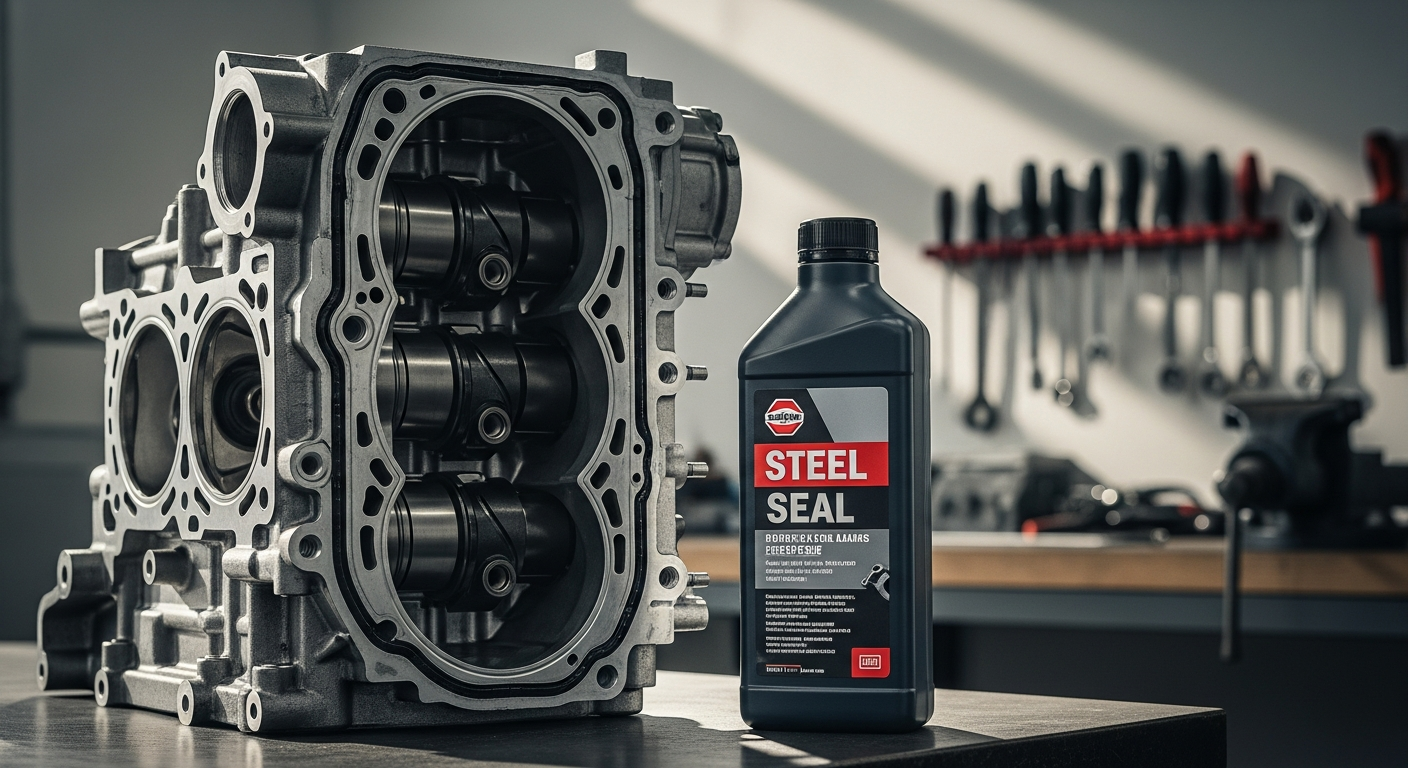
A blown head gasket repair at a mechanic shop can drain your bank account by $1,500 to $3,000—sometimes more. That's where Steel Seal enters the picture, offering DIY mechanics and budget-conscious car owners a fighting chance to tackle one of the automotive industry's most expensive problems without emptying their wallets.
Since 1999, Steel Seal has built a reputation for delivering what seems almost too good to be true: a pour-in solution that permanently seals blown head gaskets, cracked cylinder heads, and certain block leaks using thermochemical technology. Unlike temporary fixes that rely on fibrous particles or sodium silicate liquid glass, Steel Seal's unique chemical formulation hardens under engine heat and pressure to create a durable, lasting seal.
Discover how Steel Seal can save you thousands on engine repairs today.
How Thermochemical Technology Seals Engine Damage Permanently
The key to Steel Seal's effectiveness lies in understanding its thermochemical reaction process. When you pour the product into your engine's cooling system, it circulates passively until the engine reaches operating temperature. At that point, the chemical compounds activate under the intense heat and pressure inside the combustion chamber, triggering a molecular reaction that forms a hardened seal directly at the damage site.
This approach differs fundamentally from competing products that use fibrous materials or sodium silicate (liquid glass). Those alternatives rely on particles that physically plug gaps—a method that often leads to cooling system blockages, clogged radiators, and heater matrix failures. The seal they create is temporary at best, breaking down under sustained engine stress and requiring repeated applications.
Steel Seal's thermochemical reaction bonds to the damaged metal surfaces without introducing solid particles into your cooling system. The hardened material becomes part of the engine's structure rather than a foreign substance circulating through your radiator. This chemistry makes the seal permanent and resistant to the thermal cycling your engine experiences daily.
The product proves compatible with both aluminum and cast iron engine blocks, a crucial advantage since modern vehicles use varied materials. Steel Seal remains non-corrosive and works seamlessly with all traditional ethylene glycol antifreezes, meaning you won't need to drain your cooling system completely or purchase specialty coolants.
Application Protocol for Different Engine Displacements
Before you pour anything into your engine, proper preparation determines success. Start with a cooling system flush to remove old coolant, debris, and any residue from previous sealant attempts. This step is non-negotiable if your system has been treated with other products—incompatible chemicals reduce Steel Seal's effectiveness significantly.
Check your engine type and displacement to determine the correct Steel Seal quantity. For 4-cylinder engines, a standard bottle typically suffices. 6-cylinder engines require a slightly larger dose, while 8-cylinder engines need the full recommended amount. Underfilling compromises the seal; overfilling wastes product without improving results.
The application process itself demands minimal mechanical knowledge. With your engine cold, locate your radiator or expansion tank cap. Pour the measured Steel Seal directly into the system, then replace the cap securely. Start your engine and bring it to operating temperature—approximately 180 to 200 degrees Fahrenheit. Run the engine at normal operating temperature for about 30 minutes. During this period, the thermochemical reaction activates and begins bonding to the damaged surfaces.
Allow your engine to cool completely before driving. The sealing process continues as you operate your vehicle normally over the following days. Many users report symptom improvement within hours, though a full cure may take several heat cycles to complete.
Get Steel Seal now and start your engine repair journey with confidence.
Real-World Success Rates and Performance Data
The 99% success rate claim warrants scrutiny. That figure applies specifically to properly diagnosed head gasket failures in cooling systems free from contamination. The percentage doesn't encompass severe mechanical damage like cracked engine blocks or warped cylinder heads that extend beyond gasket failure.
Customer testimonials consistently highlight permanent repairs lasting multiple years. Users report sealing leaks that previously required expensive mechanical intervention, with many vehicles logging tens of thousands of additional miles after Steel Seal application. Gasoline engines show particularly strong results, though diesel engines also respond well when conditions are favorable.
The product performs best in scenarios involving straightforward gasket failure with minimal structural damage. Engine types range from standard passenger vehicle engines to truck and performance applications, with success tied more closely to accurate diagnosis and proper preparation than to engine displacement or configuration.
Long-term durability reports from extended user bases demonstrate lasting effectiveness. Vehicles treated with Steel Seal years ago continue operating without recurring leaks, suggesting the seal genuinely hardens and persists rather than providing temporary relief.
Cost Analysis: DIY Repair vs. Mechanical Shop Replacement
Steel Seal pricing ranges from $79.99 for smaller engines to $129.99 for larger displacements. Compare this to typical mechanic shop head gasket replacements, which start at $1,500 and frequently exceed $3,000 when accounting for labor, parts, and additional repairs discovered during disassembly.
Labor costs represent the bulk of mechanical shop expenses. A head gasket replacement requires removing cylinder heads, replacing the gasket, and reassembling everything—often a 6 to 10-hour job at shop rates ranging from $100 to $150 per hour. Steel Seal eliminates these labor costs entirely by enabling you to handle the repair yourself in under an hour.
The money-back guarantee provides financial protection. If your engine doesn't improve within a specified timeframe, Steel Seal processes refunds, making the initial investment risk-free for most users. The return on investment becomes obvious when comparing a $100 product to a $2,000 repair bill.
For budget-conscious vehicle owners facing head gasket failure, Steel Seal represents exceptional value. The investment pays for itself exponentially through avoided mechanic fees.
Preparation Steps That Maximize Sealing Effectiveness
Accurate diagnosis separates successful applications from disappointing outcomes. Confirm that your symptoms truly indicate head gasket failure rather than other cooling system problems. White smoke from the exhaust, coolant loss without visible leaks, milky oil on the dipstick, and rough idling suggest head gasket issues. Have a mechanic perform a combustion leak test if you're uncertain.
Cooling system flushing removes old coolant, mineral deposits, and contaminants that interfere with Steel Seal's chemical reaction. If your system previously received other sealant products, thorough flushing becomes critical—incompatible chemicals can prevent proper bonding.
Check your coolant level and condition before application. The system should be clean, free-flowing, and properly filled. Remove any visible rust or sediment through flushing and refilling with fresh ethylene glycol coolant.
Identify your specific engine type, displacement, and configuration to confirm Steel Seal compatibility. Nearly all gasoline and diesel engines prove compatible, but accurate identification ensures you purchase the correct product quantity.
Limitations and Scenarios Where Steel Seal May Underperform
Steel Seal excels at sealing gasket failures and minor head cracks, but severe mechanical damage lies beyond its reach. A block crack requiring structural repair, a warped cylinder head that prevents proper sealing, or multiple simultaneous failures may not respond adequately to chemical sealing. Mechanical intervention becomes necessary in these scenarios regardless of sealant application.
Previous sealant contamination significantly reduces effectiveness. If your cooling system contains residue from other products, Steel Seal's thermochemical reaction may not activate properly. This situation requires complete system flushing before application.
Some customer reviews report inconsistent results or only temporary effectiveness. These outcomes typically stem from inadequate preparation, severe damage beyond gasket failure, or contaminated cooling systems rather than product deficiency. Individual results vary based on damage severity and preparation quality.
Slow cure timelines occur in certain engine configurations or cold climates. While most users see improvement within hours, some experience gradual symptom reduction over several days. Patience and multiple heat cycles maximize the sealing process.
Situations involving professional diagnostic uncertainty warrant mechanic consultation before attempting Steel Seal application. An accurate diagnosis prevents wasted effort and expense.
Taking Control of Your Engine's Future Without Breaking the Bank
Steel Seal blown head gasket repair sealer represents a genuine alternative for vehicle owners facing the gut-wrenching reality of expensive engine repairs. The thermochemical technology behind it stands apart from gimmicky competitors that clog cooling systems and offer only temporary relief. You get a permanent seal, straightforward DIY application, and compatibility across most engine types—all without requiring specialized tools or mechanical expertise.
That said, this product isn't a universal fix-all. Severe mechanical damage, previous sealant contamination, and certain engine configurations can limit effectiveness. The 99% success rate claim holds weight for properly diagnosed head gasket failures in well-maintained cooling systems, but individual results vary based on preparation and damage severity.
If you're staring down a $2,000 plus mechanic bill and your engine damage is genuinely limited to gasket failure or minor head cracks, Steel Seal deserves serious consideration. The money-back guarantee provides a safety net, and the investment of $80 to $130 is negligible compared to the potential savings. Start with an honest diagnosis of your engine problem, follow the preparation steps meticulously, and approach the application with patience. Your wallet and your engine will thank you.
Order Steel Seal today and take control of your engine's future.
Leave a Reply