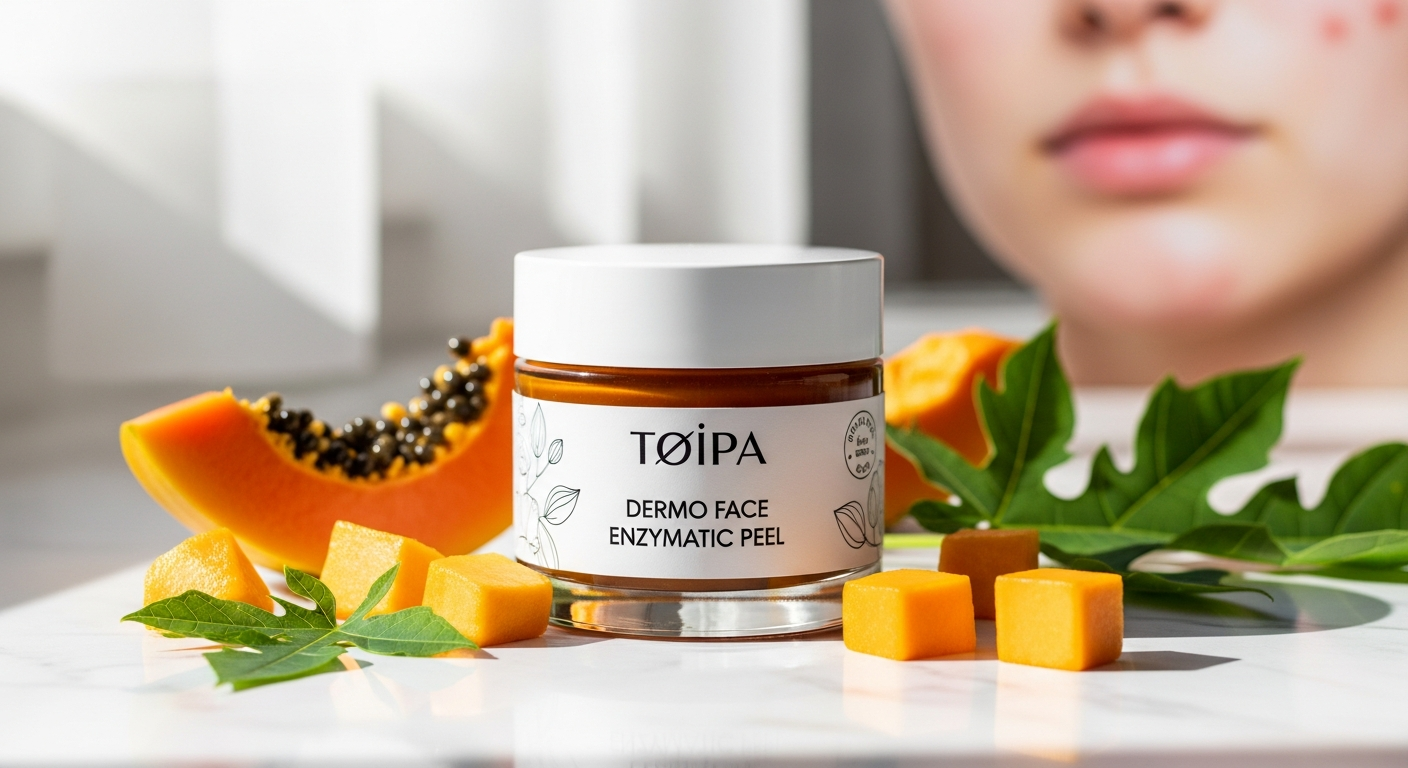
Over 70% of people with acne-prone skin have abandoned traditional scrubs and chemical peels because they trigger irritation, redness, and barrier damage. The frustration is real—you've invested in products promised to clear your skin, only to watch them backfire and worsen sensitivity.
The Tołpa Dermo Face Sebio Enzymatic Peel represents a breakthrough in Polish skincare innovation, offering a completely different approach to surface renewal. Rather than relying on abrasive particles or aggressive AHA/BHA formulations, this bestselling peel harnesses three natural enzymes to dissolve dead skin cells and unclog pores without the collateral damage.
Throughout this guide, you'll understand exactly how enzymatic exfoliation differs from traditional methods, explore the three-enzyme system that powers this peel, and discover why acne-prone skin responds so dramatically to this formula.
Experience the enzymatic peel that's transforming acne-prone skin across Europe.
Enzymatic vs. Chemical Exfoliation: Understanding the Difference
How mechanical scrubs damage compromised skin barriers and trigger inflammation
Mechanical scrubs work through friction—tiny particles grind against your skin to physically remove dead cells. For healthy, resilient skin, this might be tolerable. For acne-prone or sensitive complexions, it's a disaster. Every pass of a scrub causes micro-tears in the stratum corneum, your skin's protective outer layer. This damage triggers your immune system to respond with inflammation, redness, and increased sebum production—exactly what acne-prone skin doesn't need.
Why AHA and BHA acids can worsen sensitivity in acne-prone complexions
Chemical peels using alpha-hydroxy acids (AHAs) and beta-hydroxy acids (BHAs) dissolve the bonds holding dead skin cells together. While effective for some skin types, they work through chemical aggression. They lower skin pH, disrupt the acid mantle, and can create a reactive state where your skin becomes hypersensitive. For those already managing acne inflammation, AHAs and BHAs often escalate the problem—increasing barrier damage, triggering more oil production, and creating a cycle of irritation.
The enzymatic advantage: biological breakdown of dead skin without chemical aggression
Enzymes operate differently. They're biological catalysts that work specifically on protein structures—dead skin cells and keratin buildup—without chemical assault. Enzymes recognize their target and break it down naturally, leaving healthy skin tissue intact. Your skin doesn't perceive this as an attack. There's no pH disruption, no barrier compromise, just selective removal of what your skin no longer needs.
How enzymes work at the molecular level to dissolve keratin buildup
Enzymes are proteins that accelerate specific chemical reactions. In an enzymatic peel, proteases (protein-breaking enzymes) identify and cleave the bonds in keratin—the primary protein in dead skin cells and pore blockages. This happens at the molecular level, meaning the breakdown is precise and targeted. Unlike acids that indiscriminately dissolve surface proteins, enzymes seek out and dissolve only the damaged, dead material. This specificity is why enzymatic peels work effectively on sensitive skin.
The Three-Enzyme Complex: How Papain, Bromelain, and Keratinase Collaborate
Papain from papaya: natural protease that breaks down dead skin cell bonds
Papain is a protease enzyme harvested from unripe papaya fruit. It excels at breaking peptide bonds in proteins, making it ideal for dissolving the keratin that binds dead skin cells together. Papain has been used in skincare for centuries, and modern research confirms its efficacy. It's gentle enough for sensitive skin yet powerful enough to noticeably improve skin texture after a single application. In the Tołpa formula, papain serves as the primary exfoliating agent, working to remove the outer layer of dead cells without causing irritation.
Bromelain from pineapple: anti-inflammatory enzyme that soothes while exfoliating
Bromelain is a proteolytic enzyme extracted from pineapple stems. Beyond its exfoliating capability, bromelain possesses natural anti-inflammatory properties. As the formula works to remove dead skin, bromelain simultaneously calms any inflammation triggered by the exfoliation process. This dual action prevents the redness and irritation that often follows other peels. For acne-prone skin, this is critical—you get the benefits of exfoliation without the inflammatory response that usually worsens acne.
Microencapsulated keratinase: targeted enzyme that specifically targets keratin-based blockages in pores
Keratinase is an enzyme that specifically breaks down keratin structures. The Tołpa formula uses microencapsulated keratinase, meaning the enzyme is wrapped in microscopic capsules that release it gradually during application. This encapsulation ensures the enzyme reaches deep into pore structures where keratin buildup causes blackheads and congestion. Traditional peels can't penetrate this effectively, but keratinase targets exactly what's blocking your pores.
Synergistic action: how these three enzymes work together for superior pore cleansing
The brilliance of this three-enzyme system lies in synergy. Papain and bromelain work on the skin's surface and upper layers, removing dead cells while soothing inflammation. Simultaneously, microencapsulated keratinase penetrates deeper, targeting the keratin blockages in pores. The result is comprehensive cleansing—surface renewal paired with deep pore unclogging. None of the enzymes overwhelm your skin because each performs a specific role. Together, they deliver what no single ingredient could achieve alone.
Pore Cleansing and Blackhead Reduction: The Real Mechanism
Deep cleansing action: how enzymes penetrate follicles without harsh extraction
Blackheads form when sebum and dead skin cells oxidize inside pores. Mechanical extraction—squeezing or using pore strips—creates trauma, inflames the follicle, and damages surrounding skin. Enzymes work differently. They penetrate the pore structure and dissolve the material blocking it from inside. There's no pulling, no tearing, no inflammation. The dead skin and sebum simply dissolve and rinse away. Your pores are cleansed without the damage extraction causes.
Sebum regulation: the connection between enzymatic exfoliation and oil control
Acne-prone skin produces excess sebum, and blocked pores trap it inside, creating an ideal environment for bacterial growth. When you remove the dead skin blocking pores, sebum can flow normally again. Additionally, when skin isn't irritated or damaged, it stops overproducing sebum as a protective response. Enzymatic exfoliation addresses both issues—it clears blockages and reduces the irritation that triggers excess oil production.
Blackhead elimination: why enzyme-based peels outperform manual extraction and strips
Manual extraction damages skin and often leaves pores inflamed and enlarged. Pore strips offer temporary results but don't address underlying causes. Enzymatic peels dissolve the material causing blackheads and work on the factors that created them in the first place. Users report dramatic blackhead reduction after just one use, with continued improvement as they use the product regularly. The enzymes are simply more effective because they target the problem intelligently rather than just yanking material out of pores.
Prevention of future blockages: how regular enzymatic exfoliation keeps pores clear
Consistency matters. By using an enzymatic peel once or twice weekly, you maintain clear follicles. Regular enzymatic exfoliation prevents the buildup that leads to blackheads, congestion, and acne. You're not just treating existing problems—you're preventing new ones from forming.
Discover how consistent enzymatic exfoliation transforms acne-prone skin.
Tołpa Peat Extract: The Anti-Inflammatory Secret Weapon
What makes Tołpa peat unique: sourcing and processing methods
Tołpa peat comes from peatlands in Poland, harvested and processed specifically for skincare applications. Peat is partially decomposed plant material that's been accumulating for thousands of years, creating a complex matrix of beneficial compounds. Tołpa's proprietary extraction and processing methods concentrate these active ingredients while maintaining purity and safety. This isn't raw peat—it's refined into a skincare-grade extract with proven efficacy.
Anti-inflammatory properties: how peat calms irritation triggered by exfoliation
Even gentle exfoliation triggers some inflammatory response. Peat extract contains natural compounds that calm this inflammation quickly. Enzymes work to remove dead skin; peat works to soothe the underlying tissue. This combination means you get effective exfoliation without the redness and irritation that usually follow peels. For acne-prone skin, reducing inflammation is essential—inflammation perpetuates the acne cycle.
Regenerative benefits: cellular renewal support beyond surface exfoliation
Peat extract doesn't just calm inflammation—it supports cellular regeneration. It contains minerals, amino acids, and organic compounds that nourish skin and accelerate renewal. After enzymatic exfoliation removes dead cells, peat extract helps your skin generate healthy new cells faster. This is why users report not just smoother texture, but visibly renewed, healthier-looking skin.
Soothing sensitive skin: why peat extract prevents post-peel redness and burning
The combination of enzymes and peat is specifically formulated for sensitive skin. Enzymes do the work; peat prevents the consequences. This is why even people with reactive skin tolerate this peel well. The post-application burning sensation that some experience is typically brief and mild—peat extract minimizes even this minor irritation.
Application Strategy for Maximum Results Without Irritation
Patch testing protocol: essential first step for reactive skin types
Before using any new product, especially an active treatment like an enzymatic peel, patch test. Apply a small amount to a discreet area—inner arm or behind the ear—and wait 24-48 hours. This identifies whether your skin reacts before applying the product to your face. Even though this peel is formulated for sensitive skin, individual reactions vary. Patch testing protects you.
Frequency recommendations: how often to use for acne-prone skin without over-exfoliation
Start with once weekly application. Most acne-prone skin responds well to weekly use. Some people advance to twice weekly after their skin adapts, but over-exfoliation is a genuine risk. More frequent application doesn't mean better results—it means irritation and barrier damage. Find your frequency sweet spot; for most people, that's once weekly.
Application technique: optimal massage methods for pore penetration
Apply to clean, dry skin. Massage gently in circular motions for 1-2 minutes, allowing the enzymes time to work. Don't scrub—the enzymes are doing the exfoliation, not your fingers. Focus on congestion-prone areas like the T-zone. The gentle massage increases circulation and helps enzymes penetrate follicles more effectively.
Post-application care: essential steps to maximize results and minimize sensitivity
Rinse thoroughly with lukewarm water. Follow with a gentle toner, hydrating serum, and a good moisturizer. The peel removes surface material, making your skin temporarily more permeable—this is your opportunity to deliver hydration deep into skin layers. Use SPF 30+ during the day, as exfoliated skin is more photosensitive. At night, support skin repair with a nourishing moisturizer or facial oil.
Why This Bestseller Deserves Your Attention
Market popularity metrics: bestseller status and consumer preference data
This isn't a niche product—it's one of Tołpa's bestsellers, consistently ranking among the top enzymatic peels across European markets. Thousands of people have chosen it over competing products, indicating genuine satisfaction and results. Bestseller status reflects real consumer preference, not marketing hype.
Dermatologist recommendations: professional endorsement within the skincare community
Dermatologists recommend this peel to patients with acne-prone and sensitive skin because it delivers results without causing damage. Professional endorsement carries weight—these are experts who understand skin biology and have seen countless products come and go.
Repeat purchase rates: customer loyalty and satisfaction indicators
People repurchase products they love. High repeat purchase rates for this enzymatic peel indicate genuine satisfaction and visible results. When customers feel real improvement in their skin, they come back.
Accessibility advantage: affordable luxury for budget-conscious skincare enthusiasts
Professional enzymatic peels at dermatology clinics cost $100-300 per session. The Tołpa peel delivers comparable results at a fraction of the cost—approximately 25-50 PLN for a 40ml bottle. You're getting professional-grade efficacy at drugstore pricing. This accessibility means more people can access effective acne treatment without breaking their budget.
Your Skin's Breakthrough Moment Awaits
The Tołpa Dermo Face Sebio Enzymatic Peel represents something rare in skincare: genuine efficacy without compromise. You get powerful pore cleansing, blackhead reduction, and sebum control—all delivered through a formula that respects sensitive skin instead of attacking it. The three-enzyme system works intelligently, the Tołpa peat extract soothes inflammation, and the results appear immediately, not weeks down the line.
What makes this peel truly exceptional is its accessibility and affordability. Professional results don't require professional pricing when you have the right formula. Start with patch testing, respect the enzyme activity, and allow your skin to adapt. Within days, you'll notice the transformation—the smoothness, the clarity, the renewed confidence that comes from skin that finally feels balanced.
Your acne-prone skin has endured enough damage from harsh treatments. It's time to experience what intelligent enzymatic exfoliation can do.
Begin your enzymatic peel journey with Tołpa's bestselling formula today.
Leave a Reply