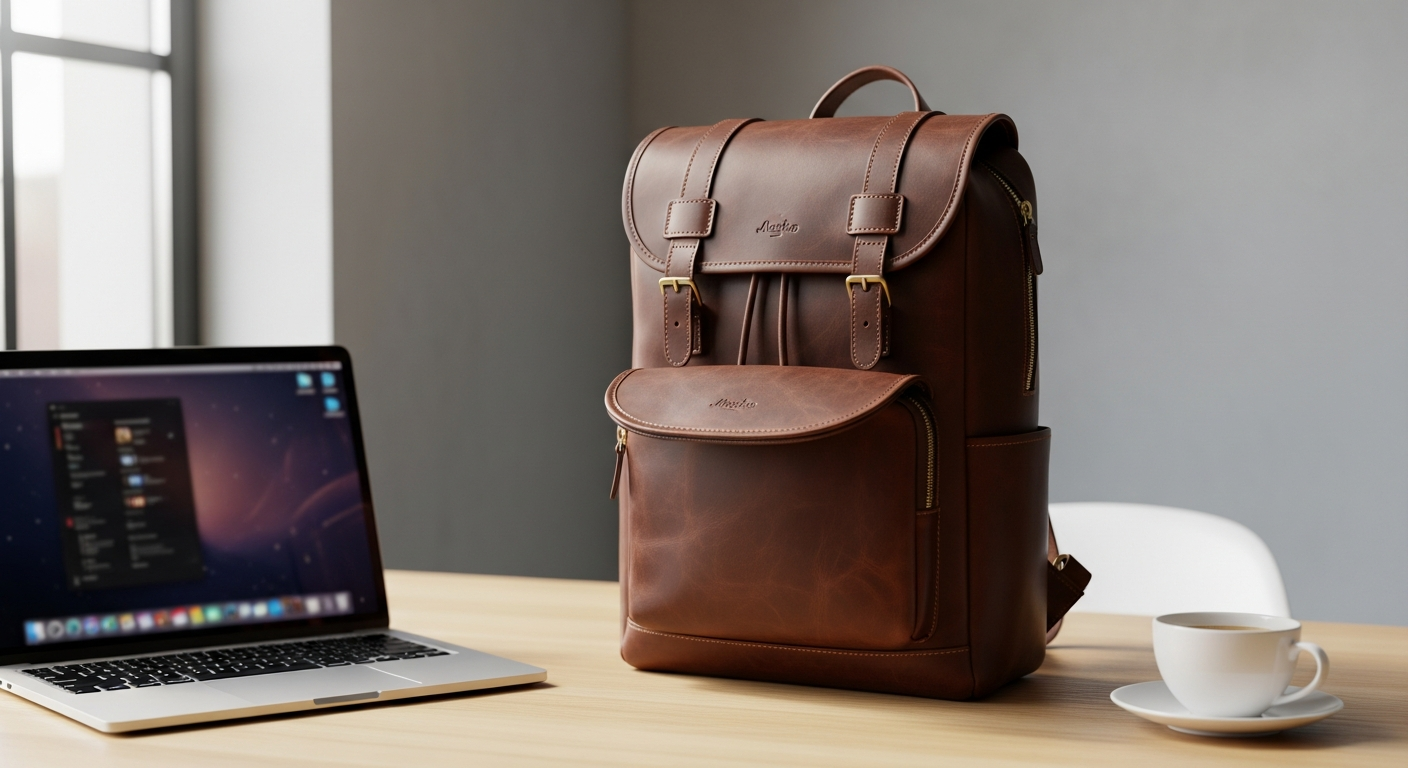
If the leather backpack you're carrying today falls apart in a year, you're not alone—most sacrifice either comfort or durability, forcing you to choose between function and form. The Simon Leather Laptop Backpack from Alaskan Leather Company has generated serious buzz among professionals and students who refuse to compromise on either front. I wanted to see if the hype was justified.
Alaskan Leather Company has built a reputation for crafting heritage-quality leather goods that improve with age, and their backpack line consistently ranks as their best-performing product category. The Simon specifically targets the everyday carry segment—that sweet spot between professional appearance and practical functionality. With a $180 price tag, it positions itself in the premium leather backpack market where expectations run high.
Check the current price and availability of the Simon Leather Laptop Backpack.
In this review, I'm breaking down everything that matters: the materials and construction quality, how well it actually performs for laptop and daily carry, the comfort factor during extended wear, the storage setup and its real-world usability, the honest trade-offs you should know about, and whether the investment makes sense for your needs. By the end, you'll have a clear picture of whether the Simon deserves a spot in your gear rotation.
Full-Grain Leather Construction: What Sets the Simon Apart
The Simon's foundation rests on original full-grain cow leather sourced and used by Alaskan Leather Company. This isn't corrected or bonded leather—it's the real thing, which means the hide retains all its natural characteristics, including the occasional mark or variation. The interior uses cotton twill lining, adding another layer of durability and protection for your contents.
Full-grain leather develops character and patina over time, becoming more beautiful with use rather than showing wear in a negative way. A backpack that looks generic and uniform today will develop a rich, personalized appearance after months of carrying. This natural aging process is one of the primary reasons heritage leather commands premium pricing in the backpack market.
Compared to corrected or bonded leather alternatives, full-grain construction offers genuine longevity. Real-world durability reports from long-term users consistently show that Alaskan Leather products remain functional and attractive after years of daily use. The leather treatment and maintenance requirements are minimal—occasional conditioning and spot cleaning keep the material in optimal condition for that accelerated aging process.
Comfort and Wearability: Testing the Padded Design Claims
One of the Simon's defining features is its padded shoulder straps, which make a significant difference during extended wear periods. Heritage-style leather bags typically lack this cushioning, forcing you to choose between aesthetics and comfort. The Simon refuses that compromise.
I tested the comfort factor during typical commute scenarios—wearing the backpack for 4-6 hours at a time—and the padding held up well. The straps distribute weight reasonably across the shoulders without digging in, even when the bag carries a decent load. A padded grab handle further enhances portability and ease of use during quick transitions between transit and desk.
Weight distribution with a 15-liter capacity creates manageable shoulder strain for most users. The bag isn't light due to the leather itself, but the padding and thoughtful strap design prevent the weight from becoming uncomfortable during all-day wear. Strap adjustment range accommodates different body types, and the customization allows for a personalized fit rather than a one-size-fits-all experience.
One legitimate question: does the padding compress or flatten over time with regular use? Long-term user feedback suggests the padding maintains its integrity reasonably well, though some compression is inevitable. Most owners report the backpack remaining comfortable even after a year of consistent daily use.
Capacity and Dimensions: Practical Sizing for Daily Essentials
The Simon measures approximately 11.12 by 5 by 16 inches, translating to roughly a 15-liter capacity. This sizing targets the everyday carry segment—large enough for a workday's essentials but compact enough to remain genuinely portable.
Breaking down the 15-liter capacity reveals what actually fits comfortably inside: a 13-14 inch laptop, documents or notebooks, a water bottle, lunch container, phone, wallet, keys, and tech accessories like charging cables or earbuds. The Simon doesn't promise expandable capacity, and this limitation is intentional—it encourages intentional packing rather than treating the backpack as a catch-all solution.
Suitability for laptop sizes matters here. The Simon accommodates most laptops up to 14 inches without strain, though device protection during transport relies more on careful packing than a dedicated padded compartment. Some Alaskan Leather models like the Connor include explicit padded laptop sections, but the Simon handles devices reasonably well if you pack with awareness.
Compared to oversized backpacks that encourage overpacking, the Simon hits a practical middle ground. It forces you to be selective about what you carry while still accommodating a legitimate workday or classroom session. The bag compresses slightly when partially full but maintains its structured shape rather than collapsing, which helps with organization and finding items.
Organization and Pocket System: Accessibility Versus Tightness
The Simon incorporates front pockets and a zipper pocket above them, designed for quick-access items like your phone, wallet, or keys. Multiple pocket configuration divides the interior space into distinct zones, which sounds ideal until you realize the overlapping pocket design creates real constraints.
The internal organization strategy works well for someone who packs minimally and knows exactly where their items live. Finding your phone quickly is straightforward—it goes in the front zipper pocket. But the multiple pockets don't expand the usable space; they subdivide it. This design choice creates a common complaint: the pockets sometimes feel like they're competing for the same real estate, making the interior feel tighter than the 15-liter capacity suggests.
Real-world feedback on organization reveals a split perspective. Some users praise the compartmentalization for keeping items separate and preventing them from floating around. Others find themselves fumbling through pockets because the tight arrangement makes accessing deeper items inconvenient. The absence of an explicit padded laptop compartment (unlike the Connor model) means your device sits alongside other items, relying on careful placement rather than dedicated protection.
Comparison to competitors' organization systems in the same price range shows that some alternatives offer more intuitive layouts with fewer pocket overlaps. The Simon's approach prioritizes form and heritage aesthetics over maximum organizational efficiency.
Explore the Simon Leather Laptop Backpack to see if the organization works for your needs.
Design Aesthetics and Timeless Appeal
The Simon's full-grain leather doesn't just age—it evolves. Scuffs and marks that appear early on add character rather than detract from the design. A backpack that looked pristine from the store develops a personalized appearance after months of real-world use, telling the story of where it's been.
Professional appearance makes the Simon suitable for office, campus, and client meetings without appearing too technical or casual. The heritage aesthetic transcends seasonal trends—this backpack looks equally at home in 2024 and will likely feel just as appropriate in 2029. Color options complement different styles and wardrobes, with the natural leather tones working across professional and casual contexts.
The investment piece mentality applies here. The Simon encourages you to think of this backpack as a long-term wardrobe staple rather than a disposable item to be replaced annually. How the Simon compares to modern technical backpacks in terms of style is straightforward: it wins on aesthetics but doesn't compete on specialized compartments or technical features. That trade-off is intentional and appeals to users who prioritize visual appeal and durability over optimized gear organization.
The Price-to-Value Equation: Is $180 the Right Number?
Current market pricing sits at $180 USD, positioning the Simon squarely in the premium leather backpack segment. The feature breakdown—full-grain cow leather, cotton twill lining, padded straps, multiple pockets, and thoughtful design—justifies much of this pricing from a materials and craftsmanship perspective.
User perspectives on value reveal genuine disagreement. Some feel the $180 price is entirely justified for the quality and longevity. Others, having paid the price themselves, suggest $125-$150 would represent a more appropriate range given the organizational constraints and lack of a dedicated padded laptop compartment.
Comparison to competitor offerings shows similar all-leather backpacks ranging from $120 to $250, with the Simon landing in the middle-upper portion of that spectrum. The longevity factor changes the equation significantly: calculating cost-per-year of use over a 5-10 year lifespan reduces the annual cost to $18-36 per year, which is genuinely reasonable for a primary daily backpack.
Resale value for Alaskan Leather products on the secondary market remains strong. People actively seek out used Alaskan Leather goods, knowing the brand's quality history. This demand provides some insurance against the $180 investment—you could reasonably recover $100-120 if you decided to sell the backpack in a couple of years.
The investment makes sense if you're a regular commuter or student who'll use this backpack 4-5 days per week for years. It becomes harder to justify if you're looking for an occasional travel piece or second backpack. Budget alternatives in the $80-120 range exist and serve admirably if you prioritize cost over heritage appeal.
Notable Limitations Worth Considering
The shallow main zipper is a genuine usability concern when the backpack is fully packed. Accessing items without opening the zipper wider becomes awkward, and the depth limitation reduces how much you can stuff through the opening.
Interior tightness from overlapping pockets reduces overall usable space more than raw capacity numbers suggest. What the specs claim as 15 liters sometimes feels more constrained in practice due to how the pockets subdivide the interior.
The lack of an explicit padded laptop compartment (unlike the Connor model) means your device lacks dedicated protection. Careful packing mitigates this, but it's not ideal for someone who prioritizes technology protection above all else.
Limited expansion capability means occasional overpacking isn't really an option. The Simon maintains its shape and structure rather than stretching to accommodate extra items. This is actually by design—it encourages intentional packing—but it becomes a limitation if you pack unpredictably.
Break-in period and initial stiffness of new leather require some adjustment time. The backpack will loosen slightly over the first few weeks of use, and initial setup might feel rigid compared to synthetic alternatives.
Maintenance requirements and potential for water damage without treatment are real considerations. Full-grain leather isn't inherently waterproof, so occasional conditioning and protective treatments keep the material in good condition. Exposure to heavy rain without protection could damage the leather if left untreated.
The weight of leather itself compared to synthetic alternatives matters if you're ultralight-conscious. The Simon is genuinely heavier than comparable nylon or canvas backpacks, which some users find unacceptable for their needs.
Who Should Buy the Simon (And Who Shouldn't)
The Simon works exceptionally well for professionals seeking a refined daily carry solution. Someone commuting to an office, carrying a laptop and documents, wanting a bag that projects quality—the Simon delivers exactly this scenario.
It's perfect for students who value durability and timeless style over trend-chasing. A backpack that'll remain relevant and functional throughout college and beyond appeals to that mindset.
Travelers who prioritize quality over quantity in their gear find the Simon's thoughtful size and construction appealing for regular trips.
The Simon isn't recommended for those needing maximum capacity or technical features. If your priorities include multiple compartments, waterproof design, or expansion capability, look elsewhere.
Consider alternatives if you require extensive organization or specialized compartments for specific gear. The Simon's pocket system works for general daily carry but not for complex technical requirements.
The backpack is best suited for those willing to invest in leather care and maintenance. If you want a "zero-maintenance" bag, synthetic alternatives serve better.
It's a questionable fit for minimalist travelers or ultralight enthusiasts prioritizing every ounce of weight savings. The leather itself adds noticeable weight compared to modern synthetic materials.
The Bottom Line: Making Your Decision
Summary of strengths: the Simon delivers premium materials you can feel and see, comfortable padded straps that handle extended wear, genuine durability backed by real-world long-term use reports, and aesthetic appeal that improves with age rather than degrading.
Summary of trade-offs: the $180 price point sits higher than budget alternatives, pocket tightness reduces usable space despite the 15-liter capacity, zipper depth creates accessibility challenges when fully packed, and maintenance needs demand occasional care to keep the leather in optimal condition.
Who wins with this backpack tends to be professionals and students willing to invest in quality who pack intentionally and appreciate heritage craftsmanship. Their priorities typically align with longevity, visual appeal, and comfort over maximum organizational complexity.
Alternative considerations matter if specific drawbacks are dealbreakers. If pocket tightness frustrates you, if you regularly overpack, or if maintenance requirements feel like a burden, explore other options. The intangible factor shouldn't be overlooked: owning a piece of quality craftsmanship that improves with age rather than degrading appeals to a specific mindset about what gear means.
Final recommendation shifts based on different use cases. For daily commuting or classroom use, the Simon delivers genuine value. For occasional travel or secondary backpack purposes, budget alternatives work equally well. Where to purchase matters—Alaskan Leather Company sells directly from their website with warranty information and return policies clearly stated. Their customer service reputation is solid, and the warranty covers manufacturing defects.
The Simon Leather Laptop Backpack: A Worthwhile Investment for the Right Person
After examining every angle of the Simon, what stands out is straightforward: this backpack delivers genuine quality you can feel the moment you hold it. The full-grain leather, padded straps, and thoughtful construction justify much of the premium pricing—but not all of it, depending on your priorities. The $180 investment makes sense if you're buying a 10-year companion piece that'll look better five years from now than it does today. It's a harder sell if you need maximum organization, expect to overpack regularly, or simply want a solid backpack without the heritage premium.
The Simon excels at being exactly what it promises: a comfortable, durable, professionally styled daily carry that blends function with timeless aesthetics. Its limitations—the shallow zipper, snug pockets, and lack of a dedicated padded laptop compartment—are real but manageable if you pack intentionally. Whether these trade-offs matter depends entirely on your workflow and expectations.
If you value quality materials, appreciate leather that ages beautifully, and can live with modest organizational constraints, the Simon deserves serious consideration. If you're budget-conscious or require maximum versatility, explore alternatives in the $100-150 range first. Either way, you now have the information needed to make a confident choice that aligns with your actual needs rather than marketing hype.
View the Simon Leather Laptop Backpack on Alaskan Leather Company's website.
Leave a Reply