Roughly 1 in 8 adults struggle with sensitive teeth, yet most avoid whitening treatments altogether—convinced that brightening their smile means enduring sharp, shooting pain. The fear is understandable. Traditional whitening products often feel like choosing between dental confidence and comfort, forcing people to accept stained teeth as the safer option.
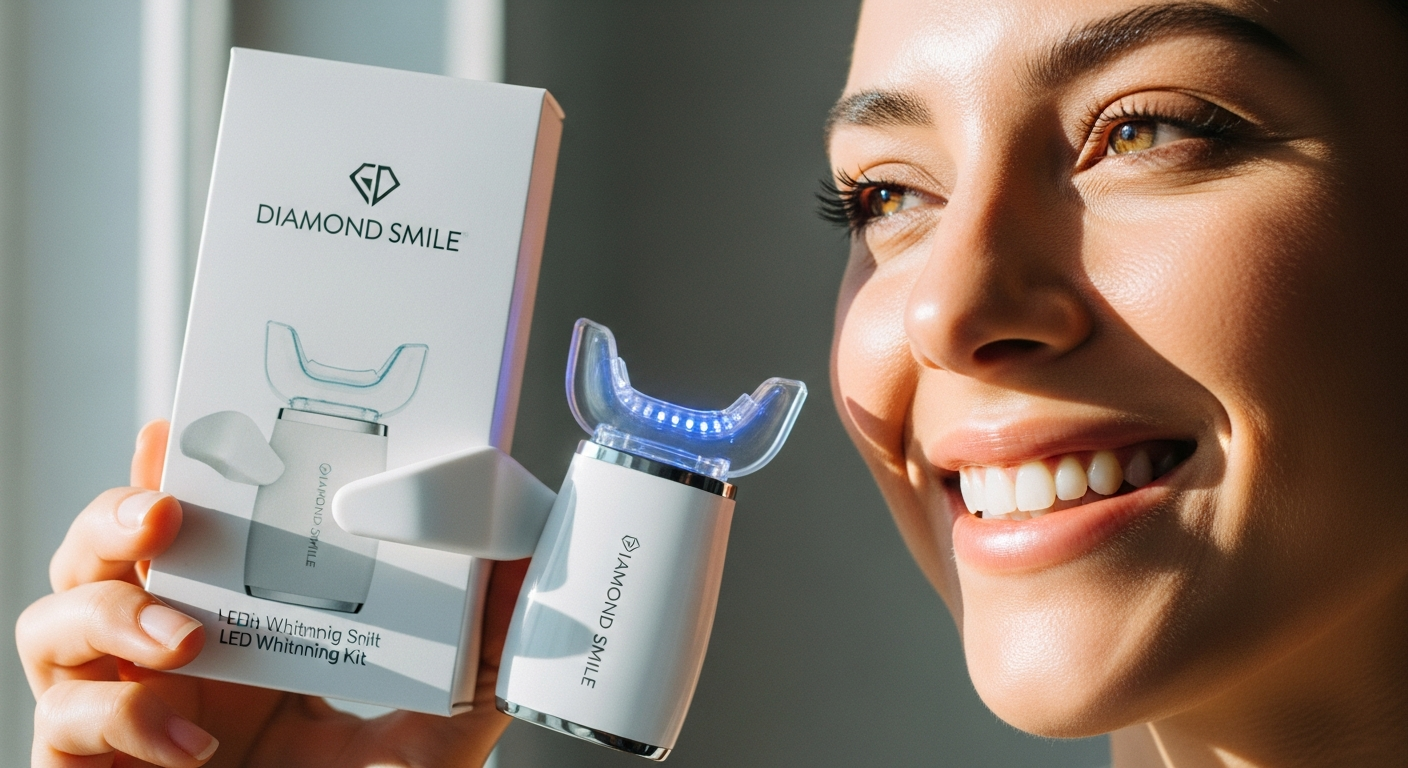
The Diamond Smile LED Teeth Whitening Kit has disrupted the at-home whitening space by directly tackling this dilemma. Developed by dentists and formulated with sensitivity as a core concern, this German-engineered system proves that gentle doesn't mean ineffective. It offers a realistic alternative for people who've written off whitening treatments.
Discover how the Diamond Smile LED Teeth Whitening Kit can brighten your smile without the pain.
Why Sensitive Teeth Make Whitening Complicated (And How Diamond Smile Solves It)
Tooth sensitivity stems from specific structural problems. When gums recede, dentin—the porous layer beneath enamel—becomes exposed. Enamel erosion from acidic foods or aggressive brushing creates the same effect. This exposed dentin contains microscopic tubules leading directly to the nerve, which explains why cold, heat, or harsh chemicals trigger that characteristic sharp pain.
Traditional whitening products typically contain high peroxide concentrations (15-35%) designed to penetrate deep into the enamel. While effective at removing stains, this aggressive approach irritates exposed dentin. Extended exposure times intensify the problem, making sensitivity flare-ups inevitable for users with vulnerable teeth.
Diamond Smile addresses this through deliberate formulation choices. The whitening gel relies on dentist-developed compounds that achieve professional results without overwhelming sensitive dentin. The brand offers peroxide-free alternatives for users whose teeth react to even moderate concentrations, proving that effective whitening and sensitivity management aren't mutually exclusive.
The science behind tooth sensitivity: Exposed dentin, receding gums, and enamel erosion explained
Dentin hypersensitivity occurs when the protective layers of tooth structure diminish or recede. The enamel—your tooth's hardest external layer—can wear down through acidic erosion, abrasive brushing, or grinding. Simultaneously, gum tissue recedes due to periodontal disease, aggressive brushing techniques, or natural aging. Both processes expose the dentin layer underneath, creating the pathway for sensitivity.
When exposed dentin contacts irritants—whether cold air, acidic beverages, or peroxide-based whitening agents—fluid movement within those microscopic tubules stimulates the nerve, producing discomfort. The intensity varies based on the number of exposed tubules and individual nerve sensitivity thresholds.
Why traditional whitening aggravates sensitivity: High peroxide concentrations and prolonged exposure cause irritation
Professional dental whitening treatments use peroxide concentrations ranging from 25% to 35%, sometimes even higher. These strong formulations work quickly because they're designed for supervised application and rinsing in a controlled environment. At-home kits often attempt to replicate professional results with similar or only slightly lower concentrations, creating problems for sensitive-teeth users.
The extended contact time common in at-home treatments compounds the issue. Peroxide molecules penetrate the enamel and diffuse toward the dentin layer, potentially causing inflammation in the pulp chamber—the nerve-containing center of your tooth. Sensitivity typically peaks 24-48 hours after treatment as this inflammatory response develops.
Diamond Smile's gentle approach: Dentist-formulated gel with natural active ingredients and peroxide-free alternatives
Diamond Smile's formula prioritizes both efficacy and gentleness. The gel uses lower peroxide concentrations combined with natural active ingredients that work synergistically to brighten without overwhelming sensitive dentin. The brand offers peroxide-free formulations for users with severe sensitivity, proving that whitening remains achievable without this traditional active ingredient.
The inclusion of natural components means the gel irritates surrounding soft tissue less than typical whitening products. Users report that even their gums tolerate applications better, reducing the inflammation-driven discomfort that sometimes accompanies whitening.
Breaking Down the Kit Components for Sensitive Teeth Users
Understanding what's inside the Diamond Smile kit helps explain why it performs better for sensitive teeth compared to standard whitening products.
LED light technology specifics: Wavelength, intensity, and how it minimizes heat-related sensitivity
The LED light device in the Diamond Smile kit operates at specific wavelengths optimized for activating the whitening gel without generating excessive heat. Many consumer whitening kits use intense light that generates warmth—this heat can accelerate peroxide diffusion into the dentin, increasing sensitivity.
Diamond Smile's LED operates at controlled intensity levels designed to activate the gel effectively while minimizing thermal stimulation. The compact, rechargeable device fits comfortably in the mouth and delivers consistent wavelengths across sessions. Portability means users can whiten while traveling without adapting to different equipment, which matters for maintaining sensitivity management strategies.
Whitening gel composition: Active ingredients, concentration levels, and why gentle doesn't mean ineffective
The whitening gel arrives in syringes containing either peroxide-based or peroxide-free formulations. For users selecting the peroxide version, concentrations remain substantially lower than professional treatments—typically around 6-16% rather than the 25-35% found in dental offices. This difference significantly reduces dentin irritation while still delivering visible whitening.
Natural active ingredients like bamboo extract, aloe, and potassium nitrate work alongside the primary whitening agent. These compounds provide additional benefits: bamboo extract and similar botanicals contain natural silica that strengthens enamel, while potassium nitrate reduces nerve sensitivity by blocking pain signals. The gel formulation thus works from multiple angles—lightening stains while simultaneously protecting against sensitivity flare-ups.
Mouth tray design: Custom-fit options, material quality, and how proper fit reduces gum irritation
The mouth tray quality directly impacts sensitivity outcomes. Poorly fitting trays force excess gel against gums, causing unnecessary irritation and sensitivity. Diamond Smile includes professionally designed trays that mold to individual tooth contours, ensuring gel contacts teeth while minimizing gum exposure.
The material itself matters too—the tray is thermoplastic, allowing users to customize the fit by warming it in hot water before insertion. This custom-fit approach reduces gum irritation considerably compared to one-size-fits-all trays common in cheaper kits. Better fit also means more efficient gel application, allowing shorter session times while maintaining effectiveness.
The Realistic Timeline for Sensitive Teeth Results
Understanding what to expect across the treatment period helps users remain committed and recognize that sensitivity patterns are normal rather than signs the product isn't working.
First application expectations: What to feel, see, and expect during your initial session
The first session typically lasts 10-15 minutes. Users apply the gel carefully to the front surface of each visible tooth, insert the tray, and activate the LED light. During the session itself, most people report minimal sensation—the gentle formulation rarely produces the intense cold or sharp pain that accompanies harsher whitening kits.
Immediately after the first application, teeth often appear slightly whiter, though this is primarily surface-level hydration making teeth look brighter. Real whitening hasn't yet occurred; the visible change reflects the gel's protective compounds and moisture retention. Some users experience mild sensitivity 12-24 hours after the first treatment as the whitening process begins in earnest, but sensitive-teeth users typically report this as noticeably milder than their expectations based on past whitening experiences.
Week-by-week progression: How results typically unfold over 2-4 weeks with consistent use
Week 1: After 2-3 applications, genuine whitening becomes visible. The yellowish tones underlying natural teeth gradually lighten. Users with dark stains from coffee or wine notice these gradually fade. Sensitivity, if it develops, typically appears mildest during this window because the gel is still establishing its whitening effect. Most users experience no sensitivity at all during week one.
Week 2: Results accelerate noticeably. Teeth appear measurably whiter compared to the starting point. The provided shade guide becomes useful for tracking progress—most users can identify a noticeable difference. Some users with very sensitive baseline teeth might experience minor sensitivity starting around day 7-10, typically described as mild tingling rather than the sharp pain associated with traditional whitening.
Week 3-4: Maximum results typically appear by the end of week 3 or beginning of week 4 with consistent use. The whitening plateaus—continuing applications produce minimal additional changes. Sensitivity, if it developed, usually stabilizes and often diminishes as users either adjust or as the whitening process nears completion.
Sensitivity onset timing: When and if discomfort typically appears for sensitive-teeth users
Not all sensitive-teeth users experience discomfort with Diamond Smile. Many complete the full 30-day protocol with zero sensitivity issues, which distinguishes this kit from harsher alternatives. Users who do experience sensitivity typically notice it appearing between day 3-10, never during the first application.
When sensitivity does emerge, it manifests as mild tingling or brief sharp sensations rather than the severe, shooting pain associated with traditional whitening. The discomfort typically lasts a few hours post-treatment and diminishes with each subsequent session as teeth acclimate. Importantly, sensitivity doesn't indicate the product isn't working—it simply reflects that whitening is occurring and your teeth are responding.
Step-by-Step Usage Protocol for Minimizing Sensitivity
Following a specific preparation and application routine substantially reduces the likelihood of sensitivity complications.
Pre-whitening preparation: Desensitizing toothpaste timing and application strategies
Begin using a dedicated desensitizing toothpaste 3-5 days before starting the Diamond Smile kit. Desensitizing formulas contain compounds like potassium nitrate or strontium chloride that block sensation from reaching the nerve. Using these several days in advance prepares sensitive teeth for the whitening process.
Continue using desensitizing toothpaste throughout your whitening period and for 2-3 weeks afterward. Apply it as you would regular toothpaste, brushing gently for two minutes. Some users find applying desensitizing toothpaste directly to the most sensitive teeth 30 minutes before whitening provides additional protection.
Gel application technique: Correct amount, even distribution, and avoiding gum contact
Use the syringe to apply a thin layer of gel to each visible tooth's front surface. The common mistake is using too much gel, which squeezes onto gums during tray insertion. Apply approximately the amount of a grain of rice per tooth—enough to cover the surface but not so much that excess runs off.
Distribute the gel evenly across each tooth before inserting the tray. This prevents concentrated areas of high peroxide exposure that could trigger localized sensitivity. Take particular care with the gum line—push gel slightly away from gums rather than allowing it to collect there. If sensitivity has plagued past whitening attempts, this application technique alone often prevents recurrence.
Session duration guidelines: Why 10-15 minutes is optimal for sensitive teeth
Diamond Smile recommends 10-15 minute sessions, and this duration balances whitening effectiveness against sensitivity risk. Longer sessions don't produce proportionally better results—they simply increase exposure time without meaningful benefits. For sensitive-teeth users, sticking to 10-15 minutes keeps the peroxide exposure manageable.
Sessions more than 2-3 times weekly don't accelerate results either. Daily use or multiple sessions per day actually increase sensitivity risk without improving outcomes. The ideal approach uses 2-3 sessions weekly for 3-4 weeks, allowing teeth recovery time between treatments.
Cost-Benefit Analysis: Is Diamond Smile Worth It for Sensitive Teeth?
The financial case for Diamond Smile becomes compelling when comparing upfront costs and long-term value against professional alternatives.
Upfront investment: $59 price point versus professional whitening ($300-$1,000+)
A single professional teeth whitening treatment typically costs $300-$1,000 depending on location and provider. Many people require multiple sessions to achieve their desired shade, pushing total professional whitening costs to $600-$2,000 for comprehensive results. In-office treatments also may not address sensitivity concerns—sensitive-teeth users sometimes must prepay for sensitivity management or discover mid-treatment that they can't tolerate professional whitening.
The Diamond Smile kit costs approximately $59, making it roughly 5-17 times less expensive than professional whitening. The initial investment is genuinely affordable for people seeking to brighten their smile without committing significant financial resources. The money-back guarantee adds further protection—if the kit doesn't deliver results or triggers unexpected sensitivity issues, users can request a refund.
Cost per session: Calculating actual expense when accounting for gel refills
Each Diamond Smile kit includes multiple gel syringes—typically enough for 15-30 applications depending on tooth count and application thickness. At $59 for a complete kit and roughly 20 applications per kit, the cost per session averages approximately $3 per whitening treatment.
Gel refills, available separately, cost substantially less than purchasing a complete new kit. This modular approach keeps long-term costs minimal. Even with occasional refill purchases, annual whitening maintenance costs remain under $100—a fraction of the cost of annual professional whitening treatments or repeated in-office sessions.
Longevity of results: How long whitening lasts and re-treatment frequency
Initial whitening results from the Diamond Smile kit typically persist for 6-12 months depending on lifestyle habits and dietary choices. Coffee drinkers, wine enthusiasts, and tobacco users typically see results fade faster—closer to the 6-month mark. Those avoiding significant staining activities maintain results for closer to a year.
Most users perform a 1-2 week touch-up protocol every 6-12 months to maintain their whitened shade, requiring minimal additional investment. This low-maintenance approach contrasts sharply with professional whitening, which often requires annual or bi-annual professional sessions totaling $300-$1,000 yearly. Over five years, the math heavily favors at-home kits like Diamond Smile from a financial perspective.
The Bottom Line: Whitening Your Smile Without Sacrificing Comfort
The Diamond Smile LED Teeth Whitening Kit genuinely transforms the whitening conversation for sensitive-teeth sufferers who've felt locked out of cosmetic dental improvements. Its dentist-developed formula, gentle gel composition, and thoughtful design address the precise pain points that make traditional whitening feel risky.
You're not sacrificing results for comfort—you're getting both, just on a slightly different timeline than professional treatments. The $59 investment proves genuinely affordable when you factor in the money-back guarantee and dramatic savings compared to professional treatments that cost 5-17 times more.
Your sensitive teeth don't have to be a permanent barrier to confidence. Start with the pre-whitening protocol outlined above: use desensitizing toothpaste for several days before beginning, apply gel carefully using proper technique, keep sessions to 10-15 minutes, and maintain 2-3 weekly treatments across a 4-week period. Monitor your comfort levels closely and adjust downward if unexpected sensitivity develops.
If this kit resonates with your situation, order it today and take advantage of that money-back guarantee—you've got nothing to lose except the stains holding you back.
Get your Diamond Smile LED Teeth Whitening Kit now and smile with confidence.
Leave a Reply