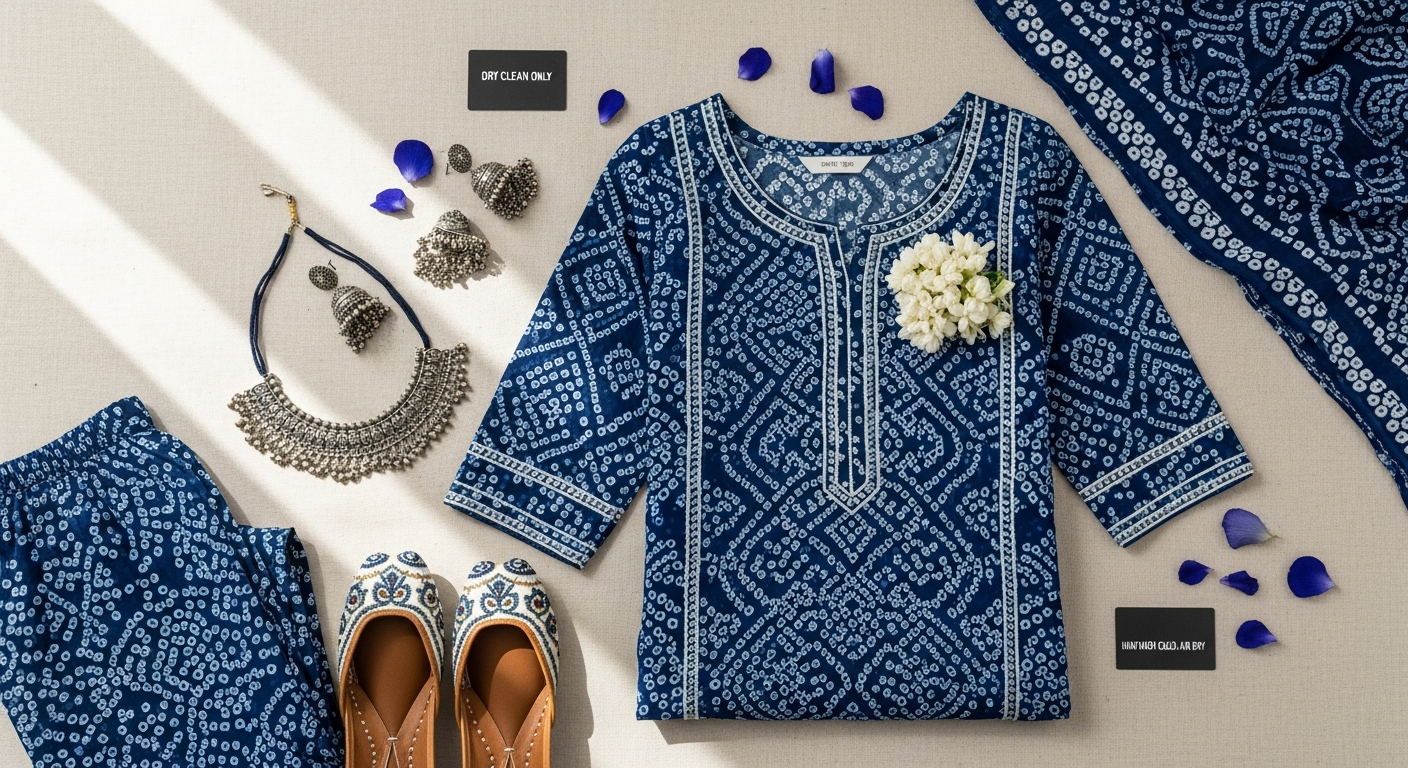
Over 60% of Indian ethnic wear shoppers struggle to find versatile pieces that work for both casual days and festive celebrations. The disconnect between occasion-specific clothing and everyday wearability has long plagued ethnic fashion, leaving many with closets full of pieces that sit unused between festivals. This gap in the market reveals a fundamental desire: authentic ethnic wear that adapts to real life, not just special events.
The Kalini Bandhani Printed Kurta Set with Sharara & Dupatta has emerged as a game-changer in the ethnic fashion space, combining centuries-old tie-dye tradition with contemporary wearability. What sets this ensemble apart is its ability to bridge the divide between heritage and modern comfort, allowing you to feel connected to traditional Indian craftsmanship while moving through your day with ease and confidence.
This comprehensive guide walks you through styling strategies for different seasons and occasions, fabric care techniques to keep your set vibrant for years, and why this ensemble is a smart investment for your wardrobe. By understanding the artistry, mastering multiple styling approaches, and learning proper maintenance, you’ll unlock the full potential of this versatile piece.
Explore the complete Kalini Bandhani collection and find your perfect set today.
Understanding Bandhani Artistry: What Makes This Print Timeless
The Origins of Bandhani Tie-Dye Technique
Bandhani, often called the art of tying and dyeing, traces its roots back centuries to the royal courts of Rajasthan and Gujarat. Artisans developed this labor-intensive technique as a way to create intricate, repeating patterns on fabric through strategic binding and resist-dyeing methods. The practice became so revered that it was reserved for nobility and the wealthy, signifying status and refined taste.
How Tie-and-Dye Creates Distinctive Patterns
The Bandhani process begins with carefully folding and tying portions of fabric with thread, creating barriers that resist dye penetration. When the bound fabric is immersed in dye baths, the tied sections remain undyed while surrounding areas absorb color, resulting in characteristic dot or geometric patterns. The tightness of each tie, the number of layers, and the placement determine the final design’s complexity and visual impact.
Regional Variations Across India
Different regions developed their own Bandhani signatures. Rajasthani Bandhani favors bold, saturated colors with dense dot patterns, while Gujarati interpretations often feature smaller, more delicate dots arranged in geometric formations. Sindhi Bandhani incorporates floral motifs, and Kathiyawadi styles showcase diamond-shaped patterns. Each regional variation tells a story of local aesthetics and cultural preferences that have remained largely unchanged for generations.
Why Bandhani Patterns Remain Timeless
The enduring appeal of Bandhani lies in its perfect balance between complexity and harmony. Despite changing fashion trends that embrace minimalism or bold graphics, the Bandhani print maintains its relevance because it feels both sophisticated and approachable. The pattern works across age groups and style preferences—it’s equally at home in a traditional household or a contemporary fashion-forward wardrobe. Its organic quality, with slight variations from piece to piece, gives each set individuality rather than mass-produced uniformity.
Fabric Quality and Comfort: Decoding Cotton vs. Blends
Pure Cotton Advantages
Pure cotton offers unmatched benefits for anyone wearing the Kalini Bandhani set regularly. Cotton’s natural fiber structure allows air circulation, making it exceptionally breathable—a critical feature in Indian climates where humidity and heat can be intense. The fabric’s absorbent properties wick moisture away from the skin, keeping you comfortable throughout the day. Additionally, pure cotton becomes softer with every wash, meaning your kurta set improves with age rather than deteriorating.
Durability ranks among cotton’s strongest selling points. Quality cotton fabrics withstand hundreds of washes without pilling or losing structural integrity. The fibers have natural elasticity that helps the garment maintain its shape, ensuring your investment lasts for years rather than months.
Cotton’s Suitability for Indian Climates
The choice of pure cotton for this kurta set isn’t arbitrary—it reflects decades of understanding what works in Indian weather conditions. Summer heat demands fabric that allows perspiration to evaporate quickly; cotton excels at this. During monsoon season, cotton’s quick-drying properties prevent that uncomfortable, clingy feeling that synthetic blends often create. Even in winter, a well-made cotton kurta provides adequate warmth through layering without the stuffiness of heavier materials.
Understanding Cotton-Blend Options
Some Kalini Bandhani sets incorporate cotton blends, mixing pure cotton with polyester or other synthetics. These blends typically reduce wrinkles and require less ironing—appealing to those seeking minimal maintenance. However, the trade-off matters: blended fabrics don’t breathe quite as effectively, may feel less soft against skin, and tend to retain more moisture in humid conditions. If you encounter a cotton-blend option, expect slightly different performance characteristics compared to pure cotton versions.
Thread Count and Its Relationship to Quality
Thread count—the number of threads woven per square inch—directly impacts fabric quality and longevity. Higher thread count means tighter weaving, resulting in fabric that resists pilling, holds color better, and maintains softness longer. For the Kalini Bandhani set, a thread count of 80-100 represents good quality, while 120+ indicates premium construction. When evaluating options on Distacart, checking thread count provides concrete data about the fabric’s durability and comfort level.
Shop premium Kalini Bandhani sets with verified fabric quality specifications.
The Three-Piece Advantage: Styling Flexibility Across Occasions
Kurta Silhouettes: Straight Cut vs. A-Line
The kurta’s cut fundamentally affects how the entire ensemble flatters your frame. Straight-cut kurtas hang vertically from shoulder to hem, creating a streamlined silhouette that works beautifully on pear-shaped or athletic figures. This style emphasizes vertical lines, making it an excellent choice if you prefer a more understated appearance or want to create the illusion of added height.
A-line kurtas gradually widen from shoulder to hem, creating a flowy, flattering shape that accommodates various body types gracefully. This silhouette works particularly well for apple-shaped bodies, as it skims over the midsection, or for anyone preferring a more relaxed, comfortable fit. The A-line style also moves beautifully, creating an elegant effect when walking.
Sharara Styling Techniques
The sharara—those wonderfully wide-legged pants gathered at the ankles—deserves more styling credit than it typically receives. For traditional occasions like weddings or religious ceremonies, pairing the sharara with gold jewelry, intricate bindis, and elaborate dupatta draping creates an unmistakably festive look. The sharara’s voluminous silhouette shines here, making bold statements without requiring additional layers.
For contemporary styling, tuck the kurta partially into the sharara waistband, creating dimension and a more fashion-forward appearance. Add sleek sneakers instead of traditional footwear, and suddenly your ethnic ensemble reads as modern fusion wear suitable for brunches or casual outings. This simple adjustment transforms the sharara from purely traditional to confidently contemporary.
Dupatta Draping Methods for Every Occasion
The dupatta offers remarkable versatility depending on how you style it. For festive events, drape it over both shoulders with one end cascading down the back—this classical approach emphasizes the embellishments and creates an air of formal elegance. For casual wear, drape it loosely around the neck like a stole, knotting the ends at your waist for a relaxed, modern interpretation. Some occasions call for half-dupatta styling, where you secure it at one shoulder and let it flow diagonally across the body—this approach works beautifully for both traditional and semi-formal events.
Creating Multiple Looks from a Single Set
The true power of this three-piece ensemble emerges when you recognize how many distinct outfits you can create. Wear the kurta-sharara combination as-is for one occasion, then pair just the kurta with regular jeans or palazzo pants for another day. Layer the dupatta as a shawl over the kurta when attending a casual gathering. Experiment with different jewelry, accessories, and footwear—each combination creates a different mood and aesthetic, effectively multiplying your wardrobe options without purchasing additional pieces.
Care and Maintenance: Preserving Your Bandhani Investment
Machine Wash vs. Dry Clean Methods
Most pure cotton Kalini Bandhani sets can handle machine washing without issue, making them more practical than delicate silk sets. However, if your particular set features significant Zari work (metallic embroidery) or embellishments, dry cleaning is advisable to protect these elements. Check your specific set’s care label—it provides guidance based on the actual fabric composition and decoration level.
For standard cotton sets, machine washing in a gentle cycle on cold water proves effective and convenient. Dry cleaning becomes necessary only if you notice stubborn stains or want to preserve pristine condition for special occasions.
Pre-Wash Preparation to Prevent Color Bleeding
Before the first wash, soak your new Bandhani set in cold water with a cup of white vinegar for 30 minutes. This step helps set the dyes and significantly reduces color bleeding in subsequent washes. Never mix your new kurta set with other garments during initial washes—if any color does bleed, you don’t want it transferring to other clothes.
Temperature Settings and Detergent Recommendations
Always use cold water for washing—heat accelerates dye fading and can cause colors to run. Select a mild, color-safe detergent specifically formulated for printed or dyed fabrics; avoid regular detergents with harsh chemicals or bleach. Use the minimum amount of detergent required; excessive soap residue can leave deposits that dull the vibrant Bandhani colors.
Drying Techniques That Maintain Fabric Integrity
Skip the dryer entirely—heat promotes both fading and shrinkage. Instead, remove the damp kurta set and reshape it slightly before hanging on a clothesline or drying rack in indirect sunlight. If you must dry indoors, ensure adequate air circulation. This gentler approach preserves the fabric’s structure, prevents shrinkage, and maintains color vibrancy far longer than machine drying would.
Seasonal Styling Strategies for Year-Round Wear
Summer Styling Leveraging Breathable Advantages
Cotton’s breathability becomes your greatest asset during scorching summer months. Keep styling minimal to maximize the fabric’s cooling effect—avoid heavy layering or multiple dupattas. Pair your Bandhani kurta with the sharara in lighter, brighter color combinations, as lighter shades absorb less heat than darker ones. Add minimal jewelry to reduce bulk and heat retention. White, cream, or pastel Bandhani sets become especially valuable during summer, offering both comfort and appropriate aesthetic for the season.
Monsoon Considerations for Fabric Care
High humidity during monsoon season accelerates moisture absorption in cotton. Store your kurta set in a cool, dry place with silica gel packets to absorb excess moisture and prevent mildew. When wearing during monsoon, select heavier cotton varieties if available, as lighter fabrics become transparent when damp. The dupatta gains additional importance during monsoon—use it to cover your kurta if caught in unexpected rain, protecting the garment from direct water exposure.
Winter Layering with Complementary Pieces
Cotton provides inadequate insulation during winter, making layering essential. Pair your Bandhani kurta with a fitted shawl, shrug, or jacket in complementary or contrasting colors. A heavy, embroidered dupatta layered with a woolen shawl creates substantial warmth while maintaining visual interest. Long cardigans or ethnic jackets work beautifully over the kurta, and you can remove these layers if moving between outdoors and heated indoor spaces.
Festival Season Styling with Jewelry and Accessories
Festival season demands elevation beyond the basic set. Select statement jewelry—chandelier earrings, layered necklaces, or ornate bangles—that coordinates with your Bandhani colors. Bindis, hair jewelry, and anklets complete the festive aesthetic. Consider a decorative dupatta with additional embroidery or contrasting fabric for occasions like weddings or Diwali celebrations. These additions transform your kurta set from everyday wear into celebration-ready attire without requiring a completely different outfit.
Styling for Different Body Types and Personal Aesthetics
Petite Frames and Proportional Styling
If you have a petite frame, selecting a kurta length that hits at mid-calf rather than full-length prevents the garment from overwhelming your proportions. A-line kurtas work better than straight cuts, as they create shape without adding bulk. Keep sharara gathering fairly tight at the ankles—loose, gathered fabric can visually shorten your legs. Avoid oversized jewelry and opt for scaled-down accessories. Drape the dupatta strategically to create vertical lines, which add perceived height.
Curvy Figures Leveraging Flattering Silhouettes
A-line kurtas are your best friend when styling a curvy figure. The gradual widening from shoulder to hem skims over the midsection without clinging, creating a fluid, elegant silhouette. Wide-legged sharara pairs perfectly with curves, as it balances proportions beautifully. Horizontal stripes or patterns within the Bandhani print can work well, contrary to common styling myths—the key is selecting designs that feel confident and comfortable on your body. Tuck the kurta partially into the sharara to define your waist and create dimension.
Tall Individuals Managing Proportions
Taller frames benefit from full-length kurtas that extend to the ankle, creating visual balance. Maxi-length versions work beautifully for very tall individuals. Pair with longer sharara lengths rather than cropped versions. The dupatta can be draped longer or with additional wrapping to add visual interest without shortening your frame. Larger jewelry pieces and bolder accessory choices suit taller frames better, as scaled-down pieces can appear delicate to the point of being overwhelmed.
Personal Color Analysis for Bandhani Palettes
Understanding your personal color season helps you select Bandhani palettes that genuinely flatter your complexion. Cool-toned skin typically glows with jewel tones—emerald, sapphire, ruby—or cool reds and blues. Warm-toned skin radiates with warm colors like saffron, burnt orange, warm reds, and golden yellows. Neutral undertones offer flexibility with both warm and cool palettes. Once you identify your color season, selecting Bandhani sets in complementary colors ensures every wear feels like your most flattering self.
Building a Cohesive Ethnic Wardrobe Around Kalini Bandhani Sets
Complementary Pieces That Extend Versatility
Building around your Kalini Bandhani set requires strategic additions. Ethnic trousers or palazzo pants in neutral colors extend the kurta’s versatility beyond the included sharara. A collection of dupattas in coordinating and contrasting colors multiplies outfit combinations dramatically. Ethnic jackets, shrugs, or shawls in complementary fabrics layer beautifully over the kurta for seasonal and occasion-based styling.
Jewelry Selection Across Traditional, Fusion, and Contemporary
Traditional jewelry—chandelier earrings, jhumkas, layered necklaces, and bangles—completes festive styling. Fusion pieces like delicate studs paired with traditional necklaces bridge traditional and contemporary aesthetics. Modern minimal jewelry in gold or silver provides understated elegance for casual wear. Building a jewelry collection that spans these categories allows you to adapt your Bandhani set to any occasion without purchasing multiple outfits.
Investing in Multiple Kalini Sets with Varied Color Palettes
One Bandhani set transforms your styling options; multiple sets revolutionize your wardrobe. Investing in two or three sets in different color families—perhaps ruby red, emerald green, and peacock blue—ensures you have appropriate options for various seasons and occasions. Different colors photograph differently, making your Instagram presence more dynamic. You’ll also rotate wear, extending the lifespan of each set through reduced frequency of washing.
Creating Themed Outfits for Life Events
With multiple Bandhani sets and complementary pieces, you can curate themed outfits for specific events. A wedding celebration might feature your jewel-toned Bandhani set with statement jewelry and elaborate dupatta draping. A casual family gathering calls for lighter colors with minimal accessories. Festive seasons can showcase your brightest, most vibrant sets. This approach ensures you feel appropriately dressed for various occasions while maintaining a cohesive aesthetic throughout your wardrobe.
Shopping Smart on Distacart and Avoiding Common Pitfalls
Navigating Product Listings and Fabric Type Filtering
Distacart’s interface allows filtering by fabric type—use this feature to identify pure cotton versus blended options. Read the detailed product description carefully; reputable listings specify thread count, exact fabric composition, and embellishment types. Look for product specifications sections that break down these details clearly rather than relying solely on images or titles.
Reading Customer Reviews for Authenticity
Customer reviews provide invaluable insights into actual fabric composition and fit accuracy. Reviewers often mention discrepancies between descriptions and reality—if multiple customers note that a “pure cotton” set feels synthetic, that’s meaningful feedback. Look for reviews mentioning specific details like fabric weight, opacity, and color accuracy. Photos uploaded by customers offer the most honest representation of how the set appears when received.
Understanding Size Charts and Fit Variations
Distacart provides detailed size charts, but fit varies across different Kalini designs and production batches. A size M in one design might fit differently than an M in another. Read reviews from customers mentioning whether the set ran large, small, or true-to-size. Don’t hesitate to contact customer service with specific questions about fit for your body type—they can often provide personalized recommendations based on their inventory.
Identifying Genuine Kalini Products
Distacart carries authentic Kalini products, but when comparing prices or considering alternatives, verify authenticity carefully. Genuine Kalini sets feature consistent quality, proper stitching, and accurate color representation. Suspiciously low prices, vague product descriptions, or sellers with minimal reviews indicate potential counterfeit products. Stick with established marketplaces and sellers with substantial positive feedback to ensure you’re purchasing legitimate merchandise.
Making Your Kalini Bandhani Kurta Set Work Harder in Your Wardrobe
The Kalini Bandhani Printed Kurta Set stands as far more than a single-occasion outfit—it’s a strategic wardrobe investment that rewards thoughtful styling and proper care. The artistry embedded in each hand-tied dot, the comfort provided by quality cotton, and the versatility offered by the three-piece construction combine to create a piece that earns its place in your everyday rotation.
From understanding the centuries-old Bandhani technique to mastering seasonal adaptations and fabric maintenance, you now possess the knowledge to transform this versatile ensemble into multiple outfits serving you across the entire year. Each styling approach, from summer’s minimal layers to winter’s creative combinations, extends the value of your investment. Proper care ensures your Bandhani colors remain vibrant and your fabric maintains its soft, breathable quality through countless wears.
The combination of cultural authenticity, comfort-first fabric choices, and accessible pricing makes this set an intelligent choice for anyone serious about building a functional, beautiful ethnic wardrobe. You’re not simply purchasing clothing; you’re acquiring a piece of Indian textile heritage that adapts to your modern life. Start with one set that genuinely speaks to your personal aesthetic, master the straightforward care routine, and watch as it becomes the foundation piece that elevates your entire ethnic fashion game.
Begin your Kalini Bandhani journey with Distacart’s curated collection and expert selection.
Leave a Reply