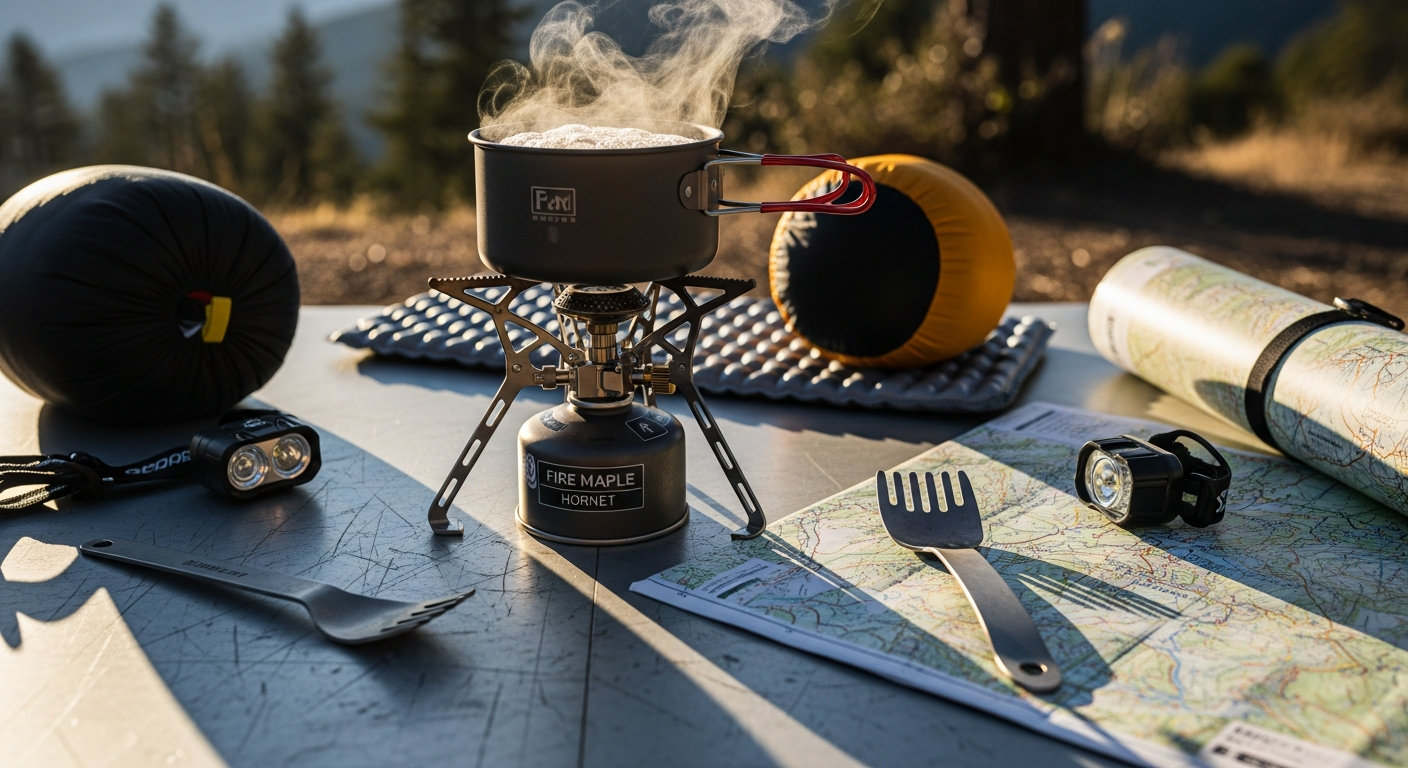
When every ounce matters, choosing the right gear separates a memorable trek from a grueling endurance test. Ultralight backpackers obsess over gram counts—and for good reason. Shaving just a few ounces from your pack can mean the difference between enjoying your trek and dragging yourself to camp. That’s where the Fire Maple FMS-300T Hornet enters the conversation: a stove so compact it fits inside a lipstick tube, yet powerful enough to boil water faster than many full-size alternatives.
For over a decade, the FMS-300T has earned its reputation as one of the most beloved ultralight cooking systems on the market. With tens of thousands of units sold and an ISPO Design Award Gold Winner accolade under its belt, this titanium-built stove has proven itself across countless wilderness adventures. It’s not just popular—it’s the benchmark against which other ultralight stoves are measured. The numbers tell a compelling story: 45 grams of pure engineering, 2800W of heat output, and a footprint smaller than a tube of lipstick when folded.
This guide breaks down exactly what makes the Hornet such a game-changer for gram-conscious adventurers. You’ll discover its impressive specifications, understand real-world performance scenarios, weigh the strengths and limitations honestly, and determine whether this stove deserves a spot in your pack.
Check the current price and availability of the Fire Maple FMS-300T on trusted outdoor retailers.
Extreme Portability Meets Durable Engineering
The FMS-300T achieves something remarkable: it obliterates conventional assumptions about lightweight stoves. At 45 grams (1.6 oz), it ranks among the lightest canister stoves available. This isn’t achieved through cheap construction shortcuts. Instead, Fire Maple engineered the stove using titanium for the body, combined with brass, hard anodized aluminum, and stainless steel components. The result is equipment that feels substantial and built to last, despite weighing nearly nothing.
Featherweight Design Without Compromise
The titanium construction delivers durability without excess mass. Over a decade of sales—tens of thousands of units worldwide—validates this engineering approach. Users consistently report that the build quality surpasses other ultralight alternatives at similar price points. The foldable pot supports provide stability when deployed, yet add negligible weight when stowed.
Nested Storage Capability
When folded to 37 x 52 mm dimensions, the Hornet becomes remarkably compact. It literally tucks inside your cookpot alongside a fuel canister, eliminating the need for additional pack space. This nesting capability transforms how you organize your cooking system, consolidating multiple components into one efficient package. The ISPO Design Award Gold Winner recognition acknowledges this thoughtful engineering approach.
Cooking Performance in the Field
Specifications matter only if they translate to real-world results. The FMS-300T delivers 2800W (9500 BTU) of heating power from its minimal footprint. In testing conditions, it brings 1 liter of water to a rolling boil in approximately 3 minutes 50 seconds. That’s genuinely impressive for equipment that weighs less than a lighter.
Heat Distribution and Flame Characteristics
The wide-spread flame pattern is intentionally designed for efficient heat distribution. However, the effectiveness depends on matching the stove with appropriately-sized cookware. Smaller pots align perfectly with the flame’s spread, achieving optimal heating. Larger cookware may experience uneven heat distribution—a trade-off inherent to the stove’s compact design.
Fuel Compatibility and Control
The FMS-300T works with all standard threaded isobutane-propane canisters (EN417), ensuring fuel accessibility along most trails. A wire adjustment mechanism allows flame modulation, though the small control can prove challenging when wearing bulky gloves. Despite this minor limitation, the flame control system works reliably once you develop a feel for its operation.
Real-World Advantages for Backpackers
The Hornet’s enduring popularity stems from several intersecting strengths. Gram-conscious adventurers—particularly thru-hikers and ultralight enthusiasts—recognize that this stove delivers functionality without excess weight. The superior build quality compared to competing ultralight options justifies its cost, offering exceptional value within the ultralight stove category.
Portability and Pack Organization
The nesting capability alone transforms how you organize your cooking system. Your stove, pot, fuel, and lighter compress into a single unified package. This approach reduces overall pack volume and eliminates the typical scattered arrangement of cooking gear. For thru-hikers tracking every ounce and cubic inch, this advantage proves invaluable.
Reliability and User Retention
Tens of thousands of units sold worldwide, with strong user retention and repeat purchases, reflects genuine satisfaction. Backpackers vote with their equipment choices—and they keep choosing the Hornet. This consistent purchasing pattern reveals something more meaningful than marketing appeal: proven reliability across diverse trail conditions and user skill levels.
Quick Meal Preparation
The ability to prepare hot meals quickly matters more on the trail than casual users realize. A stove that boils water in under four minutes means faster rehydration of meals, faster morning coffee, and faster camp setup. For exhausted hikers wanting to rest rather than tend to cooking, this efficiency translates directly to improved trail experience. Explore the Fire Maple FMS-300T and compare with other ultralight options.
Limitations and Honest Trade-Offs
No stove excels universally, and the Hornet is no exception. Its compact design inherently creates trade-offs worth acknowledging before purchase.
Flame Footprint and Pot Compatibility
The narrow flame concentrates heat in a smaller area. This works beautifully with appropriately-sized cookware but struggles with larger pots. If you anticipate cooking for groups or using standard-size camp cookware, the Hornet may not distribute heat efficiently enough for your needs.
Operational Noise and Wind Sensitivity
The stove operates noticeably louder when running at full power. Some users describe it as a hissing roar—not ideal for quiet camp environments. Additionally, canister-top stoves by design expose the flame to wind. While the Hornet’s wide-spread flame provides some wind resistance, significant gusts still affect performance. A simple windscreen mitigates this issue but adds minimal weight.
Cold Weather and Glove Operation Challenges
Pressurized fuel canisters struggle in sub-freezing temperatures. The Hornet isn’t ideally suited for winter expeditions without additional considerations like fuel canister insulation. Similarly, the small wire control becomes difficult to manipulate while wearing thick winter gloves. These limitations don’t make the stove unusable in cold conditions—they simply demand workarounds.
Flame Adjustment Precision
Achieving consistent, fine-tuned heat control requires practice. The wire adjustment mechanism feels imprecise compared to larger stoves with conventional knobs. Newcomers often struggle initially to find the ideal flame level, though experience resolves this quickly.
Choosing the Right Ultralight Stove Setup
The Hornet fits certain backpacking profiles perfectly while disappointing others. Identifying where you fall in that spectrum determines whether this stove suits your needs.
Assessing Your Cooking Needs
Start by defining priorities. Do you prioritize raw speed? Meal complexity and cooking flexibility? Or absolute minimal weight? The Hornet excels at speed and weight but sacrifices some cooking flexibility. Understanding your cooking philosophy guides the evaluation process.
Pot and System Compatibility
Match the Hornet’s design with lightweight cookware under 200 grams. Titanium or aluminum pots in the 500ml to 750ml range work optimally. Your total cooking setup—stove plus pot plus fuel canister—can remain under 300 grams, achieving genuine ultralight efficiency.
Terrain and Climate Considerations
Evaluate your typical hiking conditions. Wind exposure, altitude, and seasonal variations all affect stove performance. Three-season use represents the Hornet’s sweet spot. Winter expeditions demand alternative solutions. High-altitude cooking where boil times increase significantly still favors the Hornet’s powerful output.
Testing Before Commitment
Before relying on the Hornet for multi-day adventures, test it on day hikes or car camping trips. Familiarize yourself with its operation, flame control, and compatibility with your cookware. This hands-on experience prevents surprises on the trail.
The Hornet’s Place in Your Ultralight Kitchen
Successfully deploying the FMS-300T requires thoughtful system design, not just purchasing the stove itself.
System Integration and Weight Calculation
Standard EN417 fuel canisters range from 100 grams (100ml) to 450 grams (450ml) depending on capacity. Pair a 110ml canister with a 150-gram titanium pot and the 45-gram stove. Your entire cooking system—sufficient for multi-day trips—weighs under 300 grams. Compare that to traditional camp stoves and the weight advantage becomes staggering.
Nesting Efficiency and Organization
Store your fuel canister, stove, lighter, and even seasoning inside your cookpot. This consolidated arrangement maximizes pack efficiency and simplifies organization. Many ultralight hikers also carry a backup stove or fuel source for reliability, though the Hornet’s proven track record makes this feel more like insurance than necessity.
Maintenance and Longevity
The Hornet requires minimal upkeep. Occasional cleaning prevents carbon buildup around the burner ports. With proper care, users report years of reliable performance across multiple seasons. The titanium construction resists corrosion, and the simple design has few components to fail.
The Verdict: Is the Fire Maple FMS-300T Right for You?
The Fire Maple FMS-300T Hornet has earned its legendary status through a simple formula: ruthless weight reduction without sacrificing essential performance. At 45 grams, it challenges the assumption that ultralight means compromised functionality. The titanium construction, award-winning design, and proven reliability across thousands of adventures speak volumes about its engineering.
That said, this stove demands intentional pairing and realistic expectations. It thrives with smaller pots, performs best in mild-to-moderate weather, and rewards users who’ve thought through their cooking strategy. If you’re planning group meals, winter expeditions, or large-pot cooking, look elsewhere. But if you’re a gram-conscious adventurer who values quick hot meals and minimal pack weight, the Hornet delivers exceptional value and proven performance.
The real question isn’t whether the FMS-300T is good—it clearly is. The question is whether its specific strengths align with your trail priorities. For ultralight backpackers, thru-hikers, and minimalist adventurers, the answer almost always is yes. Get your Fire Maple FMS-300T Hornet stove today and start shaving weight from your pack.
Leave a Reply