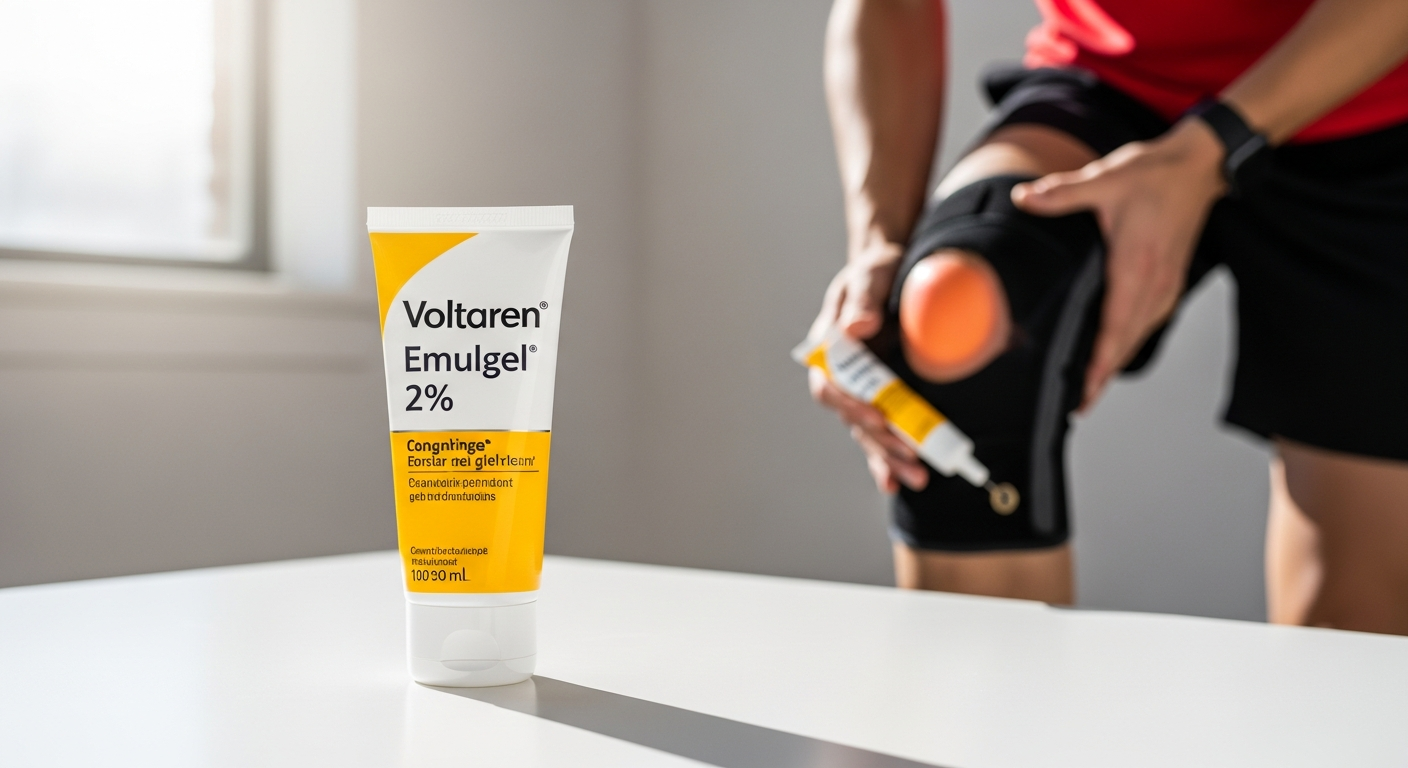
Every year, millions of active individuals and athletes lose valuable training days to muscle strains, joint inflammation, and sports-related injuries. The frustration of sidelined workouts and delayed recovery can derail fitness goals faster than any setback. When you're committed to your training, even minor injuries feel like major obstacles standing between you and your potential.
Voltaren Emulgel 2% represents a significant shift in how athletes and fitness enthusiasts approach localized pain management. This topical diclofenac gel harnesses a 2% concentration of diclofenac diethylammonium—double the strength of standard formulations—delivering anti-inflammatory action precisely where you need it. Unlike oral NSAIDs that circulate through your entire system, this gel penetrates directly into affected tissues, offering relief that lasts up to 12 hours with minimal systemic exposure.
Why Athletes Choose Voltaren Emulgel 2% Over Standard Pain Relief
The difference between a 1% and 2% diclofenac formulation goes far beyond a simple percentage increase. The higher concentration delivers measurably deeper tissue penetration, reaching muscles, tendons, ligaments, and joint structures that standard formulations barely touch. When you're dealing with a rotator cuff issue or chronic knee inflammation, surface-level relief simply isn't enough.
The 2% formulation works faster than you'd expect from a topical treatment. Many athletes report meaningful relief within minutes of application, compared to the hour or more required for oral NSAIDs to enter your bloodstream and reach the affected area. This speed matters when you're trying to assess whether an injury requires rest or can be managed through modified training.
The 12-hour duration advantage transforms your recovery strategy. With oral tablets requiring doses every six to eight hours, you're managing medication schedules around your training and sleep. Voltaren Emulgel 2% cuts your application frequency in half, meaning you apply it twice daily instead of juggling multiple pills. For athletes managing intense training blocks, this convenience translates to better compliance and more consistent inflammation control.
Targeted action at the inflammation source represents a fundamental advantage. The gel reaches the exact tissues causing pain and swelling without circulating through your digestive system. This localized approach eliminates the gastric irritation that makes oral NSAIDs problematic for regular users. The oleic alcohol excipient in the formulation acts as a penetration enhancer, essentially carving a pathway for diclofenac to reach deeper structures.
Professional athletes and trainers consistently recommend topical application for acute injuries precisely because of these advantages. The bioavailability through topical delivery means more of the active ingredient reaches the target tissue compared to systemic circulation models. Your stomach remains unaffected, your liver processes minimal drug load, and your joints get direct relief.
Targeted Application for Common Sports Injuries and Recovery
Acute muscle strains demand immediate intervention. The optimal window for applying Voltaren Emulgel 2% is within the first few hours after injury, when inflammation is initiating but hasn't yet become deeply established. Apply the gel to the strained area, gently massage it in using circular motions, and then allow it to penetrate for approximately 15 minutes before activity. During recovery phases, apply twice daily—once in the morning and once in the evening—to maintain anti-inflammatory control as the muscle heals.
Tendon and ligament inflammation responds exceptionally well to targeted topical treatment. Rotator cuff issues, Achilles tendinitis, and tennis elbow all benefit from the gel's ability to penetrate tendon sheaths and reduce the inflammatory cascade at the source. For rotator cuff concerns, apply the gel across the back of the shoulder and upper arm, then support the area with gentle shoulder mobility work rather than aggressive strengthening. Achilles tendinitis demands application along the entire calf and ankle complex, addressing inflammation both in the tendon itself and in the surrounding fascial tissues.
Joint pain management during training represents where Voltaren Emulgel 2% truly excels. Knees, ankles, shoulders, and wrists all benefit from consistent application before and after training sessions. For knee pain, apply across the front, sides, and back of the joint, then wait for absorption before training. Ankle issues require coverage of the entire ankle complex, including the achilles insertion. Shoulder work demands application across the full shoulder girdle, not just the front where pain is felt. Wrists, often overlooked in recovery protocols, respond quickly to targeted gel application, especially for athletes managing repetitive gripping or overhead activities.
Lower back and lumbar pain affects weightlifters, runners, and endurance athletes with equal frequency. Apply the gel across the lower back, covering the lumbar spine region and extending slightly across the sides toward the hip flexors. For weightlifters specifically, applying the gel before heavy lifting sessions helps stabilize inflammation during training, while post-workout application accelerates the reduction of movement-induced swelling. Endurance athletes running high mileage benefit from twice-daily application to manage cumulative spinal stress.
Post-workout inflammation represents an ideal application window. Rather than waiting until pain becomes noticeable, proactive athletes apply Voltaren Emulgel 2% immediately after intense sessions when inflammation is being triggered but pain hasn't peaked. This front-loads anti-inflammatory action, reducing the inflammatory cascade before it becomes established. This approach accelerates recovery between training sessions and keeps minor inflammation from snowballing into injury.
Chronic overuse injuries require consistent, long-term management. Unlike acute injuries where you apply the gel for one to two weeks, chronic conditions like repetitive strain tendinitis or degenerative joint changes benefit from indefinite twice-daily application. Many athletes managing chronic conditions report that consistent use prevents flare-ups that would otherwise force training modifications or rest days.
Pre-competition pain control demands strategic timing. Apply the gel 30 to 60 minutes before competition or hard efforts, allowing complete absorption before performance. This window ensures maximum anti-inflammatory effect without any wet residue or absorption time interfering with your focus. The 12-hour duration means the anti-inflammatory benefit carries through your event and into immediate recovery.
Cross-training support keeps you active while managing minor injuries. If an ankle twist or shoulder strain would normally sideline you completely, Voltaren Emulgel 2% combined with modified training allows you to maintain fitness while protecting the injured area. Apply the gel, then train around the injury—running when an arm hurts, cycling when an ankle is tender, swimming when lower body pain restricts other activities.
Proper Application Technique and Dosage Guidelines
The recommended dosage of 2-4 grams per application per affected area provides the optimal balance between efficacy and safety. A gram of gel roughly equates to the size of a pea—so 2-4 grams represents a small amount concentrated on the specific painful area. More isn't better; exceeding this dosage increases side effect risk without improving penetration or duration.
Frequency remains capped at two applications daily, separated by at least 8 to 12 hours. Morning and evening applications align naturally with daily routines and maintain consistent anti-inflammatory levels. Exceeding twice-daily application doesn't accelerate healing and increases the risk of local skin reactions.
Application technique varies slightly by body area. For joint pain, apply in small circles around the entire joint—not just the front or back. For muscle strains, apply along the length of the muscle belly, using gentle pressure to work the gel into the tissue. For tendon inflammation, apply along the tendon insertion and surrounding fascia, allowing the gel to penetrate the dense tissue structure. The key principle: use firm but gentle circular motions that enhance absorption without creating irritation through aggressive rubbing.
Absorption time typically ranges from 15 to 30 minutes, depending on body composition and skin condition. You can feel the gel beginning to work as it penetrates—the initial cooling sensation fades as the product absorbs completely. Full penetration to deeper tissues takes longer, which is why the anti-inflammatory effect builds over the first hour after application rather than appearing instantly.
Skin preparation ensures maximum efficacy. Clean the affected area thoroughly and dry completely before applying the gel. Wet or damp skin impairs absorption and creates a barrier between the gel and skin surface. If you've just finished training, allow a few minutes for sweat to dry before application. If you're applying in the shower, dry the area completely before stepping out.
Massage techniques matter for penetration enhancement. Use gentle circular motions covering a slightly larger area than the actual pain location—pain radiates from the injury site, so you want to address the entire affected region. Small, firm circles work better than large, broad strokes. Spend 30 to 60 seconds massaging the gel into each area, then allow it to fully absorb before washing hands or covering with clothing.
Layering considerations come into play when you're combining Voltaren Emulgel 2% with other recovery tools. If you're applying compression wraps or sleeves, wait for the gel to fully absorb (15-30 minutes) before adding the compression layer. Heat packs can be applied directly over the gel without issue. Other topical products like muscle rubs or additional creams should be applied to different areas rather than layered over the gel, as mixing products can impair absorption.
Treatment duration depends on injury type and severity. Acute injuries typically improve within one to two weeks of consistent twice-daily application. Chronic conditions benefit from ongoing use, sometimes indefinitely, to maintain inflammation control. If pain isn't improving after two to three weeks of consistent application, reassess whether the injury requires professional medical evaluation rather than topical management.
The Science Behind 2% Diclofenac Concentration
Diclofenac diethylammonium is a non-steroidal anti-inflammatory drug (NSAID) engineered specifically for topical application. Unlike oral NSAIDs that must be absorbed through the digestive system and processed by the liver, diclofenac in gel form penetrates skin directly to reach inflamed tissues. The diethylammonium salt formulation enhances absorption through the skin barrier, making it dramatically more effective as a topical agent than other NSAID formulations.
The anti-inflammatory mechanism works by blocking prostaglandin production at the tissue level. Prostaglandins are hormone-like substances that trigger inflammation, pain signaling, and swelling. When diclofenac inhibits the enzymes responsible for prostaglandin synthesis, inflammation doesn't escalate as it normally would. This action occurs directly in the tissues where pain originates, not systemically throughout your body.
Oleic alcohol serves as the critical penetration enhancer in the formulation. This excipient modifies skin barrier properties, allowing diclofenac molecules to penetrate deeper into muscle and joint structures. Without oleic alcohol, diclofenac would remain trapped in superficial skin layers. With it, the drug reaches tendons, deep muscle tissue, and joint capsules where the most significant inflammation occurs in athletic injuries.
Bioavailability comparison reveals why 2% outperforms lower concentrations for serious athletic injuries. A 1% formulation delivers adequate relief for minor aches and surface-level inflammation. The 2% concentration doubles the available diclofenac at the tissue level, allowing it to address deeper inflammation that 1% simply can't reach. For athletes training hard, this difference translates to superior pain control and faster inflammation resolution.
Systemic exposure from topical application remains minimal compared to oral NSAIDs. Blood concentration of diclofenac after topical application typically reaches only 10-15% of what you'd see from an oral dose. Your liver and kidneys process far less drug, your stomach remains unaffected, and systemic side effects become dramatically less likely. This makes Voltaren Emulgel 2% suitable for longer-term use than oral NSAIDs, which carry cumulative systemic risks with extended use.
Relief duration extends to 12 hours based on how the 2% concentration maintains therapeutic levels in affected tissues. Initial penetration and inflammation reduction occur within minutes, but the sustained anti-inflammatory effect throughout the 12-hour window comes from the higher diclofenac concentration maintaining therapeutic levels even as some drug is absorbed systemically or metabolized locally. This is why 2% lasts significantly longer than 1% formulations.
Interaction with muscle and joint tissue reveals the specificity of topical NSAID action. Diclofenac doesn't just sit on the skin surface—it penetrates into synovial fluid in joints, into muscle fasciae surrounding muscles, and into tendon sheaths. This direct tissue contact means the anti-inflammatory effect targets exactly where damage and inflammation are occurring, not distant areas of your body that don't need treatment.
Clinical evidence supporting efficacy comes from multiple athletic and medical studies. Research consistently demonstrates that 2% diclofenac gel provides superior pain relief and faster inflammation resolution compared to 1% formulations for muscle strains, joint sprains, and ligament injuries. Studies tracking professional athletes show measurably faster return to full training with topical diclofenac support compared to ice and rest alone.
Safety Considerations and Contraindications for Active Users
Skin sensitivity assessment should precede regular use. If you have a history of sensitive skin, eczema, dermatitis, or reactions to topical products, test the gel on a small area first. Apply a small amount to the inside of your wrist or a non-critical body area, wait 24 hours, and monitor for any redness, itching, or swelling. This approach prevents larger-area reactions while allowing you to assess your individual tolerance.
Common side effects include localized skin reactions at the application site. Dermatitis, rash, erythema (redness), and pruritus (itching) represent the most frequent effects, though they typically resolve quickly when application stops. These effects rarely prevent continued use—most athletes simply apply the gel to slightly different areas or reduce application frequency rather than discontinuing entirely. If a rash develops, cleanse the area thoroughly and allow skin to recover for 24 hours before reapplying.
Rare but serious reactions demand awareness, even though they occur infrequently. Bullous dermatitis (blistering) and photosensitivity reactions represent the most serious potential effects. If you develop blistering at the application site, stop use immediately and consult a healthcare provider. Photosensitivity reactions occur when sun exposure follows gel application—this is exceptionally rare with topical diclofenac, but avoiding excessive sun exposure on treated areas provides a reasonable precaution.
NSAID hypersensitivity screening is essential before using any diclofenac product. If you've previously experienced allergic reactions to NSAIDs (ibuprofen, naproxen, aspirin, etc.), diclofenac likely poses the same risk. Even though the gel is applied topically rather than ingested, systemic absorption still occurs, meaning hypersensitivity reactions remain possible. Consult your healthcare provider before use if you have any NSAID allergy history.
Asthma, angioedema, and urticaria triggered by aspirin or NSAIDs represent important contraindications. Some individuals experience cross-reactivity between aspirin and other NSAIDs, including topical diclofenac. If aspirin has ever triggered asthma attacks or allergic reactions, avoid Voltaren Emulgel 2% without medical clearance. This reaction pattern indicates a fundamental NSAID sensitivity that applies across all formulations and delivery routes.
Age restrictions limit use to individuals 18 years and older. The product isn't approved for use in minors, making it unsuitable for youth athletes or younger active individuals. Teenagers and children require different dosing considerations and safety profiles that Voltaren Emulgel 2% wasn't designed to address.
Pregnancy and breastfeeding demand medical consultation before use. NSAIDs carry potential risks to fetal development, particularly in the third trimester, making topical diclofenac inappropriate during pregnancy without explicit medical approval. Breastfeeding mothers should also consult healthcare providers, as some diclofenac absorption occurs systemically and could potentially transfer into breast milk, though the amount is generally minimal with topical application.
Drug interactions require consideration if you're taking other medications. While topical diclofenac has fewer interactions than oral NSAIDs, it can still interact with blood thinners, certain blood pressure medications, and some other systemically-acting drugs. Inform your healthcare provider about regular Voltaren Emulgel 2% use, particularly if you're on prescription medications.
Voltaren Emulgel 2% vs. Alternative Pain Management Solutions
The comparison with 1% diclofenac gels reveals dramatic penetration depth and duration differences. While 1% products work for surface inflammation and minor discomfort, the 2% concentration reaches deeper structures that serious athletes injure. A runner with knee pain might find 1% adequate, but a weightlifter with deep shoulder strain will find 2% noticeably superior. Duration also differs—1% typically provides 6-8 hours of relief, while 2% sustains effects for the full 12 hours.
Topical versus oral NSAIDs presents a stark contrast for athletic users. Oral ibuprofen or naproxen circulate throughout your entire body, affecting your stomach, liver, and kidneys while theoretically treating your ankle. Extended use of oral NSAIDs carries cardiovascular risks and gastrointestinal damage potential that topical application avoids. For athletes managing chronic minor injuries during intensive training blocks, topical application represents a fundamentally safer approach.
Voltaren Emulgel 2% versus heat and ice therapy addresses different injury mechanisms. Ice reduces acute inflammation immediately after injury, making it the correct first response to fresh trauma. Heat relaxes muscle tension and improves circulation in chronic conditions. The gel works alongside both—apply ice immediately after acute injury, then transition to the gel once initial swelling subsides. For chronic conditions, the gel provides continuous anti-inflammatory effect that occasional heat therapy can't match.
Gel formulations versus creams and patches show important practical differences. Creams tend toward thicker, greasier consistency that lingers on skin. Patches deliver fixed drug amounts over set periods, limiting flexibility for different injury severities. Gels penetrate quickly, absorb cleanly, and allow precise dosing per application. For athletes who train multiple times daily or work in professional settings where appearance matters, the gel formulation offers clear advantages.
Cost-effectiveness at €12.90–€19.30 per 100g tube compares favorably to most topical competitors. A 100g tube typically provides 25-50 applications depending on area size and dosage, working out to roughly €0.26-€0.77 per application. Compared to physical therapy costs, prescription medications, or performance loss from inadequately managed injuries, the gel's cost becomes negligible.
Brand reputation positions Voltaren as the market leader in topical anti-inflammatories for good reason. Decades of research, clinical validation, and athlete endorsements support the product's efficacy. Competing topical NSAIDs exist, but Voltaren's formulation and concentration have proven superior in direct comparisons. When recovery directly impacts your performance and training goals, the most proven option deserves preference.
Efficacy for chronic conditions reveals a key advantage over temporary solutions. Ice and rest work for acute injuries but do nothing for chronic inflammation management. Ongoing training with chronic joint issues requires consistent anti-inflammatory support—this is precisely where the gel excels. Rather than managing pain with acetaminophen or suffering through reduced training, consistent Voltaren Emulgel 2% use allows near-normal training load with managed inflammation.
Integration into comprehensive recovery protocols means treating the gel as one tool among many. Combined with physical therapy, targeted strengthening, adequate sleep, proper nutrition, and strategic rest days, the gel accelerates recovery and enables higher training consistency. Alone, it manages symptoms effectively but can't address underlying structural damage. As part of a complete program, it becomes a performance multiplier.
Real-World Performance: What Athletes Report
Runners consistently report relief for shin splints, ankle inflammation, and knee pain—the trinity of running injuries. Shin splints, particularly stubborn anterior tibial pain, respond rapidly to consistent gel application combined with modified running mechanics. Ankle inflammation from previous sprains or chronic instability improves noticeably within 2-3 days of twice-daily application. Knee pain, whether patellar tracking issues or meniscal inflammation, shows measurable improvement that allows return to higher mileage faster than rest alone.
Weightlifters managing shoulder, elbow, and lower back strain represent a significant user base for good reason. The overhead demands of strength training trigger tendinitis and joint inflammation that topical NSAIDs address extremely effectively. Shoulder impingement, a chronic concern for serious lifters, improves substantially with consistent gel application combined with proper shoulder mechanics. Elbow pain from pressing and pulling movements typically resolves within one to two weeks. Lower back strain from heavy deadlifting and squats responds particularly well to the gel's ability to penetrate deep spinal and paraspinal tissues.
Endurance athletes using Emulgel 2% during multi-week training blocks report maintaining training intensity despite cumulative tissue stress. Rather than tissue damage snowballing into forced rest, consistent anti-inflammatory management keeps inflammation contained. Cyclists specifically praise the gel's effectiveness for knee and hip pain during high-mileage training blocks, allowing them to maintain weekly distances that would otherwise require cutback weeks.
Weekend warriors—recreational athletes training seriously but not professionally—report quick recovery solutions that keep them active week to week. The athlete who runs hard Saturday morning, plays recreational soccer Sunday afternoon, and needs to be functional at work Monday morning benefits tremendously from the gel's rapid action and sustained relief. What might otherwise force a week of modified activity becomes a two-day situation managed with consistent gel application.
CrossFit and functional fitness athletes using the gel manage joint stress from constantly varied movement patterns. The unpredictable nature of functional fitness training creates novel stress patterns that joints and tissues weren't specifically adapted for. This triggers inflammation across multiple body regions simultaneously. The gel's targeted application allows athletes to address specific irritated areas while maintaining full training capacity.
Cycling communities widely integrate Voltaren Emulgel 2% into training protocols. The repetitive knee flexion and hip stress of cycling triggers specific inflammation patterns. Knee pain from cadence issues or bike fit problems responds quickly to the gel. Hip pain and IT band inflammation, common in cyclists pushing higher mileage, improve substantially with consistent application. Cycling's relatively low-impact nature makes it ideal for training around injuries—the gel manages inflammation while cyclists maintain fitness.
Recovery timeline reports consistently show 2-3 days to noticeable improvement and 1-2 weeks to substantial relief for most acute injuries. The timeframe varies based on injury severity—minor inflammation improves faster, while significant tissue damage requires longer. Chronic conditions improve gradually over weeks, with many athletes finding ongoing twice-daily application necessary to prevent flare-ups.
Comparative feedback reveals why users prefer Voltaren Emulgel 2% over competing brands. Superior penetration compared to other topical gels, faster onset than patches, and cleaner absorption than creams emerge as consistent advantages. The brand's reputation and proven efficacy inspire confidence that lesser-known alternatives can't match. Athletes serious about performance and recovery choose Voltaren because the results justify the choice.
Building a Complete Athletic Recovery Toolkit
Voltaren Emulgel 2% functions as one critical component within broader injury prevention strategies. The gel manages inflammation effectively, but injury prevention fundamentally depends on proper training progression, adequate recovery between sessions, and consistent mobility work. Building these foundational practices prevents injuries from developing in the first place, making the gel a backup tool rather than a primary prevention strategy.
Complementary therapies amplify the gel's effectiveness dramatically. Stretching and mobility work address tissue restrictions that contribute to inflammation. While the gel reduces inflammatory pain, targeted stretching prevents the same structures from tightening and re-injuring. Athletes who combine consistent gel application with deliberate mobility work recover faster than those using the gel alone.
Timing considerations matter significantly. Apply the gel 15-30 minutes before training to establish anti-inflammatory effect before creating workout-induced inflammation. Post-workout application during the inflammation window (within 1-2 hours after training) front-loads inflammation management. Evening application maintains anti-inflammatory effect overnight, supporting tissue repair during sleep. This strategic timing maximizes the gel's effectiveness across your entire recovery cycle.
Integration with compression therapy combines two complementary approaches. The gel reduces inflammation; compression prevents swelling accumulation. Applying the gel, waiting for absorption (15-30 minutes), then adding compression wraps or sleeves maximizes both benefits. The compression layer helps drive the gel deeper into tissues while preventing re-swelling that would otherwise occur during and after training.
Nutrition and hydration support inflammation reduction through dietary choices. Omega-3 fatty acids, tart cherry juice, turmeric, and ginger all possess mild anti-inflammatory properties that complement the gel's action. Adequate hydration supports systemic inflammation management and tissue repair. While nutrition alone won't replace topical anti-inflammatory medication, it creates a supportive environment for recovery.
Sleep optimization amplifies every recovery intervention you implement. The gel works better when your body isn't sleep-deprived. Growth hormone, released during deep sleep, facilitates tissue repair that anti-inflammatory management enables. Prioritizing 7-9 hours of quality sleep makes every recovery tool more effective, including Voltaren Emulgel 2% application.
Professional guidance from athletic trainers and sports medicine specialists ensures you're using all recovery tools correctly. A professional can assess whether inflammation is appropriate tissue response or a sign of more serious injury requiring rest. They can evaluate application technique, dosage appropriateness, and whether additional interventions are necessary. This guidance prevents the common mistake of trying to overcome significant injuries with gel applications that can't substitute for proper medical assessment.
Monitoring progress through consistent pain assessment and activity tracking allows you to evaluate effectiveness objectively. Note pain levels before application, two hours after application, and 12 hours later to understand your personal response pattern. Track return-to-activity timelines compared to previous injury experiences. This data reveals whether the gel is accelerating your recovery as expected or whether additional interventions are necessary.
The Bottom Line for Active Individuals
Voltaren Emulgel 2% delivers precisely what athletes and active people need: rapid, targeted relief that doesn't compromise systemic health or training schedules. The 2% diclofenac concentration penetrates deeper and lasts longer than alternatives, making it a legitimate performance tool for managing the inevitable bumps and strains that come with serious training. Relief within minutes, 12-hour duration, and minimal systemic side effects create an unmatched profile for topical anti-inflammatory management.
If you're serious about minimizing downtime and maximizing recovery, this gel deserves a place in your training toolkit. Start with proper application technique using 2-4 grams per affected area twice daily. Respect the safety guidelines by assessing skin sensitivity, understanding contraindications, and consulting healthcare providers if you have NSAID sensitivities. Pair the gel with comprehensive recovery practices including mobility work, proper nutrition, adequate sleep, and professional guidance when needed.
Your joints, muscles, and tendons will thank you when you're back at full capacity faster than you expected. The discipline required for serious training demands equally serious recovery protocols. Voltaren Emulgel 2% represents evidence-based anti-inflammatory management that enables consistent high-level training while protecting long-term joint and tissue health.
Leave a Reply