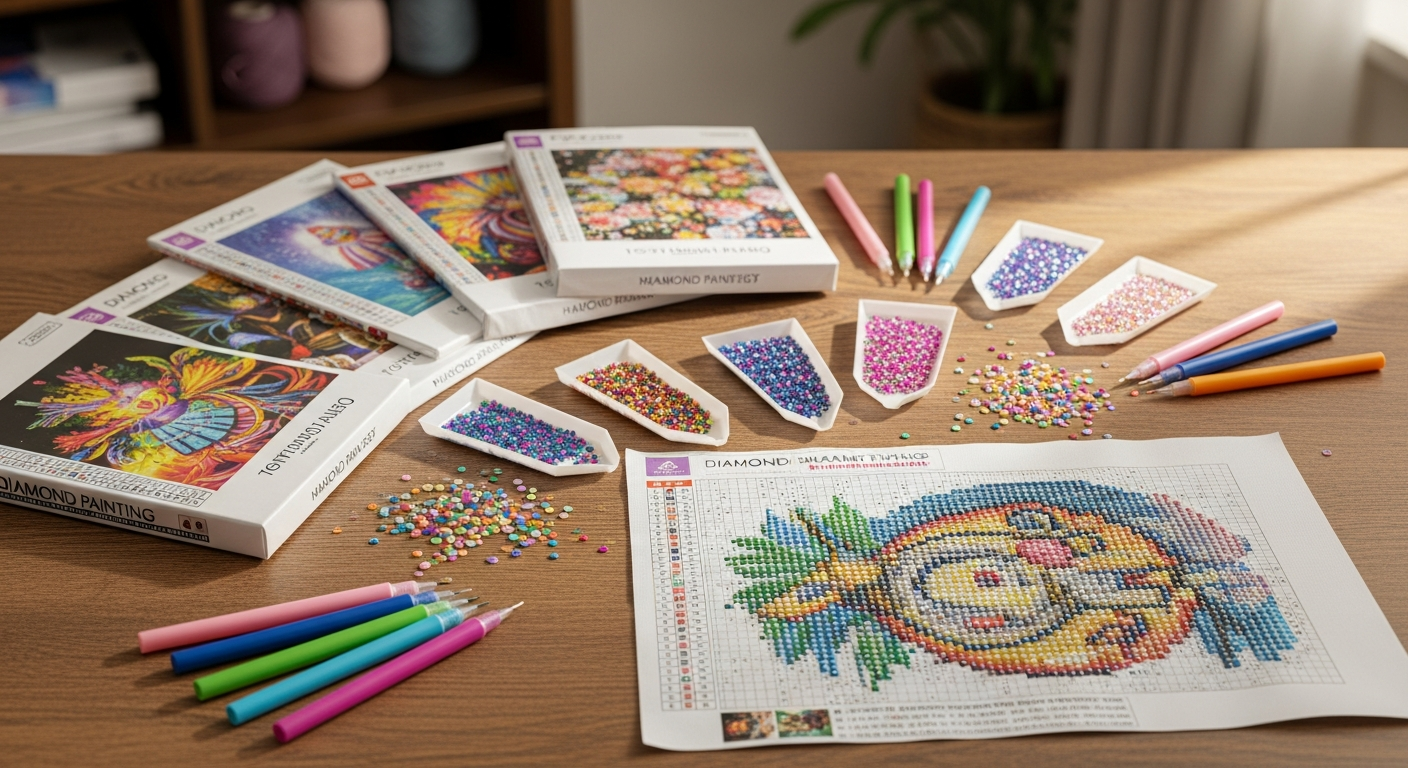
Over 15 million people worldwide have picked up a diamond painting pen in the last three years—and the hobby continues to explode. What started as a niche craft has transformed into a mainstream phenomenon, attracting everyone from stressed-out professionals seeking mindfulness to retirees looking for a creative outlet. Diamond painting sits at the intersection of puzzle-solving, jewelry-making, and meditation.
Unlike traditional painting or drawing, this craft requires zero prior experience or talent. You simply follow a color-coded blueprint, pick up tiny resin beads with an applicator pen, and place them onto a pre-printed adhesive canvas. The result is a shimmering, three-dimensional masterpiece that catches light and transforms any room.
Decoding Diamond Painting Kit Components: What's Inside the Box
Every diamond painting kit contains a carefully curated selection of materials designed to make the process intuitive and rewarding. Understanding what each component does empowers you to evaluate kit quality and make informed purchasing decisions.
Canvas and adhesive quality: Understanding pre-printed canvases, color-coded patterns, and how adhesive strength impacts drill placement
The canvas forms the foundation of your entire project. Quality kits feature pre-printed canvases with crisp, clear color-coded patterns that guide you toward the correct diamond placement. The adhesive backing must remain sticky enough to hold diamonds securely yet not so sticky that placement becomes difficult. Premium canvases resist creasing and wrinkling, which can compromise the final appearance. When adhesive quality drops below standard, diamonds may shift over time or fall away entirely, undermining your hours of work.
Round vs. square drills: Comparing ease of placement, coverage density, light reflection, and final aesthetic appeal
Round drills offer easier handling for beginners since they're forgiving during placement—minor angle variations don't affect the final result. Square drills, conversely, fit together like a mosaic, creating seamless coverage and maximum light reflection. This tight interlocking generates that coveted sparkle factor. Square drills demand slightly more precision but reward careful work with superior visual impact and density.
Applicator tools and accessories: Diamond pens, wax pads, tweezers, organizing trays, and how each tool improves your workflow
The diamond pen (applicator tool) serves as your primary instrument. A quality pen feels comfortable in your hand and maintains consistent grip throughout extended sessions. The wax pad, though small, proves essential—it creates the adhesive surface that allows the applicator to pick up diamonds reliably. Premium kits include tweezers for stubborn placements and thoughtfully designed trays that prevent diamond scatter while making color selection effortless.
Drill organization systems: Color sorting, storage solutions, and why tray design matters for efficiency
How diamonds are organized directly impacts your working pace. Quality kits provide tray systems that keep drills sorted by color and prevent mixing. Superior trays feature individual compartments with adequate spacing, preventing colors from blending. Poor organization systems force constant sorting, breaking your rhythm and creating frustration.
Premium kit additions: Iridescent drills, specialty finishes, and upgraded tools that justify higher price points
Premium kits elevate the experience with iridescent drills that shift color as light changes, creating dynamic visual effects. Specialty finishes add texture and dimension beyond standard options. Upgraded tools—precision-engineered pens, professional-grade wax pads, and durable storage solutions—transform the crafting experience from functional to genuinely enjoyable.
Finding Your Perfect Match: Selecting the Right Kit for Your Skill Level
Matching your kit selection to your current experience level determines whether diamond painting becomes a cherished hobby or an abandoned project. Each skill tier offers distinct advantages.
Beginner-friendly criteria: Smaller canvas sizes, simpler designs, partial-drill options, and why these matter for first-timers
Starting small creates immediate momentum. A 20x20cm canvas with a simple animal design builds confidence without overwhelming you with scope. Partial-drill kits (where only certain portions contain diamonds) combine painting and diamond painting, reducing intimidation. These designs teach fundamental techniques while remaining achievable within 10-20 hours.
Intermediate progression: Larger canvases, complex patterns, and full-drill coverage for crafters ready to challenge themselves
Once you've completed a beginner project successfully, intermediate kits open new possibilities. A 40x40cm canvas with intricate pattern work develops your speed and precision. Full-drill coverage means every inch of canvas receives diamonds, demanding greater focus but delivering more dramatic results.
Advanced kit selection: Custom photo-to-painting options, specialty materials, and intricate designs that reward patience
Advanced crafters thrive with custom kits featuring personal photographs transformed into diamond paintings. These projects stretch across 50x50cm or larger and may take 40+ hours. The payoff—a personalized masterpiece—justifies the commitment.
Size considerations: How canvas dimensions affect completion time, display options, and overall project commitment
Small canvases (20x20cm) complete in 10-20 hours and fit modest spaces. Medium canvases (30x40cm) require 20-40 hours and suit standard wall space. Large canvases (50x50cm or bigger) demand 50+ hours but create focal-point artwork. Consider your available time and display intentions before selecting size.
Design themes and aesthetics: Popular categories (animals, landscapes, abstract, pop culture) and matching kits to personal interests
Animal designs remain perennially popular, offering appealing subject matter that motivates completion. Landscape kits appeal to nature enthusiasts and create serene wall art. Abstract designs attract modern decorators. Pop culture themes draw fans of specific franchises. Your finished piece decorates your home—select designs you genuinely love.
Budget alignment: Navigating price ranges from budget-friendly starter kits to premium custom creations
Budget kits ($5-15) provide excellent entry points with acceptable quality for beginners. Mid-range kits ($15-35) balance affordability with better materials and more appealing designs. Premium kits ($35-50+) justify higher costs through superior adhesive, vibrant drills, and upgraded tools. Custom kits scale upward based on size and personalization.
Mastering the Craft: Techniques That Transform Your Diamond Painting Experience
Technique separates casual crafters from those who truly love the hobby. Small adjustments to your approach yield significant improvements in speed, accuracy, and enjoyment.
Optimal lighting setup: Why proper illumination reduces eye strain and speeds up drill placement accuracy
Working under adequate lighting transforms the experience entirely. Natural daylight remains ideal, but a bright LED desk lamp positioned to illuminate your workspace without creating glare works excellently. Proper lighting reduces eye strain during extended sessions and helps you distinguish subtle color variations, accelerating accurate placement.
Ergonomic positioning: Hand angles, posture, and workspace organization to prevent fatigue during long sessions
Position your canvas at a slight angle rather than flat on the table—approximately 30 degrees—to reduce wrist strain during drill placement. Sit with your back supported and your work surface at elbow height. Rest your forearm on the table rather than holding tension throughout your arm. Proper positioning enables three-hour sessions without fatigue.
Efficient drill placement strategies: Sectioning methods, color-grouping approaches, and rhythm-building techniques
Divide your canvas into manageable sections rather than attempting random placement. Complete one section fully before moving to the next, maintaining focus and momentum. Group drills by color and work through one color systematically. This approach creates rhythm—a meditative, almost musical quality that experienced crafters prize.
Wax pad maintenance: Keeping your applicator tool sticky and responsive throughout your project
Your wax pad gradually accumulates lint and loses stickiness as you work. Refresh it occasionally by dabbing it on a lint roller or replacing it entirely if provided with spare pads. A responsive wax pad makes diamond pickup effortless; a worn pad creates frustration. Simple maintenance preserves the pleasure of the craft.
Managing partial vs. full-drill projects: Understanding coverage differences and how they affect final appearance
Partial-drill kits cover roughly 50-70% of the canvas, leaving printed areas visible alongside diamonds. This creates an interesting mixed aesthetic and requires less time. Full-drill kits cover 100% with diamonds, requiring more investment but delivering maximum sparkle and a complete, professional appearance.
Troubleshooting common issues: Fixing misplaced drills, dealing with dried adhesive, and recovering from spills
Misplaced drills can be gently removed with a clean tweezer and replaced correctly. If adhesive dries before completion, carefully roll a lint roller across that section to restore stickiness. Spilled drills prove frustrating but manageable—use a lint roller to gather scattered drills, sort by color, and continue. Minor setbacks don't derail quality work.
Protective finishing techniques: Sealing completed artwork, preventing drill displacement, and long-term preservation
Once finished, seal your artwork with a clear, art-safe adhesive spray to prevent drill displacement during framing or display. Avoid plastic covers, which reduce the sparkle. Frame your piece using UV-protective glass to preserve colors indefinitely. These finishing touches transform your creation into lasting art.
Beyond Relaxation: The Genuine Mental and Creative Benefits of Diamond Painting
Diamond painting transcends simple entertainment—it delivers measurable psychological benefits that justify the time investment.
Stress reduction through repetitive motion: How the meditative rhythm activates calming neural pathways
The repetitive motion of picking up and placing diamonds activates parasympathetic nervous system responses, the same calming mechanisms triggered by meditation or yoga. Your mind settles into the rhythm, and external worries fade. Research on repetitive craft activities confirms measurable stress reduction and cortisol level improvements.
Mindfulness and present-moment awareness: Breaking free from digital overwhelm and screen fatigue
Diamond painting demands your full attention, pulling you away from phones, social media, and streaming content. You exist entirely in the present moment—focused on color, placement, and the subtle satisfaction of progress. This digital detox clears mental clutter and restores your capacity for deep attention.
Creative expression without artistic barriers: Building confidence in non-artists and redefining what creative means
You don't need to draw, paint, or possess any artistic skill. The canvas provides the design; you execute it. This removes creative intimidation entirely, allowing non-artists to produce gallery-quality results. Many participants report newfound confidence extending into other creative areas.
Cognitive engagement and focus: How color recognition and pattern-following sharpen mental acuity
Your brain constantly analyzes colors, matches them to the pattern, and guides precise hand placement. This cognitive engagement strengthens neural pathways associated with pattern recognition and focus. Regular practice sharpens these mental skills, benefiting other areas of life.
Social connection opportunities: Group painting sessions, online communities, and sharing finished pieces
Diamond painting communities flourish online and offline. Group crafting sessions create shared experiences and friendships. Sharing finished pieces on social media generates genuine engagement and celebration from fellow crafters who understand the effort invested.
Sense of accomplishment and tangible results: The psychological boost of completing a beautiful, displayable artwork
Unlike many hobbies producing intangible results, diamond painting delivers a finished, beautiful object you can display and enjoy indefinitely. This tangible accomplishment boosts self-esteem and provides lasting evidence of your creative capability.
Therapeutic applications: Why therapists and wellness professionals recommend diamond painting for anxiety management
Mental health professionals increasingly recommend diamond painting for anxiety management, PTSD recovery, and stress-related conditions. The combination of physical engagement, creative expression, and meditative rhythm addresses multiple therapeutic needs simultaneously, making it an accessible complement to traditional treatment.
Your Diamond Painting Adventure Awaits
Diamond painting kits for adults and beginners represent far more than a passing craft trend—they're a genuine pathway to creativity, calm, and beautiful handmade accomplishment. You now understand what separates quality kits from mediocre ones, how to select the perfect project for your current skill level, and the techniques that transform a casual hobby into a deeply rewarding practice.
The mental health benefits alone—stress relief, improved focus, and the meditative rhythm of repetitive motion—make this craft worth exploring. Whether you're seeking a digital detox, a creative outlet without intimidation, or simply something beautiful to display in your home, diamond painting delivers on all fronts.
Your first kit is waiting. Pick one that speaks to you, set up your workspace, and experience the magic of watching a blank canvas transform into a shimmering masterpiece. Start your diamond painting journey today with premium kits backed by quality materials and exceptional designs.
Leave a Reply