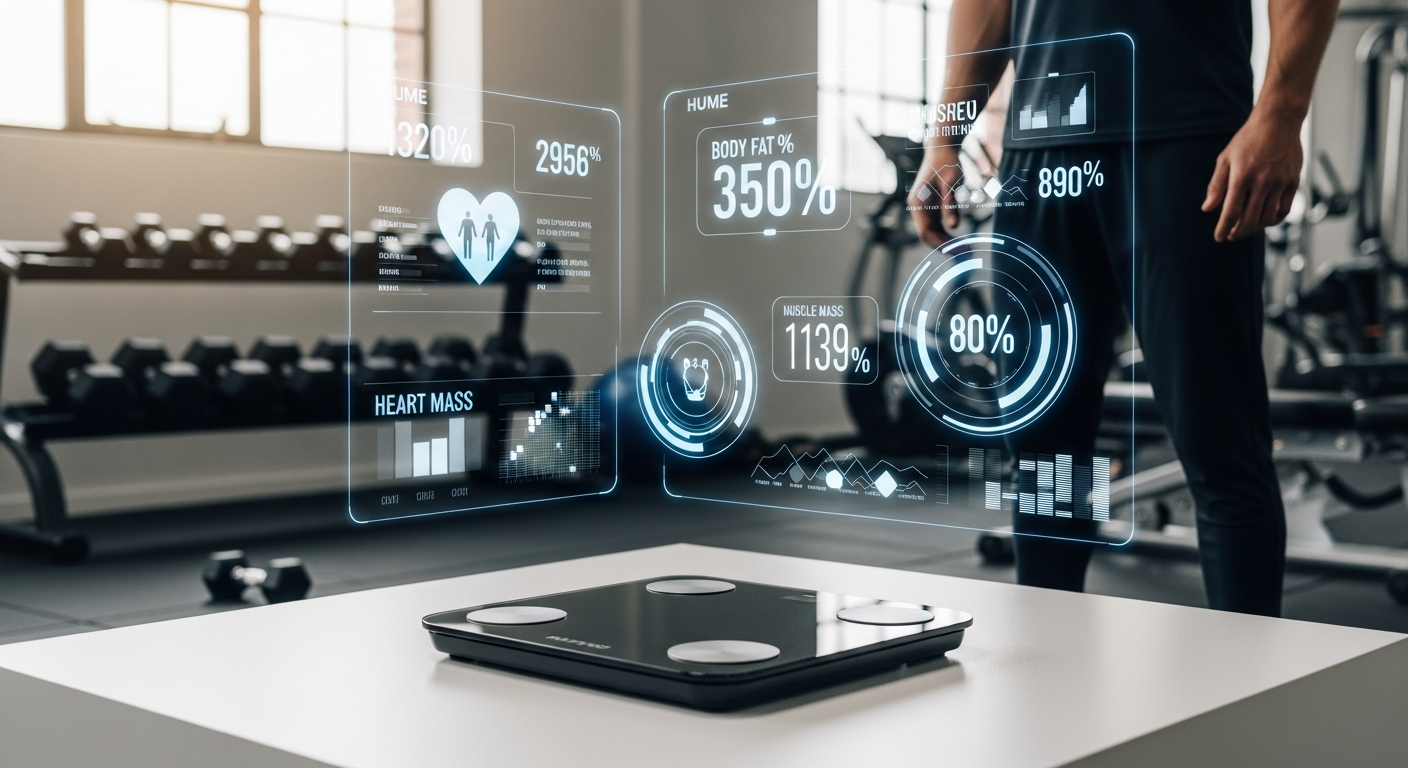
Most athletes obsess over a single number on the scale—but that number tells you almost nothing about whether you're actually getting stronger, leaner, or healthier. Your weight fluctuates based on hydration, glycogen stores, and hormonal cycles, creating a misleading picture of progress that sends training decisions in the wrong direction.
The Hume Body Pod smart scale has become the go-to device for serious athletes, coaches, and performance-focused individuals who refuse to settle for surface-level metrics. Unlike traditional bathroom scales that measure weight alone, this clinical-grade in-home health hub delivers 45 comprehensive health metrics—from muscle mass and bone density to visceral fat and metabolic age. With over 1.2 million users and a 4.93-star rating, it's trusted by elite athletes and biohackers who understand that data-driven training requires precision measurement.
Explore the Hume Body Pod and transform your training with clinical-grade body composition analysis.
Why Athletes Need More Than Weight Measurements
Traditional scales miss the complete picture of athletic progress and body composition changes. Weight fluctuations from hydration, glycogen, and hormones create misleading daily readings that obscure what's actually happening beneath the surface. You could be gaining muscle while losing fat simultaneously—a scenario where the scale shows no change, yet your body composition has transformed dramatically.
Muscle gain and fat loss occurring at the same time makes weight-only tracking counterproductive for serious athletes. Performance athletes require granular data to align training outcomes with actual physiological adaptations. The difference between a successful training phase and a wasted month often comes down to whether you're measuring the right metrics.
Body composition metrics directly correlate with speed, power, endurance, and injury prevention. Competitive advantage comes from understanding visceral fat, skeletal muscle, and bone density—not total pounds. An athlete who prioritizes muscle retention while losing excess body fat will outperform someone who cuts weight indiscriminately, yet a traditional scale can't distinguish between these outcomes.
How the Hume Body Pod's 8-Point Electrode System Works
Advanced dual-point contact technology scans the entire body, not just lower extremities. This represents a fundamental breakthrough compared to competitor scales that measure only the lower body through foot-based contact points. The handle-based scanning enables full-body assessment including arms, torso, and core musculature, capturing the complete picture of muscular development.
Multi-frequency bioelectrical impedance analysis (BIA) sensors measure tissue conductivity across different frequencies. This approach provides superior accuracy because different tissues conduct electricity differently—muscle, fat, water, and bone each have distinct electrical signatures. Real-time impedance measurements translate into 45 distinct health metrics in seconds.
The electrode placement superiority of the Hume system captures more comprehensive data than competitor scales with 2-4 contact points. The 98% DEXA-level accuracy provides clinical-grade precision comparable to professional facility scans, making it possible to track meaningful trends from home without radiation exposure or expensive appointments. Technology validates trends rather than absolute daily values, making weekly comparisons most reliable for assessing actual progress.
45 Health Metrics That Matter for Athletic Performance
Body Composition Fundamentals
Body fat percentage, lean mass, muscle mass, fat-free body weight, and subcutaneous fat measurement form the foundation of understanding your physiology. These metrics reveal whether your training program is building muscle, burning fat, or both simultaneously.
Skeletal and Bone Health
Skeletal muscle mass, bone mass, and bone density track indicators that are critical for injury prevention and longevity. Declining bone density despite hard training signals potential overtraining or nutritional deficiency. Increasing skeletal muscle marks genuine strength development independent of total weight changes.
Metabolic Insights
Basal metabolic rate (BMR), metabolic age, and protein levels indicate how efficiently your body functions at rest. Metabolic age improvements demonstrate enhanced cellular function—a biohacking marker that separates sustainable training from destructive overtraining.
Internal Health Markers
Visceral fat, water percentage, and heart health indicators reveal metabolic health independent of appearance. Visceral fat trends indicate whether your cardiovascular and metabolic systems are improving, even when total body weight stays constant.
Performance-Specific Indicators
Muscle-to-fat ratio, cellular health status, and hydration balance directly impact athletic performance. These metrics guide practical decisions about nutrition timing, training intensity, and recovery protocols.
Syncing Data to Your Training Program via the Hume Health App
Seamless iOS and Android integration connects scale measurements directly to your smartphone in real-time. Weekly health reports automatically generate personalized insights and progress summaries rather than forcing you to manually track numbers.
AI-powered coaching delivers targeted nudges based on your specific metrics and training goals. Data visualization tools track all 45 metrics simultaneously across customizable time intervals, making it simple to identify patterns that matter for your athletic discipline.
Integration potential with training apps, nutrition trackers, and recovery monitoring platforms expands the value of Body Pod data across your entire performance ecosystem. Personalized programs adapt recommendations based on your body composition trends and performance targets, creating a feedback loop that continuously refines your approach.
Start tracking your complete health metrics with the Hume Body Pod smart scale today.
Interpreting Weekly Trends vs. Daily Fluctuations
Daily readings fluctuate based on hydration status, meal timing, and circadian rhythm—expect 2-5 lb swings that reveal nothing about your actual progress. Weekly averages smooth out noise and reveal true body composition changes from training and nutrition. Monthly comparisons provide the clearest picture of whether your program is delivering results.
Track muscle gain while fat loss occurs simultaneously—the metric combination matters more than individual numbers. You might see total weight stay constant while muscle mass increases and body fat decreases, which represents exceptional progress that a traditional scale completely misses.
Visceral fat trends indicate metabolic health improvements independent of total weight changes. Bone density and skeletal muscle gains signal strength training effectiveness and injury resilience. Metabolic age improvements demonstrate enhanced cellular function and longevity markers that extend far beyond aesthetic goals.
Price, Value, and Investment Considerations for Serious Athletes
The retail price of $352 positions the Body Pod as premium but accessible compared to professional body composition testing. Professional DEXA scans cost $100-300 per measurement, while the Body Pod provides unlimited weekly scans at zero marginal cost after the initial purchase.
Flash sale pricing at $229 (40% discount) offers significant savings for budget-conscious athletes without compromising measurement quality. HSA/FSA eligibility makes the device a tax-advantaged health investment for many professionals, effectively reducing the out-of-pocket cost further.
The 45-day no-questions-asked return policy removes risk for athletes testing the device's compatibility with their program. An optional 10-year warranty provides long-term protection and peace of mind for equipment investment.
ROI calculation becomes obvious when you consider cost-per-measurement: home testing at $0 per scan versus $100-300 per professional DEXA scan. Single season of optimized training decisions based on Body Pod data typically pays for the device many times over through improved results and prevented wasted training phases.
When to Use Body Pod Data to Adjust Your Training
Plateau detection becomes obvious when stalled muscle gain occurs despite consistent training—this signals need for program modification. Overtraining identification emerges when declining muscle mass or bone density occurs despite high training volume, indicating a recovery deficit that needs immediate attention.
Nutrition optimization reveals whether caloric intake and macros align with training goals. Body composition changes provide objective feedback about whether your diet supports your training objectives.
Periodization validation confirms that off-season, pre-competition, and peak phases deliver expected body composition shifts. Injury prevention improves when declining skeletal muscle or bone density in specific regions warrants form assessment and recovery focus.
Competition prep in final weeks before events requires granular tracking to ensure peak muscle and minimal excess body fat. Recovery monitoring post-competition reveals whether recovery protocols are working effectively through body composition trend analysis.
Comparing Hume Body Pod to Traditional DEXA Scans and Competitor Scales
DEXA scan accuracy is matched by the Body Pod at 98% DEXA-level precision without radiation or facility appointments. Competitor scales like Withings and RENPHO offer only 10-12 metrics versus Body Pod's 45 comprehensive measurements, making the comparison straightforward.
Frequency advantage emerges from home testing enabling weekly tracking versus quarterly or annual professional scans. The cost differential ($229-352 versus $100-300 per professional scan) creates massive accessibility advantage that democratizes clinical-grade measurement.
Handle technology distinguishes Hume's dual-point contact that measures the full body; competitor scales measure lower body only. Trend reliability improves through Body Pod's multi-frequency sensors, providing superior consistency for week-to-week comparisons. Clinical validation through 1.2 million users and 4.93-star rating demonstrates real-world accuracy and reliability.
Real-World Applications for Different Athletic Disciplines
Strength Athletes
Track skeletal muscle gains, bone density improvements, and body fat loss during bulking and cutting phases. The Body Pod provides objective confirmation that your program is building muscle rather than just adding weight.
Endurance Athletes
Monitor muscle preservation during high-volume training, hydration status, and metabolic efficiency. Distance runners use Body Pod data to ensure they're maintaining lean muscle mass rather than sacrificing performance-critical tissue.
Combat Sports
Precise weight-class management without sacrificing muscle mass or performance capacity becomes possible through detailed body composition insights. Athletes make weight while maintaining strength and power.
Team Sports
Position-specific body composition benchmarking ensures athletes maintain optimal power-to-weight ratios. Wide receivers need different body composition profiles than linemen, and the Body Pod tracks whether each athlete hits position-specific targets.
CrossFit and Functional Fitness
Track muscle-to-fat ratios and metabolic markers to validate training intensity and nutrition. Functional fitness athletes use body composition data to optimize the balance between absolute strength and relative power.
Aesthetic Competition
Bodybuilders and physique athletes use visceral fat and subcutaneous fat data for stage-ready conditioning. The distinction between these two fat types allows for precise tuning of appearance without compromising health markers.
Recovery Validation
All athletes use bone density and metabolic age to validate whether training stress is sustainable. Declining metrics signal overtraining even when subjective fatigue hasn't reached awareness.
Maximizing Accuracy: Hydration, Timing, and Measurement Best Practices
Measure at consistent times—morning, fasted, post-bathroom—to minimize hydration and meal-related fluctuations. Maintain consistent hydration levels 24-48 hours before measurement for reliable body composition readings.
Avoid intense training sessions immediately before weighing; allow 12+ hours for cellular fluid normalization. Track weekly measurements on the same day and time to create reliable comparison baselines that eliminate timing-related variables.
Record external factors like sleep quality, stress, and menstrual cycle alongside metrics to contextualize fluctuations. Use the same scale location and surface consistency to eliminate equipment-related measurement variables.
Understand that 2-3 lb daily swings are normal and expected—focus on 7-day rolling averages instead. This perspective shift eliminates psychological noise and keeps your attention on meaningful trends.
The Role of AI Coaching in Habit Optimization and Progress Acceleration
Personalized nudges identify specific behaviors like hydration, sleep, and nutrition timing that impact body composition. AI algorithms learn your individual response patterns to training and dietary interventions over time, moving beyond generic advice toward customized guidance.
Recommendations adapt based on your actual metrics rather than generic fitness advice. Motivation amplification emerges from seeing measurable weekly progress, which drives behavioral consistency and adherence far more effectively than willpower alone.
Pattern recognition identifies which training and nutrition combinations deliver results for your specific physiology. An accountability mechanism develops through regular check-ins and progress reports, creating psychological commitment to goals.
Data-driven decision making replaces guesswork with evidence about what actually works for your body. This removes the trial-and-error frustration that wastes months of training.
The Bottom Line: Why Athletes Choose the Hume Body Pod
The Hume Body Pod smart scale represents a fundamental shift in how serious athletes approach training and body composition management. Rather than obsessing over a single number that fluctuates daily based on hydration and meal timing, you gain access to 45 comprehensive metrics that reveal whether your training program is actually delivering results.
The 8-point electrode system and multi-frequency sensors provide clinical-grade accuracy—98% DEXA-level precision—without the cost, radiation, or scheduling hassles of professional facility scans. What makes this device genuinely transformative is the combination of advanced measurement technology with practical accessibility. You can track visceral fat, skeletal muscle, bone density, and metabolic age weekly from your bathroom, then use that data to adjust your training intensity, nutrition timing, and recovery protocols.
With over 1.2 million users and a 4.93-star rating, the Body Pod has earned trust among elite athletes, coaches, and biohackers who understand that precision measurement drives precision training. Whether you're prepping for competition, optimizing an off-season program, or simply refusing to settle for surface-level progress tracking, the device delivers the granular insights that separate committed athletes from casual fitness enthusiasts.
At $229-352 (especially during flash sales), it's an investment that pays dividends through smarter training decisions, faster progress, and sustainable long-term performance gains.
Leave a Reply