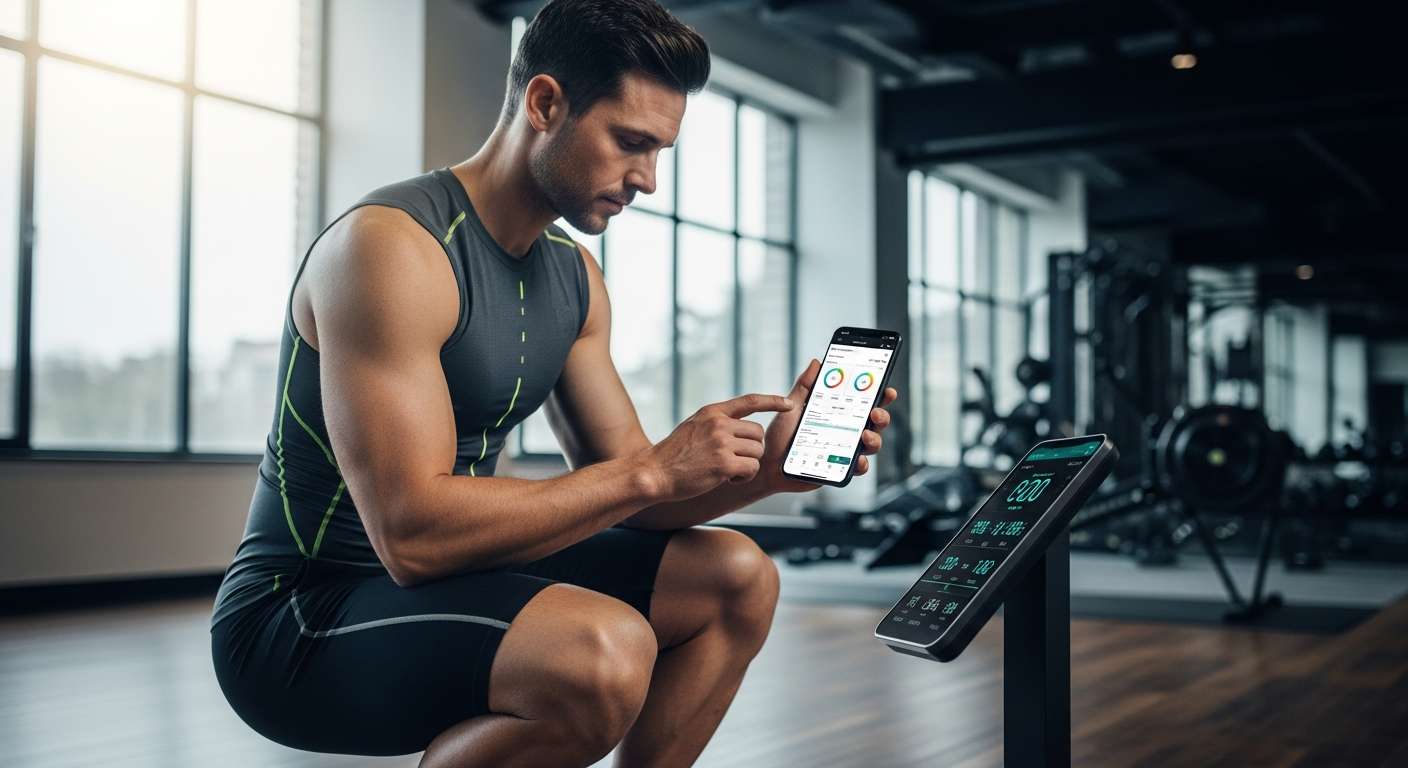
Most people glance at a bathroom scale, see a number, and call it a day. But elite athletes know better. Over 12,000 health clinics trust the Hume Pod Smart Body Composition Scale because it reveals what a traditional scale deliberately hides: the actual composition of your body. While recreational fitness enthusiasts obsess over single digits, serious performers are uncovering precise body composition data that shows exactly how their training, nutrition, and recovery strategies are producing results.
Traditional scales mislead you fundamentally. They can't distinguish between muscle gain and fat loss, water retention and metabolic changes, or whether your body is truly responding to your programming. The Hume Pod changes everything with an advanced 8-frequency sensor system and 8-point electrode technology that measures your torso, arms, and legs individually—not just your lower body like standard smart scales. This delivers clinical-grade insights comparable to DEXA scans, and you get them from home at a fraction of the cost.
For athletes, coaches, and fitness professionals who demand measurable progress, the Hume Pod bridges the gap between guesswork and science. You'll discover how its segmental body composition tracking works for serious competitors, why its 98% DEXA-level accuracy fundamentally changes training decisions, and how the companion app transforms raw data into actionable insights.
Start optimizing your training with clinical-grade body composition data from the Hume Pod today.
The Competitive Edge—Why Athletes Choose Segmental Body Composition Tracking
How Traditional Scales Fail Athletes
A standard bathroom scale delivers one number. During a serious training block, your weight might stay flat while your muscle mass climbs and your body fat percentage drops—but the scale won't tell you that. You'll feel stronger, perform better, and make real progress while the number refuses to move. Worse, your scale can't distinguish between water retention from intense training and actual fat gain, so you make nutrition adjustments based on phantom changes.
This is where competitive athletes lose months to misdirected effort.
The Advantage of Segmental Measurement
The Hume Pod's 8-point electrode system measures your torso, each arm, and each leg independently. This segmental approach reveals something crucial: where your body is actually building muscle and where fat might be lingering. A powerlifter might gain significant arm and torso mass while maintaining leg measurements—data that validates his upper body focus. An endurance athlete might preserve arm and torso muscle while slightly reducing leg mass, confirming that his high-volume training is metabolically efficient.
Sport-specific demands require sport-specific tracking. Segmental data shows you exactly what your training is building.
Real-World Tracking During Training Phases
Consider a bulking phase for strength athletes. Your weight climbs 15 pounds over eight weeks. Without segmental data, you assume some of that is fat. With the Hume Pod, you discover that 12 pounds is muscle across your torso and arms, while visceral fat remains stable. That distinction transforms your nutrition strategy and confidence in your program.
Similarly, during a cutting phase for weight-class sports, segmental measurements prevent catastrophic muscle loss. You monitor arm and leg lean mass to ensure your deficit isn't stripping away the strength you've built. You adjust calories or training intensity based on actual segmental changes, not guesswork.
Training Imbalances and Injury Prevention
Individual limb measurements reveal asymmetries that traditional metrics hide. A right-dominant athlete might see 8% more muscle mass in the right arm—useful information for programming balance work. Comparing left and right leg measurements can flag movement compensations before they become injuries. Coaches managing team rosters can spot these patterns across their entire squad and adjust individual programming accordingly.
Clinical-Grade Accuracy Meets Home Convenience—The 98% DEXA Comparison
What Makes 98% DEXA-Level Accuracy Critical
DEXA scans measure bone mineral density, fat mass, and lean mass with exceptional precision. They've been the gold standard in clinical settings for decades. The Hume Pod achieves 98% correlation with DEXA results, meaning the data you collect at home is reliable enough for serious performance decisions and medical-grade tracking.
This accuracy matters because bad data leads to bad decisions. If your body composition measurement is off by 5%, you might cut calories when you should be eating more, or increase training volume when you should be recovering. Clinical-grade precision eliminates that guesswork.
The 8-Frequency Sensor Technology
The Hume Pod uses multiple electrical frequencies to penetrate different tissue types and measure segmental body composition. Standard smart scales typically use a single frequency measured through the lower body. The Hume Pod's approach allows precise measurement across your entire body—torso, arms, and legs all measured independently through direct electrode contact.
This technology delivers the kind of granular data that athletes and coaches have previously only accessed through expensive clinical testing.
Cost and Logistical Reality
A DEXA scan costs $100-300 per session. Professional athletes undergoing serious training blocks might want monthly measurements—that's $1,200-3,600 annually. The Hume Pod costs $229-422 as a one-time investment, meaning you can test weekly or even daily if you want without budget limitations. For coaches managing rosters, testing multiple athletes becomes feasible rather than prohibitively expensive.
The logistical burden matters too. DEXA scans require clinic appointments, travel time, and scheduling coordination. The Hume Pod sits in your bathroom. You step on it any morning, same time, same conditions, and within seconds you have data comparable to what clinics charge you hundreds to obtain.
Testing Frequency and Measurement Consistency
Athletes tracking body composition typically test monthly to avoid noise from water retention and daily fluctuation. With the Hume Pod's accuracy and cost efficiency, testing becomes more flexible. Serious competitors might measure bi-weekly during peak training blocks, then monthly during maintenance phases. Coaches can test their rosters every two weeks rather than quarterly, providing better program feedback.
The key limitation that matters: consistent methodology. Same time of day, same hydration status, same recent activity level. The device's accuracy depends on you following those protocols.
Acknowledged Accuracy Limitations
User reviews mention instances where Hume Pod measurements diverged from clinical body fat testing. These exceptions typically occur in specific scenarios—extreme obesity, very low body fat percentages, or unusual body compositions. For most competitive athletes and fitness professionals operating in normal ranges, the 98% DEXA correlation holds. However, serious athletes working with medical teams should acknowledge that edge cases exist and clinical validation might be necessary in those situations.
Beyond Weight—The 45+ Metrics That Transform Training Decisions
The Complete Metric Breakdown
The Hume Pod tracks muscle mass, body fat percentage, visceral fat, metabolic age, bone density, water weight, and dozens more. This isn't data overload—it's data specificity. Each metric tells you something different about how your body is responding to training.
Muscle mass tells you whether you're building or losing lean tissue. Body fat percentage contextualizes muscle changes—you might gain muscle while losing fat, producing a stable total weight that reveals nothing to a traditional scale. Visceral fat (the dangerous fat surrounding organs) matters for health outcomes separate from subcutaneous fat. Bone density matters for longevity and injury prevention. Water weight matters for athletes managing weight classes.
Heart Health Indicators and Cardiovascular Adaptation
The Hume Pod includes heart health metrics that correlate with cardiovascular training adaptations. Endurance athletes see these metrics shift with their training volume. Strength athletes see different patterns. Tracking heart health metrics alongside training provides feedback about whether your cardiovascular system is adapting as intended.
Water Weight and Weight-Class Sports
Combat athletes, weightlifters, and boxers manage weight class requirements with precision. Water weight represents a significant portion of daily fluctuation. The Hume Pod separates water weight from fat and muscle, allowing athletes to cut weight strategically without sacrificing performance. You see exactly how much weight remains as muscle and bone versus what can be managed through hydration, rather than guessing and potentially losing strength during critical competition weeks.
Metabolic Age as a Performance Indicator
Metabolic age indicates whether your body's metabolic efficiency is improving or declining. During serious training blocks, metabolic age should improve as your body composition becomes more muscle-dominant and metabolically efficient. Decline in metabolic age despite intense training suggests inadequate recovery, poor nutrition, or overreaching—actionable signals to adjust your program.
Multiple Metrics Prevent Single-Point Failures
Obsessing over body fat percentage alone can mislead you. Obsessing over weight alone definitely misleads you. The Hume Pod forces a more sophisticated analysis. You might see body fat percentage stable while muscle mass climbs and metabolic age improves—that's progress, but you'd miss it looking at weight alone. You might see water weight spike while actual fat loss occurs—data you couldn't detect without segmental breakdown.
This prevents the psychological trap of chasing a single metric while ignoring actual body composition changes.
Interpretation During Different Training Phases
During strength phases, expect stable or slightly increasing body weight with climbing muscle mass and stable or declining body fat. During hypertrophy phases, expect faster weight gain with significant muscle increases and acceptable body fat increases. During endurance or cutting phases, expect weight loss with preserved muscle mass and declining body fat.
The Hume Pod gives you specific metrics to validate whether your current phase is producing the expected changes. If you're in a strength block and muscle mass isn't climbing despite intense training, something in your nutrition or recovery needs adjustment. The data tells you exactly what to investigate.
Data-Driven Coaching—Turning Measurements into Performance Programs
Integration with Lifestyle Factors
The Hume Health app connects your body composition measurements to sleep, stress, and nutrition data. This integration reveals relationships between variables that isolated metrics hide. You might notice that weeks with 7+ hours of sleep consistently show better muscle retention and lower visceral fat—validating sleep's importance. Weeks with high reported stress might correlate with water retention and slower fat loss despite stable calories.
These connections transform abstract lifestyle advice into personalized data.
Weekly Reports and Personalized Programs
The app generates weekly health reports based on your measurements and trends. More importantly, it recommends personalized programs. If your visceral fat is trending upward despite stable weight, the app might recommend increased cardio or nutritional adjustments. If muscle mass plateaus, it might suggest program changes or recovery enhancements.
For coaches, this data-driven coaching framework applies across rosters. You see which athletes respond well to specific programming, which need additional volume, and which need more recovery time—all validated through body composition changes rather than intuition.
Trend Analysis and Noise Separation
Raw metrics fluctuate with hydration, menstrual cycle, and daily variance. The Hume Health app tracks trends over weeks and months, filtering out daily noise. You see whether your body fat is actually declining over an 8-week block despite weekly fluctuations. You see whether muscle is genuinely accumulating or remaining stable.
This trend perspective prevents overreacting to single measurements and keeps your programming decisions grounded in actual progress.
Connecting Changes to Specific Interventions
Body composition changes don't happen randomly. The Hume Pod's data allows you to correlate changes with specific interventions. You increase protein intake by 30 grams daily and track whether muscle mass response improves over three weeks. You modify training volume and measure whether recovery improves. You add sleep-focused protocols and see whether visceral fat or metabolic age responds.
This direct feedback loop transforms nutrition and training from theoretical best practices into verified individual protocols.
Coach Management of Multiple Athletes
For coaching staff, the app allows comparing response patterns across rosters. You might discover that your high-responders to hypertrophy programming share certain body composition starting points. You might notice that specific athletes consistently lose muscle during high-volume phases while others preserve it—data validating individual programming needs rather than forcing universal protocols.
This comparative analysis improves program design across your entire operation.
App Limitations to Anticipate
User reviews indicate the Hume Health app has complexity that trips up some users. Navigation isn't always intuitive, and some features require understanding the app's logic. Additionally, connectivity issues have affected some users—WiFi drops, syncing failures, or occasional app crashes. Serious athletes should anticipate these limitations, update the app regularly, and know that workarounds exist but aren't seamless.
For professional coaching contexts, these limitations matter more because you're managing multiple data streams. Budget time for troubleshooting and establish backup protocols.
Real-World Applications in Strength Training and Athletic Performance
Powerlifters and Strength Athletes
Powerlifters operate within weight classes, creating constant tension between building strength and managing body weight. The Hume Pod allows precision: you track muscle mass increases in your torso and legs while monitoring overall weight gain. You identify whether 12 pounds of weight gain is mostly muscle (acceptable during a strength block) or mostly fat (requiring adjustment). During competition prep, you manage weight loss while validating that muscle mass remains stable—critical for maintaining strength during peak attempt weeks.
Endurance Athletes
Endurance training creates different pressures. High-volume training can erode muscle mass if nutrition isn't dialed in. Endurance athletes use the Hume Pod to track whether their arm and torso muscle are declining during heavy training blocks—a sign they need more protein or calories. They monitor whether leg muscle stabilizes or improves, validating that strength work is complementing their aerobic development rather than being neglected.
Metabolic age becomes particularly useful for endurance athletes. Training volume should improve metabolic efficiency. If metabolic age is stagnant despite increasing training load, something in nutrition or recovery isn't supporting adaptation.
Combat Sports and Weight-Class Management
Boxers, wrestlers, and MMA athletes face extreme weight management pressures. The Hume Pod separates water weight, body fat, and muscle with precision. You can cut weight aggressively while confirming muscle preservation. You see exact water weight, allowing smarter hydration loading strategies. You avoid catastrophic muscle loss that would compromise performance—data validation that your weight cut is sustainable rather than destructive.
CrossFit and Functional Fitness
CrossFit demands versatility: strength, power, endurance, and movement quality. Segmental measurements reveal imbalances. Comparing left and right arm muscle mass identifies asymmetries that might limit movement. Comparing upper and lower body proportions shows whether your training is balanced or neglecting development. This data directly informs accessory work and movement priority.
Team Sports Performance Optimization
Coaching staff use body composition data to optimize player development. You might discover that certain players respond better to hypertrophy training while others build strength more efficiently with lower volume. You track whether pre-season conditioning is building muscle and reducing fat or just creating weight loss through muscle catabolism. You identify which players are managing recovery well (stable lean mass) versus struggling (declining muscle despite training).
Injury prevention connects to this data too. Players with significant muscle imbalances show up in segmental measurements, allowing targeted prehab work before injuries occur.
Biohackers and Longevity-Focused Athletes
Individuals optimizing for long-term health use comprehensive body composition metrics to validate aging strategies. They track whether strength training maintains or builds muscle mass as they age. They monitor visceral fat, heart health indicators, and bone density—longevity markers separate from pure performance. The Hume Pod provides the granular feedback needed for this long-term optimization approach.
Transforming Data Into Competitive Advantage
The Hume Pod Smart Body Composition Scale represents genuine progress in how serious athletes and fitness professionals approach performance. With 98% DEXA-level accuracy delivered from your home, segmental body composition tracking across all major body regions, and 45+ simultaneous health metrics, this device eliminates guesswork from training decisions. Whether you're managing weight-class requirements, protecting lean mass during high-volume training cycles, or optimizing performance across an entire roster, the precision available through the Hume Pod's 8-frequency sensor system and companion app creates opportunities for training adjustments that actually produce results.
That said, realistic expectations matter. The app has navigational complexity that frustrates some users. Connectivity issues have affected specific users. Accuracy inconsistencies have been reported in edge cases. These aren't dealbreakers for serious athletes—they're simply factors requiring acknowledgment and practical workarounds.
The actual question isn't whether the Hume Pod is flawless; it's whether the clinical-grade insights justify the investment compared to traditional scales and periodic clinic visits. For competitive athletes and performance professionals, the answer is clear: the cost-benefit math heavily favors the Hume Pod.
Your next move is straightforward. Establish a baseline measurement under consistent conditions: same time of day, same hydration status, same recent activity level. Commit to regular testing protocols—weekly during peak blocks, bi-weekly during maintenance phases. Track not just raw metrics, but how your body responds to specific training and nutrition changes. Document which interventions produce measurable results and which don't.
That's when the Hume Pod transforms from an interesting gadget into a legitimate competitive tool.
Invest in your performance metrics now with the Hume Pod Smart Body Composition Scale.
Leave a Reply