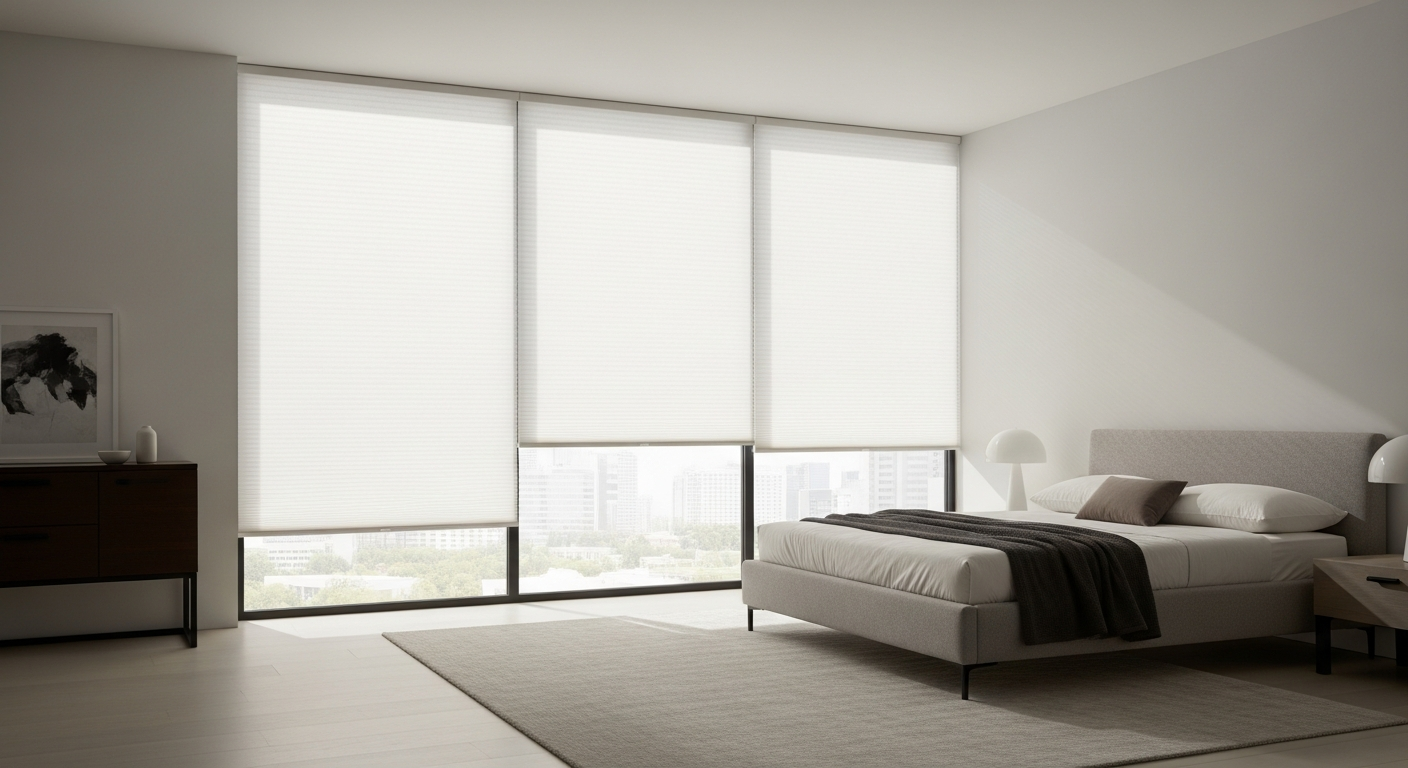
Honeycomb plissé curtains with top down bottom up control system on modern window

Honingraat Plisségordijnen Top Down Bottom Up: Energy-Efficient Window Solutions for Modern Homes

Up to 30% of household energy loss happens through windows. I've watched countless homeowners struggle with the same frustration: they want stylish window coverings that actually work — ones that let them control light independently from the top and bottom, save on heating and cooling bills, and look sleek doing it.

That's where honingraat plisségordijnen with top down bottom up functionality change the game entirely. These aren't your standard blinds. The honeycomb structure creates air pockets that insulate your rooms naturally, while the innovative top-down/bottom-up system gives you unprecedented flexibility in managing natural light and privacy simultaneously. Retailers like Raamdecoratie.com and Doehetbudget.nl have made these custom-made window coverings increasingly accessible, transforming them from a luxury feature into an attainable upgrade for modern Dutch homes.

Discover how honingraat plisségordijnen can transform your home today.

I'm breaking down everything you need to know about honingraat plisségordijnen with top down bottom up capabilities. You'll explore how the honeycomb insulation actually works, discover the practical advantages of dual-direction operation, compare fabric and customization options that suit different rooms, and understand the real cost-benefit analysis. By the end, you'll have clarity on whether this investment makes sense for your specific window situation.

How the Honeycomb Structure Delivers Real Energy Savings

Understanding the Double-Layer Fabric Design

The honeycomb structure represents a fundamental shift from traditional single-layer blinds. Two fabric layers are bonded together with vertical dividers, creating distinct air chambers — essentially tiny pockets of insulating air trapped between the inner and outer fabric surfaces. These air tunnels function as a barrier against temperature transfer, slowing down heat movement through your windows.

The genius of this design lies in physics. Air is a poor conductor of heat, meaning it naturally resists temperature change. By trapping air between fabric layers, honingraat plisségordijnen create a thermal buffer zone. During winter, this buffer keeps warm air inside your home from escaping through the glass. During summer, it prevents hot external air from penetrating your interior spaces.

Thermal Insulation: Winter Warmth and Summer Cooling

The insulation benefits are tangible and measurable. Rooms fitted with honeycomb plissé gordijnen maintain more stable temperatures throughout the day, reducing the workload on your heating system in winter and your air conditioning in summer. Your HVAC system doesn't need to run as frequently or as intensely, directly translating to lower energy consumption.

This dual-season benefit makes honeycomb blinds particularly valuable in regions with extreme temperature swings. The air pockets work year-round, adapting to whatever climate challenges your home faces.

Comparing Honeycomb to Single-Layer Alternatives

Single-layer plissé blinds offer style and basic light control but lack the insulation advantage. When you compare them side by side, the honeycomb version demonstrates noticeably superior thermal performance. The air gap in honeycomb designs creates genuine resistance to heat transfer, whereas single-layer fabrics provide minimal insulation benefit beyond basic window coverage.

This performance difference becomes clear on your energy bills. Homeowners upgrading from single-layer to honeycomb systems frequently report measurable reductions in monthly heating and cooling costs.

Impact on Household Energy Bills and Long-Term Recovery

The financial picture depends on several variables: your climate, your current heating and cooling efficiency, energy prices in your region, and the window dimensions you're treating. However, energy-conscious homeowners typically recover their investment within 3 to 5 years through reduced utility bills. After that threshold, the savings represent pure financial benefit.

A bedroom with large south-facing windows can save 15-20% on cooling costs during summer months. A living room with significant glass exposure might see comparable savings. These aren't astronomical numbers per room, but across a whole-home installation, they accumulate meaningfully.

How Air Pockets Reduce Heat Transfer

The mechanism is straightforward: heat always moves toward cooler areas, attempting to equalize temperature. Window glass conducts this heat transfer readily. Air pockets interrupt this conductive pathway. The more air chambers between your room and the external environment, the greater the insulation value.

Double honeycomb designs (with two columns of air pockets rather than one) offer even superior insulation. While standard honeycomb plissé gordijnen provide excellent value, understanding this tiered approach helps you choose the right product for your climate zone.

Durability of the Honeycomb Structure Over Time

Quality honingraat plisségordijnen maintain their honeycomb integrity for many years. The 100% polyester fabrics used by reputable manufacturers resist deterioration, and the adhesive bonding the layers together remains stable through normal use. Expect reliable performance for 10 years or longer with proper care.

The structure itself doesn't compress or flatten over time. The air chambers maintain their shape and insulating properties, meaning your energy savings don't degrade as the blinds age.

Maintenance Requirements to Preserve Insulation Effectiveness

Keeping your honingraat plisségordijnen clean preserves their insulation capacity. Dust buildup on the fabric surface can slightly reduce their effectiveness, though the impact is minimal. A gentle vacuum with an upholstery attachment or a soft brush removes accumulated dust without damaging the delicate honeycomb structure.

Avoid harsh chemicals or excessive moisture when cleaning. The polyester fabric is durable, but aggressive cleaning methods are unnecessary and risk compromising the bond between layers.

The Top Down Bottom Up Operating System: Flexibility Redefined

How the Dual-Direction Mechanism Works

The top-down/bottom-up system fundamentally changes how you interact with your windows. Instead of raising or lowering the entire blind as a single unit, you can operate the top section independently from the bottom section. Pull the top downward, and only the upper portion closes. Raise the bottom upward, and only the lower section lifts.

The mechanics involve dual corded systems or handles positioned at both the top and bottom of your blind. These independent tracks allow each section to move freely without affecting the other.

Independent Versus Simultaneous Operation

You have complete control over whether sections move together or separately. Want to close the top while leaving the bottom open? That's possible. Need both sections drawn simultaneously for complete privacy? You can do that too. This flexibility is precisely what makes the system revolutionary compared to traditional single-direction blinds.

Some users prefer simultaneous operation for simplicity, while others love the granular control that independent movement provides.

Light Control Scenarios: Strategic Privacy and Daylight

The practical applications are numerous. In a bedroom, you might open the top section to allow morning light while keeping the bottom closed for privacy from street-level views. In a living room, the reverse approach works beautifully — closing the top to reduce afternoon glare while the bottom stays open to maintain ground-floor views.

Office settings benefit tremendously. Closing just the top section reduces screen glare from overhead sunlight while preserving desk-level natural light and outdoor connection. This targeted control would require multiple different window treatments in a traditional setup.

Privacy Management Without Sacrificing Daylight

Traditional blinds force a compromise: close them for privacy and you lose all natural light. Close them partially and you sacrifice some privacy. The top-down/bottom-up system eliminates this either-or situation.

You achieve genuine privacy from street-level viewing angles while maintaining your access to upper-window natural light. Early morning or evening hours become more pleasant because you can optimize light entry while maintaining boundaries with your surroundings.

Ideal Room Applications

Bedrooms represent the perfect application. Nighttime privacy combined with wake-up light control from above addresses two competing needs simultaneously. Living rooms benefit from the ability to manage afternoon glare without darkening the entire space. Kitchens gain functional light management around work surfaces while preventing external viewing of interior activity. Offices achieve professional appearance while controlling the glare that impacts computer work.

Even bathrooms and home gyms benefit from the precise control this system enables.

Advantages Over Traditional Single-Direction Blinds

Single-direction blinds offer binary control: open or closed. The top-down/bottom-up mechanism offers infinite gradations of control. This superiority extends to aesthetics as well. The dual-operation system creates visual interest and contemporary styling that simple roller blinds or traditional vertical blinds cannot match.

The flexibility also means you install fewer window treatments to solve multiple lighting challenges. One set of plissé gordijnen manages what might otherwise require two or three different products.

Cord Routing Between Fabric Layers

One distinguishing feature of quality honingraat plisségordijnen is the hidden cord design. Rather than routing cords along the sides of the blind or through visible holes, premium designs route cords between the honeycomb fabric layers themselves. This approach eliminates visible cord holes and creates a seamlessly elegant appearance from both inside and outside your home.

The hidden routing also offers a safety advantage. The cords are protected from accidental snagging and aren't exposed as entanglement hazards for children or pets.

Fabric Choices and Customization Options That Match Your Needs

Transparent Fabric Options for Maximum Light Transmission

Transparent plissé fabrics allow nearly all natural light to pass through while still providing the honeycomb insulation benefit and basic privacy (at night with interior lighting, transparent fabrics offer less privacy). These work beautifully in spaces where you prioritize natural light: sunrooms, kitchens with outdoor views, and bright living areas.

Transparent fabrics typically have minimal visual texture, creating an almost invisible window treatment that doesn't compete with your view or interior design.

Light-Filtering Varieties for Diffused Natural Light

Light-filtering (lichtdoorlatend) fabrics strike a balance. They transmit significant natural light — roughly 50-70% depending on the specific fabric — while diffusing it softly throughout your room. This diffusion eliminates harsh shadows and glare without making your space feel dark or cave-like.

Light-filtering options work exceptionally well in offices where you want to reduce screen glare without sacrificing the mood and health benefits of natural daylight. Bedrooms appreciate the softer light quality for morning hours while still providing privacy.

Blackout Fabrics for Complete Light Blocking

Blackout (verduisterend) honingraat plisségordijnen block virtually all external light, typically achieving 95%+ light blockage. These fabrics are ideal for bedrooms where complete darkness aids sleep quality, home theaters, or any space where light control is paramount.

The blackout capability also enhances privacy by preventing interior illumination from being visible from outside at night.

Full Color Versus White-Backed Fabric Selections

Full Color fabrics maintain consistent coloring on both front and back surfaces. They look identical whether viewed from inside your home or from the street. This consistency matters if you care about exterior aesthetics or if your blind positioning means the back frequently faces inward (common with top-down operation).

White-backed options (common in blackout fabrics) feature a white reverse side. The white backing enhances heat reflection during summer, reducing solar heat gain through your windows. This feature provides additional cooling benefits but means the exterior appearance differs from the interior.

100% Polyester Durability and Maintenance

The polyester fabrics used in quality honingraat plisségordijnen are inherently durable and resistant to fading, moisture damage, and general wear. Polyester doesn't absorb water readily, making these blinds suitable for moisture-prone areas like bathrooms and kitchens.

Maintenance is straightforward. Gentle vacuuming removes dust. Spot cleaning with mild soap and water handles occasional marks or stains. The fabric doesn't require special treatments or professional cleaning.

Color Consistency on Front and Back Surfaces

Full Color options ensure your blind looks intentionally coordinated whether viewed from inside or outside. This matters aesthetically if the back of your blind is visible from certain angles or if you frequently operate your blind from the top, exposing the reverse side to interior viewing.

This consideration becomes particularly important in open-concept living spaces where interior and exterior perspectives blend.

Heat Reflection Benefits of White Backing in Blackout Versions

The white backing on blackout fabrics serves a functional purpose beyond aesthetics. White reflects solar radiation rather than absorbing it, keeping more heat outside your home during summer months. This reflection bonus enhances the cooling efficiency of your honeycomb insulation.

Combined with the honeycomb air pockets and complete light blockage, white-backed blackout plissé gordijnen represent the most thermally efficient option available in this product category.

Custom Sizing Capabilities

Honingraat plisségordijnen are made-to-measure products. Maximum dimensions typically reach 297 cm in width and 300 cm in height, accommodating almost any residential window. Unusual shapes, angled skylights, and non-standard dimensions are all achievable through custom manufacturing.

This customization ensures a perfect fit that looks professionally installed and functions flawlessly. Unlike off-the-shelf blinds that require compromises, custom sizing means your blind precisely matches your window dimensions.

Explore custom fabric and size options to perfectly fit your windows.

Control Methods: From Traditional to Fully Automated

Cord Operation: Classic, Budget-Friendly Control Mechanism

Cord-operated systems represent the most traditional and economical control method. Pulling a cord or cord loop raises or lowers the blind sections. The mechanism is proven, reliable, and requires no electricity or batteries. For most users, cord operation provides sufficient functionality and control.

The primary consideration involves safety, particularly in homes with young children. Modern cord designs incorporate safety features to mitigate entanglement risks, but cord operation requires awareness and responsible use.

Handle and Chain Operation Alternatives

Handle-operated systems use a lever or grip mechanism instead of cords, offering a different tactile experience. Chain-operated systems function similarly to cord systems but use a small chain rather than fabric cord, which some users find more durable or easier to grip.

Both alternatives provide the same fundamental functionality as cord systems while offering personal preference and aesthetic variation in how you interact with your blind.

Electric Control Systems for Convenience

Electric motors transform honingraat plisségordijnen into convenient, no-touch systems. Pressing a button or using a remote control operates your blinds effortlessly. This convenience becomes genuinely valuable for large windows, hard-to-reach installations, or anyone with mobility limitations.

Electric systems also enable scheduling, allowing you to program your blinds to open at sunrise and close at sunset automatically, synchronizing with your daily rhythm.

Integration with Smart Home Setups

Modern electric systems often connect to smart home ecosystems. Control your blinds through voice commands, smartphone apps, or integration with broader home automation platforms. This capability transforms window treatments from passive fixtures into active components of your intelligent home environment.

Imagine having your blinds adjust automatically based on temperature, time of day, or even your calendar schedule. Smart integration adds genuine lifestyle value beyond simple convenience.

Motorized Options for Large Windows and Hard-to-Reach Installations

Motorized systems excel in specific situations. Large expanses of glass become manageable with motorized operation rather than requiring excessive cord pulling. High windows or skylights become accessible through remote control instead of requiring ladders or reaching implements.

These systems justify their higher cost through genuine lifestyle improvement and safety benefits in challenging installation scenarios.

Reliability and Lifespan of Different Control Systems

Cord and chain systems are mechanically simple and extremely reliable, often lasting decades with minimal maintenance. Electric systems introduce complexity but modern motors are engineered for reliability and come with substantial warranties. Most electric systems function flawlessly for 10+ years with proper care.

The choice between manual and electric ultimately depends on your specific situation, budget, and preference for convenience versus simplicity.

Maintenance Differences Between Manual and Electric Variants

Manual systems require virtually no maintenance beyond occasional cord replacement (rarely needed). Electric systems benefit from annual inspection to ensure smooth operation and battery check for remote controls. Neither requires substantial ongoing care.

The simplicity of manual systems appeals to those preferring low-maintenance solutions, while electric users gain convenience in exchange for minimal additional upkeep.

Installation Flexibility for Every Window Type

Mounting Options: Drilling, Clamping, and Adhesive Sticking

Honingraat plisségordijnen accommodate three primary mounting approaches. Drilling involves securing mounting brackets to your window frame or wall with screws — the most permanent and secure method. Clamping uses clamp-style brackets that attach without drilling, ideal for rental situations or when you prefer reversibility. Adhesive sticking uses strong adhesive strips, the least invasive option for certain frame materials.

Each method offers different advantages depending on your frame material, window type, and whether you want permanent or temporary installation.

No-Drill Installation for Plastic and Aluminum Frames

Plastic and aluminum window frames don't accommodate drilling as readily as wood frames. No-drill installation methods (clamping and adhesive options) preserve your frame integrity while securely mounting your blinds. This consideration matters significantly for modern windows with composite frames.

Raamdecoratie.com and Doehetbudget.nl both offer extensive guidance on frame-appropriate mounting methods during the ordering process.

Compatibility with Fixed Windows, Tilt-and-Turn Windows, and Skylights

Fixed windows present straightforward installation scenarios. Tilt-and-turn windows (extremely common in European homes) require careful measurement to ensure blinds function properly while the window operates. Skylights demand specialized mounting approaches that account for angled surfaces and overhead installation.

Quality retailers provide detailed installation guidance and measurement templates for each window type, ensuring your custom-made blind fits perfectly and functions flawlessly.

Custom-Made Fitting Process and Measurement Requirements

The measurement process is crucial. Providing precise dimensions ensures your blind fits perfectly and operates smoothly. Most retailers offer downloadable measurement guides, instructional videos, or even virtual measurement consultations to help you capture accurate dimensions.

Taking time to measure carefully eliminates the frustration of blinds arriving slightly misfit or requiring return and replacement.

Professional Installation Versus DIY Considerations

Many customers successfully install their honingraat plisségordijnen independently, particularly when choosing drilling or clamping methods. The process isn't complicated for standard window situations. However, complex installations (skylights, tilt-and-turn windows, or unusual dimensions) benefit from professional installation.

Both retailers mentioned — Raamdecoratie.com and Doehetbudget.nl — can connect you with installation services if you prefer professional handling.

Temporary Versus Permanent Mounting Solutions

Adhesive and clamping methods provide reversible installation, important for renters or anyone expecting future changes. Drilling offers permanent mounting suitable for homeowners planning long-term residence. Your situation and frame type determine which approach makes most sense.

Special Considerations for Rental Properties

Renters face constraints around permanent window modifications. Fortunately, honingraat plisségordijnen's flexible mounting options (adhesive and clamping) work perfectly in rental situations without damaging your frame or requiring landlord approval. When you eventually move, these mounting methods leave no trace.

This rental-friendly flexibility has contributed significantly to these blinds' popularity among younger homeowners and those in transitional living situations.

Pricing, Value, and Comparison to Premium Alternatives

Entry-Level Pricing Starting from Approximately €79

Quality honingraat plisségordijnen begin around €79 for basic configurations — typically single-window installations with standard dimensions, transparent fabric, and cord operation. This entry-level pricing makes them accessible to budget-conscious homeowners while still delivering genuine honeycomb insulation and top-down/bottom-up functionality.

The competitive pricing reflects the market maturity of this product category and retailer efficiency in distribution and manufacturing.

Mid-Range Configurations Around €103.93

As you customize — larger dimensions, premium fabric selections, enhanced features like handles instead of cords, or upgraded materials — pricing moves toward €103-120 per blind. This mid-range represents the sweet spot for many customers: meaningful customization while maintaining excellent value.

Most homeowners find configurations in this range perfect balance between their specific needs and budget constraints.

Factors Affecting Final Cost

Window dimensions represent the primary cost driver. Larger blinds require more material and command higher prices. Fabric selection matters as well: blackout options typically cost more than transparent versions. Control methods influence pricing — electric systems cost considerably more than manual operation. Additional customization (specific colors, mounting hardware, safety features) adds incremental costs.

Understanding these factors helps you make intentional choices about where to invest and where to prioritize economy.

Value Proposition Compared to Duette Shades

Duette shades represent the premium tier of honeycomb blinds, offering superior insulation through more pronounced honeycomb structures. They cost significantly more — often 50-100% premium pricing. For maximum insulation and absolute top-tier quality, Duette justifies the investment. For most homeowners, honingraat plisségordijnen deliver exceptional value and performance at accessible price points.

The comparison question becomes: Do you need premium insulation or will good-to-excellent insulation serve your climate and budget adequately?

Budget-Friendly Retailers: Raamdecoratie.com and Doehetbudget.nl Pricing

Both retailers compete aggressively on pricing while maintaining quality standards. Raamdecoratie.com specializes in extensive customization options, while Doehetbudget.nl (literally "do-it-budget") emphasizes affordability. Comparing quotes from both sources reveals their slightly different positioning: Raamdecoratie often offers more premium options with associated pricing, while Doehetbudget.nl frequently includes attractive bundle deals and promotions.

Shopping both retailers or checking their current specials can yield meaningful savings on your complete blind installation.

Cost-Per-Year Energy Savings Calculations

Energy savings calculations vary based on climate, window size, and current energy costs. A typical bedroom window might save €10-20 annually on heating and cooling, while a large living room window could save €30-50 yearly. Over a 10-year lifespan, these savings accumulate substantially.

Using your regional energy prices and window dimensions, you can estimate realistic annual savings specific to your situation.

Return on Investment Timeline

Most homeowners achieve payback within 3-5 years, after which the energy savings represent pure financial benefit. For anyone planning to remain in their home longer than this timeframe, the investment becomes increasingly attractive. Even renters benefit from the comfort improvements and reduced utility expenses during their residency.

Hidden Costs to Consider

Installation costs may apply if you choose professional fitting (typically €15-30 per window). Occasional maintenance supplies (soft brush, mild cleaning solution) represent minimal costs. Repairs or replacements beyond the warranty period are rare but possible. None of these typically represent significant financial burdens, but acknowledging them provides realistic total-cost perspective.

Potential Limitations and How to Mitigate Them

Light Leakage Through Cord Holes in Single-Layer Fabrics

Single-layer plissé blinds can exhibit slight light leakage around cord passages. This limitation matters primarily in blackout applications where you prioritize complete darkness. The leakage isn't dramatic — most users find it unobtrusive — but it's worth acknowledging.

Honeycomb Versions' Superior Mitigation of This Issue

The honeycomb design with hidden cord routing virtually eliminates this problem. By routing cords between fabric layers rather than through holes, quality honingraat plisségordijnen achieve superior light blocking. The double-layer honeycomb structure also naturally reduces any remaining light penetration.

This represents a genuine advantage of honeycomb designs over single-layer alternatives.

Stack Height Considerations When Fully Retracted

The top-down/bottom-up system creates slightly greater stack height (the bundle of fabric at the top and bottom when fully retracted) compared to single-direction blinds. When fully opened, you might lose slightly more window real estate at the top and bottom. For most windows and room types, this represents a negligible concern.

However, windows with existing obstructions (window sills, radiators, or architectural details) might require consideration of how fully retracted fabric bundles interact with these elements.

Space Requirements for Stacked Fabric

Measure your window frames and surrounding space carefully. Ensure adequate clearance exists for the fabric bundle when the blind is fully retracted. Modern top-down/bottom-up systems are engineered to minimize stack height, but it remains a tangible consideration unlike single-direction systems.

Consultation with your retailer during the measurement and design phase addresses any potential space constraint concerns.

Cleaning and Maintenance Challenges Specific to Honeycomb Design

The honeycomb structure creates tiny crevices where dust can settle. Gentle vacuuming with an upholstery attachment removes surface dust effectively, but deep cleaning requires care to avoid damaging the fabric or compromising the bond between layers.

Fortunately, normal household dusting maintains cleanliness adequately for most users. Deep cleaning becomes necessary only occasionally, typically once or twice yearly depending on your environment.

Durability Concerns with Frequent Operation

Heavily operated blinds (opened and closed multiple times daily) experience more wear than stationary installations. Quality honingraat plisségordijnen handle frequent operation well, but the fabric does eventually show fatigue. Heavy commercial use might shorten lifespan, while typical residential use (few operations daily) sustains performance for many years.

Electric systems handle frequent operation better than manual cords, which can fray from excessive pulling.

Warranty Coverage and Manufacturer Support

Reputable manufacturers (including those associated with Raamdecoratie.com and Doehetbudget.nl) provide warranties covering manufacturing defects, typically 2-3 years. Warranty claims process is generally straightforward, particularly for obvious defects. Normal wear and user damage typically fall outside warranty coverage.

Understanding your specific warranty terms at purchase prevents disappointment if issues arise.

Real-World Applications Across Different Living Spaces

Bedroom Use: Privacy Combined with Morning Light Control

Bedrooms represent the quintessential honingraat plisségordijnen application. Closing the bottom section ensures privacy from street-level viewing while opening the top section welcomes morning light. Evening finds you lowering the top section for complete privacy and darkness, supporting quality sleep. The top-down/bottom-up system addresses the two competing bedroom needs simultaneously: privacy and natural light access.

The honeycomb insulation also provides acoustic benefits, slightly reducing external noise while maintaining thermal regulation.

Living Room Aesthetics: Modern Design Complementing Various Interior Styles

Living rooms showcase your interior design choices prominently. Honingraat plisségordijnen's contemporary aesthetic complements minimalist, Scandinavian, modern, and eclectic design approaches equally well. The clean lines and sleek operation integrate seamlessly into living spaces where window treatments receive visual attention.

The ability to customize fabric colors and textures means your blinds enhance rather than compete with your overall design vision.

Office Environments: Glare Reduction and Professional Appearance

Home offices and professional workspaces benefit tremendously from the glare management these blinds enable. Partial closure of the top section eliminates screen glare while open lower sections maintain desk-level natural light. The professional appearance supports the ambiance you project in video calls and virtual meetings.

Energy efficiency in office spaces reduces operational costs while the light control improves productivity and reduces eye strain.

Kitchen Functionality: Moisture Resistance and Light Management

Kitchens present humidity and temperature fluctuations that challenge some window treatments. The 100% polyester honeycomb construction handles moisture readily without deterioration. The light management capability helps reduce glare around work surfaces while the insulation supports consistent kitchen temperature maintenance.

The top-down/bottom-up system provides practical flexibility in busy kitchens where your viewing needs change constantly.

Bathroom Considerations: Humidity Tolerance of Polyester Fabrics

Bathrooms expose window treatments to steam and moisture. Polyester's inherent moisture resistance makes honingraat plisségordijnen ideal for bathroom windows. Unlike natural fiber treatments that can absorb moisture and develop mildew, polyester resists these issues effectively.

The blackout fabric option provides complete privacy during showering while the insulation prevents condensation buildup.

Child-Safe Operation and Cord Safety Features

Modern honingraat plisségordijnen incorporate cord safety features addressing child entanglement concerns. Cords routed between fabric layers (not hanging freely) reduce accessible cord lengths. Many designs include safety cord breaks or clips that prevent loops from forming.

For homes with young children, discussing cord safety options with your retailer ensures you choose features providing peace of mind without sacrificing functionality.

Pet-Friendly Window Covering Solutions

Pets can be tough on window treatments, but the durable polyester honeycomb construction withstands typical pet-related wear better than delicate fabrics. The robust cord design resists snagging from curious paws. The motorized option prevents your pets from operating blinds unintentionally.

Pet owners find honingraat plisségordijnen a practical solution that survives active household environments.

Moving Forward With Your Window Upgrade

The decision to invest in honingraat plisségordijnen with top down bottom up technology ultimately comes down to your priorities. If you're balancing energy efficiency with design flexibility, these window coverings deliver on both fronts remarkably well. The honeycomb insulation genuinely reduces your heating and cooling demands, while the dual-direction operation grants you control that single-mechanism blinds simply cannot match.

Yes, they cost more than basic roller blinds, but the combination of thermal performance, aesthetic appeal, and practical functionality justifies the investment for most homeowners. What clinches the decision for many is customization. Whether you're outfitting a sprawling living room, a compact bedroom, or an awkward skylight, these plissé gordijnen adapt to your space rather than forcing your space to adapt to them.

The array of fabrics, control options, and mounting methods means you're not compromising on any front. Start by measuring your windows carefully, exploring the fabric samples from retailers like Raamdecoratie.com or Doehetbudget.nl, and requesting quotes for your specific configuration. Within weeks, you'll experience the tangible difference that thoughtfully designed window coverings make in your daily comfort and your energy bills.

Begin your window transformation with honingraat plisségordijnen today.


Comments

Leave a Reply

Your email address will not be published. Required fields are marked *