Picture this: your heating bills dropping by nearly three-quarters while your home stays just as warm through the harshest Dutch winters. That's not a fantasy—it's what thousands of Dutch homeowners are experiencing right now with hybrid heat pump technology. Most people assume switching to sustainable heating means ripping out their entire system and starting from scratch, but there's a smarter alternative gaining serious traction.
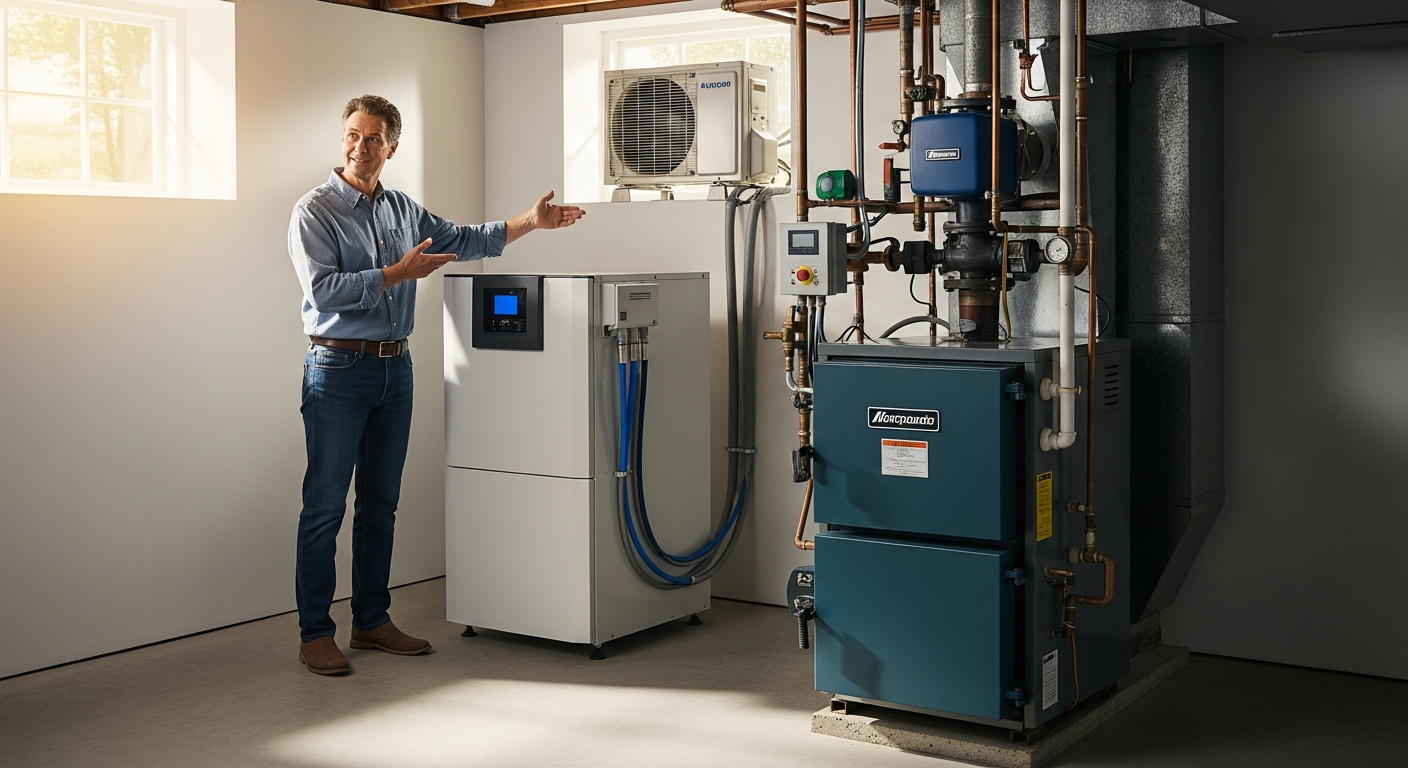
The Feenstra Hybrid Heat Pump System represents a breakthrough for homeowners caught between wanting to reduce their carbon footprint and needing a practical, affordable solution. Unlike all-electric heat pumps that require complete system overhauls, this hybrid approach pairs an efficient air-source heat pump with your existing gas boiler. Feenstra NL, a trusted Dutch specialist in heating and sustainable energy solutions, engineered this system specifically for homes like yours—ones that need flexibility, reliability, and real savings without the massive disruption.
How the Feenstra Hybrid Heat Pump System Actually Works
Dual-source heating mechanism
Your outdoor unit works quietly to extract ambient heat from the outside air. Rather than generating heat directly, the system transfers this extracted thermal energy through a heat exchanger, which warms the water circulating through your central heating system. This approach maximizes efficiency by harnessing free energy that's available even on cold days—a principle that defies the common misconception that heat pumps don't work in winter.
Intelligent boiler integration
Your existing gas CV-ketel doesn't disappear; instead, it becomes your intelligent backup. The system automatically activates your boiler during the coldest days when the heat pump alone cannot meet your heating demand. This seamless coordination ensures your home never experiences discomfort or cold spots, eliminating the performance anxiety that some homeowners feel about all-electric alternatives.
Seamless compatibility
Whether your home uses radiators, underfloor heating, or a combination of both, the Feenstra system integrates without requiring modifications to your existing infrastructure. Your current pipes, radiators, and distribution networks continue functioning exactly as before. This compatibility makes hybrid heating an elegant retrofit solution rather than a disruptive renovation project.
Efficiency hierarchy
The system operates with built-in intelligence about temperature conditions. During mild autumn days and spring months, the heat pump handles the majority of your heating demand because conditions favor efficient operation. As winter temperatures drop, the system gradually increases boiler involvement, ensuring optimal efficiency at every temperature point. This dynamic approach explains why real-world gas savings reach up to 70% rather than requiring 100% heat pump operation year-round.
Heat distribution
Warmed water produced by either the heat pump or boiler circulates through your existing central heating infrastructure. Your radiators heat up identically to how they always have, maintaining familiar comfort levels and requiring no behavioral changes or thermostat learning curves.
Outdoor unit requirement
A compact external unit handles air extraction, typically mounted on an exterior wall or roof. The visual footprint remains minimal compared to full heat pump installations, and professional placement ensures aesthetic integration with your home's architecture.
Real-World Gas Savings: What You'll Actually Reduce
Up to 70% gas consumption reduction
This remarkable figure emerges from strategic hybrid operation across seasonal temperature variations. Your heat pump operates at maximum efficiency during shoulder seasons and mild winter days, substantially reducing boiler activation. Only during the coldest weeks does your system rely heavily on gas heating, but by that point, the accumulated savings from months of heat pump operation create genuinely impressive annual reductions.
Monthly bill impact
Winter heating costs drop significantly once the system operates. Most homeowners observe reductions within their first billing cycle, with savings accumulating throughout the heating season. Spring and autumn months show even more dramatic savings as the heat pump handles nearly all thermal needs.
Year-round efficiency gains
Even during months that aren't peak winter, the heat pump works efficiently. September, October, March, and April—when temperatures hover above freezing but heating is still necessary—present ideal conditions for heat pump efficiency. These shoulder-season months represent extended periods where your boiler rarely activates, compounding annual savings beyond winter months alone.
CO2 emissions decrease
The proportional reduction in household carbon footprint follows logically from decreased gas consumption. A 70% reduction in gas usage translates directly to approximately 70% lower heating-related CO2 emissions. For environmentally conscious homeowners, this impact extends beyond personal energy bills to meaningful contribution toward climate goals.
Electricity consumption trade-off
Operating the heat pump requires electrical power to drive the compressor and circulation pumps. This modest increase in electricity consumption deserves honest acknowledgment, but the net energy savings remain substantial because the heat pump's coefficient of performance typically exceeds 3:1—meaning it delivers three units of thermal energy for every unit of electrical energy consumed.
Long-term financial trajectory
Savings compound across the system's 15-year lifespan. Year one might deliver €800-1,200 in annual gas savings for a typical household. Over 15 years, that compounds to €12,000-18,000 in cumulative savings before factoring in rising gas prices. Most households recover their initial investment within 7-10 years, with the remaining system lifespan generating pure financial gain.
Explore Feenstra's hybrid heat pump solutions and calculate your personalized savings potential.
Feenstra System Models: Power Output and Home Sizing
4kW heat pump option
Designed for smaller to medium-sized homes, the 4kW model handles properties with moderate heating demands efficiently. A typical three-bedroom home with average insulation falls comfortably within this category. The smaller capacity means lower upfront investment and reduced electrical draw, making it ideal for homeowners seeking entry-level hybrid heating.
6kW heat pump option
Engineered for larger homes or properties with higher heating requirements, the 6kW model delivers faster heat delivery and handles more demanding thermal loads. Four-bedroom homes, older properties with higher heat loss, or households with substantial space to warm benefit from this increased capacity.
Power output matching
Feenstra specialists assess your home's insulation quality, square footage, radiator capacity, and current heating performance to recommend the optimal model. This personalized approach prevents undersizing (which reduces efficiency) or oversizing (which wastes capital on unnecessary capacity).
Scalability considerations
System selection impacts both upfront costs and long-term operational efficiency. Matching power output to actual requirements ensures the heat pump operates in its optimal performance zone rather than constantly ramping up and down. Properly sized systems also minimize electricity consumption and wear on mechanical components.
Future expansion
The modular design allows for upgrades if household heating needs change. Expanding living space, adding additional bathrooms, or increasing hot water requirements can be accommodated through capacity adjustments, ensuring your system remains appropriately scaled for years to come.
Performance guarantees
Both models deliver consistent heating performance across Dutch winter conditions. Feenstra's engineering accounts for the climate challenges specific to the Netherlands, ensuring reliable operation even during rare extreme cold events.
Installation Process and What to Expect
Outdoor unit placement
Professional installation begins with positioning the external air-extraction unit. Technicians typically mount it on an exterior wall or roof, selecting locations that optimize air circulation while minimizing visual impact. The placement process requires minimal disruption to your property.
Indoor integration
Connection to your existing CV-ketel and central heating pipes follows established protocols. Certified technicians integrate the heat pump into your system with minimal intrusion, typically completing work without requiring structural modifications or extensive renovation.
Timeline expectations
Most installations complete within a manageable timeframe—typically one to three days depending on system complexity. Your home remains habitable throughout the process, and normal heating operation resumes promptly after commissioning.
Certified technicians
Feenstra's installation team brings specialized expertise in hybrid system configuration and safety compliance. Rather than generic heating contractors, you receive technicians specifically trained in this technology, ensuring professional-grade work that optimizes your system's performance.
System testing and commissioning
Thorough performance verification occurs before handover. Technicians test all operational modes, verify boiler integration, confirm proper water circulation, and ensure the system automatically transitions between heat pump and boiler operation under various temperature conditions.
Minimal home renovation
Unlike full heat pump retrofits that might require additional electrical upgrades, refrigerant line routing through exterior walls, or substantial indoor modifications, hybrid installation works within your home's existing infrastructure. Your radiators stay in place, your boiler remains integral to the system, and your current heating pipes accommodate the heat pump without modification.
Warranty and support
Comprehensive coverage protects your investment from day one. Beyond standard manufacturer warranties on components, Feenstra provides access to their maintenance expertise post-installation, ensuring your system operates optimally throughout its lifespan.
Breaking Down the Investment: Costs and Government Subsidies
4kW system pricing
Approximately €6,500 including professional installation covers the 4kW heat pump system without requiring replacement of your existing CV-ketel. For households with functional boilers, this pricing represents the complete investment needed.
6kW system pricing
Approximately €9,700 including installation applies when a new CV-ketel is also included. This option suits households whose current boiler has reached end-of-life or those preferring an entirely refreshed system with new components.
Government subsidy for 4kW
€1,700 in subsidies are available through Dutch renewable energy incentive programs for 4kW systems. This government recognition of hybrid heating's sustainability value substantially improves financial accessibility.
Government subsidy for 6kW
€2,150 in subsidies apply to 6kW systems through the same incentive programs. Larger system capacity qualifies for proportionally higher support, reflecting government commitment to scaling renewable heating across Dutch homes.
Net investment after subsidies
Actual out-of-pocket costs reduce dramatically once subsidies are applied. A 4kW system drops to €4,800 net cost; a 6kW system reaches approximately €7,550. These net figures transform the financial equation, making hybrid heating competitively priced against traditional boiler replacement alone.
Subsidy application process
Feenstra handles documentation and eligibility verification, ensuring you capture all available incentives without navigating bureaucratic complexity. Their established relationships with government agencies streamline the process considerably.
Financing options
Various payment plans spread costs across multiple years, avoiding large lump-sum expenditures. Monthly payment options often prove more manageable than upfront investment, particularly when combined with subsidy applications.
ROI timeline
Gas savings typically recover your net investment within 7-10 years. After reaching breakeven, the system's remaining 5-8 years of operation generate pure savings accumulation. This timeline transforms hybrid heating from an expense into a genuine investment yielding measurable returns.
Why Existing Homeowners Are Choosing Feenstra Over Full Replacements
Retrofit-friendly design
The Feenstra system integrates seamlessly with current CV installations. You avoid the complete system overhaul that all-electric heat pump conversion demands. This retrofit approach respects your home's existing infrastructure while delivering modern efficiency benefits.
Stepping-stone approach
Rather than viewing hybrid heating as a permanent endpoint, many homeowners recognize it as an intelligent intermediate step. Your home positions itself for future all-electric heating without forcing immediate total conversion. Technology improvements, changing regulations, and personal circumstances can all evolve before you make that final transition.
Risk mitigation
Your gas boiler backup eliminates concerns about heat pump performance during extreme cold snaps. Northern European winters occasionally produce temperature extremes that test all-electric systems. Maintaining your boiler as intelligent backup provides genuine peace of mind rather than theoretical reassurance.
Comfort continuity
Familiar heating system operation requires no learning curve or behavioral adjustments. Your home responds to temperature settings exactly as it always has. Radiators heat up identically, thermostat controls work as expected, and no new habits or compensatory behaviors become necessary.
Reduced disruption
You avoid extended downtime and extensive home modifications. Installation completes quickly with minimal lifestyle interruption. Your family maintains normal comfort levels throughout the process, and heating operation resumes immediately after commissioning.
Proven track record
Thousands of Dutch households already benefit from Feenstra's hybrid solution. This extensive real-world experience demonstrates genuine reliability across varied home types, climates, and usage patterns. You're adopting proven technology rather than experimental innovation.
Trusted provider reputation
Feenstra's expertise spans heating, cooling, and ventilation systems. This comprehensive specialization ensures professional-grade installation and ongoing support grounded in genuine technical mastery rather than generic equipment installation.
Comparing Hybrid vs. All-Electric vs. Traditional Heating
Hybrid heat pump advantage
The hybrid approach balances sustainability ambitions with practical reliability and comfort assurance. You achieve meaningful environmental impact without the risk, disruption, or cost of full conversion. This middle path appeals to pragmatic homeowners unwilling to abandon proven technology for unproven alternatives.
All-electric heat pump drawback
Complete system replacement becomes necessary, dramatically increasing upfront investment. Potential performance concerns during extreme cold persist despite manufacturer assurances. Some homeowners report comfort compromises during the coldest winter weeks when all-electric systems operate at reduced capacity.
Traditional CV-ketel limitation
Continued fossil fuel dependency locks your home into rising gas prices and increasing regulatory scrutiny. No gas savings materialize, and no environmental progress occurs. Modern boiler replacements address efficiency marginally but fundamentally fail to deliver the transformative impact that hybrid heating provides.
Hybrid sweet spot
Hybrid systems deliver meaningful environmental impact without the risk, disruption, or cost of full conversion. You capture 70% of potential gas savings while maintaining your boiler backup. Financial accessibility improves through government subsidies, making hybrid heating competitive against boiler replacement alone.
Electricity grid readiness
Hybrid systems require less electrical capacity than all-electric alternatives. If your home's electrical service panel lacks capacity for all-electric heat pump installation, hybrid heating often operates within existing infrastructure, avoiding expensive electrical upgrades.
Maintenance simplicity
Hybrid systems leverage existing boiler expertise while introducing efficient heat pump technology. Technicians familiar with traditional CV systems understand boiler maintenance, and Feenstra adds specialized heat pump knowledge. This blended approach proves more accessible than requiring entirely new expertise for all-electric systems.
Flexibility advantage
Hybrid heating maintains the option to transition to all-electric in the future without your current system becoming obsolete. You're building infrastructure that scales toward greater sustainability rather than locking yourself into a single technological path.
Environmental Impact and Sustainability Credentials
Carbon footprint reduction
Up to 70% decrease in household gas-related CO2 emissions represents substantial environmental contribution. For a typical Dutch home, this reduction translates to approximately 2-3 tons of annual CO2 avoided—equivalent to taking a car off the road or planting hundreds of trees annually.
Renewable heat utilization
The air-source heat pump harnesses ambient thermal energy present even in cold air. This renewable approach minimizes fossil fuel reliance, progressively shifting your home toward sustainable heating without abandoning proven reliability.
Alignment with Dutch climate goals
The Netherlands targets significant residential heating emissions reductions by 2030 and beyond. Hybrid heat pump adoption supports these national commitments while demonstrating individual household responsibility toward collective climate objectives.
Sustainable stepping stone
Hybrid heating demonstrates genuine commitment to environmental responsibility while maintaining practical living standards. Your household gains environmental credentials without sacrificing comfort or convenience—a balance that inspires neighbors and family toward their own sustainability investments.
Energy independence progression
Reducing gas dependency builds resilience against price volatility and supply disruptions. Your heating costs stabilize as electricity generally experiences more predictable price trajectories than volatile gas markets. This economic insulation complements environmental benefits.
Future-proofing benefits
Increasingly stringent building regulations and energy efficiency standards favor homes with reduced fossil fuel dependency. Hybrid heating positions your property favorably for evolving regulatory landscapes, protecting long-term property values and avoiding obsolescence.
Lifecycle considerations
The 15-year system lifespan involves recyclable components and minimal environmental impact at end-of-life. Unlike some technologies that create disposal challenges, hybrid systems integrate into established recycling infrastructure.
Maintenance, Lifespan, and Long-Term Reliability
Expected lifespan
Approximately 15 years of operational life matches traditional CV-ketel durability. This proven timeframe allows confident long-term planning and financial projections without technological obsolescence concerns.
Maintenance requirements
Routine servicing resembles conventional boiler maintenance. Annual inspections, periodic filter cleaning, and system performance checks maintain optimal operation. Feenstra provides comprehensive support programs tailored to hybrid system requirements.
Heat pump component durability
Air-source units engineered for extended operational life deliver proven reliability across European climates. Established supply chains and component availability ensure repairs remain accessible throughout the system's lifespan.
Boiler backup reliability
Your integrated CV-ketel continues functioning as backup indefinitely. System reliability doesn't depend on heat pump performance alone—your proven boiler provides heating security regardless of heat pump operational status.
Service accessibility
Feenstra's ongoing maintenance programs ensure system optimization throughout operational life. Regular servicing prevents performance degradation and extends component lifespan beyond standard expectations.
Parts availability
Established supply chains for hybrid system components eliminate obsolescence concerns. Both heat pump and boiler elements benefit from mature manufacturing and distribution networks, ensuring repairs remain affordable and expedient.
Performance degradation
Minimal efficiency loss occurs over time. Regular maintenance preserves near-original performance levels throughout the system's lifespan, ensuring year-15 operation remains nearly as efficient as year-1 performance.
Making the Decision: Is Feenstra Right for Your Home?
Ideal candidate profile
Existing homes with functioning CV systems represent perfect candidates. Homeowners seeking gas reduction without complete overhaul benefit most from hybrid heating. You needn't be exclusively motivated by environmental concerns—financial savings alone justify installation for many households.
Home size assessment
Determine whether your property suits the 4kW or 6kW model. Smaller three-bedroom homes with average insulation typically fit 4kW parameters. Larger properties, older construction with higher heat loss, or homes with substantial space requirements suit the 6kW system better.
Financial readiness
Net investment after subsidies becomes genuinely manageable for most households. Initial costs present less obstacle when government support reduces actual expenditure by €1,700-2,150. Long-term savings justify upfront investment for homeowners planning to remain in their homes for 7+ years.
Sustainability motivation
Genuine desire to reduce carbon footprint while maintaining comfort and reliability positions you ideally for hybrid heating adoption. You needn't sacrifice practical considerations for environmental values—hybrid systems deliver both simultaneously.
Timeline flexibility
Willingness to adopt phased approach rather than demanding immediate all-electric conversion suits hybrid heating perfectly. If you recognize that sustainable heating evolves gradually rather than transforming overnight, this system aligns with realistic expectations.
Feenstra consultation
Free assessment determines system suitability, optimal model, and personalized cost projections. Specialists evaluate your current installation, calculate potential savings with subsidies factored in, and answer every technical question comprehensively.
Long-term vision
Viewing hybrid systems as practical foundation for future energy transition rather than final destination reflects intelligent long-term thinking. Your home positions itself for evolving technology and regulations without forcing today's decisions to lock you into outdated paths.
The Bottom Line: Securing Your Heating Future
The Feenstra Hybrid Heat Pump System represents a genuinely compelling option for Dutch homeowners ready to cut gas consumption without gambling on unproven all-electric alternatives. You're looking at real savings—potentially 70% reductions in gas usage—combined with meaningful environmental impact and government subsidies that make the investment genuinely accessible.
The beauty lies in simplicity: your existing boiler remains your safety net, your current radiators keep working exactly as they always have, and installation disruption stays minimal. What makes this approach particularly smart is the flexibility it preserves. You're not locked into a single heating future; instead, you're building a sustainable foundation that can evolve as technology improves and your circumstances change.
Whether you're motivated by shrinking energy bills, reducing your household's carbon footprint, or simply wanting a heating solution that actually works for Dutch winters, the Feenstra system delivers on multiple fronts. The combination of proven technology, government financial support, and genuine performance advantages creates an opportunity window worth serious consideration.

Leave a Reply