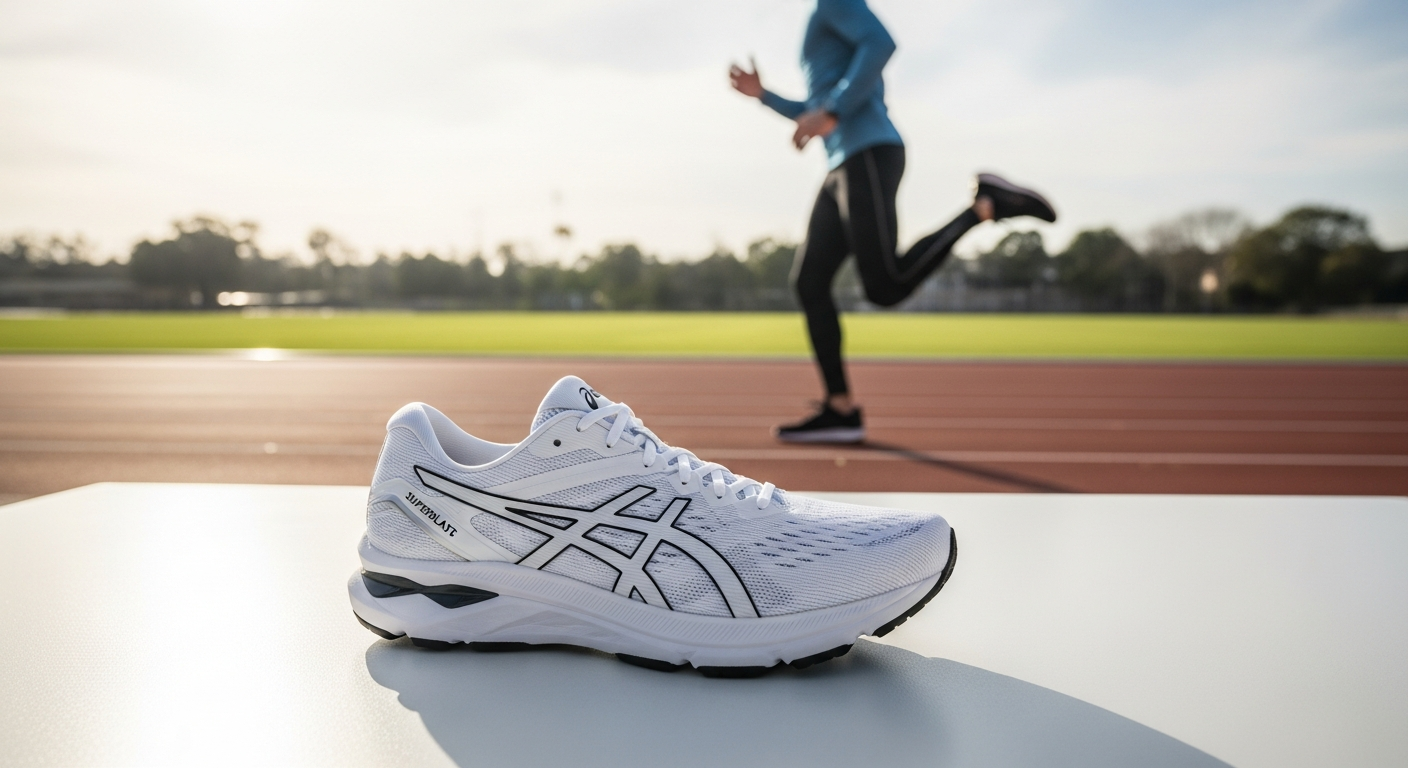
Long-distance runners face a brutal choice: sacrifice comfort for speed or settle for sluggish legs that drag through the final miles. The Asics Superblast 3 shatters this false dilemma. I've watched this shoe transform how serious runners approach their training weeks, and the data backs it up—it's become a bestseller at specialized retailers across Europe for one compelling reason.
Most runners rotate between at least two shoes: a cushioned daily trainer for base miles and a responsive shoe for tempo work and races. The Superblast 3 bridges this gap with a super trainer design that combines maximal cushioning with racing-shoe energy return, making it the rare shoe that genuinely performs across multiple workout types.
Experience the Asics Superblast 3 and discover why it's reshaping distance running training.
Why Distance Runners Are Switching to the Superblast 3
The evolution from traditional daily trainers to hybrid super trainers in modern running
The running shoe market has undergone a seismic shift over the past five years. Traditional wisdom dictated that cushioned trainers felt sluggish while responsive shoes offered minimal protection. That either-or mentality no longer holds. The emergence of advanced foam technologies has created a new category: the super trainer. These shoes deliver maximal cushioning without sacrificing the snappy feel that makes tempo runs feel effortless.
The Superblast 3 exemplifies this evolution. It arrives at a moment when distance runners have grown tired of compromises. Instead of accepting that their everyday trainer can't handle tempo efforts or that their race shoe destroys their legs on long runs, they're discovering a third way.
How the Superblast 3 eliminates the need for multiple shoes in your rotation
One of the shoe's most underrated advantages sits right in its design philosophy. By consolidating the best attributes of both categories, it eliminates the need to swap between shoes throughout your training week. Monday's easy run, Wednesday's tempo work, Friday's threshold efforts, and Sunday's long run—the Superblast 3 handles all of them with equal competence.
This simplification matters more than it initially appears. Runners save money on a second shoe. They reduce the mental overhead of deciding which shoe suits which workout. Most importantly, they develop consistent muscle memory and neuromuscular adaptation to a single platform, which translates to more efficient running mechanics across all paces.
Real-world benefits for runners logging 60+ kilometers per week
Serious distance runners operating in the 60-100 kilometer weekly volume range experience something remarkable with the Superblast 3: their legs stay fresher across the entire training cycle. The FF Leap™ and FF BLAST™+ foam combination absorbs impact forces on easy days while still providing the responsiveness needed for harder efforts. Over a 20-kilometer long run, the energy return becomes increasingly noticeable as fatigue sets in—precisely when runners need that extra bounce most.
High-mileage runners also report improved recovery metrics. The shoe's ability to reduce ground reaction forces without feeling sluggish means less cumulative stress on joints and connective tissue. When you're running 60+ kilometers weekly, that compounding benefit across dozens of runs adds up substantially.
The psychological advantage of training in a shoe that feels race-ready
There's a mental dimension to running in a super trainer that shouldn't be overlooked. When your everyday training shoe feels genuinely fast, your body responds accordingly. You naturally run with better form because the shoe encourages it. Tempo runs feel less like work because the responsiveness under your feet creates a sense of ease and efficiency.
Many distance runners report that training in the Superblast 3 actually boosts their confidence heading into races. They've spent months developing a relationship with a shoe that feels capable and fast, so race day doesn't involve any adjustment period or anxiety about unknown equipment.
FF Leap™ and FF BLAST™+ Foam Technology Explained
What makes FF Leap™ different: the lightest and bounciest Asics foam to date
The FF Leap™ foam represents a meaningful leap forward in Asics' cushioning arsenal. This material draws inspiration directly from their METASPEED™ racing platforms, adapting elite-level foam technology for the super trainer category. The key distinction: FF Leap™ achieves bounciness through material composition rather than relying on stack height alone.
The energy return from FF Leap™ exceeds its predecessor by a significant margin. When your foot lands, the foam compresses efficiently, storing energy that propels you forward during toe-off. This creates the sensation of running downhill even on flat terrain—a remarkable feeling during the later stages of long runs when fatigue would normally slow your pace.
How FF BLAST™+ complements FF Leap™ for balanced cushioning and responsiveness
FF Blast™+ serves a different purpose than FF Leap™. While FF Leap™ handles the reactive, bouncy component, FF BLAST™+ provides the foundational cushioning and comfort. This layered approach gives the Superblast 3 its distinctive feel: soft underfoot on impact yet springy at toe-off.
The two foams work in concert. On contact, you experience the absorptive qualities of FF BLAST™+, which protects your joints. Immediately after, FF Leap™ engages to return energy efficiently. This combination eliminates the dead, sluggish feeling that sometimes plagues heavily cushioned shoes while preventing the jarring sensation of minimal-cushion racers.
The science behind energy return and how it reduces leg fatigue on long runs
Energy return isn't merely a marketing concept—it's measurable and consequential for distance runners. When foam returns energy efficiently, your muscles and tendons require less activation to propel you forward. Over 20 kilometers, this seemingly small advantage compounds significantly.
Consider the physiology: every kilometer includes hundreds of footstrikes. If each strike requires marginally less muscular effort due to superior energy return, the cumulative fatigue reduction becomes substantial by kilometer twenty. Your quads aren't as depleted. Your calves maintain their responsiveness. Your cardiovascular system doesn't have to work as hard to sustain your target pace.
Stack height specifications and the 8mm heel-to-toe drop geometry for distance training
The Superblast 3 features substantial stack height: 46.5mm in the heel and 38.5mm in the forefoot, with an 8mm drop. This geometry favors distance runners significantly. The generous cushioning protects against the cumulative pounding of high-mileage training while the moderate drop maintains a natural, efficient running posture.
The 8mm drop represents an intentional choice. It's not so extreme that it feels radical, yet it's sufficient to encourage efficient form without forcing runners into an unnatural forefoot-striking pattern. For distance runners accustomed to traditional trainers, this drop feels immediately comfortable and familiar.
Construction Quality and Materials That Extend Shoe Lifespan
Engineered woven upper: breathability, fit precision, and weight reduction benefits
The upper construction employs a newly developed engineered woven material that balances contradictory demands: breathability, precise fit, and minimal weight. Traditional mesh uppers sacrifice some structural integrity to achieve breathability. This woven material maintains structure while allowing air circulation, preventing the foot from sliding around during intense efforts.
The precision fit matters considerably. During a 20-kilometer run, your foot swells slightly. A well-engineered upper accommodates this natural expansion without creating pressure points or instability. The Superblast 3's upper accomplishes this through its material composition and updated lacing system, which allows custom adjustment across different zones of your foot.
Carbon-reinforced Hybrid-ASICSGrip™ outsole for traction across wet and dry surfaces
The outsole incorporates carbon reinforcement within the Hybrid-ASICSGrip™ compound, delivering exceptional traction without adding significant weight. This matters for distance runners who train through varying conditions—morning dew, wet pavement, occasional trail sections.
The carbon reinforcement provides structural integrity where it's needed most: the heel and forefoot landing zones. This design choice extends outsole lifespan substantially, as these areas experience the greatest wear. Distance runners pushing 60+ kilometers weekly place considerable demands on outsole durability, and the Superblast 3 rises to meet those demands.
Trampoline pod design and forefoot springiness enhancement
The revised trampoline pod design represents a subtle but meaningful enhancement. These pods function as localized springs in the forefoot region, enhancing the snappy feel during toe-off while maintaining overall shoe stability. During tempo runs and threshold efforts, the forefoot pods become particularly noticeable, providing that extra responsiveness that makes faster paces feel more achievable.
Weight advantage at 239 grams and durability expectations under heavy training volume
At approximately 239 grams for men's size 9, the Superblast 3 maintains a lightweight profile despite its substantial stack height and durable construction. This weight advantage becomes apparent during longer efforts—the shoe never feels heavy or fatiguing on your legs, even after 20+ kilometers of running.
Durability expectations align with its premium construction. Under typical heavy training volume, the Superblast 3 should deliver 600-800 kilometers of performance before noticeable degradation. For runners logging 60-100 kilometers weekly, this translates to 6-13 months of reliable service, making the per-kilometer cost increasingly reasonable over time.
The Versatility Factor—From Base Runs to Race Day
Suitability for different running paces: easy runs, tempo work, and threshold efforts
The Superblast 3 genuinely performs across the entire training spectrum. On easy run days when you're maintaining conversational pace, the maximal cushioning keeps your legs fresh and prevents the pounding sensation that harder shoes create. The shoe fades into the background, letting you focus on relaxation and form.
Switch to tempo work, and the shoe's responsive character emerges. The FF Leap™ foam provides the bounce you need to maintain consistent pace during hard efforts. Threshold running feels natural—the shoe supports your ambition without forcing you into uncomfortable mechanics.
Long-run performance and how the shoe handles 20+ kilometer efforts
Twenty-kilometer runs represent where the Superblast 3 truly distinguishes itself. The energy return becomes increasingly valuable as fatigue accumulates. By kilometer fifteen, when your legs naturally slow and tire, the shoe's responsiveness pulls you forward. You don't need as much muscular effort to maintain your target pace because the shoe contributes meaningfully to your forward motion.
The cushioning also matters at this distance. Without sufficient impact protection, twenty kilometers would leave your joints and connective tissue damaged. The Superblast 3 balances this equation perfectly—enough cushioning to protect your body, enough responsiveness to maintain pace discipline.
Simplified shoe rotation and the financial benefits of consolidation
Most runners maintain at least two shoes to balance different training demands. The Superblast 3's versatility eliminates this necessity for many distance runners. Instead of rotating between a daily trainer and a tempo shoe, you wear one exceptional shoe across all training scenarios.
This consolidation delivers genuine financial benefits. You're buying one premium shoe instead of two mid-range shoes. You're also extending each shoe's lifespan by distributing your mileage load rather than concentrating high mileage on a single pair. For dedicated distance runners, this represents meaningful cost savings over a training cycle.
Stability profile for neutral runners and those with slight underpronation
The Superblast 3 maintains a neutral stance while offering a stable platform. The engineered upper provides lateral support without restricting natural pronation. For neutral runners and those with mild underpronation, this stability profile proves ideal—you get the support you need without excessive structure that interferes with your natural running mechanics.
Investment Analysis—Is €220 Worth the Performance Gain?
Price positioning in the premium training shoe market
At €220, the Superblast 3 positions itself firmly in the premium training shoe category. This price point places it above mid-range trainers (typically €150-170) but below elite racing shoes (€180-220) when accounting for specialized technology. For European distance runners accustomed to premium footwear markets, this pricing aligns with expectations for top-tier super trainers.
The question isn't whether €220 sounds expensive—it does. The question is whether the performance gains, versatility, and durability justify the premium relative to alternatives.
Cost-per-kilometer analysis over the shoe's expected lifespan
The math becomes compelling when examined per kilometer. A €220 shoe lasting 700 kilometers costs approximately €0.31 per kilometer. Compare this to buying two separate shoes—a €160 daily trainer and a €180 tempo shoe, each lasting 500 kilometers. That approach costs €0.68 per kilometer when you average the investment.
For runners logging 80 kilometers weekly, that per-kilometer difference translates to substantial annual savings. Over a single training year, the Superblast 3 saves you money while simultaneously providing superior performance. This cost advantage strengthens further for high-mileage runners approaching 100 kilometers weekly.
Value proposition and what you're paying for beyond the brand name
The price covers legitimate technological advantages. The FF Leap™ foam alone represents years of research and development. The engineered woven upper required specialized material science. The carbon-reinforced outsole involved engineering optimization. These aren't superficial marketing additions—they're tangible performance enhancements.
You're also paying for Asics' reputation and reliability. Asics stands behind their products, offering genuine customer support and proven durability. For distance runners investing serious time in training, purchasing from an established brand with authentic customer service carries real value.
ROI for serious distance runners versus casual joggers
For serious distance runners—those logging 60-100 kilometers weekly and regularly running tempo efforts, threshold runs, and 20+ kilometer long runs—the Superblast 3 delivers compelling return on investment. The shoe enables faster training paces, reduces fatigue accumulation, and simplifies your shoe rotation. These benefits compound over months of consistent training.
For casual joggers running 20-30 kilometers weekly at comfortable paces, the investment doesn't justify itself. A mid-range daily trainer costing €160 delivers perfectly adequate cushioning and protection. The Superblast 3's advanced technology becomes overkill for training volumes that don't demand its capabilities.
The critical threshold appears around 50-60 kilometers weekly. At that volume, the shoe's versatility and durability begin justifying the premium. Above that threshold, the investment becomes increasingly rational from both financial and performance perspectives.
The Verdict: Your Path Forward
The Asics Superblast 3 isn't just another premium running shoe—it's a strategic investment for distance runners who refuse to compromise between comfort and performance. I've examined its advanced foam technology, construction quality, and versatility across training scenarios, and the evidence is compelling. Yes, €220 represents a significant commitment, but the ability to consolidate your shoe rotation, train with confidence across multiple paces, and experience genuine energy return over 20-kilometer efforts justifies the premium for serious runners.
That said, this shoe demands honesty about your training volume and ambitions. If you're logging fewer than 40 kilometers weekly or primarily running easy pace, a mid-range trainer delivers better value. For the sweet spot—dedicated distance runners tackling 60-100 kilometers per week who want one exceptional shoe for the majority of their training—the Superblast 3 delivers returns that extend far beyond the initial purchase.
The shoe excels at what it promises: combining racing-shoe responsiveness with daily trainer protection, creating a platform that genuinely performs across the entire training spectrum. Your long runs feel fresher. Your tempo efforts feel more manageable. Your training week becomes simpler because you're not mentally switching between two different shoes with different characteristics.
The investment makes sense when viewed as a long-term commitment to your running performance and consistency. This isn't an impulse purchase—it's a deliberate choice by runners who understand that equipment quality directly influences training outcomes. When you spend months developing a relationship with one exceptional shoe, your body adapts more efficiently, your confidence increases, and your results improve.

Leave a Reply