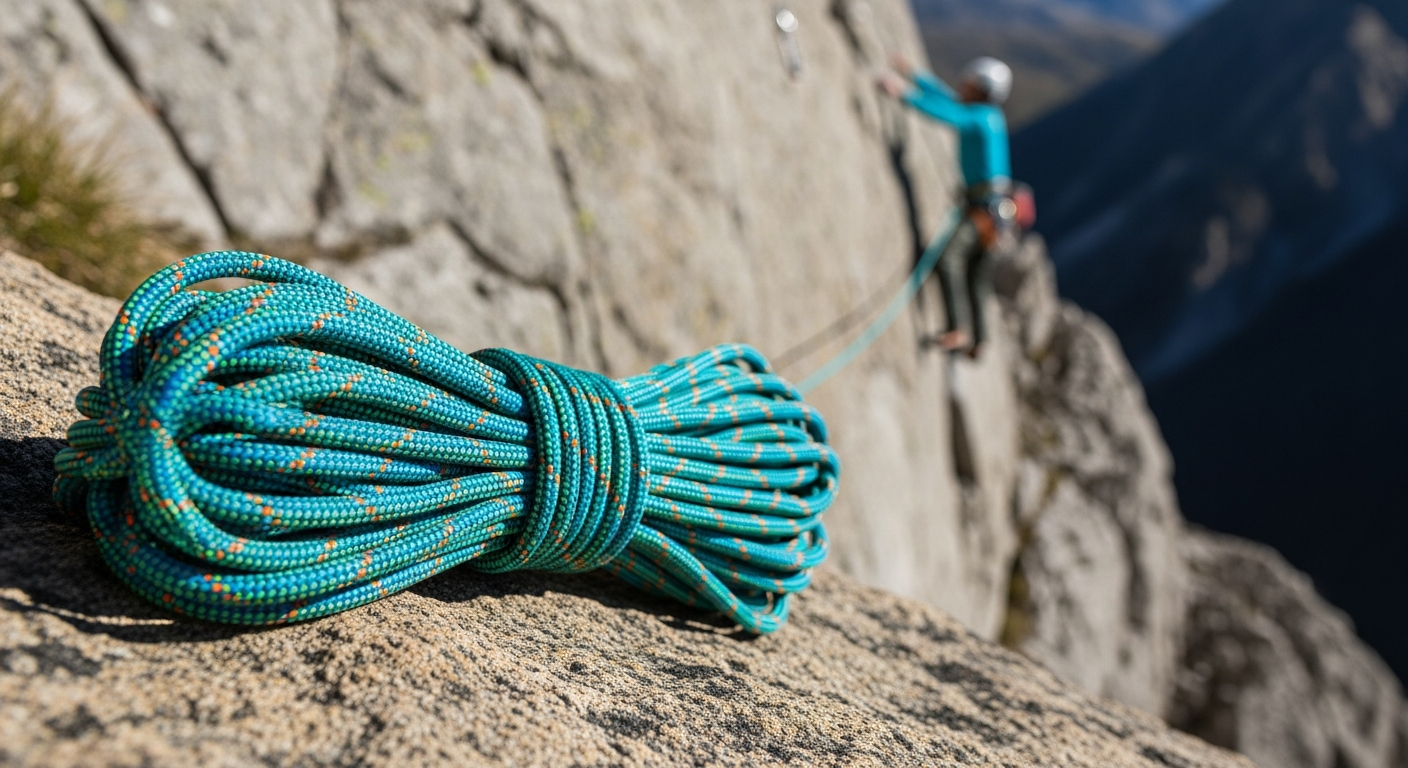
Mammut Infinity 9.5mm climbing rope coiled on rocky terrain showing sheath construction and dry treatment

Mammut Infinity 9.5mm Climbing Rope: The Versatile Workhorse for Multi-Pitch and Sport Climbing

When climbers talk about the ideal rope, they're often describing something that feels like a contradiction: light enough to carry for hours yet strong enough to catch falls without hesitation. The 9.5mm diameter has emerged as the sweet spot for climbers who refuse to compromise on either front. This size carries the weight of a feather during long approaches while absorbing punishment from countless falls without flinching, making it the diameter that bridges every climbing discipline.

The Mammut Infinity 9.5mm represents far more than just another option in the rope aisle. This rope has earned its best-seller status through years of real-world testing by climbers who demand reliability in unpredictable conditions. What sets it apart is its genuine versatility—it performs brilliantly across sport climbing, traditional climbing, multi-pitch expeditions, and light alpine work without requiring gear swaps or compromise.

Discover why the Mammut Infinity 9.5mm has become the standard choice for climbers building a single-rope quiver.

This guide examines what makes the Infinity stand out in a crowded market. You'll uncover the technical specifications that enable its versatility, understand how its handling characteristics make climbing more enjoyable, explore the durability advantages that justify its investment, and identify the specific scenarios where this rope truly shines.

The Engineering Behind 9.5mm: Why This Diameter Dominates

The physics of diameter and climbing performance

Rope diameter fundamentally shapes how a climber experiences the gear. Thinner ropes reduce weight and pack volume, critical for alpine routes and long approaches. Thicker ropes distribute impact forces over a larger surface area and offer greater durability for high-use environments. The 9.5mm Infinity occupies the middle ground where both advantages coexist rather than compete.

At 58-59 grams per meter, the Infinity delivers a rope that won't exhaust your arms during all-day climbing sessions or force you to question whether a longer approach is worth the effort. This weight-per-meter figure places it in the practical middle ground—heavier than specialized alpine sending ropes, lighter than dedicated gym-to-crag workhorses, and perfectly suited for climbers who don't want to choose between disciplines.

The balance between protection and portability

The physics of rope diameter directly impact how forces distribute during a fall. A 9.5mm rope spreads impact forces across a surface area that's genuinely substantial—noticeably more protective than a 9mm rope, yet without the bulk penalty of a full 10mm strand. Climbers who've transitioned from thinner ropes often report an immediate sense of security: the rope feels more substantial in hand, catches feel noticeably softer, and the psychological reassurance matters as much as the physics.

For long approaches where every kilogram counts, this diameter makes sense. For cragging sessions where multiple falls are inevitable, the extra diameter still provides meaningful protection without the weight penalty that comes with thicker ropes. The 9.5mm essentially asks: why choose between comfort and practicality when you don't have to?

Comparing neighboring sizes and their trade-offs

A 9mm rope might save you a few hundred grams across a 70-meter length, but you're accepting noticeably firmer handling and reduced durability under intensive use. The Infinity 9.5mm's marginal weight increase buys you substantially better handling and longevity without crossing into the territory where you're genuinely carrying excess baggage.

Moving to 10mm introduces noticeable weight penalties—the rope becomes appreciably heavier, packing becomes bulkier, and long approaches feel genuinely different. For the vast majority of climbing scenarios, that extra thickness delivers diminishing returns. The 9.5mm sweet spot avoids both the compromises of thinner diameters and the inefficiencies of thicker options.

The sheath-to-core proportion and abrasion resistance

The Infinity's approximately 40% sheath ratio creates a protective layer substantial enough to resist the constant friction of rock edges, repeated falls, and the general violence of climbing, yet not so thick that it stiffens the rope or dampens the feel. This proportion reflects engineering discipline—the designers resisted the urge to add unnecessary sheath material and instead optimized what's there.

Climbers notice this proportion through the absence of "peach fuzz"—that fuzzy degradation that appears when a rope's sheath begins deteriorating. The Infinity's resistance to this effect means your rope looks and feels newer for longer, even after seasons of regular use. This isn't just cosmetic; a clean sheath maintains the rope's handling characteristics and signals that the protective layer is still doing its job effectively.

Dry Treatment Technology and Weather Performance

Understanding the proprietary dry coating system

Mammut's dry treatment works by coating both the sheath and the core with a water-repellent compound. This dual approach matters because water doesn't just sit on the surface—it seeps into the rope's structure if given the chance, adding weight and compromising handling. By treating both layers, Mammut ensures that water struggles to penetrate at any point.

The coating isn't a temporary surface treatment that washes away after a few seasons. It's engineered to remain effective through repeated washing, fall impacts, and the constant flex that comes with regular use. Climbers who've used treated ropes in wet conditions report that the handling barely changes from day one to day 200, a consistency that's genuinely valuable in variable weather.

Water repellency and rope lifespan extension

A rope that absorbs water becomes heavier, stiffer, and less pleasant to handle—and more importantly, it degrades faster. Water accelerates oxidation processes in the rope's fibers, shortening its useful lifespan. By keeping water out, the dry treatment extends the Infinity's working life noticeably, particularly for climbers who regularly encounter wet conditions.

The UIAA water repellency standards represent a demanding benchmark. The Infinity doesn't just meet these standards; it exceeds them, meaning the rope stays drier and performs better than even rigorous testing requires. For alpine climbers, winter cragging enthusiasts, and anyone climbing in temperate climates where wet conditions are common rather than rare, this advantage compounds through seasons of use.

Dirt ingress prevention and long-term handling maintenance

Dirt that works into a rope's fibers acts as an abrasive that accelerates sheath degradation from the inside out. The dry treatment creates a water-repellent barrier that also resists dirt penetration. Ropes treated this way require less aggressive cleaning and remain supple for longer, even in genuinely dirty climbing environments.

Climbers who've used the Infinity in muddy areas—typical of UK climbing or wet alpine conditions—report that the rope doesn't accumulate the grime buildup that thinner-sheathed alternatives develop. The handling remains consistent, and when you do wash the rope, it returns to its original feel rather than maintaining a residual stiffness from embedded particles.

Experience the difference a dry-treated 9.5mm rope makes in maintaining consistent performance across seasons.

Handling Characteristics and the Out-of-Bag Experience

The supple, predictable feel

Most new ropes feel somewhat stiff, requiring break-in time before they handle smoothly. The Infinity breaks this pattern. Climbers consistently report that the rope feels ready immediately, with a supple character that makes clipping bolts and managing rope smoother from day one. This isn't a minor convenience—it means you're enjoying your rope rather than tolerating it while it breaks in.

The suppleness comes from both the diameter and the construction philosophy. At 9.5mm, the rope has enough flexibility to move smoothly without that stiffness smaller-diameter ropes sometimes exhibit. The engineering team clearly optimized for the feel climbers actually experience rather than pursuing theoretical specifications at the expense of practical handling.

Minimal break-in period

Climbers sometimes invest in ropes and find themselves frustrated by weeks of stiff handling before the rope reaches its potential. The Infinity shortens this timeline dramatically. Within a few sessions, what was ready out of the bag becomes genuinely supple as the rope's fibers settle. This difference matters for climbers who don't have time to gradually condition new gear—they need it working well immediately.

Smooth clipping and belaying across extended sessions

The rope's predictable diameter and consistent handling mean clipping bolts remains smooth even during marathon cragging days. Unlike ropes that become unpredictable or difficult as you work through tired hands, the Infinity maintains its character across climbing sessions that stretch for hours. Belayers appreciate the consistent, manageable rope feel whether they're working on the first pitch or the fifth.

The soft catch—that cushioned deceleration during a fall—reflects supple handling translated into functional safety. Climbers and belayers both notice this; the catch feels controlled rather than violent, reducing the psychological impact of falls and making the rope feel more forgiving.

Durability and Abrasion Resistance in High-Use Scenarios

The sheath's resistance to degradation

The 40% sheath proportion provides meaningful protection without unnecessary bulk. Climbers who put their ropes through intensive use at the crag—multiple falls per session, rough stone, repeated use at the same anchors—report that the Infinity maintains its appearance far longer than expectations would suggest. The sheath doesn't develop significant peach fuzz even after seasons of regular sessions.

This durability isn't accidental. The sheath's composition includes materials selected specifically for abrasion resistance. The dry treatment adds another protective layer, making the sheath more resistant to the friction that causes degradation. The combination creates a rope that handles punishment while maintaining its character.

Protection against sharp edges and repeated impact

Traditional climbing frequently means managing sharp rock edges and variable protection. The Infinity's sheath thickness provides meaningful protection against the cutting hazards that worry climbers protecting themselves. The rope doesn't just resist individual sharp encounters; it tolerates repeated exposure to harsh conditions without accelerated degradation.

The data from climbing communities and retailers bears this out. Used Infinity ropes regularly appear on secondhand markets with surprisingly good remaining life. Climbers selling ropes often have simply upgraded for longer models rather than worn out their previous strand. This speaks to genuine durability under real-world climbing conditions.

Expected lifespan and usage intensity

The Infinity's lifespan depends on climbing intensity, environmental conditions, and how aggressively you use the rope. For moderate users—climbers who session the crag weekly and take care of their gear—the rope typically provides 5-7 years of reliable service. For intensive users working projects regularly, the lifespan might compress to 3-4 years. For lighter use or primarily single-pitch outdoor climbing, 7+ years isn't unrealistic.

The UIAA certification provides some framework for expected durability, but real-world use varies. What's consistent is that the Infinity typically lasts longer than ropes costing less and matches or exceeds the lifespan of ropes costing more. The construction and materials justify the investment through sheer longevity.

Ideal Use Cases: Where the Infinity Truly Shines

Sport climbing and single-pitch crag sessions

Sport climbing represents the Infinity's native habitat. The rope's handling characteristics, soft catch, and weight make it genuinely enjoyable for clipping bolts and working projects. Whether you're establishing new routes or working existing problems, the rope responds predictably. The dry treatment means wet conditions don't force you to change your game plan.

Climbers often report that the Infinity simply disappears—you stop thinking about the rope and focus on the climbing. This quality, which sounds abstract, translates directly into more relaxed climbing and better performance. When the gear stops commanding attention, your climbing improves.

Traditional climbing and variable protection

Traditional climbing demands rope reliability under unpredictable conditions. Protection placement varies, impact dynamics change, and the rope must perform consistently across scenarios the climber can't fully control. The Infinity's versatility—balanced handling, responsive catch, durable sheath—makes it genuinely reliable for trad climbing from single-pitch to multi-pitch routes.

The rope's dry treatment matters for traditional climbing more than some realize. Muddy approaches and wet conditions are common in traditional climbing areas, particularly in maritime climates. A rope that resists water ingress maintains its handling and longevity where less-protected alternatives would start showing degradation.

Multi-pitch alpine routes and weight-critical scenarios

Alpine climbing introduces genuine weight considerations that transform the 9.5mm advantage into practical value. A 70-meter Infinity at 58-59g per meter totals roughly 4 kg—noticeable enough that climbers think about it, yet light enough that longer approaches remain reasonable. Compare this to a 10mm rope at the same length, and you're looking at noticeably more weight without proportional durability gains.

The supple handling matters at altitude. Tired hands and cold temperatures make difficult rope handling genuinely dangerous. The Infinity's responsive behavior remains consistent whether you're climbing at sea level or alpine elevations, where equipment reliability becomes psychologically and practically critical.

Gym-to-crag progression for climbers building their first personal rope

Climbers investing in their first personal rope often face paralysis: what will I actually use this rope for? The Infinity solves this by genuinely covering nearly every scenario. Gym climbers transitioning to outdoor cragging can take this rope to single-pitch sport areas, multi-pitch traditional routes, or alpine ventures. The versatility means your first rope investment isn't limiting—it's enabling.

For climbers still discovering their primary discipline, the Infinity provides breathing room to explore. You won't outgrow it quickly because it adapts to your climbing rather than forcing you into predetermined categories.

Value Proposition and Investment Perspective

Price positioning relative to performance

The Infinity typically ranges from $160 to $260 for a 60-70 meter length, placing it in the mid-to-premium category. This positioning reflects the reality of the product: the rope costs more than budget alternatives but less than ultra-specialized ropes targeting niche uses. The price includes the dry treatment, quality construction, and the engineering discipline reflected in the 9.5mm diameter and sheath ratio.

For climbers comparing prices, the question worth asking isn't "is this the cheapest rope available?" but rather "does this rope deliver value relative to its cost?" By that metric, the Infinity performs solidly. Cheaper alternatives typically sacrifice handling or durability; more expensive ropes often target specialization rather than versatility.

Cost-per-use analysis for frequent climbers

A climber who sessions the crag weekly across 5-7 years of Infinity ownership spreads the rope's cost across hundreds of climbing days. The per-use cost becomes negligible compared to other climbing expenses. Viewed this way, investing in a rope that handles beautifully and lasts genuinely is economically sensible.

The calculation becomes even more favorable when you consider that cheaper ropes often require earlier replacement or sacrifice handling that makes climbing less enjoyable. An extra $50-100 spent on the Infinity typically returns value through extended lifespan and better climbing experience.

Longevity advantages and cost-per-year

The Infinity's resistance to sheath degradation and water absorption means it maintains performance longer than many alternatives. A rope that lasts 6 years costs less per year than one lasting 3 years, even if the latter costs less upfront. Real-world reports from climbing communities consistently show Infinity ropes outlasting comparable alternatives from competitors, justifying the mid-premium pricing.

Retailers specializing in climbing equipment, like Verticalextreme, stock the Infinity prominently because they understand its value proposition—climbers who buy this rope tend to be satisfied customers who don't regret their investment. Satisfaction correlates directly with longevity and reliable performance.

Resale value and market demand

The Infinity maintains strong resale value in the used rope market. Climbers selling used strands typically recover 40-50% of their original investment, substantially better than many rope alternatives. This reflects genuine market demand—climbers actively seek Infinity ropes even secondhand, suggesting the rope's reputation extends through communities of experienced users.

A rope with strong resale value effectively reduces your net investment. If you eventually upgrade and sell your Infinity, the recovered funds partially offset the purchase price, making the original investment less significant than it initially appears.

The Verdict for Your Climbing Quiver

The Mammut Infinity 9.5mm doesn't claim to be the absolute lightest, thickest, or most specialized rope on the market. That refusal to over-specialize is precisely what makes it brilliant. Whether you're clipping bolts on sun-baked limestone, protecting yourself on traditional routes with variable protection, or hauling yourself up multi-pitch alpine faces, the Infinity responds with the same dependable character. The dry treatment ensures you're not watching your rope deteriorate after a season of wet-weather climbing, and the supple handling means you'll actually enjoy using it rather than fighting against stiffness or unpredictable behavior.

For climbers building their first serious rope investment or those seeking a single strand that genuinely covers nearly every scenario, the Infinity 9.5mm represents a compelling choice. The climbing community's consistent selection of this rope as a best-seller speaks louder than marketing claims—this rope delivers on its promise of versatile, durable, all-around performance. The investment is justified by years of reliable service, and the handling quality ensures that years of use remain genuinely enjoyable.

Invest in the Mammut Infinity 9.5mm and experience why climbers across all disciplines trust this rope to perform.


Comments

Leave a Reply

Your email address will not be published. Required fields are marked *