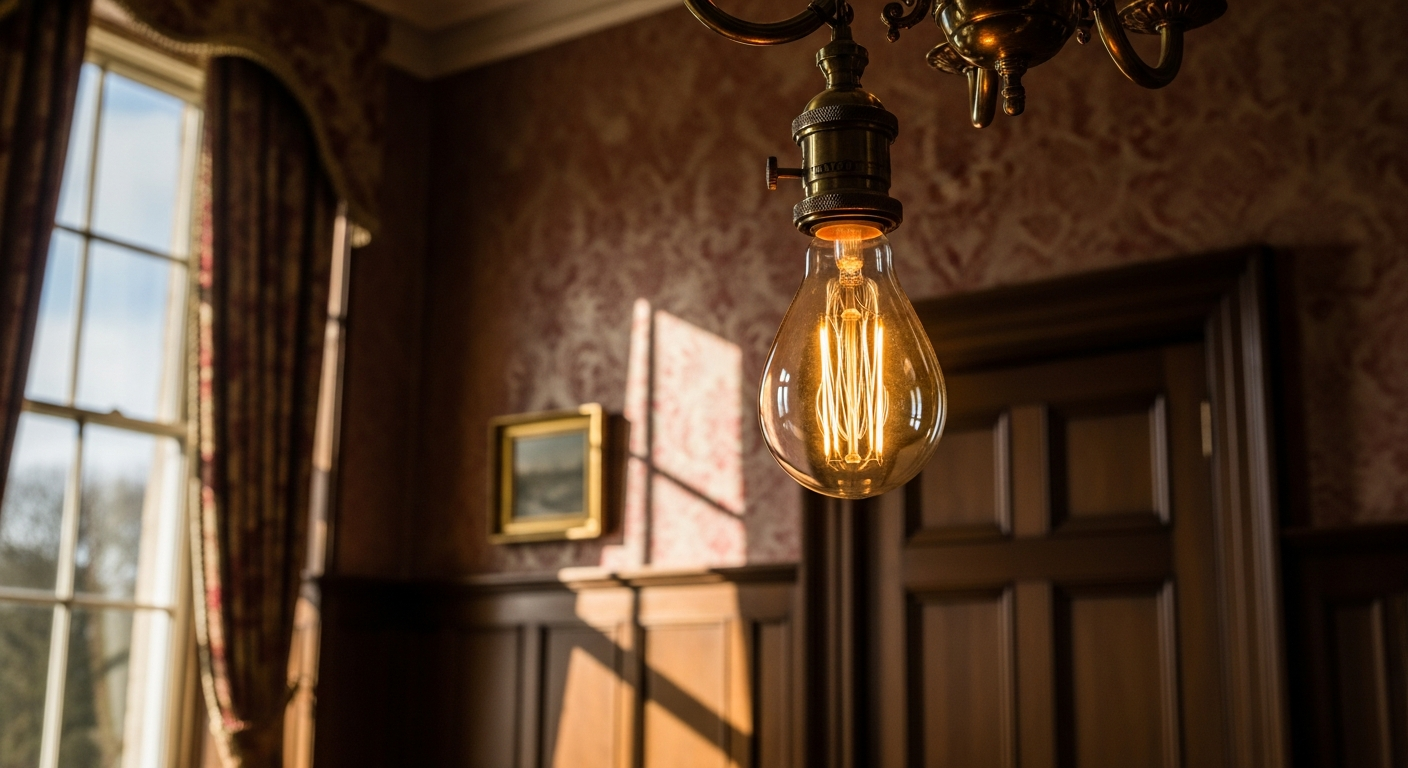
Period Home Lighting Without Compromise
Period homes present a lighting paradox: you want to slash energy bills, yet modern LED bulbs look jarringly out of place in vintage fixtures. Over 40% of homeowners with heritage properties struggle to find lighting solutions that honor their home's character while meeting today's efficiency standards. The pressure to modernize energy consumption without compromising architectural integrity weighs heavily on those invested in period properties.
For decades, traditional incandescent bulbs dominated period homes, delivering that warm, golden glow that defines classic interiors. The shift to LED technology felt inevitable, but it came with a catch—most modern bulbs looked sterile and out of context in ornate Victorian or Edwardian fixtures. The Crompton Ultra-Efficient LED Filament Bulb changes this equation entirely, combining cutting-edge LED technology with the authentic visual appeal of vintage incandescent lighting.
The Crompton filament bulb shatters the authenticity-versus-efficiency compromise. Discover how the Crompton Ultra-Efficient LED Filament Bulb transforms period home lighting today.
Why Period Homes Need Purpose-Built LED Solutions
Heritage properties often feature original light fixtures designed for incandescent bulbs—standard LED replacements look visually incongruous in spaces where every detail matters. Vintage fixtures typically have smaller apertures and specific aesthetic requirements that generic LED bulbs fail to meet. The warm color temperature of traditional incandescent output was never just about brightness; it was about creating an atmosphere that enhanced period interiors.
The Crompton operates at 3000K—matching traditional incandescent output and preserving the original ambiance that makes period homes special. Period properties represent significant investments; lighting choices directly impact overall property value and character. When you select the wrong bulb, you undermine decades of careful restoration work and architectural integrity.
Homeowners face mounting pressure to reduce their environmental footprint without dismantling what makes their homes distinctive. The Crompton bridges the gap between conservation principles and contemporary sustainability standards, allowing residents to modernize responsibly while respecting their property's heritage.
Unraveling the A-Class Energy Rating and What It Means for Your Bills
A-Class represents the highest possible energy classification under current EU energy regulations. This isn't marketing language—it's a measurable standard that separates genuine efficiency from marginal improvements. The Crompton achieves 211 lumens per watt, delivering more than 60% efficiency compared to standard LED alternatives that often fall short.
The numbers speak for themselves: 7.2W power consumption replaces traditional 100W incandescent bulbs, representing a 93% energy reduction. Real-world savings translate to approximately £8-12 per bulb annually on a typical household. Over a 27-year lifespan, a single bulb can save £216-324 in electricity costs alone—money that compounds significantly across a period home's multiple fixtures.
A-Class rating ensures compliance with future ERP (Ecodesign and Energy Labelling) requirements, positioning the Crompton as future-proof regardless of how regulations evolve. The efficiency advantage becomes even more compelling when you consider a typical installation. A 10-bulb setup—common in period homes with chandeliers, wall sconces, and ceiling fixtures—saves £2,160-3,240 over its lifetime.
The 50,000-Hour Lifespan Advantage for Heritage Interiors
50,000 hours equals approximately 27 years of use at 5 hours daily—eliminating ladder work for decades. This isn't a minor benefit for heritage homeowners. Vintage fixtures often sit in hard-to-reach locations: high ceilings, elaborate chandeliers, wall sconces positioned above period cornicing. Accessing these fixtures for maintenance is disruptive, costly, and potentially risky.
The extended lifespan proves particularly valuable in these scenarios. Reduced replacement frequency means less disruption to carefully curated period interiors. You're not constantly changing bulbs, repositioning furniture, or retrieving ladders from storage. Unlike incandescent bulbs that degrade gradually, LEDs maintain consistent brightness throughout their lifespan—no dimming, no yellowing, just reliable performance year after year.
For rental properties or listed buildings where frequent access is problematic, the Crompton's durability makes it ideal. Long-term reliability reduces maintenance costs and the environmental impact of frequent replacements. When you calculate the hassle factor alongside the financial savings, the value proposition strengthens considerably.
Authentic Warm White Light and Color Rendering in Period Settings
3000K color temperature matches the golden hue of traditional incandescent bulbs—the warmth that makes period homes feel inviting rather than institutional. Excellent color rendering ensures fabrics, artwork, and furnishings appear natural and true-to-life. Earlier LED generations suffered from harsh, artificial color casting that made period interiors feel wrong somehow, even if homeowners couldn't articulate why.
The Crompton eliminates this issue entirely. Warm white light enhances the cozy, intimate atmosphere that period homes are designed to deliver. The clear, filament-visible design adds visual authenticity to exposed bulb applications—chandeliers, pendant lights, and wall fixtures where the bulb itself becomes part of the decor.
For accent lighting in period features like picture rails, cornicing, and decorative fixtures, this bulb performs exceptionally well. The authentic appearance combined with genuine warmth creates the ambiance period homes deserve.
Installation and Compatibility Across Period Properties
Standard ES-E27 Edison screw cap (27mm) fits 99% of period light fixtures without modification. This universal compatibility removes a major barrier to upgrading heritage properties. No rewiring or fixture replacement required—simply unscrew old incandescent bulbs and install the Crompton.
The bulb works with most vintage chandeliers, wall lights, table lamps, and ceiling roses without adapter plates or electrical work. The GLS (General Lighting Service) shape matches traditional bulb proportions, maintaining fixture aesthetics. Works with standard switches—no special dimmer requirements for basic operation.
Retrofitting is DIY-friendly, making it accessible for homeowners without electrical expertise. You aren't paying electricians to upgrade your lighting. You're simply making an informed swap that respects both your home's character and your budget.
Cost-Benefit Analysis: Initial Investment vs. Long-Term Savings
Typical retail price sits at £8.37 per bulb—higher than budget LED alternatives that cut corners on efficiency and durability. The initial cost offsets within 18-24 months for average households through energy savings alone. A 10-bulb installation costs approximately £83.70 upfront, which represents the annual lighting energy consumption for many period homes.
Annual energy savings for 10 bulbs: £80-120, depending on local electricity rates. Over 27 years, the per-bulb cost becomes negligible compared to the cumulative savings. Add in reduced replacement frequency, and you're looking at substantial additional money saved on labor and inconvenience.
Environmental savings extend beyond financial metrics—lower carbon footprint aligns with conservation ethics. Period home owners often appreciate quality and longevity over cheap replacements, making the Crompton philosophically consistent with the values that drive heritage conservation.
Comparing the Crompton Against Other Heritage-Friendly Alternatives
Budget LED filament bulbs offer lower upfront costs but lack A-Class efficiency and longevity—you're simply deferring costs to future replacement cycles. Halogen alternatives consume significantly more energy and generate heat unsuitable for period fixtures, particularly those with delicate silk or fabric elements.
Smart bulbs with filament design exist but introduce unnecessary complexity for heritage applications. Vintage-style incandescent reproductions maintain authenticity but offer zero energy benefits—you're paying period pricing without capturing any efficiency gains. Specialty 'heritage LED' brands often command premium pricing without matching the Crompton's efficiency credentials.
The Crompton delivers the best balance of authenticity, efficiency, and value in its category. It outperforms competitors on efficiency metrics while matching or exceeding them on aesthetic grounds.
Environmental Impact and Sustainability Credentials
93% energy reduction translates to significantly lower household carbon emissions. 50,000-hour lifespan means fewer bulbs entering landfills over decades. A-Class rating ensures the bulb meets strict environmental manufacturing standards. Compliance with ERP regulations positions the Crompton as a future-proof, sustainable choice regardless of how environmental policy evolves.
Using the Crompton instead of incandescent bulbs prevents approximately 1.3 tons of CO₂ emissions per bulb over its lifetime. Heritage home conservation and environmental responsibility align seamlessly with this product—you're not choosing between preservation and sustainability; you're achieving both simultaneously.
Choosing efficient lighting supports broader climate goals without compromising historical authenticity. The environmental case for the Crompton stands independently from the financial case, appealing to homeowners motivated by either consideration.
Real-World Performance in Different Period Home Settings
Victorian terraces benefit from the warm glow that complements original gaslight-era design principles. The Crompton recreates the ambiance those homes were built to deliver. Edwardian properties feature filament visibility that suits exposed bulb fixtures and period chandeliers—the visual authenticity matters as much as the light quality.
Georgian homes demand symmetrical, formal lighting arrangements where A-Class efficiency meets aesthetic requirements perfectly. Country estates gain substantial value from extended lifespan that reduces maintenance demands across multiple rooms and outbuildings. Listed buildings achieve compliance with conservation guidelines while meeting modern energy standards—no compromises required.
Rental period properties benefit from durability and low maintenance that reduce landlord costs and tenant complaints. Commercial heritage venues—museums, historic hotels, and period restaurants—benefit from authentic ambiance with operational efficiency that keeps energy costs manageable across large installations.
The Bottom Line
The Crompton Ultra-Efficient LED Filament Bulb represents a genuine breakthrough for heritage homeowners facing the authenticity-versus-efficiency dilemma. Its A-Class rating, 211 lumens-per-watt performance, and authentic warm white output deliver the rare combination of period-appropriate aesthetics and modern energy responsibility. Over 27 years, you're looking at substantial financial savings—£216-324 per bulb—while eliminating the visual compromise that plagues most LED alternatives.
The ease of installation into existing E27 fittings means no costly modifications or professional electricians required. Yes, the £8.37 upfront cost is higher than budget options, but the math becomes compelling once you factor in energy bills, replacement frequency, and the sheer convenience of not climbing ladders for nearly three decades.
For period homes, this bulb isn't simply a lighting upgrade—it's a statement that you can honor your property's heritage while embracing sustainable, cost-effective living. If you've been searching for a lighting solution that respects your home's character without sacrificing efficiency, the Crompton deserves a place in your fixtures. Order your Crompton Ultra-Efficient LED Filament Bulbs now and preserve your period home's beauty while reducing energy costs.

Leave a Reply