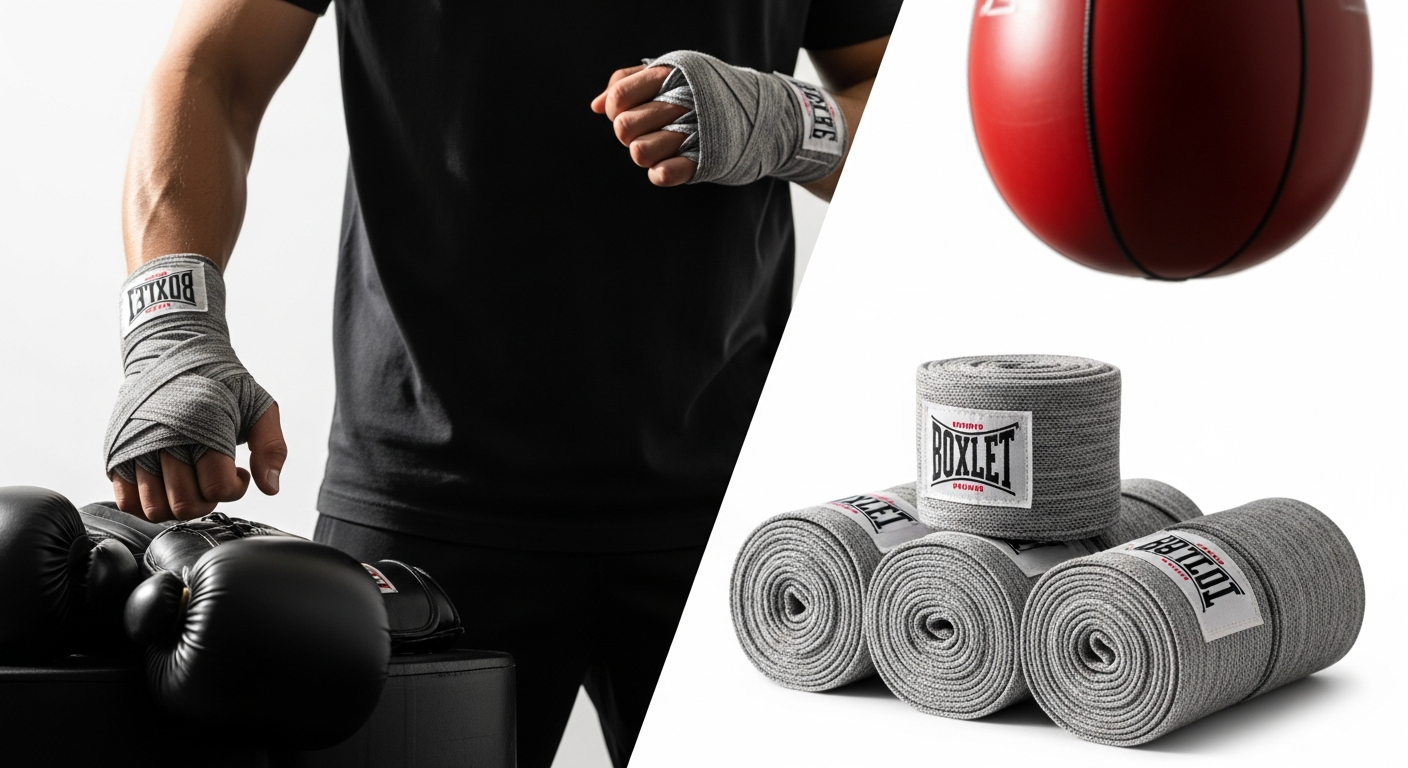
Professional white gauze boxing handwraps for training and sparring protection

Pro Boxing Handwraps for Training and Sparring: Complete Guide to Hand Protection in 2026

Boxers throw thousands of punches during their careers—and without proper hand protection, each one risks serious injury. Hand and wrist fractures are among the most common injuries in combat sports, yet many athletes overlook the equipment that prevents them. Handwraps aren't glamorous equipment, but they're absolutely critical. These protective gauze wraps work alongside your gloves to compress and stabilize the delicate bones and joints in your hands and wrists, absorbing the tremendous impact forces generated during sparring and competitive training.

Most boxers focus on finding the perfect gloves while treating handwraps as an afterthought. This approach leaves your hands vulnerable to cumulative damage that compounds over months and years of training. The reality is that every punch, every combination, and every sparring session places stress on small bones and joints that weren't designed to absorb repeated impact. Without proper wrapping, even casual training can lead to chronic pain, reduced performance, and potentially career-threatening injuries.

In this guide, I'll break down everything you need to know about pro boxing handwraps for serious training and sparring, including how these gauze wraps work, what makes them essential for boxers at every level, and why bulk purchasing makes sense for frequent trainers and sports facilities. Discover the Pro Boxing Handwraps that thousands of athletes trust for their hand protection needs.

What Are Boxing Handwraps and Why Do Boxers Need Them?

Boxing handwraps serve a single, critical purpose: protecting your hands and wrists from injury. While boxing gloves provide padding and impact distribution, handwraps work underneath to stabilize the structure of your hand itself. They compress the small bones of your hand—the metacarpals and carpal bones—into a unified, stable unit that can better withstand the forces generated by punching.

The difference between handwraps and boxing gloves is crucial to understand. Gloves absorb external impact and protect your opponent, while handwraps protect you. Gloves can be snug or loose depending on preference, but handwraps must be tight enough to provide genuine compression. Think of handwraps as internal support and gloves as external cushioning. Together, they create a complete protection system.

Hand and wrist injuries occur during boxing because punching generates enormous forces. When you throw a punch, you're accelerating your fist and arm to high speeds, then suddenly stopping that motion against a target. Your hand bones experience rapid deceleration forces that, without support, can cause fractures, sprains, or joint damage. Sparring intensifies this risk because you're punching a moving, responsive opponent rather than a stationary bag.

Gauze wraps provide compression and stability by wrapping tightly around your hand, holding the bones in their proper alignment. This compression reduces the movement of small bones relative to each other, preventing the micro-fractures and joint instability that lead to chronic pain. The firm wrap acts like an internal cast, keeping everything in place throughout your training session.

The role of handwraps in preventing sprains, fractures, and joint damage cannot be overstated. Professional and amateur boxers consider handwraps essential equipment for this reason—they've experienced firsthand what happens when hands aren't properly supported. Training longevity increases dramatically when athletes consistently use handwraps. Injury prevention rates are measurably higher among boxers who wrap properly and regularly compared to those who skip this step.

Understanding Gauze vs. Elastic Handwrap Options

Gauze handwraps are made from a non-elastic cotton or poly-cotton blend material. Unlike elastic or semi-elastic alternatives that stretch and rebound, gauze provides a firm, static compression that doesn't give way during impact. This material composition means that once you wrap your hands properly, the compression remains consistent throughout your training session.

The fundamental difference between gauze and elastic wraps comes down to how they respond to force. Elastic wraps expand and contract, which can allow unwanted movement in your hand during impact. Gauze wraps maintain their tension, providing constant, reliable support. Elastic alternatives are easier to wrap quickly and forgive wrapping mistakes, but they sacrifice some protection effectiveness in the process.

Gauze wraps offer several distinct advantages. The firm support they provide is superior for competitive training and sparring scenarios where impact forces are highest. The custom fit you create through wrapping allows you to tailor compression to your specific hand anatomy. Durability is another major advantage—gauze wraps withstand repeated use without degrading as quickly as elastic alternatives.

The primary disadvantage of gauze wraps is that they require proper wrapping technique to achieve full benefits. Beginners often struggle with the wrapping process, either applying too little tension or too much, which reduces effectiveness. Learning the correct technique takes practice and patience. Additionally, once wrapped, you cannot easily adjust the fit mid-training like you can with elastic wraps that have fasteners.

Choosing gauze over elastic makes most sense for competitive training and serious athletes who prioritize maximum protection. Athletes planning to spar frequently or train at high intensity benefit most from the superior support gauze provides. The wrapping technique requirements are manageable once you've practiced a few times, making the learning curve a minor drawback compared to the protection benefits.

Pro Boxing Handwraps Specifications and Product Details

The Pro Boxing Handwraps from Sportdirect.ca come in a standard 12-foot length, which is the industry standard for hand wraps. This length allows boxers to properly wrap the hand, wrist, and base of the hand with appropriate layers for support. Shorter wraps leave you unable to provide adequate wrist support, while longer wraps create unnecessary excess material.

The white color option is classic and practical, though it's worth noting that the current product listing offers this single color choice. For boxers who prefer variety, this does limit aesthetic options, though functionally the color makes no difference in performance. The white also makes it easy to see dirt or wear, signaling when wraps need replacement.

Material composition in these wraps means standard gauze—a non-elastic cotton or poly-cotton blend that provides the firm support characteristic of professional-grade handwraps. This material choice prioritizes protection and durability over convenience, making these wraps ideal for serious athletes and institutional settings.

The bulk packaging is a significant feature—these wraps are sold by the dozen, meaning 12 pairs per order. This quantity makes them ideal for individual trainers with regular training schedules, boxing gyms that train multiple fighters, and institutional programs like schools or sports centers. A single purchase provides several months of wraps for a dedicated boxer.

Storage and maintenance for bulk purchases requires minimal effort. Handwraps should be kept in a clean, dry location. Periodically washing them by hand or machine keeps them fresh and extends their lifespan. With a dozen pairs, rotation is built in naturally—you can use one pair while others dry.

Stock up on professional-grade Pro Boxing Handwraps and ensure consistent hand protection across your entire training regimen.

Hand and Wrist Protection: How These Wraps Safeguard Your Training

Understanding hand anatomy helps explain why handwraps matter so much. Your hand contains 27 small bones—the metacarpals (in your palm and fingers) and carpal bones (in your wrist)—along with numerous joints. These structures evolved for fine manipulation, not impact absorption. Punching creates forces that can exceed 1,000 pounds per square inch concentrated through your gloved fist.

Compression from handwraps reduces injury risk by distributing these forces across a larger surface area of bone and joint rather than concentrating them in one spot. When bones are properly compressed and aligned, they handle impact more effectively. The stable foundation prevents the excessive movement that causes sprains and the small fractures that accumulate into chronic problems.

Protection during sparring sessions is considerably more important than during heavy bag work. A heavy bag is stationary and predictable—you always know exactly where it is and how it will respond. A sparring opponent moves, blocks, and strikes back, creating unpredictable impact angles and forces. Your hands need maximum support during these sessions, which is precisely why the Pro Boxing Handwraps are designed with sparring and competitive use in mind.

Cumulative impact management is perhaps the most underrated benefit of consistent handwrap use. A single punch might not cause damage even without wraps, but thousands of punches over weeks and months of training definitely will. Your hands build up micro-damage that develops into chronic pain, reduced strength, and eventually serious injuries. Wraps protect against this cumulative effect by spreading impact forces more evenly.

Repetitive strain injuries are common among boxers who train frequently without proper hand support. The same wrapping and unwrapping of hand structures thousands of times creates inflammation and weakening over time. Handwraps prevent this by stabilizing joints and reducing the excessive movement that causes strain.

Proper handwrapping also supports correct punching technique by enforcing proper wrist alignment. When your wrist is properly wrapped, you cannot punch in biomechanically incorrect ways that stress your joints. Over time, this reinforces good technique and prevents injuries caused by bad form.

Long-term benefits of consistent handwrap use compound over your boxing career. Athletes who wrap properly and regularly maintain stronger, healthier hands well into their 30s and 40s. Those who skip handwraps often experience hand pain and injuries that force them to reduce training volume or retire early.

Pricing, Value, and Bulk Purchasing Benefits

The current pricing for these Pro Boxing Handwraps is $49.95 per dozen, marked down from a regular price of $56.99. This represents excellent value for professional-grade handwraps. The cost per pair breaks down to approximately $4.16 per wrap, which is competitive with other quality options on the market.

For individual boxers training several times weekly, a dozen wraps provides roughly 3-4 months of equipment. Over a year, that's just about $200 in handwrap costs—a minimal investment considering the injury prevention value and training longevity it supports.

Bulk purchasing makes exceptional sense for boxing gyms and institutions that train multiple athletes regularly. A gym with 10 fighters might purchase several dozen wraps at once, ensuring every athlete has access to quality hand protection. The per-unit cost savings when buying by the dozen add up quickly across multiple purchases.

Inventory management becomes easier with bulk purchases. Rather than constantly reordering small quantities, a facility can stock a reasonable supply that covers normal wear, loss, and replacement. This approach reduces administrative overhead and ensures wraps are always available when needed.

Long-term cost savings compared to purchasing individual wraps are substantial. Some retailers sell handwraps individually or in pairs at significantly higher per-unit costs. Bulk purchasing avoids this premium and locks in the lower per-dozen price.

The value proposition for schools and sports centers is particularly strong. These institutions serve many athletes across different programs, creating consistent demand for protective equipment. The $49.95 per dozen price point makes it feasible to equip large numbers of participants without straining budgets.

Comparing the price-to-protection ratio reveals that these wraps deliver professional-grade quality at accessible pricing. You're not paying premium prices for brand prestige—you're getting genuine protective equipment at a fair market rate.

Getting Started: How to Properly Wrap Your Hands

Wrapping your hands with 12-foot gauze wraps follows a systematic pattern that ensures all critical areas receive adequate support. Start by anchoring the wrap around your wrist, then move to the back of your hand, threading between your fingers to wrap around the knuckles. Return to your wrist, creating layers that distribute support across your entire hand structure.

Proper tension and compression techniques are essential for effectiveness. The wrap should be snug enough that you cannot easily shift it with your fingers, but not so tight that it cuts off circulation or causes numbness. You should be able to fit one finger under the wrap at your wrist to verify circulation remains intact.

Common wrapping mistakes include applying uneven tension that leaves some areas loose and others overly tight, skipping adequate wrist wraps that provide insufficient support, and failing to secure the wrap properly at the end so it unravels during training. Most of these mistakes become apparent with practice and self-correction.

Anatomical areas to prioritize include your knuckles—where impact forces concentrate—your wrist, which must support the forces transmitted from your hand, and the base of your hand where power transfers from your arm. Each of these areas requires multiple layers of wrapping material.

Time required to master the wrapping technique typically ranges from 5-10 practice sessions. Initial wraps might take 3-5 minutes as you learn the pattern, but eventually most boxers can wrap hands in under 2 minutes once muscle memory develops.

Practice tips for beginners include wrapping both hands repeatedly without training, asking experienced boxers to review your technique, and paying attention to how your hands feel during training. If any area feels unstable or loose, you know to adjust your wrapping pattern next time.

Replace worn or damaged handwraps when they show visible fraying, when wrapping becomes difficult because material has stretched or deteriorated, or when the gauze no longer provides firm compression. With a dozen pairs, rotation is natural—you'll use wraps until they show genuine wear before discarding them.

Your Hands Deserve Professional-Grade Protection

Boxing demands everything from your body—and your hands bear the brunt of that commitment. The Pro Boxing Handwraps from Sportdirect.ca deliver the compression, stability, and durability that serious athletes need when they're pushing their limits in sparring and competitive training. At $49.95 per dozen, these 12-foot gauze wraps represent an investment in your long-term health and athletic career.

Whether you're wrapping up before a training session or outfitting an entire facility, these handwraps prove that reliable protection doesn't have to break the bank. The specifications—12-foot gauze construction, white color, bulk packaging—address the real needs of boxers and institutions that train consistently.

Your hands are irreplaceable. Treating them as such means prioritizing their protection before injury forces you to stop training. Consistent handwrap use is the simplest, most effective way to ensure your hands stay healthy and functional throughout your boxing journey.

Order your dozen Pro Boxing Handwraps today and experience the difference that professional-grade hand protection makes in your training.


Comments

Leave a Reply

Your email address will not be published. Required fields are marked *