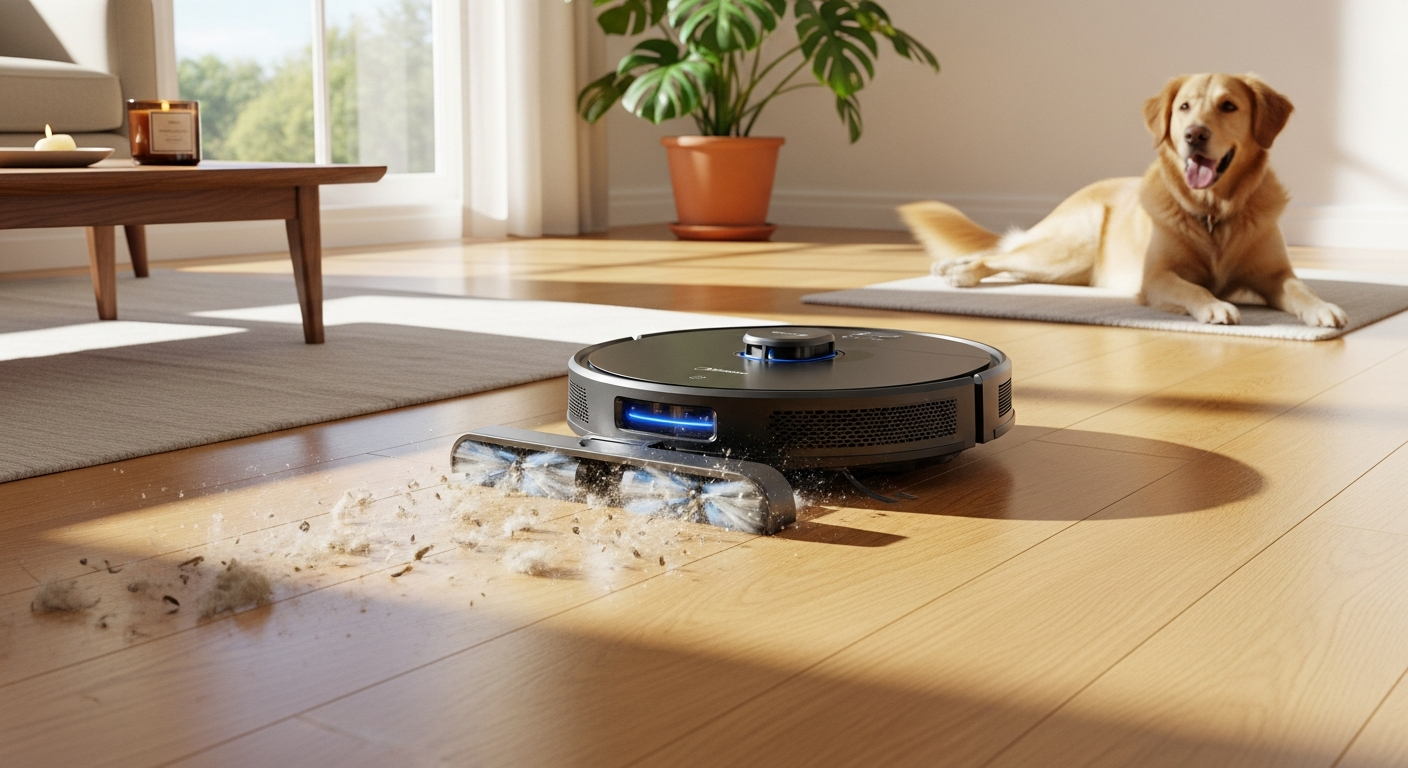
Pet hair tumbleweeds rolling across your floors. Dust motes triggering sneezing fits. The constant battle between keeping a clean home and managing allergies feels endless—especially when you're juggling work, family, and life. The Midea V12 Robot Vacuum Mop changes that narrative entirely.
This award-winning 2-in-1 cleaning powerhouse combines industrial-strength suction with intelligent allergen management, making it specifically suited for households where pet hair and air quality are legitimate concerns. With HEPA filtration, warm-air mop drying, and AI-powered navigation, it's engineered to address the exact pain points that plague allergy-prone families.
In this guide, I'm breaking down how the Midea V12 actually performs against pet hair, what makes its allergen-filtering system effective, and whether the investment makes sense for your specific situation. You'll also discover setup strategies that maximize its effectiveness and real-world maintenance requirements you should know about.
Check current retailer discounts on the Midea V12 Robot Vacuum Mop to see if it fits your budget.
Pet Hair Elimination: How 5000Pa Suction Handles Furry Friends
The 5000Pa suction power in the Midea V12 is purpose-built to tackle embedded pet hair that standard vacuums struggle with. The dual-brush system works in tandem with this powerful suction to pull hair from carpet fibers before it gets ground deeper into the material. On hardwood floors, laminates, and tile, the same force extracts pet hair without scattering it, which prevents the need for multiple passes.
Multi-pet households face a unique challenge: hair accumulation happens faster than in single-pet homes, and shedding seasons can feel relentless. The Midea V12's 3-liter dust bag capacity translates to 60-75 days of hands-free operation, meaning you're not emptying a traditional vacuum's small canister multiple times per week. This self-emptying feature prevents the common problem of reduced suction caused by a clogged dustbin—a issue that plagues pet owners using conventional robots.
Performance varies somewhat by surface type. Carpets benefit most from the suction power since embedded hair requires significant force to dislodge. Hard floors see faster collection rates because pet hair doesn't embed as deeply. The robot's smart path planning prevents secondary pollution, meaning it doesn't kick up settled hair as it navigates, which matters enormously in homes where fur is a constant presence.
Noise levels during operation remain relatively low compared to upright or handheld vacuums, though pets may still react to the device initially. The quieter operation means you can run cleaning cycles during work-from-home hours or while family members are resting without significant audio disruption. Brush maintenance becomes necessary when pet hair builds up around the bristles—typically every 2-3 weeks in high-shedding situations—but this is a five-minute task that keeps suction performance consistent.
HEPA Filtration and Air Quality: Breathing Easier at Home
HEPA filter technology removes microscopic particles that traditional filters let slip through. The Midea V12's HEPA system captures pet dander, dust mites, pollen, and mold spores—the exact allergens that trigger symptoms in sensitive households. While the robot vacuums your floors, it's simultaneously cleaning the air, creating a dual-action effect on indoor air quality.
Allergen types matter because different people react to different particles. Pet dander poses the most obvious concern for pet-owning families, but dust mite colonies and their waste products actually affect more allergy sufferers than people realize. Pollen brought indoors on clothing and pet fur compounds the problem during high pollen seasons. The HEPA filtration works through mechanical capture, using dense fiber networks to trap particles smaller than the human eye can see.
Air quality improvement manifests as fewer sneezing episodes, reduced nighttime congestion, and decreased allergy medication dependence. Some families report noticeable relief within the first week of consistent use. Clinical evidence supports HEPA filtration effectiveness—these filters remove 99.97% of particles 0.3 micrometers or larger, a standard recognized by medical professionals treating indoor allergen sensitivity.
Filter replacement follows a standard schedule: typically every 12 months for households with moderate pet activity, or every 6-8 months in high-shedding scenarios. The replacement cost factors into long-term ownership calculations but remains lower than professional duct cleaning or medical expenses related to untreated allergies. The HEPA system works alongside the self-washing mop technology to create comprehensive allergen control—vacuuming captures airborne and floor-level allergens while mopping sanitizes hard surfaces where allergens settle.
Self-Cleaning Technology: The Hygiene Advantage for Sensitive Families
The automatic mop pad washing cycle represents a significant quality-of-life improvement that distinguishes the Midea V12 from competing models. After each cleaning session, the base station washes the mop pads with clean water and applies a 55°C (131°F) warm-air drying cycle. This temperature matters because it prevents mold, bacteria, and odor development—problems that plague traditionally stored mop heads left in buckets or hanging in dark corners.
Dual spinning mops rotating at 200 RPM deliver deep floor sanitization beyond what static mopping achieves. The pressure and rotation tackle stubborn stains and actually scrub rather than just push dirty water around. For families with young children or immunocompromised members, this sanitization level provides genuine peace of mind. You're not redistributing pathogens across your floors; you're actively eliminating them.
Hands-free operation during mop maintenance addresses a specific pain point: direct contact with dirty mop heads. Immunocompromised individuals and parents of young children benefit from this separation. Traditional mopping involves wringing out dirty water with your hands, exposing yourself to whatever bacteria or allergens the mop has collected. The Midea V12 eliminates that contact entirely—the robot handles the contaminated material while you stay protected.
The 60-75 day dust bag capacity directly impacts hygiene maintenance intervals. With a smaller capacity requiring weekly emptying, you'd experience frequent exposure to accumulated dust and pet hair. The extended capacity means less frequent handling of debris, which translates to lower contamination risk and less time spent on maintenance tasks. Comparing self-cleaning versus manual mop maintenance reveals the convenience factor extends beyond mere time savings—it represents reduced exposure to allergens and pathogens for your entire household.
Smart Navigation for Pet-Filled Homes: Avoiding Chaos and Obstacles
LiDAR technology combined with DuoDetect AI 3D obstacle detection creates a navigation system specifically valuable in homes where pets scatter toys, food bowls, and unexpected obstacles throughout the day. The robot identifies and avoids these items without stopping to recalculate routes constantly. It maps your home with precision, understanding furniture placement and floor layouts after the initial mapping phase.
Multi-floor mapping capabilities handle homes with multiple levels, allowing you to create separate cleaning configurations for each floor based on different layouts and pet activity zones. Virtual barriers and no-go zones configured through the Midea SmartHome app give you granular control—keeping the robot away from pet beds, food areas, or delicate items without physically blocking its path.
Scheduling features work around pet routines and family schedules. You can program the robot to clean while everyone's away at work, avoiding stress for anxious pets. Different rooms can be scheduled for different times, creating a balanced cleaning routine that never conflicts with your household's rhythm. The app interface allows you to monitor the robot's progress and manually redirect it if needed, though the AI typically handles navigation without requiring intervention.
Real-world performance in cluttered homes with pets demonstrates the sophistication of this system. While the robot won't navigate stairs independently (a physical limitation, not a software issue), it handles scattered pet toys and food bowls effectively. Socks and small wires occasionally create issues, requiring pre-cleaning tidying, but this remains far less problematic than with earlier-generation robots. Smart path planning prevents secondary pollution—the robot doesn't kick up settled pet hair as it moves, maintaining the cleanliness it's already achieved.
Cleaning Modes Tailored to Different Needs
The vacuum-only mode serves daily pet hair pickup without introducing water to carpeted areas. For homes with primarily hardwood or tile floors, this mode efficiently collects debris while preserving furniture moisture levels. Pet owners appreciate the ability to run quick cleaning cycles without mop involvement, especially on days when floors aren't visibly dirty but pet hair has accumulated.
Mop-only mode sanitizes hard floors without wetting carpets, addressing a practical need in homes with mixed flooring. Tile kitchens and hardwood hallways benefit from the dual-spinning mop action and 55°C warming cycle after mopping. You're not over-wetting delicate materials while still maintaining hard surface hygiene in high-traffic pet areas.
Combined vacuum and mop mode provides comprehensive cleaning in a single cycle, maximizing convenience for busy families. The robot intelligently transitions between functions, vacuuming carpeted areas and mopping hard surfaces without requiring manual intervention or separate scheduling. For families juggling demanding schedules, this single-cycle approach represents significant time savings.
Customizable cleaning intensity and frequency settings through the app let you adjust performance based on seasonal shedding patterns. Heavy shedding seasons warrant more frequent, intense cycles, while light maintenance periods allow extended intervals between cleaning sessions. Integration with smart home routines means the robot can activate as part of a broader automation sequence—for example, starting its cleaning cycle when the last family member leaves for work and completing before anyone returns home.
Battery efficiency across different cleaning modes remains strong across the board. The 120-minute runtime on a single charge covers significant areas in most homes, though larger spaces may require partial completion and resumption after recharging. The robot returns to its dock autonomously when the battery drops below operating threshold and resumes from where it stopped, ensuring full coverage without your involvement.
Investment Breakdown: Is the Midea V12 Worth It for Allergy-Prone Households?
The standard retail price sits around CHF 1,190.00, but retailers like SODEAL CH frequently offer discounts ranging from 40-70%, bringing the effective cost significantly lower. This upfront investment requires perspective through a cost-per-use analysis over 3-5 years of ownership. If you run the robot 5 days per week, that's roughly 1,300 cycles over five years, reducing the per-cycle cost to mere cents—far lower than most household appliances.
Comparing with professional cleaning services reveals immediate financial sense. Professional pet hair and allergen remediation services cost CHF 150-400 per session, and most allergy-prone households require monthly or bi-weekly treatments. The Midea V12 costs roughly equivalent to 3-4 professional cleaning sessions while providing continuous automated cleaning year-round. Traditional vacuum replacement cycles factor in as well: quality upright vacuums designed for pet hair cost CHF 600-1,200 and require replacement every 3-4 years, whereas the robot vacuum handles the same job indefinitely with routine maintenance.
Hidden costs deserve honest acknowledgment: HEPA filter replacements run approximately CHF 40-60 annually, and dust bag refills cost CHF 20-30 per 3-pack. Over five years, total consumables expenditure reaches roughly CHF 300-400. This remains negligible compared to vacuum cleaner replacement cycles or professional cleaning service cumulative costs. The health cost calculation becomes compelling when allergies cause missed work days, medical expenses, or medication costs—factors that improve notably with consistent allergen reduction.
Warranty coverage and customer support through retailers like SODEAL CH typically include 2-3 year hardware warranty and responsive technical support. Financing options through major retailers make the investment accessible through installment plans, spreading payments across months rather than absorbing a single large expense. Bundle deals sometimes pair the robot with replacement filters or extended warranties, further improving value.
Setup and Optimization: Maximizing Performance in Your Home
Ideal base station placement requires clear floor space with access to power outlets and adequate ventilation. Position it in a central location that the robot can reach easily without navigating around major obstacles. The base station itself occupies roughly 60×60 centimeters, so hallway corners or open areas near stairs often work well. Ensure the surrounding space remains clear to allow for effective docking and water drainage from the washing cycle.
Home preparation through decluttering significantly improves robot navigation efficiency. Creating clear pathways allows the robot to move between rooms without obstacles blocking its routes. While the AI handles some clutter, reducing the number of small items on floors accelerates the mapping process and prevents occasional navigation hiccups. Pet toys, scattered cables, and loose items should be consolidated in designated storage during cleaning cycles.
App configuration establishes cleaning routines that align with your household's rhythm. Set virtual barriers around pet beds or feeding areas, create no-go zones for delicate furniture, and establish daily or weekly cleaning schedules. The app interface is intuitive enough that most users complete initial setup within 15-20 minutes. Experiment with different cleaning modes and intensity levels to discover what works best for your specific space and pet activity levels.
The initial learning phase spans the first 2-3 runs as the robot maps your home thoroughly. Don't expect perfect optimization during this period—allow extra time and maintain clear pathways while mapping occurs. Mapping accuracy becomes exceptional once this phase completes, and the robot subsequently navigates with precision you'll find remarkable compared to older-generation devices.
Troubleshooting common issues specific to pet-heavy environments typically involves clearing smaller obstacles the robot encounters during navigation. Keep a charging cable handy for occasionally retrieving the robot if it gets stuck, though this happens infrequently after the initial learning phase. Integration with existing smart home ecosystems (Apple HomeKit, Google Home, Alexa) varies by your specific setup, so verify compatibility before purchase if you rely heavily on voice assistant control.
A maintenance calendar should include: brush cleaning every 2-3 weeks, HEPA filter replacement annually, dust bag refill every 60-75 days, and a thorough visual inspection monthly. Setting calendar reminders prevents overlooking maintenance steps that could reduce performance over time. This preventive approach keeps the robot functioning at peak efficiency year after year.
Real-World Limitations: What the Midea V12 Can't Do
Interaction with small obstacles despite advanced detection remains a reality. Socks, power cables, and small toy pieces occasionally cause navigation delays or require manual intervention. The robot won't damage items it encounters, but it may need retrieving if it gets caught. Pre-cleaning tidying prevents most issues, though some days it's inevitable that small items end up in the robot's path.
Stair navigation represents a physical impossibility rather than a software limitation. The robot cannot climb stairs, confining its operation to single-floor areas. Homes with multiple levels require separate cleaning configurations or manual repositioning between floors. This becomes less problematic in homes with primary pet activity concentrated on one level, but it's a genuine constraint worth assessing for your specific layout.
Performance on very thick carpets or high-pile rugs diminishes compared to medium-pile carpeting. The robot's height and wheel configuration work optimally on standard carpets but may struggle on plush, deep pile materials. Hard floor and low-carpet homes see better overall performance than heavily carpeted spaces with premium padding.
Wet carpet handling and moisture sensitivity require careful planning. Don't run the mop function on freshly cleaned or wet carpets, as moisture can linger and create mold risk. The robot assumes carpeted areas are dry before mopping, a reasonable assumption in normal circumstances but worth verifying in humid climates or after spill incidents.
Pet behavior adjustments happen naturally over time. Most pets become accustomed to the robot within days to weeks, though some anxious animals may require longer adjustment periods. Running the robot during times when pets are comfortable helps accelerate acceptance. Very small pets occasionally startle, but the robot's low speed and gentle bumper protection prevent injury.
App connectivity reliability varies by region and your home network infrastructure. Most users report consistent connectivity, though some geographic areas or older router configurations occasionally experience intermittent communication. This doesn't prevent operation—the robot functions autonomously—but it does limit remote monitoring and scheduling adjustments.
Noise levels during operation remain relatively low in absolute terms, but they're perceptible in quiet spaces. The robot produces roughly 60-65 decibels, comparable to normal conversation but quieter than traditional vacuums. Sensitivity to this noise varies by individual, and placing the robot's schedule during active household hours often proves preferable to running it during sleeping periods.
Making the Clean-Home Dream a Reality
The Midea V12 Robot Vacuum Mop transforms allergy management from a constant struggle into a background convenience. Its combination of powerful suction, HEPA filtration, self-cleaning technology, and intelligent navigation specifically addresses the challenges that pet owners and allergy sufferers face daily. You're not just buying a robot vacuum—you're investing in cleaner air, fewer allergens, and reclaimed time with your family and pets.
The investment stings initially, but when you factor in the 60-75 days of hands-free operation, reduced professional cleaning needs, and genuine health improvements, the math becomes compelling. For households where pet hair and allergens have been persistent headaches, this machine delivers measurable relief. Start by checking current retailer discounts often ranging from 40-70% off, assess your home layout against the navigation capabilities, and consider whether the self-cleaning convenience aligns with your lifestyle.

Leave a Reply