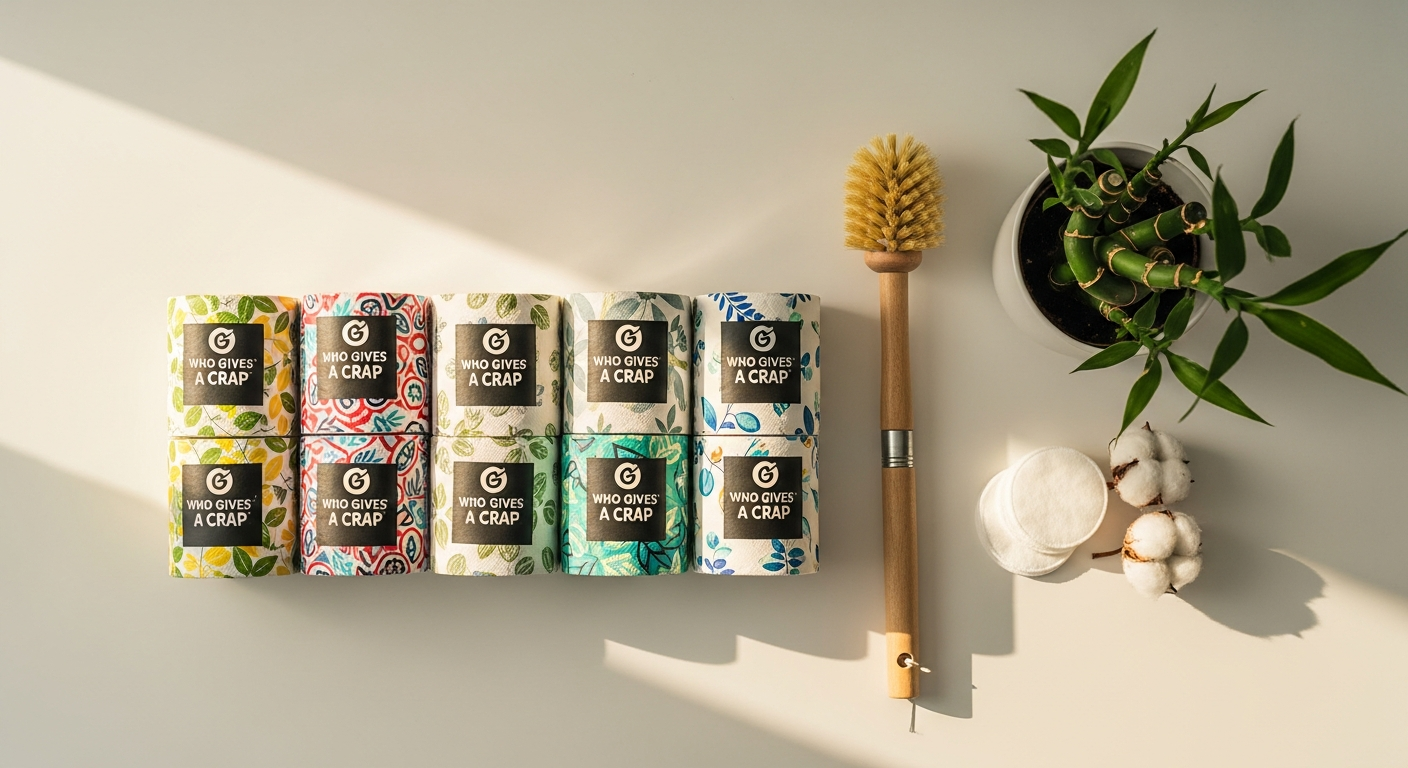
Who Gives A Crap bamboo toilet paper rolls stacked showing eco-friendly packaging design

Who Gives A Crap Bamboo Toilet Paper: The Complete Guide to Sustainable Bathroom Choices in 2026

Who Gives A Crap 100% Bamboo Toilet Paper: The Complete Guide for Australian Households

Over 20 million dollars raised for sanitation projects worldwide, zero plastic waste in packaging, and rolls that actually last twice as long as supermarket alternatives—these aren't just marketing claims. They're the real-world impact of one Australian brand that's fundamentally changed how people think about toilet paper. What started as a cheeky startup has become a movement.

Who Gives A Crap's 100% Bamboo Toilet Paper represents a growing shift toward sustainable household products. Traditional toilet paper production drives deforestation, uses excessive water, and wraps everything in plastic. This brand flips that script entirely. Their bamboo option harnesses a rapidly renewable resource, ditches plastic packaging altogether, and funnels half their profits into building toilets and sanitation infrastructure in developing countries.

It's functional, it's ethical, and it's become the gold standard for eco-conscious Australian households. Explore Who Gives A Crap's 100% Bamboo Toilet Paper and join thousands of Australians making a sustainable switch.

What Sets Bamboo Toilet Paper Apart From Traditional Options

A Rapidly Renewable Resource vs. Virgin Tree Pulp

Bamboo grows at an extraordinary pace—some species regenerate within 3-5 years without replanting. This stands in stark contrast to traditional toilet paper sourcing, which relies on harvesting virgin trees that take decades to mature. The environmental advantage becomes immediately apparent when you consider that conventional toilet paper production directly fuels deforestation across sensitive ecosystems. Bamboo cultivation requires minimal intervention and naturally replenishes itself, making it a genuinely sustainable alternative rather than a band-aid solution.

Water Usage and Environmental Impact

The water footprint of toilet paper production is staggering. Conventional manufacturing consumes enormous quantities of water for pulping and bleaching processes. Bamboo-based production, by comparison, requires significantly less water while avoiding the chemical-intensive bleaching protocols that contaminate waterways. Traditional toilet paper manufacturing also contributes to deforestation, which disrupts water cycles and destroys habitats. Bamboo plantations support local ecosystems while maintaining water efficiency throughout the production chain.

3-Ply Construction and Durability

Who Gives A Crap's 3-ply design balances softness with structural integrity. This construction means each sheet provides genuine strength without excessive thickness, reducing the number of sheets needed per use. The engineering matters: stronger sheets mean fewer sheets wasted, which translates directly to longer-lasting rolls. For household budgets, this translates to fewer purchasing trips and less packaging waste entering landfills.

400-Sheet Rolls and Packaging Efficiency

Standard supermarket rolls contain around 200-300 sheets. Who Gives A Crap's double-length rolls offer 400 sheets per roll, immediately reducing packaging material and waste. When you multiply this across a 48-roll carton, the reduction in cardboard packaging and plastic film becomes substantial. This design philosophy reflects genuine commitment to minimizing household waste rather than greenwashing with superficial changes.

Processing Methods and Chemical-Free Production

The absence of inks, dyes, and scents in Who Gives A Crap's formulation means no synthetic chemicals leaching into waterways or sitting on sensitive skin. Conventional toilet paper undergoes aggressive bleaching with chlorine compounds that create toxic byproducts. The chemical-free approach reduces water pollution at the manufacturing source and eliminates irritants that affect users with sensitivities. This matters both environmentally and personally.

Carbon Footprint and Sustainable Sourcing

Carbon-neutral shipping across all orders offsets the environmental cost of bulk delivery. Bamboo's rapid growth cycle means the carbon sequestration benefits are substantial. Combined with sustainable harvesting practices, the overall carbon footprint remains significantly lower than conventional alternatives. This comprehensive approach to environmental responsibility extends beyond the product itself to encompass the entire supply chain.

Breaking Down the Quality and Performance Metrics

Real User Feedback and Performance Ratings

Thousands of Australian households have provided candid feedback on the bamboo option. Users consistently praise the softness, describing it as comfortable for daily use without the ultra-processed feel of some luxury brands. Absorbency ratings are strong—the 3-ply construction effectively manages moisture without disintegrating. Strength feedback is particularly positive; users report that sheets hold together reliably even when wet, a critical performance metric many overlook.

Double-Length Rolls in Real Household Testing

In practical family settings, the 400-sheet rolls perform exceptionally. High-traffic bathrooms—those serving multiple people throughout the day—see noticeably fewer roll changes. This isn't just convenience; it's measurable efficiency. Users report that a single roll lasts substantially longer than supermarket equivalents, which means reduced purchasing frequency and lower per-sheet costs over time.

Durability Assessment and Sheet Integrity

The structural integrity during use is where bamboo toilet paper often surprises users accustomed to conventional products. Sheets maintain their form under moisture and pressure, preventing the mid-use tearing that frustrates many. Comparing sheet count alone doesn't capture this advantage; a stronger sheet that doesn't require doubling up represents genuine value. Household testers found that the effective number of usable sheets often exceeded expectations because waste from tearing or excessive consumption dropped significantly.

Flushability and Septic System Compatibility

Bamboo toilet paper breaks down readily in water without the resistance that causes plumbing problems. Users with septic systems report no complications, and standard water treatment facilities process the material without issue. This compatibility matters because environmental products are worthless if they cause infrastructure problems that force users to abandon them.

Texture, Comfort, and Moisture Resistance

The texture strikes a balance between softness and structural integrity. It's noticeably softer than recycled paper options while maintaining the strength advantage over ultra-processed virgin pulp. Moisture resistance means sheets don't immediately disintegrate when damp, a practical concern in bathrooms with higher humidity levels. The material feels pleasant against skin without triggering sensitivities that chemical-laden alternatives might cause.

Performance in Australian Climate Conditions

Australia's variable humidity levels—from coastal moisture to dry inland conditions—present real challenges for tissue products. Bamboo toilet paper maintains consistent performance across these conditions without becoming brittle in dry climates or excessively soft in humid environments. Users across different Australian regions report reliable performance regardless of seasonal variations.

Longevity in High-Traffic Family Bathrooms

Family households with multiple occupants provide the most demanding testing environment. Cartons lasting noticeably longer than conventional alternatives represent measurable cost savings. Tracking actual usage over months reveals that the double-length rolls genuinely reduce purchasing frequency by a meaningful margin, justifying the bulk purchase model.

The Plastic-Free Packaging Revolution and What It Means

Individual Paper Wrapping and Practical Benefits

Each roll wraps in paper rather than plastic film, immediately eliminating microplastics from household waste streams. This design choice isn't aesthetic—it's functional. Paper wrapping protects the product adequately while remaining entirely compostable. Users appreciate the reduced visual plastic waste in their homes; discarding paper feels fundamentally different from discarding plastic, reinforcing the sustainable choice they've made.

Recyclable Cardboard Delivery Systems

The 48-roll carton arrives in recyclable cardboard, completely eliminating plastic packaging at every stage. Once opened, the entire packaging stream—rolls and box—enters standard recycling or home compost systems without creating waste management complications. This simplicity removes friction from choosing the sustainable option.

Reduction in Microplastics Entering Waterways

Plastic film packaging breaks down into microplastics that enter waterways through landfills and waste processing. These particles infiltrate drinking water, marine ecosystems, and ultimately human bodies through the food chain. Paper-based packaging eliminates this pathway entirely, making the environmental impact calculation straightforward and substantial.

Storage Solutions for Bulk Purchases

Bulk purchases require adequate storage space, but paper packaging is stackable and doesn't demand climate-controlled conditions. Bathroom cupboards, linen closets, or even under-sink storage accommodate cartons effectively. The compact nature of rolled paper means a 48-roll carton occupies less physical space than many expect, and storing paper is preferable to repeated trips to purchase smaller quantities packaged in plastic.

Packaging Design and B-Corp Certification Standards

The plastic-free approach directly supports Who Gives A Crap's B-Corp certification, which requires demonstrated environmental and social responsibility. The packaging design reflects genuine commitment to sustainability standards rather than symbolic gesture. B-Corp auditing ensures these claims withstand external scrutiny.

Comparison With Mainstream Competitor Packaging

Major conventional brands wrap individual rolls in plastic film, then package dozens of rolls in plastic-wrapped bundles, often within larger plastic containers. This multi-layered plastic approach creates substantial waste multiplied across millions of household purchases. Who Gives A Crap's elimination of plastic at every stage represents a genuine innovation in an industry that's historically accepted excessive packaging as inevitable.

Compostability of Paper-Based Materials

Paper packaging breaks down within standard composting timeframes, supporting circular economy principles. Users maintaining home compost systems can dispose of packaging responsibly, creating zero waste from the entire purchase. This contrasts sharply with plastic alternatives that persist in landfills for centuries.

Supply Chain Transparency in Packaging Components

The company provides visibility into packaging sourcing and manufacturing practices, demonstrating that sustainability extends beyond the product to encompassing all materials. This transparency allows consumers to verify that packaging materials meet environmental standards rather than accepting corporate claims without evidence.

Pricing Strategy That Actually Makes Financial Sense

Cost-Per-Sheet Breakdown

At approximately A$0.42 per 100 sheets for the bamboo option, the per-sheet cost proves competitive with mainstream supermarket brands. Many conventional brands marketed as budget-friendly actually cost similar or higher per sheet when accounting for sheet count. A carton of 48 rolls typically costs A$66.00 to A$72.49, which breaks down favorably against buying smaller quantities at higher per-unit prices.

Comparison With Supermarket Brand Economics

A typical supermarket roll costs A$0.60 to A$1.50 depending on the brand. These rolls contain 200-300 sheets, putting their per-sheet cost at A$0.30 to A$0.75. When accounting for sheet count and durability, Who Gives A Crap's pricing sits comfortably within the competitive range while offering superior environmental credentials and product longevity. The value proposition strengthens when considering that fewer sheets are wasted due to superior strength.

Bulk Purchase Pricing Structure

Ordering in quantities of 48 rolls provides the best per-unit pricing. Smaller quantities are available at slightly higher per-roll rates, accommodating those uncertain about bulk commitment. This tiered approach removes barriers for first-time buyers while rewarding commitment with better economics.

Subscription Discounts and Long-Term Savings

Setting up automatic delivery unlocks additional discounts, typically 10-15% off the standard bulk price. Over a 12-month period, these subscription savings compound substantially. A household ordering four cartons annually could save A$100+ through subscription pricing alone, money that offsets any perceived premium compared to supermarket alternatives.

Initial Investment vs. Long-Term Savings

The upfront cost of purchasing a carton exceeds buying a single roll. However, this represents shifting spending forward rather than increasing overall costs. Most households recoup the investment within the first month through reduced purchasing frequency and subscription discounts. Tracking actual spending over three months typically reveals net savings despite the larger initial transaction.

Value Proposition Through Roll Longevity

The double-length design extends roll lifespan, reducing the frequency of changing rolls and purchasing replacements. Households purchasing supermarket rolls weekly or twice-weekly shift to monthly purchasing with Who Gives A Crap. This frequency reduction itself provides convenience value beyond pure economics.

Seasonal Promotions and Loyalty Opportunities

The company periodically offers promotions on cartons, particularly around major shopping events. Loyalty programs reward repeat customers with credits or discounts. Tracking these opportunities allows savvy buyers to time larger purchases for maximum savings. Start your subscription with Who Gives A Crap and lock in long-term savings on sustainable toilet paper.

Australian Pricing vs. International Comparisons

Australian customers benefit from local production and distribution, avoiding the international shipping costs that increase prices in other markets. Comparing A$0.42 per 100 sheets to international pricing reveals that Australian households actually receive excellent value for this category of product.

The Social Impact Model—50% Profits to Sanitation Projects

How the 50/50 Profit-Sharing Model Works

Who Gives A Crap commits to donating half of all profits to sanitation and toilet infrastructure projects. This isn't marketing spin—it's structural business design embedded in the company's founding principles. Every carton purchased directly contributes to this impact stream, creating accountability that marketing claims alone cannot provide.

Over $20 Million Raised for Global Sanitation

The cumulative impact of customer purchases has generated over A$20 million for sanitation projects worldwide. This isn't theoretical—it represents actual infrastructure built, actual lives improved, and actual disease prevention realized in communities lacking basic sanitation. The scale demonstrates that the business model genuinely works at meaningful magnitude.

Geographic Focus and Project Selection

The company prioritizes regions where sanitation infrastructure is most critically needed. Projects span multiple continents, focusing on areas where toilet access directly reduces disease transmission and improves child health outcomes. This targeted approach ensures donations address genuine need rather than dispersing resources inefficiently.

Transparency Reporting on Fund Allocation

Who Gives A Crap publishes detailed impact reports documenting how donations are allocated, which organizations receive support, and what results those projects achieve. This transparency exceeds industry standards and allows customers to verify that their purchases genuinely create impact. Audit trails provide evidence that money reaches intended recipients rather than being absorbed by administrative overhead.

Impact Metrics: Toilets Built, Lives Improved, Disease Prevention

The company quantifies results: specific numbers of toilets constructed, beneficiary families served, school sanitation facilities established, and disease cases prevented. These metrics allow customers to understand exactly what their purchase contributes—not in vague terms but in concrete outcomes. A typical carton purchase might contribute to a portion of a toilet installation or sanitation education program reaching hundreds of people.

Partnerships With NGOs and Local Organizations

Rather than implementing projects unilaterally, Who Gives A Crap partners with established NGOs and local organizations that understand community needs and cultural contexts. This collaborative approach ensures projects are sustainable, locally appropriate, and integrated with existing infrastructure development efforts. Partnership structures prevent the colonial dynamic of external organizations imposing solutions.

B-Corp Certification Requirements

B-Corp certification requires independent verification of social and environmental claims. The company undergoes regular audits confirming that profit-sharing actually occurs and that operations meet rigorous sustainability standards. Certification provides assurance that claims are externally validated rather than self-reported.

How Customer Purchases Translate to Real-World Change

The supply chain is transparent: your carton purchase generates revenue, a portion of which becomes profit, and 50% of that profit funds projects. Unlike donation-based approaches where customers choose to give, this model automatically directs a portion of every purchase toward impact. It's easier, more reliable, and creates consistency that individual charitable giving cannot match.

Addressing Common Concerns and Honest Trade-Offs

Softness Comparison With Luxury Alternatives

Some users accustomed to ultra-processed virgin pulp toilet paper initially find bamboo slightly less luxuriously soft. The difference is minor—bamboo is noticeably softer than recycled options—but it's worth acknowledging. Most users adjust their expectations within days and report satisfaction with the balance between softness and environmental responsibility. This trade-off is minimal given the substantial environmental and ethical advantages.

Storage Space Requirements

A 48-roll carton requires adequate storage space—typically a bathroom cupboard, linen closet, or similar area. For apartments or smaller homes, this presents a genuine constraint worth considering before purchasing. Sharing bulk orders with friends or family provides an alternative solution that maintains the cost advantages while distributing storage burden.

Delivery Reliability and Courier Experiences

While most users report reliable delivery, occasional complaints mention courier service inconsistencies. This reflects broader Australian logistics challenges rather than Who Gives A Crap-specific issues. Planning ahead and allowing buffer time in toilet paper stock mitigates delivery timing concerns. Subscription scheduling allows customization of delivery frequency to match household consumption.

Quality Consistency Across Production Batches

The overwhelming majority of users report consistent quality across batches. Some older reviews mention perceived quality changes, but recent feedback indicates stability in product standards. Monitoring recent customer reviews provides current-batch specific information rather than relying on older feedback.

Adjustment Period for Brand Switching

Users transitioning from conventional brands sometimes experience a brief adjustment period. Expectations about softness, sheet thickness, and rolling mechanism can influence initial perception. Giving the product a full week of regular use typically allows adaptation and more accurate quality assessment than initial impressions.

Potential Sensitivities to Chemical-Free Formulations

The absence of dyes, inks, and scents makes the product suitable for sensitive skin. However, some users with extreme sensitivities might need testing to confirm compatibility. The product's gentle formulation is typically an advantage rather than a concern, but individual skin chemistry varies.

Bulk Purchase Commitment vs. Flexibility

Bulk purchasing reduces flexibility compared to buying smaller quantities. Switching products or reducing usage requires storage management. Subscription customization and the ability to adjust order frequency mitigates this constraint, and the subscription model allows pausing or modification if needs change.

Environmental Cost of Bulk Shipping

Carbon-neutral shipping offsets environmental impact, but the question of efficiency versus local retail remains valid. Consolidated bulk shipping typically demonstrates lower per-unit environmental cost than multiple individual purchases, though this varies with individual circumstances and delivery distances.

Who This Product Actually Works Best For

Environmentally Conscious Households

Users prioritizing sustainability across household decisions find Who Gives A Crap's commitment genuinely aligned with their values. The complete elimination of plastic packaging and direct environmental benefits of bamboo sourcing resonate strongly with this demographic. For these households, the product represents an easy decision despite minor trade-offs.

Families Seeking Longer-Lasting Rolls

Households with multiple occupants benefit substantially from the extended roll lifespan. Reducing the frequency of roll changes and purchasing trips provides genuine convenience value. Larger families see proportionally greater savings from decreased purchasing frequency.

People With Sensitive Skin

The chemical-free formulation makes this product ideal for users experiencing irritation from conventional options. The absence of synthetic additives eliminates a significant class of potential irritants. For this demographic, the product often provides measurable improvement in comfort despite higher cost.

Consumers Embracing Bulk and Subscription Models

Users comfortable with bulk purchasing and willing to set up subscription delivery unlock the best pricing and greatest convenience. This approach requires minimal effort once established and provides reliable supply while optimizing costs.

Australian Shoppers Supporting Local Ethical Businesses

Who Gives A Crap is an Australian company with genuine commitment to local and global impact. Australians prioritizing support for ethical local businesses find alignment with company values and business practices. Supporting a B-Corp certified Australian operation that demonstrates transparency resonates strongly with community-minded consumers.

Households With Adequate Storage

Practical storage space is a prerequisite for bulk purchasing. Homes with bathroom storage, linen closets, or accessible under-sink space accommodate cartons without difficulty. This factor eliminates the product as an option for some living situations but remains manageable for most Australian households.

Budget-Aware Long-Term Planners

Consumers calculating expenses across months and years recognize that Who Gives A Crap's pricing structure delivers savings. This approach appeals to those willing to invest slightly higher upfront costs to achieve long-term financial benefits.

Socially Minded Customers Seeking Impact

Users wanting their purchases to create positive global change find genuine satisfaction in knowing that their toilet paper purchase funds actual sanitation projects. The documented impact and transparency reports provide concrete evidence of contribution, reinforcing the decision to purchase.

Making the Switch: Practical Tips for First-Time Buyers

Testing With an Initial Carton

First-time buyers should purchase one carton without commitment, allowing evaluation of comfort, performance, and storage requirements. This minimal-risk introduction prevents buyer's remorse from larger commitments while providing sufficient supply to assess the product thoroughly.

Setting Up Subscription Delivery

Once satisfied with the product, establishing automatic delivery locks in discounted pricing and removes the need to remember reordering. Subscription frequency can be customized to match household consumption patterns, typically every 1-2 months for standard households.

Organizing Storage Before Arrival

Planning storage location before the carton arrives prevents scrambling for space or leaving boxes in inconvenient locations. Identifying a dedicated storage spot ensures convenient access and maintains home organization.

Adjusting Expectations if Transitioning From Ultra-Soft Options

Users accustomed to premium luxury brands should anticipate minor texture differences and allow adjustment time. Most users find the bamboo option completely satisfactory within days of regular use, at which point initial impressions give way to comfortable routine.

Tracking Cost Savings

Recording toilet paper expenses before and after the switch quantifies actual savings. Three months of tracking typically reveals clear financial benefits, reinforcing the decision and providing concrete justification for continued purchases.

Sharing Bulk Purchases With Others

Friends, family, or housemates can share carton orders, splitting the purchase and distributing storage needs. This arrangement provides cost benefits for all involved while preventing any individual from over-committing to bulk storage.

Monitoring Delivery Timing

Noting when deliveries arrive helps prevent unexpected stock depletion. Scheduling subscription deliveries to arrive slightly before stock runs out maintains continuous supply without storage overflow.

Reading Recent Customer Reviews

Checking current user feedback on the company website or third-party review platforms provides batch-specific information about product quality. Recent reviews reflect current production, offering more relevant information than older testimonials.

The Bigger Picture—Why This Brand Resonates With Australians

The Rise of Conscious Consumerism

Australians increasingly evaluate purchases beyond price and performance, considering environmental and social impact. This shift in consumer values has created demand for products demonstrating genuine commitment to sustainability. Who Gives A Crap capitalized on this trend early and authentically.

Humor and Personality in Brand Differentiation

The company's distinctive voice—cheeky, direct, and unapologetically Australian—creates memorable brand personality. Marketing materials entertain rather than lecture, building affinity through humor rather than guilt. This approach makes sustainability feel accessible and fun rather than burdensome.

Trust-Building Through Transparency

The company publishes detailed impact reports, shares supplier information, and provides evidence for sustainability claims. This transparency builds trust that competitors struggling with vague greenwashing cannot match. Australian consumers appreciate straightforward communication backed by verifiable evidence.

Community Engagement and Social Media Presence

Active social media engagement and community interaction build loyalty beyond transactional relationships. User-generated content and customer stories create social proof that the product works while reinforcing the community of users making conscious choices.

Alignment With Australian Environmental Values

Australians demonstrate strong concern about deforestation, water conservation, and plastic pollution. Who Gives A Crap's direct response to these specific concerns aligns with deeply held community values. The product becomes expression of environmental identity rather than mere consumption.

Support for B-Corp Certified Operations

Australians increasingly seek out B-Corp certified companies, understanding that certification provides external validation of ethics claims. Supporting certified ethical businesses feels meaningfully different from supporting conventional corporations with sustainability marketing.

Word-of-Mouth Momentum and Organic Advocacy

Satisfied customers enthusiastically recommend the product to friends and family, creating organic growth driven by genuine satisfaction rather than advertising spend. This word-of-mouth momentum creates momentum that mainstream brands struggle to replicate.

Long-Term Business Sustainability

The transparent business model, commitment to impact, and genuine customer satisfaction create conditions for long-term success. Customers trust that purchasing today supports a company likely to remain reliable and committed to its principles for years to come.

Your Next Step Toward Sustainable Bathroom Habits

Making the switch to Who Gives A Crap bamboo toilet paper isn't just about upgrading your bathroom experience—it's about aligning your daily choices with your values. The numbers speak clearly: comparable pricing to conventional brands, superior environmental credentials, and tangible social impact through every purchase. You're getting a product that performs, lasts longer, and genuinely contributes to sanitation projects that transform lives in developing countries.

The initial bulk purchase might feel like a bigger commitment than grabbing a pack from the supermarket, but the math works in your favor. Longer-lasting rolls mean fewer shopping trips, lower per-sheet costs, and subscription discounts that sweeten the deal even further. Storage space is a legitimate consideration, but it's a small trade-off for the environmental and financial benefits you'll realize over months of use.

Whether you're a seasoned eco-warrior or someone just beginning to question what conventional toilet paper actually costs the planet, this product deserves a spot in your home. Start with one carton, experience the quality yourself, and watch how a simple bathroom staple can become part of something bigger—a movement toward sustainable living that actually works. Your wallet, your skin, and the planet will thank you.

Order your first carton of Who Gives A Crap 100% Bamboo Toilet Paper today and take the next step toward sustainable household choices.


Comments

Leave a Reply

Your email address will not be published. Required fields are marked *