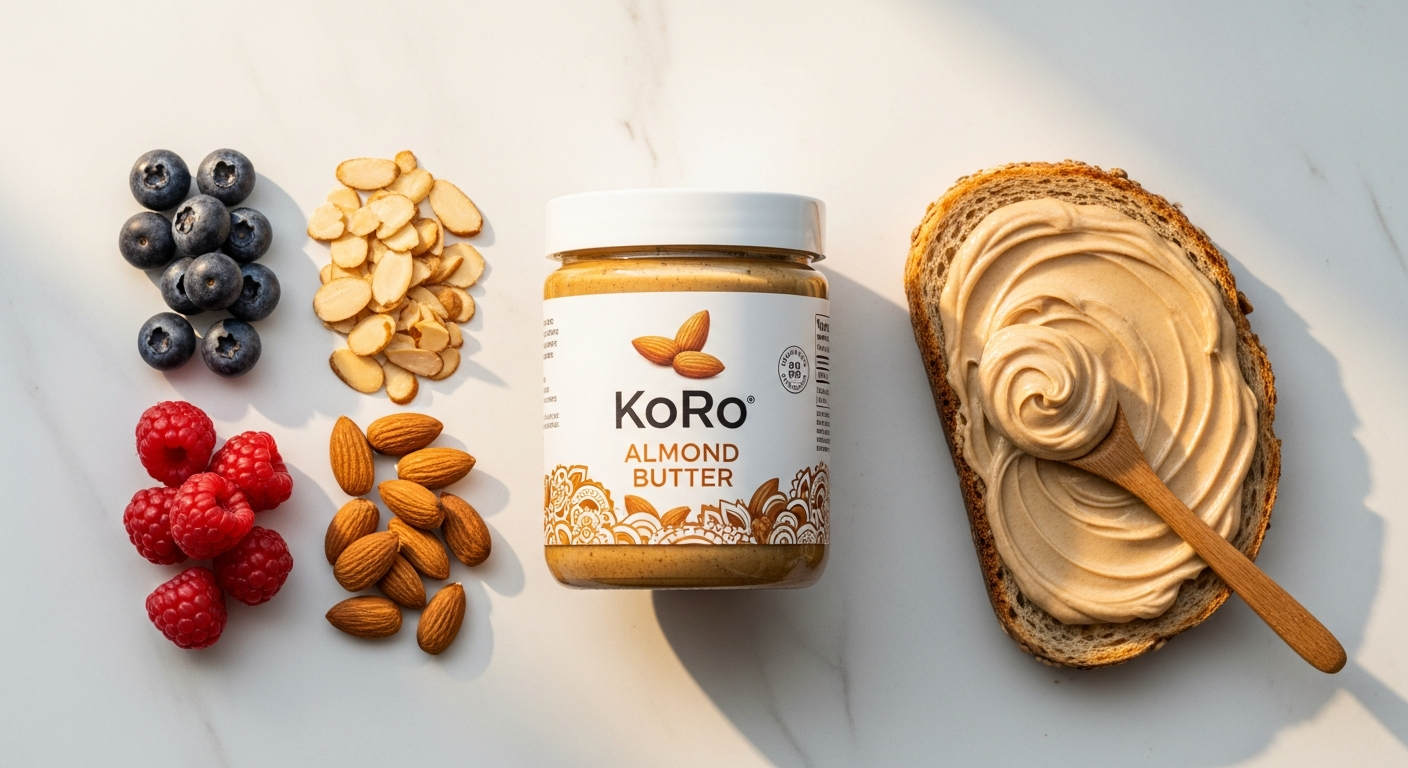
Plant-based athletes are consuming nut butters at record rates, with almond butter sales climbing 23% year-over-year. Yet most home cooks are barely scratching the surface of what these creamy powerhouses can do. I've spent considerable time testing KoRo's White Almond Butter across different applications, and the results have genuinely surprised me—this isn't just a breakfast condiment.
KoRo's White Almond Butter has earned its reputation as a bestseller for good reason. Made from 100% blanched almonds with zero added sugars, salts, or oils, it delivers 27 grams of protein per 100 grams while maintaining an exceptionally smooth, velvety texture. The brand's commitment to clean ingredients and generous 500g packaging means you're getting serious nutritional density without compromise.
Explore KoRo's White Almond Butter selection today and transform your kitchen staples.
What makes this product particularly special is how its neutral, naturally sweet flavor profile opens doors to both sweet and savory culinary possibilities. Throughout this article, I'll walk you through unconventional ways to leverage this versatile ingredient in your kitchen. You'll discover how to transform it into silky salad dressings, integrate it into baked goods, use it as a binding agent in energy balls, and even incorporate it into savory sauces that'll elevate your weeknight dinners.
Elevating Your Breakfast Game Beyond Toast
Smoothie Bowls and Parfaits
Using white almond butter as a creamy base for smoothie bowls creates layers of texture that compete with traditional yogurt foundations. The rich consistency provides a luxurious mouthfeel while boosting protein content without the heaviness of dairy. Swirling it into Greek yogurt parfaits adds richness without relying on heavy creams, giving you protein stacking that works for recovery or sustained morning energy.
Overnight Oats and Puddings
Mixing white almond butter into overnight oats produces a velvety texture that requires no additional thickening agents. The almond flavor complements vanilla, cinnamon, and cocoa when stirred into chia pudding, creating complex taste profiles that feel intentional rather than fortuitous. This method works particularly well for meal prep, as the mixture develops a more cohesive texture overnight.
Pancakes, Waffles, and Toast Applications
Creating protein-packed pancake and waffle batters with white almond butter keeps the finished product moist and tender while extending satiety. Spreading on whole-grain toast with fresh berries and raw honey provides a classic pairing that benefits from the almond butter's creamy texture. Layering in breakfast sandwiches with eggs and avocado creates complete amino acid profiles that sustain energy through morning activities.
Savory Sauce and Dressing Formulas
Creamy Dressings Without Dairy
Building creamy salad dressings without mayonnaise or heavy cream bases opens possibilities for lighter yet satisfying preparations. Whisking white almond butter into vinaigrettes creates emulsifying properties that produce silky, coating dressings. The nutty undertone complements both delicate greens and substantial salad compositions.
Asian-Inspired and International Sauces
Creating Asian-inspired peanut sauce alternatives with soy, ginger, and lime juice produces authentic-tasting condiments that work across multiple cuisines. Developing satay-style dipping sauces for spring rolls and grilled vegetables brings restaurant-quality results to home cooking. Blending into marinades for chicken, tofu, and roasted vegetables creates deeply flavored glazes that penetrate proteins effectively.
Creamy Pasta and Soup Applications
Formulating vegan cream sauces for pasta dishes rivals dairy versions in richness while adding protein density. Whisking into soup bases provides added body and subtle nutty depth that rounds out vegetable-forward preparations. Creating smooth, protein-rich gravy alternatives for plant-based meals transforms holiday cooking and comfort food traditions.
Tahini-Based Dressings
Mixing white almond butter into tahini-based dressings produces hummus-adjacent applications with distinct personality. The combination creates creamy spreads and dipping sauces that work across Mediterranean and Middle Eastern cuisine.
Baking and Dessert Applications
Cookies, Brownies, and Energy Bites
Substituting white almond butter for butter or coconut oil in brownie and cookie recipes maintains moisture and texture while elevating protein content. Creating fudgy almond butter energy bites without refined sugar produces naturally sweet treats that satisfy dessert cravings without blood sugar spikes. Incorporating into homemade granola bars as a binding agent eliminates processed binders while improving nutritional density.
Cheesecake and Frosting Innovations
Swirling white almond butter into cheesecake batters adds richness and protein while maintaining the luxurious texture that defines the dessert. Making creamy frosting bases that don't require excessive powdered sugar produces less-sweet finishes that appeal to adult palates. Blending into raw dessert crusts as an alternative to nuts and dates creates cohesive structures with superior flavor.
Protein-Dense Confections
Creating protein-dense bliss balls with cocoa, coconut, and sea salt produces treats that satisfy both taste and nutritional goals. Baking white almond butter into muffins and quick breads improves moisture retention while adding subtle flavor that complements traditional spices.
Stock up on KoRo's White Almond Butter now and unlock these baking transformations.
Muscle-Building Nutrition for Athletes and Active Individuals
Complete Amino Acid Profiles
Understanding the complete amino acid profile reveals how white almond butter supports muscle recovery across diverse training modalities. The 27 grams of protein per 100 grams positions it as a legitimate functional food rather than a peripheral supplement. Calculating protein-per-serving ratios for post-workout smoothies ensures you're meeting recovery targets without overreliance on powders.
Timing and Nutrient Absorption
Timing white almond butter consumption around training sessions optimizes nutrient absorption when your body's demand for amino acids peaks. Combining with carbohydrate sources enhances glycogen replenishment, creating synergistic effects that accelerate recovery. Using as a calorie-dense fuel option works particularly well for endurance athletes and high-volume trainers who require substantial energy input.
Performance Comparisons and Applications
Comparing nutritional density to conventional protein powders reveals that whole-food almond butter offers micronutrient advantages that isolated proteins cannot replicate. Creating pre-workout energy balls with dates and dark chocolate provides sustained energy that bridges the gap between meals and training sessions. Integrating into meal prep containers provides convenient between-meal protein boosts that maintain amino acid availability throughout the day.
Budget-Conscious Bulk Buying and Storage Strategies
Cost Analysis and Value Proposition
Calculating cost-per-serving compared to branded alternatives and grocery store options demonstrates significant savings with bulk purchasing. Understanding KoRo's bulk discount structure for larger purchases reveals how volume buying reduces per-unit costs substantially. The 500g jar provides generous quantity at approximately €10.50, with further discounts available for larger orders.
Proper Storage and Shelf Life Extension
Proper storage techniques maintain freshness and prevent separation that can occur with natural nut butters. Identifying optimal pantry conditions—cool, dark, airtight containers—preserves quality across months of storage. Freezing portions in ice cube trays enables portion-controlled usage that prevents waste while maintaining stock rotation.
Batch Preparation and Inventory Management
Batch-preparing sauces and spreads maximizes bulk purchases by transforming raw almond butter into finished products ready for immediate use. Tracking inventory prevents waste while maintaining stock rotation based on purchase dates and consumption patterns.
Clean-Label Ingredient Transparency and Health Benefits
Pure Almond Composition
Examining the significance of 100% blanched almonds with no additives reveals a commitment to ingredient integrity that increasingly defines premium food products. Understanding how blanching affects nutrient bioavailability and digestibility clarifies why this processing method appears in the formulation. Recognizing the absence of added oils, sugars, and preservatives validates claims about clean-label formulation.
Micronutrient Density and Antioxidants
Exploring the mineral content—magnesium, zinc, copper—demonstrates micronutrient density that extends far beyond macronutrient considerations. Identifying the role of natural vitamin E as an antioxidant in whole almonds explains how the product contributes to comprehensive nutrition beyond protein. Comparing ingredient lists with mainstream commercial nut butters highlights how KoRo's formulation stands apart in ingredient simplicity.
Long-Term Health Impact and Certifications
Understanding the impact of clean-label products on long-term health outcomes shifts perspective beyond individual meals toward cumulative nutritional patterns. Recognizing certifications and quality standards that validate product purity provides assurance for consumers evaluating multiple options.
Real Customer Experiences: 4.9-Star Testimonials Decoded
Common Praise Themes
Analyzing recurring praise themes from 3,500+ verified reviews reveals consistent satisfaction across diverse customer demographics. Identifying specific use cases that resonate most with existing customers—athletes recovering from training, parents seeking nutritious spreads, vegans replacing dairy products—shows how the product serves multiple market segments simultaneously.
Customer Feedback and Applications
Understanding texture and consistency feedback from diverse user demographics confirms that the creamy composition appeals across age groups and dietary preferences. Exploring how different customer segments utilize the product uncovers both obvious applications and creative uses that extend beyond traditional applications. Recognizing common flavor pairing suggestions from the review community provides inspiration for culinary experimentation.
Loyalty and Innovation Indicators
Learning from repeat purchase patterns and loyalty indicators shows that satisfied customers return regularly, suggesting confidence in product quality. Discovering unexpected applications mentioned by creative home cooks demonstrates how versatile this ingredient truly becomes in experienced hands.
Comparing White vs. Roasted Almond Butter: Which Fits Your Needs
Flavor and Texture Considerations
Flavor profile differences significantly influence recipe applications, with white almond butter offering a more neutral, delicate taste compared to roasted varieties. Texture variations exist across temperature ranges, with white almond butter maintaining consistent spreadability that suits both warm and cold preparations. Color considerations matter for aesthetic appeal in specific dishes, where white almond butter's pale hue complements certain presentations better than darker roasted versions.
Nutritional and Processing Factors
Nutritional differences emerge from how processing affects micronutrient retention, with blanching potentially influencing certain heat-sensitive compounds. Shelf stability and oxidation resistance favor white almond butter due to the blanching process removing the nutrient-rich skin that's more prone to oxidation in roasted varieties.
Application-Based Selection
Pairing recommendations based on culinary applications suggest white almond butter for delicate baked goods, cream sauces, and sweet applications, while roasted varieties suit savory preparations where deeper flavor profiles enhance results. Personal preference factors ultimately determine ideal choice, as individual taste preferences and specific recipe requirements guide selection.
Your Pantry's Secret Weapon Awaits
KoRo's White Almond Butter transcends the traditional role of a breakfast spread—it's genuinely a culinary workhorse that belongs in every kitchen. From silky savory sauces to protein-dense desserts, from athlete's recovery smoothies to budget-friendly bulk purchases, this creamy, versatile product delivers on multiple fronts. The 4.9-star rating from thousands of customers isn't accidental; it reflects a product that actually performs across diverse applications and dietary preferences.
What I've found most compelling is how the clean-label formulation—nothing but blanched almonds—means you're not compromising on ingredient quality while experimenting with unconventional uses. The 27 grams of protein per 100 grams makes it legitimately functional for muscle recovery and sustained energy. The texture is forgiving enough for beginners yet sophisticated enough for experienced cooks pushing culinary boundaries.
Ready to unlock the full potential of this ingredient? Start with one of the applications that resonates most with your cooking style—whether that's a creamy salad dressing, a baked good, or a post-workout smoothie.
Leave a Reply