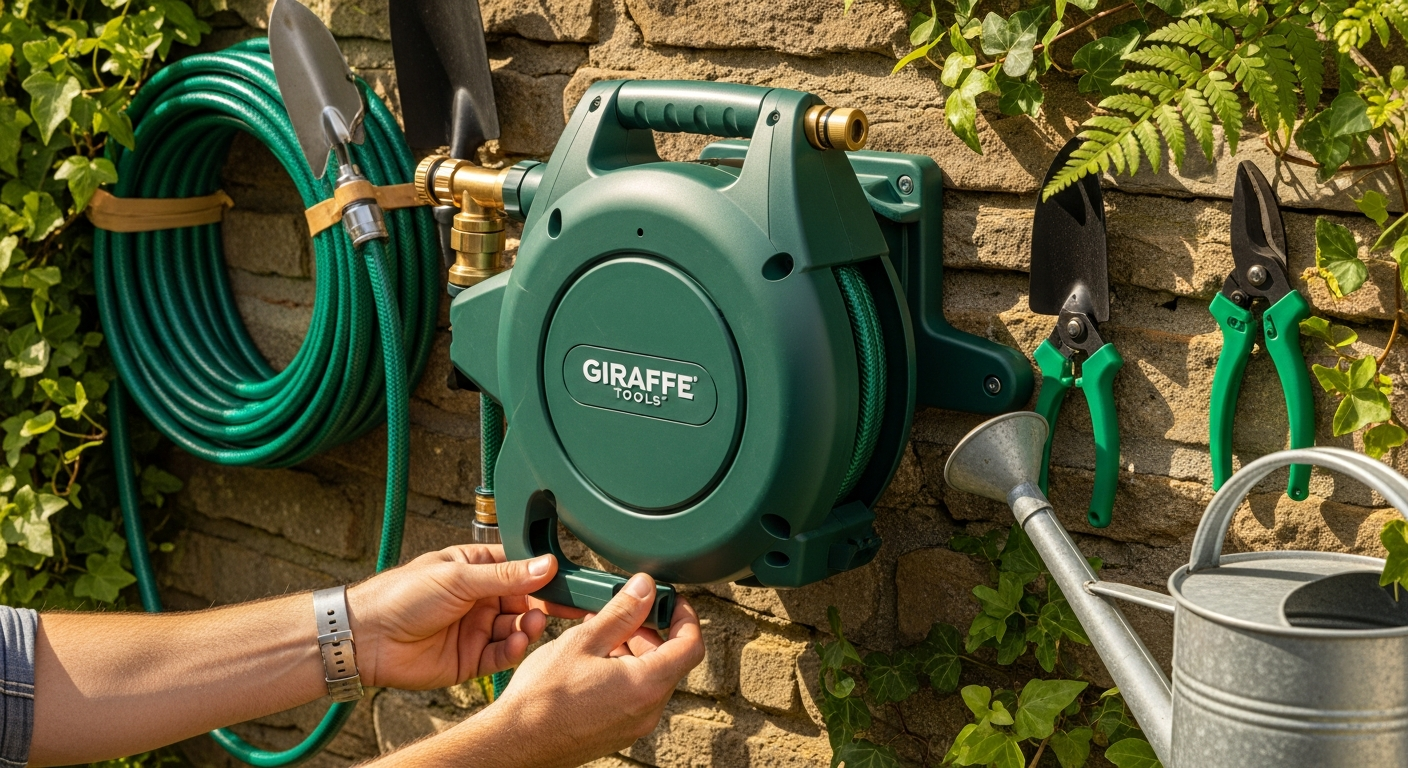
Nothing derails a gardening season faster than a hose reel that won't cooperate. Whether it's a mounting bracket that won't fit your fence posts or a nozzle that leaks after six months, installation and maintenance hiccups can turn your convenience tool into a frustration factory. The Giraffe Tools Retractable Garden Hose Reel has earned its reputation as a game-changer for outdoor watering, but like any quality investment, it demands proper installation and care to perform at its peak.
This guide walks you through the complete installation process, reveals maintenance routines that extend your reel's lifespan, and equips you with troubleshooting strategies for the issues that actually occur in real-world gardens. You'll learn how to navigate mounting challenges, protect your casing from UV damage, and keep every component functioning smoothly season after season.
Pre-Installation Assessment: Choosing the Right Location for Your Reel
Evaluating your fence post dimensions (standard vs. oversized posts)
The mounting bracket's width can present challenges right from the start. Standard 4×4 fence posts are common, but many residential installations feature wider posts or non-standard configurations. Before purchasing or committing to a location, measure your posts carefully. The Giraffe Tools bracket requires adequate surface area to seat properly without overhang or instability. Posts that are too narrow demand creative solutions—spacers, reinforcement plates, or alternative mounting surfaces like fascia boards become necessary considerations.
Assessing water pressure requirements and supply line compatibility
Your home's water pressure directly impacts how the reel performs. The Giraffe Tools models handle pressures up to 600 PSI, which exceeds most residential water systems (typically 40-80 PSI), but it's worth confirming your actual pressure. If your supply line runs through old galvanized pipes or has multiple bends, pressure drops occur. Locate your water shut-off valve and nearest outdoor faucet to minimize the supply line distance. Shorter connections mean better pressure retention and fewer potential leak points.
Determining optimal hose length for your property size (60-155 feet options)
Hose length selection demands honest assessment of your watering needs. A 60-foot reel suits compact urban gardens and smaller suburban lots. Properties exceeding 5,000 square feet benefit from 100-foot or 155-foot models. Consider the furthest corner of your property from the water source. Add extra footage for obstacles and winding pathways—you'd rather have excess length than constantly discover you're ten feet short of your back border.
Identifying sun exposure and weathering factors for casing protection
The plastic casing resists UV damage through special materials, but prolonged direct sunlight causes fading over time. Scout your installation location during different hours. Morning sun differs significantly from afternoon western exposure. Sheltered locations under eaves or partial shade from trees offer natural protection. Document how many hours of direct sunlight strike your chosen spot. This information guides your protective coating strategy later.
Measuring clearance space for the 180-degree swivel bracket operation
The swivel bracket allows the hose to reach distant garden areas without repositioning the entire reel. Verify that nothing obstructs the bracket's movement—low branches, utility lines, or structural elements can prevent full rotation. Stand at your proposed installation point and simulate the swivel's full range. Ensure clearance extends at least 18 inches on both sides of the bracket's movement arc.
Mounting Bracket Installation: Solving the Post-Size Challenge
Understanding why standard 4×4 posts may not align with bracket width
The Giraffe Tools bracket spans a specific width designed for typical fence posts. Reality often presents variations. Older fences may feature 3×4 posts. Newer construction sometimes uses 4×6 or wider posts. Vinyl-wrapped posts add another dimension to the equation. Misalignment creates wobbling and potential structural stress on the mounting hardware over time.
Bracket reinforcement techniques for non-standard post sizes
When post dimensions fall outside the bracket's ideal range, reinforcement plating distributes mounting load more effectively. Metal brackets or wooden spacer plates can bridge gaps or provide additional contact surface. Ensure any reinforcement material matches the bracket's corrosion resistance—galvanized steel works well alongside the reel's rust-resistant components.
Using spacers and shims to achieve proper alignment
Spacers create even contact between the bracket and your post. Rubber or neoprene shims absorb vibration and accommodate minor surface irregularities. Stainless steel shims prevent rust staining on painted posts. Stack shims gradually, checking alignment frequently, rather than forcing thick shims into place all at once. Gradual adjustment ensures you can fine-tune the final position.
Fastening hardware requirements and pressure-rated specifications
Use stainless steel or galvanized bolts rated for outdoor pressure applications. Lag bolts work for wooden posts, while through-bolts provide superior holding power. Never substitute standard hardware—the reel's weight and water pressure create constant mechanical stress. Torque bolts to manufacturer specifications, typically around 35-40 foot-pounds for standard 3/8-inch hardware. Under-tightened bolts allow movement; over-tightened bolts risk stripping threads or cracking post material.
Preventing bracket wobble through multi-point anchoring
Single-point fastening invites movement. The Giraffe Tools bracket should attach via at least three anchor points—typically two upper bolts and one lower fastener. This triangulated anchoring distributes stress and eliminates lateral movement. Check tightness monthly during the first season. Wood posts shift slightly with seasonal moisture changes, requiring periodic re-tightening.
Hose Connection and Pressure Testing Procedures
Connecting the leader hose to your water supply safely
The leader hose—the short segment between your water source and the reel—must connect securely. Wrap the connection threads with plumber's thread seal tape, overlapping each wrap. Hand-tighten the connection, then use an adjustable wrench for a final quarter-turn. Excessive force damages the fitting; insufficient tightening causes leaks.
Understanding pressure ratings (up to 600 PSI) and your home's water pressure
Most residential systems operate between 40-80 PSI. Pressure spikes occur when demand drops across your neighborhood, particularly at night. A simple pressure gauge (available at hardware stores) attaches temporarily to any outdoor faucet. Record readings at different times. Excessive pressure—consistently above 100 PSI—requires a pressure regulator installation before your reel to prevent hose and internal component stress.
Detecting and preventing kinks during initial setup
New hoses sometimes retain coiling from manufacturing. Before first use, lay the hose fully extended in the sun for several hours. This relaxes the material and reveals kinks before they create permanent damage. Never fold or bundle the hose sharply. The self-layering system winds it properly into the reel automatically during operation.
Testing for leaks at connection points and nozzle base
Turn the water on fully and inspect every connection point. Wipe surfaces dry with a cloth, then watch carefully for moisture accumulation. Small leaks often hide under dripping water. Pay special attention to the nozzle's base where the O-ring seals the spray pattern selector. The connection between leader hose and reel body is another common leak location. Tighten any leaking connections slightly. If leaking persists, drain the system and re-wrap threads with fresh tape.
Adjusting water flow before first use
The 9-pattern nozzle includes a flow control valve. Start with the valve half-open during testing. Gradually increase flow while monitoring pressure at the reel body. If the connection leaks or the bracket shows any movement, reduce flow immediately. Safe operation pressure sits 20-30 PSI below your maximum rating, providing a safety margin for pressure spikes.
Seasonal Maintenance Routines That Prevent Costly Repairs
Spring startup checklist for hose reels after winter storage
Winter weather stresses outdoor equipment. As temperatures warm, inspect the entire reel before opening the water supply. Check for visible cracks in the casing or bracket corrosion. Manually test the retract mechanism by gently pulling the hose—it should reel back smoothly without resistance. Verify that all fasteners remain tight after months of freeze-thaw cycles. If you drained the system for winter storage, prime the hose by running water slowly for 30 seconds before resuming normal use.
Monthly inspection schedule for hybrid hose material integrity
The hybrid hose material resists abrasion and kinking, but it needs monitoring. Once monthly, inspect visible hose sections for cracks, splits, or flat spots. Feel along the hose surface for rough patches that indicate developing damage. Early detection prevents ruptures that create water waste and emergency repairs mid-season. Pay particular attention to areas near the reel's exit port where stress concentrates.
Cleaning the nozzle's 9-pattern spray settings
Hard water deposits clog the nozzle's tiny ports, reducing spray effectiveness. Remove the nozzle monthly and soak it in white vinegar for 30 minutes. Use a soft brush or old toothbrush to gently scrub the spray face. Rinse thoroughly under clean running water. Cycle through all nine pattern settings multiple times to clear internal passages. This simple routine maintains consistent water delivery across all spray options.
Checking the auto-retract mechanism for smooth operation
The auto-retract system's smooth operation defines the reel's convenience factor. Monthly, pull the hose out about 20 feet, then release the trigger and let gravity guide it back. The reel should wind evenly and smoothly without jerking or hesitation. Rough retraction indicates internal friction—often caused by hose misalignment in the self-layering system. If retraction feels strained, drain the system and inspect the internal guide rollers for obstructions.
Flushing sediment from the internal hose pathways
Sediment accumulates gradually in the internal passages. Seasonally, disconnect the reel from the water supply and attach a utility nozzle set to maximum flow. Pull all the hose out and flush water through it at high pressure. This pushes sediment out through the nozzle rather than deeper into the reel. Pay attention to water quality—cloudy discharge indicates significant sediment buildup requiring more thorough flushing.
Protecting Your Casing from UV Damage and Fading
Understanding UV-proof material limitations over time
The UV-resistant plastic slows fading but doesn't prevent it entirely. Over five to ten years, exposed casing gradually discolors from vibrant colors to muted tones. This cosmetic change doesn't affect functionality, but it signals that UV exposure continues affecting material integrity. Casing brittleness eventually follows fading, making protective measures worthwhile.
Applying protective coatings to prevent plastic degradation
Marine-grade UV protective coatings, designed for boat covers and outdoor plastic furniture, extend casing longevity. Clean the casing thoroughly, allow it to dry completely, then apply coating according to product instructions. Most products require reapplication annually or biennially. This investment in a $15-30 coating protects a $100-240 reel.
Strategic placement to minimize direct sunlight exposure
When choosing an installation location, prioritize shade whenever possible. Northern-facing walls receive minimal direct sun. Locations under roof overhangs or tree canopy reduce exposure significantly. If sun exposure is unavoidable, consider installation on the shadier side of a fence or structure rather than the sunny side.
Using shade structures or covers during off-season storage
During winter storage or extended non-use periods, a simple shade cloth or burlap cover provides substantial protection. Canvas covers designed for outdoor furniture work equally well. Ensure covers allow air circulation to prevent moisture accumulation. Remove covers periodically during storage to check for mold or mildew growth.
Monitoring for early signs of casing discoloration
Inspect your reel's casing quarterly. Early discoloration appears as subtle color shifts or slight haziness on the surface. This is the perfect time to apply protective coatings. Acting early prevents the darker fading that becomes difficult to reverse. Documentation through photos helps track discoloration progression.
Troubleshooting Common Issues and Quick Fixes
Hose not retracting smoothly: tension adjustment and obstruction removal
Rough retraction usually traces to one of two sources. First, check for internal obstructions—debris lodged in the guide system prevents smooth operation. Inspect the hose exit port carefully. If visible obstructions exist, drain the system and attempt removal with pliers or a small hook. Second, the self-layering tension may require adjustment. Some Giraffe Tools models feature adjustable tension settings. Consult your manual for tension adjustment procedures specific to your model. Slight increases in tension sometimes resolve hesitant retraction.
Water leaking from connection points: O-ring replacement and tightening
Minor leaks at the nozzle base often trace to the O-ring sealing the spray pattern selector. Turn the nozzle counterclockwise to remove it. The O-ring sits in a groove at the nozzle's base. If it appears cracked, hardened, or flat, replacement is necessary. Hardware stores stock universal O-ring assortments in various sizes—typically $3-8. Apply a thin layer of silicone grease to the new O-ring before reinstalling the nozzle. Connection leaks between the leader hose and reel body demand retightening or re-taping of threads. Drain the system, disconnect the leader hose, wrap fresh thread seal tape around the fitting, and reconnect.
Nozzle pressure loss: cleaning spray ports and checking internal flow
When water pressure drops significantly at the nozzle despite strong pressure at the reel, spray port clogs are likely. Remove the nozzle and soak it in vinegar as described in the maintenance section. For stubborn deposits, use a small wire or needle to carefully clear each spray port. Alternatively, reduced pressure might indicate a kinked hose restricting flow. Carefully inspect the full hose length for any flat spots or sharp bends. If the hose has kinked despite the auto-retract mechanism, manual straightening may resolve the issue.
Hose kinking despite auto-retract: self-layering system inspection
The self-layering system guides hose evenly into the reel, preventing kinks. Persistent kinking suggests this system needs inspection. Drain the reel fully and carefully pull the hose out to inspect the first several feet. Look for the guide rollers or directional channels that govern hose placement. If these appear bent, damaged, or misaligned, professional service may be necessary. Alternatively, certain installation angles or water pressure combinations trigger improper layering. Try reducing water pressure slightly or repositioning the reel's angle if mounting flexibility exists.
Bracket wobbling or loosening: re-tightening fasteners and checking alignment
Seasonal wood movement and vibration from water flow gradually loosen fasteners. Every season, systematically re-tighten all bracket bolts using appropriate wrenches. Check that shims remain in place and haven't compressed. If wobbling persists after tightening, the post itself may be moving. Inspect the post for rot or structural weakness. Wooden posts deteriorate over time, eventually requiring professional assessment or replacement. Vinyl or composite posts sometimes flex in wind. Additional support or reinforcement brackets may be necessary for problematic installations.
Extending Hose Lifespan: Care Strategies for Non-Replaceable Components
Why hose replacement isn't an option and how to plan accordingly
The Giraffe Tools retractable reel design integrates the hose permanently. Unlike traditional coiled hoses you can swap out, the internal hose cannot be replaced without complete reel disassembly—a process that voids warranties and costs nearly as much as purchasing a new reel. This reality underscores the importance of treating the hose as a permanent component deserving careful protection.
Preventing abrasion damage through proper storage and routing
Abrasion accelerates hose degradation. When fully extended, keep the hose away from rough surfaces, sharp edges, or hot pavement. Route it around garden obstacles rather than dragging it over them. During storage, ensure the hose lies evenly in the reel without bunching or compression. Never force the hose back into the casing—the auto-retract system should handle retraction smoothly.
Temperature management during extreme weather seasons
Extreme heat softens hose material, making it more prone to kinking and puncture. Extreme cold hardens it, increasing brittleness. During intense summer heat, allow the reel to remain in shade and operate it during cooler morning or evening hours when possible. In winter, drain all water from the system if temperatures regularly fall below freezing in your region. Residual water inside the hose expands during freezing, potentially cracking the material.
Pressure regulation to avoid stress on hybrid hose material
Sustained high pressure accelerates hose aging. If your home's water pressure consistently exceeds 80 PSI, install a pressure regulator on your outdoor faucet before the reel. This inexpensive device ($30-50) reduces pressure to a consistent 60-70 PSI, extending hose lifespan significantly. Avoid sudden pressure changes by opening and closing the water valve gradually rather than abruptly.
Draining residual water to prevent internal corrosion
Water remaining inside the hose gradually causes internal corrosion and mineral buildup. At season's end or before extended storage periods, drain the reel fully. Disconnect the leader hose and point it downward, allowing gravity to pull water out. Pull the hose fully extended and walk its length, gently encouraging remaining water toward the outlet. Even slight draining significantly improves long-term condition.
Keep Your Reel Running Strong: The Maintenance Payoff
Proper installation and consistent maintenance transform your Giraffe Tools Retractable Garden Hose Reel from a convenient gadget into a reliable workhorse that serves your garden for years. The time you invest upfront—measuring those tricky mounting dimensions, testing water pressure, and establishing seasonal routines—pays dividends through fewer frustrations and extended product longevity.
Your reel represents a meaningful investment in garden organization and efficiency. By following the installation protocols outlined here, you'll sidestep the common pitfalls that create unnecessary headaches. The maintenance strategies aren't complicated or time-consuming; they're simply smart practices that keep every component functioning as designed.
Start with your installation today and commit to a simple seasonal maintenance schedule. Your future self will thank you for the difference between a reel that frustrates you and one that delights you.
Order your Giraffe Tools Retractable Garden Hose Reel and enjoy years of reliable garden watering.

Leave a Reply