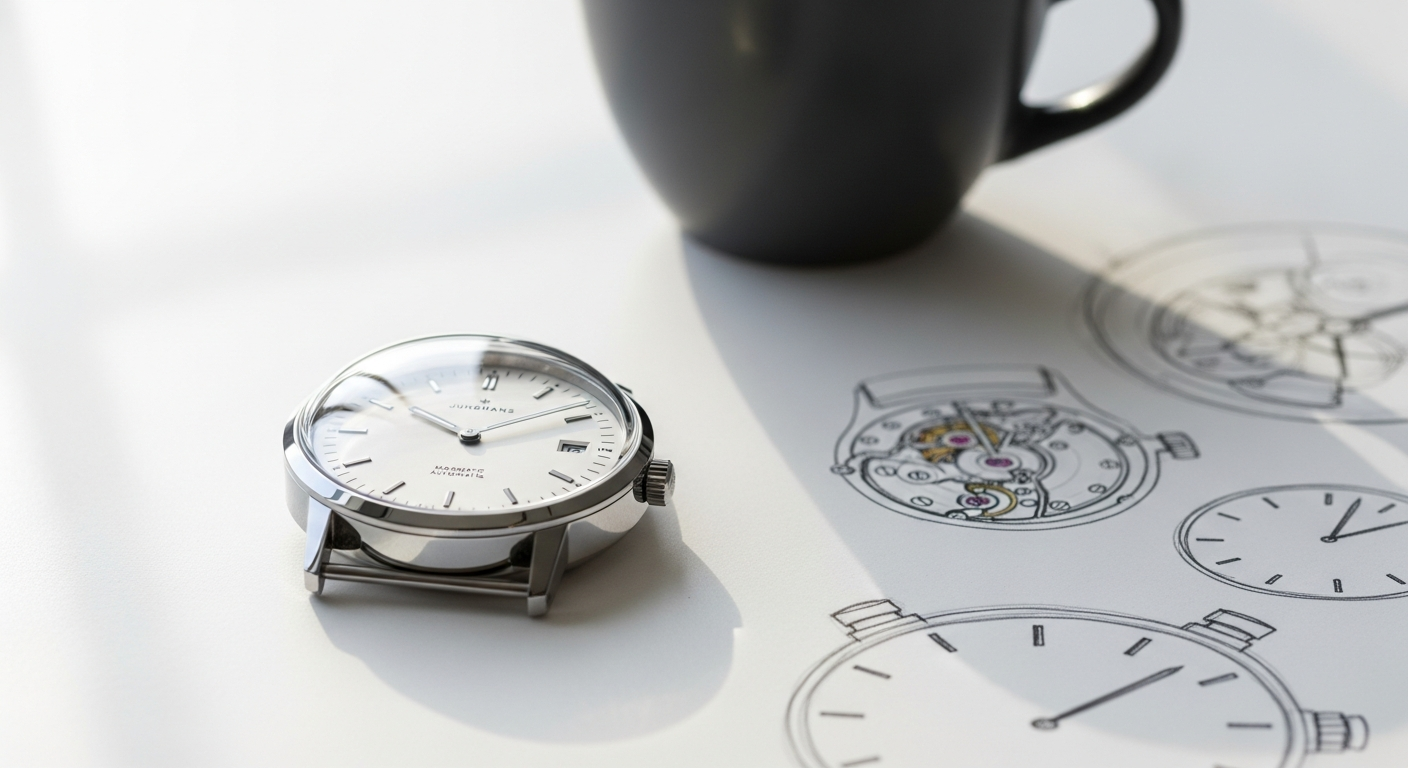
The Junghans Max Bill Automatic Bauhaus Watch: A Complete Guide to Minimalist Design in Horology
Over 60 years have passed since Max Bill first sketched the design that would become one of watchmaking's most recognizable icons—yet the Junghans Max Bill Automatic Bauhaus Watch remains virtually unchanged. This isn't a watch that chases trends; it's a watch that defines them. The collaboration between legendary Swiss-German artist and architect Max Bill and Junghans represents something rare in horology: a perfect marriage of artistic vision and mechanical precision.
The Max Bill Automatic embodies the Bauhaus philosophy of form follows function, stripping away every unnecessary element to reveal pure, purposeful design. Every detail serves a purpose, from the elegant proportions of the case to the meticulously curved hands that sweep across the dial. This approach to design has influenced countless watchmakers and continues to resonate with those who appreciate intellectual rigor in their timepieces.
In this guide, you'll understand why design professionals choose this watch, how it compares to other minimalist alternatives, and whether it's the right investment for your collection. Discover the Max Bill Automatic and its Bauhaus heritage at Bauhaus.
The Design Philosophy Behind Max Bill's Masterpiece
Max Bill's Background and Aesthetic Direction
Max Bill's training at the Bauhaus school under luminaries like László Moholy-Nagy and Herbert Bayer shaped his entire design philosophy. When Junghans approached him in the early 1960s, Bill brought decades of experience in architecture, graphic design, and sculptural form. His influence on the Max Bill Automatic was profound and deliberate—every line, every proportion, every decision reflected the core Bauhaus tenets he had internalized throughout his career.
The Principle of Less Is More
The thin bezel represents restraint. The stripped-down dial speaks elegance. The absence of complications or unnecessary markings creates a visual clarity that modern watchmaking often overlooks. This philosophy extends to every surface and contour. The case has no applied logos or decorative elements. The lugs flow seamlessly without angular flourishes. The overall effect is one of purposeful reduction—nothing is present that doesn't serve the fundamental function of telling time with clarity and precision.
Eliminating Visual Clutter While Maximizing Legibility
The Max Bill Automatic achieves something counterintuitive: by removing visual noise, it actually enhances readability. The dial commands immediate attention. The hands are proportioned perfectly to maintain contrast against the clean background. The baton hour markers or sans-serif numerals provide just enough reference points without overwhelming the eye. This design approach ensures that at a glance, the wearer can read the time instantly, whether in bright sunlight or dimly lit environments.
The Custom-Designed Hooked 4
One detail captures Max Bill's attention to subtlety: the distinctive hooked 4 in the numerals. This element appears on certain dial variants and serves as a quiet signature—a mark of craftsmanship and intentional design that only those familiar with Bill's work will recognize. It's the kind of detail that separates purposeful minimalism from mere simplicity.
The All-Dial Illusion
The minimal bezel creates an optical effect where the 38mm case appears larger than its actual dimensions. This design choice emphasizes dial prominence and adheres strictly to Bauhaus philosophy. The thin frame becomes almost invisible, allowing the dial to dominate the visual composition. Observers often express surprise at the case's modest size when they discover it measures just 38mm—the proportions feel perfectly balanced and generous on the wrist.
Dial & Hands: Where Precision Meets Aesthetics
Dial Options and Visual Impact
The Max Bill Automatic typically appears in two primary dial configurations: matte silver-plated white and deep black. The white dial offers brightness and contrast, making the watch pop against darker clothing or backgrounds. The black dial conveys sophistication and creates a striking visual presence. Both options employ matte finishes rather than glossy surfaces, which prevents reflections and maintains the minimalist aesthetic while improving legibility in varied lighting.
Baton Markers Versus Sans-Serif Numerals
Different iterations offer distinct visual personalities. Some versions feature simple baton hour markers—horizontal lines positioned at cardinal points—that reinforce the watch's geometric purity. Other variants showcase Max Bill's custom sans-serif numerals, which add a graphic design element and connect the watch more directly to Bill's typographic legacy. The choice between these options comes down to personal preference and the specific statement you want the watch to make.
Luminous Hand Design and Crystal Interaction
The hands are curved to follow the domed Hesalite crystal, a subtle but important detail. When illuminated with lume, they glow distinctly in darkness, ensuring readability during nighttime hours. The curve of each hand means it maintains visual harmony with the watch's overall geometry. This attention to three-dimensional design—considering how elements interact with the crystal—reflects genuine engineering thoughtfulness.
Hesalite Crystal with SICRALAN Coating
Junghans selected Hesalite plexiglass specifically for its aesthetic warmth and historical authenticity. The SICRALAN coating provides additional durability against scratching while maintaining the material's distinctive visual character. Hesalite possesses a subtle cloudiness when viewed at angles—a quality some find charming and others view as imperfect. This warmth contrasts sharply with modern sapphire glass, which appears almost invisible and ultra-clear, but arguably lacks character.
Legibility Across Lighting Conditions
The watch performs remarkably well in various lighting situations. Under bright daylight, the matte dial and polished hands create excellent contrast. In office environments with artificial lighting, the dial's clean geometry remains instantly readable. At night, the luminous hands become the primary reference points, and their size and position ensure quick time-reading without requiring focus or effort. This consistency across lighting conditions speaks to intelligent dial design.
Movement & Reliability: The Swiss Automatic Heart
Junghans Caliber J800.1 Specifications
The J800.1 caliber powers most Max Bill Automatic models and represents a proven, reliable workhorse. Based on the well-established ETA 2824-2 or Sellita SW200 platform, this movement benefits from decades of refinement and real-world testing. Junghans selected it specifically for its accuracy, durability, and ease of service. The movement operates at 4 Hz (28,800 vibrations per hour), a standard frequency that ensures smooth hand sweeping and reliable timekeeping.
38-Hour Power Reserve
The 38-hour power reserve means the watch can comfortably sit unused over a weekend without stopping completely. This practical specification reflects real-world ownership patterns. If you wear the watch daily, the power reserve becomes academic—you'll wind it automatically through wrist motion. However, the generous reserve accommodates weekend breaks or vacation periods where you might switch to a different timepiece, and the watch will remain running when you return to it.
Accuracy Expectations at This Price Point
Swiss automatic movements at this level typically maintain accuracy within -10 to +20 seconds per day, though many owners report even tighter performance. This specification satisfies the needs of daily timekeeping without requiring constant adjustment. Unlike quartz watches, mechanical movements naturally drift slightly, and the Max Bill Automatic's performance falls entirely within acceptable parameters for this category. Regular wear and proper winding will keep timekeeping consistent.
Maintenance Requirements and Service
The J800.1 caliber requires standard automatic movement maintenance: periodic servicing every 3–5 years, depending on wear and environmental factors. This involves cleaning, lubrication, and component inspection by a qualified watchmaker. Junghans-authorized service centers handle these procedures, and the parts availability remains excellent due to the movement's widespread use across multiple watch brands. Service costs typically range from $150–$300, reflecting the straightforward nature of the movement and its widespread familiarity among technicians.
Longevity and Real-World Durability
Owners report decades of reliable service from the J800.1. The movement's design prioritizes longevity, and the robust construction means it tolerates minor shocks and variations in care that would damage more delicate calibers. Properly serviced, a Max Bill Automatic with J800.1 movement can function reliably for 30, 40, or even 50+ years. This durability, combined with the watch's timeless aesthetic, positions it as a potential heirloom piece.
Explore premium Bauhaus timepieces and horological heritage at Bauhaus.
Case, Strap & Wearability: Built for Everyday Use
Case Dimensions and Wrist Compatibility
The 38mm diameter and 10mm height create proportions that work across a broad spectrum of wrist sizes. This "Goldilocks" sizing has become increasingly appreciated in recent years as the watch industry moves away from oversized cases. On smaller wrists, the Max Bill feels appropriately scaled without appearing diminutive. On larger wrists, the clean design and thin profile ensure the watch doesn't disappear or feel uncomfortable. The short, downward-sweeping lugs enhance this versatility by improving how the watch sits on different lug-to-lug distances.
Stainless Steel Construction
The case material is robust 316L stainless steel, a standard that resists corrosion and tolerates daily wear remarkably well. The finish typically combines polished lugs with brushed sides, creating visual interest while minimizing the appearance of micro-scratches on the side surfaces. The case edges are refined without being sharp, and the overall construction quality reflects Junghans' Swiss manufacturing standards. After years of daily wear, the case develops a patina of light scratches that many owners find characterful rather than detracting.
Lug Design and Comfort
The short, downward-sweeping lugs represent another subtle but consequential design choice. They don't extend sharply from the case but instead flow smoothly, reducing the watch's effective footprint on the wrist. This proportioning makes the watch feel lighter and more comfortable during extended wear, whether seated at a desk, typing on a keyboard, or moving through daily activities. The strap connection points sit closer to the wrist, minimizing overhang and improving the overall fit.
Strap Options
The Max Bill Automatic typically arrives with either a high-quality calf leather strap or a Milanese-style bracelet. The leather option offers elegance and develops a natural patina over time, creating a personalized appearance. The Milanese bracelet provides durability and a more contemporary aesthetic while maintaining minimalist sensibilities. Both options are genuine and well-crafted, though leather straps require periodic maintenance and eventual replacement, while the Milanese bracelet offers greater longevity with proper care.
Water Resistance Limitations
The 30–50 meter water resistance (depending on the specific model variant) accommodates daily splashes, hand-washing, and light rain without concern. This specification adequately covers the watch's intended purpose as a daily wearer in typical life situations. However, it excludes swimming, showering, or any activity where the watch would be submerged. The limited water resistance reflects a design priority: keeping the case as thin and visually minimal as possible. Deeper water resistance would require thicker case walls and additional sealing complexity, compromising the aesthetic vision.
The Hesalite vs. Sapphire Crystal Debate
Junghans' Choice of Hesalite for Original Design
When Max Bill and Junghans developed the watch in the early 1960s, Hesalite was the logical choice. This acrylic material offers excellent optical clarity, lightweight construction, and a subtly warm appearance that complements vintage design aesthetics. The vintage aesthetic remains a central appeal today. Hesalite possesses a slight tint and slight cloudiness at extreme angles—characteristics that many design purists view as adding character and warmth to the overall presentation.
Scratch Susceptibility and Polishing Solutions
Hesalite is softer than sapphire and scratches more easily with regular wear. A micro-abrasive cloth or professional polishing can often restore the crystal's clarity, making minor scratches disappear almost completely. Many owners view this repairability as an advantage: unlike sapphire scratches, which are permanent, Hesalite damage can be remedied relatively inexpensively. This cyclical maintenance becomes part of the ownership experience for those who embrace the material's characteristics.
Sapphire Upgrades and Retrofit Options
Some newer Max Bill Automatic variants and aftermarket modifications offer sapphire crystal upgrades. Sapphire provides superior scratch resistance and maintains clarity indefinitely, but it introduces a visual change. The increased transparency of sapphire eliminates the subtle warmth of Hesalite, making the dial appear somehow more clinical. Additionally, sapphire reflects light differently, creating different optical effects. For collectors prioritizing authenticity to Bill's original vision, this change represents a departure from the intended design.
Visual Differences Between Materials
Comparing the two side-by-side reveals the distinction. Looking through Hesalite creates a slightly softer, warmer viewing experience. The crystal seems almost to embrace the dial rather than merely frame it. Sapphire, conversely, appears neutral and completely transparent—it essentially disappears from perception. Both approaches have merit, but they deliver different sensory experiences and communicate different design philosophies.
Collector Perspectives on Authenticity Versus Practicality
The Hesalite versus sapphire question divides the collecting community. Purists argue that Hesalite remains essential to the watch's historical authenticity and visual character, and that the occasional polishing routine becomes part of the ownership ritual. Pragmatists contend that sapphire's durability and scratch resistance serve modern lifestyles better, even if the change slightly alters the original aesthetic. Neither position is objectively correct—the choice depends on how you prioritize historical accuracy against practical convenience.
Investment Value & Collector Appeal
Historical Significance and Design Lineage
Owning a Max Bill Automatic means possessing a tangible connection to Bauhaus—arguably the most influential design movement of the twentieth century. Max Bill's personal authority as a Bauhaus student and later master, combined with the watch's role as a cultural artifact, grants it significance beyond typical timepieces. Collectors of design history, architecture enthusiasts, and serious horology devotees all recognize the watch's cultural weight. This historical grounding creates appeal that transcends fashion cycles.
Resale Market Trends
Over the past decade, Max Bill Automatic prices have remained relatively stable, with some appreciation for vintage examples and discontinued variants. The watch doesn't experience dramatic value fluctuations like speculative modern watches. Instead, it maintains steady demand among collectors and design professionals. Pre-owned examples typically retain 60–75% of original retail value, depending on condition and variant. This stability reflects consistent interest and the watch's status as a design classic rather than a trend-driven purchase.
Appeal to Design Professionals and Architects
Architects and industrial designers specifically gravitate toward the Max Bill Automatic because it represents design principles taught in their disciplines. The watch serves as a professional statement—visible evidence that the wearer appreciates and understands minimalist design philosophy. In architectural or design offices, the Max Bill Automatic functions as both timepiece and credential, silently communicating knowledge and taste to colleagues and clients.
Price Stability and Appreciation Potential
The $1,000–$1,500 price range ensures the watch remains accessible to serious enthusiasts without commanding exotic-watch prices. This accessibility supports consistent demand. The watch doesn't attract speculative investors seeking rapid appreciation, which paradoxically protects it from the volatility affecting trendier brands. Instead, it attracts thoughtful collectors who plan to wear and keep their watches long-term, supporting stable values and occasional appreciation.
Cultural Symbol Status and Collector Demand
The Max Bill Automatic has transcended mere functional timepiece status to become a cultural symbol—a shorthand for understanding Bauhaus principles and valuing minimalist aesthetics. Museum collections feature the watch. Design schools use it as a teaching tool. Fashion publications regularly reference it as the quintessential minimalist watch. This cultural weight sustains demand independent of marketing cycles or industry trends.
Practical Considerations for Daily Wear
Versatility Across Settings
The watch performs brilliantly across diverse contexts. In a formal business setting, the refined proportions and elegant lines communicate professionalism and sophistication. In casual environments, the minimalist aesthetic prevents the watch from appearing overdressed or ostentatious. This chameleonic quality—the ability to integrate seamlessly into any context—represents genuine design success. The watch doesn't demand attention; it earns respect through understated presence.
Pairing with Different Clothing Styles
The Max Bill Automatic pairs naturally with virtually any wardrobe. The clean design means it doesn't clash with patterns or color palettes. On a dark suit, the watch provides refined visual punctuation at the wrist. With casual jeans and a shirt, it adds intentional sophistication without effort. The leather strap option offers warmth and casualness, while the Milanese bracelet projects a more refined aesthetic. This adaptability means you'll wear it constantly rather than rotating through multiple watches.
Comfort During Extended Wear
Extended wear tests reveal the watch's genuine wearability. The light weight means it doesn't fatigue the wrist during full workdays. The short lugs prevent the strap from digging into the wrist, and the case height ensures the watch doesn't catch on desk edges or keyboard frames. Many owners report forgetting they're wearing the watch after initial acclimation, which represents the ultimate compliment for a wristwatch—it simply disappears into daily life while performing its function flawlessly.
Durability for Active Lifestyles
While the watch isn't designed for extreme sports or intense physical activity, it tolerates normal active lifestyles without complaint. Walking, traveling, and typical daily exertion pose no problems. The stainless steel case resists denting from minor impacts, and the movement's robust construction tolerates normal wrist movement. The primary caution involves contact sports or activities where impact damage becomes likely—these situations warrant leaving the watch at home or investing in a protective strap.
Conversation Starter Appeal
Unexpectedly, the Max Bill Automatic frequently generates conversations. Observant individuals recognize its significance and ask about it. These interactions often become pleasant opportunities to discuss design, craftsmanship, and the Bauhaus movement. The watch becomes a gateway to meaningful conversations with fellow design enthusiasts, creating social value beyond its primary function. This conversational appeal is particularly pronounced among architects, designers, and culturally engaged professionals.
Comparing the Max Bill Automatic to Other Minimalist Watches
Design Purity Against Bauhaus-Inspired Competitors
Other watchmakers have attempted Bauhaus-inspired designs, but few match the Max Bill Automatic's design purity and historical authenticity. The watch benefits from Max Bill's direct involvement in its creation and represents his artistic vision rather than a later reinterpretation. Competitors like Braun watches (also Bauhaus-influenced) offer similar minimalism but lack the horological sophistication and Swiss automatic movement quality. The Max Bill Automatic stands as the genuine article—the direct continuation of Bauhaus design principles applied to watchmaking.
Price-to-Value Comparison
In the $1,000–$1,500 range, the Max Bill Automatic competes against various Swiss automatic watches, many with higher complications or brand prestige. However, the Max Bill offers exceptional value when considering design pedigree, historical significance, and movement quality. You're paying for a design classic and cultural artifact, not marketing or brand elevation. Compared to fashion watches at similar prices, the Max Bill Automatic delivers genuine horological substance.
Movement Quality and Reliability
The J800.1 caliber represents solid, proven engineering without exotic complications. Direct competitors at this price point often feature ETA-based movements of similar quality. What distinguishes the Max Bill Automatic isn't superior movement specifications—it's the design integration and overall package. The movement serves the design rather than dominating it, which aligns perfectly with Bauhaus philosophy.
Design Heritage and Storytelling
Few timepieces in this price range can claim direct lineage to one of history's most influential design movements. The storytelling attached to the Max Bill Automatic—the connection to Max Bill, Bauhaus pedagogy, and six decades of design continuity—creates narrative richness that technical specifications alone cannot capture. When you wear the watch, you're wearing history.
Entry Point for Serious Collectors
The Max Bill Automatic frequently serves as the entry watch for individuals transitioning from casual timekeeping to serious collecting. The watch introduces automatic movement ownership, demonstrates what exceptional design looks like, and provides a piece with genuine collectible potential. Many collectors report that the Max Bill Automatic sparked their interest in horology and design, leading them to explore deeper waters.
Ownership Realities: What You Should Know Before Buying
Common Owner Concerns and Real-World Solutions
Prospective owners often worry about the Hesalite crystal's scratch susceptibility. In practice, this proves a minor concern for careful wearers, and most owners develop polishing routines that effectively maintain clarity. Others express concern about the limited water resistance, but again, actual ownership reveals this specification adequately covers normal use. Most concerns dissolve once owners experience the watch's practical performance.
Automatic Movement Ownership Learning Curve
If you're new to automatic watches, the Max Bill Automatic demands basic understanding: regular wear maintains the movement, and occasional winding becomes necessary if the watch sits unused. This learning curve is minimal, and most owners master the routine quickly. The watch includes instructions, and authorized dealers provide guidance. Within a week of ownership, the automatic movement's operation becomes second nature.
Ownership Costs Beyond Purchase
Beyond the initial purchase, budget for occasional strap replacement (every 2–3 years for leather, or as needed for Milanese), professional servicing every 3–5 years ($150–$300), and the occasional crystal polishing ($20–$50 for professional work). Annual costs average $30–$75, making the Max Bill Automatic remarkably economical to maintain compared to watches requiring expensive service intervals or parts.
Warranty Coverage and Guarantees
Junghans typically provides a two-year international warranty covering movement defects and case construction issues. The warranty covers normal wear but excludes damage from accidents, water intrusion beyond the rated specification, or unauthorized modifications. Authorized retailers provide details on their specific warranty terms, which sometimes extend coverage beyond the manufacturer's standard warranty.
Authorized Retailers and Pricing Consistency
The Max Bill Automatic maintains fairly consistent pricing across authorized retailers, typically within a $50–$100 band around the $1,000–$1,500 range. Authorized dealers include online retailers, department stores with watch departments, and dedicated watch boutiques. Purchasing from authorized sources ensures warranty validity and access to official service channels. While unauthorized or gray-market sources might offer discounts, these savings rarely justify the risk of warranty complications or potential service access issues.
The Legacy Continues: Why This Watch Endures
Relevance in the Era of Smartwatches
The Max Bill Automatic exists in an interesting cultural moment. Smartwatches dominate the technology landscape, yet mechanical watches have experienced renewed interest among design-conscious individuals. The Max Bill represents a deliberate choice to embrace mechanical simplicity over digital complexity. In this context, owning the watch becomes a quiet statement about values—a preference for tangible, understandable mechanics over algorithmic abstraction. This counter-cultural positioning paradoxically strengthens its relevance.
Timeless Appeal of Bauhaus Principles
Bauhaus teaching emphasized functional beauty and stripped-down design—principles that transcend historical periods. Contemporary design continues to reference Bauhaus concepts, and the philosophy remains actively taught in design schools worldwide. The Max Bill Automatic demonstrates these principles so effectively that it serves as a teaching tool. Each generation of design students discovers the watch and recognizes its clarity, and this generational relevance sustains cultural significance.
Influence on Contemporary Watchmakers
The Max Bill Automatic's design has influenced modern watchmakers far more than most recognize. Countless contemporary minimalist watches employ design strategies first perfected in the Max Bill. The watch essentially established the template for minimalist horology that subsequent designers either emulate or respectfully diverge from. Its influence operates at such fundamental levels that it has become nearly invisible—the baseline against which minimalist watches are measured.
Educational Value for Design Students
Architecture and industrial design programs regularly feature the Max Bill Automatic in curriculum. The watch serves as a masterclass in design principles: constraints driving innovation, historical context informing decisions, form and function achieving unity. Students studying the watch understand not just Bauhaus philosophy but practical applications of design thinking. This educational role sustains interest among younger generations of design professionals.
Future Prospects Without Compromising Vision
Speculation about the watch's future raises questions about potential modifications or updates. Junghans has demonstrated remarkable restraint in this regard, understanding that the watch's power derives partly from its historical consistency. Future iterations will likely maintain design fidelity while potentially offering material upgrades (sapphire crystal options, improved water resistance) for those who desire them. The core design will almost certainly remain unchanged, preserving the watch's authentic connection to Max Bill's vision.
The Enduring Benchmark of Minimalist Horology
The Junghans Max Bill Automatic Bauhaus Watch stands apart because it refuses to compromise between form and function—it achieves both with remarkable clarity. After more than six decades, this timepiece continues to prove that great design transcends trends, speaking instead to something deeper: our human appreciation for clarity, purpose, and beauty stripped down to its essence. Whether you're a design professional seeking an authentic connection to Bauhaus principles, a collector building a meaningful watch portfolio, or simply someone who values understated elegance, this watch delivers on every front.
The real magic lies in what the Max Bill Automatic represents: a tangible piece of design history that you can wear daily. It's a reminder that constraint drives creativity, that less is truly more, and that a single vision pursued with rigor produces results that outlast trends and fashions. The watch has become inseparable from discussions of minimalist design, serving as the benchmark against which all comparable timepieces are measured.
If you've been considering the Max Bill Automatic, the next step involves experiencing one in person. Visiting an authorized retailer allows you to feel the weight, see the dial's clarity, and understand how the proportions interact with your specific wrist. Visit Bauhaus to explore the Max Bill Automatic and begin your journey with this design icon.
Leave a Reply