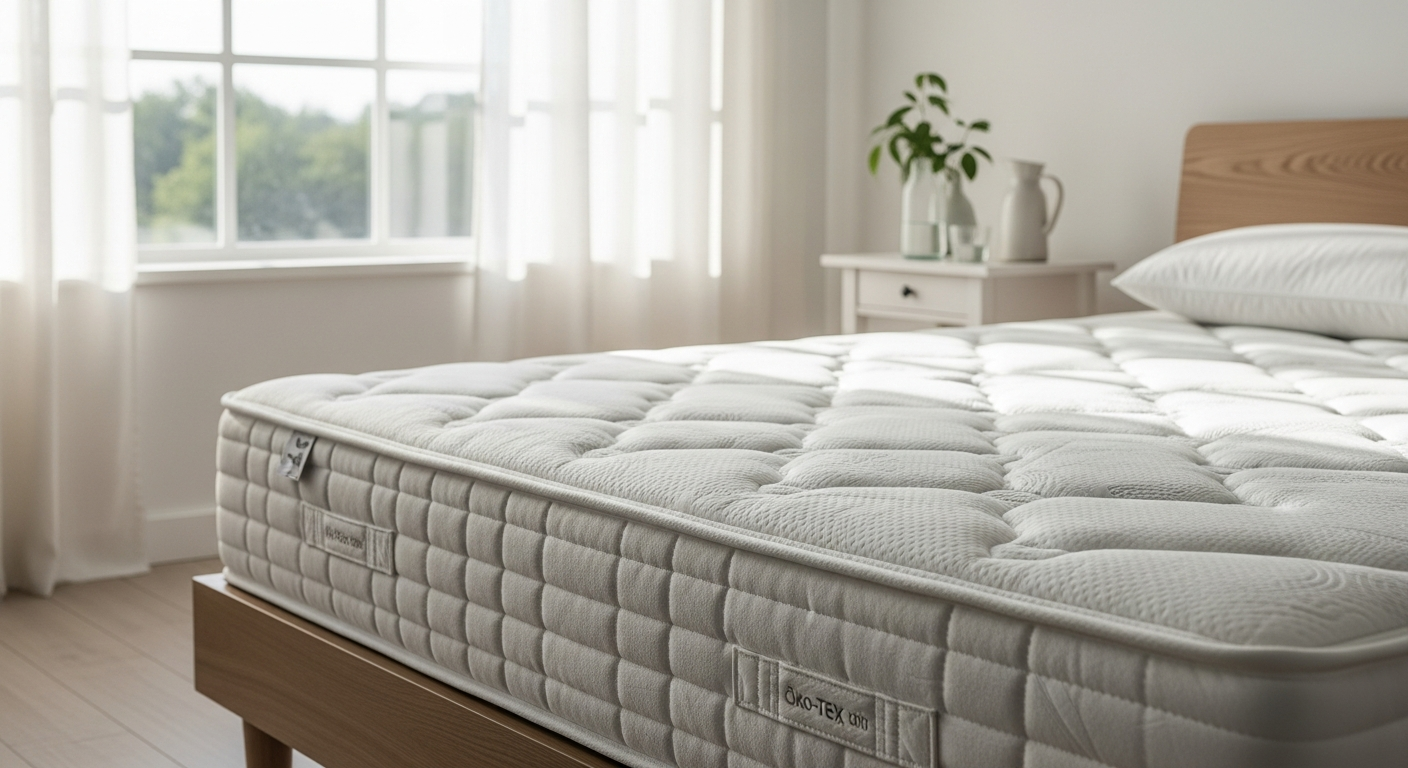
If you wake up with itchy skin, allergic reactions, or unexplained discomfort despite a new mattress, you're not alone. Millions of sensitive sleepers struggle to find bedding that supports their body without triggering skin irritation or chemical sensitivities. The challenge intensifies when you realize that most mattresses prioritize comfort over health considerations, leaving those with reactive skin in a difficult position.
The HOTELSHOP.one Exclusive 7-Zone Pocket Spring Mattress was engineered specifically with health-conscious consumers in mind, prioritizing skin safety through rigorous material certification and thoughtful design. This mattress represents a deliberate shift away from generic construction toward a purpose-built solution for sensitive sleepers.
Discover how the HOTELSHOP.one Exclusive 7-Zone Pocket Spring Mattress can transform your sleep experience. Throughout this guide, you'll learn about the certified materials that protect your skin, the advanced support system that prevents pressure points, and why German engineering matters for durability. You'll also discover how the washable cover and hypoallergenic construction keep your sleep space fresh and safe year-round.
Öko-Tex Certification: What It Really Means for Your Skin
Understanding Öko-Tex Standard 100 Certification
Öko-Tex Standard 100 certification represents one of the most rigorous textile testing standards globally. This certification guarantees that materials have been tested for harmful substances at every production stage—from raw materials through finished products. Unlike standard textile testing that focuses primarily on durability and appearance, Öko-Tex Standard 100 examines over 100 harmful substances, including banned chemicals, regulated heavy metals, and residual pesticides.
The certification process involves independent testing laboratories that verify compliance with strict human-ecological standards. This means each component—threads, dyes, finishing agents, and coatings—undergoes scrutiny before approval.
How This Certification Differs from Standard Testing
Standard textile testing typically measures physical properties: tensile strength, color fastness, and shrinkage resistance. These tests ensure a fabric performs well mechanically, but they don't necessarily address chemical safety or skin compatibility.
Öko-Tex Standard 100 takes an entirely different approach. It prioritizes what touches your skin and what enters your body through dermal absorption or inhalation. The certification prohibits substances known to cause allergic reactions, dermatitis, or long-term health effects. For sensitive sleepers, this distinction is critical—a fabric might feel soft and perform well physically while harboring chemical residues that trigger skin responses.
Certified Materials Within the HOTELSHOP.one Mattress
The HOTELSHOP.one Exclusive 7-Zone Pocket Spring Mattress carries Öko-Tex Standard 100 certification across multiple components. The Jersey cover—composed of 71.5% Polyester, 28% Viscose, and 0.5% Elastane—meets these stringent standards. The Aquacell® comfort foam layers are also certified, ensuring that the materials cradling your body contain no harmful dyes, finishes, or chemical treatments.
This comprehensive certification extends throughout the mattress. The internal foam layers, adhesives, and stitching materials have all undergone independent testing. For someone with eczema or contact dermatitis, knowing that every textile element in the mattress meets Öko-Tex standards provides genuine reassurance.
The Hautsache körperverträglich (Skin-Friendly) Seal
Beyond Öko-Tex Standard 100 certification, this mattress carries the "Hautsache körperverträglich" seal—a German designation specifically indicating skin compatibility. This seal goes beyond chemical testing to confirm that the materials are genuinely gentle on human skin and unlikely to trigger irritation, even in individuals with heightened sensitivities.
This seal carries particular weight in Germany and Europe, where consumer protection standards and health consciousness run exceptionally high. Manufacturers cannot apply this seal without extensive dermatological testing and third-party verification.
Third-Party Testing Standards That Protect Against Harmful Chemicals
The testing protocols behind both Öko-Tex and the skin-friendly seal involve independent laboratories with no financial interest in the mattress manufacturer. These labs conduct tests that include:
- Detection of banned azo dyes that break down into carcinogenic amines
- Measurement of heavy metals (lead, cadmium, chromium, nickel)
- Analysis of pesticide residues
- Assessment of formaldehyde and other volatile organic compounds
- Evaluation of pH balance to ensure minimal skin irritation
Each test follows internationally recognized methodologies, and results are documented and verified before certification is granted.
Why Certified Materials Reduce Allergic Reactions and Skin Irritation
Chemical residues in conventional mattresses can accumulate on skin during extended contact, particularly during sleep when you spend 6-8 hours with your face and body pressed against the surface. Dyes, finishes, and flame retardants used in standard manufacturing can migrate from the fabric to your skin, causing inflammation, itching, or allergic responses.
Öko-Tex certified materials eliminate this pathway. Without harmful dyes or chemical finishes, there's nothing to trigger reactions. For individuals with existing skin conditions—eczema, psoriasis, atopic dermatitis—this makes a measurable difference in symptom severity and frequency.
The Hypoallergenic Design: Breathability Meets Protection
Jersey Cover Composition and Skin Gentleness
The Jersey cover's specific composition—71.5% Polyester, 28% Viscose, and 0.5% Elastane—creates a fabric that balances durability, softness, and skin compatibility. Polyester provides structural integrity and longevity, ensuring the cover maintains its properties through regular washing and years of use. More importantly, the inclusion of viscose, derived from wood pulp cellulose, introduces a natural element that enhances comfort and skin interaction.
Viscose fibers are smoother at the microscopic level compared to conventional synthetic fibers, reducing friction against skin. This smooth surface is particularly beneficial for sensitive sleepers, as it minimizes the microscopic irritation that occurs when rougher fabrics repeatedly contact delicate skin during sleep movements.
The Elastane component (0.5%) provides minimal stretch, ensuring the cover maintains its shape and doesn't create uncomfortable wrinkles that might cause pressure points or uneven contact with skin.
How Viscose Contributes to Moisture-Wicking and Temperature Regulation
Viscose is hygroscopic, meaning it naturally absorbs and releases moisture. During sleep, your body perspires—even in cool environments. A mattress that traps moisture creates a warm, humid microclimate ideal for bacterial and mold growth. Conversely, viscose fibers actively pull moisture away from your skin and into the fabric where it can evaporate.
This moisture-wicking property is transformative for sensitive sleepers. When skin remains damp against a mattress surface, friction increases dramatically, and conditions like eczema flare. The HOTELSHOP.one cover's viscose content prevents this scenario by maintaining a relatively dry interface between your skin and the mattress.
Temperature regulation improves as well. Viscose's ability to release absorbed moisture also releases the heat that accompanies perspiration. This creates a more neutral sleep temperature, reducing night sweats and the skin irritation that accompanies them.
Aquacell® Comfort Foam Technology and Hypoallergenic Properties
Aquacell® foam is engineered specifically for hypoallergenic applications. Unlike conventional polyurethane foams that can off-gas volatile organic compounds or create environments favorable to dust mites, Aquacell® foam has an open-cell structure designed to resist microbial colonization.
The foam's manufacturing process eliminates common allergens and irritants. The material itself is inert—it doesn't interact chemically with skin or trigger immunological responses. For someone with multiple chemical sensitivities or immune-mediated skin conditions, Aquacell® represents a safer choice than standard foam formulations.
The foam also provides superior pressure relief. By conforming gradually to body contours rather than creating pressure points, it reduces the mechanical irritation that sensitive skin experiences from concentrated pressure. Areas like shoulder joints, hip bones, and the lower spine—which naturally experience higher pressure when lying down—receive cushioned support that prevents skin compression and resulting inflammation.
Breathability Features That Prevent Heat Buildup and Bacterial Growth
The 7-zone structure itself contributes to breathability. Unlike solid foam mattresses that trap air, the pocket spring core creates channels for airflow. Heat generated by your body can dissipate upward through the foam layers and outward through the cover, rather than accumulating in a warm, stagnant microclimate.
Bacterial and fungal growth thrives in warm, humid conditions. By maintaining airflow and allowing perspiration to evaporate rather than accumulate, the mattress structure actively prevents the microbial proliferation that causes odors, mold, and skin infections. For sensitive sleepers dealing with conditions like fungal dermatitis or bacterial folliculitis, this breathability is medically significant.
The Role of the 1000-Count Pocket Spring Core in Airflow and Moisture Management
The 1000-count pocket spring core represents approximately 1000 individual spring units per mattress, depending on size. Each spring is wrapped in fabric, allowing air to flow around and between springs. This creates a three-dimensional air pathway system that conventional foam-only mattresses cannot replicate.
As your body warms the mattress, heat rises naturally through the foam layers and into the spring chamber, where it disperses into the surrounding air. Moisture follows a similar path. This continuous air exchange prevents the stagnant microclimate that promotes dust mites, mold, and bacterial growth—common triggers for sensitive skin conditions.
Dust Mite Accumulation: This Design Versus Traditional Foam Mattresses
Traditional all-foam mattresses create a sealed environment where dust mites, dead skin cells, and fecal matter accumulate over time. The closed-cell structure of conventional foam actively traps these materials. Within months of use, a foam mattress can harbor millions of dust mites—and their waste products are potent allergens.
The HOTELSHOP.one's combination of breathable materials, moisture management, and airflow actively discourages dust mite colonization. Additionally, the washable cover means you can remove and wash the primary surface where dust mites congregate, disrupting their life cycle. Traditional foam mattresses offer no equivalent cleaning option.
Studies have consistently shown that breathable, well-ventilated mattresses support significantly lower dust mite populations. Combined with the ability to wash the cover regularly, this mattress design provides measurable protection against one of the most common sleep allergens.
Washable Cover: Maintaining a Clean Sleep Environment
Care Instructions for the Removable Jersey Cover
The Jersey cover is fully removable and machine washable at 60 degrees Celsius. This temperature is specifically chosen: high enough to kill dust mites, bacteria, and fungal spores, yet not so hot that it damages the Öko-Tex certified fibers or causes excessive shrinkage.
To remove the cover, locate the zipper (typically positioned along one side) and carefully unzip. The cover slides off the foam and spring layers without tools or complexity. Most users can complete this in under five minutes.
When washing, use mild detergent—preferably one designed for sensitive skin or hypoallergenic applications. Avoid fabric softeners, which can coat the fibers and reduce breathability. Washing alone at 60 degrees Celsius takes approximately 45-60 minutes. Select a gentle or delicate cycle if your machine offers this option, as it reduces mechanical stress on the fibers.
After washing, the cover goes directly into the dryer on low heat, or you can air-dry it. Air-drying is gentler and preserves the integrity of the Öko-Tex certified materials. Once dry, simply slide the cover back over the foam and spring core and re-zip.
Frequency Recommendations for Hygiene Maintenance
For sensitive sleepers, monthly washing of the cover is ideal. This schedule removes accumulated dust mites, dead skin cells, and perspiration residues before they reach problematic concentrations. Monthly washing also prevents the musty odors that develop in mattresses with less frequent cleaning.
Those with active skin conditions—eczema flare-ups, ongoing dermatitis, or fungal infections—benefit from bi-weekly cover washing. This frequency prevents microbial proliferation and removes irritating substances quickly.
Seasonal deep cleaning of the entire mattress, combined with cover washing, provides additional protection. In spring and fall, when dust mite populations naturally surge, increasing wash frequency from monthly to bi-weekly offers measurable symptom relief for allergic sleepers.
How Regular Washing Reduces Allergens, Dust Mites, and Bacteria
Each time you wash at 60 degrees, you eliminate the majority of dust mites living on the cover surface. Hot water denatures the proteins in dust mite exoskeletons and fecal matter, rendering them non-allergenic. Regular washing breaks the dust mite reproductive cycle—by removing females and eggs monthly, populations never reach the threshold where allergen concentrations become problematic.
Bacteria and fungi are similarly affected. The 60-degree temperature, combined with detergent's antimicrobial action, substantially reduces microbial populations. For someone with bacterial skin infections or fungal dermatitis, this regular cleansing provides genuine therapeutic benefit.
Over time, regular washing compounds these benefits. A mattress cover that's washed monthly for several years will have a dramatically lower allergen load than one washed only annually, if at all.
Impact on Long-Term Skin Health and Mattress Longevity
Clean sleep surfaces directly correlate with improved skin health in sensitive individuals. Reduced exposure to dust mites means fewer allergic reactions, less inflammation, and faster healing of existing skin conditions. Many sensitive sleepers report that symptoms stabilize within weeks of implementing regular cover washing—fewer morning skin irritations, reduced nighttime itching, and overall improvement in sleep quality.
From a mattress perspective, regular washing dramatically extends lifespan. Dust, sweat, and body oils that accumulate on unwashed covers begin breaking down foam and fabric over time. By keeping the cover clean, you preserve the integrity of underlying materials and maintain support properties. A mattress with a regularly washed cover often performs well for 10+ years, while the same mattress with an unwashed cover may degrade noticeably within 5-7 years.
Benefits for Sensitive Sleepers with Specific Conditions
For eczema sufferers, the psychological benefit of sleeping on a frequently washed cover is profound. Eczema is often triggered or worsened by environmental allergens and bacterial colonization of the skin surface. Knowing your mattress cover is cleaned bi-weekly or monthly provides reassurance and often translates into less stress-related flare-ups.
Psoriasis involves abnormal skin cell turnover, and environmental triggers like dust mites can activate flare-ups. Regular cover washing reduces these triggers and, anecdotally, many psoriasis patients report fewer flare-ups after implementing regular mattress cleaning routines.
Contact dermatitis—reactions to specific substances—is particularly relevant. If your contact dermatitis is triggered by dust mites, detergent residues, or fabric finishes, regular washing with mild detergent maintains a cover free from accumulated irritants.
Atopic dermatitis, a chronic inflammatory condition, benefits from controlling the microbial and allergen environment. Frequent washing creates a measurably cleaner sleep surface, reducing inflammatory triggers.
Practical Tips for Drying and Reattaching Without Damage
After washing, inspect the cover for any debris or damage before drying. Air-drying is preferable: hang the cover on a clothesline or lay it flat in a well-ventilated area, away from direct sunlight (which can fade certified dyes). Air-drying typically takes 3-6 hours depending on humidity.
If using a dryer, select the lowest heat setting. High heat can damage the elastane component and cause excess shrinkage. Tumble-dry on low for 20-30 minutes, then remove promptly to air-dry the remainder.
When reattaching, ensure the mattress core is centered on the bed base. Lay the cover over the core with the zipper aligned to one side. Begin zipping from the middle and work outward in both directions to ensure even distribution. This prevents puckering or uneven seams that might create pressure points or uncomfortable sensations against skin.
7-Zone Support System: Targeted Comfort for Pressure-Prone Areas
How the 7-Zone Design Distributes Body Weight and Reduces Pressure Points
The seven-zone support structure divides the mattress into distinct regions, each with specific firmness and spring density. Typically, these zones are: head region, shoulder region, mid-back region, lumbar region, hip/buttocks region, thigh region, and foot region.
Each zone contains springs calibrated for the typical pressure and weight distribution of that body area. The shoulder zone uses softer springs because shoulders need cushioning to prevent neck strain. The lumbar zone uses firmer springs because the lower back requires robust support to maintain spinal alignment. By customizing spring density throughout the mattress rather than using uniform springs, the design eliminates the pressure points that develop when uniform mattresses force your body to conform to their rigidity.
Pressure points develop when a single area of your body—typically bony prominences like hip bones, shoulder joints, or tailbone—bears excessive load and compresses against the mattress surface. This compression restricts blood flow and creates the sensation of pressure. Over 8 hours of sleep, prolonged pressure causes inflammation and, importantly for sensitive sleepers, triggers skin irritation from sustained compression.
The 7-zone design prevents this by distributing pressure more evenly. Instead of a hip bone creating a single pressure point, the load disperses across a zone of softer springs that conform to the bone's shape without creating concentrated pressure. The result is better blood circulation, reduced inflammation, and significantly less skin irritation from pressure-related friction.
Special Soft Shoulder Pads and Skin Protection
Many sleepers experience shoulder and neck discomfort because standard mattresses provide inadequate shoulder support. The HOTELSHOP.one incorporates specialized soft shoulder pads—foam layers in the shoulder zone engineered to be softer than surrounding zones while maintaining sufficient support.
These pads address a critical issue for sensitive sleepers: shoulder pressure directly affects cervical spine alignment and can trigger referred pain, tension headaches, and tension-related skin responses. Additionally, the shoulder area has delicate skin; excessive pressure and friction create irritation and, in some cases, chronic inflammation.
The soft shoulder pads cushion the shoulder joint, distribute pressure across a larger surface area, and reduce friction against skin during sleep movements. Sensitive sleepers with existing shoulder tension or inflammatory conditions often report noticeable improvement within the first week of using this mattress.
Spinal Alignment Benefits That Reduce Tossing and Turning
Poor spinal alignment—when the spine isn't properly supported and sags or hyperextends—triggers muscular tension, discomfort, and nighttime restlessness. Restlessness manifests as frequent tossing and turning, which increases friction between your skin and the mattress surface.
The 7-zone system maintains proper spinal alignment by providing optimal support at each vertebral region. The cervical spine (neck) receives moderate support from the head zone; the thoracic spine (mid-back) gets firmer support; the lumbar spine (lower back) receives maximum support. This graduated support keeps the spine in neutral alignment throughout the night.
When the spine is properly aligned, muscular tension decreases, discomfort diminishes, and sleep becomes more restful. You toss and turn less frequently. This reduction in movement directly benefits sensitive skin: less friction means less irritation, fewer morning skin complaints, and better overall sleep quality.
How Proper Support Minimizes Sleep Disruption
Sleep disruption—waking multiple times per night or experiencing frequent micro-arousals—correlates with poor mattress support. When your body isn't properly supported, your nervous system interprets the discomfort as a signal to wake and adjust position. This creates a cycle: poor support → discomfort → frequent waking → impaired sleep quality.
The 7-zone support system breaks this cycle. By providing targeted support, it eliminates discomfort-triggered awakenings. With fewer disruptions, your sleep becomes deeper and more restorative. Deep sleep allows your skin's natural repair mechanisms to function optimally. During deep sleep, your body redirects resources toward cellular renewal, immune function, and tissue repair—processes essential for managing sensitive skin conditions.
For someone with eczema or other inflammatory skin conditions, the improved sleep quality enabled by proper support has measurable therapeutic effects.
Zone-Specific Firmness Levels and Body Type Suitability
The HOTELSHOP.one comes in multiple firmness levels: H1 (soft), H2 (medium-soft), H3 (medium-firm), and H4 (firm). Each firmness level adjusts the spring strength throughout all seven zones proportionally.
H1 (soft) suits lighter individuals (typically under 70 kg), side sleepers who need pressure relief, and those with conditions like fibromyalgia where excessive firmness triggers pain. H2 (medium-soft) fits average-weight individuals (70-85 kg) and combination sleepers who move between positions during the night.
H3 (medium-firm) is ideal for heavier individuals (85-100 kg) or those who prefer more robust support. H4 (firm) suits very heavy individuals (over 100 kg) or stomach sleepers who need maximum lumbar support to maintain spinal alignment.
For sensitive sleepers, the key consideration is matching firmness to body weight and sleeping position. Too-soft support causes sagging and pressure points; too-firm support creates excessive pressure and friction. Getting the right firmness level ensures optimal support without sacrificing comfort—allowing sensitive skin to remain undisturbed throughout the night.
Connection Between Proper Support and Reduced Skin Irritation
Skin irritation from sleeping stems from two primary sources: pressure and friction. Pressure creates localized inflammation and restricted blood flow; friction causes mechanical irritation and inflammation of skin surface layers.
Proper support addresses both. By distributing pressure evenly, it prevents pressure-related inflammation. By reducing the tossing and turning that causes friction, it minimizes mechanical irritation. The combination results in dramatically lower skin irritation during sleep.
For sensitive sleepers with conditions triggered or exacerbated by these mechanical factors, proper support is genuinely therapeutic. Many sensitive sleepers report that upgrading to a properly supporting mattress resolves morning skin complaints that persisted for years on inferior mattresses.
Firmness Options: Finding Your Perfect Match
Detailed Breakdown of Firmness Levels
The H1 firmness level provides maximum conformity to body contours with minimal resistance from the springs. The foam and spring combination yields gradually, allowing your body to sink into the mattress. This creates an enveloping sensation and excellent pressure relief—ideal for side sleepers and lighter individuals.
H2 offers a balanced blend. Springs yield to body weight but provide noticeable support and pushback. The mattress conforms to your body while preventing excessive sinking. Most users find H2 neither too soft nor too firm.
H3 features springs that yield less easily. The mattress conforms to major body features but resists deeper compression. This firmness suits heavier individuals whose body weight would cause excessive sinking on softer mattresses, and those who prefer a more "floating on" rather than "sinking into" sensation.
H4 provides maximum support with minimal conformity. Springs resist compression significantly, and the mattress feels genuinely firm. Stomach sleepers often prefer H4 because it prevents hip sag that compromises spinal alignment during prone sleeping.
Suitability for Different Sleep Positions
Side sleepers typically need softer mattresses—H1 or H2—because side sleeping concentrates pressure on the shoulder and hip. These areas need adequate cushioning to prevent pressure points. A too-firm mattress forces side sleepers into uncomfortable positions, creating neck and shoulder tension.
Back sleepers benefit from medium firmness—H2 or H3—which supports the natural curve of the lumbar spine while allowing slight conformity to other body areas. A too-soft mattress allows the hips to sink, flattening the lumbar curve; a too-firm mattress creates a gap under the lower back.
Stomach sleepers need firm support—H3 or H4—to prevent hip sag that hyperextends the lumbar spine. A too-soft mattress buckles under the stomach and hips, creating spinal misalignment and morning back pain.
Combination sleepers who shift positions throughout the night benefit from medium firmness—H2 or H3—which provides adequate support for all positions, even if not optimally suited to any single position.
How Firmness Affects Pressure Relief for Sensitive Areas
Firmness directly determines whether sensitive areas experience pressure relief or pressure concentration. The shoulders, for example, require adequate softness to prevent pressure points. If you choose H4 but you're a side sleeper, your shoulders experience excessive pressure, leading to inflammation and skin irritation.
Conversely, the lumbar spine requires adequate firmness. If you choose H1 but you're heavier or a back sleeper, your hips sink too deeply, eliminating lumbar support. The unsupported lower back creates muscular tension and can trigger referred pain and inflammatory responses affecting skin health.
The correct firmness for your body type and sleeping position balances pressure relief in high-pressure areas with support in high-load areas. This balance is essential for sensitive sleepers because both excessive pressure and inadequate support trigger compensatory responses—muscle tension, poor circulation, and skin irritation.
Guidance for Those with Specific Skin Sensitivities or Pain Conditions
For fibromyalgia or generalized pain sensitivity, softer mattresses (H1 or H2) typically reduce symptoms. The reduced pressure and gentler conformation minimize trigger points for pain.
For sleep apnea or those with breathing-related sleep issues, firmness matters less than ensuring unrestricted movement and proper spinal alignment. H2 or H3 generally provides sufficient support without creating postural restrictions.
For chronic pain conditions localized to specific areas—chronic lower back pain, cervical spine issues—match firmness to your primary sleep position. A back sleeper with lower back pain benefits from medium-firm support (H3) that maintains lumbar curve.
For skin conditions alone without pain considerations, choose firmness based on body weight and sleep position. Proper support from the correct firmness level prevents the pressure and friction that exacerbate skin irritation.
If you're uncertain, H2 is generally the safest starting point—it accommodates most body types, sleep positions, and preferences, providing a balance between conformity and support.
Preventing Bottoming Out and Skin Contact with Internal Materials
Bottoming out occurs when body weight compresses a mattress so thoroughly that you can feel internal structures—springs, internal foam layers, or the mattress base—through the top layer. This is problematic for two reasons: it indicates inadequate support, and it creates direct contact between your skin and materials you're not intended to touch.
If the covering foam is too thin or the springs too soft for your body weight, you may bottom out, creating an uncomfortable sensation and exposing yourself to materials that may not be Öko-Tex certified or skin-friendly.
Choosing the correct firmness for your body weight prevents bottoming out. The springs and foam are calibrated so that even under maximum anticipated pressure, there's sufficient depth that your body never reaches the internal structures. The correct firmness ensures you're always in contact with the certified, hypoallergenic surface layer—the materials engineered for skin safety.
Sizing Availability Across All Firmness Levels
The HOTELSHOP.one is available in standard sizes (single, double, queen, king) and numerous special sizes. Importantly, all firmness levels are available across all sizes, so you're not forced to compromise firmness for a specific bed dimension.
Special sizes might include 90×200 cm, 100×200 cm, 140×200 cm, and many others—accommodating unusual bed frames or specific spatial requirements. You can select your ideal firmness level and then specify your exact size requirement, ensuring you're not settling for the "closest available" option.
German Engineering and Sustainable Production
Why Made in Germany Matters for Quality Control
German manufacturing is internationally recognized for rigorous quality standards, precision engineering, and meticulous attention to detail. The phrase "Made in Germany" signals adherence to exceptionally high standards of craftsmanship and material quality.
For mattresses, German engineering translates into several practical benefits. Precision machinery ensures consistent manufacturing—every mattress is constructed to identical specifications, eliminating the quality variance common in less rigorous manufacturing environments. Tolerances are tight: spring count, foam thickness, and cover stitching all meet exact specifications.
Quality control is continuous throughout manufacturing. Raw materials are inspected upon receipt, intermediate components are tested during assembly, and finished mattresses undergo final inspection before packaging. This multi-stage quality oversight ensures that defective materials or manufacturing errors are caught before the mattress reaches you.
For sensitive sleepers, this precision matters. A mattress manufactured to loose tolerances might have inconsistent foam thickness, leading to some zones providing inadequate support and others excessive pressure. A precisely manufactured mattress delivers consistent support across all zones.
Regional Sourcing Practices and Material Traceability
The HOTELSHOP.one prioritizes regional sourcing—acquiring materials from suppliers within Germany and Europe whenever possible. This approach provides several advantages for sensitive sleepers.
Traceability improves dramatically when supply chains are shorter and regionally localized. Manufacturers can directly verify that component suppliers meet Öko-Tex standards and maintain consistent quality. Long supply chains spanning multiple continents introduce opportunities for substitution—when a specific foam supplier is unavailable, a substitute is used instead, potentially compromising quality or certification status. Regional sourcing minimizes this risk.
Environmental standards are more consistent within Europe and Germany. Suppliers operating in Germany face the same stringent environmental and labor regulations as HOTELSHOP.one itself, ensuring that materials are produced responsibly. This commitment extends beyond the mattress itself; it reflects a broader philosophy that responsible manufacturing protects both consumers and the environment.
Sustainable Production Techniques and Chemical Waste Minimization
The manufacturing process itself is designed to minimize environmental impact and chemical waste. Traditional mattress manufacturing involves substantial chemical use—adhesives, flame retardants, processing chemicals, and dyes. Much of this is necessary, but poor practices allow excessive chemical runoff and waste.
HOTELSHOP.one's sustainable approach minimizes these impacts through multiple strategies: water recycling systems reduce water consumption, chemical quantities are calculated precisely to avoid excess, and waste materials are sorted for recycling rather than landfill disposal. These practices lower the chemical load in the final product—less residual chemical means safer materials for your skin.
Flame retardants, while necessary for fire safety, are a particular concern for sensitive sleepers. Conventional flame retardants can trigger skin reactions and are under scrutiny for health concerns. HOTELSHOP.one uses flame-retardant approaches that minimize skin-reactive chemical residues, utilizing physical barriers and treated fibers rather than reactive chemical coatings.
Durability Advantages for Long-Term Skin Health
German-engineered mattresses are designed for longevity. Quality materials, precise manufacturing, and robust construction mean the mattress maintains its properties for 10+ years rather than degrading after 5-7 years. This durability has direct implications for sensitive sleepers.
A durable mattress maintains consistent support throughout its lifespan. After seven years, a poorly manufactured mattress may have lost significant firmness, developed sagging, or degraded foam properties. These changes compromise support and create new pressure points—triggering skin irritation in someone accustomed to the original, properly supporting surface.
A HOTELSHOP.one mattress maintains its structure and support properties. The spring system doesn't degrade significantly; the foam retains its resilience; the cover resists wear. This consistency means you're not experiencing changing support properties that might require readjustment and potentially trigger new skin responses.
Additionally, a durable mattress that you keep for 12+ years versus replacing every 5-7 years reduces environmental impact and represents better long-term value—particularly important for the significant investment required for a quality mattress.
How Hotel-Use Testing Translates to Reliability
HOTELSHOP.one's design incorporates insights from hotel industry standards. Hotels operate under extraordinary use conditions: multiple users per week, constant pressure cycles, intensive cleaning requirements, and the need for exceptional durability. A mattress that performs reliably in a hotel environment—where it might experience more intensive use in six months than a home mattress in five years—demonstrates genuine durability.
This hotel-grade engineering means the mattress is designed for reliability far beyond typical home use patterns. While your home mattress experiences one user sleeping 8 hours nightly, a hotel mattress might experience three to four different users daily. The engineering required for hotel reliability creates a product that's overbuilt for residential use—a significant advantage.
For sensitive sleepers, this means you're not at risk of the mattress degrading prematurely and developing properties that irritate your skin. You're investing in reliability and consistency.
Long-Term Investment Value for Sensitive Sleepers
A quality mattress is expensive—new HOTELSHOP.one models are priced above €1,000. This represents a substantial investment, but when amortized over 10-12 years of use, it becomes approximately €100 annually, or roughly €0.27 per night.
For sensitive sleepers, this investment delivers measurable returns. Reduced skin irritation, better sleep quality, fewer allergy-related symptoms, and improved skin condition throughout the lifespan justify the investment. Someone with eczema who spends €1,000 on a mattress that significantly reduces flare-ups and improves sleep quality has made a sound investment in health.
Additionally, the mattress resale value remains respectable. German-manufactured mattresses hold value better than cheap alternatives. If you eventually need to upgrade or relocate, you can recoup a portion of your investment through resale.
Comparing Price Points: New vs. B-Stock Options
Standard Pricing for New Mattresses
New HOTELSHOP.one Exclusive 7-Zone Pocket Spring Mattresses are typically priced above €1,000, with exact pricing depending on size and firmness level. Larger sizes and specific firmness levels may command premium pricing. This reflects the mattress's quality, German manufacturing standards, and included features like Öko-Tex certification and the skin-friendly seal.
For someone purchasing a mattress with their own funds, this represents a significant expense. However, context matters: it's one of the lowest costs associated with
Leave a Reply