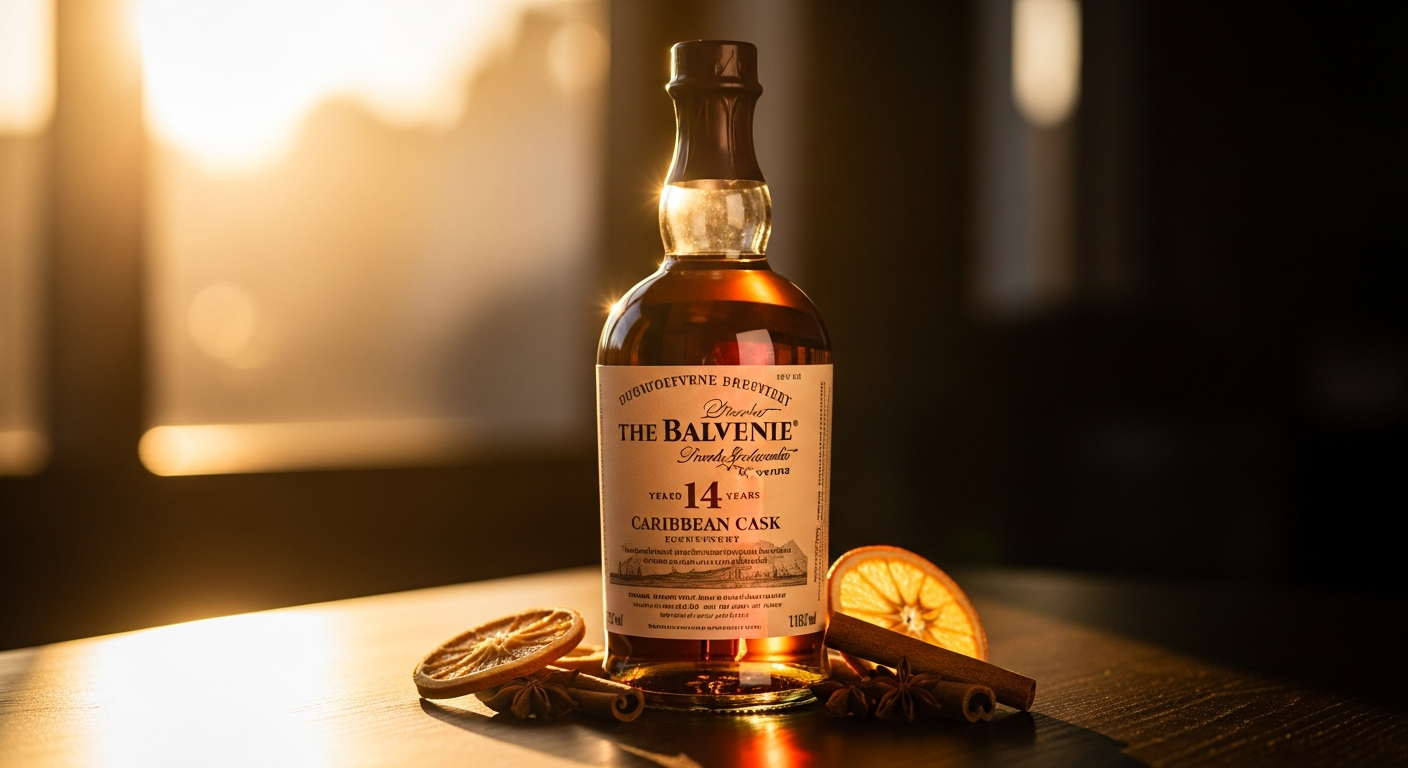
Here's something that might surprise you: one of Scotland's most beloved single malts gets its distinctive character not from Scottish soil, but from Caribbean rum barrels. The Balvenie 14 Year Old Caribbean Cask has become a bestseller precisely because it breaks the mold—combining traditional Scotch whisky craftsmanship with an unconventional finishing method that transforms the entire drinking experience.
The Balvenie distillery, nestled in Speyside, has long been recognized for its commitment to artisanal whisky-making. What sets the Caribbean Cask expression apart is its pioneering finishing technique, developed by legendary Malt Master David C. Stewart MBE. After 14 years of maturation in traditional oak, the whisky spends additional time in casks that previously held Caribbean rum, infusing it with tropical sweetness and complexity that you simply won't find in conventional single malts.
Discover the Balvenie 14 Year Old Caribbean Cask at The Whisky World today.
The Art and Science Behind Rum Cask Finishing
Secondary maturation fundamentally differs from traditional single cask aging in one critical way: it allows the whisky to interact with fresh wood compounds and residual flavors from its previous contents. While conventional aging relies on a single cask environment, finishing introduces a controlled shift in flavor development during the final maturation phase.
David C. Stewart's pioneering innovation in Speyside whisky production changed how distillers approached finishing techniques. Rather than viewing it as a shortcut, Stewart treated finishing as an advanced craft requiring deep knowledge of wood chemistry and flavor interaction. His work with Caribbean rum barrels demonstrated that secondary maturation could honor the base spirit while introducing entirely new dimensions.
Caribbean rum barrels impart tropical characteristics without overpowering the base spirit through careful timing and barrel selection. The residual rum compounds interact with the mature Scotch in subtle ways—enhancing existing vanilla and oak notes while introducing passion fruit, pineapple, and mango aromatics. This balance prevents the whisky from tasting like rum; instead, it emerges as a harmonious marriage of Speyside tradition and tropical influence.
The chemical interaction between aged Scotch and residual rum compounds involves the migration of flavor compounds from the barrel wood into the spirit. The wood's porosity allows these compounds to diffuse gradually, creating complexity that develops over months rather than overwhelming the palate immediately. This process requires precision—the duration in rum casks must be calibrated perfectly to achieve the desired flavor profile without excessive sweetness.
Finishing is considered an advanced technique in single malt production because it demands expertise in wood management, flavor layering, and timing. Distillers must understand how their base spirit will interact with new barrel environments, predicting flavor outcomes months in advance. An inferior base spirit cannot be salvaged through finishing; conversely, a masterfully made malt can be elevated through this technique.
The balance between respecting the original 14-year maturation and adding new dimensions through finishing requires restraint and vision. Stewart's approach honored the Balvenie's foundational character—the honey, vanilla, and creamy oak developed over 14 years—while allowing Caribbean cask influence to emerge as complementary rather than dominant.
Sensory Profile: What You'll Actually Taste
The Nose: First Impressions
The initial experience begins with a rich aroma of tropical fruits that immediately capture attention. Passion fruit, pineapple, and mango blend together, creating a medley that distinguishes this whisky from conventional Speyside expressions. Beneath these bright notes lie creamy toffee, vanilla, and sweet honey—foundational scents that anchor the profile and prevent it from becoming one-dimensional.
The Palate: Where Complexity Unfolds
The palate reveals a smooth, creamy texture that coats the mouth pleasantly without harsh edges. Vanilla and sweet oak form the backbone, while brown sugar adds subtle sweetness. Citrus notes—orange and pear undertones—emerge as the whisky settles on the tongue, providing brightness that contrasts with the creamy base. Gentle spice, including nutmeg, allspice, and a touch of black pepper, gradually reveals itself, adding structure and interest.
The Finish: Warmth and Duration
The finish unfolds as warm and lingering, with vanilla taking center stage. The spice notes fade gradually, leaving behind a pleasant warmth that encourages another sip. This finish-driven experience demonstrates how thoroughly the rum cask finishing influences the entire tasting journey.
Evolution in the Glass
Tropical notes develop more prominently as the whisky opens up, revealing layers that weren't immediately apparent on the first nosing. This evolution rewards those who linger with their dram, allowing the whisky to breathe and showcase its complexity over time.
Temperature and Water's Effect
Temperature significantly impacts flavor perception. Neat at room temperature, the whisky delivers full intensity across all flavor dimensions. Adding a few drops of water opens up additional aromatic compounds, softening the alcohol's bite while enhancing the tropical and spice elements. Some drinkers prefer it slightly chilled, which emphasizes the vanilla and creamy texture while muting the more delicate fruit notes.
Nose Versus Palate Intensity
The nose presents boldness and immediate accessibility, while the palate reveals more restraint and subtlety. This contrast—between the whisky's forward aromatics and its measured flavor delivery—creates an engaging tasting experience that doesn't overwhelm even those new to single malts.
Unpeated Speyside Character: Why It Matters
Understanding the difference between peated and unpeated Scotch whisky clarifies why the Caribbean Cask appeals to such a broad audience. Peated whiskies derive smoky, earthy, sometimes medicinal character from peat smoke used during malting. Unpeated expressions allow the malt's natural sweetness and subtle grain character to flourish. The Balvenie Caribbean Cask belongs firmly in the unpeated camp, meaning smoke plays no role in its flavor profile.
Speyside's terroir influences the base spirit before rum cask finishing even begins. This region, known for its water sources rich in minerals and its moderate climate, produces malts with characteristic softness and fruitiness. These foundational qualities become the canvas upon which rum cask finishing paints its tropical hues.
The role of unpeated malt in allowing Caribbean cask influence to shine proves crucial. If the base spirit carried heavy smoke notes, they would compete with and potentially overwhelm the delicate tropical character that the rum casks impart. By remaining unpeated, the Balvenie allows the finishing to take center stage without conflict.
This expression appeals strongly to whisky drinkers avoiding smoky profiles, whether due to personal preference or health considerations. Those who find peated malts off-putting often discover that Caribbean Cask offers the complexity and depth they seek without the smoke barrier.
Natural production methods distinguish this expression from mass-produced alternatives. The whisky is neither chill-filtered nor does it contain added coloring. Chill-filtering removes certain flavor compounds that some producers consider undesirable; Balvenie retains these elements, preserving authenticity. The absence of added coloring means the golden hue derives entirely from the casks themselves, reflecting true barrel interaction rather than cosmetic adjustment.
The 43% ABV bottling strength reflects a deliberate choice that impacts flavor delivery and approachability. At this strength, the whisky remains smooth and accessible without excessive alcohol burn, yet maintains sufficient proof to carry flavor compounds effectively. Higher-proof versions would appeal more to enthusiasts seeking intensity; lower proof would sacrifice complexity for approachability.
Explore premium Speyside expressions like the Balvenie Caribbean Cask at The Whisky World.
Value Proposition: Investment vs. Everyday Drinker
Price positioning in the UK (£60-70) and US ($65-85) markets places the Caribbean Cask firmly in the mid-tier category—neither luxury nor budget, but thoughtfully priced for quality delivery. This positioning reflects both the age statement and the innovative finishing technique that justifies premium placement relative to younger expressions.
Cost-per-ounce comparison with other 14-year-old single malts reveals the Caribbean Cask's competitive positioning. Many comparable aged malts command similar or higher prices, yet the finishing innovation and Balvenie's reputation provide distinct value justification. You're paying for age, yes, but also for techniques and expertise that younger malts cannot match.
The age statement justification extends beyond simple maturation time. Fourteen years allows the spirit to develop subtle complexity and refinement that six or eight-year-old expressions cannot achieve. This maturation period, combined with finishing, creates a package that justifies the price without approaching luxury price points.
Mid-tier pricing that delivers premium quality without luxury price tags makes the Caribbean Cask accessible to enthusiasts who might hesitate at premium pricing yet demand more than entry-level offerings provide. You're investing in genuine quality without the significant financial commitment that ultra-premium bottles require.
Availability and consistency across global markets demonstrate Balvenie's commitment to meeting demand while maintaining standards. The Caribbean Cask maintains regular production, ensuring you're unlikely to encounter empty shelves or artificial scarcity pricing.
When to splurge on this bottle versus reserve it for special occasions depends on personal finances and whisky consumption patterns. For those with moderate disposable income, it qualifies as an excellent everyday dram that rewards regular enjoyment. For budget-conscious enthusiasts, it becomes a special occasion purchase that marks celebrations or personal milestones. Either approach makes financial sense given the quality-to-price ratio.
The Gateway Whisky Appeal: Perfect for Newcomers
Tropical sweetness and smoothness attract first-time single malt drinkers by presenting a flavor profile that resonates with familiar experiences. Many people enjoy rum-based cocktails, fruit-forward spirits, and creamy liqueurs—the Caribbean Cask speaks this flavor language while delivering authentic whisky complexity. This accessibility removes the intimidation factor that often deters whisky newcomers.
Approachability compared to heavily peated or high-proof expressions proves decisive. A first-time drinker encountering Islay's aggressive smoke or a barrel-proof whisky's alcohol intensity might conclude that single malts simply aren't for them. The Caribbean Cask's gentle presentation allows newcomers to build confidence and develop their palate without overwhelming their senses.
Rum cask finishing makes Scotch more accessible to bourbon drinkers in particular. Bourbon's vanilla, caramel, and oak characteristics appear throughout the Caribbean Cask's profile, creating a natural bridge between bourbon and Scotch appreciation. Those transitioning from American whiskey often find this expression remarkably familiar despite its Scottish origin.
The balance between complexity and drinkability for novices reflects masterful execution. The whisky delivers genuine depth—those who pay attention discover multiple layers and flavor dimensions—yet remains approachable enough for casual enjoyment without analytical focus. This dual nature allows newcomers to enjoy it at their comfort level while rewarding deeper exploration.
Recommended food pairings for introduction tastings expand the whisky's appeal. Tropical fruits like mango and pineapple complement the aromatic profile beautifully. Vanilla-forward desserts, caramel, and toffee enhance the palate's sweetness. Mild cheeses and nuts provide contrasting textures. These pairings help newcomers understand how whisky integrates with dining experiences rather than standing alone.
Building a whisky palate using Caribbean Cask as a stepping stone creates a logical progression. After developing comfort with this expression, newcomers might explore other Speyside malts, then venture into peated regions, high-proof expressions, or heavily sherried releases. The Caribbean Cask serves as an excellent foundation upon which to build broader whisky knowledge and appreciation.
Balvenie's Commitment to Traditional Craftsmanship
On-site barley cultivation and malting floor operations distinguish Balvenie from most distilleries that source malt from specialized producers. Growing their own barley allows quality control from grain selection through harvesting. The malting floor—a traditional method involving hand-turning grain during germination—produces malt with characteristics that automated malting cannot fully replicate. These commitments reflect philosophy rather than economic necessity.
Vertical integration from grain to glass creates accountability and consistency that partially integrated or fully outsourced operations struggle to match. When a single entity controls each production stage, quality standards remain uncompromised by external suppliers or contractors prioritizing cost reduction over excellence.
Traditional production methods influence the Caribbean Cask expression through the sum of countless small decisions that collectively define character. Every step—from grain selection through fermentation duration, copper stills' design, cask selection, and finishing duration—reflects choices rooted in tradition and expertise. These accumulated decisions create a whisky that tastes distinctly Balvenie.
Distillery heritage and reputation in the Speyside region provide context for the Caribbean Cask's standing. Balvenie ranks among Speyside's most respected producers, a status earned through consistent quality across multiple product lines and decades of production. This heritage instills confidence in consumers—you're purchasing from an institution, not a startup experimenting with unproven methods.
Consistency and quality control across batches ensure that a bottle purchased today tastes substantially identical to one purchased five years ago or five years from now. This consistency reflects rigorous processes and standards that some smaller, more artisanal producers cannot maintain. For consumers seeking reliability alongside quality, this matters tremendously.
The brand's philosophy on natural whisky-making without shortcuts permeates every Balvenie expression, including the Caribbean Cask. No artificial flavoring compounds, no shortcuts like added coloring, no extreme chill-filtering that strips character—the whisky reflects what naturally develops through traditional processes. This philosophy appeals to consumers increasingly skeptical of industrial food and beverage practices.
Serving Suggestions and Tasting Rituals
Optimal glassware for experiencing the full flavor profile begins with the Glencairn glass, specifically designed for whisky tasting. Its narrow opening concentrates aromatics while the bowl's shape allows slight swirling without significant spillage. Alternatives include the Copita glass used in sherry tasting and the traditional crystal rocks glass, though neither concentrates aromatics quite as effectively as the Glencairn.
Temperature considerations significantly impact the drinking experience. Neat at room temperature, the whisky delivers full intensity across all flavor dimensions. With ice or a single large cube, the temperature drops while dilution from melting ice gradually reveals new aromatic layers. With water—starting with just a few drops—the alcohol's bite softens, allowing more delicate notes to emerge. Many enthusiasts prefer a small amount of water added to their neat dram, creating a personalized optimal experience.
The role of water in opening up tropical and spice notes deserves special attention. Water molecules disrupt the spirit's density, allowing volatile aromatic compounds to escape more readily. This isn't a weakness of the spirit; it's a characteristic of whisky chemistry that benefits from water's intervention. Experimenting with different water amounts helps each drinker identify their preference.
Ideal occasions for enjoying this expression span both casual and formal contexts. Pour it casually during relaxed evenings with friends, savoring conversation and connection. Reserve it for celebrations or personal milestones where the whisky becomes part of the occasion's significance. Personal reflection moments—when you're thinking through decisions or simply need quiet time—pair beautifully with the Caribbean Cask's contemplative nature.
Food pairings that complement tropical and vanilla notes expand the experience beyond whisky alone. Tropical fruits—mango, pineapple, papaya—echo the whisky's aromatic character. Vanilla-forward desserts, from simple custards to elaborate pastries, enhance the palate's sweetness. Dark chocolate provides contrasting bitterness that highlights the vanilla. Mild cheeses, candied nuts, and caramel offer texture variety that keeps the palate engaged throughout extended tasting sessions.
Whisky flight construction comparing Caribbean Cask with other Balvenie releases creates an educational experience that deepens appreciation for finishing's impact. Arrange three glasses: the classic DoubleWood expression (finished in sherry), the original Caribbean Cask, and perhaps a cask-strength limited release. Nosing and tasting them in sequence—moving from lighter to richer profiles—allows direct comparison of how different finishing techniques create entirely distinct experiences from the same distillery.
How Caribbean Cask Compares to Other Balvenie Expressions
Differences between Caribbean Cask and DoubleWood (sherry cask finishing) illustrate finishing's dramatic impact on character. DoubleWood's sherry maturation introduces dried fruit, rich spice, and oaken complexity that creates a denser, more serious profile. The Caribbean Cask's tropical character contrasts sharply—brighter, sweeter, more immediately approachable. Neither surpasses the other; they appeal to different preferences and contexts.
Caribbean Cask versus Classic Balvenie (no finishing) comparison reveals what finishing accomplishes. The Classic's straightforward Speyside character displays subtle fruit, honey, and vanilla without the rum cask's tropical intervention. It's more traditional, arguably more complex in its subtlety, yet less distinctive. The Caribbean Cask's finishing creates a more memorable, immediately recognizable whisky that generates stronger reactions—both enthusiasm and occasional skepticism from purists.
Complexity levels across the Balvenie portfolio vary significantly based on age, finishing style, and cask type. Entry-level expressions offer immediate approachability; higher-aged releases deliver greater nuance; experimental finishes push boundaries. The Caribbean Cask occupies a middle ground—more complex than entry-level offerings but less labyrinthine than some premium releases, making it ideal for those developing their palate.
Flavor intensity and sweetness relative to other 14-year-old Speyside malts positions the Caribbean Cask toward the sweeter, more intense end of the spectrum. This distinguishes it from neighboring competitors that might emphasize drier, more restrained characters. For those seeking sweeter Speyside expressions at this age point, the Caribbean Cask stands out as exceptional value.
Why experienced drinkers might choose Caribbean Cask despite preferring higher complexity reflects the whisky's multifaceted appeal. Veteran tasters appreciate the finishing technique's execution and the balance Stewart achieved. They might collect Caribbean Cask specifically for its finishing innovation rather than viewing it as a compromise from more complex expressions. The technique itself becomes the point of interest.
Collectibility and secondary market performance demonstrate strong stability. The Caribbean Cask doesn't command inflated secondary-market prices like limited releases or discontinued expressions, yet it holds value consistently. This stability makes it an excellent option for those considering whisky as partial investment while prioritizing enjoyment over appreciation.
Common Misconceptions About Rum Cask Finishing
Myth: Rum Cask Finishing Makes It Taste Like Rum
Reality: The influence is subtle and carefully balanced. The Caribbean Cask doesn't taste like rum or even particularly rum-forward; rather, the finishing enhances existing tropical and vanilla characteristics while introducing new fruit dimensions. The base spirit remains recognizably Speyside Scotch—the rum cask adds complexity rather than fundamentally altering identity.
Myth: Finishing Is a Shortcut for Lesser Whisky
Reality: Finishing represents an advanced technique requiring expertise and precise execution. David C. Stewart's pioneering work demonstrated that finishing demands more knowledge, not less, than conventional aging. Inferior base spirits cannot be salvaged through finishing; conversely, masterfully made malts gain additional dimensions through thoughtful finishing.
Myth: All Rum-Finished Whiskies Taste Similar
Reality: Barrel quality, cask origin, and finishing duration create significant variation among rum-finished expressions. A Caribbean Cask finished for a few months tastes distinctly different from one finished for a year; barrels previously holding different rum styles impart different characteristics. Assuming all rum finishes are interchangeable misses the nuance that separates quality from mediocrity.
Myth: It's Too Sweet for Serious Whisky Drinkers
Reality: Sweetness in the Caribbean Cask reflects careful balance, not excessive sugar. The structure beneath the sweetness—the spice, the oak, the Speyside foundation—appeals to connoisseurs seeking complexity. Many experienced tasters specifically appreciate how the whisky delivers sweetness without becoming cloying or unbalanced.
Myth: Finishing Diminishes the Scotch Character
Reality: Finishing enhances rather than replaces Scotch character. The Caribbean Cask remains recognizably Scotch whisky—nothing about it disguises its origin or distillery. The finishing adds a complementary layer rather than overwhelming the foundational identity.
Clarifying the Difference Between Finishing and Blending
Finishing involves secondary maturation in different casks; the whisky begins in one cask environment and moves to another for the final maturation stage. Blending combines whiskeys from different sources, ages, or production methods into a single product. These represent fundamentally different processes. The Caribbean Cask is purely finished whisky; no blending with other distilleries occurs.
The Collector's Perspective: Investment Potential
Vintage year variations and bottle collectibility depend on whether specific bottling years become scarce or achieve cult status. Standard production runs of the Caribbean Cask lack the scarcity that makes certain limited releases valuable. However, early bottlings or discontinued expressions associated with the Caribbean Cask line might appreciate if they become unavailable.
Secondary market pricing trends for Caribbean Cask demonstrate stability without dramatic appreciation. Unlike rare, discontinued, or exceptionally limited releases, the Caribbean Cask trades near original retail pricing. This stability provides reassurance for those purchasing for personal enjoyment that they're unlikely to suffer losses, though significant appreciation remains unlikely.
Bottle condition and packaging impact resale value significantly. Sealed, mint-condition bottles with original boxes command premium pricing compared to opened bottles or those showing storage damage. For those considering potential resale, maintaining proper storage conditions and packaging preserves value retention.
Limited releases versus standard production runs create different investment profiles. The standard Caribbean Cask offers consistency and availability; limited variants might appreciate but carry uncertainty regarding desirability. Those seeking investment-worthy bottles might focus on specific limited releases rather than the standard expression.
Storage considerations for long-term appreciation matter primarily for maintaining bottle condition rather than affecting the whisky itself. Upright storage in cool, dark environments preserves both the liquid and the presentation. Extreme temperature fluctuations or light exposure can affect cork integrity and coloring over decades.
Whether to open or keep sealed depends entirely on personal philosophy. Drinking the whisky provides immediate enjoyment and allows experiencing what Stewart created. Retaining sealed bottles as collectibles offers potential appreciation and indefinite shelf life. Many collectors split their collection between bottles for display and bottles for consumption.
Tasting Notes from Whisky Critics and Enthusiasts
Aggregated professional reviews consistently highlight the Caribbean Cask's approachability alongside its distinctive character. Critics appreciate the balance between innovation and tradition, the successful execution of the finishing technique, and the value proposition at the price point.
Common praise points across whisky publications emphasize the tropical aromatic profile, the smooth palate, the innovative finishing technique, and the approachability for newcomers. Publications from Scotch Whisky Magazine to mainstream outlets have recognized the expression as deserving of its bestseller status.
Criticisms from traditional single malt purists typically focus on the finishing as unnecessary intervention, preferring straightforward Speyside character without rum cask influence. Some argue the sweetness lacks the complexity of sherry-finished expressions or the character of peated malts. These critiques reflect philosophical preference rather than quality concerns—the whisky executes its vision competently even when that vision doesn't appeal universally.
User reviews and real-world drinking experiences consistently demonstrate satisfaction across consumer demographics. First-time whisky buyers report it as their perfect introduction; experienced drinkers acknowledge it as reliable, well-made, and worth having in rotation; casual drinkers appreciate its smoothness and accessibility.
Award recognition and competition placements validate the expression's quality, though the Caribbean Cask doesn't accumulate the accolades pursued by limited, ultra-premium releases. It achieves consistent recognition as a solid, well-executed expression that represents Balvenie's commitment to quality.
How critical reception has evolved since release shows consistent respect that hasn't waned despite the whisky's age in market. Initial skepticism about rum finishing has largely dissipated, replaced by recognition of the technique's legitimacy and appeal.
Your Next Step in the Balvenie Journey
The Balvenie 14 Year Old Caribbean Cask represents something rare in the whisky world—a whisky that respects tradition while fearlessly embracing innovation. It's smooth enough for newcomers to enjoy without training wheels, yet nuanced enough to reward careful attention from experienced palates. The rum cask finishing isn't a gimmick; it's a deliberate, masterful technique that transforms 14 years of careful maturation into something genuinely unique.
Whether drawn to the tropical sweetness, the approachability, or simply the story of how David C. Stewart revolutionized Speyside whisky-making, this expression deserves a place in your collection. At £60-70 or $65-85, you're investing in quality that consistently delivers.
Pick up a bottle, pour yourself a dram, and experience firsthand why this whisky has earned its bestseller status. Your palate will thank you.
Order your bottle of Balvenie 14 Year Old Caribbean Cask from The Whisky World now.
Leave a Reply