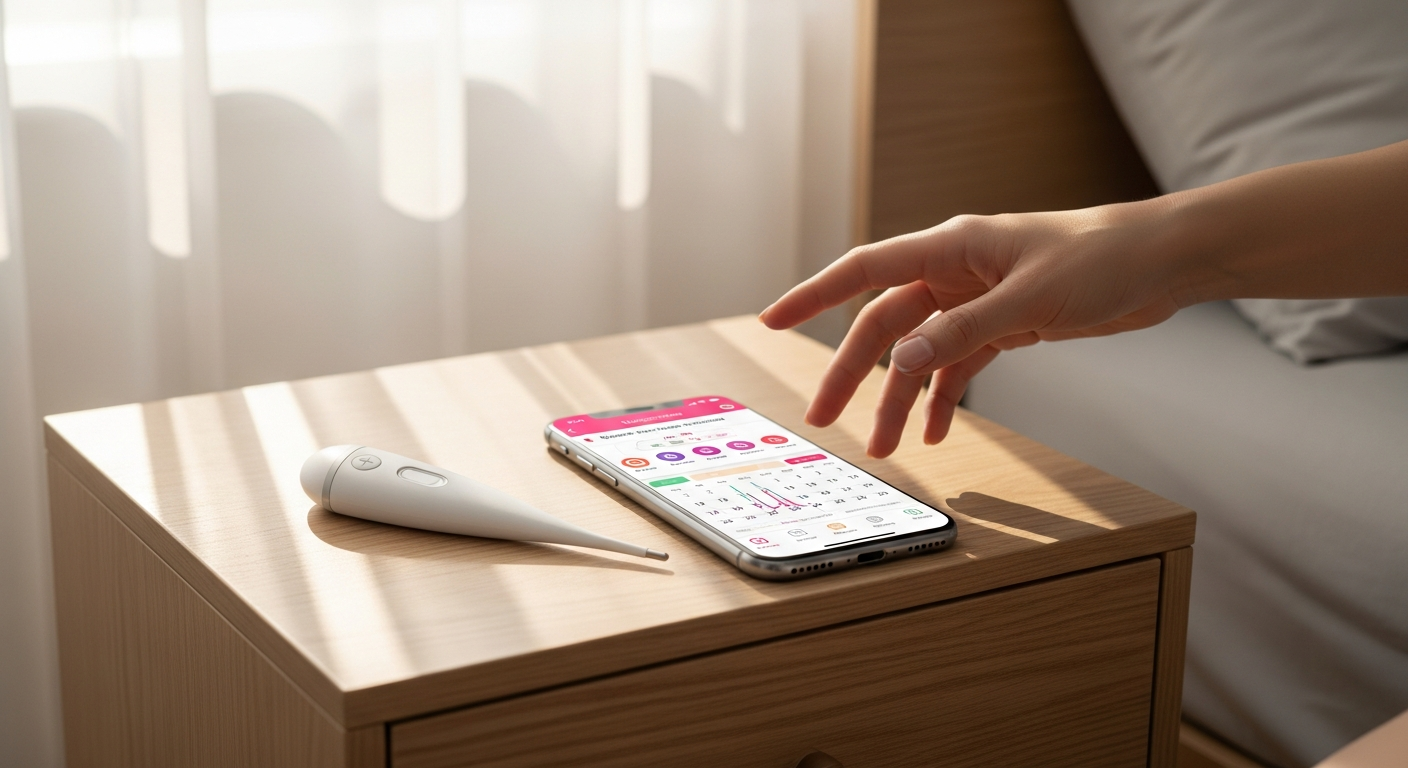
Over two million women worldwide are ditching hormonal contraception and turning to science-backed alternatives for cycle management. The rise reflects a growing demand for reproductive autonomy—women want solutions that work with their bodies rather than against them. This shift isn’t driven by anti-science sentiment; it’s rooted in the opposite. Women are leveraging precision technology and medical data to make informed choices about their health.
The Ovy Bluetooth Basal Thermometer sits at the center of this movement, combining precision hardware with intelligent app technology to make natural family planning accessible, accurate, and genuinely user-friendly. The symptothermal method—tracking basal body temperature alongside other fertility indicators—has existed for decades, but Bluetooth connectivity and medically-certified apps transformed it from a spreadsheet-and-guesswork approach into a streamlined, data-driven system.
Discover how the Ovy Thermometer makes hormone-free cycle tracking effortless.
Why Women Are Choosing Temperature-Based Cycle Tracking
The rise of hormone-free contraception and its appeal to health-conscious women
Hormonal birth control remains effective for millions, but an increasing number of women experience side effects ranging from mood changes and weight fluctuations to migraine auras and blood clotting concerns. These aren’t imaginary complaints—they’re documented medical realities that prompt women to seek alternatives. Temperature-based tracking offers a hormone-free path forward, eliminating synthetic hormones while providing meaningful reproductive control.
How basal body temperature shifts signal fertility windows with scientific precision
Your core body temperature rises slightly after ovulation, typically by 0.3–0.5°C. This shift occurs due to progesterone release and remains relatively stable through the luteal phase until menstruation begins. By measuring temperature immediately upon waking—before physical activity, caffeine, or stress influence metabolism—you capture your basal metabolic state. Multiple temperature readings across cycles reveal your personal pattern, allowing you to identify your fertile window with remarkable accuracy.
Comparison of symptothermal method effectiveness versus other natural family planning approaches
The symptothermal method combines basal temperature data with cervical mucus observation and cycle length tracking. Studies show effectiveness rates of 99.4% with perfect use and approximately 88% with typical use for contraception. When compared to calendar-based rhythm methods (which rely solely on cycle length prediction), temperature tracking significantly outperforms because it accounts for individual variability. Ovulation doesn’t occur on a fixed schedule—it shifts based on stress, illness, travel, and hormonal fluctuations. Temperature data captures these variations in real time.
Real-world reasons women transition away from hormonal birth control
Beyond side effects, women cite reasons like environmental concerns about hormone metabolites in water systems, philosophical alignment with hormone-free living, and the desire to understand their bodies more deeply. Some transition temporarily—tracking naturally while off hormonal contraception, then restarting if they choose. Others make permanent switches after recognizing how their energy, libido, and mood stabilize without synthetic hormones. These aren’t fringe concerns; they represent legitimate health considerations that deserve serious tracking tools.
The role of cycle literacy in informed reproductive decision-making
Cycle literacy—understanding your menstrual patterns, ovulation timing, and hormonal fluctuations—shifts reproductive decision-making from passive acceptance to active participation. Women who track their cycles report greater confidence in contraception choices, earlier detection of hormonal irregularities, and more informed conversations with healthcare providers. This knowledge becomes particularly valuable when planning conception, managing PCOS or endometriosis, or optimizing athletic performance and energy around cycle phases.
Why tracking core body temperature provides more reliable data than other DIY methods
Temperature is objective and measurable. Unlike cervical mucus consistency (which requires learning to distinguish subtle changes) or cycle length (which varies month to month), basal temperature produces quantifiable data. A thermometer reads your temperature; interpretation happens through the app’s algorithm, which removes guesswork. This combination of objective measurement plus intelligent analysis creates a reliable foundation for fertility awareness—far more dependable than memory, smartphone reminders alone, or apps that require manual data entry.
Hardware Breakdown—What You’re Actually Getting
Measurement accuracy of ±0.05°C and what that precision means for your cycle
Clinical-grade thermometers typically measure to ±0.1°C. The Ovy device achieves ±0.05°C accuracy—twice as precise. This matters because your fertile window identification depends on detecting subtle temperature shifts. A 0.05°C margin of error means your readings remain consistently reliable across repeated measurements. You’re not getting pharmaceutical-grade lab equipment, but you’re getting precision that far exceeds consumer thermometers. The device displays readings to two decimal places (98.23°F rather than 98.2°F), allowing the app’s algorithm to detect even minor variations that indicate hormonal changes.
Three-minute measurement window and how it fits into morning routines
Waiting three minutes feels longer than you’d expect when half-asleep. Most users incorporate measurement into morning routines—keeping the thermometer on your nightstand, measuring before moving around, then setting it down while you grab water or check your phone. The three-minute window is standard for accurate basal temperature readings. Shorter timeframes don’t allow sufficient heat stabilization; longer ones introduce variables like body movement or temperature fluctuation from activity.
Flexible probe design: oral versus vaginal measurement options explained
The probe’s flexibility accommodates both oral and vaginal measurement. Vaginal temperature provides slightly higher (and sometimes more consistent) readings because it’s closer to core body temperature. Some women alternate methods depending on circumstances—oral on rushed mornings, vaginal for more precise data. The flexibility eliminates excuses like “I have a cold and can’t measure orally this month.” Measurement consistency matters less than reliable consistency, so choosing your preferred method and sticking with it works perfectly fine.
Illuminated display and notification choices (vibration, beep, or silent mode)
Measuring your temperature in darkness without disturbing a sleeping partner requires some finesse. The illuminated display solves the first problem—you can read your temperature without turning on lights. The notification options (vibration, quiet beep, or silent) address the second. Silent mode means you won’t jolt awake to a beep, but you’ll need to watch the display for the completion signal. Vibration offers a middle ground—you’ll feel the notification but won’t create noise.
Waterproof construction and easy cleaning protocols
The waterproof design means you can rinse the thermometer under water without worry. Cleaning is straightforward—water and mild soap suffice. This feature matters more than it initially seems; thermometers accumulate residue from oral or vaginal use, and easy cleaning maintains hygiene without complicated protocols.
Rechargeable battery lifespan: 60+ measurements per charge and charging logistics
The rechargeable battery provides 60 to 80 measurements per charge, meaning a single charge easily covers a full menstrual cycle (you measure once daily). USB charging via included cable takes roughly 1–2 hours. The rechargeable design eliminates ongoing battery purchases and reduces waste compared to disposable thermometers. However, it does mean you need access to a charging cable and can’t rely on the device if the battery fully depletes.
Physical specs: 80g weight, Bluetooth 4.0 connectivity, device durability
The thermometer weighs just 80g, making it lightweight enough for travel or keeping anywhere convenient. Bluetooth 4.0 connectivity works with iOS 13.0+ and Android 5.0 Lollipop+. Most modern smartphones support these standards, but older devices may face compatibility issues. The device’s durability stems from its simple design—minimal moving parts, waterproof construction, and sturdy materials mean it withstands years of daily use.
2-year warranty coverage and what it protects
Ovy’s 2-year warranty covers manufacturing defects and malfunctioning components. It protects you if the thermometer fails to power on, Bluetooth connectivity stops working, or the probe becomes damaged under normal use. Accidental drops or submersion beyond normal rinsing might not qualify. The warranty period is standard in the health device industry and reflects Ovy’s confidence in hardware quality.
The Ovy App—Where the Thermometer Data Comes Alive
Automatic Bluetooth data transmission and why it eliminates manual entry errors
Each morning after measurement, the thermometer automatically transmits your temperature to the Ovy App via Bluetooth. No manual logging required. This automation removes friction and, crucially, eliminates transcription errors. Paper charts and manual entry invite mistakes—reading 98.23°F as 98.32°F or simply losing track of recorded data. Automatic transmission means your data moves directly from device to algorithm without human error.
Medical certification and gynecologist collaboration behind app development
The Ovy App carries CE medical device certification in Europe, meaning it’s been independently evaluated and meets medical standards for accuracy and reliability. The app was developed in collaboration with gynecologists and fertility experts, not designed by engineers with only casual domain knowledge. This professional backing matters—the algorithm reflects medical evidence about ovulation and fertile window identification.
How the algorithm learns your cycle and predicts fertile windows over time
The app’s core intelligence lies in its learning algorithm. Over the first few cycles, the app establishes your baseline temperature, identifies your ovulation pattern, and learns your unique cycle rhythm. Early predictions may carry wider uncertainty ranges (“fertile window likely between days 12–16”). As the algorithm accumulates data across multiple cycles, predictions narrow and confidence increases (“fertile window identified between days 13–15 based on your pattern”). This learning curve is normal—the system requires enough data to identify your personal patterns before achieving precision.
Personalized cycle reports and what data points the app tracks
Beyond temperature, the app tracks menstruation dates, cervical mucus changes, sexual activity, and subjective symptoms (mood, energy, physical symptoms). This holistic approach strengthens the symptothermal method’s effectiveness. The app generates detailed cycle reports showing your ovulation timing, fertile window, luteal and follicular phase lengths, and predictive insights for upcoming cycles. Healthcare providers can access these reports to better understand your cycle patterns.
Sharing cycle insights with healthcare providers for informed medical conversations
One of the Ovy App’s underrated features is the ability to export cycle reports as PDFs that you can share with doctors, gynecologists, or fertility specialists. Rather than describing your cycle from memory, you’re presenting medical-grade data. This transforms conversations—providers see objective patterns instead of relying on your recollection. For women considering conception, dealing with suspected hormonal issues, or transitioning from contraception, this data becomes genuinely valuable medical documentation.
Data privacy: health information stored in Germany and GDPR compliance
Reproductive health data is sensitive. Ovy stores health information on servers in Germany and complies with GDPR regulations, meaning your data remains protected under European privacy law. The company doesn’t sell your data or share it with third parties for marketing purposes. If you’re concerned about privacy (particularly in regions with restrictive reproductive healthcare laws), this matters enormously. Your cycle data remains yours—encrypted, protected, and under your control.
Free versus premium features and what each tier unlocks
The free Ovy App allows basic temperature logging and provides general cycle information. Premium (€9.99/month or €83.90/year) unlocks the algorithm’s full power—advanced fertility window predictions, detailed cycle reports, symptom tracking integration, and priority customer support. The free version works for tracking but lacks the predictive intelligence that makes the thermometer investment worthwhile. Most users find premium features essential for realizing the system’s full value.
User interface design and why the app earns praise for intuitiveness
The Ovy App consistently receives praise for clean, intuitive design. Temperature data appears clearly, fertile windows display prominently, and navigation feels logical. The interface assumes users have no prior cycle-tracking experience while remaining functional for experienced users. This balance—accessible yet capable—distinguishes Ovy from competitors whose apps sometimes feel clunky or overly technical.
Start tracking with the medically-certified Ovy App today.
Cost Breakdown—Thermometer, Subscription, and Hidden Expenses
One-time hardware purchase price (€79.99) and regional pricing variations
The Ovy Bluetooth Basal Thermometer costs approximately €79.99, though regional pricing varies slightly. In the US and other markets, you might encounter prices around $85–$90 USD. This represents a one-time purchase—the device itself requires no ongoing costs beyond occasional battery charging (via your own USB cable).
Premium subscription model: €9.99/month or €83.90/year explained
Premium subscription costs €9.99 monthly (approximately €119.88 annually) or €83.90 if purchased annually (roughly €7 per month). The annual option saves about €36 versus paying monthly. This is the ongoing cost—continuing indefinitely as long as you maintain a premium subscription.
Free trial period typically included with thermometer purchase
Most Ovy thermometer purchases include a free week or month of premium access. This trial period lets you explore premium features before committing to a subscription. It’s valuable time to confirm whether the premium experience justifies the ongoing cost for your use case.
Total first-year investment versus ongoing annual costs
First-year cost: €79.99 (thermometer) + €83.90 (annual subscription) = €163.89 total. Ongoing years cost €83.90 annually for the subscription alone (thermometer is already purchased). If you use the system for five years, total cost reaches approximately €495 (€163.89 + 4 × €83.90).
Whether the subscription fee represents value for your use case
Value depends entirely on your goals. For contraception, the subscription’s predictive accuracy justifies the cost if it replaces other contraceptive methods entirely (eliminating costs for pills, patches, or devices). For conception planning, detailed cycle reports and accurate ovulation predictions can accelerate pregnancy attempts, potentially justifying the expense. For general cycle literacy, free tracking might suffice if you’re comfortable with less sophisticated predictions.
Free app features and whether basic version meets your tracking needs
The free app logs temperatures and displays menstruation dates. It won’t generate predictive fertile windows or advanced cycle analytics. If you’re content with simple tracking and don’t need prediction, the free version works. If you’re using the system for contraception or conception planning, premium features become essentially necessary.
Comparison of Ovy pricing against competing cycle tracking devices
Competing devices like Tempdrop (wearable thermometer, ~$200–$300 USD) and Oura Ring (wearable tracker, ~$300–$400 USD) carry higher upfront costs, though some users prefer wearable automation over daily measurements. Fertility apps without hardware (various smartphone-only options) cost less monthly but lack the clinical-grade measurement accuracy. Ovy’s pricing positions it as a mid-range option—more expensive than app-only solutions but less costly than premium wearables.
Budget planning: spreadsheet for calculating your total investment
| Year | Hardware | Subscription | Annual Total |
|---|---|---|---|
| Year 1 | €79.99 | €83.90 | €163.89 |
| Year 2 | — | €83.90 | €83.90 |
| Year 3 | — | €83.90 | €83.90 |
| Year 4 | — | €83.90 | €83.90 |
| Year 5 | — | €83.90 | €83.90 |
| 5-Year Total | — | — | €499.49 |
The Accuracy Question—How Reliable Is Temperature-Based Tracking?
Clinical-grade precision and what ±0.05°C accuracy means in practice
The ±0.05°C accuracy specification sounds technical; practically, it means your readings remain consistently reliable. If you measure 98.23°F, the actual temperature falls between 98.18°F and 98.28°F. Across multiple measurements, this precision allows the app to detect genuine temperature trends (which shift 0.3–0.5°C post-ovulation) without confusing measurement noise with actual changes. You’re measuring biological signals clearly enough to draw meaningful conclusions.
Two decimal place readings and their role in pattern detection
Displaying temperature to two decimal places (98.23°F rather than 98.2°F) enables sensitive pattern detection. Temperature rises post-ovulation occur gradually—sometimes increasing 0.1°C daily across several days. The second decimal place captures these subtle shifts. Without it, changes smaller than 0.1°C become invisible, potentially obscuring ovulation timing.
How temperature shifts identify the fertile window with scientific backing
Ovulation typically occurs 12–24 hours before the temperature rise becomes apparent. Medical literature confirms that identifying the post-ovulation temperature shift reliably indicates that ovulation has already occurred. Using this information, you can identify the fertile window retrospectively with high confidence. The fertile window itself (days when pregnancy is biologically possible) extends approximately five days before ovulation through the day of ovulation. Once ovulation occurs and temperature rises, fertility decreases sharply—only rare late ovulations or sperm longevity edge cases extend fertility beyond the temperature shift.
Factors that influence basal temperature accuracy (sleep quality, illness, stress)
Multiple variables affect basal temperature. Poor sleep, fever, infections, emotional stress, travel across time zones, and alcohol consumption the night before all influence morning temperature. The Ovy App allows you to note these factors, helping the algorithm distinguish between measurement noise and significant changes. Consistency matters—measuring at roughly the same time each morning, after a stable night’s sleep, produces the most reliable data.
Learning curve: how many cycles the app needs to establish your unique pattern
The algorithm begins generating predictions immediately, but confidence increases over time. After three cycles, the app typically demonstrates reasonable accuracy for most women. After six cycles, pattern recognition becomes robust. Women with very irregular cycles (30+ day variations) may require more cycles before the algorithm confidently identifies their ovulation timing. This learning period is normal and expected—biological pattern recognition requires sufficient data.
Post-hormonal contraception: timeline for app accuracy after stopping birth control
Hormonal contraceptives suppress ovulation by preventing follicle development and ovulation. After discontinuing hormonal contraception, your body typically requires 2–3 months to resume normal ovulation patterns. During this adjustment period, cycle length and ovulation timing may vary significantly. The Ovy App will note these irregularities, but predictions become unreliable until patterns stabilize. Most women see predictable cycles return within three months, though some require longer. This doesn’t represent a flaw in the system—it reflects biological reality.
Effectiveness rates for contraception versus conception planning
For contraception, the symptothermal method (temperature + cervical mucus + cycle length) demonstrates 99.4% effectiveness with perfect use (correctly identifying fertile windows and avoiding unprotected intercourse during fertility) and approximately 88% with typical use. Typical use includes occasional missed days, measurement errors, or disciplinary lapses. Perfect use requires consistent daily measurement and commitment to avoiding intercourse or using barrier methods during fertile windows. For conception planning, the same effectiveness rates apply in reverse—couples correctly timing intercourse during identified fertile windows show high pregnancy achievement rates within 3–6 months.
Limitations of temperature-only tracking and why combining methods strengthens reliability
Temperature-only tracking works but carries higher error risk than the full symptothermal method. Combining temperature data with cervical mucus observation (noting moisture consistency and stretchiness) and cycle length tracking creates redundancy—if one indicator suggests different timing than another, you notice the discrepancy. This multi-method approach strengthens confidence. The Ovy App supports tracking cervical mucus and symptoms, allowing you to implement true symptothermal methodology rather than relying on temperature alone.
Real User Experiences—What Women Actually Report
High praise for automatic data syncing and reduced tracking friction
Users consistently highlight how automatic Bluetooth transmission removes friction. One measurement, the data flows to your phone automatically—no logging, no remembering to enter data later. This automation transforms tracking from a cognitive task into a seamless habit. Women report that what once felt like burden (manual charting) becomes effortless.
Customer service reputation and Ovy’s responsive support team
Ovy earns repeated praise for responsive, helpful customer support. Users report quick email responses, knowledgeable representatives, and genuine willingness to troubleshoot issues. In the fertility technology space, where users often carry emotional investment in outcomes, responsive human support matters significantly beyond typical tech support expectations.
Android versus iOS user experiences and reported differences
iOS users generally report seamless Bluetooth connectivity and reliable data transmission. Some Android users encounter intermittent background transmission issues—the app occasionally fails to sync data in the background, requiring manual app opening to force synchronization. These reports aren’t universal (many Android users experience flawless performance), but they appear more frequently than iOS issues. If you use Android, this warrants consideration; many report simple solutions resolve the issue, but occasional frustration persists for some users.
Common challenges: data transfer glitches and occasional defective units
Most users experience zero issues. However, scattered reports describe Bluetooth connectivity problems (thermometer not pairing initially), occasional defective units (thermometer failing to power on or measure), and rare app crashes. These occur infrequently enough that Ovy’s 2-year warranty handles replacements, but you should be aware that as with any electronic device, occasional failures happen.
How long it takes to feel confident in your cycle predictions
Confidence builds gradually. First cycle, you’re learning the interface and watching data accumulate. Second cycle, patterns emerge. Third cycle, predictions feel meaningful. By cycle four through six, most women report genuine confidence in their fertile window identification. This isn’t a flaw—it reflects normal pattern recognition. You can’t become confident in your cycle’s unique rhythm without sufficient data to establish it.
Integration into daily routines and morning measurement consistency
Successful Ovy users incorporate measurement into existing morning routines—measuring before getting out of bed, integrating it with coffee preparation or shower routines. Users who struggle typically haven’t anchored measurement to an existing habit; measurement remains a separate task rather than automatic behavior. Building consistency takes roughly two weeks of deliberate placement; after that, it becomes automatic.
Community feedback on app updates and feature improvements
Ovy regularly releases app updates addressing user feedback. Users appreciate responsive development—when users report issues or request features, Ovy demonstrates responsiveness. The community aspect remains relatively small compared to fitness trackers, but users report supportive communities on social media and the Ovy platform itself.
Honest reviews about subscription fatigue and long-term commitment
Some users report subscription fatigue—the ongoing €9.99/month feels like accumulated expense over years. While the annual rate offers modest savings, the ongoing nature of the cost creates psychological resistance for some. Others embrace it as reasonable cost for reliable reproductive health management. This represents personal financial tolerance rather than objective value judgment.
Who This Device Is Perfect For (And Who Should Look Elsewhere)
Women seeking hormone-free contraception with clinical-grade reliability
If you’ve abandoned hormonal contraception due to side effects and want a medically-backed alternative, the Ovy system delivers. The clinical accuracy, medically-certified algorithm, and detailed reporting provide contraceptive reliability without hormones. This represents the primary use case where Ovy excels.
Those planning conception and wanting detailed ovulation insights
Women actively trying to conceive benefit significantly from precise ovulation identification. Rather than guessing ovulation timing, detailed cycle data reveals your exact fertile window. This accelerates conception timelines and removes uncertainty from family planning.
People managing hormonal side effects or health conditions affected by contraception
Migraine with aura, family history of blood clots, depression triggered by hormonal fluctuations—these conditions make hormonal contraception problematic. Temperature-based tracking offers viable alternatives for managing reproductive health without triggering these complications.
Users comfortable with technology and willing to learn their cycle patterns
The Ovy system requires comfort with smartphone apps, Bluetooth connectivity, and willingness to learn cycle interpretation. If you’re intimidated by technology or prefer not to engage with apps, this system won’t appeal. Similarly, if you’re unwilling to track your cycle or learn its patterns, the device becomes pointless expense.
Individuals prioritizing data privacy and European-based health storage
If you’re concerned about reproductive health data privacy or regulatory environment, Ovy’s German-based servers and GDPR compliance provide meaningful reassurance. Your cycle data remains protected under European privacy law rather than subject to varying jurisdictional standards.
Not suitable for those seeking 100% pregnancy prevention certainty
The Ovy system, like all natural family planning methods, cannot guarantee pregnancy prevention with absolute certainty. Effectiveness rates around 88% with typical use mean approximately 12 out of 100 women using typical use patterns will experience unintended pregnancy annually. If you require near-absolute pregnancy prevention certainty, hormonal contraceptives or IUDs provide higher reliability. This limitation is biological, not a device flaw—no method offers true certainty.
Limited effectiveness for users with irregular cycles or hormonal conditions
PCOS, thyroid disorders, and other hormonal conditions disrupt ovulation patterns that the app relies upon for predictions. The temperature data remains useful for monitoring, but predictive capacity decreases significantly. If your cycles vary wildly (20 days one month, 40 the next), the algorithm struggles to identify reliable patterns. You can still use the system, but awareness of reduced predictive reliability matters.
Android users experiencing background transmission issues
While many Android users experience flawless performance, the scattered reports of background transmission problems warrant consideration if you have an older or less-common Android device. Testing the app before purchasing the thermometer provides risk mitigation.
Those unwilling to commit to daily morning measurements
The thermometer requires daily measurement upon waking. Missing multiple days weekly, traveling frequently without maintaining measurement consistency, or simply lacking discipline for daily commitment will undermine system effectiveness. Temperature tracking only works if you actually measure consistently.
Ovy Thermometer Versus Alternative Cycle Tracking Methods
Comparison with wearable fertility trackers (Oura Ring, Tempdrop)
Oura Ring and Tempdrop represent wearable alternatives that automate temperature measurement throughout the day or night. Oura Ring ($300+ USD) primarily tracks sleep and recovery; Tempdrop ($200–$300 USD) specializes in continuous temperature monitoring. Advantages: no daily measurement required, continuous data collection. Disadvantages: significantly higher upfront cost, still require app integration, and some users find wearing jewelry/patches uncomfortable. For users seeking maximum automation and willing to invest heavily upfront, wearables offer appeal. For budget-conscious users or those comfortable with daily measurement, Ovy’s directed morning measurement remains competitive.
Smartphone-only apps versus hardware + app combination approaches
Apps like Fertility Friend, Natural Cycles, or period trackers without hardware allow manual temperature entry or rely on existing health data. Advantages: lower cost, no hardware purchase. Disadvantages: require manual data entry (introducing errors), lack clinical-grade measurement devices, and often depend on estimated ovulation rather than confirmed temperature shifts. The hardware + app combination provides measurement precision that smartphone-only approaches cannot match.
Ovulation predictor kits versus continuous temperature monitoring
Ovulation predictor kits (OPKs) detect LH surge, confirming ovulation is imminent within 24–48 hours. They provide high certainty about ovulation timing but require purchasing kits repeatedly (approximately $15–$30 monthly). Temperature monitoring provides ongoing visibility without recurring costs. For conception planning, combining both methods (OPK confirmation + temperature tracking) maximizes reliability. For contraception, temperature tracking alone suffices.
Symptothermal method advantages over single-indicator tracking
The symptothermal method combines temperature, cervical mucus, and cycle length—creating redundancy that strengthens predictions. Single-indicator methods (temperature alone) remain effective but carry higher error risk. The Ovy App supports multi-method tracking, allowing you to implement full symptothermal methodology rather than relying on temperature exclusively.
Price comparison across the fertility technology landscape
| Method | Hardware Cost | Monthly Cost | Year 1 Total |
|---|---|---|---|
| Ovy Thermometer | €80 | €10 | €164 |
| Tempdrop | €250 | €5 | €310 |
| Oura Ring | €330 | €6 | €403 |
| OPK Kit | — | €20 | €240 |
| Fertility App (free) | — | €0 | €0 |
| Fertility App (premium) | — | €7 | €84 |
Accuracy rates: clinical studies on temperature-based versus other methods
Clinical evidence demonstrates that symptothermal methods (temperature + cervical mucus) achieve 99.4% effectiveness with perfect use, comparable to IUDs and more effective than typical pill use. OPKs detect LH surge with approximately 98% accuracy when used correctly. Smartphone-only apps without clinical-grade hardware typically demonstrate lower accuracy due to measurement errors or estimation-based predictions. The evidence supports temperature-based tracking when implemented properly—it’s not experimental; it’s established medical practice.
Convenience factor: automated data entry versus manual logging
Ovy’s automatic data transmission beats manual entry entirely. Apps requiring manual temperature entry increase friction and introduce errors. If convenience matters significantly, Ovy’s automation provides meaningful advantage over manual-entry apps, even though it requires daily measurement (unlike continuous wearables).
Long-term sustainability of different tracking approaches
Daily measurement remains sustainable for most users once incorporated into routine—similar to taking vitamins or brushing teeth. Continuous wearables promise lower friction but carry higher cost and potential comfort issues. Manual apps create unsustainable friction—users eventually stop logging data consistently. Temperature-based tracking’s sweet spot lies between sustainability and cost, making it practical for long-term use.
Getting Started—Setup, Measurement Technique, and First Cycles
Unboxing and initial setup with the Ovy App
Upon delivery, you’ll receive the thermometer, charging cable, and instructions. Download the Ovy App (iOS or Android), create an account, and follow initial setup prompts. The app guides you through device pairing and basic settings. Setup typically takes less than five minutes. Keep your charging cable accessible—you’ll charge the device weekly or biweekly depending on usage.
Pairing Bluetooth connectivity and troubleshooting connection issues
Initial pairing pairs the thermometer with your phone via Bluetooth. The process resembles pairing any Bluetooth device—enable Bluetooth on your phone, open the Ovy App, initiate pairing, and confirm connection. Occasional pairing issues resolve through device restart, app reinstallation, or thermometer reconnection. Ovy’s customer support responds quickly if you encounter persistent pairing problems.
Proper measurement technique for consistent, accurate readings
Consistency matters more than technique choice. Choose either oral (under the tongue) or vaginal measurement and maintain that method consistently. Measure immediately upon waking, before getting out of bed, before any activity or temperature-affecting behavior. Lie still for the full three-minute measurement period. The device signals completion via your selected notification method (vibration, beep, or visual). Read the display once signaled. Consistency (same time, same body location, same conditions) matters far more than perfect technique.
Timing considerations: measuring immediately upon waking before activity
Basal temperature represents your lowest metabolic state—immediately upon waking before movement, caffeine, food, or activity. Once you move around, body temperature rises due to activity and metabolism. Measuring after using the bathroom, checking your phone, or sitting up compromises basal measurement. The first measurement of the day, lying in bed immediately upon waking, provides most accurate data. If you wake multiple times nightly, measure upon final waking before leaving bed.
Building your baseline: what to expect in months one through three
Month one: You’re learning the interface, taking measurements consistently, and watching temperature data accumulate. No meaningful predictions yet—the algorithm needs data. Month two: Patterns emerge. You notice temperature variations across your cycle and see where temperature rises post-ovulation. Month three: Predictions become meaningful. The app generates fertile window estimates with increasing confidence. This learning curve is normal and expected.
Understanding your unique cycle pattern and temperature variations
Your cycle isn’t static—temperature varies based on sleep quality, stress, illness, and individual hormonal patterns. The app helps you visualize these variations and identify underlying patterns beneath the noise. Most women develop intuition for their patterns within a few cycles—recognizing when temperature shifts represent genuine ovulation signals versus random variation.
Identifying your fertile window once the algorithm has learned your data
Once the app accumulates sufficient data (typically 3+ cycles), it generates predictions for your fertile window based on your historical ovulation timing and temperature patterns. The fertile window appears prominently in the app with dates highlighted. This represents the scientifically-identified window when unprotected intercourse carries pregnancy risk. The app typically narrows the window based on your personal patterns—instead of assuming a standard 5-day fertile window, it identifies your window based on your unique cycle.
Adjusting measurement habits if initial readings seem inconsistent
Occasional inconsistent readings occur. Assess whether measurement conditions changed—different time, disturbed sleep, illness, stress. Try reestablishing consistent measurement timing and conditions. If inconsistencies persist despite consistent technique, thermometer malfunction is possible; contact Ovy support. Usually, once consistency improves, readings stabilize.
The Subscription Question—Is Ovy Premium Worth the Cost?
Free features available without premium subscription
The free Ovy App tracks temperature measurements, records menstruation dates, and displays your cycle calendar. Basic cycle information appears without premium access. If you want simple tracking without prediction features, the free version suffices.
Premium features that unlock deeper cycle insights and predictions
Premium unlocks the algorithm’s predictive power—fertile window forecasts, detailed cycle analysis, advanced symptom tracking, period predictions, and comprehensive cycle reports. These aren’t trivial features; they’re the core functionality that makes the system valuable for contraception or conception planning.
Monthly versus annual pricing and which option offers better value
Monthly (€9.99/month = €119.88 annually) costs more than annual (€83.90/year). The annual option saves roughly €36 yearly. If you’re committing to long-term use, annual pricing makes financial sense. If you’re testing the system, monthly allows exit without large sunk cost.
Comparing Ovy Premium cost against other fertility app subscriptions
Fertility app subscription costs range widely—Natural Cycles (€9.99/month), Fertility Friend (€45 annually or free with limitations), Clue (€10/month for premium), Period Tracker (free with optional
Leave a Reply