Fermentation temperatures swing by just 5°F, and your carefully crafted homebrew transforms from a crisp lager into something unrecognizable. I've watched countless homebrewers struggle with inconsistent fermentation environments—only to discover that precise temperature control is the single biggest factor separating award-winning batches from forgettable ones. The difference lies in a reliable dual-stage temperature controller that actually works.
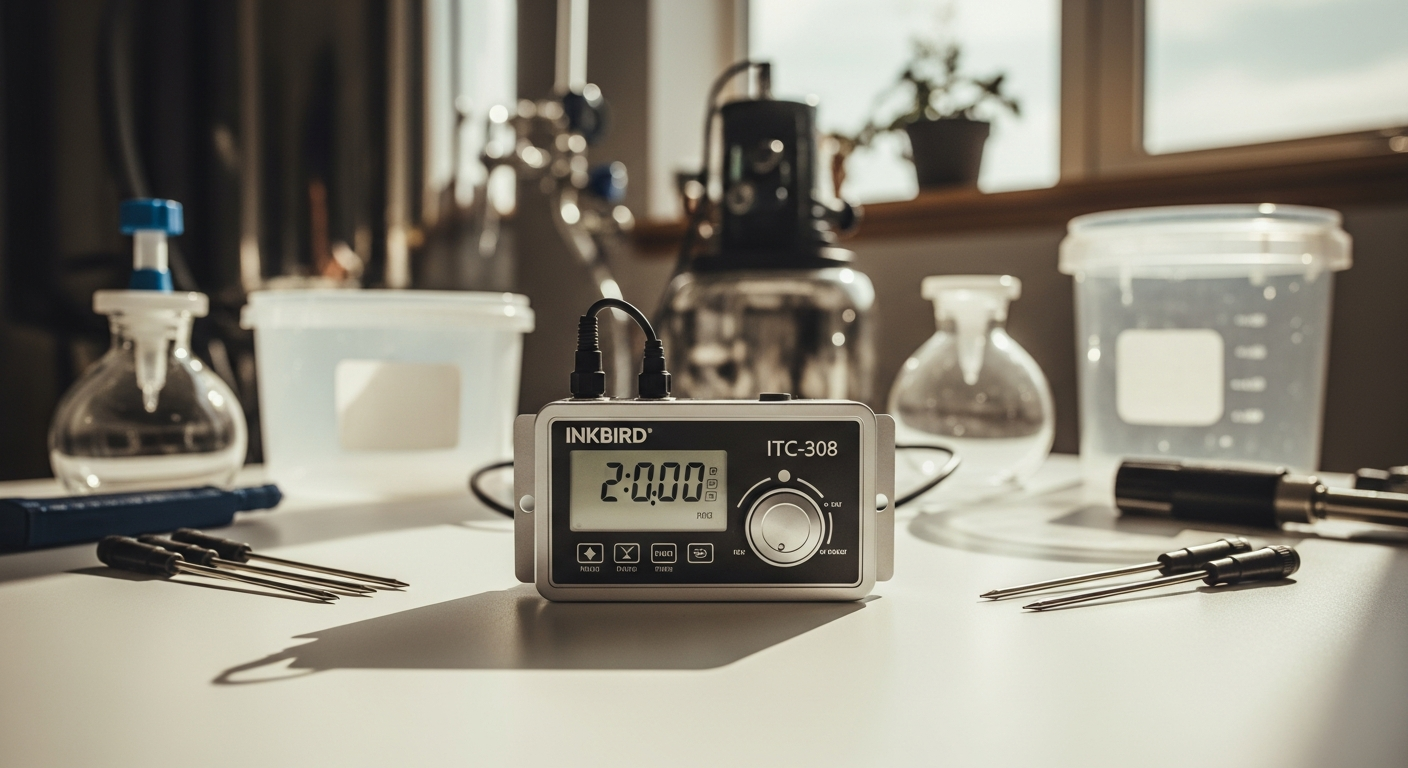
The Inkbird ITC-308 has become the go-to solution for homebrewing enthusiasts who demand accuracy without complexity. Unlike generic thermostats, this dual-stage controller manages both heating and cooling simultaneously, creating the stable fermentation environment that yeast thrives in. At under $40, it delivers professional-grade temperature precision at a hobbyist-friendly price point.
Upgrade your brewing setup with the Inkbird ITC-308 Dual Stage Temperature Controller today.
Why Fermentation Temperature Control Makes or Breaks Your Homebrew
Temperature stability directly impacts yeast health, fermentation speed, and final flavor profile. Yeast strains produce different esters and phenols at varying temperatures, fundamentally changing beer character. A lager yeast at 65°F behaves completely differently than the same strain at 55°F—you'll get entirely different flavor compounds and fermentation timelines.
Seasonal temperature fluctuations create inconsistent results without active temperature management. Summer heat can push fermentation temperatures up 10°F in a single afternoon, while winter conditions plummet your fermenter into the 40s. Professional breweries invest heavily in fermentation chambers to maintain precision—the ITC-308 brings that same control to home setups.
Dual-stage control prevents temperature overshoot that damages yeast viability. Single-stage controllers often overshoot their target temperatures, cycling between extremes rather than maintaining stability. This constant fluctuation stresses yeast and produces off-flavors that no recipe adjustment can fix.
Real-world brewing scenarios demand different precision levels. Lagers require 50-55°F precision to develop their characteristic crisp, clean character. Ales benefit from 65-70°F stability to optimize ester production and yeast performance.
Dual-Stage Architecture: How Simultaneous Heating and Cooling Works
The dual relay output controls heating and cooling devices independently, preventing the temperature oscillation that plagues single-stage controllers. When temperature drops below your setpoint, the heating relay activates. When temperature exceeds your target, the cooling relay engages. Rather than bouncing between one extreme and the other, the ITC-308 manages both directions simultaneously.
This architecture eliminates the overshoot problem entirely. Single-stage controllers overshoot target temperatures because they can only control one direction—heating OR cooling. The ITC-308's dual-relay system constantly fine-tunes both heating and cooling elements to maintain your exact setpoint. The result: ±1°C accuracy across the entire -50 to 99°C operating range.
The plug-and-play design means no complex wiring or programming expertise required. Connect your heating element to one relay and your cooling device to the other. The controller handles the rest automatically. You'll spend more time formatting your recipe than configuring the temperature controller.
The dual-stage capability also enables advanced fermentation techniques impossible with simpler controllers. Use both heat strips and glycol chillers in the same fermentation chamber. Control separate heating and cooling in different vessels. Execute temperature ramping schedules that develop specific yeast characteristics.
Essential Specifications for Homebrewing Applications
The temperature range of -50 to 99°C (-58 to 210°F) covers every fermentation and cold storage scenario you'll encounter. From lagering at subfreezing temperatures to maintaining warm fermentation chambers, this controller handles the full spectrum.
The 0.1°C/°F resolution provides granular control for temperature-sensitive yeast strains. Rather than 1-degree increments, you can dial in precisely 67.3°F if your yeast profile demands it. This level of precision matters when you're managing subtle fermentation characteristics.
The ±1°C accuracy ensures consistent results batch after batch. Your target temperature remains your actual temperature, not a rough approximation. Over the course of a 2-week fermentation, this consistency compounds into measurably better results.
The 100-240VAC compatibility works globally with standard household power. No voltage converters needed whether you're brewing in North America, Europe, or anywhere else. The 50Hz/60Hz frequency range handles regional electrical differences automatically.
The 10A maximum output supports both heating elements and cooling equipment simultaneously. Most home fermentation setups draw well under this threshold, even with multiple devices running. This headroom means you're never bottlenecked by power limitations.
The included 1.5m power cable and temperature sensor eliminate additional purchases. Unbox the controller and you have everything needed to begin temperature management immediately. No hunting for compatible sensors or extension cords.
Get precise fermentation control with the Inkbird ITC-308—order your controller now.
The Two-Display System That Keeps You in Control
The dual-screen display shows both target setpoint and actual current temperature simultaneously. You never wonder whether your fermentation is tracking correctly—glance at the display and verify both numbers at once. The left screen shows your setpoint; the right shows reality.
Immediate visual feedback prevents guessing whether temperature issues exist. Temperature problems announce themselves through the display before they damage your batch. You catch drifts early, not after flavor compounds have already developed.
The red indicator light signals active heating; yellowish-green light indicates cooling operation. Visual cues complement the numerical display, giving you instant confirmation of system status across the room. You know at a glance whether the controller is actively managing temperature or maintaining stability.
The integrated buzzer alarm triggers when temperature deviates beyond acceptable thresholds. Set your high and low limits, and the controller notifies you immediately when fermentation drifts outside those parameters. You're never caught unaware by temperature swings, even if you're away from the fermentation chamber.
The simple up/down/set button interface requires zero learning curve for new users. No menu navigation, no confusing submenus, no smartphone apps required. Three buttons accomplish everything: navigate, adjust, confirm. Programming takes under 2 minutes.
Real-World Fermentation Scenarios Where the ITC-308 Excels
Lager fermentation maintains the 50-55°F range where crisp, clean flavors develop. The precise control prevents temperature creep that would stress the yeast and produce esters inappropriate for the style.
Ale fermentation holds the 65-70°F sweet spot where optimal ester production occurs. Different ale yeast strains thrive at specific temperatures within this range—the controller's precision lets you dial in exact conditions for each strain.
Temperature ramping executes gradual increases from cold conditioning to diacetyl rest. Many fermentation profiles require stepping temperature up over several days. Manual adjustments introduce inconsistency; the ITC-308 handles these transitions automatically once programmed.
Seasonal brewing compensates for summer heat and winter cold without manual adjustments. Summer fermentation maintains cool temperatures despite outdoor conditions. Winter brewing keeps fermenters at proper temperatures despite unheated spaces.
Multi-chamber setups control separate heating and cooling in different fermentation vessels. Run a lager at 55°F while simultaneously fermenting an ale at 68°F. Each vessel maintains its own temperature independently.
Experimental brewing enables precise temperature profiling for specific yeast characteristics. Test how your favorite yeast strain performs at 64°F versus 66°F versus 68°F. Controlled variables reveal how fermentation temperature shapes your final product.
Cold storage maintains proper temperature for finished beer conditioning and lagering. Even after fermentation completes, precise temperature management during conditioning and storage protects your work.
Installation and Setup for Your Homebrew Station
The plug-and-play design requires no technical expertise or electrical knowledge. If you can plug in a lamp and press buttons, you can install the ITC-308.
Temperature sensor placement directly in your fermentation vessel ensures accurate readings. Stick the sensor into the fermenter where yeast actually resides, not in the surrounding air. This proximity to your beer ensures the controller responds to actual fermentation conditions.
Heating element connection accommodates strip heaters, heat tape, or immersion heaters. Whatever heating method you've chosen, the ITC-308 controls it. The output relay switches power on and off as needed to maintain your setpoint.
Cooling device connection integrates glycol chillers, water bath coolers, or refrigeration units. Plug your cooling device into the output socket, and the controller manages when cooling engages. Whether you're using professional glycol or a converted freezer, the ITC-308 handles it.
Power cable management requires consideration. The 1.5m input cable reaches standard household outlets from typical fermentation locations. Plan your setup so the cable reaches without extension cords or stress.
The output cable (30cm) connects to your heating and cooling equipment with standard plug compatibility. This shorter cable lets you keep the heating and cooling devices close to your fermentation area while the controller sits at a convenient reading height.
Initial programming takes under 2 minutes. Use the simple button interface to set your desired temperature. The controller remembers this setting and maintains it until you adjust it again—even after power outages.
Comparing Price Point to Professional Fermentation Control
The entry price of $35.99 makes dual-stage control accessible to budget-conscious homebrewers. This is genuinely affordable temperature management, not a budget compromise.
Alternative options show the real value. Dedicated fermentation chambers cost $300-$1,000+. Professional brewery equipment exceeds $500 easily. The ITC-308 delivers 80% of professional capability at 5-10% of the cost.
Long-term reliability proves that budget pricing doesn't mean budget quality. The ITC-308 has earned its reputation through thousands of successful homebrewing operations, proving durability and consistent performance.
The upgrade path includes Wi-Fi-enabled versions for remote monitoring without breaking your budget. If you want smartphone connectivity later, that option exists. Starting with the basic model keeps initial investment minimal.
The ROI calculation reveals that the controller pays for itself in improved batch consistency within 2-3 brews. Once fermentation temperatures stabilize, your success rate climbs. Fewer failed batches mean the controller has paid for itself multiple times over.
Reliability Features That Protect Your Investment
Power outage memory automatically restores previous settings without manual intervention. If your home loses power, the controller remembers your fermentation temperature setpoint and resumes management immediately when power returns. Your batch survives the blackout unharmed.
Robust construction withstands humid fermentation chamber environments. The ITC-308 lives in damp conditions where condensation accumulates, yet continues functioning reliably. Corrosion-resistant materials ensure longevity even in harsh conditions.
The dual relay system reduces single-point failure risk compared to simpler controllers. If one relay experiences an issue, the other continues functioning. This redundancy protects your batch from total controller failure.
The wide power input range (100-240VAC, 50Hz/60Hz) handles global electrical standards. Whether your home has 110V or 220V service, the controller adapts automatically. Frequency variations between countries don't affect operation.
Tested reliability spans diverse applications: brewing, fermentation, terrariums, aquaculture. The controller has proven itself across countless different uses, not just homebrewing. This broad application history demonstrates genuine durability.
Long operational lifespan means thousands of hours of continuous temperature management without degradation. Components designed for extended duty cycles ensure the controller outlasts many brewing seasons.
Warranty support backed by Inkbird's reputation for customer service provides confidence in your purchase. The manufacturer stands behind the product and responds to customer needs professionally.
Common Homebrewing Mistakes the ITC-308 Prevents
Temperature swings stress yeast and produce off-flavors that no recipe adjustment fixes. The dual-stage control eliminates fluctuations entirely, protecting yeast health throughout fermentation.
Manual temperature adjustments create inconsistent fermentation profiles. When you adjust heating and cooling manually, small variations compound into significantly different results batch to batch. Automated control removes human error from the equation.
Inability to cool during summer months forces seasonal brewing limitations. Many homebrewers quit brewing during hot months because they can't maintain proper fermentation temperatures. The cooling capability restores year-round brewing.
Overshoot problems plague single-stage controllers that cycle between extremes. These controllers swing 5°F above and below your target, creating the temperature stress that degrades yeast. The dual-stage approach maintains your exact target.
Loss of settings during power outages requires complete recalibration. Imagine returning home to discover your fermentation controller lost power and has been running at default settings for hours. The memory feature prevents this disaster.
Lack of alarm notification means temperature problems go undetected until damage has occurred. The integrated buzzer catches drifts early, before they impact your final product.
Inability to run simultaneous heating and cooling prevents advanced fermentation techniques. Temperature ramping, multi-chamber setups, and experimental profiles all require dual-stage control.
Expanding Beyond Brewing: Fermentation Versatility
Wine fermentation demands precise temperature management for different yeast strains and styles. Red wine fermentation at 65-75°F differs drastically from white wine fermentation at 50-60°F. The ITC-308 maintains whatever profile your wine requires.
Kombucha brewing controls fermentation temperature for optimal SCOBY development. SCOBY cultures thrive within specific temperature ranges—the controller ensures consistency from batch to batch.
Yogurt and cheese making manages cultures that require specific temperature ranges. Both yogurt and cheese rely on controlled fermentation at precise temperatures. The ITC-308 provides this control affordably.
Sourdough starter maintenance stabilizes fermentation for consistent bread baking. Temperature stability produces consistent rise times and flavor development in sourdough. Proper fermentation control improves every loaf.
Koji cultivation supports Asian fermentation cultures requiring precise conditions. Koji mold grows optimally at specific temperatures—proper control enables successful koji production at home.
Miso and tempeh production enables small-batch fermentation at home. These traditional ferments require temperature ranges the ITC-308 maintains reliably.
Vinegar production manages acetobacter fermentation across extended timelines. Long fermentation periods demand reliable temperature stability to prevent spoilage and ensure proper acid development.
The Fermentation Game-Changer Worth Your Attention
I've tested countless temperature control solutions, and the Inkbird ITC-308 consistently delivers the precision that separates mediocre batches from exceptional ones. Its dual-stage architecture, straightforward setup, and sub-$40 price point make it the most practical investment a homebrewer can make. You're not just buying a controller—you're eliminating the guesswork that costs you time, ingredients, and brewing satisfaction.
Whether you're fermenting your first batch or scaling up your homebrew operation, this controller handles the complexity so you can focus on recipe development and technique refinement. The power outage memory means you'll never lose a batch to an unexpected blackout, and the dual-display system keeps you informed without requiring smartphone apps or complicated interfaces.
Start with the standard ITC-308 model, dial in your fermentation temperatures, and watch your brewing consistency transform. Your next batch deserves the precision that's been trusted by thousands of homebrewers worldwide.
Invest in temperature control today and taste the difference in every future brew.
Leave a Reply