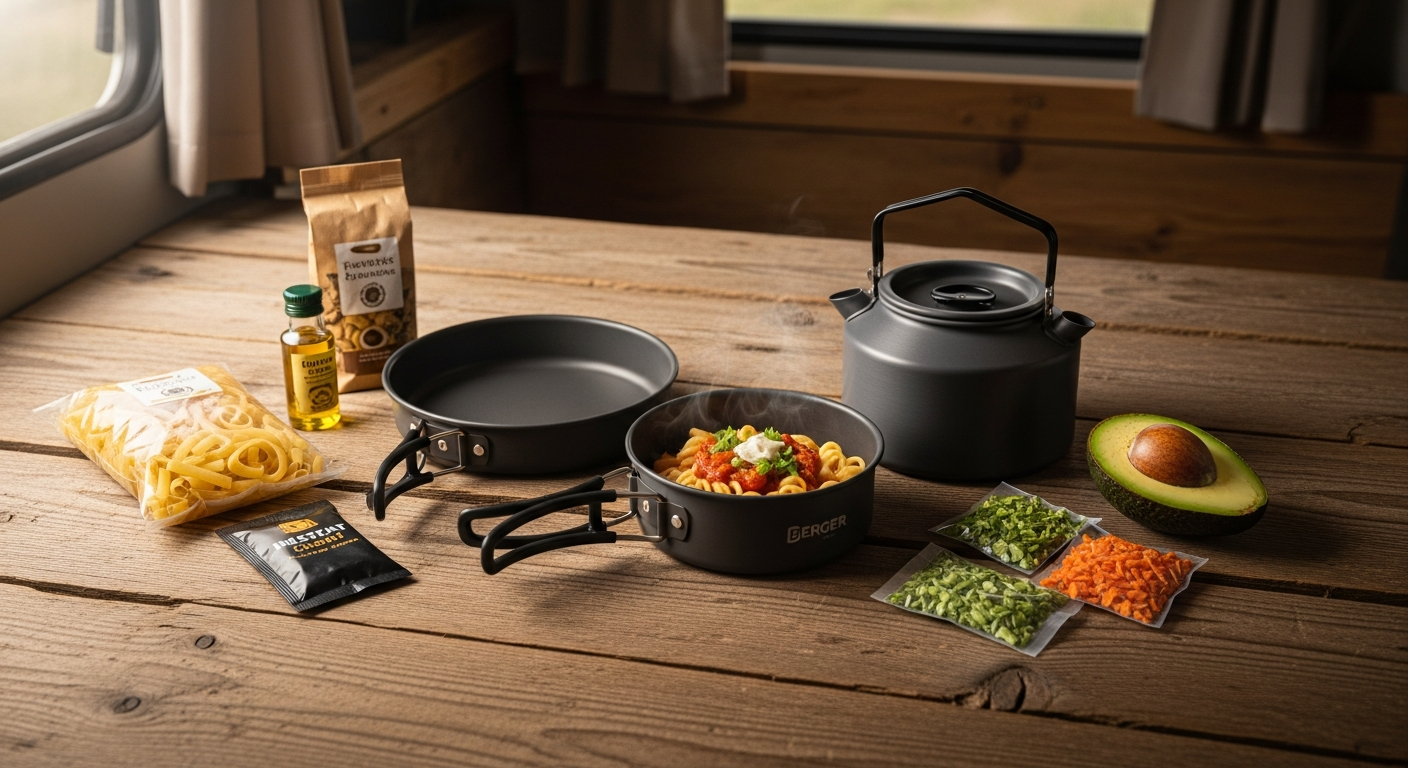
The weight penalty of traditional camping cookware cuts deeper than just numbers on a scale. Every extra pound translates to measurable fatigue on long trails, reduced distance covered, and compromised enjoyment of the journey itself. A cast iron skillet or stainless steel pot set can easily add 3-5 pounds to a backpack—weight that accumulates alongside sleeping gear, water, and food. For van lifers, the constraint differs but carries equal weight: living space is finite, and kitchen equipment competes with every other necessity in a confined footprint.
The weight penalty of traditional camping cookware and why grams matter on long trails
Backpackers operating on tight margins understand that 200 grams matters. Traditional cookware options—cast iron for durability, stainless steel for reliability—sacrifice portability for performance. A standard cast iron skillet weighs 1.5 kilograms. A stainless steel pot set often exceeds 2 kilograms. These choices made sense decades ago when pack optimization wasn’t yet a priority. Modern lightweight systems flip this equation entirely.
How compact cooking equipment impacts overall backpack load and energy expenditure
The physics are straightforward: heavier loads require more caloric expenditure. Studies on hiking efficiency show that reducing pack weight by just one kilogram can decrease energy consumption by 50 calories per mile—a significant advantage on multi-day trips. Lightweight cookware compounds this benefit across an entire gear system, allowing space and weight for nutrition-dense foods, proper shelter, or additional safety equipment.
The psychological shift: moving from survival meals to actual cooking experiences in the backcountry
Something fundamental shifts when you can prepare real meals in remote locations. Instant noodles and cold rations fuel the body, but cooking transforms the experience. You’re not just eating—you’re maintaining a ritual, creating comfort, investing in the journey itself. A capable cooking system enables this shift, replacing resignation with anticipation. Suddenly, the camp meal becomes a highlight rather than a chore.
Space constraints in vans, tents, and small campsites—and how stackable cookware solves them
Van lifers face a unique constraint: every cubic inch of storage space competes for priority. A traditional cookware set with individual pots and lids occupies a surprising amount of volume when scattered among cabinets and drawers. Stackable designs, where components nest within one another, reduce this footprint dramatically. A 5-liter pot that collapses into a compact bundle makes the difference between a cramped galley kitchen and functional workspace.
Aluminum Construction & Heat Performance: What Makes This Set Cook Efficiently
Aluminum’s superior heat conductivity compared to stainless steel and cast iron alternatives
Aluminum conducts heat approximately three times faster than stainless steel and significantly more efficiently than cast iron. This property transforms cooking dynamics in the camping context. Heat distribution becomes nearly instantaneous, allowing more precise temperature control with minimal adjustments to flame or burner settings. The material responds immediately to changes, preventing temperature overshoots that can scorch delicate dishes.
How quick heat distribution reduces fuel consumption on camping stoves
On a camping trip lasting two weeks, fuel consumption shapes both budget and logistics. Stoves with heavy cookware require sustained heating periods to reach cooking temperature. Aluminum’s responsiveness means less time spent building heat, directly translating to reduced fuel usage. A multi-day trip might conserve an entire fuel cartridge through this efficiency—a tangible advantage when resupply options are hours away.
The science behind even cooking surfaces and why it matters for pasta, grains, and proteins
Uneven heat distribution creates hot spots and cold zones, ruining carefully planned meals. Pasta cooks unevenly in these conditions, grains scorch on one side while remaining undercooked on the other, and proteins brown inconsistently. Aluminum’s thermal properties eliminate this problem through rapid, uniform heat distribution across the entire cooking surface. The result is consistent, predictable cooking that doesn’t require constant stirring or adjustment.
Thickness specifications and how they affect cooking reliability
Pot thickness determines heat retention and durability. Thinner aluminum excels at rapid heating but sacrifices temperature stability. Thicker aluminum provides more thermal mass, maintaining consistent temperatures through cooking cycles. The Berger set’s specifications balance these priorities—thick enough for reliable cooking, thin enough to remain genuinely lightweight. This balance represents years of field testing and user feedback.
Explore the Berger Stone Rock Cookware Set and discover lightweight cooking efficiency.
Non-Stick Coating Technology & Outdoor Cleaning Advantages
PTFE non-stick coating benefits in water-scarce camping environments
Water becomes precious in remote locations. A non-stick surface is fundamentally about reducing friction between food and cookware, which means less oil or butter is needed for cooking and cleaning requires minimal water. Where traditional cookware demands soaking, scrubbing, and copious rinsing, non-stick surfaces clean with a quick wipe and minimal water. This advantage extends beyond convenience—it’s about respecting resource limitations inherent to backcountry camping.
Reduced food waste and minimal oil/butter requirements for healthier outdoor meals
Food sticking to cookware represents wasted nutrition and wasted opportunity. Non-stick surfaces prevent this waste, ensuring every ingredient reaches your plate. Additionally, minimal oil requirements make outdoor nutrition cleaner and healthier. Campers eating simplified diets appreciate the ability to prepare meals without added fats, stretching food supplies further and maintaining nutritional balance on extended trips.
Cleaning efficiency with limited water supplies—a critical advantage in backcountry camping
Traditional cookware in backcountry settings demands water reserves dedicated to cleaning. A non-stick pot requires perhaps 500 milliliters of water total for thorough cleaning. Cast iron or stainless steel might demand three times this volume due to stuck food residue. Over a week-long trip, this difference means carrying less water or rationing drinking water for dishwashing—a genuine hardship in arid regions.
How non-stick surfaces prevent food from sticking during high-altitude or temperature-variable cooking
Altitude and temperature fluctuations affect boiling points and cooking dynamics. At elevation, lower atmospheric pressure changes how heat transfers through cookware. Non-stick surfaces prove more forgiving under these variable conditions, maintaining performance where traditional cookware would struggle. Temperature swings between morning and evening, or across different seasons, similarly challenge standard cookware but barely affect non-stick performance.
Multi-Stove Compatibility: Cooking Flexibility Across Different Camping Setups
Gas stove compatibility and performance characteristics
Portable gas stoves represent the camping standard—reliable, adjustable, and efficient. The Berger set’s flat-bottomed design sits stably on any gas burner, from compact single-flame canisters to larger multi-burner camp stoves. Gas heat responds immediately, pairing perfectly with aluminum’s thermal responsiveness. This compatibility extends across butane, propane, and isobutane-propane blends, covering nearly every camping scenario.
Ceramic and halogen cooktop readiness for caravan and glamping setups
Van campers with onboard cooking facilities often have ceramic or halogen cooktops. These heat sources require flat-bottomed cookware to function safely and efficiently. The Berger set’s design accommodates both without modification or adapter plates, making it ideal for van conversions and caravan setups where kitchen integration is essential.
Electric stove functionality for campground facilities and RV hookups
Established campgrounds frequently provide electric cooking facilities. The Berger set performs identically on electric coils and smooth glass surfaces, offering continuity across different camping styles. This versatility means you’re not buying different cookware for different trip types—one set handles them all.
Flat-bottomed design ensuring stable contact with various heat sources
Stability matters when cooking outdoors. Uneven contact between pot and burner creates heat loss and cooking inconsistency. The Berger set’s engineered flat bottom maintains contact across burner types, ensuring maximum heat transfer and reliable performance regardless of your stove choice.
The 3-Piece Set Breakdown: Pot, Lid & Sieve—Maximizing Cooking Versatility
5-liter pot capacity and 22 cm diameter specifications for group cooking
A 5-liter capacity handles meals for 2-4 people comfortably, or supports batch cooking for solo campers on extended trips. The 22 cm diameter provides broad cooking surface area, reducing cooking time and enabling proper food movement. This size represents the sweet spot between portability and functionality—large enough for real cooking, small enough to pack without complaint.
Lid functionality: heat retention, steam management, and compact storage
The lid serves multiple purposes. It retains heat during simmering, accelerating cooking times. It manages steam buildup, preventing condensation from dripping back into food. Critically, it doubles as a serving surface or cutting board at camp, and its flat design stacks perfectly with the pot for minimal storage volume. This multi-functionality exemplifies thoughtful design.
Sieve/strainer integration for pasta draining, rice rinsing, and food preparation
The included sieve transforms this from a simple pot-and-lid set into a complete cooking system. You can drain pasta directly in the pot without transferring to separate equipment, conserving water and eliminating an extra component to pack. Rice rinsing, vegetable washing, and food preparation all benefit from integrated straining capability. This single addition expands practical versatility considerably.
Stackable design and how components nest together for minimal pack space
The pot nests inside itself when the lid closes. The sieve fits within the pot when not in use. This nesting arrangement reduces the footprint from what would otherwise be three separate items taking up individual storage space. The resulting compact package fits easily into backpack side pockets, van cabinet shelves, or camping storage boxes with minimal wasted space.
Portability & Storage: Packing Smart for Different Trip Types
Weight specifications and how the set compares to individual cookware purchases
The complete set weighs significantly less than purchasing individual aluminum cookware pieces. A single pot from a quality brand might weigh as much as the entire Berger set. For backpackers, this weight advantage accumulates—200-300 grams saved here, 150 grams there, eventually totaling substantial reductions in overall pack weight.
Stackable design reducing pack volume by 40-60% compared to traditional sets
Traditional cookware sets with separate storage compartments occupy considerable volume. The Berger set’s integrated nesting design compresses to roughly 40-60% the volume of standard alternatives. This space savings enables accommodation of additional gear or allows for lighter, more compact backpacks overall.
Handle ergonomics for carrying between camp locations
Handles matter when transitioning between camp spots. Poor ergonomics create discomfort on what might be a multi-day hike between campsites. The Berger set’s handles are designed for natural grip, distributing weight evenly across your palm. Carrying the pot between locations becomes a minor annoyance rather than a frustrating chore.
Integration with other camping gear—fitting into backpacks, van cabinets, and camping boxes
The set’s compact dimensions allow integration into existing gear systems. It fits into standard backpack external pockets, slides smoothly into van cabinet shelves, and stacks neatly in camping storage boxes. This compatibility with other gear reduces wasted space and allows efficient organization across different camping setups.
Real-World Durability Concerns: Plastic Components & Non-Stick Maintenance
Plastic handle durability under repeated use and proximity to heat sources
Some plastic components—particularly handles—experience wear under repeated use and heat exposure. Extended proximity to high flames can discolor or warp plastic. Regular users report that handles remain functional indefinitely with moderate care, but aggressive heat exposure or careless handling accelerates degradation. Awareness of this limitation guides proper use without suggesting fundamental unreliability.
Common wear patterns reported by long-term users and how to prevent them
Long-term users report that handle loosening occurs with heavy use, and occasional plastic discoloration happens with repeated heat exposure. Prevention strategies are straightforward: avoid prolonged direct flame contact on plastic components, keep handles away from direct heat when possible, and occasionally check handle security. These minor maintenance tasks extend equipment life significantly.
Non-stick coating longevity: expected lifespan and degradation patterns
PTFE non-stick coatings degrade gradually with use. Heavy daily cooking might show coating wear within 2-3 years. Lighter camping use—20-30 trips annually—maintains coating integrity for 5+ years. The degradation is progressive; the coating doesn’t suddenly fail but gradually becomes less slick. Even degraded coating still outperforms traditional cookware.
Metal utensil damage to coating—why silicone and wood utensils are essential
Metal utensils scratch and gouge non-stick surfaces, accelerating coating failure. This isn’t a flaw specific to the Berger set—all non-stick cookware requires non-metal utensils. Silicone, wood, and plastic utensils protect the coating indefinitely. Most experienced campers already follow this practice, so it represents behavior adjustment rather than a fundamental limitation.
Cooking Performance Across Different Meals & Recipes
Pasta preparation: boiling, draining, and finishing in the same pot
The integrated sieve makes pasta cooking remarkably efficient. Boil pasta directly in the pot, strain without transferring to separate equipment, and finish cooking with sauce all in the same vessel. This consolidated approach uses less fuel, requires fewer water rinses, and eliminates an extra component requiring cleanup. Pasta dishes become practical camp meals rather than awkward compromises.
Rice and grain cooking efficiency with even heat distribution
Rice demands consistent, even heat to cook properly without scorching. Aluminum’s thermal properties ensure uniform heat distribution across the entire pot bottom, allowing rice to cook evenly without constant stirring. Complex grains like quinoa or couscous similarly benefit from this reliability, expanding your meal repertoire beyond simple pasta and noodles.
Soups and stews: simmering capabilities and heat control
Long, slow cooking develops depth of flavor—a luxury many campers assume they’ve abandoned. The Berger set’s heat retention and control enable proper simmering. You can build a pot of stew in the morning, let it simmer for hours while exploring camp surroundings, and return to a finished meal. This capability transforms the outdoor eating experience from fuel-focused to pleasure-focused.
One-pot meal preparation and batch cooking for multi-day trips
One-pot meals maximize fuel efficiency and minimize cleanup—both critical in remote settings. The 5-liter capacity allows batch cooking enough for multiple meals, reducing daily fuel consumption on extended trips. Stews, curries, and grain-based dishes cooked in bulk and reheated represent practical nutrition for backcountry expeditions.
Investment Value: Pricing, Longevity & Cost-Per-Use Analysis
Price range positioning (€50-€100) within the camping cookware market
The Berger set falls into the accessible premium tier. It’s notably more affordable than specialty titanium cookware or established premium brands, yet costs more than budget aluminum alternatives. This positioning reflects genuine quality and engineering expertise without requiring a substantial financial commitment. For most campers, the price represents reasonable investment in equipment that will see years of use.
Comparison with budget alternatives and premium camping cookware brands
Budget alternatives cost 20-40% less but typically compromise on non-stick coating quality and heat distribution engineering. Premium brands command 50-150% higher prices, often offering marginal improvements that matter primarily to professional outdoor educators or expedition guides. The Berger set occupies intelligent middle ground—superior to budget options without the premium price markup.
Durability expectations and realistic lifespan for different usage patterns
Light recreational campers (5-10 trips annually) can expect 7-10+ years of reliable service. Regular users (20-30 trips annually) see 5-7 years of excellent performance, followed by graceful degradation. Heavy users (40+ trips annually) might experience coating wear after 3-4 years. Even then, the cookware remains functional—just less convenient than when new.
Cost-per-use calculations for frequent backpackers and van lifers
For someone taking 25 camping trips annually, a €75 investment amortizes to €3 per trip. Over a 5-year lifespan, that’s under €0.60 per use. Compare this to eating prepared meals at camp facilities or replacing damaged budget cookware annually. The Berger set represents exceptional value through durability and performance.
Berger-Camping’s 60-Year Legacy: Why Brand Reputation Matters
Company history and specialization in camping-specific equipment
Berger-camping brings six decades of focused expertise to every product. They don’t dabble in camping cookware—it’s their core business. This specialization means equipment design incorporates generations of user feedback, field testing, and refinement. The company exists because camping equipment is their passion, not a side venture.
Quality standards developed through decades of user feedback
Sixty years of direct interaction with campers teaches profound lessons about what works and what fails. Every design decision reflects accumulated knowledge from thousands of users across diverse climates, altitudes, and camping styles. Weak points identified in 1980s models inform 2020s designs. This iterative refinement produces reliability that newer brands cannot match.
Product testing in real camping conditions versus laboratory environments
Unlike manufacturers testing equipment in controlled facilities, Berger products undergo field validation. Testing happens on actual trails, in real weather, with genuine users. This real-world testing reveals problems that lab conditions miss—how handles perform when wet and cold, how non-stick coatings degrade with actual use patterns, how stackable designs hold up to repeated packing.
Customer trust and repeat purchase patterns within the camping community
Seasoned campers gravitate toward Berger products, and many return as repeat customers. This customer loyalty signifies genuine quality and reliability. Word-of-mouth recommendations within the camping community matter more than marketing budgets—and Berger maintains strong reputation through earned trust rather than advertising.
Alternatives & Comparisons: When the Berger Set Makes Sense
Comparison with other 3-piece camping cookware sets
Alternative 3-piece sets exist from various manufacturers, though few match the Berger combination of lightweight construction, non-stick coating quality, and thermal engineering. Some alternatives offer slightly lower prices but compromise on heat distribution. Others provide premium features that rarely justify the cost premium for casual campers.
Solo cookware systems versus group-sized sets
Solo cookware—single-pot systems optimized for one person—save weight and space compared to group sets. They make sense for ultralight backpacking where you’re cooking for yourself exclusively. The Berger set’s 5-liter capacity exceeds most solo needs, making it suboptimal for minimalist backpackers but ideal for anyone cooking for two or more people or batch-cooking.
Titanium cookware alternatives: weight savings versus cost premium
Titanium cookware saves roughly 30-40% weight compared to aluminum equivalents, but costs 3-5 times as much. For someone shaving ounces from an ultralight setup, the premium makes sense. For everyone else, aluminum’s combination of weight, durability, and cost represents better overall value.
Scenario-based recommendations: which campers benefit most from this specific set
The Berger set excels for backpackers taking 3-7 day trips with group cooking, van lifers seeking integrated kitchen equipment, and recreational campers wanting genuine cooking capability without premium-tier pricing. It’s less suitable for ultralight backpackers obsessing over every gram or fully-equipped car campers who don’t prioritize packability. For the substantial middle ground of genuine campers seeking practical equipment, it’s nearly ideal.
Getting the Most From Your Berger Stone Rock Set: Pro Tips & Best Practices
Seasoning and initial preparation before first use
Unlike cast iron, aluminum non-stick cookware doesn’t require seasoning, but initial preparation improves longevity. Wash thoroughly in warm soapy water, dry completely, then heat gently on your camp stove for a minute or two. This prepares the coating for use. Some users apply a light oil coating before storage, though this is optional.
Proper cleaning techniques in water-limited environments
Immediately after cooking, wipe residual food with paper or cloth while the pot remains warm. This prevents stuck-on food from hardening. Add a small amount of water (200-300 milliliters), bring to a gentle boil, then wipe clean. For stubborn residue, add a tiny amount of cooking oil, swirl briefly, then wipe. Avoid abrasive scrubbing—gentle technique preserves the coating.
Storage methods to prevent damage between trips
Store in a cool, dry place away from temperature extremes. Ensure complete dryness before storage to prevent corrosion of any metal components. Nest components together to save space. Some users place parchment paper between nested items to prevent scratches, though this is unnecessary if careful during nesting.
Heat management strategies for consistent cooking results
Aluminum’s responsiveness means gentle heat achieves better results than high flame. Start on low to medium heat, allowing the pot to preheat evenly. Most camping tasks benefit from moderate rather than maximum flame. This practice reduces cooking time, conserves fuel, and minimizes risk of overheating or burning food.
Extending non-stick coating lifespan through careful use
Use only non-metal utensils—silicone, wood, or plastic exclusively. Avoid high-temperature searing that stresses the coating. Clean immediately after use rather than allowing food to cool and harden. Store carefully to prevent impact damage. These simple practices add years to coating life.
Troubleshooting common issues: sticking, uneven heating, handle loosening
Food sticking despite non-stick coating typically indicates inadequate oil or butter—add more fat to prevent sticking. Uneven heating suggests pot placement over uneven flame—adjust stove or burner positioning. Handle loosening sometimes occurs with repeated use—occasionally check and tighten fasteners as needed. These minor adjustments maintain optimal performance.
Ready to Simplify Your Outdoor Kitchen?
The Berger Stone Rock 3-Piece Camping Cookware Set addresses a genuine problem facing backpackers, van lifers, and weight-conscious campers: how to prepare actual meals without sacrificing precious pack space or carrying capacity. Its lightweight aluminum construction, efficient non-stick coating, and multi-stove compatibility create a cooking system that genuinely works in the field—not just in theory.
What makes this set stand out isn’t flashy features. It’s the thoughtful engineering behind every component, from the stackable design that saves inches of space to the aluminum’s heat responsiveness that reduces fuel consumption on expensive camping stoves. The sieve transforms the set from a simple pot-and-lid combo into a versatile cooking platform. And Berger’s six decades of camping expertise means they’ve already solved problems you haven’t encountered yet.
The trade-offs are minimal but real: plastic components require careful handling, and non-stick surfaces demand respect with no metal utensils. These aren’t dealbreakers—they’re simply the cost of going lightweight. For anyone planning extended backcountry trips, van conversions, or regular camping adventures, this cookware set delivers exceptional value. It’s the kind of gear that disappears into your setup and simply works, meal after meal, trip after trip. If you’re tired of compromising on outdoor nutrition, it’s worth the investment.
Start cooking better meals on your next camping adventure with the Berger Stone Rock Set.
Leave a Reply