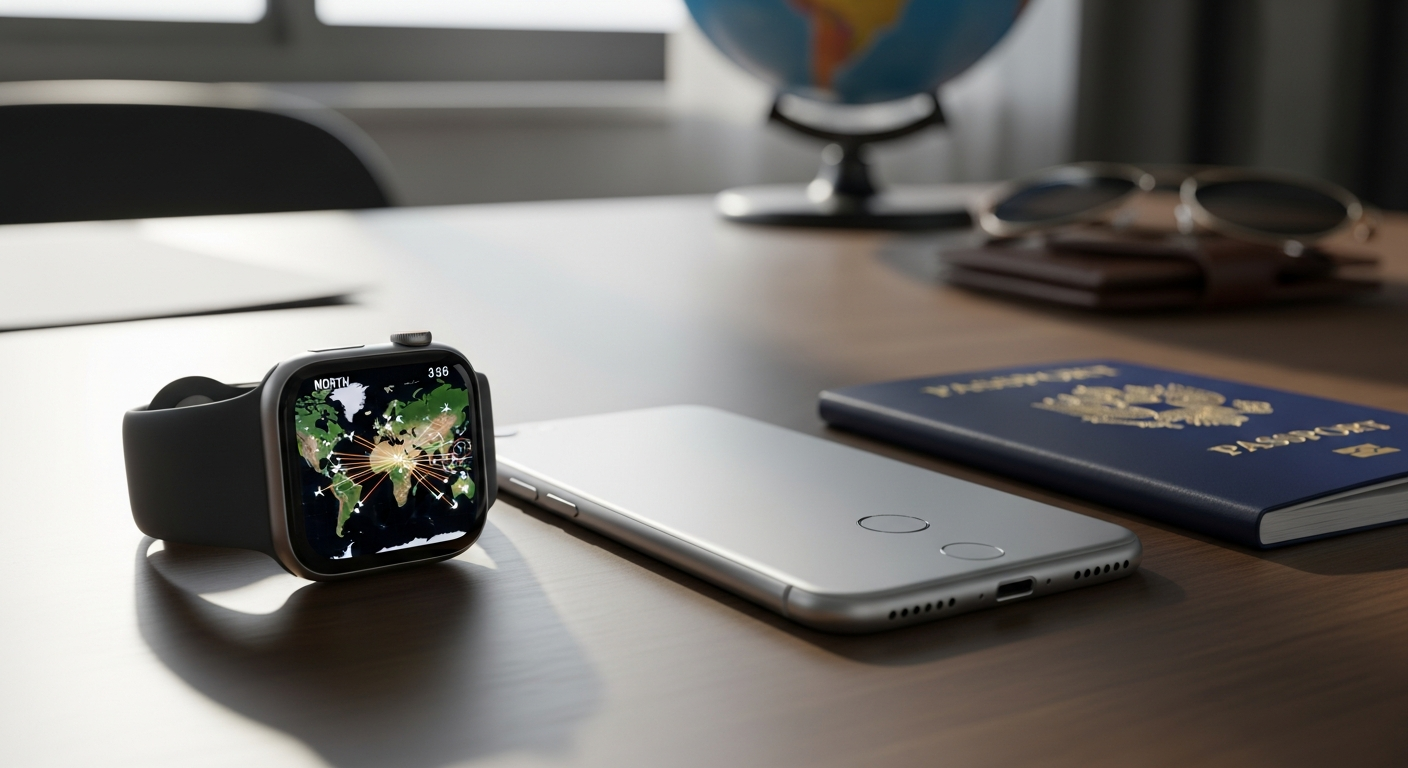
Smartwatches have transformed how we stay connected, but their usefulness evaporates the moment you cross a border. Most travelers face the harsh reality: their Apple Watch becomes a glorified timepiece once they land abroad, unable to receive calls, messages, or emergency alerts without being tethered to their phone via Bluetooth. This connectivity gap creates genuine anxiety for parents, professionals, and anyone who values real independence from their pocket-sized device.
The Connectivity Gap Most Travelers Face
Picture this: you’re exploring a Barcelona neighborhood separate from your family, and your watch remains silent. Your partner can’t reach you directly because your Apple Watch lacks its own cellular connection. You’re forced to keep your phone in hand constantly, defeating the entire purpose of wearing a smartwatch. Traditional international roaming plans rarely include smartwatch coverage, and when they do, the costs mirror their phone data pricing—adding insult to injury.
Apple Watch Family Setup and Traveling Families
Apple’s Family Setup feature changes everything for families traveling separately. Kids wearing Apple Watches can maintain direct cellular connectivity to parents without needing their own iPhones. However, this magic only works when each device has its own cellular plan. BetterRoaming recognizes this need and delivers dedicated Apple Watch eSIM options, enabling families to stay connected across 160+ countries without expensive carrier plans.
Real-World Scenarios Where Wearable Connectivity Prevents Emergencies
Consider a business traveler in Singapore whose Apple Watch receives an urgent work notification while her phone sits charging at the hotel. Or a parent in Thailand whose child’s Apple Watch alerts them to a minor injury that requires attention. These aren’t theoretical scenarios—they’re situations where independent wearable connectivity proves invaluable. Traditional carrier plans either don’t support these situations or charge premium rates for the privilege.
Limitations of Relying Solely on Phone Tethering
Bluetooth tethering works in proximity, but it drains battery life faster than direct cellular connectivity and fails when the phone is out of range. For professionals presenting in conference rooms, explorers hiking in nature, or anyone wanting genuine independence from their smartphone, reliance on tethering creates unnecessary friction. Direct cellular connectivity through eSIM technology eliminates these constraints entirely.
Professionals Managing Multiple Apple Devices
Freelancers and business professionals traveling with an iPad for productivity, an Apple Watch for notifications, and an iPhone for communication face a unique challenge: how to keep everything connected without breaking the budget. Most eSIM providers ignore iPad connectivity altogether, forcing professionals to choose between devices. BetterRoaming’s dedicated support for both Apple Watch and iPad ecosystems addresses this exact use case, allowing seamless connectivity across an entire Apple device ecosystem.
Apple Watch Cellular Plans: Carrier Pricing vs. BetterRoaming
Traditional carriers charge $10-15 USD monthly for Apple Watch cellular in most countries, often requiring phone plan commitments. BetterRoaming’s approach costs approximately £8.99 per month or £79 annually—a fraction of what carriers demand. For a two-week vacation, BetterRoaming’s standalone Apple Watch plan costs roughly $2-3 USD when purchased à la carte, while carriers would charge minimum $10-15 USD for the same period.
BetterRoaming’s Unique Ecosystem: Beyond Phone Data
Dedicated Apple Watch Cellular eSIM Plans
BetterRoaming offers Apple Watch cellular subscriptions at £8.99 monthly or £79 annually. These plans provide independent connectivity specifically for your wearable, eliminating the need for phone tethering while traveling. The pricing structure remains transparent—no hidden charges or surprise upgrades appear at renewal.
iPad eSIM Options for Professionals and Content Creators
iPad users traveling internationally gain dedicated eSIM support through BetterRoaming’s ecosystem. Content creators, digital nomads, and professionals requiring tablet connectivity abroad can activate individual iPad plans without committing to phone service, addressing a gap most competitors ignore. iPad-only travelers can now stream, edit, and collaborate seamlessly across continents.
Dual eSIM Functionality Keeping Your Primary Number Active
Modern smartphones support dual eSIM capability, allowing you to maintain your primary phone number on one eSIM while using BetterRoaming on a secondary eSIM. This functionality means no SIM card juggling, no missed calls to your home number, and no temporary phone number hassles. Your contacts reach you on your usual number, while BetterRoaming handles data connectivity.
How BetterRoaming Differs From Competitors
Most eSIM providers focus exclusively on phone data plans. BetterRoaming distinguishes itself by supporting Apple Watch and iPad alongside phone connectivity. This ecosystem approach means families, professionals, and multi-device users can consolidate their international connectivity needs with a single provider rather than juggling multiple services.
Device Compatibility Across Apple’s Ecosystem
BetterRoaming’s eSIM support extends across Apple Watch Series 4 and newer models with cellular capability, all iPad models featuring cellular options, and every iPhone supporting eSIM technology. While Android users can access BetterRoaming’s phone data plans, the wearable and tablet ecosystem advantages primarily benefit Apple users.
Regional Coverage for Apple Watch in 160+ Countries
BetterRoaming’s network covers 160+ countries for Apple Watch connectivity. Regional breakdowns include Western Europe, Eastern Europe, North America, Central America, South America, Southeast Asia, Northeast Asia, South Asia, Oceania, Africa, and the Middle East. This breadth ensures your Apple Watch remains connected whether you’re navigating Madrid or Manila.
Plan Options and Data Allowances for Every Traveler Type
Individual Country Plans: 1GB to 25GB with 7-30 Day Validity
BetterRoaming’s country-specific plans range from 1GB (lasting 7 days) to 25GB (lasting 30 days). A traveler spending five days in France could purchase a modest 3GB plan, while someone working remotely from Spain for a month might opt for the 25GB option. The granularity allows precise matching between your actual data needs and the plans available.
Regional Bundles: Coverage Across Multiple Continents
For travelers hopping between neighboring countries, regional bundles eliminate the need for multiple single-country purchases. A two-week European tour covering five countries becomes simpler with a regional European bundle than activating individual plans for each destination. Regional options typically offer 10-20GB across 30-90 day periods, with pricing scaling according to data volume and duration.
Global Plans: Seamless Connectivity Across All Supported Countries
Nomads rotating through multiple regions monthly benefit most from global plans. Activation in one country, continuation in another—your existing BetterRoaming plan remains active without switching or purchasing new eSIMs. Global plans typically include 10-20GB valid for 30-90 days, providing consistent connectivity regardless of which of 160+ supported countries you’re visiting.
Data Allowance Breakdown: Which Plan Suits Which Traveler
Light users managing email and messaging consume 1-3GB weekly. Moderate travelers streaming occasional videos and browsing social media require 5-10GB weekly. Heavy streamers watching multiple hours of video daily need 15GB or more weekly. BetterRoaming’s plan structure accommodates light users efficiently while occasionally frustrating heavy data consumers who exceed even their largest available plans.
Absence of Unlimited Data Plans and Travel Style Implications
BetterRoaming doesn’t offer unlimited data, distinguishing it from some competitors but limiting its appeal for travelers with uncertain data needs. Road-trippers planning extensive video editing, remote workers streaming all day, or entertainment enthusiasts downloading content may find themselves rationing data. This constraint requires honest self-assessment before purchasing.
Validity Period Flexibility: Short Trips Versus Extended Stays
Seven-day plans suit weekend getaways and brief business trips, while 30-day options accommodate month-long explorations. No plan validity extends beyond 90 days, meaning extended travelers must chain multiple purchases or negotiate renewal timings. This structure favors short-term travelers over long-term residents but provides flexibility absent from annual-commitment carrier plans.
Transparent Pricing Breakdown: What You Actually Pay
Entry-Level Pricing: Starting at $2.99 for 1GB Plans
BetterRoaming’s accessible pricing begins at $2.99 USD (£1.69-£1.99 GBP) for 1GB seven-day plans. This entry point undercuts virtually every carrier’s international roaming by orders of magnitude, targeting budget travelers and those testing eSIM technology for the first time. A weekend trip costs approximately the price of a coffee at an airport café.
Mid-Range Options: 10GB-15GB Plans for Week-Long Trips
Plans in the 10-15GB range cost between $8-18 USD, covering most travelers’ moderate usage during week-long journeys. Streaming casual videos, video calling with family, browsing social media, and checking maps fall comfortably within this allocation without requiring obsessive data monitoring.
Premium Plans: 20GB for 30 Days ($37.49 USD UK Example)
BetterRoaming’s most substantial plan measured in the research—20GB valid for 30 days in the UK—costs $37.49 USD. This plan targets remote workers, content creators, and anyone requiring consistent connectivity throughout an entire month. Regional variations in pricing reflect carrier agreements and local demand, but premium plans universally remain significantly cheaper than equivalent carrier services.
Regional Bundle Costs: Up to $110 for 20GB Over 90 Days
Multi-country travelers consolidating purchases into regional bundles access 20GB spanning 90 days for approximately $110 USD. This pricing equates to roughly $36.67 monthly—cheaper than most single-country carrier plans and providing consistency across multiple destinations.
Apple Watch Monthly Subscription: £8.99/Month or £79/Year
Apple Watch cellular plans cost £8.99 monthly or £79 annually, representing exceptional value compared to carrier-imposed rates of $10-15 USD monthly. Annual commitment saves roughly £28 versus month-to-month purchasing, rewarding committed users with meaningful discounts.
Hidden Fees Comparison: BetterRoaming’s Transparent Model
BetterRoaming emphasizes upfront, transparent pricing with no concealed charges, activation fees, or surprise surcharges. Carriers routinely add administrative fees, exceed-limit charges, and network access fees to baselines quoted to consumers. BetterRoaming’s approach—what you see is what you pay—eliminates negotiation anxiety and billing surprises.
Actual Savings Calculations for Common Travel Scenarios
A two-week European vacation costs approximately $35-50 USD with BetterRoaming across multiple countries. The same trip through carrier roaming runs $150-300+ USD depending on device count and network usage. A family maintaining an iPhone, Apple Watch, and iPad across three countries saves $100-200+ USD by choosing BetterRoaming over traditional roaming.
Instant Activation and Setup: Getting Connected in Minutes
eSIM Download and Activation Process
BetterRoaming’s activation begins on your smartphone: purchase a plan through their app or website, receive a QR code, scan it in your phone’s settings under Cellular/Mobile Data, confirm the eSIM profile, and wait seconds for activation. The entire process typically completes in under five minutes from purchase confirmation.
Time-to-Connectivity: Typically Minutes After Purchase
After successful eSIM profile installation, connectivity follows within seconds to minutes as your device registers with BetterRoaming’s partner networks. You don’t need to wait for physical mail, visit retail stores, or schedule appointments. Purchase during your flight’s layover and arrive at your destination already connected.
Pre-Arrival Setup Option: Activate Before Landing
The process can begin before leaving your home country while connected to WiFi, meaning you arrive at your destination with immediate connectivity. No fumbling with airport WiFi networks, no frantic searches for network settings, no time lost to setup friction. Your device automatically switches to BetterRoaming’s data network once you disable airplane mode.
No Physical SIM Card Swap Required
eSIM technology eliminates the fiddly card-swapping dance travelers have endured for decades. Losing tiny SIM cards, damaging SIM trays, or discovering incompatible formats becomes impossible. Your phone remains entirely intact throughout your travels.
Dual eSIM Management on Compatible Devices
Modern iPhones and many Android flagships support dual eSIM functionality. Your primary phone number resides on one eSIM (typically your home carrier’s profile), while BetterRoaming occupies the secondary slot. Switching between profiles happens through Settings without removing anything physical, and you maintain both numbers simultaneously.
Troubleshooting Common Activation Issues
Rare activation failures typically stem from airplane mode remaining engaged, incorrect cellular settings, or region-specific carrier partnerships missing coverage. BetterRoaming’s support team assists with profile reinstallation, device compatibility verification, and network troubleshooting when standard activation encounters obstacles.
QR Code Scanning and Manual eSIM Profile Installation
The QR code method suits most users, but BetterRoaming provides manual entry options for those unable to scan. Long alphanumeric activation codes allow direct entry in Settings without requiring QR code functionality, accommodating older devices and accessibility needs.
Network Quality and Coverage: 4G/5G Performance Across Regions
4G/5G Availability Across 160+ Supported Countries
BetterRoaming partners with local carriers in 160+ countries, generally providing 4G connectivity and 5G where available. Coverage maps vary by destination: developed nations typically feature robust 5G alongside 4G fallback, while developing nations may rely primarily on 4G with spotty 3G coverage in rural areas.
Network Partner Details and Carrier Selection by Region
BetterRoaming doesn’t publicly detail every carrier partnership per country, though broad regional information exists. European coverage leverages partnerships with major carriers like Telefónica (Spain), Deutsche Telekom (Germany), and Vodafone (UK). Asian coverage similarly partners with regional leaders. This approach ensures reasonable coverage without requiring perfect partner visibility.
Speed Expectations: Real-World Performance for Streaming, Video Calls, and Browsing
4G networks support HD video streaming at 2-3 Mbps, video calling at 1-2 Mbps, and web browsing at 5-10 Mbps comfortably. 5G networks exceed these speeds substantially, supporting 4K streaming and simultaneous intensive tasks. BetterRoaming users report speeds consistent with carrier expectations in partner networks, suggesting no throttling beyond typical network congestion.
Coverage Reliability in Major Travel Destinations
Europe, North America, and developed Asian markets provide excellent reliability. Central America, Eastern Europe, and Southeast Asia generally offer solid coverage in urban areas with potential gaps in remote regions. Africa and parts of South Asia show more variable coverage, though major cities remain well-served. Destination-specific research before purchasing provides clarity on expected coverage quality.
Signal Drop Issues Reported by Apple Watch Users
Some Apple Watch users report occasional signal drops, particularly in areas with weaker network presence or when the watch’s eSIM struggles with network handoffs. This issue appears specific to wearable devices rather than BetterRoaming itself—smartwatches generally experience more connectivity challenges than phones due to antenna size constraints and power management. Keeping your paired phone nearby largely mitigates this concern.
Network Switching Capabilities When Coverage Is Inconsistent
BetterRoaming’s eSIM profiles automatically connect to the strongest available partner network in each country, similar to how your home carrier’s roaming works. You don’t manually select networks—your device handles this automatically. This automation simplifies the experience but removes manual control for users in border regions experiencing signal from multiple countries.
Data Speed Variations by Region and Time of Day
Network congestion during peak hours (typically 7-11 PM) can reduce speeds by 30-50% compared to off-peak periods. Rural areas consistently show slower speeds than urban centers regardless of time. Tourist destinations experience seasonal speed reductions during peak travel seasons. These variations reflect network realities rather than BetterRoaming’s service quality—the same patterns apply to carrier roaming.
Customer Support Reality: What You Need to Know
24/7 Availability Claims Versus Actual Response Times
BetterRoaming advertises 24/7 support availability, and this claim holds technically true. However, response time expectations should remain realistic. Live chat during business hours responds within minutes; after-hours support may involve significant delays depending on support queue volume and geographic timezone.
Live Chat, Email, and Phone Support Options
BetterRoaming provides live chat (business hours), email support (all hours), and phone support in select regions. Live chat offers immediate interaction for urgent issues, while email accommodates detailed technical explanations but introduces reply-time delays. Phone support availability varies by region and timezone.
Inconsistencies in Support Quality Reported by Users
User experiences with BetterRoaming support range from highly positive to disappointing. Some travelers report fast resolutions and knowledgeable representatives, while others describe vague responses and unhelpful troubleshooting. This variance suggests inconsistent training, support tier quality, or volume-dependent response quality rather than systematic service failures.
Email-Only Support Limitations and Response Expectations
Email support often takes 12-48 hours for initial responses, creating friction for urgent connectivity issues. Travelers experiencing problems during critical moments may struggle with this timeline, while advance planning minimizes email-only support’s impact.
Positive Support Experiences and Common Resolution Scenarios
Straightforward issues like failed activations, billing questions, and plan changes typically resolve quickly through live chat or email. Users report satisfaction when support teams provide clear next steps and follow-up assistance. Complex network issues sometimes stump support representatives, requiring escalation and patience.
Community Forums and Self-Service Resources
BetterRoaming maintains community forums where experienced users troubleshoot problems and share solutions. Self-service FAQs address common questions about setup, coverage, and troubleshooting. These resources supplement official support, particularly for issues with documented solutions.
Escalation Procedures for Complex Technical Issues
Technical issues beyond frontline support’s capacity can escalate to engineering teams, though this process may extend resolution timelines. Persistent signal drops, unsupported devices, and regional network problems sometimes require escalation.
Who Benefits Most from BetterRoaming’s Global eSIM Plans
Short-Term Travelers and Weekend Getaway Enthusiasts
Weekend trips lasting 2-5 days represent BetterRoaming’s ideal use case. Seven-day plans at $2.99-5.99 USD cost considerably less than a single day of carrier roaming, making casual international trips financially painless. No commitment, no waste, pure simplicity.
Light Data Users and Messaging-Focused Travelers
Travelers prioritizing messaging, email, and maps over streaming find exceptional value in BetterRoaming’s modest data plans. 1-3GB suffices completely for light users, with pricing reflecting their actual consumption rather than carrier one-size-fits-all approaches.
Apple Ecosystem Professionals (iPad Users, Apple Watch Owners)
Professionals requiring iPad and Apple Watch connectivity abroad find BetterRoaming indispensable. No competitor offers comparable support for multiple Apple devices, making this segment BetterRoaming’s core audience. iPad-dependent designers, remote workers with Apple Watch assistants, and professionals managing entire ecosystems benefit substantially.
Families Using Apple Family Setup Across Different Countries
Families utilizing Apple Watch Family Setup can equip children with independent connectivity while maintaining parental oversight—all without expensive carrier plans. This use case transforms travel dynamics, granting autonomy while preserving safety.
Business Travelers Maintaining Connectivity Across Multiple Devices
Executives, consultants, and sales professionals traveling internationally with phones, tablets, and smartwatches gain organizational simplicity and cost control through BetterRoaming’s multi-device support. Expense management becomes straightforward when all devices consolidate under one provider.
Digital Nomads Rotating Through Multiple Regions Monthly
Nomads spending 2-4 weeks per country before moving face perpetual carrier switching. BetterRoaming’s global and regional plans eliminate this friction, with a single purchase covering month-long stays or multi-country tours. Avoiding activation fees and plan research for every border crossing saves time and sanity.
Who Should Look Elsewhere: Unlimited Data Seekers and SMS-Dependent Users
Travelers requiring truly unlimited data should explore competitors offering uncapped plans. Similarly, users dependent on traditional SMS for two-factor authentication or requiring a dedicated phone number for business communications need alternative solutions. BetterRoaming’s data-only approach with no included SMS doesn’t serve these use cases effectively.
Honest Limitations and Workarounds You Should Consider
No Unlimited Data Plans Available
BetterRoaming’s maximum single plan is typically 25GB, which suits most travelers but excludes heavy streamers and content downloaders. Road-trippers downloading entire media libraries, remote workers streaming video conferences all day, or entertainment enthusiasts might exceed even premium plans. Honest assessment of your actual data habits prevents disappointment.
Data-Only Service: No Phone Number or SMS Capabilities
BetterRoaming eSIMs provide data exclusively—no phone number assignment, no SMS capabilities. Voice calls and messaging require VoIP applications (WhatsApp, Telegram, Signal, Viber) operating over data connections. This limitation eliminates traditional phone functions but suits modern travelers accustomed to app-based communication.
VoIP Dependency for Calls and Messaging
Calling family requires WiFi or BetterRoaming data connectivity through VoIP apps. No automatic voice routing through cellular networks happens. International contacts, family members unfamiliar with WhatsApp, or anyone requiring traditional phone calls faces friction. Most modern travelers accept this trade-off happily; others find it unacceptable.
Signal Stability Concerns Specific to Apple Watch Connectivity
Apple Watch users report occasional signal drops, particularly in weaker coverage areas. This issue reflects wearable technology constraints rather than BetterRoaming’s service quality, but it remains a legitimate limitation for Apple Watch-dependent users. Keeping paired iPhones nearby mitigates concerns substantially.
Limited SMS Services and Two-Factor Authentication Impact
Websites and apps requiring SMS verification present challenges when your eSIM provides no phone number. Account recovery, login verification, and security protocols relying on SMS need alternative methods. Many services now support authentication through apps or email, but some holdouts still demand SMS. Identifying your critical SMS needs before purchasing prevents unexpected friction.
Plan Validity Periods: No Rollover of Unused Data
Purchasing a 20GB plan valid for 30 days means unused data evaporates when validity expires—no carryover to future plans. This structure encourages right-sizing purchases to prevent waste, but occasionally leaves users with stranded data. Periodic use while plans remain active prevents unnecessary loss.
Regional Restrictions and Blacklisted Countries
BetterRoaming’s 160+ country coverage excludes certain destinations entirely. Some countries operate closed telecom markets preventing third-party eSIM access. Syria, Iran, North Korea, and a handful of others fall beyond BetterRoaming’s reach. Destination verification before purchasing prevents arrival-day frustration.
Making the Switch: BetterRoaming vs. Traditional International Roaming
Cost Comparison: Typical Carrier Roaming Charges vs. BetterRoaming Plans
US carriers typically charge $10/day for international roaming, equating to $70 weekly or $300 monthly. A two-week European trip through carrier roaming costs $140+ USD. BetterRoaming’s equivalent coverage costs $25-50 USD depending on destination and data needs. Savings exceed 65% for typical travelers, increasing further for multi-device users.
Convenience Factor: eSIM Activation vs. Physical SIM Replacement
eSIM activation takes minutes via WiFi before departure; traditional roaming requires no setup but immediately incurs overage risk. Physical SIM replacement requires finding compatible cards, inserting them correctly, and configuring access point settings—often frustrating, occasionally impossible. eSIM technology eliminates this entire friction category.
Flexibility Advantages: Changing Plans Mid-Trip Without Commitment
Traditional carriers lock you into daily rates once roaming begins. BetterRoaming allows mid-trip purchases of additional regional plans or pivots to alternative destinations without penalties. A sudden detour from France to Spain simply requires a new purchase—no calling customer service, no contract adjustments, pure flexibility.
Coverage Trade-Offs: Carrier Networks vs. BetterRoaming’s Partner Networks
Carriers generally provide superior coverage through their primary networks, while BetterRoaming aggregates coverage through multiple partner carriers per region. In developed markets, coverage differences are negligible. In remote areas, carrier networks occasionally provide superior coverage, though this advantage rarely impacts typical travelers visiting urban destinations.
Speed and Reliability Differences in Popular Destinations
Speed differences between carrier networks and BetterRoaming partners prove minimal in developed European, North American, and East Asian markets. Southeast Asia and Africa show more variable performance, though BetterRoaming’s partnership with leading regional carriers generally ensures competitive speeds. Reliability concerns favor neither party overwhelmingly.
Hidden Fee Elimination with Transparent Pricing Model
Carriers routinely add activation fees, network access charges, administrative fees, and surprise surcharges beyond quoted rates. BetterRoaming’s transparent model involves no hidden costs—what the website displays represents your actual charge. This pricing clarity alone justifies consideration even before factoring substantial savings.
When Traditional Roaming Still Makes Sense
Occasional travelers taking single international trips yearly might overlap eSIM purchase timelines awkwardly, making traditional roaming’s per-day flexibility appealing. Travelers requiring traditional phone numbers and SMS absolutely need carrier roaming or alternative solutions. Business travelers with corporate accounts benefiting from employer subsidies may find carrier roaming advantageous. Users unfamiliar with technology preferring human support might prefer traditional carriers’ retail presence.
Real Traveler Scenarios: Where BetterRoaming Shines
European City Hopper: Multi-Country Coverage Without SIM Swaps
A tourist spending five days each in Spain, France, and Germany activates a single European regional bundle instead of purchasing three separate country plans. One activation, three countries, seamless transitions. Border crossings trigger automatic network switching. No SIM juggling, no time lost to setup between countries. Total cost: approximately $20-35 USD versus $75-120 USD through carriers.
Family Vacation: Keeping Kids’ Apple Watches Connected
Parents equip children with Apple Watches through Family Setup, purchasing individual Apple Watch eSIM plans for $8.99 monthly per watch. Kids maintain independent connectivity while parents monitor locations and receive notifications from their watches. No expensive carrier family plans, no compromised parental oversight, genuine autonomy for both generations.
iPad-Dependent Freelancer: Staying Productive Across Time Zones
A designer travels to Thailand, needing consistent iPad connectivity for client uploads and video conferences. BetterRoaming’s iPad eSIM plan costs $15-25 USD weekly compared to $70+ USD through carrier roaming. Stable connectivity supports uninterrupted client work across 12-hour timezone differences.
Business Traveler: Maintaining Multiple Device Connectivity
An executive requires simultaneous iPhone, Apple Watch, and iPad connectivity across three continents during a two-month project. Traditional carrier roaming would cost $400+ USD across devices and regions. BetterRoaming’s tiered approach—phone data regional plan, Apple Watch monthly subscription, iPad plan—totals roughly $150-180 USD while maintaining superior flexibility and transparency.
Adventure Traveler: Coverage in Remote Destinations
A mountaineer trekking through Nepal requires connectivity for emergency contacts and progress updates. BetterRoaming’s 160+ country coverage includes Nepal, where cellular networks reach most tourist destinations despite limited coverage depth. A simple data plan provides emergency connectivity at a fraction of satellite communicator rental costs.
Budget Backpacker: Minimizing Data Costs on Extended Trips
A backpacker spending three months exploring Southeast Asia purchases global or regional plans for each month-long segment, totaling approximately $60-90 USD across the entire journey. Traditional roaming would exceed $600+ USD. Budget conscious travelers find BetterRoaming’s pricing removes the choice between connectivity and financial prudence.
Expat Settling Temporarily: Flexible Month-to-Month Connectivity
Someone relocating internationally for a six-month assignment needs reliable connectivity without long-term commitment. BetterRoaming’s monthly renewal approach suits temporary residency perfectly, avoiding annual contracts while maintaining consistent service. Simple cancellation follows assignment completion without early-termination fees.
Your Connected Travel Starts Here
BetterRoaming solves a problem that mainstream eSIM providers ignore: keeping your entire Apple device ecosystem connected while traveling. The combination of Apple Watch cellular plans, iPad support, instant activation, and genuinely transparent pricing creates a compelling option for tech-forward travelers who refuse to choose between connectivity and affordability. Yes, the lack of unlimited data and SMS capabilities requires some adjustment, and customer support experiences vary—but for the right traveler profile, these trade-offs are absolutely worth it.
The real question isn’t whether BetterRoaming works, but whether your travel style aligns with what they offer. If you’re juggling an Apple Watch, iPad, and phone across multiple countries while keeping costs reasonable, you’ve found your answer. Short trips, light data users, and Apple ecosystem professionals benefit most, while unlimited data seekers and SMS-dependent users should explore alternatives.
The setup process takes minutes, the coverage spans across 160+ countries, and the savings accumulate quickly—often exceeding $100-200 USD per trip compared to traditional carrier roaming. Your smartphone works, your Apple Watch stays connected, your iPad remains productive, and your wallet retains its contents. This is connectivity freed from carrier overreach.
Ready to test BetterRoaming on your next trip? Start with a single-country plan for a short journey to experience the setup process and network quality firsthand. Begin your BetterRoaming journey today and discover how affordable global connectivity truly is.
Leave a Reply