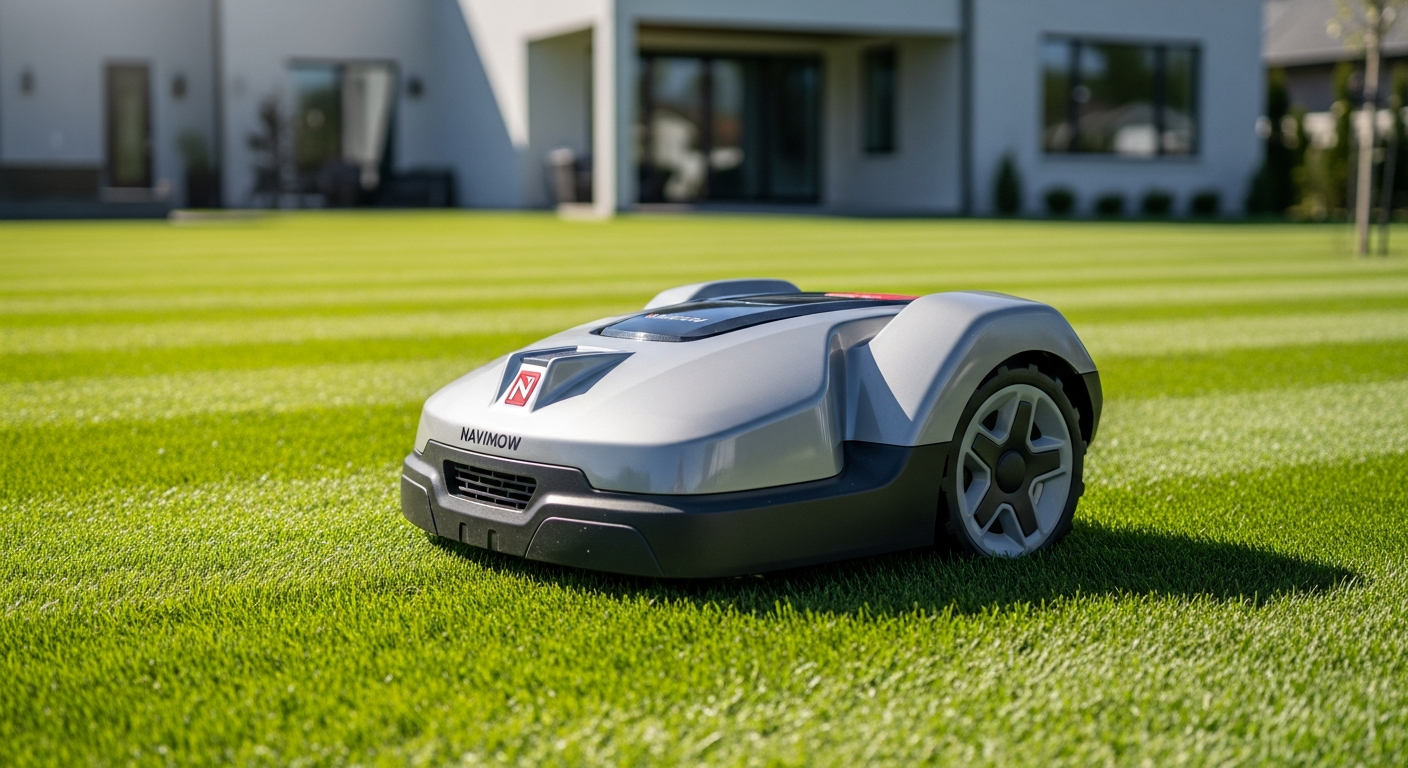
Over 40% of homeowners dread weekly lawn maintenance—and that number climbs higher when they realize traditional robotic mowers require hours of tedious perimeter wire installation. The friction of setup alone keeps countless people from ever trying automation in the first place. Burying boundary wires around your entire property, waiting for proper mapping, and managing potential wire damage over seasons feels like defeating the purpose of owning a labor-saving device.
The Segway Navimow i105N represents a genuine shift in how residential lawn care works, combining satellite-based navigation with artificial intelligence to handle the heavy lifting without the setup headaches that plague older models. Its wire-free design doesn’t just save time on installation—it fundamentally changes what’s possible for homeowners who want flexibility and simplicity.
Discover how the Navimow i105N can transform your lawn care routine today.
Traditional Robotic Mower Setup Frustrations
Conventional boundary-wire systems demand significant upfront effort. Homeowners must carefully plan perimeter layouts, bury wires around obstacles, and maintain these underground boundaries season after season. Wire damage from lawn aeration, landscaping work, or root growth requires troubleshooting and repair. The entire process transforms what should be a simple purchase into a weekend project before the mower even touches grass.
GNSS and Satellite-Based Navigation Explained
The i105N relies on Global Navigation Satellite System (GNSS) technology to pinpoint its exact location without buried boundaries. This satellite-based approach combines multiple positioning signals to achieve centimeter-level accuracy. The Exact Fusion Locating System 2.0 (EFLS 2.0) pairs GNSS data with AI-assisted mapping, creating a detailed mental model of your lawn that improves with each mowing session. Rather than following buried wires, the mower knows precisely where it is at all times and navigates accordingly.
Why Wire-Free Matters for Suburban Properties
Suburban homeowners benefit tremendously from wire-free design. Deployment happens in minutes rather than hours. When you redesign your landscaping or expand a garden bed, there’s no need to relocate buried infrastructure. The mower doesn’t require ongoing maintenance of perimeter systems. Renters and homeowners planning future moves no longer face the question of whether they can take their robotic mower with them.
Comparison to Boundary-Wire Alternatives
Traditional wire-based mowers typically cost $500–$1,200 and demand 4–8 hours of installation labor. The i105N eliminates this equation entirely. While some wire systems offer slightly lower prices, their total cost of ownership—including installation time and long-term maintenance—often exceeds the i105N’s upfront investment. For most suburban properties under 1/8 acre, wire-free technology simply makes practical sense.
Real-World Installation Timeline
Unboxing to autonomous operation typically takes 30–60 minutes. Users download the smartphone app, establish a Wi-Fi connection, and allow the mower to map the lawn through initial autonomous runs. The AI learning process continues over several mowing cycles, but basic operation begins immediately. This is dramatically different from traditional systems requiring a full day or professional installation services.
Compatibility with Existing Smart Home Ecosystems
The i105N integrates with Alexa and Google Home for voice-controlled scheduling. Rather than opening an app, homeowners can simply command voice assistants to start or stop mowing. This compatibility extends the mower’s usefulness beyond simple lawn care—it becomes part of a broader home automation ecosystem. Multi-zone management through the smartphone app allows different cutting patterns for various lawn sections, with each zone maintaining its own schedule and height settings.
Precision Cutting Through AI-Assisted Navigation Technology
Satellite navigation alone doesn’t guarantee a well-maintained lawn. The i105N combines positional accuracy with intelligent mowing logic to deliver professional-quality results consistently.
Exact Fusion Locating System 2.0 (EFLS 2.0) Breakdown
EFLS 2.0 represents significant advancement over earlier satellite systems. GNSS provides base positioning, while AI mapping interprets lawn boundaries, obstacles, and terrain variations. The system learns from each mowing session, continuously refining its understanding of your property. Centimeter-level accuracy means clean, straight cutting lines without the overlapping or missed patches common to less precise systems. The mower adapts to seasonal changes, weather impacts, and gradual landscape modifications without manual recalibration.
Systematic Mowing Patterns
Rather than random wandering, the i105N follows organized cutting patterns that maximize efficiency and minimize wasted energy. These patterns adjust based on lawn shape, obstacle locations, and zones you’ve defined through the app. The result resembles professional groundskeeping—neat, uniform coverage with consistent cutting heights throughout. Edge areas receive the same attention as open sections, preventing that telltale “unmowed perimeter” appearance that plagues some autonomous systems.
Multi-Zone Management Capabilities
Different lawn areas often require different treatment. Shaded front yards may need different cutting heights than sun-exposed back sections. The app allows programming up to multiple zones with independent schedules, cutting heights, and mowing frequencies. A shadier zone might receive less frequent cutting, while sun-drenched grass gets more regular attention. This flexibility means the i105N adapts to your specific property’s microclimates and aesthetic preferences.
Real-Time Monitoring Features
The smartphone app provides constant visibility into mower status. Users track location, battery percentage, cutting progress, and any alerts or obstacles encountered. This real-time feedback means you’re never wondering whether the mower is operating properly or if something’s gone wrong. Battery status automatically triggers dock returns before depletion, ensuring the mower reaches its charging station. Notifications alert users to maintenance needs or unusual activity patterns.
Adaptive Mowing Logic
The mower adjusts routes and patterns based on grass growth rates, seasonal conditions, and environmental factors. Spring growth may trigger more frequent cutting cycles, while slower summer growth allows longer intervals. The system recognizes weather patterns—heavy rain increases growth, triggering more frequent mowing—and adapts scheduling accordingly. This intelligence prevents both overmowing during slow-growth periods and undergrowth during peak seasons.
Accuracy Performance in Different Seasons
Spring through fall navigation remains reliable across diverse weather conditions. Satellite signal strength can fluctuate with seasonal foliage density, but the AI mapping system compensates by relying on stored lawn data from previous seasons. Winter operation in northern climates presents challenges due to snow cover and reduced satellite visibility, but this rarely concerns homeowners whose lawns are dormant anyway.
VisionFence AI Technology: Protecting Your Garden While Mowing
Autonomous mowers raise legitimate safety concerns about damaging garden ornaments, outdoor furniture, or children’s play equipment. The i105N’s VisionFence addresses these worries through predictive obstacle avoidance rather than reactive collision detection.
AI-Powered Obstacle Detection
VisionFence identifies and avoids over 20 common garden objects—lawn furniture, decorative elements, toys, pet equipment, garden statuary, and landscaping features. Rather than bumping into obstacles and reversing (the traditional approach), the mower “sees” these objects approaching and redirects before contact. This vision-based system uses onboard cameras and AI analysis to continuously scan the mowing area, maintaining a safety bubble around detected objects.
Safety Mechanisms That Prevent Damage
The system performs object recognition in real time, analyzing shapes, colors, and movement patterns. When potential obstacles appear, the mower stops or redirects its path automatically. Precious garden decorations, patio furniture, and play equipment remain untouched. This predictive approach also protects the mower itself from damage—no collision means no wear on the chassis or cutting deck.
Comparison to Traditional Bump-and-Reverse Systems
Older robotic mowers rely on physical contact sensors. They bump obstacles, reverse, change direction, and continue. This approach often causes scuffs, marks, or damage to delicate objects over repeated interactions. VisionFence’s predictive avoidance eliminates this problem entirely. The mower never actually collides with obstacles in normal operation. This represents a generational leap in safety and protection.
Protecting Flower Beds and Garden Borders
Flower beds and decorative plant arrangements receive careful treatment through VisionFence technology. The system distinguishes between mowable grass and planted areas, maintaining safe distance from landscape features. This capability allows homeowners to create defined garden spaces without worry that the autonomous mower will trample plantings or dig into soil during turns.
Pet and Child Safety Considerations
The quiet operation and obstacle avoidance work together to create a safer yard environment. Stationary children’s toys or pet equipment are detected and avoided. The 58 dB(A) noise level means the mower won’t startle children or pets through sudden loud operation. Parents can allow children to play nearby—the combination of obstacle detection and low noise creates a genuinely safer autonomous experience compared to gas-powered alternatives or even some electric models.
Limitations in Dense Vegetation or Cluttered Yards
VisionFence performs optimally in typical residential yards with moderate landscaping. Extremely dense vegetation, heavily cluttered spaces, or yards with numerous small objects may occasionally require manual intervention. Heavy rain or very low-light conditions can reduce camera effectiveness temporarily. In such scenarios, users can manually guide the mower or temporarily remove obstacles before autonomous operation.
Experience the safety and precision of VisionFence technology with your own Navimow i105N.
Quiet Operation and Neighborhood-Friendly Lawn Care
The i105N operates at 58 dB(A)—a fundamental advantage for residential areas where noise complaints can strain neighborhood relationships. This whisper-quiet operation opens mowing possibilities that gas-powered equipment simply cannot match.
Decibel Rating Explained
Fifty-eight dB(A) falls between normal conversation (60 dB) and quiet office environments (50 dB). Gas-powered mowers typically exceed 90 dB—loud enough to require hearing protection during operation. Traditional electric mowers range from 75–85 dB. The i105N’s 58 dB rating represents genuine quiet operation that won’t disturb sleeping family members early in the morning or neighbors’ peaceful evenings.
Operating Times Without Neighbor Complaints
Early morning operation starting at 7 AM becomes genuinely feasible without triggering justified complaints from neighbors. Evening mowing after dinner no longer creates tension. Weekend mornings remain open for yard work without guilt. This expanded operational window means homeowners can choose convenient times rather than working around neighborhood noise sensitivity.
Sound Profile During Different Mowing Phases
The mower maintains consistent quiet levels during straight cutting sections, gentle turns, and acceleration. Unlike gas engines that roar during load changes, the i105N’s brushless electric motor produces steady, unobtrusive sound. The cutting deck operates quietly, with most noise coming from grass movement rather than mechanical grinding.
Residential Area Advantages
Close quarters in suburban neighborhoods make noise a sensitive issue. The i105N eliminates this problem entirely. Townhouse complexes, densely packed subdivisions, and properties adjoining parks or protected areas all become suitable for autonomous mowing. The quiet operation means zero neighborhood friction, a significant lifestyle benefit often overlooked when comparing mower options.
Stress Reduction for Homeowners
Chronic noise anxiety disappears when yard work no longer means disturbing others. This psychological benefit shouldn’t be dismissed—knowing you can mow whenever convenient without guilt fundamentally improves the yard care experience. The ability to schedule autonomously without timing around neighborhood quiet hours creates genuine convenience.
Battery Efficiency Tied to Quiet Operation
Brushless electric motors that enable quiet operation also provide superior energy efficiency compared to gas engines. The 120-minute runtime on a single charge covers up to 1/8 acre comfortably. Quiet operation correlates directly with minimal mechanical friction and electrical losses. The efficiency that powers quiet operation also extends battery life and reduces overall energy consumption.
Coverage Capacity and Lawn Size Suitability
The i105N targets specific property sizes. Understanding coverage capacity ensures the right mower selection for your lawn rather than discovering limitations after purchase.
Maximum Coverage Area
The i105N handles up to 1/8 acre (500 m²) effectively. This capacity covers most suburban residential yards. Properties approaching 1/4 acre require the step-up i110N model instead. The distinction matters because undersizing creates overwork and extended mowing cycles, while oversizing leads to incomplete coverage and battery management problems.
Ideal Property Sizes
Small urban lots, modest suburban yards, and townhouse grounds represent ideal applications. A typical suburban corner lot (roughly 50′ × 100′ with 40% dedicated to landscaping) falls well within i105N capacity. Homeowners with properties larger than approximately 5,000–6,000 square feet of mowable grass should consider the i110N instead. The distinction prevents disappointment and ensures satisfactory performance.
Cutting Width Specifications
Seven-point-one inches (18 cm) cutting width means relatively narrow mowing passes compared to some alternatives. This narrower deck provides superior obstacle avoidance capability and tight-space maneuverability, but requires more passes to cover identical ground. For small-to-mid-sized properties, this tradeoff favors precision and safety over raw speed.
Battery Runtime and Recharge Cycles
One hundred twenty minutes of continuous mowing time, with 120-minute recharge cycles, supports continuous operation when the mower returns to dock automatically. Most 1/8-acre properties receive complete coverage in a single 2-hour session. Larger properties within capacity may require multiple sessions, but the docking routine runs automatically—no user intervention needed. Overnight charging ensures the mower is ready for the next autonomous session.
Slope Handling Capability
Sixteen-degree slope management (approximately 30% grade) handles modest inclines common to residential properties. This capacity covers most suburban terrain, though properties with severe slopes or ravines may experience limitations. The mower won’t operate safely on steeper grades, which is actually a protective feature preventing equipment damage or operator injury.
Seasonal Adjustments
Coverage capacity effectively increases during slow-growth seasons when grass elongates less between cuts. Spring growth may reduce effective coverage as the mower mows more frequently to maintain consistent height. Summer dormancy or late-season slowdown allows longer intervals between cuts, reducing mowing frequency while maintaining lawn quality. The system adapts automatically through app-based scheduling.
Smart App Control and Customization Options
Smartphone control transforms the i105N from an autonomous appliance into a truly customizable lawn care system. The app interface makes operation accessible regardless of technical sophistication.
Smartphone App Functionality
Download the dedicated app to establish scheduling, monitor real-time status, and access emergency stop controls. The app shows mower location on a map view of your property, battery percentage, cutting progress, and any alerts or obstacles encountered. Scheduling features allow setting recurring mowing patterns or one-time sessions for specific weather conditions.
Cutting Height Adjustments
Manual dial control on the mower itself allows quick height changes (2–3.6 inches range), while app-based adjustments provide remote convenience. Different zones can maintain different heights—perhaps 3 inches for sun-exposed areas and 2.5 inches for shade. Height adjustments accommodate seasonal variations, with longer grass in spring and shorter cuts during summer peak growth.
Multi-Zone Mowing Strategies
Define separate zones for front yard, back yard, side areas, and any other distinct sections. Each zone maintains independent scheduling, cutting heights, and mowing frequency. This flexibility means the front yard (perhaps more visible to neighbors) receives regular attention while backyard recreational areas might accept slightly longer grass. The system manages all zones autonomously without user intervention.
Weather-Responsive Scheduling
The app can adapt mowing schedules based on local weather patterns and rainfall forecasts. Heavy rain increases growth rates, triggering more frequent cutting cycles automatically. Drought conditions reduce growth, allowing longer intervals. This intelligent scheduling optimizes lawn health while minimizing unnecessary mowing during slow-growth periods.
Maintenance Reminders
Blade sharpening alerts notify users when cutting efficiency declines. Seasonal service notifications remind homeowners about winterization, battery checks, or other preventative maintenance. These proactive reminders prevent performance degradation and extend equipment lifespan without requiring users to remember technical details independently.
User-Friendly Interface
The app design accommodates both tech-savvy users seeking advanced customization and non-technical homeowners preferring simple “set and forget” operation. Intuitive menu structures, visual representations of zones, and straightforward scheduling features make operation accessible to everyone. Tutorial content and support resources help users maximize the system’s capabilities.
Weather Resistance and Long-Term Durability
A lawn mower operating outdoors year-round faces serious environmental stress. The i105N’s construction addresses these challenges through weather-resistant design and quality materials.
IP66 Waterproof Rating
IP66 rating means complete protection against water jets and temporary submersion. This classification handles rain, dew, sprinkler system exposure, and even occasional puddle operation without damage. Electronics remain sealed against moisture ingress. The waterproof design eliminates concerns about wet weather operation—the mower simply continues working safely regardless of conditions.
Materials and Construction Quality
Corrosion-resistant chassis materials withstand prolonged outdoor exposure. Weather-sealed electronics prevent moisture penetration into sensitive components. Quality construction throughout the drive system, motor, and control circuits ensures reliable long-term operation. The robust build quality supports multi-year operation without premature deterioration.
Seasonal Storage Considerations
Northern climates with harsh winters require winterization—removing the mower from active operation once ground freezes and snow covers the lawn. Proper storage in a garage or shed protects the unit from extreme cold and salt spray. Battery maintenance during dormancy (periodic charging during winter) preserves lithium-ion health. Southern regions with year-round growing seasons rarely require storage considerations.
Blade Maintenance
Blade sharpening becomes necessary every 50–100 operating hours as cutting efficiency declines from normal wear. Dull blades tear grass rather than cutting cleanly, promoting disease and poor appearance. Replacement blades are readily available and affordable. Regular maintenance keeps the mower performing optimally and the lawn looking pristine.
Battery Longevity
Lithium-ion batteries degrade gradually over years of use and environmental exposure. The i105N’s 5.1 Ah battery typically remains at 80% capacity after 2–3 years of regular use. Outdoor temperature extremes accelerate degradation slightly, but the waterproof design minimizes exposure to worst conditions. Replacement batteries are available if capacity drops below acceptable levels after several seasons.
Warranty Coverage
Manufacturer warranty typically covers defects in materials and workmanship. Extended protection plans available through retailers provide additional security against unexpected failures. Understanding warranty coverage before purchase ensures clarity about repair or replacement options if problems arise.
Pricing, Value, and When Satellite Signal Becomes a Problem
Investment decisions hinge on both cost and practical suitability. The i105N’s pricing sits in an accessible range, but satellite signal limitations require honest assessment for certain properties.
US Market Pricing
The i105N typically retails for $679–$799 in the US market, though promotional sales and seasonal pricing may offer better deals. This price point sits below premium robotics but above basic models. For the features offered—wire-free installation, AI obstacle avoidance, smartphone control, and quiet operation—the value proposition is compelling compared to spending $1,000+ on professional lawn service subscriptions.
European Pricing Comparison
The equivalent i105E model in Europe carries a £949 price point, approximately $1,200 USD when accounting for value-added tax and market differences. US pricing remains considerably more competitive for North American consumers.
Cost-Per-Square-Foot Analysis
For a typical 3,500 square-foot lot with 2,000 square feet of mowable lawn, the $679–$799 investment represents roughly $0.34–$0.40 per square foot of lawn area. Professional lawn service subscriptions typically cost $40–$60 per visit, with weekly service equating to $2,000+ annually. The i105N pays for itself through service savings within 3–4 seasons, after which operation costs drop to minimal battery charging and occasional blade replacement.
Satellite Signal Limitations
Dense tree cover directly above the lawn disrupts GNSS signal reception. Properties surrounded by tall trees on multiple sides may experience intermittent signal loss, causing navigation uncertainty. Signal degradation doesn’t prevent operation but reduces reliability compared to open-sky scenarios. Areas with significant obstructions overhead require careful consideration before purchase.
Troubleshooting Weak Signal Areas
Repositioning the dock to maximize sky visibility helps. Clearing overhanging vegetation slightly improves reception. Hybrid strategies—combining autonomous operation in open areas with manual guidance in dense sections—provide workarounds. Some users install signal boosters or select alternative locations for dock placement to optimize reception.
Long-Term Savings
Over a five-year ownership period, the i105N’s operating costs (electricity for charging, occasional blade replacement, possible battery replacement) remain minimal—perhaps $200–$400 total. Professional lawn service subscriptions cost $2,000–$3,000 annually. The mower investment pays substantial dividends for homeowners committed to long-term property ownership. Short-term renters may not recoup costs before relocating.
Financing and Payment Plan Options
Major retailers often offer financing through third-party providers, allowing monthly payments instead of lump-sum purchase. These plans enable budget-conscious homeowners to spread costs over 12–24 months. Interest-free promotional periods during seasonal sales further enhance accessibility. Verify terms carefully before committing to financing agreements.
Real-World Performance Expectations and Honest Limitations
Realistic expectations prevent disappointment. The i105N delivers on its core promises but isn’t a universal solution for every property or homeowner preference.
Initial Mapping Patience Required
First-run setup involves allowing the mower to autonomously explore and map your lawn. This learning process typically spans 2–3 mowing sessions spanning several days. During this period, mowing patterns may appear less organized as the AI builds spatial understanding. Once mapping completes, systematic patterns emerge. Patience during this brief learning phase pays dividends in long-term reliability.
Unsuitable for Very Large Properties
Half-acre lawns and larger properties exceed the i105N’s design capacity. Attempting to force operation on oversized areas creates overwork, extended battery cycles, and incomplete coverage. The i110N model exists specifically to address larger properties. Honest assessment of lawn size before purchase prevents regret.
Dense Tree Cover Challenges
Properties with significant overhead tree coverage experience satellite signal interruptions. Mower navigation becomes less reliable despite AI mapping. Heavy vegetation also reduces light availability for camera-based obstacle detection. Such properties may experience operational compromises that reduce the “set and forget” experience. Honest evaluation of tree coverage determines suitability.
Grass Type Compatibility
The i105N performs optimally on common cool-season grasses. Thick zoysia or other dense warm-season varieties present slightly more challenging mowing conditions. Very thin or sparse fescue lawns can be overworked by frequent autonomous cutting. Grass type doesn’t eliminate suitability but influences cutting patterns and scheduling optimization.
Maintenance Frequency
Unlike truly autonomous systems, occasional user intervention remains necessary. Seasonal checks, blade sharpening every 50–100 hours, battery maintenance, and occasional manual override of obstacles all represent ongoing responsibilities. Those seeking genuinely zero-touch operation will encounter minor maintenance needs.
Realistic Timeline to ‘Set and Forget’ Operation
Most homeowners achieve truly autonomous operation within 2–4 weeks after purchase. Initial mapping completes, autumn-summer pattern adjustments stabilize, and comfort with the system’s capabilities develops. After this brief adjustment period, truly hands-off operation becomes the norm. The transition from engaged trial period to autonomous operation happens gradually rather than overnight.
User Reviews and Satisfaction Ratings
Aggregate feedback from actual homeowners consistently rates the i105N highly for wire-free convenience and quiet operation. Common praise highlights effortless setup compared to traditional systems and professional-quality results. The primary criticisms focus on satellite signal issues in heavily wooded areas and the property-size limitation. Most reviewers express genuine satisfaction with purchase decisions for suitable properties.
Making Your Decision: Is the Navimow i105N Right for Your Yard?
Clear-eyed evaluation determines whether the i105N suits your specific circumstances. No single mower solves every homeowner’s needs.
Ideal Homeowner Profile
Suburban residents with small-to-mid-sized lawns (up to 1/8 acre), moderate tree coverage, and tolerance for minimal setup convenience represent ideal candidates. Tech-comfortable homeowners or those willing to learn smartphone app basics adapt easily. Individuals tired of weekly manual mowing and willing to invest $700–$800 for convenience find the value proposition compelling. Neighborhood-conscious homeowners appreciate the quiet operation enabling flexible scheduling.
Deal-Breaker Scenarios
Dense shade from overhead trees creates ongoing frustration with satellite signal unreliability. Very large properties (over 1/4 acre) simply demand the i110N instead. Heavily landscaped yards with numerous obstacles, decorative elements, and complex geometry challenge the system’s capabilities. Properties with steep slopes or unusual terrain present operational difficulties. Those requiring absolute “zero involvement” operation may encounter the occasional need for manual intervention.
Comparison to Competing Robotic Mowers
Boundary-wire alternatives (Husqvarna Automower, Worx Landroid) offer established reliability but demand tedious installation and perimeter maintenance. Some competing wire-free models exist but typically cost $1,200+ with less advanced obstacle avoidance. The i105N balances innovation, price accessibility, and practical performance competitively within its category. Direct comparisons usually favor the i105N for small properties.
Questions to Ask Yourself Before Purchasing
What’s your lawn size accurately measured in square feet? How much tree coverage exists overhead? What’s your comfort level with smartphone app-based control? Can you tolerate 30–60 minutes of initial mapping? Is your property layout relatively simple or complex with numerous obstacles? Do you plan to stay in your current home for several years, justifying equipment investment? Honest answers guide purchase decisions.
Trial Period Considerations
Major retailers typically offer 30–60 day return windows. Taking advantage of trial periods minimizes purchase risk. Real-world operation for several weeks reveals whether the system matches expectations for your specific property. Return policies from Amazon, Best Buy, and specialty retailers generally favor customer satisfaction.
Future-Proofing
The i105N’s technology roadmap demonstrates ongoing development of navigation refinement, obstacle detection improvement, and app feature expansion. Segway Navi continues advancing satellite-based autonomous mowing rather than abandoning wire-free approaches. Long-term software updates should improve performance over ownership years. Hardware limitations remain fixed, so accurately assessing current suitability prevents regret.
Your Lawn’s Automation Future Starts Here
The Navimow i105N doesn’t just promise effortless lawn care—it actually delivers on that promise, at least for the right property and homeowner. The wire-free setup eliminates the biggest friction point that keeps people from adopting robotic mowers in the first place. Pair that with AI-powered obstacle avoidance, whisper-quiet operation, and smartphone control, and you’ve got a genuinely compelling package. The $679–$799 price point makes it accessible without feeling like a budget compromise.
That said, this mower isn’t a universal solution. Dense tree coverage can disrupt satellite navigation, and properties larger than 1/8 acre demand the step-up i110N model instead. For suburban homeowners managing modest lawns who are tired of pushing a mower every weekend, the i105N represents a meaningful quality-of-life upgrade that can transform your weekends from yard work to actually enjoying your outdoor space.
Honest assessment of your specific circumstances—lawn size, tree coverage, landscaping complexity, and commitment to minimal setup—determines whether this investment makes sense. Properties that align with the i105N’s design parameters will experience years of reliable, autonomous lawn maintenance. Those with mismatched conditions may encounter frustrations outweighing convenience benefits.
The automation revolution in residential lawn care has arrived. The question isn’t whether wire-free robotic mowing represents the future—it clearly does. The question is whether your property is ready to embrace it.
Start your journey to effortless lawn care with the Navimow i105N today.
Leave a Reply