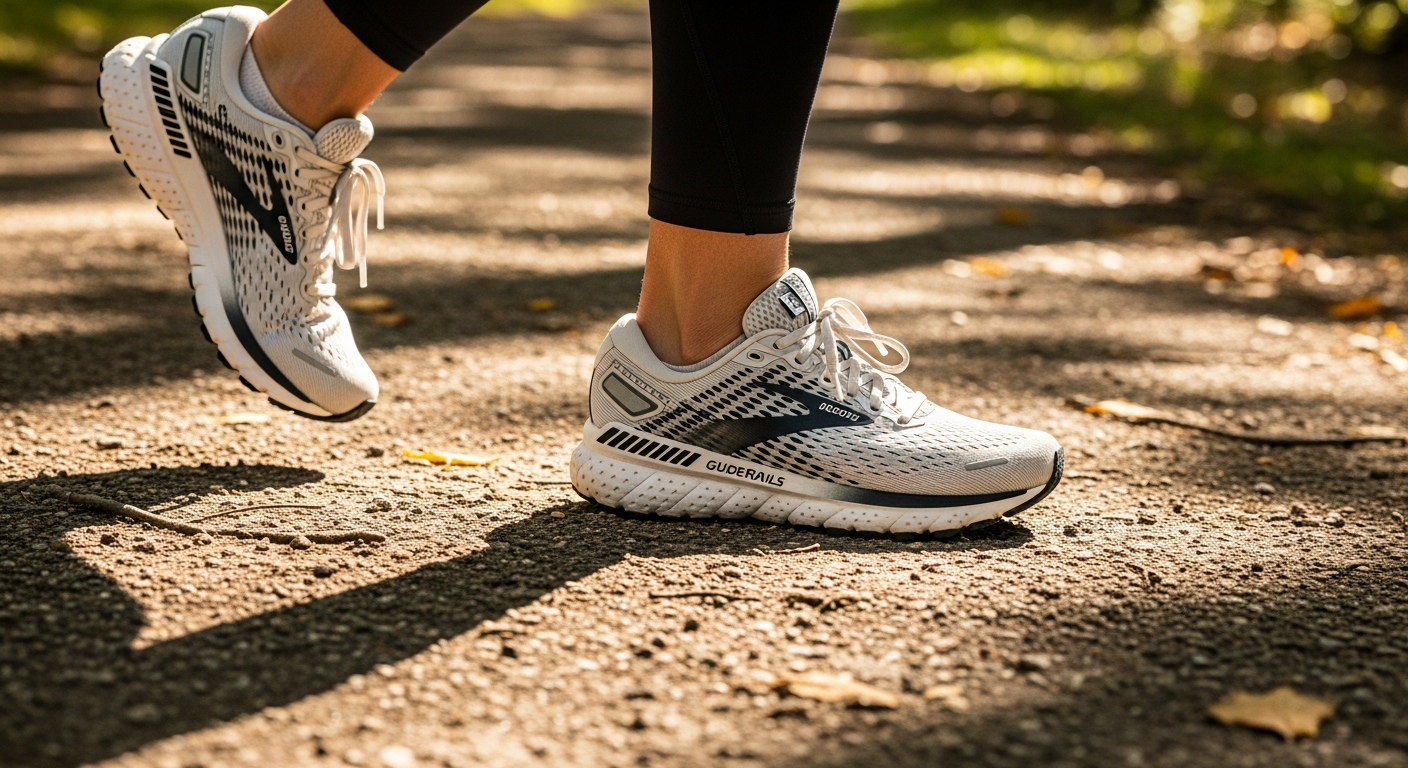
When a running shoe stays in production for over two decades and releases 24 iterations, you're witnessing something rare: a shoe that works. The Brooks Adrenaline GTS 24 has become Europe's best-selling stability shoe, with women runners choosing it in record numbers. Walk into any running community, and you'll find people lacing up this shoe for their morning commute, weekend walks, and everyday training runs—trusting it to deliver the same reliable performance week after week.
What earns that kind of loyalty? The Adrenaline GTS 24 isn't chasing trends or ultra-soft foam gimmicks. Instead, it's built for runners who value consistent support, predictable cushioning, and shoes that actually address overpronation without feeling clunky or restrictive. Brooks has refined this formula across nearly 25 years, balancing everyday comfort with genuine biomechanical support.
Discover the stability and comfort of the Brooks Adrenaline GTS 24 today.
This article breaks down what makes the Adrenaline GTS 24 the go-to choice for daily runners and walkers. You'll discover how GuideRails® technology works, why the updated DNA Loft v3 midsole matters, how the shoe performs across different running scenarios, and whether it's the right fit for your feet and your goals.
GuideRails® Support System: Stability Without the Clunky Feel
How GuideRails® reduces excess foot and ankle motion during overpronation
GuideRails® technology represents Brooks' approach to holistic support. Rather than relying on a firm medial post that intrudes into the shoe's midsole, GuideRails® uses a guide system that sits on both sides of the midsole. This design reduces excess motion in the foot and ankle specifically where it matters most—during the contact and propulsion phases of your stride.
When you overpronate, your foot rolls inward excessively. This motion places stress on your ankle, knee, and hip. GuideRails® gently guides your foot back toward a more neutral path without forcing an artificial correction that feels restrictive.
Why this technology differs from traditional medial posts and feels less intrusive
Traditional stability shoes use a firmer foam insert on the inner side of the midsole—the medial post. This creates a noticeable feel that many runners find uncomfortable, as though part of the shoe is pushing against their foot. GuideRails® takes a different approach: it works as a wraparound support system that feels almost invisible during normal movement.
The system maintains the shoe's natural flex pattern while preventing the harmful inversion (outward rolling) that overpronators experience. You get support without the sensation of fighting against the shoe's structure.
Who benefits most from this holistic support system
Overpronators represent the primary audience for GuideRails® technology. If your foot rolls inward beyond a natural range during running or walking, this system delivers targeted support. Daily runners and walkers who log consistent mileage also benefit—they accumulate enough steps weekly that even minor biomechanical issues compound into discomfort or injury risk.
The system works equally well for recreational runners and those training for longer distances, provided they're logging their mileage at easy paces rather than pushing for speed.
How the system maintains natural foot movement while preventing harmful pronation
GuideRails® doesn't lock your foot into position. Instead, it creates a supportive channel that allows natural pronation—a necessary part of the gait cycle—while preventing excessive inward rolling. Your foot still moves through its full range of motion; the shoe simply guides that motion within a healthy range.
This approach means your proprioceptors (the sensors in your feet that detect position and movement) continue to function normally. You maintain awareness of the ground beneath you, which supports balance and coordination during everyday activities and relaxed training runs.
Real-world impact on stride consistency and injury prevention during everyday runs
Runners using GuideRails® report more consistent stride patterns across training weeks. Because the support system works passively—engaging only when needed—your body doesn't have to compensate with muscle tension in the hip, knee, or lower back. This reduces fatigue during extended runs and walks.
Injury prevention follows naturally from improved biomechanics. By reducing excessive pronation, GuideRails® decreases stress on the medial knee ligaments and the plantar fascia, two areas where overpronators frequently develop pain.
DNA Loft v3 Midsole: Responsive Cushioning That Lasts
Technical breakdown of nitrogen-infused foam technology
DNA Loft v3 uses nitrogen-infused foam to create a midsole that balances softness with responsiveness. Nitrogen bubbles within the foam structure create microscopic cushioning pockets that absorb impact without creating the sluggish feeling associated with ultra-soft shoes. The result is a foam that compresses initially to absorb shock, then springs back quickly to propel you forward.
This nitrogen-infusion process differs from traditional foam manufacturing. Instead of relying solely on the foam material's inherent properties, Brooks engineered the foam's internal structure to perform specific functions—energy absorption on impact and rapid energy return during toe-off.
How DNA Loft v3 compares to previous midsole generations
The Adrenaline GTS 24's DNA Loft v3 is softer and more dynamic than previous versions used in earlier iterations. This represents a direct response to runner feedback requesting more cushioning comfort without sacrificing the shoe's stability characteristics. DNA Loft v2 offered solid cushioning but felt firmer; v3 brings more plush comfort to the equation.
However, DNA Loft v3 maintains responsiveness better than competitor ultra-soft foams. You won't experience the "marshmallow" sensation of sinking into cushioning with every step—instead, the midsole provides responsive feedback that keeps you engaged with your stride.
Balance between softness and responsiveness for daily training
The Adrenaline GTS 24 achieves a sweet spot for daily training. It's soft enough to make easy runs and recovery days genuinely comfortable, yet responsive enough that your feet don't feel disconnected from the ground. This balance matters when you're logging consistent mileage at conversational paces.
Fast runners accustomed to highly responsive shoes might find the Adrenaline GTS 24 slightly plush, but daily runners appreciate the comfort-to-responsiveness ratio.
Shock dissipation capabilities during walking and walking
The 36mm heel and 24mm forefoot stack heights provide substantial cushioning, particularly in the heel where impact forces concentrate during walking and running. DNA Loft v3 dissipates this shock effectively, reducing the jarring sensation that can lead to fatigue during long days on your feet.
Walking in the Adrenaline GTS 24 feels noticeably smoother than in minimalist shoes. The nitrogen-infused foam absorbs the repetitive impact of thousands of walking steps, protecting your joints and allowing you to spend entire days in these shoes without discomfort.
Durability and longevity of the cushioning system over time
DNA Loft v3 holds up well over extended mileage. The nitrogen-infused structure resists the progressive softening that occurs with traditional foams as they accumulate mileage. While all midsoles eventually compress, the Adrenaline GTS 24 maintains its cushioning characteristics longer than many alternatives.
Most runners report that the shoe remains comfortable and supportive through 300-400 miles (480-640 kilometers) of running. Even at higher mileage, the cushioning degrades gradually rather than suddenly, giving you warning signs before the shoe truly needs replacement.
Why the midsole feels firmer than ultra-soft alternatives (and why that matters)
The Adrenaline GTS 24 deliberately targets a firmer cushioning profile compared to shoes marketed as ultra-soft. This firmness serves multiple purposes: it maintains stability during pronation control, provides a more responsive platform for natural foot motion, and preserves the shoe's structured feel that appeals to runners who want support.
For daily training and walking, this firmness actually enhances comfort and performance. A firmer midsole requires less muscular effort to propel yourself forward—your muscles fatigue more slowly over the course of a day. Runners accustomed to plush shoes might need an adjustment period, but most report preferring this feel once acclimated.
Experience the balanced cushioning of DNA Loft v3 in the Adrenaline GTS 24.
Engineered Mesh Upper: Breathability Meets Sustainability
Construction details of the engineered mesh material
The upper combines engineered mesh with strategic overlays to create a structure that balances breathability, durability, and support. The mesh itself features a tight weave that allows air circulation while preventing debris and water from easily entering the shoe. Reinforced areas at the heel counter and around the midfoot provide structural support without adding bulk.
This engineered approach means the shoe adapts across seasons: warm enough for cool weather runs, breathable enough for summer training. The mesh doesn't feel flimsy or insubstantial; it's engineered for durability, which shows in the shoe's reputation for lasting through extended mileage.
Breathability performance for year-round comfort
The mesh upper excels at temperature regulation. During summer runs, air flows through the weave, keeping your feet cool during extended outdoor time. Winter runners appreciate that the upper provides enough coverage to trap warmth without creating that suffocating, sweaty feeling that some closed uppers produce.
Many runners wear the Adrenaline GTS 24 year-round without switching shoes—a testament to the upper's adaptability across seasons.
The role of 62.7% recycled materials in the design
Brooks incorporated 62.7% recycled materials into the Adrenaline GTS 24's upper, demonstrating a commitment to sustainability without compromising performance. These recycled materials maintain the same durability and breathability standards as virgin materials, proving that environmental responsibility and functional performance aren't mutually exclusive.
The recycled content reduces the shoe's environmental footprint while supporting Brooks' broader sustainability initiatives. For runners concerned about their environmental impact, this design choice represents meaningful action rather than superficial greenwashing.
Sustainability commitment without compromising durability
The use of recycled materials doesn't result in a shoe that wears out faster or feels less comfortable. Testing confirms that the Adrenaline GTS 24 maintains its durability characteristics across extended mileage despite incorporating recycled content. This proves that sustainability and performance can coexist in modern shoe design.
Runners get a shoe that lasts, performs reliably, and aligns with environmental values—a rare combination that explains much of the Adrenaline GTS 24's appeal.
Fit characteristics in the toe box and heel area
The toe box runs slightly snug, particularly around the midfoot. This snugness provides good lockdown during running and walking but might feel restrictive for runners with naturally wide forefoots. The heel counter sits firm but comfortable—it doesn't slip during dynamic movement, yet doesn't pinch.
Many runners describe the fit as "true to size with a slightly narrow toe box." If you have moderately wide feet, you might prefer sizing up by half a size.
Sizing considerations and width options
Brooks offers the Adrenaline GTS 24 in narrow, medium (standard), wide (2E), and extra-wide (4E) widths. This range accommodates various foot shapes more effectively than brands offering only standard widths. A runner with a wide forefoot but normal heel width might find the wide version more comfortable than sizing up in the standard width.
Taking time to determine your actual width—rather than assuming standard fits everyone—pays dividends in comfort and performance.
Weight and Geometry: Numbers That Matter
Men's weight specifications
The men's Adrenaline GTS 24 typically weighs between 10.0–10.1 ounces (283–286 grams). This positions it in the moderate weight category for stability shoes—heavier than lightweight trainers but lighter than some cushioned alternatives. For daily training and walking, this weight goes largely unnoticed; the shoe feels substantial without being burdensome.
Women's weight specifications
Women's models weigh approximately 8.8–9.1 ounces, with the UK size 6 coming in at 249.5 grams. This weight distribution reflects proportional scaling for smaller feet, maintaining the shoe's balance and feel across sizes. The women's version doesn't feel bloated or oversized despite its support features.
12mm heel-to-toe drop and what it means for your stride
The 12mm drop (difference between heel and forefoot stack height) represents a moderate drop that appeals to runners with various stride patterns. This moderate drop is neither ultra-minimalist nor aggressively elevated. It encourages a relatively natural stride while providing enough heel cushioning to reduce impact stress during the contact phase.
Runners transitioning from higher-drop shoes (14mm+) to the Adrenaline GTS 24 might notice a slightly different feel, but most adapt within a few runs.
36mm heel stack height and 24mm forefoot stack height
The heel stack provides substantial cushioning for impact absorption, particularly important during walking and easy running where heel contact dominates. The forefoot stack of 24mm offers adequate cushioning for propulsion without feeling overly soft or unstable.
These stack heights combine to create a platform that feels stable and responsive—not squishy, yet adequately cushioned for extended daily wear.
How these specifications affect performance in daily training versus speed work
For daily training and walking, these specifications excel. The moderate stack height and drop work together to support your natural biomechanics without imposing an artificial stride pattern. You can walk or run at conversational paces comfortably for extended periods.
During speed work or faster running, these specifications show their limitations. The modest responsiveness of the midsole combined with the moderate drop means you won't get the propulsive platform that racing flats or dedicated speed trainers provide. The shoe feels slightly clunky at paces faster than 7:30 per mile.
Comparison with other stability shoes in terms of weight and drop
Compared to traditional stability shoes, the Adrenaline GTS 24 punches above its weight in terms of lightness. Many stability competitors weigh 11+ ounces, making the Adrenaline GTS 24 noticeably nimbler without sacrificing support. The 12mm drop sits squarely in the moderate range, matching many competitors.
The combination of relative lightness plus effective stability support distinguishes the Adrenaline GTS 24 from heavier, more clunky stability alternatives.
Daily Training and Walking: Where the Adrenaline GTS 24 Shines
Why this shoe excels for easy runs and recovery days
The Adrenaline GTS 24's design targets exactly what easy runs and recovery days require: comfort, support, and a forgiving platform that doesn't demand anything from your legs. The DNA Loft v3 midsole cushions adequately without demanding constant muscular engagement. GuideRails® provides support passively, without forcing your biomechanics into an unnatural pattern.
Easy runs should feel, well, easy. The Adrenaline GTS 24 delivers that experience consistently.
Performance during walking and commute scenarios
Many owners wear the Adrenaline GTS 24 as a casual shoe, not just for running. The upper breathes during active walking, the cushioning protects your feet during long days on your feet, and the support system works equally well whether you're strolling or power-walking. The shoe transitions seamlessly from running workout to evening commute to weekend walk.
This versatility extends the shoe's value beyond its running-specific applications.
Smooth transitions and durability for high-mileage training
Runners logging consistent weekly mileage appreciate the smooth transitions the Adrenaline GTS 24 provides. The shoe's geometry and midsole design encourage efficient movement without requiring constant proprioceptive compensation. Over weeks and months of training, this translates into less fatigue and lower injury risk.
Durability across high mileage is proven. The Adrenaline GTS 24's reputation stems partly from runners who log hundreds of miles in the same shoe across multiple seasons.
Versatility across different terrain and surfaces
The rubber outsole grips effectively on roads, light trails, and mixed surfaces. The shoe doesn't demand pristine pavement—it performs adequately on varied terrain. This versatility appeals to runners who don't want separate shoes for road and trail training.
For daily runners who encounter mixed surfaces during commutes and neighborhood runs, this adaptability matters.
Comfort during extended wear (all-day wearability)
Beyond structured runs, the Adrenaline GTS 24 excels during extended wear. The cushioning protects your feet during full days spent mostly standing or walking. The upper breathes without causing sweat accumulation. The support system works all day, not just during runs.
This all-day comfort extends the shoe's value far beyond its running-specific applications.
Real-world experiences from everyday runners and walkers
Testimonials consistently emphasize reliability and comfort. Runners report that the shoe "shows up the same way every run," suggesting that consistency matters more than flashy features. Walkers appreciate the cushioning and support during extended walking sessions. Commuters value the versatility of transitioning between active runs and casual walking.
The common thread: the Adrenaline GTS 24 delivers exactly what daily runners actually need, without unnecessary frills.
Performance Limitations: When This Shoe Isn't the Right Choice
Why the ride feels firm compared to ultra-soft cushioned alternatives
The Adrenaline GTS 24 prioritizes responsiveness and stability over plushness. If you're accustomed to shoes marketed as "cloud-like" or "ultra-soft," the Adrenaline GTS 24 will feel firmer—more ground-connected, less cushioned. This firmness is intentional, serving performance goals rather than representing a limitation.
However, runners seeking maximum cushioning for extended mileage at very easy paces might prefer softer alternatives.
Performance at faster paces and why it's not ideal for speed work
Beyond easy conversational pace running, the Adrenaline GTS 24 shows its constraints. At tempo pace (85-90% effort) or faster, the shoe feels somewhat clunky. The midsole isn't responsive enough to feel snappy, and the structured support becomes noticeable rather than transparent.
Runners training for races or regularly running at faster efforts should consider dedicated speed trainers for those workouts.
Unsuitability for racing and tempo runs
The Adrenaline GTS 24 isn't built for race day. Its moderate weight and moderate responsiveness sit between daily trainers and racing flats—excelling at neither extreme. For race-specific training, dedicated racing shoes deliver superior performance and confidence.
Potential fit issues in the toe box and heel
The snug toe box and firm heel counter create fit challenges for some runners. If you have a naturally wide forefoot or prefer a roomier fit, the standard width might feel restrictive. Sizing up partially helps, but may create heel slippage.
Runners with these fit concerns should prioritize trying on multiple widths before committing to a purchase.
When the GuideRails system might feel slightly invasive for neutral runners
If you don't overpronate—if your foot tracks relatively straight through your gait cycle—the GuideRails® system may feel unnecessary and slightly constraining. Neutral runners often prefer shoes without pronation control technology, finding the support system intrusive even if subtle.
Testing the shoe before purchasing is particularly important if you're unsure about your pronation pattern.
Alternative shoe considerations for different running goals
Runners seeking maximum cushioning should consider pure cushioned trainers without stability features. Those training for speed work benefit from dedicated racing flats or speed trainers. Runners with severe overpronation might require shoes with more aggressive pronation control. Determining your specific priorities helps identify whether the Adrenaline GTS 24 matches your needs.
Fit, Sizing, and Width Options: Finding Your Perfect Fit
Standard sizing guidance and when to size up by half a size
Brooks typically runs true to size, and the Adrenaline GTS 24 follows this pattern. However, the snug toe box means some runners prefer sizing up by half a size. If you usually wear a size 9, trying a 9.5 is reasonable—but this depends on your foot shape and personal preference for fit snugness.
Professional shoe fitting at specialty running retailers helps determine your optimal size more accurately than guessing.
Width availability and how wider versions accommodate different foot shapes
The availability of narrow, medium, wide, and extra-wide options allows precise fitting for various foot shapes. A runner with a wide forefoot but narrow heel doesn't need to compromise with standard widths—the wide version provides proportional widening throughout.
Width selection is as important as length selection in achieving optimal fit.
Heel and toe box fit characteristics
The heel counter fits snugly without slipping, providing good lockdown during dynamic movement. The toe box runs tight, particularly in the midfoot area. Some runners describe it as "hugging the foot," which provides stability but might feel constrictive for those with wide forefeet.
The overall fit sensation is "locked in" rather than "spacious."
Breaking-in period and comfort expectations
The Adrenaline GTS 24 typically requires minimal breaking in. Most runners report comfort during the first runs. The engineered mesh upper conforms quickly to your foot without creating pressure points. The midsole softens slightly after the first 10-15 miles but doesn't dramatically change feel.
You should feel comfortable in this shoe immediately or shortly after purchase. Extended breaking-in periods suggest fit issues rather than normal midsole adaptation.
Comparison of fit between men's and women's models
The women's model features a proportionally narrower heel and adjusted midfoot fit compared to scaled-down men's sizes. Women's-specific design means the fit accounts for average differences in foot shape between men and women, resulting in better fit consistency.
Women runners should prioritize the women's model over men's sizes, even if unisex sizing typically works for them in other brands.
How to determine if you need a wider version
If your forefoot feels constrained in standard width—if the shoe pinches along the sides of your midfoot or your toes touch the shoe's sides—a wider version merits consideration. Walking while wearing the shoes can reveal fit issues that aren't apparent during initial fitting.
Retailers accepting returns or exchanges allow you to experiment with different widths before committing.
Price and Value: Investment in Reliable Daily Running
Price range across European retailers
The Adrenaline GTS 24 typically retails between €84.99 and €150.00 across European retailers, with significant variation based on timing, retailer, and sales. Early season pricing runs higher; seasonal sales offer substantial discounts. Buying during major sales periods can mean saving €40-60 compared to regular pricing.
Comparing prices across multiple retailers before purchasing maximizes value.
Seasonal sales and where to find the best deals
Sportwerk DE/AT, the primary retailer mentioned in the product details, frequently offers seasonal promotions. End-of-season sales (typically when new shoe models release) provide the deepest discounts. Flash sales on specific colors or sizes offer additional savings opportunities.
Timing your purchase strategically reduces the effective cost significantly.
Value proposition compared to other stability shoes
The Adrenaline GTS 24 delivers consistent performance at a mid-range price point. Compared to premium stability shoes costing €150+, the value proposition is excellent. Compared to budget stability options under €80, you gain improved durability and refined support technology.
The shoe represents fair value for daily runners seeking proven reliability.
Durability and cost-per-wear calculation
Most runners get 300-400 miles (480-640 kilometers) of useful life from the Adrenaline GTS 24. At an average price of €100 and 400 miles, the cost-per-mile is approximately €0.25. For a runner logging 30 miles weekly, the shoe lasts nearly three months, representing reasonable value compared to more expensive alternatives that wear out at similar rates.
Cost-per-wear calculations often reveal that mid-priced shoes deliver better value than premium options.
Long-term investment in a proven, reliable shoe
Buying the same shoe across multiple iterations—as many Adrenaline GTS 24 owners do—reduces research time and decision fatigue. You know the shoe works for you. You don't need to experiment with new models. This consistency has value beyond the pure monetary cost.
Many runners justify staying with the Adrenaline GTS 24 partially because familiarity reduces uncertainty.
When to upgrade or replace based on mileage and wear
After 300-400 miles, the midsole begins noticeably degrading. You might feel decreased cushioning or responsiveness. The outsole shows visible wear patterns. At this point, replacing the shoe prevents the transition into an uncomfortable and potentially injury-promoting worn-out condition.
Waiting until the shoe literally falls apart extends wear time but introduces injury risk that outweighs minor cost savings.
The Women's Advantage: Why Women Runners Choose the Adrenaline GTS 24
Popularity among Sportwerk DE/AT female customers
Women represent a disproportionately large portion of Adrenaline GTS 24 purchasers at Sportwerk DE/AT. This reflects both women's appreciation for the shoe's reliability and the shoe's women's-specific design advantages. Word-of-mouth recommendations among female runners have created a community around the shoe.
This popularity indicates that the shoe genuinely meets women runners' needs rather than simply appealing to gender-based marketing.
Specific design considerations in the women's model
The women's model features proportional adjustments throughout. The heel sits narrower, matching typical anatomical differences. The midfoot volume accounts for average differences in foot shape. The upper dimensions align with women's feet rather than scaling down men's shoes.
These adjustments create a better fit experience than unisex sizing would provide.
Weight distribution and fit optimized for women's anatomy
The women's model at 8.8-9.1 ounces accounts for lighter overall body weight compared to men. The proportional stack heights and geometry work optimally with women's stride patterns and biomechanics. The support system engages appropriately for typical female pronation patterns.
Women get a shoe engineered for female bodies, not scaled from male designs.
Support systems tailored to female running biomechanics
Female runners often experience different pronation patterns than males due to anatomical differences in hip width and knee angle. The GuideRails® system in the women's model addresses these patterns effectively. The support feels naturally integrated rather than fighting against your biomechanics.
This tailoring explains why women runners report better fit and performance in the women's-specific model.
Community feedback and testimonials from women runners
Women runners consistently praise the Adrenaline GTS 24's reliability, comfort during extended wear, and effective support for overpronation. Many note transitioning from other brands and discovering that this shoe works better for their specific needs. The community aspect—knowing other female runners trust this shoe—builds confidence in the choice.
Community reputation carries significant weight in women's running communities.
How the shoe addresses common concerns for female athletes
Women runners frequently seek shoes that provide genuine support without feeling bloated or oversized. The Adrenaline GTS 24 delivers support in a proportionally appropriate package. The women's-specific design ensures that features like GuideRails® and the midsole feel appropriately integrated rather than retrofitted.
The shoe takes women's specific needs seriously rather than offering a scaled men's shoe as a token women's option.
The Adrenaline GTS 24 Earns Its Reputation Through Consistency
The Brooks Adrenaline GTS 24 has dominated the stability shoe market for nearly 25 years because it refuses to chase trends while delivering exactly what everyday runners and walkers actually need. The GuideRails® system works quietly in the background, the DNA Loft v3 midsole cushions without feeling mushy, and the engineered mesh upper breathes through commutes and training runs. The consistent performance across multiple iterations has created a community of loyal runners who return to this shoe because it simply works.
That said, this shoe isn't a Swiss Army knife. It's not built for speed work, racing, or runners seeking pillow-soft cushioning. The firmness that makes it reliable for daily training feels clunky when you push the pace. The fit runs slightly snug in certain areas, and neutral runners might find the stability system unnecessary.
But if you're a runner—particularly a woman runner—who values predictable support, sustainable design, and a shoe that performs equally well on your morning walk and your weekend easy run, the Adrenaline GTS 24 deserves serious consideration. It's the type of shoe that doesn't demand attention because it handles your daily running effortlessly, session after session.
Leave a Reply