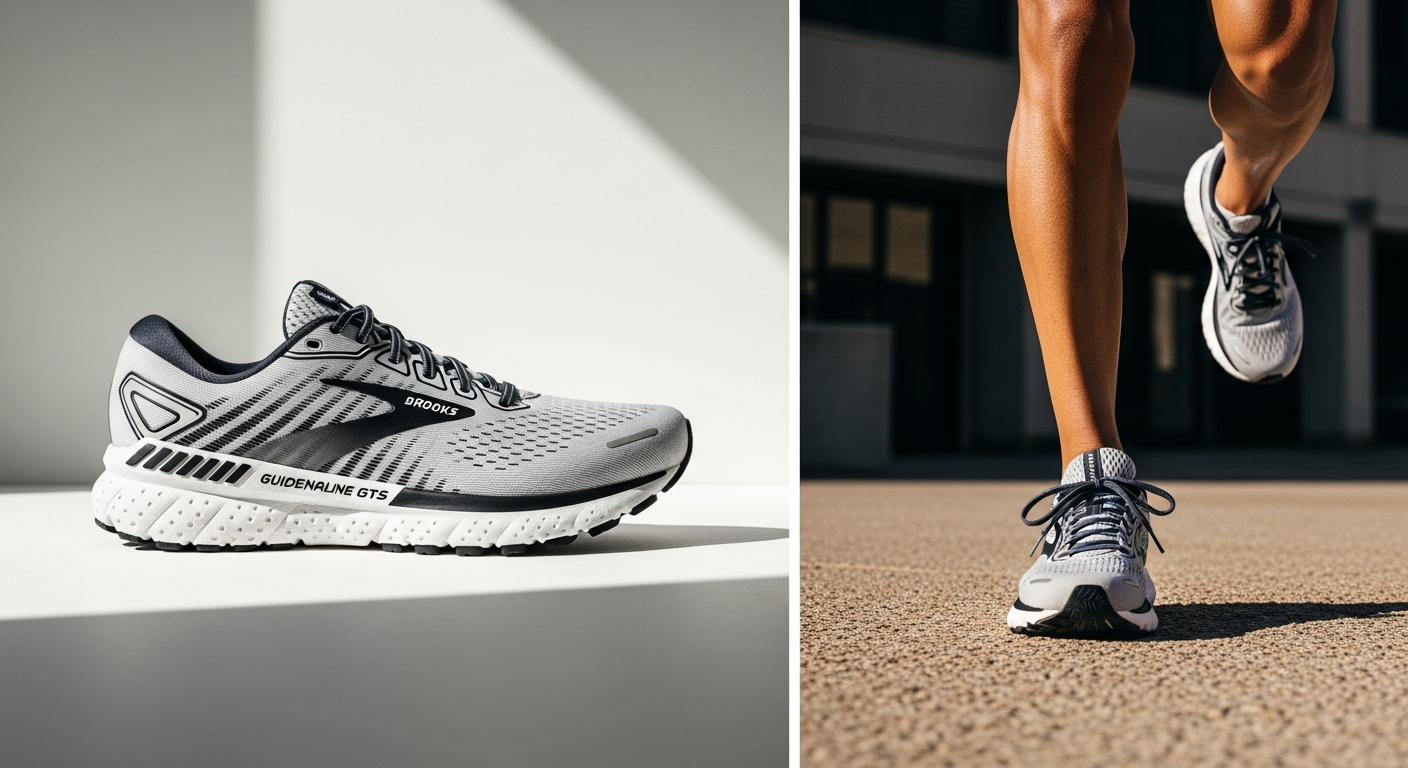
After 24 iterations, the Brooks Adrenaline GTS remains one of the most trusted stability shoes on the market. Runners with overpronation issues consistently reach for this model, yet many still wonder whether the hype actually matches the reality. The Adrenaline GTS 24 occupies a unique space in the running shoe landscape, engineered specifically for runners who need motion control without sacrificing comfort.
This shoe bridges the gap between everyday training and casual walking with remarkable versatility. It's built for a specific purpose: guiding overpronators through their natural motion path while maintaining responsive cushioning for daily miles. Whether you're logging easy runs or incorporating it into your regular walking routine, this shoe aims to deliver consistent support.
The real question is whether the $99–$140 price range delivers genuine value for your running goals. Explore the Brooks Adrenaline GTS 24 to see current pricing and availability. In this review, I'll break down the GuideRails® support system, evaluate the updated DNA Loft v3 cushioning, assess the fit across different widths, and honestly compare its strengths against its limitations.
What Makes the GuideRails® Support System Stand Out?
How GuideRails® Technology Gently Redirects Foot Motion
The GuideRails® system represents Brooks' holistic approach to stability. Rather than relying on a rigid medial post that controls your foot with a heavy hand, GuideRails® gently guides your foot, knee, and hips into their natural motion path. This means the shoe works with your biomechanics rather than against them, reducing excess movement without forcing your stride into an unnatural pattern.
The technology functions through strategically placed support structures along the medial and lateral sides of the midsole. These rails create a gentle boundary that prevents excessive inward or outward rolling, allowing overpronators to run with improved alignment without feeling restricted.
The Biomechanical Benefits for Runners Experiencing Knee and Hip Alignment Issues
Overpronation—excessive inward foot roll—can create a chain reaction of problems. Your foot rolls too far inward, your knee tracks misaligned, and your hips follow suit. Over time, this biomechanical imbalance contributes to knee pain, IT band issues, and hip discomfort. The GuideRails® system addresses this by keeping your foot in proper alignment, which naturally corrects knee and hip positioning throughout your gait cycle.
Runners who've struggled with these alignment-related injuries often report significant relief when switching to the Adrenaline GTS 24. The support system essentially acts as a preventive measure, keeping everything stacked vertically and moving efficiently.
Comparison of GuideRails® to Traditional Medial Posts and Other Stability Mechanisms
Traditional stability shoes rely on firmer foam posts on the medial (inner) side of the midsole. These posts are durable and effective, but they can feel rigid and unresponsive, especially during transitions. GuideRails® takes a more nuanced approach by distributing support across a broader area rather than concentrating it in one spot.
Compared to other modern stability systems, GuideRails® stands out because it doesn't sacrifice the responsive feel of the shoe. You get stability without the "heavy" sensation that can come with older stability shoe designs. It's a refinement born from years of iteration and real-world runner feedback.
Why Neutral Runners Might Find the Support System Too Pronounced
If you don't overpronate, the GuideRails® system actually works against you. Neutral runners have biomechanically efficient gaits and don't need guided motion—in fact, the support structures can feel intrusive and restrictive. Neutral runners typically prefer shoes that allow complete freedom of movement without any directional guidance.
Forcing a neutral runner into a stability shoe often results in a less efficient stride and can even create compensatory movements. This is why it's critical to have your gait analyzed before purchasing any stability-focused footwear.
Real-World Feedback from Overpronators on the Effectiveness of Guided Motion
The consistency of positive feedback from overpronators speaks volumes. Runners with moderate to severe overpronation report that the GuideRails® system actually works as advertised. Knee pain diminishes, the gait feels more aligned, and the overall running experience becomes more comfortable and efficient.
Many users note that after an initial adjustment period, the guidance feels natural and supportive rather than constraining. The system has genuine clinical backing and years of real-world validation from thousands of runners.
The Learning Curve: Adapting to the Shoe's Corrective Support
New wearers sometimes feel that the GuideRails® system is "too much" during the first 10–20 miles. Your feet have become accustomed to moving in a certain pattern (even if that pattern isn't biomechanically ideal), and the guidance system redirects that pattern. This adjustment period typically lasts a few weeks of regular running.
Patience through this transition phase pays off. As your foot and lower body adapt to the corrected alignment, the support feels less like correction and more like natural guidance. Most runners report that after 50 miles, the shoe feels seamlessly integrated into their running routine.
DNA Loft v3 Cushioning: Responsive Yet Firm
Breakdown of Nitrogen-Infused Foam Technology
The DNA Loft v3 cushioning represents the evolution of Brooks' nitrogen-infused foam platform. Nitrogen infusion creates tiny air pockets within the foam structure, giving it a unique combination of properties: lightweight construction, adaptive cushioning, and responsiveness.
Unlike traditional foam that compresses and dissipates energy uniformly, nitrogen-infused foam adapts to your individual impact signature. Different areas of your foot experience different force levels, and the foam responds accordingly—firmer where needed, more yielding where preferred. The v3 iteration refines this technology with improved durability and a better balance between protection and feel.
The Balance Between Responsive Feedback and Shock Absorption for Daily Training
The Adrenaline GTS 24 walks a careful line: cushioned enough to absorb impact during sustained training runs, yet responsive enough to maintain ground contact and provide feedback. This balance suits daily training perfectly. You're not sinking into clouds of padding, which would slow you down, but you're also not pounding on a thin, harsh midsole.
For the majority of runners doing steady-paced training runs at conversational effort levels, this balance feels ideal. The shoe provides protection without sacrificing responsiveness, making it suitable for everything from easy base-building runs to moderate-tempo work.
Stack Height Specifications and What They Mean for Your Stride
The 12mm drop combines with a 36mm heel stack and 24mm forefoot stack to create a particular ride characteristic. A 36mm heel stack provides substantial cushioning and protection for heel strikers, while the 24mm forefoot allows for more ground feel and natural toe-off. The 12mm difference (drop) encourages a slightly heel-forward gait pattern, which suits heel strikers naturally.
For runners accustomed to maximalist shoes with 40mm+ stacks, the Adrenaline GTS 24 might feel slightly less plush. Conversely, runners transitioning from minimal shoes will find the stack height generous and supportive.
Why Some Runners Perceive the Cushioning as Firmer Than Competitor Models
Several factors contribute to the "firm" perception. First, the nitrogen-infused foam prioritizes responsiveness over maximum softness—it's designed to maintain structural integrity and ground feel. Second, the GuideRails® support system includes firmer elements that provide guidance, which some perceive as part of the overall firmness.
Compared to ultra-plush stability shoes from other brands, the Adrenaline GTS 24 definitely skews firmer. This isn't a drawback for most daily trainers; it's actually a feature that maintains efficiency and durability over high mileage.
Ideal Use Cases: Steady-Paced Runs Versus Speed Work and Tempo Training
The Adrenaline GTS 24 excels during easy-to-moderate runs and steady-paced training. The cushioning provides adequate protection, and the responsiveness allows for efficient movement. Tempo runs at lactate threshold pace feel natural and controlled.
However, fast interval work and all-out speed sessions present challenges. The shoe's bulk and support-focused design don't facilitate the nimbleness and agility that faster running demands. Runners incorporating significant speed work often prefer lighter, more responsive shoes for those sessions while keeping the Adrenaline GTS 24 for base-building and recovery runs.
Durability Expectations: How the Midsole Holds Up Over Hundreds of Miles
The DNA Loft v3 foam demonstrates impressive durability over extended mileage. Most reviewers report that the midsole maintains its cushioning characteristics well past 300 miles, with many shoes remaining comfortable at 400+ miles. The nitrogen-infused technology resists the permanent compression that affects some softer foams.
The outsole also contributes to longevity. The RoadTack Rubber compound provides reliable traction without wearing away rapidly. Many users get 400–500 miles from a pair before noticeable degradation occurs, which represents solid value given the shoe's price point.
Fit, Comfort, and Width Availability
Engineered Mesh Upper Construction and Breathability Performance
The upper features engineered mesh construction made with 62.7% recycled materials. This mesh balances structure and flexibility—it's breathable enough for warm-weather running but structured enough to maintain foot security. The engineered design means the mesh varies in thickness and weave pattern across different areas of the shoe, providing reinforcement where needed and stretch where beneficial.
Breathability performs well in the Adrenaline GTS 24. Your foot won't feel trapped or excessively warm during sustained running, even in summer conditions. The mesh allows air circulation while maintaining the supportive, secure feel that stability runners expect.
Secure Fit Characteristics and How the Shoe Accommodates Different Foot Shapes
The shoe's lacing system and collar design work together to create a secure fit without being constrictive. The heel counter (the rigid cup at the back of the shoe) is snug enough to prevent heel slip during quick transitions but not so tight that it creates pressure points. The midfoot is where the lacing system truly shines—you can dial in precise tension to match your specific foot volume.
Different foot shapes find accommodation in the Adrenaline GTS 24's design. Medium-volume feet fit naturally, while runners with higher-volume feet can loosen laces appropriately. The multiple width options extend this accommodation even further.
Width Options Available: Narrow, Regular, Wide, and Extra-Wide Sizing
Few running shoes offer the width range that the Adrenaline GTS 24 provides. Whether you need narrow (B-width for women, D-width for men), regular, wide, or extra-wide, Brooks manufactures versions specifically engineered for each width category. This is a significant advantage for runners with feet that don't fit standard sizing.
Width diversity means you're not forced into uncomfortable compromises. A runner with wide feet can get a genuinely wide shoe, not just a regular shoe laced loosely. This attention to fit diversity partly explains the Adrenaline GTS 24's sustained popularity across diverse running communities.
Toe Box Considerations and Potential Tightness for Runners with Wider Forefeet
The toe box is proportionally roomier than some racing flats but slightly narrower than some maximum-cushioning trainers. Runners with average to narrow forefeet find the toe box accommodating and roomy. Those with exceptionally wide forefeet (even in wide-width shoes) sometimes report that the toe box feels snug.
If you have a wide forefoot, trying on the shoe before purchasing or buying from a retailer with a good return policy makes sense. The wide-width version addresses many toe box concerns for those with fuller feet.
Heel Counter Design and Ankle Support During Transitions
The heel counter provides firm, secure support without excessive height or padding thickness. It keeps your heel locked in place during landing and push-off, preventing the micro-movements that can contribute to blisters or instability. The design is snug but not uncomfortable, providing natural ankle support without feeling constraining.
Transitions—the moment when your heel leaves the ground and your forefoot takes over—feel smooth and controlled. The heel counter doesn't interfere with forward motion; it simply provides a secure foundation.
Comparison of Men's Versus Women's Weight and Fit Nuances
The men's version (US Men's 9) weighs approximately 10.0 oz (283g), while the women's version (UK 6) is around 8.8 oz (249.5g). This weight difference reflects both the shoe's scaled dimensions and women-specific engineering adjustments. Women's versions typically have slightly narrower heels, more tapered toe boxes, and different arch placement to match typical female foot geometry.
Beyond weight, the women's version often fits better for female runners rather than simply being a scaled-down men's shoe. Brooks' women-specific construction accounts for biomechanical differences, resulting in better overall fit and comfort.
Sustainability and Material Quality
62.7% Recycled Content in the Upper Mesh and Environmental Impact
The Adrenaline GTS 24 incorporates 62.7% recycled materials in the upper mesh. This means more than six-tenths of the mesh comes from post-consumer or post-industrial recycled content rather than virgin materials. This reduces the shoe's environmental footprint significantly compared to conventional shoe construction.
From an environmental perspective, this represents genuine commitment rather than superficial greenwashing. Using recycled materials requires additional processing and quality control to maintain performance standards, and Brooks invests in these processes. The environmental benefit extends through the entire lifecycle—less virgin material extraction, reduced energy consumption in production, and support for established recycling infrastructure.
RoadTack Rubber Outsole Construction with Recycled Materials
The RoadTack Rubber outsole also incorporates recycled content. This outsole compound delivers excellent traction across varied surfaces while maintaining reasonable weight. The use of recycled rubber doesn't compromise performance—the outsole remains durable and reliable across hundreds of miles.
RoadTack technology specifically enhances grip on wet surfaces without sacrificing longevity or adding excessive weight. The outsole design balances rubber placement, minimizing material where unnecessary and concentrating it where impact and traction matter most.
Durability of Eco-Friendly Materials Versus Traditional Shoe Components
A valid concern: do recycled materials compromise durability? The answer is nuanced. Well-engineered recycled materials can match or exceed the durability of conventional materials when properly processed and designed. The Adrenaline GTS 24 demonstrates this principle—the recycled mesh upper and rubber outsole don't show accelerated wear compared to competitor shoes using traditional materials.
The nitrogen-infused DNA Loft v3 midsole (the primary durability factor) isn't recycled material; it's fresh foam engineered for longevity. This strategic use of recycled materials where appropriate and traditional materials where durability is paramount provides the best of both worlds.
Brooks' Commitment to Sustainable Manufacturing and What It Means for Longevity
Brooks' sustainability initiatives extend beyond material selection. Their manufacturing processes increasingly prioritize energy efficiency and waste reduction. This commitment suggests that the company views product longevity and durability as part of their sustainability mission—a durable shoe that lasts 400+ miles serves the environment better than a cheap shoe that wears out in 200 miles.
For runners, this means purchasing the Adrenaline GTS 24 supports a company actively working to reduce environmental impact. The durability of the shoe extends its useful life, which further reduces per-mile environmental cost.
Traction Performance Across Wet, Dry, and Variable Surfaces
The RoadTack outsole performs reliably across dry pavement, wet streets, light trails, and mixed surfaces. Grip is confident without being sticky, and the shoe maintains traction even when wet. This versatility suits runners who train year-round and in variable weather.
On slick surfaces, the outsole provides sufficient grip to prevent slipping and inspire confidence. During longer outings, the traction consistency remains constant—there's no degradation as miles accumulate. This reliability suits runners who incorporate varied terrain into their training.
How Recycled Materials Affect the Shoe's Overall Weight and Responsiveness
Recycled materials don't add measurable weight to the Adrenaline GTS 24. The shoe weighs essentially the same as conventional versions because Brooks' engineering optimized material placement and density, not because of inherent material properties. The responsiveness remains unchanged—recycled content in the upper doesn't affect midsole behavior.
This represents good engineering: achieving sustainability goals without sacrificing performance characteristics. Runners get the same responsive, durable shoe they expect while supporting environmental responsibility.
The 12mm Drop: Who Benefits Most?
Heel-to-Toe Drop Specifications and Biomechanical Implications
A 12mm drop means the heel sits 12mm higher than the forefoot. This moderate drop encourages a slightly heel-forward gait pattern, subtly influencing where your foot strikes the ground. For natural heel strikers, this drop feels intuitive and comfortable.
Biomechanically, a 12mm drop slightly reduces the strain on calf muscles and Achilles tendon compared to lower-drop shoes. For runners with calf tightness or Achilles issues, moderate drop can provide relief. Conversely, runners accustomed to zero-drop or very low-drop shoes may feel tension in their calves initially when transitioning to 12mm.
Why the 12mm Drop Suits Heel Strikers but Challenges Forefoot Strikers
Heel strikers naturally contact the ground with their heel first, and a 12mm drop accommodates this pattern perfectly. The shoe's geometry aligns with their natural biomechanics, creating an efficient, comfortable stride. For heel strikers, the 12mm drop feels like the shoe is working with them rather than against them.
Forefoot strikers, conversely, contact the ground with their midfoot or forefoot first. A 12mm drop encourages heel landing even for these runners, potentially forcing an unnatural gait pattern. Forefoot strikers typically prefer lower-drop shoes (6mm or less) that allow their natural landing pattern to express itself.
Transition Considerations for Runners Switching from Lower-Drop Shoes
Runners transitioning from 4–6mm drop shoes to the Adrenaline GTS 24's 12mm drop often experience calf and Achilles tightness initially. The difference in lever angle forces your posterior chain to work slightly differently. Most runners adapt within 2–3 weeks of consistent running, after which the higher drop feels natural.
To manage the transition, increase mileage gradually in the new shoe, allowing your muscles and connective tissues to adapt. Some runners do a progressive transition—mixing lower-drop and 12mm-drop shoes across different training sessions until the adaptation is complete.
Impact on Running Cadence and Natural Stride Patterns
Drop doesn't directly determine cadence, but it influences stride mechanics. The 12mm drop in the Adrenaline GTS 24 encourages a slightly longer stride and more pronounced heel-first landing. Runners with naturally quick cadences (180+ steps per minute) may find the drop encouraging their cadence to decrease slightly (170–180 range).
For most daily trainers, this shift is negligible and doesn't negatively impact performance. The drop encourages efficiency for heel strikers while potentially creating minor adjustments for other landing patterns.
Comparison to Neutral-Cushioned Shoes with Lower Drop Measurements
Many neutral-cushioned trainers feature 8–10mm drop, creating a middle ground between the Adrenaline GTS 24's 12mm and minimal shoes' 0–4mm. This lower drop combined with neutral support appeals to runners seeking balance between cushioning and natural movement.
The Adrenaline GTS 24's 12mm drop, paired with GuideRails® support, targets a specific runner: the overpronating heel striker. If you fit this profile, the drop is advantageous. If you're neutral or a forefoot striker, the drop (combined with support) may not align with your biomechanics.
Best-Case Scenarios for Runners Who Thrive with Moderate Drop Shoes
Runners who excel in the Adrenaline GTS 24 typically possess several characteristics: natural heel strikers, moderate overpronation, affinity for moderate-to-high stack heights, and appreciation for responsive shoes that maintain ground contact. These runners consistently report that the 12mm drop feels natural and supportive.
Additionally, runners with calf tightness, Achilles tendinopathy history, or plantarfasciitis often benefit from moderate drop. The reduced calf loading and slightly less aggressive dorsiflexion demand can alleviate these issues while still maintaining good cushioning and support.
Real-World Performance: Training, Walking, and Durability
Daily Training Capabilities and How the Shoe Performs Across Varied Distances
The Adrenaline GTS 24 performs admirably across most daily training distances. For 5–10 mile runs at easy-to-moderate paces, the shoe feels composed, supportive, and efficient. The cushioning provides adequate protection without feeling overly soft, and the GuideRails® system keeps your gait stable throughout.
Longer runs (12+ miles) see slightly diminished comfort relative to maximalist shoes, but the Adrenaline GTS 24 remains capable. The shoe is designed for consistency rather than extreme distance comfort, and most runners report satisfying long-run experiences.
Versatility for Both Running and Walking Activities
Unusual among serious running shoes, the Adrenaline GTS 24 transitions seamlessly from running to walking. The support system, cushioning, and overall construction suit walking as well as running. Many users incorporate it into their daily lifestyle—morning run, casual errands, extended walking throughout the day—without changing shoes.
This versatility appeals to runners who value practicality. You get genuine running shoe performance without the hyper-specialized design that limits non-running utility.
Mileage Longevity and Reviewer Feedback on Shoe Lifespan
Consistent reviewer feedback indicates that the Adrenaline GTS 24 provides 350–450 miles of quality performance before noticeable degradation. Some runners report 500+ miles in lighter-weight bodies with conservative training, while heavier runners or those with aggressive training patterns see the lower end of this range.
The midsole maintains cushioning properties longer than some competitors, and the outsole resists wear effectively. This durability represents solid value, especially when the shoe can be purchased on sale for $99.95–$109.95.
Performance During Slower, Steady-Paced Runs Versus Faster Intervals
The Adrenaline GTS 24 shines during slow, conversational-pace runs and steady tempo work. The support feels natural, the cushioning protective, and the overall ride efficient. Easy runs feel smooth and composed, making these sessions genuinely enjoyable.
Faster interval work reveals the shoe's limitations. The bulk, support-focused design, and moderate responsiveness don't facilitate the nimbleness required for fast running. Runners doing significant speed work benefit from lighter, more responsive shoes for these sessions.
Potential Limitations for Speed Work and Agility-Focused Training
The Adrenaline GTS 24 isn't built for agility or speed emphasis. The GuideRails® system, while beneficial for overpronators, adds weight and compliance compared to minimal stability shoes. The 12mm drop and stack height encourage longer strides, incompatible with the quick, snappy footstrike needed for plyometric training or top-end speed work.
For runners incorporating hill repeats, tempo intervals, or track sessions, having a lighter, faster shoe complements the Adrenaline GTS 24 nicely. Many runners maintain multiple shoes—the Adrenaline GTS 24 for base and recovery work, a lighter shoe for speed and tempo, and potentially a trail or casual shoe for varied training.
Long-Term Comfort During Extended Wear for All-Day Use
Extended wearing comfort stands as a notable strength. The engineered mesh upper breathes well, the cushioning remains responsive after hours of wear, and the fit stays secure without creating pressure points. Runners wearing the Adrenaline GTS 24 for an entire day (work + training + casual activity) report consistent comfort.
The supportive upper and snug heel counter prevent excessive foot motion, reducing fatigue during extended activity. The cushioning doesn't compress excessively, maintaining its comfort properties throughout the day. This all-day capability distinguishes the Adrenaline GTS 24 from shoes optimized purely for running performance.
Pricing Strategy and Value Proposition
Regular Retail Price and Typical Sale Ranges
The Brooks Adrenaline GTS 24 carries a regular retail price of approximately $140 USD. However, competitive retail pressure and seasonal sales mean you'll frequently encounter prices between $99.95 and $109.95 USD—roughly a 25–30% discount from regular retail.
European pricing on Sportwerk DE/AT ranges from €109.95 to €150.00, reflecting regional pricing strategies and import costs. Timing your purchase strategically can yield meaningful savings, particularly during seasonal transitions (late summer/early fall, winter/early spring).
Cost-Per-Mile Analysis Compared to Competitor Stability Shoes
If you purchase the Adrenaline GTS 24 at $109.95 and achieve 400 miles of use, your cost-per-mile is $0.27. Competitors offering similar stability features typically cost more or deliver fewer miles, resulting in higher cost-per-mile figures. The ASICS Gel-Kayano and New Balance 860, both excellent stability shoes, often cost more and don't consistently outlast the Adrenaline GTS 24.
From a pure value perspective, the Adrenaline GTS 24 represents strong economics, particularly if purchased on sale. Few stability shoes deliver comparable performance at this price point.
When to Buy: Seasonal Sales Patterns and Best Timing for Discounts
Running shoe sales follow predictable seasonal patterns. The deepest discounts typically occur during seasonal transitions: late August through September (as new models release and old inventory clears) and December through January (post-holiday clearance).
If you purchase in-season (March–May for spring, July–August for summer training), expect to pay closer to regular retail. Savvy runners plan shoe purchases around expected seasonal sales, buying new shoes 1–2 months before they enter peak use.
Return on Investment for Runners with Specific Stability Needs
For overpronators, the return on investment in the Adrenaline GTS 24 is quantifiable. Improved gait mechanics reduce injury risk, potentially saving money and time lost to rehabilitation. Runners with history of overpronation-related injuries often find that proper stability shoes prevent recurrence more effectively than any alternative.
The psychological investment also matters: knowing your shoes are designed specifically for your gait pattern builds confidence and encourages consistent training. This consistency yields fitness improvements and better race outcomes—a meaningful return beyond the shoe's literal cost.
Budget-Friendly Alternatives and Premium Comparisons
Budget-conscious runners might consider the previous-generation Adrenaline GTS 23, which often drops to $79–$89 when clearanced. This shoe delivers 95% of the GTS 24's performance at lower cost, making it an excellent value if available.
For premium comparisons, the ASICS Gel-Kayano 30 costs approximately $170–$180 and offers more plush cushioning but similar stability. The New Balance 860v13 ($150–$160) provides comparable support with slightly different cushioning feel. The Saucony Guide 17 ($130–$140) sits at similar pricing with less versatile width options.
Each alternative has merits depending on your specific preferences, but the Adrenaline GTS 24 stands out for its width diversity, proven durability, and price-to-performance ratio.
Who Should (and Shouldn't) Choose the Adrenaline GTS 24?
Ideal Candidates: Overpronators, Heel Strikers, and Daily Trainers
The Adrenaline GTS 24 is purpose-built for overpronators—runners whose feet roll excessively inward during the gait cycle. If gait analysis confirms moderate overpronation and you're a natural heel striker, this shoe fits your needs perfectly. Add daily training ambitions and preference for proven durability, and the match becomes even stronger.
These runners—overpronators, heel strikers, daily trainers—represent the shoe's target audience, and it delivers exceptional value for them.
Runners Seeking Proven Durability and Long-Term Reliability
The Adrenaline GTS 24's 24-year lineage speaks to durability and reliability. Runners specifically seeking a proven, dependable workhorse find exactly that here. The shoe doesn't promise innovation or flashy technology; it delivers consistent, dependable performance mile after mile.
This durability emphasis appeals to runners less interested in the latest technology and more interested in a shoe that simply works, season after season.
Athletes Prioritizing Motion Control Over Plush Cushioning
Runners viewing motion control as their primary need benefit from the Adrenaline GTS 24's GuideRails® system. If plush cushioning would compromise that control, the moderate firmness of the DNA Loft v3 foam becomes an asset rather than a limitation.
These athletes understand that properly guided motion prevents injuries more effectively than maximum cushioning, and they prioritize that prevention.
Those with Wide Feet Who Struggle Finding Supportive Options
The full range of width options—narrow, regular, wide, extra-wide—represents a genuine advantage for runners with non-standard feet. Many stability shoes focus on regular widths, leaving wide-footed runners compromised. The Adrenaline GTS 24's inclusive sizing makes it one of the few stability options that actually works for everyone.
Wide-footed runners who've struggled finding supportive shoes finally have a validated option.
Poor Fit Scenarios: Neutral Runners, Forefoot Strikers, and Ultra-Cushioning Seekers
Conversely, neutral runners without overpronation should look elsewhere. The GuideRails® system, while beneficial for overpronators, constrains neutral runners and creates inefficiency. Forefoot strikers find the 12mm drop and heel-biased design suboptimal compared to lower-drop, forefoot-friendly shoes.
Runners prioritizing plush, cloud-like cushioning will find the Adrenaline GTS 24's responsiveness-focused approach disappointing. Those seeking maximum softness should explore maximalist trainers from other brands.
Alternative Shoe Recommendations for Different Running Profiles
Neutral runners: Consider the Brooks Ghost or Nike Pegasus—responsive, adaptable shoes without stability elements.
Forefoot strikers: Explore the New Balance Fuelcell Propel or ASICS Metaride with lower-drop specifications.
Ultra-cushioning seekers: The Hoka Clifton, ASICS Gel-Cumulus, or New Balance Fresh Foam 1080 deliver plush rides.
Speed-focused runners: The Nike Vaporfly or ASICS Metaspeed Alpha provide race-day performance.
Trail runners: Consider the Salomon Speedcross or ASICS Gel-Trabuco for off-road capability.
Matching your running profile to appropriate shoe characteristics yields better outcomes than forcing yourself into mismatched footwear.
The Verdict: A Proven Workhorse That Delivers on Its Promise
The Brooks Adrenaline GTS 24 earns its reputation through consistent, dependable performance—not flashy innovation. After 24 iterations, Brooks has perfected the formula for a stability shoe that runners trust mile after mile.
If you're an overpronator seeking stability without compromise, this shoe checks every box. The GuideRails® system genuinely guides your foot into proper alignment, the DNA Loft v3 cushioning strikes a solid middle ground between responsiveness and protection, and the multiple width options mean you're likely to find your perfect fit. The shoe's proven durability translates to real value, especially at sale prices under $110.
The sustainability angle deserves recognition too. Sixty-two percent recycled content in the upper demonstrates that performance and environmental responsibility can coexist. The shoe's longevity—regularly exceeding 400 miles—means you're buying a product engineered for durability rather than planned obsolescence.
That said, this shoe isn't for everyone. Runners chasing plush cushioning, lower drop mechanics, or speed-focused performance will find better matches elsewhere. Neutral runners will find the guidance system intrusive, and forefoot strikers will struggle with the heel-biased design and moderate drop.
At $99–$140, the Adrenaline GTS 24 offers genuine value. After two decades of refinement, Brooks has perfected a stability shoe that delivers on its promise. Ready to experience the support? Start shopping for the Brooks Adrenaline GTS 24 and find your size today.
Leave a Reply