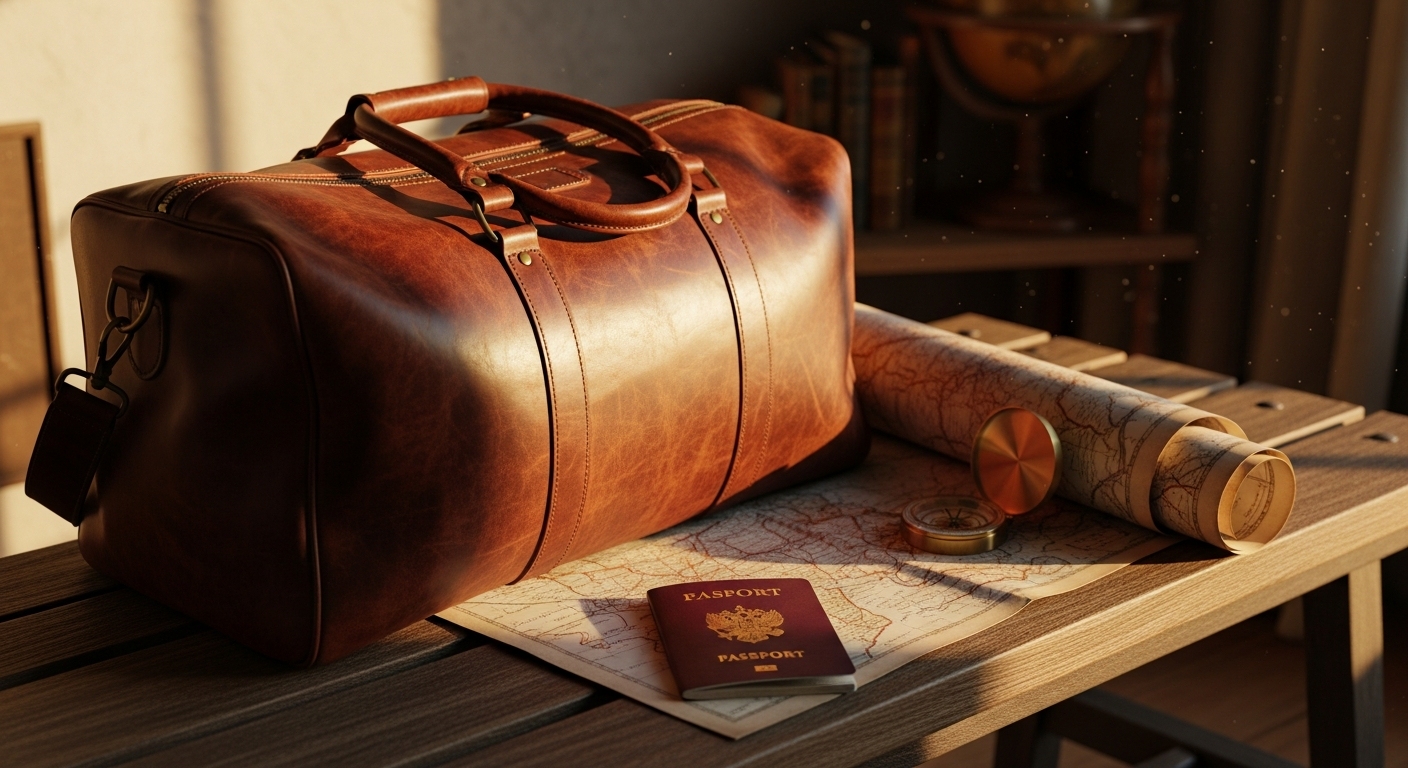
Your leather bag gets better with every trip you take. While most travel gear deteriorates over time, full grain buffalo leather actually develops a richer, more distinctive appearance the more you use it—a phenomenon called patina that transforms your duffle into a one-of-a-kind travel companion. This isn't marketing speak; it's genuine material science at work.
The full grain buffalo leather duffle has become a staple for serious travelers, outdoor enthusiasts, and professionals who refuse to compromise on quality. MaheTri's approach to crafting these bags combines traditional leather-working techniques with modern sustainability practices, using natural tanning methods that eliminate toxic chemicals while preserving the leather's inherent strength. At around $250, these bags sit in the premium category for good reason—they're engineered to outlast cheaper alternatives by decades.
Why Full Grain Buffalo Leather Outperforms Other Leather Types
Structural Integrity Across Leather Classifications
Full grain leather represents the highest tier in leather quality hierarchies, fundamentally different from top-grain and genuine leather alternatives. The distinction matters profoundly for durability. Full grain leather retains the complete outer surface of the hide, including its natural grain pattern and all inherent strength characteristics. Top-grain leather has the outer surface sanded away to remove imperfections, which compromises structural integrity despite appearing uniform. Genuine leather—a misleading marketing term—refers to any product containing leather, often including bonded scraps held together with adhesives that deteriorate over time.
Buffalo Leather's Unique Strength Properties
Buffalo leather specifically offers advantages beyond standard cowhide. The tensile strength of buffalo hides exceeds that of cattle leather, meaning the material resists tearing and puncturing more effectively. The fibers in buffalo leather are denser and more tightly knit, creating a leather that can withstand repeated stress from carrying heavy loads, constant folding, and exposure to environmental elements. This density also contributes to thickness without excessive weight—a crucial balance for travel gear.
Natural Oil Content and Water Resistance
Buffalo leather contains higher natural oil content than cowhide, providing inherent water-resistant properties without requiring chemical treatments. These oils migrate through the leather structure over time, actually improving water resistance with use rather than degrading it. This characteristic means your duffle naturally repels light rain and resists moisture absorption, protecting your belongings without the need for synthetic waterproofing sprays that can damage the leather's breathability.
Grain Surface Resilience
The complete grain surface on full grain leather prevents the cracking and peeling problems common in corrected-grain products. Corrected leather has surface patterns stamped on after the natural grain is removed—these artificial patterns eventually wear through, exposing the altered leather beneath. Full grain leather's natural surface actually strengthens with age as it weathers, developing micro-scratches and patina that enhance rather than detract from appearance.
Thickness and Weight Distribution
Full grain buffalo leather duffles typically feature leather thickness between 1.4 and 1.8mm, providing optimal durability without excessive weight. This thickness allows the material to distribute carrying loads across a wider surface area, preventing the stress concentration that weakens thin leathers. Thicker leather also means the bag won't show permanent indentations from regular packing patterns.
Breathability and Moisture Management
Unlike synthetic materials that trap moisture inside, full grain leather breathes naturally. This breathability prevents humidity accumulation that would foster mold growth and odors. Your belongings remain fresher, and the leather itself stays healthier by avoiding moisture saturation that weakens fibers over time.
The Patina Process—How Your Duffle Becomes a Personal Statement
Understanding Patina Development
Patina represents the visible accumulation of oxidation, wear patterns, and color deepening that occurs naturally on full grain leather. It's not deterioration—it's transformation. The process begins immediately upon exposure to air and light, but visible changes typically emerge between 6 and 18 months of regular use. Each person's duffle develops a unique patina fingerprint based on their specific usage patterns, climate exposure, and care practices.
Timeline for Visible Changes
The first three months show subtle color deepening, particularly in areas subject to hand contact. By six months, distinct burnishing appears along stress points where hands grip the handles and the bag flexes during carrying. Year one brings noticeable color saturation and the emergence of personalized wear patterns that distinguish your bag from identical ones fresh from production. Beyond two years, the transformation becomes dramatic—the leather develops a rich, burnished appearance that commands attention.
UV Exposure and Color Evolution
Sunlight accelerates patina development significantly. Leather exposed to consistent UV rays darkens more rapidly than leather kept in shade, creating natural color gradients across your duffle. These gradients tell the story of how you've used the bag—which strap gets most sun exposure, which compartments face the light, which areas stay protected. The color doesn't fade; it deepens and enriches, transitioning from bright tan to chocolate to near-black depending on the leather's original tone.
Moisture's Role in Aging
Water exposure contributes substantially to patina formation. Light rain, humid conditions, and even the moisture from your hands gradually saturate the leather fibers, accelerating oxidation. This is why your duffle becomes more beautiful if you actually use it in varied conditions rather than protecting it obsessively. The leather's natural oils interact with environmental moisture, creating the burnished, aged appearance associated with heirloom leather goods.
Climate and Usage Variations
Geographic location influences patina speed. Travelers in sunny, dry climates see faster color deepening through UV exposure. Those in humid regions develop patina through moisture-driven oxidation. Regular users see more dramatic wear patterns in high-stress areas, while occasional travelers develop more uniform aging. Neither approach is superior—both create authenticity, just with different visual signatures.
Patina as Authenticity Proof
The unique patina that develops on your full grain leather duffle becomes impossible to counterfeit. Synthetic finishes and corrected-grain leathers can't develop genuine patina because their surface composition doesn't support the oxidation process. When you see a leather duffle with rich, varied patina that follows natural wear patterns, you're looking at authentic full grain leather that's actually been used and cherished. This authenticity has become increasingly valuable in a market saturated with mass-produced look-alikes.
Maintenance Practices That Enhance Patina
Rather than fighting patina development, handcrafted leather enthusiasts actively encourage it through maintenance practices. Conditioning with natural oils accelerates color deepening while maintaining suppleness. Exposure to varied weather conditions—intentional use rather than protective storage—develops the most compelling patina. Even simple practices like occasionally brushing your duffle in sunlight contribute to consistent, beautiful aging.
Handcrafted Construction: Where Durability Begins
Hand-Stitching Versus Machine Production
The distinction between hand-stitched and machine-stitched seams goes beyond aesthetics. Hand-stitching in load-bearing areas—particularly shoulder straps and handle attachment points—allows artisans to adjust tension and technique based on the specific leather's characteristics. Leather varies subtly in density and grain pattern; experienced craftspeople compensate for these variations in real-time, creating stitching that distributes stress evenly. Machine stitching follows predetermined patterns regardless of the leather's individual properties, sometimes creating weak points at stress concentrations.
Hand-stitched seams also offer repair advantages. If a stitched seam fails after years of use, skilled leather workers can easily re-stitch the area without compromising the surrounding leather. Machine stitches that fail often require cutting and patching, which weakens the structure.
Hardware Quality and Zipper Specifications
MaheTri's use of YKK zippers—a premium Japanese manufacturer known for decades of reliable performance—demonstrates quality commitment at component level. YKK zippers feature precisely engineered sliders, properly coated coil teeth, and superior corrosion resistance compared to cheaper alternatives. The difference becomes apparent after hundreds of use cycles; budget zippers stick, skip, or separate entirely while YKK zippers continue sliding smoothly.
Beyond zippers, hardware quality encompasses buckles, D-rings, and reinforcement plates. Premium hardware uses solid brass or stainless steel rather than plated pot metal that corrodes. This attention to components means your duffle's functionality remains intact throughout its lifespan.
Reinforced Stress Points
Handcrafted construction identifies and reinforces the specific points where your duffle experiences maximum stress. Handle attachment points receive additional leather patches underneath stitching, distributing load across broader surface area. Strap connections employ multiple stitching passes and sometimes leather rivets for redundant security. The bottom corners—where weight concentrates during packing—feature doubled and sometimes tripled leather layers.
Leather Selection During Manufacturing
Not all full grain buffalo leather is equivalent. Master craftspeople sort hides before cutting, selecting pieces for specific bag components based on grain pattern consistency and fiber density. The front panel might use leather with tight, even grain, while secondary panels use leather with more character. This selection process ensures that high-stress areas receive the most resilient leather available.
Quality Control in Artisanal Production
Handcrafted production involves numerous checkpoints where individual artisans inspect progress. After leather cutting, pieces are examined for defects that might compromise durability. Post-stitching inspection verifies seam tension consistency. Final assembly includes structural integrity testing—pulling on handles, flexing the bag, opening zippers repeatedly. Items failing quality standards don't reach customers.
Catching Flaws Mass Production Misses
The economies of scale that reduce costs in factories create blind spots. Production lines prioritize speed; individual items receive minimal inspection. Flawed items pass through because stopping the line costs significantly more than occasional defective products reaching customers. Handcrafted producers can't sustain that model—every bag earns its reputation individually. A single poorly constructed duffle affects brand perception directly because production volume remains manageable enough that word-of-mouth consequences matter.
Warranty Confidence Through Construction Quality
MaheTri's willingness to offer repair services and warranty protection reflects genuine confidence in handcrafted construction. Companies don't guarantee products they expect to fail. The availability of repair options means your duffle can be refreshed indefinitely—new handles can be attached, torn leather can be patched, failing hardware can be replaced. This repairability extends useful lifespan far beyond the initial purchase.
Discover the handcrafted excellence and lifetime value potential of MaheTri's leather duffle bags.
Sustainable Tanning Methods and What They Mean for Your Bag
Natural Tanning Versus Chrome Processing
Traditional chrome tanning—used for decades in industrial leather production—accelerates the tanning process using chromium salts and synthetic chemicals. While efficient, chrome tanning leaves chemical residues in the leather that can affect longevity and create health concerns with prolonged contact. Natural tanning employs organic compounds found in tree bark, leaves, and plant materials. MaheTri's commitment to natural tanning using organic barks and leaves represents a return to pre-industrial leather craftsmanship that actually proves superior in longevity testing.
The chemistry matters: natural tannins bond with collagen fibers through a slower, more thorough process that creates leather with superior aging characteristics. Chrome-tanned leather often shows cracking and brittleness after 5-10 years; naturally-tanned leather continues improving for decades.
Eliminating Toxic Chemicals
Chrome-tanned leather production generates hazardous waste that requires expensive environmental remediation. Workers in chrome tanning facilities face exposure to carcinogenic compounds. Naturally-tanned leather eliminates these risks entirely. The organic compounds used in sustainable tanning break down safely without polluting water systems or creating persistent toxins.
For bag owners, natural tanning means no chemical off-gassing inside your luggage. Synthetic-tanned leathers can smell harsh for months after production. Naturally-tanned leather develops pleasant, subtle aromas associated with quality leather goods.
Durability Without Compromise
The misconception that sustainable practices require durability sacrifices doesn't apply to leather tanning. Naturally-tanned leather actually develops superior durability characteristics compared to chemically-processed alternatives. The slower tanning timeline allows complete saturation of tannins throughout the leather thickness, creating uniform fiber structure. Chrome tanning achieves faster results through chemical acceleration, sometimes leaving the leather's interior insufficiently tanned.
Graceful Aging Through Natural Tanning
Naturally-tanned leather develops patina more predictably and beautifully than chrome-tanned alternatives. The organic tannins continue subtle oxidation throughout the leather's life, constantly refining color and surface character. Chrome-tanned leather sometimes develops uneven aging patterns or surface degradation because the chemical structure changes less predictably over time.
Environmental Impact Considerations
Choosing naturally-tanned leather directly reduces your environmental footprint. Tanneries using organic compounds eliminate toxic waste generation, reducing pollution in communities where tanning occurs. Water usage decreases significantly—natural tanning requires less water for rinsing processes. The organic materials used as tanning agents come from renewable sources and decompose safely rather than persisting as industrial pollutants.
Over your duffle's 20+ year lifespan, the environmental advantage compounds. One naturally-tanned leather bag eliminates the waste and pollution generated by 10 synthetic alternatives that require replacement every few years.
Health Benefits During Ownership
Leather goods you contact directly affect your health. Chrome-tanned leather releases trace compounds that absorb through skin contact, particularly when you perspire. Naturally-tanned leather contains no toxic compounds to release. This becomes particularly relevant for travelers who carry their duffles frequently, often in warm conditions that increase skin contact and perspiration.
Certification Standards for Eco-Conscious Production
Legitimate sustainable leather producers achieve certification from organizations like the Leather Working Group, which audits tanneries for environmental compliance and sustainability practices. These certifications verify that producers actually follow sustainable practices rather than marketing eco-friendly claims without substance. MaheTri's commitment to natural tanning processes places their products at the intersection of sustainability verification and handcrafted quality.
Real-World Performance: From Weekend Trips to Gym Sessions
Spacious Design and Organizational Capacity
The main compartment dimensions accommodate everything from a weekend's clothing to professional gear for extended stays. The spacious opening allows complete interior visibility and easy packing without forcing items through restricted access points that can tear contents. Interior organization features—whether compartments, pockets, or simply a well-designed flat bottom—enhance functionality without adding weight.
Versatility Across Travel Scenarios
The same duffle transitions seamlessly from weekend beach trips to gym sessions to business travel. The classic aesthetic works equally well emerging from a hiking trail or a hotel lobby. Professionals can carry it as a professional travel bag; adventure travelers use it as expedition gear. This versatility means you're not purchasing specialized bags for different uses—one duffle handles everything across your lifestyle.
Water-Resistant Properties
Buffalo leather's natural oils provide genuine water-resistance without synthetic coatings. Light rain beads on the surface rather than soaking through. Brief submersion doesn't immediately damage contents because the leather repels rather than absorbs moisture. This practical protection matters consistently across travel scenarios.
Weight Distribution and Carrying Comfort
The way your duffle sits on shoulders and distributes weight determines whether long carrying sessions become painful. Well-designed bags position weight toward the body rather than pulling forward, maintaining balanced posture. Reinforced straps prevent digging into shoulders even with heavy loads. The bag's overall structure—how leather stretches during use—affects carrying comfort throughout ownership.
Aesthetic That Shifts Contexts
Few travel bags genuinely work in professional settings, yet also appear appropriate on casual adventures. The full grain buffalo leather duffle achieves this rare versatility through timeless design that transcends trend cycles. You're not self-conscious carrying it into conference rooms or through airport terminals; it enhances your appearance rather than detracting from it.
Proven Performance Across Conditions
Travelers in diverse climates report consistent performance. Desert regions with extreme temperature fluctuations don't crack the leather; tropical humidity doesn't encourage mold despite moisture exposure; temperate zones show predictable, attractive aging. The leather's natural structure handles environmental extremes that synthetic materials can't manage.
User Experiences at Different Usage Intensities
Frequent travelers—those taking 20+ trips annually—report that their duffles improve with use rather than deteriorating. Weekend adventurers see gradual transformation over years, developing patina that they genuinely love. Even infrequent travelers comment that the bag looks better after occasional use than when new. This universal testimony across usage frequencies suggests the design and materials genuinely deliver across different ownership contexts.
The Investment Question—Does Premium Price Justify Long-Term Value?
Cost-Per-Use Over Decades
The $250+ initial investment sounds significant until calculated across actual usage. A serious traveler taking 20 trips annually uses their duffle 20 times yearly. Over 10 years, that's 200 uses. The cost-per-use becomes approximately $1.25—less than most travel-sized drinks. Over 20 years, it drops to $0.63 per use. Few purchases—clothing, gear, or experiences—deliver similar cost-per-use economics.
Replacement Cycles of Synthetic Alternatives
Budget synthetic duffles typically remain functional for 2-3 years before developing problems: zippers that stick or separate, straps that fray or tear, seams that split under stress. This means replacing your bag every 2-3 years. Over a 20-year period, you'd purchase 6-10 replacement bags. Total cost: $600-1,500 plus the inconvenience of repeated replacements.
Your single premium duffle costs less than half the total spending on replacements while delivering vastly superior performance throughout.
Repair and Restoration Options
Premium leather goods gain value through repairability. A handle fails after years of use? Master leather workers replace it. A zipper wears out? YKK replacement zippers cost $15-30 and can be professionally installed. Interior lining deteriorates? New lining installation extends functional life another decade. These repairs cost far less than replacing the bag entirely.
Budget bags often can't be economically repaired because the repair cost approaches or exceeds the original purchase price. Your premium duffle becomes more valuable the longer you own it because repair options remain viable indefinitely.
Secondhand Market Value
Quality leather duffles retain remarkable resale value. A well-maintained full grain leather duffle purchased for $250 often sells in secondhand markets for $150-200 after years of use. Budget bags sell for $10-20, if they sell at all. This resale value effectively reduces your long-term ownership cost dramatically.
Hidden Costs of Budget Alternatives
Cheap duffles generate unexpected expenses beyond purchase price. A broken zipper halfway through a trip forces emergency purchases of temporary luggage. A torn strap necessitates travel disruption for repairs or replacements. Failed seams risk belongings spilling during transport. These incidents create stress and expense that the budget price point never accounts for.
Emotional Value and Confidence
Owning a statement piece that you genuinely love carries psychological benefits that economics alone don't capture. Using a beautiful, functional tool daily elevates your travel experience. The confidence that your belongings will reach their destination safely eliminates travel anxiety. The knowledge that you've made a thoughtful, sustainable choice rather than disposable purchase aligns your spending with your values.
Financial Sense by Usage Pattern
The investment makes strongest sense for frequent travelers—anyone taking 15+ trips annually will easily recoup the price premium through durability and resale value. Business travelers whose professional image depends on quality luggage benefit from the aesthetic advantage. Outdoor enthusiasts whose gear requires genuine durability find full grain leather superior to any synthetic alternative at any price point.
Even occasional travelers benefit because the duffle remains functional and beautiful across decades of intermittent use, whereas budget alternatives deteriorate frustratingly while sitting unused between trips.
The Leather Legacy You'll Leave Behind
Your full grain buffalo leather duffle isn't just a bag—it's a decision to invest in something that improves with age, tells a story through its patina, and performs flawlessly across countless adventures. The handcrafted quality, sustainable tanning methods, and premium materials create a travel companion that actually becomes more beautiful and reliable the harder you use it.
While the $250+ price tag requires genuine commitment, the cost-per-use over a decade of travel makes it one of the smartest investments a traveler can make. If you're ready to move beyond disposable travel gear and embrace a piece that reflects your values—durability, sustainability, and timeless style—a full grain buffalo leather duffle deserves serious consideration.
Leave a Reply