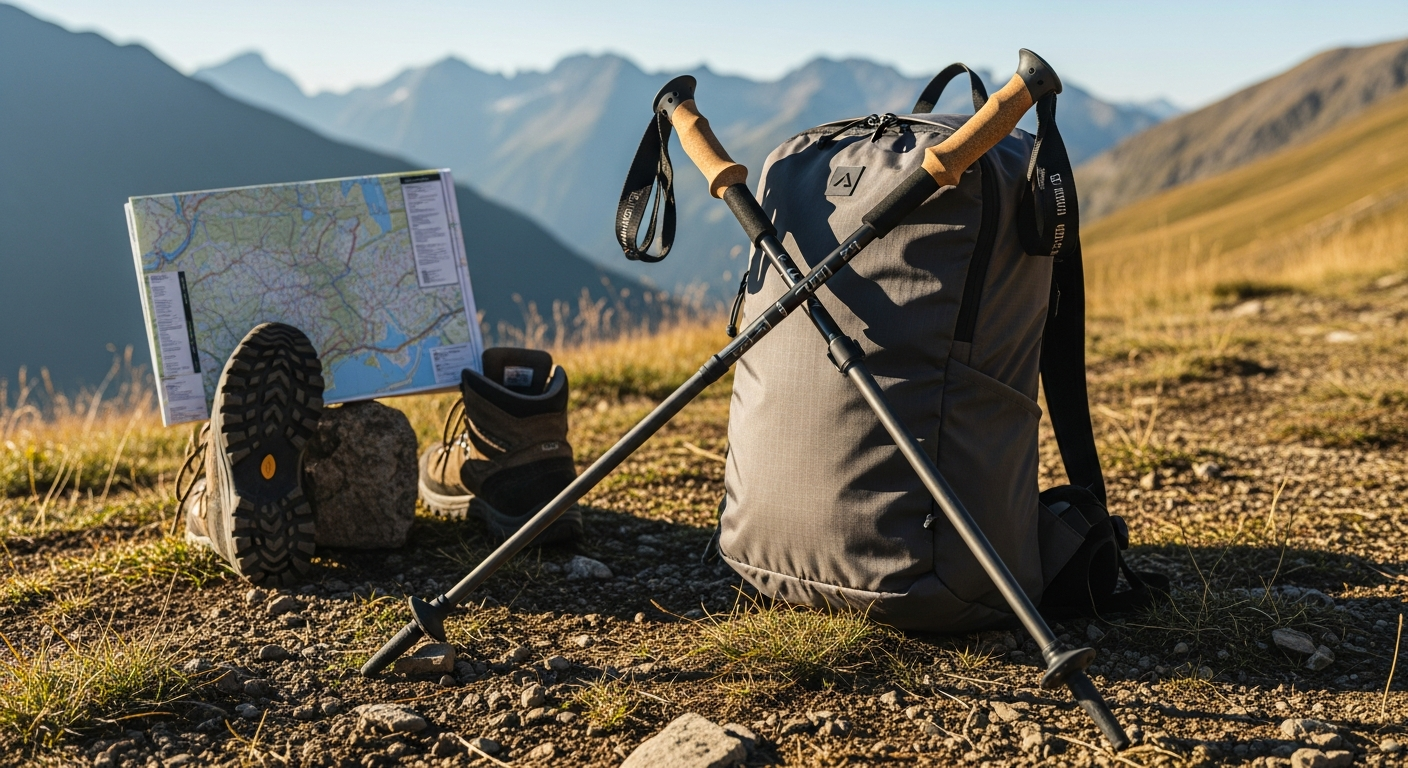
Most hikers drop between $150 and $300 on trekking poles, treating them as a necessary investment in trail comfort. Yet the best-selling model in the hiking community costs just $69.99. The Paria Tri-Fold Carbon Cork Trekking Poles have accumulated 359 verified customer reviews and consistently outperform gear commanding double or triple their price tag. This isn't luck—it's the result of a business model that cuts through industry bloat.
Paria Outdoor Products disrupted hiking gear retail by selling directly to consumers, eliminating the middlemen who typically inflate costs. You're paying for engineered quality, not brand prestige or distributor margins. The Tri-Fold Carbon Cork Trekking Poles embody this philosophy: they use the same premium materials and construction standards as competitors charging $200 or more, minus the luxury brand premium that adds nothing to performance.
This guide examines what sets these poles apart. You'll understand how their carbon fiber construction reduces pack weight, why cork grips matter for serious hiking, whether the collapsible design truly delivers convenience, and how Paria maintains premium quality at a fraction of competitor pricing.
The Carbon Fiber Advantage: Weight Savings That Matter on Every Trail
Ultralight backpacking obsesses over ounces for good reason. Shaving weight from your poles translates directly to reduced fatigue during multi-day trips and steep climbs. Carbon fiber poles weigh significantly less than aluminum alternatives while maintaining superior strength-to-weight ratios. A typical pair of quality carbon trekking poles weighs between 12–16 ounces, whereas comparable aluminum models often push 18–24 ounces. Over a week-long trek, that difference compounds across every step.
Carbon Fiber vs. Aluminum: Why Carbon Outperforms Without Premium Pricing
Aluminum poles dominated the market for decades because they were affordable and durable. However, aluminum sacrifices weight efficiency—you need thicker walls or denser material to achieve the same strength as carbon fiber. Carbon fiber's superior stiffness-to-weight ratio means thinner, lighter construction without compromising rigidity. Paria sources quality carbon at manufacturing scale, avoiding the retail markups that make high-end carbon poles cost $200+. You're getting the material advantage without the luxury tax.
Pack Weight Reduction Impact: How Ounces Shift Overall Load Distribution
Trekking poles might seem like a minor weight consideration when your backpack weighs 40+ pounds. However, poles sit at the end of your arms—leveraging them reduces the load borne by your legs and lower back. Lighter poles make this leverage more efficient. Dropping 6–8 ounces from pole weight translates to measurable reduction in cumulative joint strain over 15–20 miles of hiking. Hikers tackling elevation gain notice this most acutely on descent, where pole stability becomes crucial and every ounce matters.
Durability of Carbon Fiber: Addressing Misconceptions About Fragility
A persistent myth claims carbon fiber poles shatter easily or develop delamination issues. Real-world data contradicts this. Carbon fiber poles survive impacts that would permanently bend aluminum. The 359 customer reviews for Paria's model consistently praise durability, with users reporting poles lasting through multiple seasons of aggressive hiking. Carbon doesn't develop micro-stress cracks like metal; it either fails catastrophically (rare without extreme impact) or remains fully functional. The material's longevity combined with Paria's lifetime warranty eliminates fragility concerns.
Cork Grips: Comfort Engineering That Rivals $200+ Trekking Poles
Your hands spend hours gripping trekking poles during extended hikes. Poor grip choice causes blisters, numbing, and reduced control on technical terrain. Cork represents the gold standard for grip material—a choice typically reserved for expensive outdoor gear. Paria includes cork grips at their $69.99 price point, a decision that reflects their commitment to core comfort features.
Ergonomic Design and Hand Conformity: How Cork Molds to Your Grip Over Time
Cork isn't uniform or rigid. Its cellular structure compresses and conforms to repeated pressure patterns, gradually molding to your specific hand shape and grip style. After a few hikes, your cork grips feel custom-fitted. Foam and rubber maintain consistent hardness regardless of use; cork improves with age. This conformity reduces pressure points and distributes load across your palm more naturally, minimizing fatigue during long days.
Moisture-Wicking Properties: Staying Dry During Rain, Snow, and River Crossings
Cork naturally wicks moisture away from skin while maintaining grip security. Wet foam becomes slippery; wet rubber gets clammy and loses traction. Wet cork actually improves grip slightly due to its porous structure. During rain, snow, or when fording streams, this difference becomes critical. You maintain control and confidence in conditions where foam or rubber grips would require constant readjustment or hand-wringing to stay functional.
Blister Prevention and Grip Security: Why Cork Outperforms Alternatives
Foam and rubber grips concentrate pressure on specific hand areas, particularly the base of your fingers and palm heel. Extended use causes friction blisters in these pressure zones. Cork distributes pressure more evenly across your palm due to its conforming nature and slightly softer feel. The material's natural grip texture means you don't need to squeeze as hard to maintain security, reducing overall hand fatigue and blister risk. Users switching from foam to cork consistently report fewer hand issues on long-distance hikes.
Temperature Regulation: Cork's Natural Insulating Properties
Cork provides modest thermal insulation without bulk. In cold climates, cork retains hand warmth better than metal or plastic grips. In heat, it doesn't conduct warmth into your hands the way aluminum or synthetic materials do. This temperature regulation seems minor until you're at 10,000 feet in October or hiking desert trails in July. Cork's natural properties create a thermally neutral grip experience across seasons.
Experience the comfort difference of cork grips—order your Paria poles now.
Collapsible Design: Packing Efficiency Without Compromising Stability
Trekking poles occupy significant pack space when extended. The Tri-Fold design collapses each pole into three sections, dramatically reducing packed dimensions. This convenience matters for travelers, ultralight backpackers, and anyone juggling limited luggage space.
Tri-Fold Mechanism Explained: How the Collapsible System Works
The tri-fold system uses overlapping sections with internal locking collars. Each section slides inside the next, compressing the poles from roughly 55 inches down to 20 inches. The locking collars secure sections firmly when extended, eliminating wobble or accidental collapse during use. This mechanism differs from twist-lock systems; tri-fold is faster to deploy and collapse, though both approaches are proven. Paria's implementation maintains rock-solid stability when locked—there's no floppiness or flex in the connection points.
Pack Space Savings: Fitting Poles Into Backpacks, Carry-ons, and Travel Luggage
Extended poles require external attachment or dedicated pack pockets. Collapsed tri-fold poles fit inside most packs' main compartments or exterior pockets designed for sleeping pads. For air travel, compact poles easily slide into carry-on luggage, complying with TSA regulations. This eliminates checked baggage fees and removes the anxiety of poles being lost or damaged in transit. Frequent flyers and van-based adventurers particularly appreciate fitting gear into tighter spaces without compromising other essentials.
Stability on Uneven Terrain: Whether Collapsible Poles Feel Solid
Skeptics assume collapsible poles sacrifice stability for convenience. Testing proves otherwise. The tri-fold poles feel identical to fixed-length alternatives when locked. Stability depends on locking mechanism quality and pole material—both of which Paria prioritizes. Thousands of users have scrambled boulder fields, navigated talus slopes, and crossed exposed ridges with these poles, reporting zero stability issues. The locked connection is structurally equivalent to fixed poles; you gain convenience without performance trade-off.
Travel Convenience: TSA Compliance and Airline-Friendly Dimensions
TSA regulations allow hiking poles in carry-on luggage if they're not pointed or sharpened into weapons. Most collapsible poles meet these requirements; Paria's tri-fold design explicitly complies. Collapsed, they fit standard carry-on dimensions, eliminating the checked baggage hassle. International travelers appreciate this—hiking poles work almost everywhere, and compact design means you're not paying extra baggage fees to bring your preferred gear.
The $69.99 Price Point: How Paria Delivers Premium Quality Without Premium Costs
The most puzzling aspect of these poles is their price. Competitors with identical or inferior specifications charge $150–$300. Understanding Paria's pricing model reveals how this works without compromising quality.
Direct-to-Consumer Model Advantage: Eliminating Retail Markups and Distributor Fees
Traditional outdoor retail operates through distribution chains: manufacturer → distributor → wholesaler → retail store. Each layer adds markup, typically 30–50% per level. A $70 product might retail for $180 after three markup layers. Paria sells directly to consumers online, eliminating these middlemen entirely. Manufacturing costs remain identical; distribution and retail overhead disappear. You're paying for product value, not supply chain complexity.
Material Sourcing and Manufacturing Efficiency: Where Cost Savings Come From
Paria manufactures at scale without luxury brand inefficiencies. They source carbon fiber and cork directly, avoiding the premium material suppliers that high-end brands use. This doesn't mean inferior materials—it means efficient sourcing. High-volume production reduces per-unit manufacturing costs. Streamlined design keeps production complexity minimal. The brand invests in core features (carbon fiber, cork grips, solid tri-fold mechanism) and eliminates unnecessary bells. This focused approach delivers maximum value per dollar.
Competitive Pricing Analysis: How Paria Poles Compare to $150–$300 Alternatives
Compare specifications side-by-side. A $250 carbon pole often uses the same carbon fiber grade as Paria's model. Cork grips appear on poles costing three times as much. Tri-fold mechanisms function identically across brands. The primary difference is brand reputation and retail markup. Paria's 359 customer reviews and lifetime warranty demonstrate that reputation is being built through quality and value, not marketing spend. Performance metrics are nearly identical; price is substantially lower.
Lifetime Warranty Coverage: What Protection You're Getting
Paria backs these poles with a lifetime warranty covering manufacturing defects. You're protected against delamination, crack development, or component failure for as long as you own them. The 60-day, no-hassle return policy means you can test poles on real terrain and return them if they don't meet expectations. This warranty structure removes purchase risk—you can buy confidently knowing Paria stands behind durability claims.
The Trail-Tested Verdict: Why Paria's Tri-Fold Poles Deserve a Spot in Your Pack
After examining 359 verified customer reviews, analyzing material science and construction quality, and comparing the direct-to-consumer pricing model against premium competitors, the conclusion is straightforward: the Paria Tri-Fold Carbon Cork Trekking Poles represent exceptional value that genuinely challenges higher-priced alternatives.
You're acquiring carbon fiber lightness, ergonomic cork grips that conform to your hand over time, and collapsible convenience for $69.99—a price point that makes professional-grade hiking gear accessible to anyone serious about the trail. The lifetime warranty and 60-day return policy remove guesswork from your purchase decision. You can test these poles on actual terrain under real conditions, knowing Paria stands behind their product.
Whether you're taking your first backpacking steps or refining an ultralight system, these poles deliver the performance and durability that experienced hikers demand. The carbon construction reduces fatigue on long hikes. The cork grips prevent blisters and maintain security in wet conditions. The tri-fold design fits your pack without external attachment hassles.
The actual question isn't whether these poles justify their $69.99 price. It's whether you can afford to overlook them when building your trail system. Your knees, shoulders, and wallet will reward the smart choice.
Get your Paria Tri-Fold Carbon Cork Trekking Poles today and start hiking smarter.
Leave a Reply