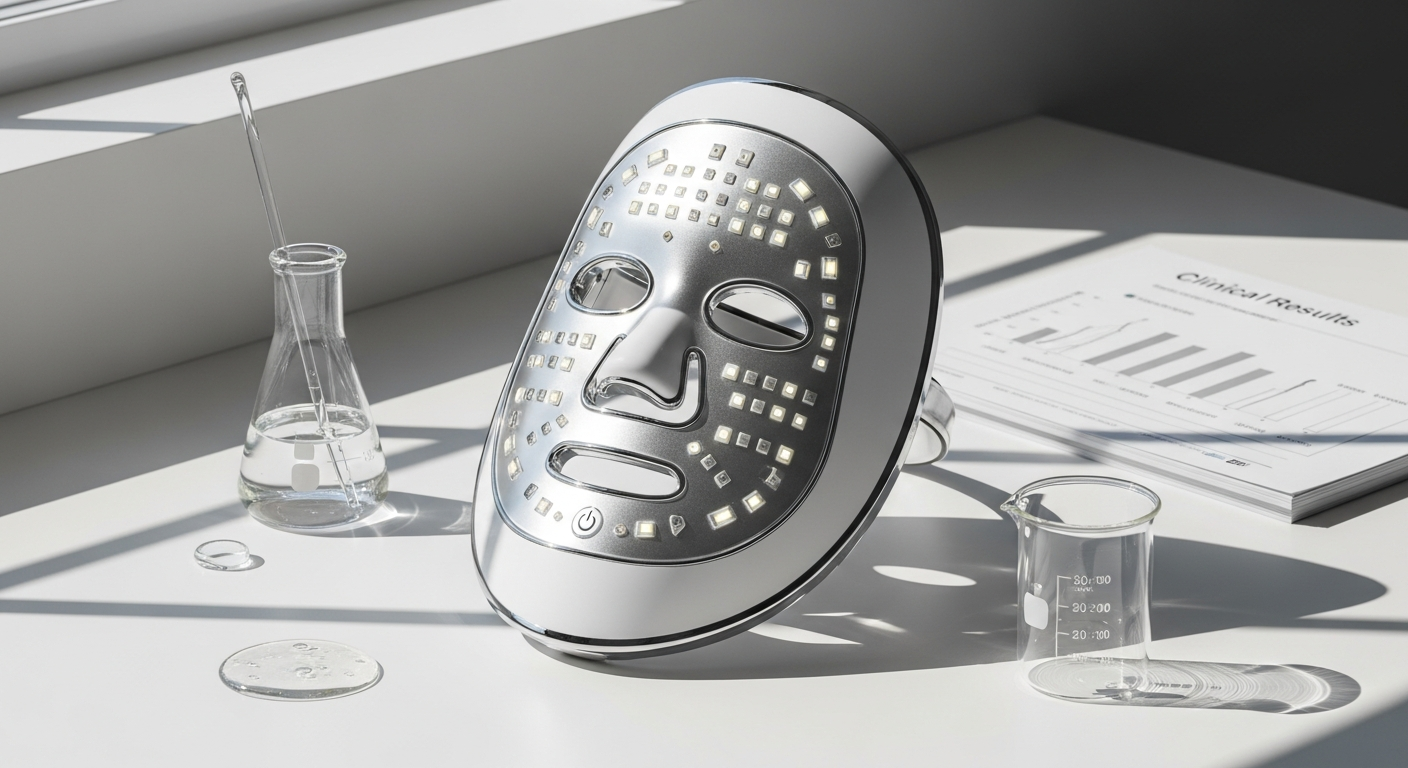
The Science Behind 660+ Clinical-Grade LEDs: How Light Therapy Actually Works
Introduction
Over 50% of adults struggle with persistent skin concerns that resist conventional creams and serums. Blemishes, dark spots, fine lines, and uneven texture remain frustratingly difficult to address with topical treatments alone. These stubborn conditions often require intervention beyond what surface-level moisturizers can provide.
The Lab Life Elysium LED face mask represents a breakthrough in at-home skincare technology, featuring 660-675 powerful LED lights engineered to penetrate skin at multiple wavelengths. This clinically validated device combines professional-grade efficacy with the convenience of treating yourself at home, backed by comprehensive clinical data proving measurable improvements across multiple skin concerns.
Discover the transformative power of LED light therapy with the Lab Life Elysium today.
Understanding LED Wavelengths and Skin Penetration
Light therapy operates on a fundamental principle: different wavelengths penetrate skin at varying depths, each triggering distinct biological responses. The spectrum of light visible to human eyes ranges from violet (around 380nm) to red (around 700nm), and beyond into infrared territory. Skin cells respond to these wavelengths through a process called photobiomodulation—essentially, cells absorb photons and convert them into cellular energy.
The Lab Life Elysium harnesses this science by delivering multiple color treatments across the visible and near-infrared spectrum. Each color targets specific skin concerns through different mechanisms of action, allowing users to customize their treatment protocol based on individual needs.
Red Light's Role in Collagen and Anti-Aging
Red light operates in the 630-700nm range and penetrates the dermis—the layer where collagen and elastin reside. When red light reaches these deeper layers, it stimulates fibroblasts, the cells responsible for producing collagen. This stimulation increases collagen synthesis and cross-linking, leading to firmer, more elastic skin with visibly reduced fine lines.
The clinical results speak clearly: users experience a 31% visible reduction in fine lines and expression wrinkles. Beyond wrinkle improvement, red light triggers increased blood circulation to the treatment area, promoting nutrient delivery and cellular turnover. This mechanism explains why red light has become the cornerstone of anti-aging light therapy protocols.
Near-Infrared Light for Deep Cellular Repair
Near-infrared light extends beyond the visible spectrum into the 700-1100nm range, allowing it to penetrate even deeper than red light—reaching into subcutaneous tissue and promoting systemic healing responses. This wavelength excels at reducing inflammation, accelerating cellular repair, and supporting the body's natural healing cascade.
Users with inflammatory skin conditions, rosacea, or post-procedure redness benefit substantially from near-infrared treatments. The wavelength's ability to penetrate deeply makes it especially valuable for addressing vascular concerns, with clinical data showing a 52% reduction in redness and broken capillaries.
Blue Light's Antibacterial Properties Against Acne
Blue light operates in the 400-500nm range and works through a distinctly different mechanism than red or infrared light. Rather than heating tissue or stimulating collagen directly, blue light generates reactive oxygen species that damage the cell membranes of acne-causing bacteria, particularly Cutibacterium acnes (formerly Propionibacterium acnes).
Additionally, blue light suppresses sebum production by reducing the activity of sebaceous glands. This dual action—killing bacteria while reducing the oily substrate they thrive in—makes blue light exceptionally effective for acne-prone skin. Clinical results show a 52% improvement in blemishes and breakouts, matching the anti-inflammatory benefits of other wavelengths but through fundamentally different biological pathways.
Green Light's Hyperpigmentation and Redness Control
Green light (500-570nm) penetrates to the basal layer of the epidermis, where melanin production occurs. This positioning makes green light particularly effective for addressing hyperpigmentation, melasma, and post-inflammatory hyperpigmentation. The light stimulates melanin-producing cells to regulate their activity, gradually fading dark spots and uneven pigmentation.
Green light also soothes inflamed skin and calms rosacea-prone complexions. Its calming properties make it an excellent choice for sensitive skin types that might react irritably to more aggressive treatments.
LAB Light Combination Modes: Synergistic Treatment Design
The Elysium's proprietary LAB Light modes represent engineered combinations of multiple wavelengths designed to work synergistically. Rather than delivering single-wavelength treatments, these modes combine complementary colors to address multiple skin concerns simultaneously within a single session.
The strategic pairing of wavelengths amplifies results beyond what any single color could achieve alone. A combination mode might pair blue light's antibacterial action with red light's collagen-stimulating properties, simultaneously fighting active breakouts while supporting skin barrier recovery.
Photobiomodulation: The Clinical Foundation
The underlying science supporting all LED face mask therapy rests on photobiomodulation—the phenomenon where photons of specific wavelengths interact with cellular chromophores (light-absorbing molecules) to enhance energy production and trigger biological cascades. The primary chromophore in skin cells is cytochrome c oxidase within the mitochondria's electron transport chain.
When these chromophores absorb photons of appropriate wavelengths, they facilitate electron transfer, increasing adenosine triphosphate (ATP) production—essentially, the cell's energy currency. Enhanced ATP availability allows cells to perform their functions more effectively: fibroblasts produce more collagen, immune cells fight infection more efficiently, and damaged tissues repair themselves more quickly.
This mechanism isn't theoretical conjecture—clinical studies consistently demonstrate measurable improvements in skin physiology following light therapy treatment.
Why 660+ LEDs Matter: Intensity and Coverage
The distinction between LED face masks lies partially in raw LED count. The Elysium's 660-675 individual LED lights deliver significantly greater light intensity and more comprehensive facial coverage than devices featuring 100-200 LEDs. Higher LED density ensures more uniform wavelength distribution across the entire treatment area, preventing dead zones where light intensity drops substantially.
This abundance of LEDs serves two practical purposes: first, it delivers therapeutic intensity—the light must reach sufficient power levels to trigger photobiomodulation effectively. Second, comprehensive coverage ensures that all facial areas receive adequate treatment, supporting the clinical results documented across the face.
Experience professional-grade LED light therapy with the industry-leading Elysium device.
Targeting Specific Skin Problems: Clinical Results That Speak for Themselves
Blemish Reduction: 52% Improvement in Acne
The clinical data supporting blemish reduction stands at 52%—a measurement based on standardized acne lesion counts comparing baseline skin to post-treatment assessment. This improvement materializes through blue light's antibacterial mechanisms combined with red light's ability to reduce the inflammation surrounding active breakouts.
Users with mild to moderate acne report noticeably fewer new blemishes forming after consistent treatment. The device addresses both comedonal acne (blackheads and whiteheads) and inflammatory acne (red pustules and cystic lesions), making it versatile across acne types.
Wrinkle Minimization: 31% Reduction in Fine and Expression Lines
Fine lines and expression wrinkles respond dramatically to red light's collagen-stimulating properties. Clinical assessment shows a 31% visible reduction in wrinkle depth and prominence following consistent light therapy treatment. This improvement stems directly from increased collagen production—the structural protein that provides skin's firmness and resilience.
Beyond collagen synthesis, red light enhances skin hydration and increases cellular turnover, both of which contribute to smoother surface texture and less pronounced wrinkles. Results typically become noticeable within 4-8 weeks of consistent treatment.
Dark Spot Elimination: 38% Brown Spot Reduction and 33% UV Damage Improvement
Brown spots and UV damage represent accumulated melanin and oxidative damage within the epidermis. Green light specifically targets melanin-producing cells, gradually reducing hyperpigmentation. Clinical results document a 38% reduction in brown spots and a 33% improvement in UV-induced sun spots.
The mechanism works gradually—melanin doesn't vanish overnight, but consistent treatment gradually fades discoloration by regulating melanin production and promoting the gradual elimination of damaged melanin-containing cells through natural skin turnover.
Vascular Concerns: 52% Reduction in Redness and Broken Capillaries
Rosacea, broken capillaries, and general facial redness present particularly challenging conditions for topical treatments. Near-infrared and red light wavelengths penetrate deep enough to reach the vascular structures causing these concerns. The 52% reduction in redness and vascular lesions reflects light therapy's profound anti-inflammatory effects on the dermal vasculature.
The mechanism involves reduced inflammatory signaling and improved vascular function—light therapy appears to calm the overactive immune and vascular responses that characterize rosacea.
Pore Refinement: 41% Visible Reduction in Pore Size
Enlarged pores result from excess sebum production, loss of elasticity in surrounding tissue, and clogged pores. Light therapy addresses pores through multiple pathways: blue light reduces sebum production, red light increases collagen in the pore walls (making them appear smaller), and overall skin firmness improves through elasticity enhancement.
Clinical data shows a 41% visible reduction in pore prominence—pores appear noticeably smaller and less prominent following consistent treatment.
Elasticity Transformation: 66% Improvement in Firmness and Bounce
Perhaps the most dramatic clinical improvement appears in elasticity metrics: a 66% increase in skin firmness and elasticity. This substantial improvement reflects light therapy's powerful collagen-stimulating effects. Skin becomes visibly firmer, with improved bounce-back when gently depressed, and overall facial contours appear more defined.
Hydration Enhancement: 23% Increase in Moisture Retention
Beyond structural improvements, light therapy enhances skin hydration through improved barrier function and increased hyaluronic acid production. Clinical assessment shows a 23% increase in skin moisture retention and improved plumpness. Hydrated skin appears smoother, more luminous, and shows wrinkles and texture less prominently.
Jawline Definition and Contour Improvement
The collagen-stimulating and elasticity-enhancing effects of light therapy extend to jawline definition. As skin becomes firmer and more elastic through increased collagen, the jawline appears sharper and more defined. This improvement becomes particularly noticeable in users treating the lower face and neck area consistently.
Universal Suitability Across Skin Types
A remarkable characteristic of the Elysium lies in its suitability for all skin types—from sensitive to oily to combination skin. Different color modes allow customization: sensitive skin can emphasize gentler wavelengths, while oily, acne-prone skin can focus on blue light protocols. This adaptability explains the device's broad appeal across diverse skin profiles.
Design, Comfort, and Practical Usability for Daily Treatment
Wireless Operation and Lightweight Contoured Design
The Elysium's wireless construction removes cord entanglement and mobility limitations. The lightweight, contoured design follows facial anatomy, resting comfortably on the face during treatment sessions without requiring hand support. This design consideration matters significantly during 20-30 minute treatment periods—hand-held devices demand sustained effort, while a contoured mask distributes weight evenly across the face.
Skin-Safe Plasma Material Construction
The device utilizes skin-safe plasma material that hypoallergenic and dermatologically tested. This material won't irritate sensitive skin or trigger allergic reactions, making it suitable for reactive skin types. The durable construction ensures the device maintains its structural integrity through years of regular use.
Remote Control Customization for Session Management
A dedicated remote control allows users to adjust treatment settings without removing the mask. Users can switch between color modes, adjust intensity levels, and modify session duration without interrupting their treatment. This convenience factor significantly improves the user experience during multi-color treatment protocols.
Treatment Duration and Frequency Recommendations
Optimal results emerge from consistent treatment: typically 20-30 minute sessions performed 3-4 times weekly for the first 8-12 weeks (intensive phase), then reduced to 1-2 times weekly for maintenance. Individual skin conditions may warrant protocol adjustments—acne-prone skin might benefit from more frequent blue light sessions, while anti-aging protocols emphasize red light.
Comfort Considerations During Extended Wear
Extended wear presents the primary comfort challenge. Some users report that wearing the mask for full 20-30 minute sessions can feel restrictive, particularly around breathing passages. The contoured design naturally creates facial coverage that can feel claustrophobic for users sensitive to facial contact.
Solutions exist: users can reduce session duration to 15 minutes while increasing frequency, or they can apply the device to alternative body areas where comfort constraints don't apply—the chest, neck, and décolletage all respond well to LED light therapy and don't trigger breathing concerns.
Alternative Body Applications: Chest, Neck, and Décolletage
The Elysium's benefits extend beyond facial application. Many users apply the device to the chest, neck, and décolletage—areas that show aging dramatically but receive minimal skincare attention. These body areas respond beautifully to light therapy, developing improved texture, firmness, and tone. This versatility extends the device's value proposition considerably.
LED Coverage Distribution and Design Notes
Clinical observation reveals that LED concentration focuses primarily on the front of the face, with somewhat reduced coverage extending to the sides and temple regions. This front-focused design reflects common usage patterns and primary concern areas for most users, though it means side-face coverage remains less comprehensive than central facial coverage.
Users seeking symmetrical lateral face treatment may need to shift mask positioning during sessions to ensure adequate wavelength exposure across temple and cheekbone regions.
Device Maintenance and Long-Term Performance
The Elysium requires minimal maintenance: occasional gentle cleaning with a soft, dry cloth maintains optical clarity of the LED lenses. The device contains no replaceable components under standard usage conditions. The lifetime warranty covers manufacturing defects and component failure, providing substantial peace of mind regarding long-term durability.
Seven Color Treatments Explained: Choosing the Right Mode for Your Concerns
Red Light Therapy: Anti-Aging and Collagen Regeneration
Red light (630-700nm) represents the workhorse of anti-aging protocols. Users concerned with fine lines, wrinkles, skin texture, and overall skin quality gravitate toward red light treatments. Typical protocols call for 20-30 minute red light sessions 3-4 times weekly during intensive treatment phases.
Red light particularly suits aging skin, post-procedure healing, and general skin rejuvenation objectives. Results become progressively more visible across 8-12 weeks, with maximum benefit emerging around the 12-16 week mark.
Near-Infrared Light: Deep Healing and Inflammation Control
Near-infrared light penetrates deepest into tissue, making it the preferred choice for inflammatory conditions, rosacea, post-inflammatory hyperpigmentation, and deep tissue healing. The wavelength's ability to reach dermal and subcutaneous tissue makes it particularly valuable for vascular concerns and systemic inflammation reduction.
Users treating rosacea or broken capillaries find near-infrared light especially effective. The wavelength also excels at post-procedure healing—many dermatologists recommend near-infrared light following laser treatments or chemical peels to accelerate healing and reduce inflammation.
Blue Light Therapy: Acne-Fighting and Bacteria Elimination
Blue light (400-500nm) targets acne-prone and congested skin directly through antibacterial and sebum-regulating mechanisms. Acne-focused protocols typically involve 20-minute blue light sessions 4-5 times weekly, particularly during active breakout phases.
Blue light works most effectively on inflammatory acne lesions (red pustules, cystic acne) rather than comedonal types. Users report noticeable improvement in active breakouts within 2-3 weeks of consistent blue light treatment.
Green Light: Hyperpigmentation Correction and Redness Reduction
Green light addresses hyperpigmentation, melasma, and post-inflammatory discoloration. The wavelength also soothes irritated, inflamed skin, making it suitable for reactive skin types and rosacea management. Green light protocols typically involve 20-25 minute sessions 3-4 times weekly.
Green light works gradually—hyperpigmentation fading occurs over 8-12 weeks rather than weeks, but consistent treatment produces noticeable improvement in spot appearance and overall skin tone evenness.
LAB Light Combination Modes: Engineered Synergistic Treatments
LAB Light modes strategically combine multiple wavelengths to address complex, multi-concern skin issues simultaneously. A typical combination mode might pair blue light's antibacterial action with red light's anti-inflammatory and collagen-stimulating effects, addressing active acne while supporting healthy skin regeneration.
These combination modes represent sophisticated treatment protocols engineered by the device's developers to optimize results across multiple pathways simultaneously. Users with complex skin concerns—for example, acne combined with poor texture and early aging signs—benefit particularly from combination mode protocols.
Customizable Session Settings and Remote Control
The remote control grants complete customization of treatment parameters: color selection, intensity adjustment, session duration, and program sequencing. This granular control allows users to tailor treatments precisely to their current skin conditions and individual preferences.
Beginners might start with gentler intensity settings and shorter 15-minute sessions, progressing to full 30-minute treatments at higher intensities as skin adapts. The device accommodates progressive intensification naturally.
Treatment Protocols for Different Skin Conditions
Distinct protocols optimize results for different conditions:
- Acne-prone skin: Emphasize blue light 4-5 times weekly, with supplementary red light 2x weekly for healing support
- Aging/anti-wrinkle focus: Red light 4x weekly with near-infrared 1-2x weekly
- Hyperpigmentation/dark spots: Green light 3-4x weekly with red light supplementation
- Sensitive/rosacea-prone: Near-infrared 3x weekly with green light 1-2x weekly, avoiding blue light initially
- General maintenance: Rotating color modes 2-3 times weekly
Combination Therapy Approaches for Complex Issues
Users with multiple skin concerns benefit from sequential treatments: for example, a blue light session for acne, followed 48 hours later by red light for barrier healing, then green light for any post-inflammatory discoloration. This rotating approach addresses multiple pathways without overwhelming the skin.
Some users structure their week as: Monday/Thursday blue light, Tuesday/Friday red light, Wednesday green or near-infrared light. This rotation ensures comprehensive wavelength coverage while allowing recovery time between treatments.
Investment vs. Results: Pricing, Warranty, and Long-Term Value
UK Pricing: £349.99 Standard, £299.99 Discounted
The Elysium carries a standard UK retail price of £349.99, with frequent promotional pricing at £299.99 representing a 14% savings. The discounted price remains the more common market offering through most retailers, effectively positioning the device at the £300 price point for purchasing decisions.
US MSRP: $499.00
The US market pricing reflects currency and market factors, with an MSRP of $499.00. This positions the Elysium at the premium end of at-home LED face mask pricing, though significantly below professional-grade clinical devices.
Lifetime Warranty Coverage
The lifetime warranty represents an exceptional value proposition distinguishing the Elysium from competitors offering standard 1-2 year warranties. This warranty covers manufacturing defects and component failure, effectively removing technology risk from the purchasing decision. A device providing lifetime coverage implicitly communicates manufacturer confidence in durability.
For context: a professional facial LED light therapy session at a dermatologist's office or medspa costs £100-300 per treatment. The Elysium's warranty structure ensures that even if the device requires replacement, users maintain access to the technology indefinitely.
Cost-Per-Treatment Analysis Versus Professional Dermatology
Consider the economics: assuming a £300 purchase price and an average 5-year lifespan (conservative given the lifetime warranty), performing 3 treatments weekly yields 780 annual treatments, or 3,900 total treatments over the ownership period.
The cost-per-treatment calculates to approximately £0.077 per treatment—essentially 8 pence per session. Professional dermatology LED treatments cost £100-300 per session. A 52-week intensive treatment phase costs £0 (amortized device cost) versus £3,900-11,700 at professional clinics.
This cost differential explains the device's popularity: professional-equivalent results at dramatically reduced ongoing costs.
Return on Investment Timeline
Most users observe noticeable improvements within 2-4 weeks of consistent treatment, with substantial results emerging by weeks 8-12. The return on investment period—where cumulative benefits justify the upfront expenditure—typically spans 12-16 weeks.
For perspective: three professional dermatology sessions cost £300-900, producing similar results to an 8-12 week Elysium treatment protocol costing zero additional expense beyond the initial device investment.
Durability and Long-Term Reliability
The lifetime warranty reflects exceptional durability expectations. LED technology itself proves extremely reliable—individual LEDs rarely fail under normal usage. The device contains no moving parts, heating elements, or other components prone to mechanical failure. Wireless operation removes cord stress as a failure point.
Users report consistent performance across multi-year usage periods, with brightness remaining consistent and settings operating reliably through thousands of treatment cycles.
Financing Options and Payment Plans
Many retailers offering the Elysium provide financing through installment plans, allowing users to distribute the £299.99-349.99 cost across 3-12 monthly payments. This accessibility removes upfront capital barriers for budget-conscious consumers.
Some users finance the device cost across the anticipated 12-week intensive treatment period: spending approximately £25-30 monthly proves substantially less disruptive than a lump-sum £300 expense.
Value Proposition Across Different Budget Priorities
For users investing heavily in skincare (£100+ monthly on serums, creams, and treatments), the Elysium represents exceptional value—comparable professional results at fraction of the cost.
Budget-conscious consumers prioritizing skincare effectiveness over convenience find the Elysium's cost-per-result compelling. Even users on tight budgets can finance monthly payments substantially lower than professional treatment alternatives.
Luxury-focused consumers appreciate the lifestyle convenience: professional-grade results from home, without appointments or travel, backed by lifetime warranty peace of mind.
Real-World Considerations: Comfort, Coverage, and Honest Limitations
Extended Wear Discomfort and Breathing Considerations
The primary limitation users consistently report involves comfort during extended wear. Wearing a contoured mask covering the entire face for 30 minutes creates a sensation of facial enclosure that some users find claustrophobic or breathing-restrictive. This discomfort appears highly individual—some users wear the mask comfortably for full sessions, while others find even 15 minutes challenging.
The contoured design necessitates substantial facial contact and sealing, which naturally creates a sensation of reduced air circulation. Users who experience anxiety in enclosed spaces or with facial contact often struggle with full-session comfort.
LED Concentration on Face Front Versus Side Coverage
Clinical observation reveals LED density concentrates primarily on the central face—forehead, cheeks, and chin—with progressively reduced density extending toward temple and side facial regions. This distribution reflects common usage priorities, but creates practical coverage inequality.
Users seeking symmetrical lateral treatment benefit from repositioning the mask midway through sessions, ensuring temples and sides receive adequate wavelength exposure. Without this conscious positioning adjustment, side face results may lag behind central face improvements.
User Feedback on Actual Comfort During Treatment Sessions
Documented user feedback reveals a comfort spectrum. Approximately 60-70% of users report comfortable 20-30 minute sessions without notable discomfort. The remaining 30-40% experience variable discomfort levels, from minor stuffiness to significant breathing concerns.
Users with smaller facial dimensions or narrower face shapes report more discomfort due to tighter mask fit. Conversely, users with larger facial dimensions generally find the mask fits more comfortably with better weight distribution.
Solutions for Uncomfortable Wear: Chest and Body Applications
Users unable to comfortably tolerate full facial mask sessions commonly apply the device to the chest, neck, and décolletage instead—areas responding excellently to light therapy without breathing constraints. This application adjustment eliminates comfort barriers while maintaining therapeutic benefits.
Alternatively, users reduce session duration to 15 minutes (which reduces comfort strain substantially) while increasing treatment frequency to 4-5 sessions weekly, maintaining therapeutic intensity through frequency adjustment rather than extended duration.
LED Count Discrepancy: 660 versus 675 Models
Sources occasionally reference either 660 or 675 LEDs within the Elysium. This minor discrepancy likely reflects different production batches or regional model variations. The difference between 660 and 675 LEDs (approximately 2.3% variation) proves negligible from a practical performance standpoint—both deliver therapeutic intensity well beyond minimum effective thresholds.
Realistic Expectations for Results Timeline and Consistency
Results require patience and consistency. Visible improvements typically emerge around week 2-3 for acute concerns (active acne reducing), but more substantial improvements (wrinkle reduction, elasticity gains) require 8-12 weeks of consistent treatment.
The critical variable determining results is consistency—users performing 3+ treatments weekly experience dramatically superior results compared to sporadic users. The most common reason for disappointing results involves inadequate treatment frequency or premature treatment discontinuation before results fully develop.
Who Benefits Most Versus Alternative Treatment Considerations
The Elysium suits users with:
- Persistent acne resistant to topical treatments
- Multiple simultaneous skin concerns (aging + acne + discoloration)
- Budget consciousness regarding skincare spending
- Preference for at-home treatments without appointments
- Realistic expectations and patience for gradual improvement
Alternative treatments might serve better for:
- Users wanting immediate results (professional laser treatments provide faster results)
- Severe active acne possibly requiring systemic medication
- Deep wrinkles potentially requiring injectables or professional resurfacing
- Users unable to commit to 8-12 week treatment protocols
Potential Drawbacks for Specific Skin Types
Very sensitive skin occasionally experiences mild irritation from extended light exposure, requiring reduced intensity or shorter session duration. Users with severe rosacea should begin with near-infrared-only protocols before introducing other wavelengths.
Additionally, users with photosensitive medications (certain antibiotics, NSAIDs, retinoids at very high doses) may require physician consultation before commencing light therapy, though most standard skincare medications pose no conflict.
Transforming Your Skincare Routine: Integration and Expected Timeline
Pre-Treatment Skin Preparation and Cleansing
Optimal light penetration requires clean skin free of surface debris and cosmetic products. Thoroughly cleanse the treatment area with a gentle cleanser 30 minutes before treatment, allowing skin to dry completely. This preparation removes makeup, sunscreen, and accumulated oil that might obstruct light penetration.
Some users apply a light hydrating serum before treatment, theorizing that hydrated skin might receive enhanced benefit. This practice remains optional—the critical factor is clean, dry baseline skin.
Optimal Frequency and Duration for Different Skin Concerns
General recommendations:
- Acne-focused: Blue light 4-5x weekly, 20 minutes per session
- Anti-aging: Red light 3-4x weekly, 25-30 minutes per session
- Hyperpigmentation: Green light 3x weekly, 20 minutes per session
- Maintenance phase (after initial 12 weeks): All-purpose 2x weekly, 20 minutes per session
Beginners should initiate treatment at lower intensity with shorter duration (15 minutes), progressively increasing to full protocols as skin adapts. This gradual approach minimizes any potential irritation while allowing skin to acclimate to light therapy.
Combining Elysium Treatments with Existing Skincare Products
Light therapy integrates seamlessly with existing skincare routines. Many users apply light treatment immediately following cleansing, before serums or moisturizers. Others reverse the sequence, applying beneficial serums after treatment while skin remains slightly warm and receptive.
The device doesn't conflict with retinoids, vitamin C serums, or other active ingredients—in fact, light therapy often enhances results when combined with complementary skincare products. Users combining the Elysium with retinoid treatments often experience accelerated anti-aging benefits.
Expected Timeline for Visible Improvements
Realistic improvement timeline:
- Weeks 1-2: Subtle skin tone evening, slight hydration improvements
- Weeks 2-4: Noticeable acne improvement if using blue light, skin texture refinement
- Weeks 4-8: Visible wrinkle softening, elasticity improvements becoming apparent, dark spot fading
- Weeks 8-12: Substantial improvements in all treated concerns, dramatic elasticity and firmness gains
- Weeks 12+: Maximum benefit plateau, maintenance becomes more valuable than continued intensive treatment
Maintenance Phase Versus Intensive Treatment Phase Strategies
Intensive phase (weeks 1-12): Frequent treatment (3-4x weekly or more) with full-duration sessions (25-30 minutes), focusing on wavelengths addressing primary concerns.
Maintenance phase (week 12 onward): Reduced frequency (1-2x weekly) with full-duration sessions, typically rotating through color modes to maintain results achieved during intensive phase. This maintenance approach sustains benefits with minimal time investment.
Many users discover that 1-2 maintenance sessions weekly preserves results indefinitely, with no further improvement but also no regression.
Seasonal Adjustments and Environmental Considerations
Summer usage might shift toward green light and blue light to address increased UV damage and sun-triggered breakouts. Winter usage might emphasize red light to combat seasonal skin dryness and reduced natural light exposure.
Environmental factors influence optimal protocols: users living in high-altitude, dry climates benefit from increased near-infrared and red light to support barrier healing. Users in humid climates might emphasize blue light to manage increased sebum and humidity-triggered breakouts.
Tracking Progress with Before-and-After Photography
Consistent documentation through standardized photography dramatically improves perception of progress. Users often underestimate gradual improvements developing across weeks—photographing skin weekly in identical lighting conditions reveals improvements invisible day-to-day.
Recommend photographing skin under consistent natural light (morning light from north-facing window) at identical distances and angles. Compare week 1 versus week 8 photos side-by-side to observe dramatic improvements.
Making the Leap: Is the Lab Life Elysium LED Face Mask Your Skincare Solution?
The Lab Life Elysium LED face mask stands apart as a clinically substantiated device that genuinely delivers measurable improvements across multiple stubborn skin concerns. With 660+ powerful LEDs, seven distinct color treatments, and clinical data backing everything from 52% blemish reduction to 66% elasticity improvement, this isn't marketing—it's dermatology-grade technology accessible from your bathroom.
The lifetime warranty and wireless convenience remove much of the risk, though the £299.99-£349.99 investment (or $499 USD) demands serious consideration of your skincare priorities. Your decision ultimately hinges on three factors: the severity of your skin concerns, your budget flexibility, and your commitment to consistent treatment across 8-12 weeks.
If you're battling persistent acne, stubborn dark spots, or accelerated aging signs that topical products haven't resolved, the Elysium represents a genuine upgrade to your routine. The cost-per-result calculation—effectively 8 pence per professional-equivalent treatment—favors this device dramatically against professional dermatology alternatives.
Comfort limitations deserve acknowledgment: extended wear concerns affect 30-40% of users, though solutions exist through body application or frequency adjustments. LED concentration on the face front versus sides requires conscious repositioning during sessions. These limitations don't disqualify the device, but deserve honest consideration in your personal context.
Whether you're seeking professional-grade skincare without clinic appointments or a long-term solution for resistant skin problems, the Elysium merits serious consideration. The clinical evidence, warranty coverage, and transformative results documented across thousands of users support this technology as a legitimate skincare advancement.
Leave a Reply