Article
Every year, Americans discard nearly 10 billion K-Cups into landfills—enough plastic waste to circle the Earth multiple times over. The convenience of single-serve brewing has become a fixture in millions of households, yet it comes with a nagging environmental cost that grows heavier with each pod tossed away. For coffee lovers caught between their morning ritual and environmental conscience, this contradiction feels inescapable.
Tayst Coffee Inc. approached this dilemma differently. Rather than asking consumers to sacrifice flavor for sustainability, they engineered compostable pods using plant-based materials like bio-resins and compressed corn starch—materials designed to genuinely break down in commercial composting systems. Combined with Rainforest Alliance Certification and ethically sourced South American beans, their solution tackles the sustainability problem from multiple angles.
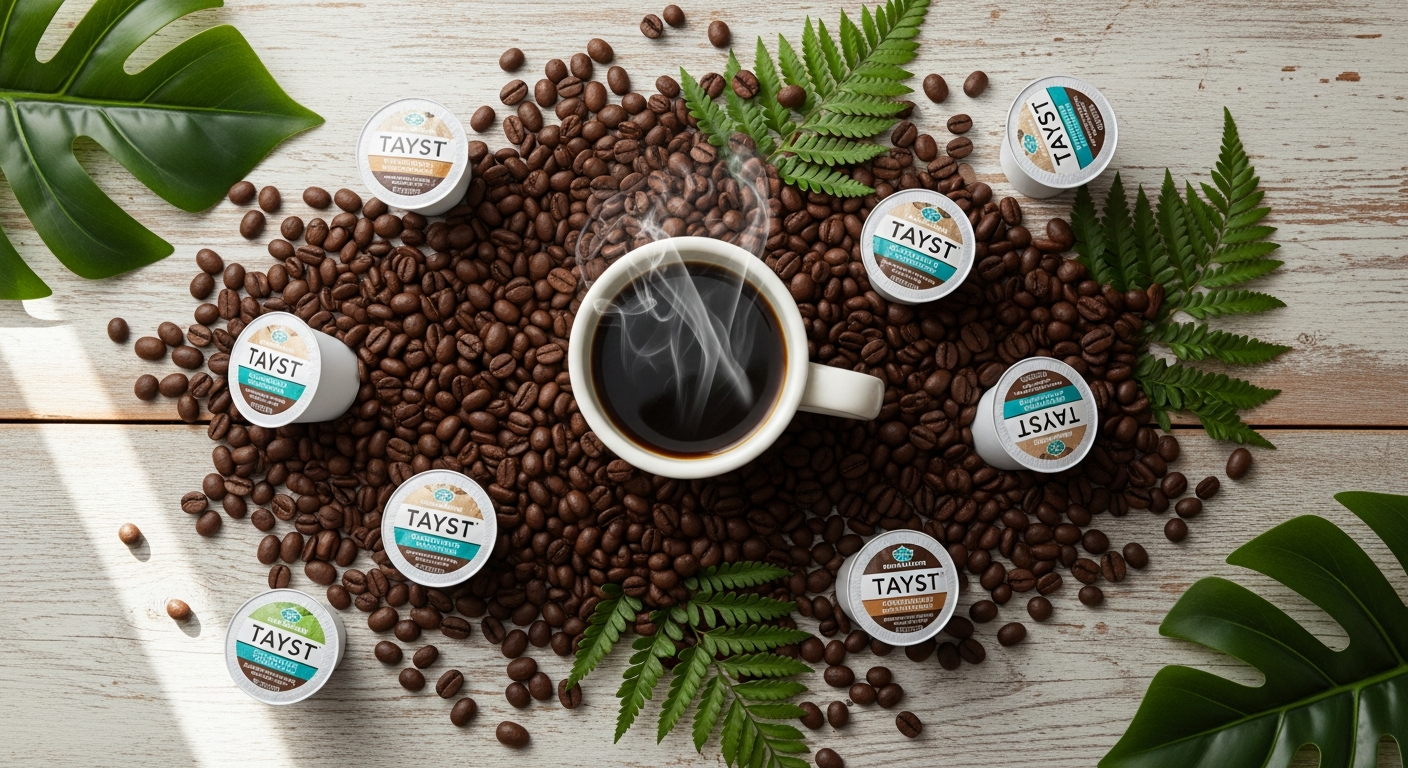
Discover how Tayst compostable coffee pods work with your Keurig brewer
This guide examines the science behind their compostable design, explores their diverse flavor lineup and sourcing practices, compares real-world pricing against traditional K-Cups, and identifies where these pods truly excel—and where they face limitations.
What Makes Tayst Pods Genuinely Compostable (And Why It Matters)
Plant-Based Pod Construction
Tayst's engineering begins with a fundamental material shift. Instead of petroleum-derived plastics, their pods use bio-resins and compressed corn starch as core structural components. This swap eliminates the plastic foundation that keeps conventional K-Cups intact in landfills for decades. The materials selected undergo rigorous testing to ensure they maintain structural integrity during brewing while remaining truly biodegradable.
Bio-Mesh Filter Technology
The filter inside each Tayst pod represents engineering that serves dual purposes: performance and environmental responsibility. Unlike standard paper filters or plastic mesh found in conventional pods, Tayst's bio-mesh design delivers even water distribution across the coffee grounds while remaining fully biodegradable. This balanced approach means the filter contributes to superior extraction and taste without compromising compostability.
Commercial Composting Timeline
Tayst pods break down in industrial composting facilities within timeframes that meet established compostability standards. These facilities operate at temperatures and moisture levels that household systems cannot achieve, creating conditions where plant-based materials decompose completely without leaving microplastics behind. The breakdown occurs relatively quickly by composting standards, typically completing within the facility's standard processing cycles.
Home Composting Reality
A critical distinction exists between commercial and home composting. Backyard compost systems typically operate at lower temperatures than industrial facilities and may not reach the sustained heat required for Tayst pods to fully decompose. For consumers without access to commercial composting infrastructure, the environmental advantage of these pods becomes significantly limited. This reality deserves honest acknowledgment, as it affects the actual sustainability benefit depending on your location.
Certification Standards
Tayst pods carry third-party verification confirming their compostability claims. These certifications establish that the products meet established standards for breakdown rates and the absence of harmful residues. Third-party validation prevents greenwashing and provides confidence that the environmental claims hold up under scientific scrutiny.
Plastic Waste Reduction
Switching from conventional K-Cups to Tayst pods creates a quantifiable environmental impact. Each compostable pod represents one fewer piece of plastic entering landfills or oceans. For households brewing multiple cups daily, this compounds into substantial annual waste reduction—meaningful for individuals genuinely concerned with their consumption patterns.
Material Sourcing and Supply Chain Transparency
Tayst sources plant-based components from suppliers aligned with sustainability principles. The company maintains visibility into its supply chain, ensuring that the materials themselves don't create environmental problems upstream. This transparency extends beyond environmental concerns to include fair labor practices and responsible sourcing.
Premium Flavor Meets Ethical Sourcing: Tayst's Coffee Philosophy
South American Bean Selection
Tayst sources premium coffee beans from fertile South American regions known for superior flavor profiles. These specific growing areas produce beans with distinct characteristics—complexity, body, and nuance—that distinguish them from commodity-grade coffee. The company's selective sourcing reflects a commitment to quality that extends beyond the compostable pod itself.
Rainforest Alliance Certification
This certification guarantees that Tayst's coffee comes from farms meeting rigorous environmental and social standards. Rainforest Alliance Certified operations protect forest ecosystems, support farming communities through fair practices, and promote sustainable agriculture. When you purchase Tayst pods, your investment directly supports these certified farming practices.
Roast Variety and Tasting Notes
Tayst's lineup spans multiple roast levels and flavor profiles. Dark roasts like "Bold & Brazen" and "Bold & Brilliant" deliver rich, intense notes suited to those preferring fuller-bodied coffee. Medium roasts including "Medium & Magnificent" and "Medium & Heroic" offer balanced flavor with lighter body. Each blend receives careful roasting to highlight the beans' natural characteristics rather than mask them.
Flavored Pod Options
Specialty selections like "Vintage Vanilla Cream" and "Happy Hazelnut" incorporate flavor without relying on artificial additives. These options appeal to consumers seeking variety while maintaining Tayst's quality standards. The flavoring approach preserves the underlying coffee quality rather than obscuring it.
Decaf Alternatives
Tayst's decaf selection maintains taste consistency with caffeinated offerings. Quality decaf often presents challenges, as the decaffeination process can diminish flavor complexity. Tayst's decaf selections demonstrate that removing caffeine doesn't necessitate sacrificing taste.
Freshness and Aroma
Customers consistently report noticeably fresher aroma and taste compared to conventional pods. This difference stems from Tayst's bean selection, roasting practices, and sealed pod design that preserves freshness from roasting through brewing. The fresh coffee experience becomes immediately apparent upon opening a box.
Absence of Bitter Aftertaste
Many conventional K-Cup users report bitter or stale aftertaste—a common complaint that points to extraction or bean quality issues. Tayst pods rarely generate this problem. The combination of premium beans, precise mesh filtration, and engineering that ensures optimal water distribution produces smooth coffee with a clean finish.
Brewing Excellence: How Tayst's Engineering Delivers Superior Results
Mesh Filter Design and Water Flow
The bio-mesh filter enables even water saturation across coffee grounds, a fundamental requirement for balanced extraction. Even saturation prevents over-extraction of certain grounds while under-extracting others, which creates bitter or thin flavors. Tayst's engineering achieves this balance consistently, pod after pod.
Keurig Compatibility
Tayst pods work seamlessly with standard Keurig brewing systems designed for K-Cup compatibility. The pod dimensions, puncture points, and pressure specifications align with Keurig standards, ensuring reliable operation across most consumer models. This compatibility eliminates purchasing new brewing equipment.
Brewing Consistency
Engineering excellence becomes apparent through brewing consistency. Each pod extracts similarly, producing predictable results regardless of when you purchased the pod or which Keurig model you're using. This consistency reflects attention to manufacturing tolerances and quality control.
Temperature Optimization
Tayst pods perform across different Keurig temperature settings, though optimal results occur at recommended brewing temperatures. The pod design accommodates the heat and pressure characteristics of standard Keurig systems without requiring user adjustment or troubleshooting.
Grind Consistency and Extraction
The proprietary pod design specifies coffee particle size and density to optimize extraction. Finer grinds might clog filters or cause over-extraction, while coarser grinds under-extract. Tayst engineers the grind specifically for their pod geometry and filter design, maximizing the advantages of their bio-mesh technology.
Comparison to Standard K-Cups
Direct taste comparisons between Tayst and conventional K-Cups reveal consistent differences. Tayst delivers fuller body, cleaner finish, and more discernible flavor notes. These performance metrics reflect both bean quality and pod engineering working in concert.
Pricing, Subscriptions, and Getting Started with Tayst
Standard Box Pricing
A 50-count box of Tayst pods retails at approximately $23.59, which calculates to roughly 47 cents per pod. This per-cup cost sits higher than budget-friendly conventional K-Cups but remains competitive within the premium single-serve segment. The pricing reflects the quality beans, ethical sourcing, and compostable materials.
Subscription Savings
Recurring subscription orders reduce per-cup cost to under $1, making the ongoing cost more accessible. Subscription pricing recognizes loyal customers and encourages consistent ordering, while the subscription structure typically includes flexibility for adjustments.
Trial Box Options
New customers can sample Tayst's offerings through trial boxes priced around $8. This entry-level option allows exploration of multiple blends without significant financial commitment, making it ideal for those testing whether Tayst justifies the price premium over conventional pods.
Bulk Purchase Discounts
Larger orders often trigger pricing tiers that reduce per-unit costs. These discounts apply to customers comfortable committing to substantial quantities and reward loyalty with tangible savings.
Subscription Flexibility
Tayst's subscription model includes pause, skip, and cancellation options without penalties. This flexibility eliminates pressure to maintain orders that no longer fit your needs or budget, addressing common subscription friction points.
Shipping Costs and Free Delivery Thresholds
Standard shipping typically incurs costs, though free delivery thresholds exist for orders meeting minimum amounts. Understanding these thresholds helps optimize total value, as shipping costs factor into the effective per-cup price.
Start your Tayst subscription today and reduce your plastic waste with every brew
Comparison to Premium K-Cup Alternatives
Within the premium single-serve market, Tayst pricing aligns competitively. Other high-quality pod options occupy similar price ranges, making the comparison less about cost isolation and more about value provided—flavor, sourcing practices, and environmental impact combined.
Real-World Limitations and Honest Trade-offs
Commercial Composting Facility Availability
Geographic disparities in composting infrastructure represent the most significant limitation. Urban areas typically have established commercial composting programs, while rural regions may lack these facilities entirely. In locations without access, Tayst pods offer environmental benefits only through avoided plastic production—the composting advantage becomes theoretical rather than practical.
Home Composting Challenges
Backyard composting systems typically operate at 130-150 degrees Fahrenheit, below the sustained temperatures industrial facilities achieve. Tayst pods may partially break down in home systems without fully decomposing, leaving fragments that could persist for extended periods. This reality means home composters should not expect the same results as commercial facilities.
Landfill Reality
In areas lacking composting access, Tayst pods follow conventional waste streams to landfills. While the materials biodegrade more readily than conventional plastics, they still require specific conditions to break down completely. The environmental advantage shrinks considerably in these scenarios.
Pod Durability During Storage
Plant-based materials respond differently to moisture and temperature fluctuations than petroleum plastics. Storage conditions affect pod performance and shelf life. Customers should store pods in cool, dry conditions to maintain optimal freshness and prevent material degradation.
Keurig Model Compatibility Gaps
While Tayst pods work with most standard Keurig models, some older or specialized machines may experience occasional issues. Compatibility concerns primarily affect non-standard Keurig variants rather than mainstream consumer models.
Flavor Consistency Across Batches
Coffee, as an agricultural product, exhibits natural variation between harvest seasons and lots. While Tayst maintains quality standards, discerning customers might notice subtle differences between roasting batches. This variation reflects the reality of sourcing premium beans rather than artificial consistency from commodity blends.
Customer Service Responsiveness
Support availability and responsiveness influence the ownership experience, particularly when issues arise. Tayst's customer service quality should factor into your decision, as responsive support enhances satisfaction and trust.
Why Eco-Conscious Coffee Drinkers Are Switching to Tayst
Guilt-Free Morning Ritual
Choosing compostable pods eliminates the psychological weight many experience when discarding plastic pods. This shift from environmental guilt to alignment with values transforms the morning coffee ritual into an action supporting personal convictions. The psychological benefit shouldn't be underestimated—it affects how you experience your daily routine.
Values Alignment
For consumers whose sustainability commitments extend beyond casual concern, Tayst's mission resonates deeply. The brand acknowledges the environmental cost of single-serve coffee and proactively addresses it, creating alignment between consumer values and purchasing decisions.
Taste Quality as Non-Negotiable
Tayst refuses to present sustainability as requiring taste sacrifice. This approach appeals to discerning coffee drinkers unwilling to compromise morning satisfaction for environmental responsibility. The combination—sustainability without sacrifice—becomes the primary appeal.
Community Impact
Rainforest Alliance Certification means your purchases support farming communities and sustainable agricultural practices. This connection between daily consumption and meaningful impact in coffee-producing regions strengthens the value proposition beyond personal benefit.
Long-Term Lifestyle Shift
Switching to Tayst often represents one component of broader sustainable living goals. For individuals systematically reducing consumption footprints, compostable coffee pods represent measurable progress in a larger pattern of intentional choices.
Social Proof and Reviews
Customer testimonials from long-term Tayst users provide authentic evidence of transformation from conventional pod reliance. Real experiences demonstrating improved taste and reduced environmental guilt persuade prospective customers more effectively than marketing claims alone.
Gift-Giving Appeal
Tayst appeals to eco-conscious gift-givers seeking meaningful presents for sustainability-focused friends and family. A box of premium compostable pods communicates thoughtfulness while supporting recipient values.
The Sustainable Brew Worth Your Investment
Tayst compostable Keurig coffee pods represent something genuinely uncommon: a product refusing to force you into choosing between environmental responsibility and morning satisfaction. The combination of plant-based materials, premium South American beans, and Rainforest Alliance certification creates a compelling case for anyone tired of tossing plastic pods into the trash.
The honest reality includes geographic limitations. If your area lacks commercial composting infrastructure, the environmental advantage diminishes considerably. And yes, Tayst pods cost slightly more per cup than budget-friendly alternatives. But when you factor in the superior taste, ethical sourcing, and genuine reduction in plastic waste, the value proposition clarifies itself.
The real question isn't whether Tayst pods warrant trying—it's whether you're prepared to align your daily coffee habit with your values. Start with a trial box, sample a few blends, and experience firsthand the difference that thoughtful engineering and quality beans produce. The cost difference becomes negligible when you're drinking significantly better coffee that aligns with your environmental commitments.
Order your first Tayst trial box and experience the taste difference that sustainability can deliver
Leave a Reply