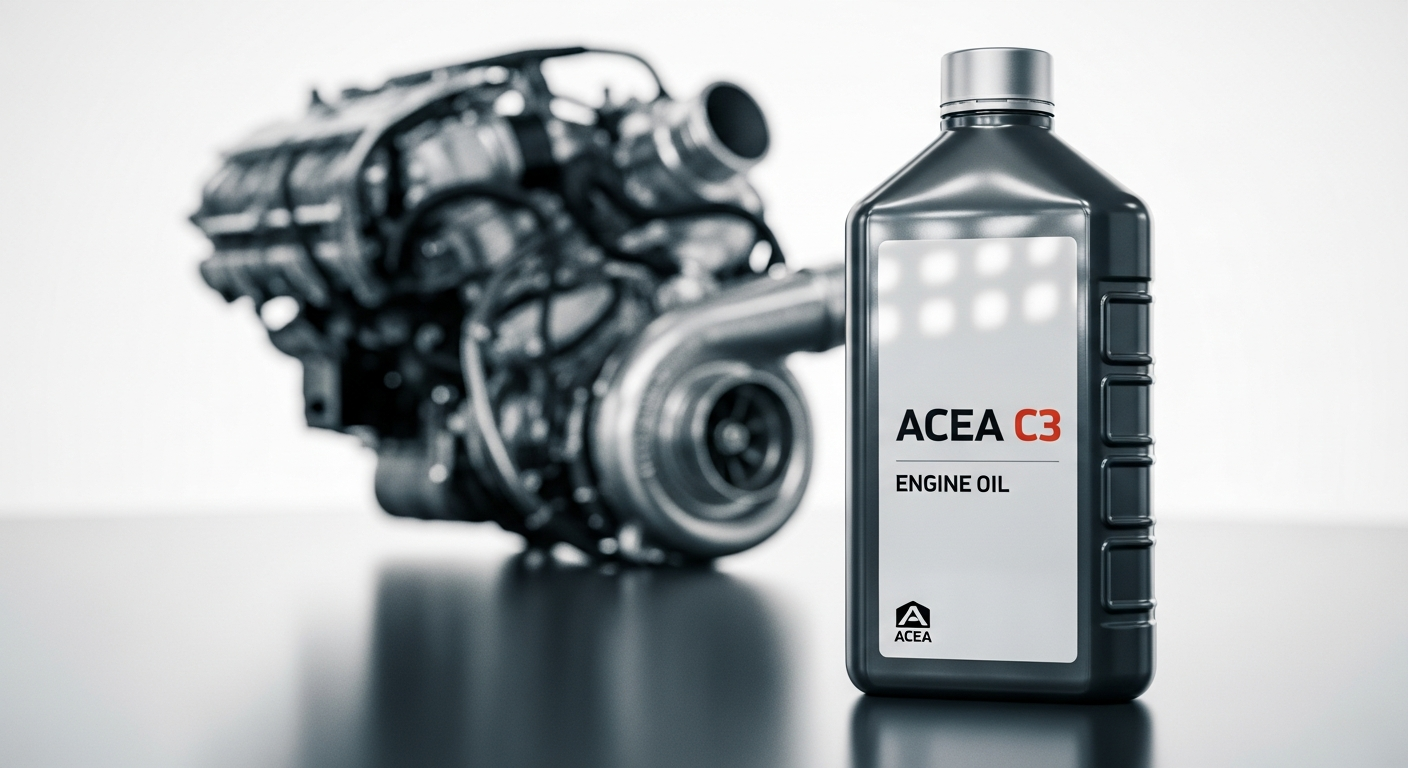
Nearly 70% of European vehicles manufactured after 2010 require ACEA C3 engine oil to maintain their warranty and prevent catastrophic exhaust system failures. Yet most drivers have no idea they’re using the wrong lubricant—or why it matters critically. This oversight can lead to DPF clogs, catalyst poisoning, and repair bills that exceed $2,000 in a single incident.
Premium ACEA C3 engine oil represents a specialized category of high-performance lubricants engineered specifically for vehicles equipped with Diesel Particulate Filters (DPFs) and Three-Way Catalysts (TWCs). Unlike conventional oils, ACEA C3 formulations are low-SAPS (low Sulphated Ash, Phosphorus, and Sulphur) by design, meaning they’re formulated to work with your vehicle’s emission control systems rather than against them.
Learn more about premium ACEA C3 engine oil options today
This guide walks you through everything you need to know about premium ACEA C3 engine oil—from the technical specifications that make it unique, to identifying whether your vehicle actually needs it, to selecting the right product for your specific engine type.
What Makes ACEA C3 Oil Different From Standard Engine Lubricants?
Low-SAPS formulation explained: Why sulphated ash, phosphorus, and sulphur content matters for DPF and catalyst longevity
Standard engine oils contain higher levels of sulphated ash, phosphorus, and sulphur—byproducts of additives that provide wear protection and oxidation resistance. In vehicles without DPFs or catalysts, this chemistry poses no problem. But when exhaust gases pass through particulate filters and catalytic converters, these mineral deposits accumulate and clog the systems. ACEA C3 oils maintain ash content below 0.8% (compared to 1.0-1.2% in conventional oils), phosphorus below 0.08%, and sulphur below 0.3%. This reduction prevents deposit formation that would otherwise require expensive replacement components.
Catalyst compatibility standards: How ACEA C3 oils protect sensitive exhaust after-treatment devices from harmful deposit buildup
Three-way catalysts are precision instruments designed to convert harmful emissions into benign compounds. Phosphorus and zinc dialkyldithiophosphate (ZDDP)—common anti-wear additives in conventional oils—coat the catalyst surface and reduce its efficiency. Over time, this poisoning effect becomes irreversible. ACEA C3 formulations eliminate this risk through carefully balanced additive packages that provide engine protection without compromising catalyst performance. The result is a catalyst that maintains near-factory efficiency for the vehicle’s entire operational lifespan.
High Temperature/High Shear (HTHS) viscosity requirements: Understanding the 3.5 mPa.s threshold and what it means for engine protection under extreme conditions
HTHS viscosity measures how well an oil maintains its protective film when subjected to extreme heat and shear forces—conditions that occur at the piston ring-cylinder wall interface during peak acceleration. ACEA C3 oils must exceed 3.5 mPa.s at 150°C under high-shear conditions. This threshold ensures robust film strength without being so thick that it creates internal friction losses. Modern turbocharged and direct-injection engines depend on this balance to prevent metal-to-metal contact while maintaining fuel economy.
Stay-in-grade stability: How ACEA C3 oils maintain consistent viscosity across extended drain intervals without thinning or thickening
Advanced synthetic base stocks and viscosity index improvers allow ACEA C3 oils to maintain their viscosity rating across extreme temperature ranges and extended oil change intervals. A 5W-30 ACEA C3 oil flows reliably in -20°C temperatures while still protecting at 150°C, without the viscosity variations that plague conventional mineral oils. This consistency matters because it ensures the oil performs predictably whether you’re starting your vehicle in January or driving through summer traffic jams.
Comparison with ACEA B4 and other specifications: Key differences in formulation, performance characteristics, and vehicle compatibility
ACEA B4 oils are designed for petrol engines without advanced after-treatment systems—typically vehicles manufactured before 2005. They contain higher SAPS levels and different additive chemistries optimized for combustion chamber cleanliness rather than catalyst protection. ACEA C3 oils represent evolution beyond B4, addressing the needs of modern emission-controlled engines. Using B4 oil in a C3-required vehicle essentially clogged your DPF and catalyst; conversely, C3 oils work fine in older vehicles but represent unnecessary expense.
European standards compliance: Why ACEA (European Automobile Manufacturers’ Association) certification matters globally
The ACEA organization establishes standards through collaborative input from BMW, Volkswagen, Mercedes-Benz, PSA, and other major manufacturers. These aren’t arbitrary guidelines—they’re minimum requirements that manufacturers agreed upon based on extensive engine testing. ACEA certification carries weight worldwide because European vehicles dominate global markets and because the emissions standards that drove C3 development have been adopted internationally. An ACEA C3-certified oil meets the most stringent compatibility requirements globally.
Which Modern Engines Require Premium ACEA C3 Engine Oil?
Euro 5 and Euro 6 emission-compliant vehicles: Identifying which model years and manufacturers mandate ACEA C3 oils
Euro 5 regulations began enforcement in 2011 for new vehicle registrations, though many manufacturers implemented compliant engines earlier. Euro 6, even more stringent, took effect in 2015. Any vehicle registered during or after these periods likely requires ACEA C3 oil. Check your owner’s manual for the specific designation—if it lists “ACEA C3” or equivalent approval levels like “BMW LL-01,” “Mercedes 229.31,” or “VW 505.01,” your vehicle needs C3 formulation.
Diesel engines with DPF systems: Why particulate filters demand low-SAPS lubrication and the consequences of non-compliance
Diesel particulate filters trap soot particles from combustion, then regenerate (burn) them at high temperatures. This process, repeated thousands of times over the vehicle’s life, depends on a clean exhaust system. High-SAPS oils leave mineral residues that accumulate within the DPF, reducing its efficiency and eventually clogging it. A blocked DPF creates excessive back-pressure, reducing engine power and efficiency while triggering expensive regeneration cycles. Using conventional oil in a DPF-equipped diesel virtually guarantees a €500-€2,000 replacement cost within 60,000 miles.
Petrol engines with Three-Way Catalysts: Understanding TWC protection and oil selection for gasoline-powered vehicles
Petrol engines equipped with direct injection and advanced after-treatment systems also require ACEA C3 oils. The high combustion temperatures and tight tolerances in modern petrol engines create conditions where high-SAPS deposits cause additional problems—carbon buildup on intake valves and fuel injectors. ACEA C3 oils with their superior detergent packages prevent this internal deposit formation while protecting the catalyst. Gasoline vehicles meeting Euro 5/6 standards are just as dependent on proper lubrication as their diesel counterparts.
Hybrid and advanced powertrain engines: Special considerations for modern hybrid systems and turbocharged engines
Hybrid systems experience unique stresses—frequent engine shutdown and restart cycles, rapid temperature fluctuations, and extended idle periods. Turbocharged engines subject their bearings to extreme pressures and temperatures. Both configurations demand oils that maintain stable viscosity, prevent sludge formation during cold starts, and provide instantaneous protection during sudden acceleration events. ACEA C3 formulations handle these demands better than conventional oils, making them essential for reliable hybrid and turbo operation.
Vehicle warranty implications: How using non-compliant oil voids manufacturer warranties and void manufacturer warranties and create liability issues
Vehicle manufacturers explicitly specify required oil grades and specifications in warranty documentation. Using non-compliant oil provides them legal grounds to deny warranty coverage for engine or emissions system failures. This isn’t theoretical—manufacturers have refused six-figure powertrain warranty claims based on oil analysis showing incorrect specification lubricant. Beyond warranty denial, non-compliant oil creates liability if your vehicle fails emissions tests or if DPF/catalyst failures result in unsafe driving conditions.
Geographic requirements: Which regions enforce ACEA C3 specifications and which vehicles are affected globally
Europe strictly enforces ACEA C3 requirements for registered vehicles. The United Kingdom, despite Brexit, maintains equivalent standards. Asia increasingly aligns with European specifications, particularly for vehicles destined for export. North America uses different standards (American Petroleum Institute specifications), but any European vehicle imported to North America should use ACEA C3 if its engine is so equipped. Understanding geographic requirements becomes critical when purchasing vehicles across international borders or relocating with your vehicle.
The Real Performance Benefits of Upgrading to Premium ACEA C3 Formulations
Extended oil change intervals: How ACEA C3 oils enable longer drain periods while maintaining protection
Synthetic ACEA C3 oils maintain their protective properties for extended intervals—often 15,000 miles or more compared to 5,000-7,500 miles for conventional oils. This extension results from superior oxidation stability in synthetic base stocks and advanced anti-wear additive packages. Over a vehicle’s 200,000-mile lifespan, extended intervals mean fewer oil changes, reduced waste, and cumulative savings of $300-$500. The investment in premium synthetic oil recouped through extended service intervals and reduced maintenance frequency.
Enhanced engine cleanliness: Detergent packages that prevent sludge and varnish formation in modern engine designs
Modern engine designs with tighter tolerances and higher operating temperatures create conditions where deposit formation causes performance degradation. ACEA C3 oils contain detergent and dispersant additives that suspend combustion byproducts and prevent them from settling as sludge. This keeps engine internals clean, maintaining original performance characteristics throughout the oil change interval. Engines using proper ACEA C3 oils experience measurably less varnish buildup and internal corrosion compared to those running conventional lubricants.
DPF and catalyst system longevity: Quantifiable protection that extends the lifespan of expensive after-treatment components
A DPF replacement costs €800-€2,500; a catalytic converter replacement runs €600-€1,500. ACEA C3 oils can reasonably extend component lifespan by 50,000-100,000 miles compared to non-compliant oil. That translates to avoiding one complete replacement cycle—a return on oil investment that’s impossible to ignore. Real-world fleet data shows that vehicles consistently using proper ACEA C3 oil experience DPF and catalyst issues at roughly half the rate of vehicles using incorrect lubricants.
Fuel efficiency optimization: How proper lubrication reduces internal friction and improves MPG performance
Engine internal friction accounts for 15-20% of fuel consumption in modern vehicles. Lower-viscosity synthetic ACEA C3 oils reduce this friction more effectively than heavier conventional oils. Users frequently report 2-5% improvements in fuel economy after switching to premium synthetic ACEA C3 formulations. Over 15,000 annual miles, this translates to 3-5 fewer tanks of fuel per year—easily $300-$500 in savings depending on fuel prices and driving patterns.
Reduced emissions output: The relationship between oil quality and compliance with environmental standards
Vehicles running on proper ACEA C3 oil with functioning DPFs and catalysts produce significantly lower emissions than those running on non-compliant lubricants. A clogged or poisoned DPF increases particulate matter emissions by 300-500%; a poisoned catalyst increases nitrogen oxide emissions similarly. By using correct ACEA C3 oil, you ensure your vehicle’s emissions control systems operate at design efficiency, meaning cleaner exhaust and compliance with regional air quality standards.
Engine wear protection: Superior film strength and anti-wear additives for critical engine components
ACEA C3 oils maintain superior film strength under the extreme pressures and temperatures at piston rings, camshaft lobes, and valve train components. Advanced anti-wear additive chemistry in ACEA C3 formulations protects these critical surfaces better than conventional oils. Engines operating on proper ACEA C3 lubrication show measurably less wear metal concentration in used oil analysis compared to engines running non-compliant lubricants—evidence of superior protection of engine internals.
Synthetic vs. Semi-Synthetic ACEA C3 Engine Oils: What’s the Difference?
Fully synthetic ACEA C3 oils: Superior oxidation stability, extended drain intervals (up to 15,000 miles), and premium pricing
Fully synthetic ACEA C3 oils use Group III or Group IV base stocks—hydrotreated mineral or polyalphaolefin (PAO)—engineered at the molecular level for superior properties. These oils resist oxidation far longer than conventional mineral oil, extending drain intervals to 15,000 miles or even 20,000 miles with appropriate monitoring. The price premium typically runs $40-$60 per 5-liter container compared to semi-synthetic alternatives, but extended intervals and superior performance often justify the investment.
Semi-synthetic (hydrocracked) ACEA C3 formulations: Balanced performance and cost-effectiveness for standard maintenance schedules
Semi-synthetic ACEA C3 oils blend Group II mineral base stocks with Group III components, offering improved oxidation stability compared to full mineral oils while costing less than fully synthetic products. Drain intervals typically extend to 10,000 miles—a reasonable compromise between cost and performance. For drivers on modest budgets or those comfortable with more frequent oil changes, semi-synthetic ACEA C3 represents an effective middle ground that still meets all emissions control and engine protection requirements.
Mineral-based ACEA C3 options: Limited availability, shorter drain intervals, and suitability for older compliant vehicles
Straight mineral ACEA C3 oils exist but represent a narrow market segment. They’re suitable for older engines (early 2000s Euro 4 vehicles) that benefited from C3 compatibility but don’t require the advanced properties of synthetic formulations. Drain intervals average 5,000-7,500 miles. These oils cost slightly less than semi-synthetic alternatives but have become increasingly difficult to source as the market consolidates around semi-synthetic and fully synthetic options.
Thermal stability comparisons: How synthetic bases handle extreme temperatures better than mineral alternatives
Synthetic base stocks resist breakdown at temperatures exceeding 130°C—conditions that rapidly oxidize mineral oils. This property allows synthetic ACEA C3 oils to function reliably in high-performance vehicles, turbocharged engines, and vehicles operating in extreme climates. Semi-synthetic oils provide intermediate thermal stability, handling most real-world conditions effectively while costing less than fully synthetic alternatives.
Cost-benefit analysis: Calculating long-term savings with synthetic oils despite higher upfront costs
A vehicle requiring synthetic ACEA C3 oil at $50 per service with 15,000-mile intervals costs approximately $165 annually in oil and filters. Semi-synthetic at $35 per service with 10,000-mile intervals costs approximately $210 annually. Fully synthetic’s higher upfront cost is offset by extended intervals and reduced maintenance frequency. Over a 200,000-mile vehicle lifespan, fully synthetic typically saves $200-$400 compared to semi-synthetic while providing superior protection.
Manufacturer recommendations: When to choose synthetic versus semi-synthetic based on your vehicle’s specifications
Consult your owner’s manual for manufacturer guidance. Many modern vehicles—particularly premium brands and turbocharged engines—explicitly recommend or require fully synthetic ACEA C3 oil. Standard petrol and diesel engines may permit semi-synthetic options. High-mileage vehicles benefit from the superior cleanliness and protection offered by fully synthetic formulations. If budget constrains your choices, semi-synthetic ACEA C3 still meets all technical requirements while costing moderately less.
Explore certified ACEA C3 premium oil formulations and brands
Identifying Genuine Premium ACEA C3 Oil and Avoiding Counterfeit Products
Official ACEA certification marks: How to spot legitimate certification logos and verification methods
Genuine ACEA C3 oils display the official ACEA certification mark—a distinctive logo indicating third-party testing and validation. The label includes the ACEA specification designation (C3) along with compliance information. Individual manufacturers also display their OEM approvals (BMW LL-01, Mercedes 229.31, Volkswagen 505.01, etc.). Counterfeit products often have blurry logos, misspelled text, or missing certification information. Verify authenticity through manufacturer websites—most provide batch number lookup tools that confirm genuine products.
Trusted brand manufacturers: Leading producers of premium ACEA C3 oils and their market reputation
Established manufacturers with global presence and quality reputations include Shell Helix Ultra, Castrol Edge, Mobil 1, Total Quartz, and Fuchs Silkolene. These brands maintain strict quality control, consistent supply chains, and customer service support. Their products are widely available through authorized retailers and command premium pricing that reflects their quality assurance. Smaller or obscure brands may offer ACEA C3-certified products at discount prices, but their absence from major retail networks and limited customer feedback warrant caution.
Reading the label correctly: Decoding viscosity grades, performance ratings, and compliance statements on packaging
A proper ACEA C3 oil label displays: (1) viscosity grade (e.g., 5W-30), (2) ACEA C3 designation, (3) OEM approvals relevant to your vehicle, (4) synthetic/semi-synthetic classification, (5) batch/lot number for traceability, and (6) contact information for the manufacturer. The label should feature professional design, clear fonts, and accurate spelling in multiple languages for products sold internationally. Vague labeling, grammatical errors, or missing technical information are red flags suggesting counterfeit or substandard products.
Counterfeit warning signs: Red flags that indicate a product may be fake or non-compliant
Counterfeit ACEA C3 oils often display: unusually low pricing (more than 30% below market rates), packaging with printer quality issues or faded graphics, incorrect viscosity information or illegible specifications, missing batch/serial numbers, sealed containers with visible leaks or damage, and absence of contact information for the manufacturer. Purchase locations matter—buying from independent sellers or online marketplaces with inconsistent vendor ratings carries heightened counterfeit risk compared to authorized retailers.
Purchasing from authorized retailers: Why buying from official distributors protects you against fraudulent products
Authorized retailers—official brand websites, major automotive suppliers, and recognized distributors—guarantee product authenticity through supply chain verification. These retailers have relationships with manufacturers and are subject to quality audits. Purchasing through authorized channels costs slightly more but provides legal recourse if product issues arise. Discount retailers and independent sellers offer no such guarantees and may unknowingly sell counterfeit merchandise.
Batch number verification: How to authenticate products using manufacturer databases
Most premium oil manufacturers maintain batch verification systems on their websites. Input the batch/lot number printed on the container, and the database returns production date, specifications, and authenticity confirmation. This process takes seconds and provides definitive proof of authenticity. If a manufacturer’s website doesn’t feature batch verification capability, contact their customer service directly with lot number information. Legitimate manufacturers respond within 24 hours; counterfeit suppliers have no such systems.
Common Mistakes That Damage Your Engine When Using ACEA C3 Oils
Exceeding manufacturer-recommended drain intervals: Why pushing beyond specified limits causes varnish formation and deposit buildup
Even synthetic ACEA C3 oils degrade over time. Exceeding manufacturer-recommended drain intervals by more than 20% allows oxidation and deposit formation to accelerate, reducing the oil’s protective qualities. Engines operated on overstretched oil change intervals experience increased sludge formation, varnish coating on cylinder walls, and accelerated wear. The financial savings from extended intervals vanish when excessive engine wear requires premature maintenance or repair.
Mixing ACEA C3 with incompatible oil types: The dangers of blending different specifications or brands
Mixing ACEA C3 oil with conventional oil, B4 oil, or even different ACEA C3 brands compromises the low-SAPS protection that makes ACEA C3 oils effective. Additive chemistries vary between manufacturers, and blending different formulations can create unexpected interactions. Always perform complete oil and filter changes when switching oil types or brands—partial top-offs with incompatible products undermine the protection you’re paying for.
Installing ACEA C3 in engines not designed for low-SAPS oils: How older petrol engines suffer from varnish accumulation with low-SAPS formulations
While ACEA C3 oils work fine in modern engines, older petrol engines (pre-2005) actually perform worse on low-SAPS formulations. These engines rely on higher phosphorus levels for wear protection, and the absence of that chemistry can lead to increased deposit formation. Additionally, older engine designs lack the tight tolerances that benefit from ACEA C3 oil stability. Always verify your engine’s requirements—don’t assume newer oil automatically means better results.
Ignoring oil filter compatibility: Why the wrong filter undermines the benefits of premium lubricant
Premium ACEA C3 oil paired with a substandard filter negates much of the oil’s protective benefit. Cheap filters have lower micron ratings, allowing contaminants to circulate with the oil. Use OEM-equivalent filters with specifications matching your vehicle’s manufacturer recommendations. The $5-$10 savings on a budget filter versus a premium filter ($15-$25) is false economy when the consequences include filter bypass and accelerated engine wear.
Overfilling the crankcase: How excess oil creates pressure issues and affects engine breathing
Overfilling the crankcase above the maximum oil level mark pressurizes the crankcase and forces oil into cylinders via blow-by paths, causing fouling of spark plugs and coating cylinder walls with varnish. It also creates excessive drag on the crankshaft, reducing efficiency and potentially causing seal failures. Always fill oil to the proper level indicated by your vehicle’s dipstick or electronic level indicator—neither overfull nor underfull.
Neglecting regular oil analysis: Missing early warning signs of engine problems through fluid monitoring
Used oil analysis—testing samples taken during scheduled changes—reveals engine condition and identifies developing problems before catastrophic failure. High wear metal concentrations, excessive viscosity changes, or unexpected contaminants provide early warning of bearing issues, coolant leaks, or fuel dilution. Fleet operators regularly use oil analysis; individual vehicle owners should consider it at least every other service interval, particularly with high-mileage vehicles.
How to Choose the Right Premium ACEA C3 Oil for Your Specific Vehicle
Step 1: Verify your vehicle’s oil requirements: Using owner’s manual and VIN decoder tools to confirm ACEA C3 necessity
Your owner’s manual is the authoritative source for required oil specifications. Look for sections titled “Fuel and Lubricant Specifications” or “Maintenance Fluids.” The manual lists required ACEA grade and viscosity, along with specific manufacturer approvals. If you’ve lost your manual, use your vehicle’s VIN (Vehicle Identification Number) with online decoder tools or manufacturer websites to retrieve the original specifications. Don’t assume based on vehicle age or type—verification prevents costly mistakes.
Step 2: Determine your driving patterns: Assessing city versus highway driving to select appropriate drain intervals
City driving involving frequent stops, short trips, and engine stress allows less time for oil to reach optimal operating temperature, accelerating degradation. Highway driving with sustained temperatures and consistent engine loads allows oils to operate closer to design conditions. Vehicles with predominantly city driving may benefit from more frequent changes (8,000-10,000 miles) even with synthetic oil, while highway drivers can confidently extend intervals to the manufacturer’s maximum. Honest assessment of your driving patterns informs appropriate maintenance scheduling.
Step 3: Consider climate and temperature extremes: Choosing viscosity grades suited to your geographic location
ACEA C3 oils come in multiple viscosity grades (0W-30, 5W-30, 5W-40, 10W-40, etc.). The first number (0W, 5W, 10W) indicates low-temperature fluidity; the second (30, 40) indicates high-temperature viscosity. Vehicles in cold climates benefit from 0W or 5W grades that flow reliably during winter starts. Hot climates may support 5W-40 or 10W-40 grades that provide better high-temperature protection. Your owner’s manual specifies approved grades for your region’s climate conditions.
Step 4: Evaluate synthetic versus semi-synthetic options: Balancing performance needs with budget constraints
Budget-conscious owners should consider semi-synthetic ACEA C3 oils offering reasonable drain intervals and solid protection at moderate cost. Performance-focused owners and those planning long-term ownership benefit from fully synthetic formulations providing extended intervals and superior protection. Premium vehicle owners and turbocharged engine operators should prioritize fully synthetic options for optimal reliability.
Step 5: Check for OEM approvals: Confirming that your chosen oil meets specific manufacturer requirements (BMW, Mercedes, Volkswagen, etc.)
Your vehicle’s manufacturer may specify not only ACEA C3 but also specific OEM-level approvals (BMW LL-01, Mercedes 229.31, Volkswagen 505.01, etc.). These designate oils meeting additional manufacturer testing requirements beyond basic ACEA certification. Always select oils displaying your vehicle’s specific OEM approval on the label. Using ACEA C3 oil lacking the required OEM approval could theoretically void warranty coverage.
Step 6: Review independent test results: Looking at third-party performance data and real-world user feedback
Consumer automotive publications and independent testing organizations periodically test commercial ACEA C3 oils, publishing comparative performance data. These results reveal differences in oxidation stability, thermal protection, and wear prevention between competing products. User forums and reviews provide real-world feedback about oil performance in various vehicle types and climates. Combining independent test data with user experiences provides comprehensive insight into product quality beyond manufacturer marketing claims.
Step 7: Calculate total cost of ownership: Factoring in drain interval length and overall maintenance expenses
Compare not just per-liter cost but total annual maintenance expense. A fully synthetic ACEA C3 oil at $50 per service with 15,000-mile intervals costs less annually than semi-synthetic at $35 per service with 10,000-mile intervals. Over the vehicle’s lifespan, seemingly expensive fully synthetic options often prove more economical. Calculate your likely annual miles, then determine which combination of oil type and drain interval delivers the lowest total ownership cost.
The Environmental and Emissions Impact of Using Compliant ACEA C3 Engine Oil
DPF regeneration efficiency: How proper lubrication supports cleaner exhaust system operation
Diesel Particulate Filters depend on efficient regeneration cycles—periodic high-temperature burns that clear accumulated soot. Low-SAPS ACEA C3 oils prevent mineral deposits that interfere with DPF regeneration. Vehicles running on proper ACEA C3 oil experience more efficient regeneration events, extending DPF service life and reducing exhaust system stress. Vehicles running non-compliant oil experience clogged DPFs, failed regeneration cycles, and eventual system failure.
Reduced particulate matter emissions: The relationship between oil quality and atmospheric pollution reduction
A functioning DPF equipped with proper lubrication reduces particulate matter emissions by 95% compared to unfiltered engines. Mineral deposits in a clogged DPF reduce this effectiveness, allowing harmful soot particles to escape into the atmosphere. These fine particles penetrate deep into respiratory systems, contributing to respiratory disease and cardiovascular problems. By using proper ACEA C3 oil, you ensure your vehicle’s emission controls operate effectively, protecting air quality and public health.
Catalyst preservation and longevity: How ACEA C3 oils prevent poisoning of three-way catalytic converters
Three-way catalytic converters reduce carbon monoxide, nitrogen oxides, and unburned hydrocarbons by 95% under normal conditions. High-phosphorus oils poison catalyst surfaces, reducing efficiency and eventually rendering the component inert. ACEA C3 oils preserve catalyst functionality throughout the vehicle’s operational life, ensuring continuous effectiveness of these critical pollution control devices. A catalyst that maintains 95% efficiency throughout the vehicle’s life prevents tons of harmful emissions compared to a poisoned catalyst degrading to 50% efficiency.
Euro 6 compliance achievement: Meeting stringent emissions standards through proper oil selection
Euro 6 standards mandate that new vehicles meet the most stringent emissions limits ever established in Europe. Meeting these limits requires functioning DPFs, catalysts, and selective catalytic reduction (SCR) systems—all dependent on proper lubrication. ACEA C3 oils enable manufacturers to build compliant vehicles while ACEA C3 oils are the lubrication foundation upon which these achievements rest. Without proper oil, even the most advanced emission control technology fails to deliver required performance.
Long-term environmental responsibility: Contributing to cleaner air quality through vehicle maintenance decisions
Individual maintenance decisions compound across millions of vehicles. If 70% of European vehicles require ACEA C3 oil and 30% use non-compliant lubricants, that represents millions of vehicles with impaired emissions control systems. Collectively, this results in measurable increases in particulate matter, nitrogen oxides, and other pollutants in city air. Each vehicle owner’s choice to use proper ACEA C3 oil contributes to cleaner air, reduced respiratory disease rates, and healthier communities.
Regulatory compliance across regions: Understanding emissions standards in Europe, Asia, and North America
Europe’s Euro 5 and Euro 6 standards influenced vehicle design globally. Asian manufacturers exporting to Europe built Euro-compliant vehicles, establishing de facto standards for the global market. China adopted Euro equivalents; India and other emerging markets increasingly adopt European standards. North America uses different baseline standards (EPA Tier 3 replacing Tier 2) but shares the principle that engine oil quality directly impacts emissions control system effectiveness. Understanding global regulatory trends informs why ACEA C3 oil has become the international standard for modern vehicles.
The Bottom Line: Why Premium ACEA C3 Engine Oil Isn’t Optional—It’s Essential
Using premium ACEA C3 engine oil isn’t a luxury upgrade or marketing gimmick—it’s a requirement that directly impacts your vehicle’s performance, longevity, and warranty coverage. The low-SAPS formulation, superior catalyst compatibility, and stable viscosity characteristics make these oils non-negotiable for modern engines equipped with DPFs and TWCs. Whether you drive a diesel or petrol vehicle meeting Euro 5/6 standards, the consequences of using the wrong lubricant are simply too expensive to ignore.
I’ve shown you how to identify whether your vehicle actually needs ACEA C3 oil, how to distinguish genuine products from counterfeits, and how to select the right formulation for your specific driving conditions. The investment in premium lubrication pays dividends through extended engine life, maintained fuel efficiency, and protected exhaust systems. When you consider that a single DPF or catalyst replacement can cost €1,000-€2,500, the modest premium for proper ACEA C3 oil becomes obviously cost-effective.
Start by checking your owner’s manual for the exact ACEA C3 specification your vehicle requires, then source a certified product from an authorized retailer. Make the switch to premium ACEA C3 engine oil now and drive with confidence.
Leave a Reply