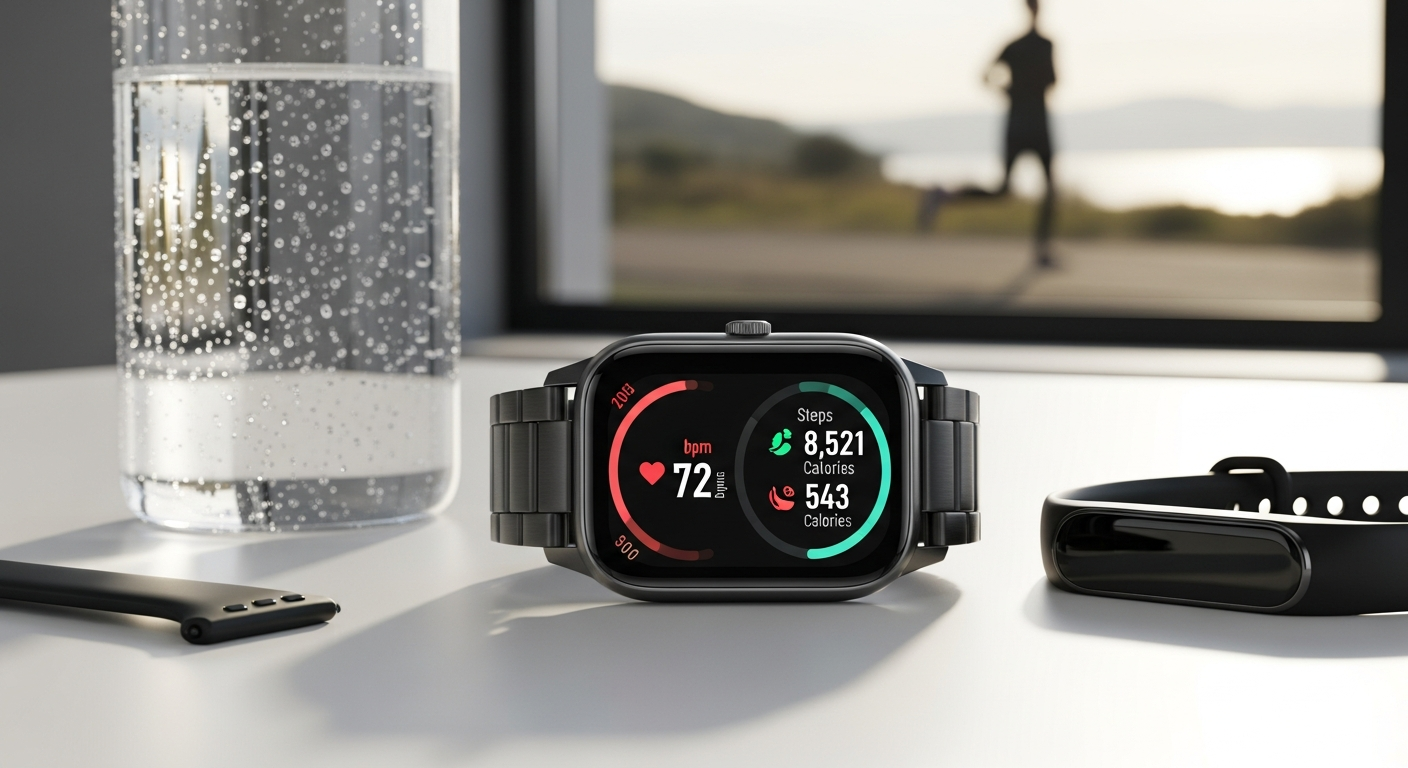
Over 60% of Swedish tech enthusiasts now wear a smartwatch daily, yet most users unlock only a fraction of their device’s potential. The gap between what these wearables can do and what people actually use them for remains surprisingly wide. Smartwatches have evolved far beyond simple activity trackers—today’s advanced models pack sophisticated health monitoring systems, AI-powered insights, and seamless ecosystem integration that genuinely impact how you approach wellness.
This guide breaks down everything you need to know about advanced smartwatches for health & fitness, from decoding display technologies and health sensors to evaluating battery performance and ecosystem compatibility. You’ll discover which features actually matter for your lifestyle, how to interpret the data these devices collect, and whether the premium price tags deliver genuine value for Swedish consumers.
Explore advanced smartwatches on Amazon SE
Understanding Display Technology & Always-On Capabilities
AMOLED vs. LTPO3 OLED: What’s the practical difference for daily use?
The display is your primary interface with a smartwatch, and the technology powering it significantly shapes your experience. AMOLED screens deliver vibrant colors and true blacks by controlling individual pixels independently, which means darker content consumes less power than lighter displays. LTPO3 OLED represents the newer evolution, adding adaptive refresh rate technology that dynamically adjusts between 1Hz and 60Hz depending on what’s showing on screen.
For daily use in Sweden, the practical difference comes down to responsiveness and battery efficiency. LTPO3 OLED screens feel snappier when you’re scrolling through data or swiping between apps, while also stretching battery life through intelligent refresh rate reduction during static content. If you’re primarily checking notifications and glancing at time, the difference feels minimal. But if you’re actively navigating menus or reviewing detailed fitness data, the smoother interaction becomes noticeable.
Always-on display functionality and its impact on battery consumption
Always-on displays represent one of the most desirable features and one of the biggest battery drains on modern smartwatches. This capability lets you check time and key metrics without lifting your wrist or tapping the screen—genuinely convenient during runs or when your hands are occupied.
The power cost varies significantly based on implementation. A basic always-on showing just the time and date might reduce battery life by 20-30%, while keeping a full dashboard of metrics permanently visible can cut it in half. This explains why some manufacturers offer always-on modes that dim dramatically, simplifying the display to essential information only. You’ll need to weigh immediate convenience against more frequent charging sessions.
Brightness levels and outdoor visibility in Scandinavian daylight conditions
Swedish summers feature extended daylight hours, while winters bring low-angle sun and often overcast skies. A smartwatch display needs to perform across both extremes. Premium models typically offer 1,000+ nits peak brightness, which proves essential during bright summer days when even squinting doesn’t help with dimmer screens. Standard models often max out around 500-600 nits, which feels adequate indoors but becomes frustrating in direct sunlight.
Corning Gorilla Glass provides adequate scratch resistance for most users, though sapphire crystal—available on premium models—offers superior durability if you lead an active lifestyle with frequent contact sports or outdoor work.
Refresh rate optimization for smooth interactions and reduced power drain
Modern smartwatch processors handle refresh rate optimization through adaptive technology. When you’re reading static information, the screen can drop to 10Hz or even 1Hz. Swiping through menus or viewing animated workout data triggers the jump to 60Hz for fluid motion. This dynamic approach lets manufacturers advertise impressive battery life while maintaining a premium feel during actual interaction.
The practical benefit emerges during extended use. Your screen feels responsive and modern without the constant power drain that would come from running at maximum refresh rate throughout the day.
Screen-to-body ratio and how it affects the overall user experience
A larger display relative to the overall watch size means more usable space for information without requiring excessive scrolling. Newer models push toward fuller screens that curve closer to the edges, maximizing the viewable area. This ratio matters most if you’re regularly checking detailed metrics like workout splits, heart rate zones, or sleep data.
The tradeoff involves aesthetics and comfort. Larger displays often require larger bezels for durability and sensor placement, which some find visually bulky. The most comfortable watches balance adequate screen real estate with a proportional design that doesn’t overwhelm your wrist.
Decoding Health Monitoring: Beyond Basic Heart Rate Tracking
Heart rate monitoring accuracy and real-time pulse detection during workouts
Heart rate monitoring forms the foundation of most smartwatch health tracking. Modern optical sensors use LED light to detect blood flow through your wrist, calculating pulse in real-time. Accuracy during steady-state activity like running typically reaches 95%+ for quality sensors, matching dedicated chest straps in most conditions.
The challenge emerges during high-intensity intervals, quick transitions between effort levels, and certain activities where wrist movement creates interference. Swimming, for instance, often confuses optical sensors due to water movement and wrist positioning. Most manufacturers acknowledge these limitations honestly in their specifications.
For fitness purposes, the real value comes from trend data rather than individual data points. A single heart rate reading can be off by 5-10 bpm, but viewing your patterns across dozens of workouts over weeks reveals your actual fitness progression.
ECG (electrocardiogram) functionality and what cardiac insights reveal
ECG functionality has moved from premium flagship territory into mid-range models. This feature captures electrical activity across your heartbeat, detecting irregular rhythms that optical sensors miss. For most healthy individuals, ECG primarily validates that your rhythm is normal—a straightforward pass-or-fail result.
The genuine value emerges if you have cardiac risk factors or a family history of arrhythmias. The smartwatch can detect atrial fibrillation, a serious condition where the heart’s upper chambers quiver irregularly, often without obvious symptoms. Early detection enables medical intervention before complications develop.
Blood oxygen saturation (SpO2) tracking and respiratory health assessment
SpO2 tracking measures the percentage of oxygen-carrying hemoglobin in your blood, typically 95-100% for healthy individuals at sea level. Smartwatch sensors take periodic readings throughout the day and night, helping identify concerning drops that might indicate sleep apnea or respiratory issues.
Accuracy varies more with SpO2 than heart rate due to individual skin tone variations and sensor calibration differences. A reading showing 92% might actually be 94-96%, so consistency matters more than absolute accuracy. You’re looking for concerning trends—consistent drops during sleep or unexpected daytime dips—rather than pinpoint precision.
Sleep analysis features: REM cycles, deep sleep duration, and sleep quality scoring
Sleep tracking combines heart rate variability monitoring, movement detection, and sometimes SpO2 data to estimate your sleep architecture. Advanced models segment sleep into light, deep, and REM stages, then calculate a composite sleep quality score. Some integrate AI to identify patterns—perhaps showing that your deep sleep consistently drops on nights after intense workouts.
The practical application hinges on whether you act on the insights. If the watch suggests you’re consistently sleep-deprived and you actually modify bedtime accordingly, real value emerges. If you simply log the data without behavioral change, the feature becomes a curiosity.
AI-powered health insights and personalized wellness recommendations
Newer models employ machine learning to move beyond simple metrics. Instead of just reporting “you slept 6.5 hours,” the AI considers your heart rate variability, recent training stress, resting heart rate trends, and historical patterns to calculate an energy score—your readiness for intense activity today.
These insights improve with time as the algorithm learns your individual baseline. After several weeks of data collection, recommendations become increasingly personalized and accurate. The best systems flag meaningful deviations—unusual resting heart rate elevation, irregular sleep patterns, or training stress accumulation—that warrant attention.
Check out the latest health-focused smartwatches today
Fitness Tracking & Workout Performance Metrics
Built-in GPS accuracy for running, cycling, and outdoor activities
GPS accuracy directly determines the reliability of distance and route mapping. Most modern smartwatches achieve ±5-10 meter accuracy under clear skies, sufficient for training purposes. Urban canyons with tall buildings and dense forest canopy create challenging environments where accuracy degrades to ±20-30 meters. Swedish geography—with significant forests and scattered dense urban areas—presents mixed conditions.
The practical impact matters most for distance-based training. If you’re targeting a specific 10km run, GPS drift might show 10.3km when you’ve actually covered 10.0km, slightly inflating your performance metrics. Over dozens of workouts, these small errors average out, but individual session data can feel frustratingly imprecise.
100+ sport modes: coverage across niche activities and mainstream exercises
The number of sport modes has become a marketing metric, with flagship models offering 150+ different activity types. This breadth matters less than specific coverage for your actual activities. A runner needs robust running modes with pace/cadence optimization. Cyclists benefit from cycling-specific metrics like cadence and power integration. Cross-trainers need accurate tracking across their varied routine.
Most users regularly employ 3-5 sport modes and never touch the remaining hundred options. Rather than chasing the highest count, verify that your primary activities receive optimized tracking rather than generic motion-based approximations.
Real-time workout metrics: speed, pace, cadence, and stride length
Real-time metrics during active workouts let you adjust effort on the fly. Pace-based runners benefit from instant feedback when they’re drifting above or below target zones. Cyclists appreciate cadence readouts showing whether they’re spinning efficiently or grinding in too heavy a gear. Runners gain stride length insights showing whether they’re overstriding or maintaining optimal turnover.
The value compounds when you can view these metrics during the workout. Smartwatch screens, while small, provide enough space for a simplified view of key metrics. Some models let you customize which four to six metrics appear, prioritizing your focus areas.
Elevation gain tracking and barometric altitude measurement
Elevation gain—the total uphill distance covered—matters tremendously for trail runners, hikers, and cyclists navigating mountainous terrain. Optical sensors can’t measure elevation, so watches rely on barometric pressure sensors that detect altitude changes. This approach works reasonably well, accurately capturing elevation gain within 5-10% of actual values.
The caveat: barometric readings drift slowly over time and require occasional calibration. After a day-long mountain hike, checking your elevation gain and verifying it against known trail data can show why calibration matters. A 1,000-meter vertical gain might read as 950-1,050 meters depending on atmospheric pressure changes during the day.
VO2 max estimation and aerobic fitness assessments
VO2 max—the maximum amount of oxygen your body can utilize during intense exercise—indicates aerobic fitness. Smartwatches estimate this through heart rate response to exercise, combined with age and activity data. These estimates improve significantly once the algorithm collects weeks of your training data.
For serious athletes, smartwatch estimates typically fall within 10% of lab-measured VO2 max. This accuracy suffices for tracking fitness progression over time. Trend tracking—watching your estimated VO2 max improve or decline—provides more useful information than any single absolute value.
Build Quality, Materials & Durability Standards
Lightweight aluminum construction vs. premium stainless steel options
Material choice affects weight, durability, and aesthetics. Aluminum construction—the standard across most models—provides excellent strength-to-weight ratio. Watches weighing 30-40 grams feel barely noticeable during all-day wear and extended activities. Stainless steel options add prestige and durability but also add 10-20 grams, making them slightly more noticeable during extended wear.
Titanium, appearing on ultra-premium models, offers the best strength-to-weight combination but at significantly higher cost. For most users, quality aluminum construction proves entirely sufficient and offers the most comfortable all-day wearing experience.
Corrosion resistance and longevity in Nordic climates
Swedish weather—with salt exposure near coastal areas, temperature swings, and humidity variations—challenges material durability. Quality anodized aluminum resists corrosion effectively, while stainless steel provides natural resistance. Cheaper watches sometimes use non-anodized aluminum that oxidizes and becomes discolored after months of exposure to salt air or constant moisture.
Band materials matter equally. Quality silicone and leather withstand Scandinavian conditions well, though cheaper synthetic materials degrade faster. Premium brands invest in corrosion-resistant hardware and durability-tested materials specifically for harsh environments.
Water resistance ratings: 5 ATM standard and what it means for your activities
Water resistance ratings indicate how deep your watch can survive submerged. The standard 5 ATM rating means 50 meters—adequate for splashing, washing hands, and brief submersion in shallow water. It’s explicitly not sufficient for swimming or diving. Swimming mode works through motion tracking rather than relying on water resistance, though the watch shouldn’t be submerged deeply.
For water sports like kayaking or surfing, you’d want 10 ATM (100 meters) rating. Scuba diving requires specialized dive computers. Most general-purpose smartwatches max out at 5 ATM, which covers the vast majority of real-world water exposure.
Sapphire crystal glass vs. standard Gorilla Glass protection
Display protection evolves across models. Corning Gorilla Glass—used on mid-range and premium watches—resists scratching remarkably well for everyday use. Sapphire crystal, found on luxury models, offers superior scratch resistance but costs significantly more. For typical wearers, Gorilla Glass proves adequate, while serious athletes engaging in contact sports might justify sapphire’s durability.
The practical consideration: most damage comes from impacts rather than scratches. A watch that survives a drop onto concrete matters more than resistance to keys in a pocket. Strong aluminum casings and durable glass both protect reasonably well against typical mishaps.
Battery Life Realities: Expectations vs. Real-World Usage
Premium models with 1-2 day battery life under heavy use conditions
Premium smartwatches featuring always-on displays, intensive health monitoring, and powerful processors typically deliver 1-2 days of battery life under heavy use. “Heavy use” typically means continuous activity tracking, always-on display enabled, frequent GPS use, and constant notification monitoring. Lighter use patterns—passive health monitoring, occasional activity tracking, display-off most of the time—can extend this to 3-4 days.
The practical implication: expect daily charging for premium models if you’re consistently using all features. This mirrors smartphone usage patterns, so if you’re comfortable charging your phone nightly, a smartwatch charging habit feels natural.
Fitness-focused watches offering 5-14 day battery longevity
Watches optimized specifically for fitness sometimes achieve 5-14 days of battery life by making different design choices. They use traditional LCD displays instead of AMOLED, skip always-on functionality, and simplify the processor demands. These tradeoffs yield longer battery life but at the cost of screen vibrancy and continuous visibility.
This category appeals strongly to endurance athletes and outdoor enthusiasts who prefer not charging frequently during training cycles. The tradeoff between screen quality and battery longevity shapes which watch suits your actual priorities.
Always-on display impact on daily charge cycles
Always-on displays are convenient but expensive in battery terms. Keeping the display partially illuminated throughout the day—showing time, heart rate, steps, or whatever dashboard you configure—reduces battery life 30-50% compared to display-off operation. The aesthetic appeal of checking time without wrist flicks or screen taps comes at measurable battery cost.
Some models offer compromise modes: always-on during daylight hours only, or ultra-simplified always-on showing only time and date. These provide convenience without devastating battery life.
Power-saving modes and adaptive battery management systems
Modern smartwatches employ adaptive battery management that learns your patterns and conserves power accordingly. Features like adaptive always-on—dimming the display in low-light conditions—preserve battery without sacrificing usability. Activity-specific power conservation automatically reduces background processing during sleep or recovery periods.
The best implementations prove nearly invisible, managing power intelligently without requiring manual mode selection. Basic power-saving modes exist as fallback options for users who need maximum longevity during specific situations like multi-day hiking trips without charging opportunities.
Smartphone Integration & Ecosystem Compatibility
Apple Watch ecosystem and iPhone seamless integration
Apple Watch integration with iPhone represents the gold standard for ecosystem cohesion. Pairing happens automatically, notifications sync flawlessly, and features like unlock via watch or payment via Wallet work seamlessly. The Apple ecosystem extends to Mac computers, iPad, and AirPods, creating a genuinely connected experience.
The limitation: Apple Watch requires iPhone—it won’t pair with Android devices. If you’re invested in Apple’s ecosystem, this becomes your natural choice. If you’ve mixed devices, the tight integration becomes unavailable.
Google Wear OS smartwatches and Android phone synchronization
Google Wear OS represents the open Android equivalent, offering flexibility across multiple manufacturers and devices. Wear OS watches pair with any Android phone, and some newer models work with iPhone through limited functionality. The ecosystem breadth allows choosing your preferred watch design without requiring a specific phone manufacturer.
The synchronization quality, while functional, doesn’t quite match Apple’s integration. Notifications sync reliably, but some advanced features remain Android-only. The tradeoff: more choice in hardware, slightly less polished ecosystem integration.
Samsung Galaxy Watch and Tizen OS ecosystem benefits
Samsung Galaxy Watch uses Tizen OS, Samsung’s proprietary platform, and integrates deeply with Samsung phones. For Samsung smartphone owners, this delivers ecosystem benefits approaching Apple’s integration level. Non-Samsung users can still use Galaxy Watch with other Android phones, though some features diminish.
Samsung’s advantage lies in hardware design sophistication and software optimizations for their ecosystem. Galaxy Watch remains fully functional with other Android devices, making it more flexible than Apple Watch while offering strong integration for Samsung users.
Cross-platform compatibility limitations and workarounds
Cross-platform use—pairing watches outside their native ecosystem—works but with limitations. Apple Watch with Android remains impossible; Wear OS and Galaxy Watch function with non-native phones through workarounds and feature reduction. Health data syncs through third-party apps like Google Fit or Samsung Health, but you lose deep integration features.
For users with mixed devices (Android phone and tablet plus Chromebook), ecosystem choice becomes a compromise. Selecting the platform your primary device uses typically maximizes functionality.
Cellular Connectivity & Independence from Your Phone
Cellular-enabled models and eSIM technology explained
Cellular-enabled smartwatches use eSIM (embedded SIM) technology to connect directly to cellular networks independently from your phone. After setup linking your watch to your carrier, the watch can make calls, send messages, and access data without pairing to your phone nearby.
The technology works well in theory and practice—you can genuinely leave your phone at home and maintain communication through your watch. The practical benefit depends on your lifestyle. For quick runs or trips around town, having communication without the phone proves genuinely liberating. For extended outings or travel, carrying your phone still makes sense.
Making calls and sending messages without your paired phone
Cellular watches enable calling and texting through your wrist device. Voice calls through a smartwatch speaker work reasonably well in quiet environments but feel awkward in social settings or noisy locations. Most users find them acceptable for quick conversations or emergencies rather than routine communication.
Messaging through the watch, using voice-to-text or pre-programmed quick responses, works efficiently for brief interactions. Longer messages still require reaching for your phone for practical typing.
Data plans and subscription costs for Swedish carriers
Swedish carriers offer smartwatch data plans ranging from SEK 50-150 monthly depending on data allowances and carrier. Most plans provide ample data for notifications, music streaming, and emergency communication without requiring extensive bandwidth. Pairing cellular service with your existing phone plan sometimes offers bundle discounts.
The additional cost represents the real consideration—whether cellular independence justifies adding SEK 600-1,800 annually to your subscription expenses.
Coverage reliability across urban and rural Scandinavian areas
Swedish cellular coverage excels in urban areas and along major highways, with good reliability in most populated regions. Rural areas and deep forests sometimes experience gaps. The coverage maps for cellular watches match your phone’s coverage reasonably closely—if your phone works somewhere, your watch will too.
The practical limitation: coverage in remote hiking or skiing areas remains spotty regardless of technology. For activities in wilderness regions, cellular connectivity shouldn’t be your sole communication method.
Pricing Strategy & Value Proposition Across Models
Entry-level models: SEK 2,100-3,500 and what you’re actually getting
Entry-level smartwatches start around SEK 2,100 and deliver core functionality: basic activity tracking, heart rate monitoring, notifications, and battery life exceeding a week. Display technology typically uses standard AMOLED with fixed refresh rates rather than adaptive systems. Health features focus on heart rate and basic sleep tracking rather than advanced metrics.
These watches satisfy users prioritizing fitness tracking and notifications over premium displays or comprehensive health monitoring. They’re genuinely adequate for most casual fitness enthusiasts and excellent value for discovering whether smartwatch ownership suits your lifestyle before investing heavily.
Mid-range options: SEK 3,500-5,500 and the sweet spot for features
Mid-range watches at SEK 3,500-5,500 introduce adaptive LTPO displays, more sophisticated health metrics like SpO2 and ECG, expanded sport modes, and improved battery life through better power management. This tier represents where most consumers find optimal feature-to-price value.
At this price point, you’re getting meaningfully more robust health monitoring, superior display technology, and reliable construction without the premium markup of flagship models. For most users balancing capability and investment, mid-range delivers genuine satisfaction.
Premium models: SEK 5,500-7,500+ and justifying the investment
Premium smartwatches exceeding SEK 5,500 add refinements: superior materials like titanium or premium stainless steel, cellular connectivity, proprietary health AI algorithms, and design prestige. The feature set largely matches mid-range capability, but execution and materials elevate the experience.
Premium pricing reflects material quality, brand value, and incremental feature advantages rather than fundamental capability differences. The justification requires weighing whether superior durability, cellular independence, or brand prestige matters enough to justify the significant additional investment.
Feature-to-price ratios across different brands and manufacturers
Comparing feature-to-price across brands reveals some models consistently deliver more capability per crown than competitors. Apple Watch typically commands a premium for ecosystem integration; Garmin excels in fitness-specific features at competitive prices; Samsung balances features and value effectively. No single brand dominates across all metrics—each makes different priority choices.
The smart approach: identify your top five required features, then compare which brands deliver those most effectively at your budget level, rather than chasing overall feature counts or brand prestige.
Customization, Personalization & Style Integration
Interchangeable band systems and material variety
Modern smartwatches feature interchangeable band systems—your watch case connects to bands through standard connectors, letting you swap bands to match outfits or activities. Premium watches offer proprietary connections; others use standardized connectors supporting third-party bands from manufacturers like Barton or strap-making specialists.
The practical benefit emerges quickly—a silicone band suits workouts while a leather or fabric option works professionally. Building a small band collection costs SEK 200-600 per band but enables outfit matching and practical adaptation to different situations.
Watch face libraries: thousands of options from minimalist to complex
Digital watch faces have evolved dramatically. Modern libraries offer thousands of options from minimalist single-digit time displays to complex dashboards showing heart rate, temperature, activity progress, and calendar information simultaneously. Many faces support customization—choosing colors, adding specific complications (mini-apps showing targeted information), and adjusting layout.
The abundance creates decision paralysis but enables expressing personal style while accessing different information layouts for different situations. A focus-mode face might simplify information during deep work, while a health-monitoring face during workouts displays heart rate zones and workout progress.
Custom watch face creation and third-party designer collections
Premium ecosystem smartwatches enable custom watch face creation through built-in tools or third-party apps. Designer watch faces—created by professional designers—offer aesthetic sophistication approaching premium fashion watches. Some remain free; others cost SEK 15-50 per face.
The value proposition matters primarily if you care about visual personalization and enjoy exploring design aesthetics. Functionally, the pre-loaded default faces satisfy most users entirely.
Color options and aesthetic matching with personal style
Smartwatch colors range from classic black and silver to vibrant colors including rose gold and specific brand colors. Band color options multiply the possibilities, enabling truly personalized aesthetics. Most users develop preferences aligning with personal style—sport-focused users gravitate toward athletic colors, while professional settings might prefer classier aesthetics.
The consideration remains practical: you’ll wear your watch constantly, so choosing colors and finishes you genuinely enjoy matters for long-term satisfaction.
Subscription Services & Hidden Costs Beyond Purchase
Premium health insight subscriptions and their actual value
Many smartwatch brands offer premium subscriptions unlocking advanced health insights—deeper analysis of sleep quality, training load optimization, injury prevention algorithms, and detailed fitness assessments. These subscriptions typically cost SEK 60-150 monthly.
The genuine value depends on your engagement level. If you actively review insights and modify behavior based on recommendations, premium subscriptions justify their cost. If you passively consume data without acting, basic free features suffice.
Sleep coaching programs and personalized wellness recommendations
Sleep coaching represents a specific premium feature area, providing personalized recommendations to improve sleep quality based on your data. These programs analyze your sleep patterns and suggest behavioral modifications potentially improving rest.
The effectiveness depends on following recommendations and whether your sleep issues stem from behavioral factors the watch can address (sleep timing, pre-sleep activity) versus medical conditions requiring professional intervention.
Training plans and structured fitness programming costs
Premium training plans—customized workout progressions tailored to your fitness level and goals—sometimes require additional subscriptions beyond basic watch ownership. Coaching apps like Strava or specialized training platforms integrate with smartwatches and cost SEK 100-300 monthly.
These services matter most for athletes pursuing specific performance goals or training for competitive events. Casual fitness enthusiasts typically find free training features or the watch’s built-in sport modes sufficient.
Data storage and cloud synchronization premium tiers
Most smartwatches store substantial health data—months of minute-by-minute heart rate readings, detailed sleep architecture, GPS tracks from hundreds of workouts. Cloud synchronization and storage sometimes require premium subscriptions for storing historical data or accessing it across multiple devices.
Better options often exist: Google Fit, Apple Health, and Samsung Health integrate with smartwatches and provide cloud storage through broader ecosystem services. Investigate exactly what data storage your specific watch requires before committing to paid subscriptions.
Real-World Pros That Justify the Investment
Convenience factor: notifications and communication at a glance
The most immediate smartwatch benefit emerges daily—checking notifications without removing your phone from your pocket or bag. Incoming messages, calls, and calendar alerts become visible instantly at a glance. During focused work, you can quickly check whether incoming notifications require immediate attention.
This convenience compounds throughout the day. For professionals receiving frequent communications, reducing phone-checking frequency delivers focus benefits. For parents managing logistics across multiple family members, rapid notification scanning streamlines coordination.
Behavioral change through health data visibility and trend tracking
Smartwatches create fascinating psychological effects: visible step counts motivate increased activity, achievement badges trigger motivation loops, and watching sleep quality metrics consistently influence bedtime. These behavioral modifications represent genuine health benefits, often more impactful than the raw health metrics themselves.
The effect feels subtle initially but compounds over months. Users report naturally gravitating toward higher activity, adjusting sleep schedules to improve metrics, and maintaining consistency longer than traditional fitness tracking approaches.
Motivation boost from achievement badges and activity rings
Gamification—achievement badges, activity rings showing daily progress toward targets, or streak counters tracking consecutive days of activity—creates powerful motivation. The dopamine hit from completing rings or earning badges encourages consistency more effectively than pure willpower.
This psychology works strongly for competitive users or those motivated by concrete progress markers. Others find gamification gimmicky and unnecessary. Either way, understanding that motivation mechanisms exist helps evaluate whether this suits your personality.
Reduced phone dependency and digital wellness benefits
Ironically, wearing a smartwatch sometimes reduces overall phone dependency. Handling notifications without extracting your phone prevents accidental “just checking one notification” sessions turning into 20-minute phone scrolling. The immediate notification visibility makes constant phone checking unnecessary.
For digitally-conscious users prioritizing attention management, smartwatch notifications represent a practical middle ground between complete disconnection and constant phone engagement.
Honest Limitations & When a Smartwatch Might Not Be Right
Battery drain with always-on displays and feature-heavy usage
The always-on display that feels so convenient during daily use genuinely drains battery substantially. Heavy users combining always-on displays with frequent GPS use and intensive health monitoring face daily charging demands. For users accustomed to weekly phone charging, this frequency feels burdensome.
Honesty matters here: if daily charging feels like an unacceptable imposition, either disable always-on features or choose fitness-focused watches sacrificing display quality for multi-week battery life.
Premium pricing barriers for budget-conscious consumers
Advanced smartwatches represent meaningful expense—mid-range models at SEK 3,500-5,500 represent substantial discretionary spending for many. Premium models at SEK 6,000+ approach luxury watch territory. For budget-conscious consumers, smartwatch ownership genuinely requires careful financial consideration against other priorities.
Entry-level options at SEK 2,100 provide basic functionality but skip premium display technology and advanced health features. No dishonesty in smartwatch marketing here—you genuinely get what you pay for, and budget constraints might make devices outside your range genuinely inaccessible.
Subscription requirements for accessing deeper health insights
Several manufacturers lock meaningful health insights behind premium subscriptions. Advanced training plans, sleep coaching, and comprehensive health analysis sometimes require ongoing monthly fees. For users expecting comprehensive functionality included in the device purchase, subscription requirements feel deceptive.
Research specific models carefully: some deliver complete functionality with paid features purely optional, while others require subscriptions for basic health analysis. This practice varies significantly across brands.
Accuracy concerns with certain health metrics and sensor limitations
Smartwatch health metrics provide useful trend data but don’t match medical-grade equipment accuracy. Heart rate monitoring during intense intervals, SpO2 readings on certain skin tones, and stress level assessments all show meaningful variation from precise measurements. Users relying on smartwatch readings for medical decisions rather than general trend observation risk misinterpretation.
The honest assessment: treat smartwatch data as motivational and trend-tracking tools rather than diagnostic instruments. Unusual readings warrant professional medical verification, not self-diagnosis based on watch data.
Making the Right Choice for Your Lifestyle & Goals
Assessing your primary use case: fitness tracking vs. health monitoring
Different smartwatches optimize for different priorities. Some excel at comprehensive health monitoring—tracking sleep architecture, heart rate variability, stress levels, and providing AI-powered wellness insights. Others prioritize fitness tracking—offering extensive sport modes, detailed workout metrics, and training analytics.
Your decision starts here: which matters more for your needs? A serious runner benefits from fitness-focused optimization. A health-conscious individual tracking wellness metrics values comprehensive health monitoring. Most watches do both adequately, but understanding your priority informs feature evaluation.
Ecosystem alignment with your existing smartphone and devices
Smartwatch experience depends heavily on smartphone integration. Apple Watch with iPhone creates an exceptionally polished ecosystem. Wear OS with any Android phone offers flexibility. Galaxy Watch with Samsung phones delivers strong integration.
Your existing devices largely determine which smartwatch maximizes value. Attempting cross-ecosystem pairing works but sacrifices integration quality. Evaluate the ecosystem you’re already invested in—phones, tablets, computers—and choose smartwatch platforms matching that infrastructure.
Budget allocation and feature prioritization framework
Create a personal feature priority list: which capabilities matter most for your lifestyle? Rate them in order: perhaps notifications matter most, then fitness tracking, then advanced health features. This framework guides smartwatch evaluation.
Budget constraints interact with feature priorities. You might prioritize cellular connectivity but find it exists only in premium models. You might want advanced health features but only at mid-range pricing. Understanding your negotiables helps find the best compromise for your situation.
Activity level matching: casual tracker vs. serious athlete requirements
Casual users checking notifications, tracking basic steps, and occasionally reviewing sleep data need far less sophistication than serious athletes training for competitions. Athletes benefit from detailed sport modes, training load analytics, and workout-specific metrics.
Honestly assess your actual activity level. Most users overestimate fitness commitment when purchasing. Consider: have you maintained a consistent exercise routine for the past year? If not, avoid premium sports watches justifying cost through features you won’t use. Mid-range watches work beautifully for casual fitness interest without unnecessary expense.
The Smartwatch Decision: Your Path Forward
Advanced smartwatches for health & fitness represent a genuine intersection of technology and wellness when chosen thoughtfully. The Swedish market offers exceptional variety, from accessible entry-level options around SEK 2,100 to sophisticated premium models exceeding SEK 7,500, each serving distinct needs and preferences. The real value emerges when you align the device’s capabilities with your actual lifestyle.
Start by identifying your top three health or fitness priorities, then evaluate which models deliver on those specific fronts rather than chasing every feature. Consider the ecosystem you’re already invested in, factor in subscription costs, and honestly assess whether you’ll use advanced features or stick to basics. Your wrist-worn companion should motivate healthier choices, not become another device draining your attention.
The best advanced smartwatch is the one you’ll actually wear consistently and engage with meaningfully. Beyond display brightness, health sensor sophistication, and ecosystem integration, your primary consideration remains whether this device genuinely fits your lifestyle and whether you’ll develop habits around the data it provides. Investment in a smartwatch isn’t purely financial—it’s a commitment to engaging with your health metrics, adjusting behavior based on insights, and maintaining consistency with a tool designed to support wellness.
Start exploring advanced smartwatch options on Amazon SE now
Leave a Reply