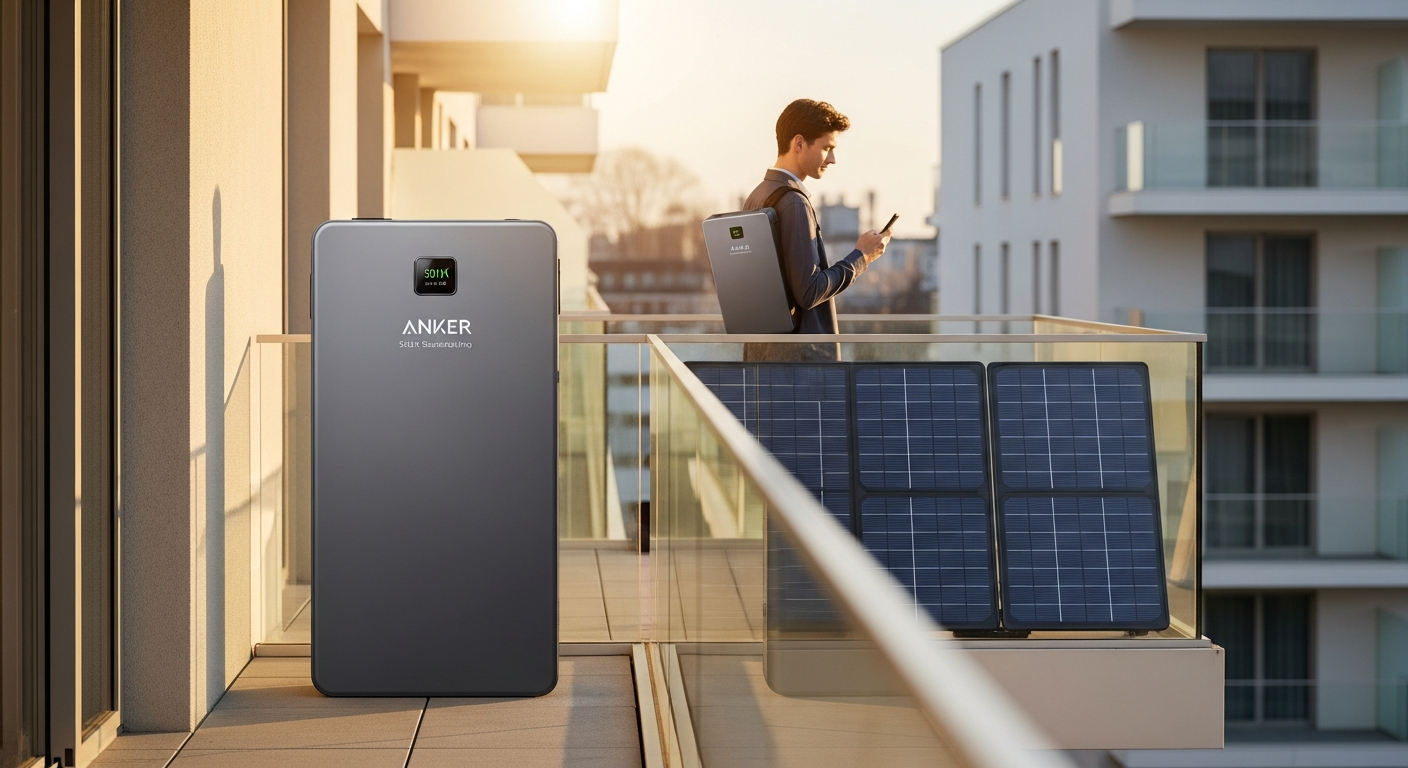
The Anker SOLIX Solarbank 2 E1600 Pro relies on Lithium Iron Phosphate (LiFePO4) chemistry rather than conventional lithium-ion batteries, and this distinction matters significantly. LiFePO4 offers superior thermal stability, meaning it resists the heat-related degradation that plagues standard lithium-ion cells. When you’re storing solar energy that fluctuates throughout the day, this stability translates to consistent performance. Additionally, LiFePO4 chemistry inherently resists the risk of thermal runaway—a dangerous condition where standard batteries can overheat uncontrollably. For apartment dwellers storing energy just steps from living spaces, this safety advantage proves invaluable.
Traditional lithium-ion batteries typically degrade faster under repeated charging cycles, losing capacity more quickly than LiFePO4. The E1600 Pro’s LiFePO4 cells maintain their structural integrity cycle after cycle, preserving usable capacity far longer than competing technologies. This means your stored energy remains accessible and reliable, even after years of daily use.
The 6,000-Cycle Lifespan Explained and What It Means for Long-Term Ownership
Six thousand cycles represents approximately 16 to 22 years of daily charging and discharging at typical household usage rates. To put this in perspective, the average apartment dweller might cycle their storage system once daily during productive solar seasons, translating to roughly two decades of reliable operation. This lifespan extends well beyond most rental agreements, making the E1600 Pro a stable investment even if you relocate multiple times.
The practical implication deserves attention: after 6,000 cycles, the battery doesn’t suddenly stop functioning. Instead, it gradually retains slightly less charge, similar to aging smartphone batteries. Many users continue operating systems beyond the rated cycle count, experiencing only marginal performance reduction. This degradation curve is gradual and predictable, allowing you to plan replacements or upgrades with certainty.
Safety Certifications and Thermal Management Features
Anker integrates TÜV-certified safety standards throughout the E1600 Pro, meeting rigorous European electrical safety requirements. TÜV certification verifies independent testing of electrical safety, electromagnetic compatibility, and operational reliability. For apartment installations where the system sits visible and accessible, this certification provides peace of mind for both you and your landlord.
Thermal management becomes crucial when storing electricity in compact form. The E1600 Pro incorporates built-in temperature sensors and intelligent charging circuits that prevent overheating during high-demand periods. Automatic load balancing distributes power draw across internal cells, preventing hotspots and extending overall lifespan. These features operate silently and require zero maintenance from you.
How LiFePO4 Maintains Performance in Varying Temperature Conditions
Apartment balconies experience temperature swings—freezing winters and scorching summers. LiFePO4 chemistry handles these extremes better than standard lithium-ion, though performance does vary seasonally. During cold months, chemical reactions slow slightly, reducing peak power output. Conversely, summer heat can accelerate degradation if the system operates continuously at high temperatures.
The E1600 Pro’s thermal management circuitry compensates for these temperature variations automatically. The system reduces charging speed in extreme cold to prevent lithium plating (a degradation mechanism), and throttles power output in extreme heat to maintain cell integrity. Your stored energy remains accessible across seasons, though seasonal efficiency variations do occur naturally.
Storage Capacity and Power Output: Is 1600Wh Enough for Your Apartment?
Breaking Down 1600Wh Capacity and Typical Daily Household Energy Needs
A 1600Wh battery stores enough energy to power a modern apartment for several hours, depending on which appliances you operate. The average German household consumes 3,000-4,000 watt-hours daily, meaning the E1600 Pro captures roughly 40-50% of daily needs during peak production seasons. This capacity proves sufficient for supplementing grid power rather than replacing it entirely, which aligns perfectly with balcony solar’s realistic design parameters.
Breaking this into practical terms: 1600Wh can power a refrigerator for 24 hours, a television for 15-20 hours, or your home office setup (computer, monitor, lighting) for an entire workday. The capacity shines brightest for daytime usage, offsetting your peak demand periods when solar generation peaks simultaneously.
Which Apartment Appliances the E1600 Pro Can Power Simultaneously
The E1600 Pro’s inverter converts stored DC power into standard AC household current, allowing simultaneous operation of multiple devices. Your refrigerator (typically 150W continuous) runs alongside your home office setup (200-300W) without strain. Simultaneously charging laptops and smartphones while the fridge operates requires minimal battery stress.
High-demand appliances like electric kettles (2000W+) or hairdryers drain the battery quickly, but apartment dwellers rarely need to operate these simultaneously with other loads. Strategic timing—boiling water during peak solar generation hours, for instance—maximizes efficiency without forcing difficult compromises. The key advantage is flexibility: you’re not choosing between powering your laptop or running the refrigerator; you’re powering both within realistic consumption patterns.
Understanding the Integrated Inverter’s Role in Converting DC to AC Power
Solar panels generate direct current (DC), which can’t power standard household appliances designed for alternating current (AC). The E1600 Pro’s integrated inverter performs this conversion seamlessly and efficiently. This all-in-one design eliminates the need for external inverters, simplifying installation and reducing energy losses during conversion.
Inverter efficiency typically exceeds 95%, meaning minimal energy dissipates as heat during conversion. This efficiency rating proves critical for apartment installations where every watt of solar energy should become usable household power rather than wasted heat.
Peak Power Output Versus Continuous Power Delivery Capabilities
The system distinguishes between peak power (brief maximum output) and continuous power (sustained delivery). Peak ratings describe momentary surges when devices first activate—a refrigerator compressor engaging, for example. Continuous ratings reflect sustained operation across extended periods. The E1600 Pro’s continuous power delivery matches most apartment appliance requirements, while peak capacity handles initialization spikes from motor-driven devices.
Understanding this distinction prevents frustration. You might experience momentary dimming lights when simultaneously starting multiple devices, but sustained operation at reasonable power levels functions smoothly throughout the day.
The Complete Balkonkraftwerk Package: What’s Included and Installation Essentials
Components Included in Standard E1600 Pro Packages
Complete E1600 Pro packages typically include the 1600Wh storage unit, paired with either 450Wp or 500Wp solar panels. This combination delivers realistic energy generation across seasonal variations. Additional components cover essential connection needs and installation hardware. The inclusion of matched solar panels ensures proper voltage and current compatibility, eliminating guesswork and incompatibility risks.
Package completeness distinguishes quality providers. SolarMars.de structures bundles specifically for the German market, accounting for local weather patterns and building standards. Purchasing as a complete package costs less than sourcing components individually while guaranteeing compatibility.
MC4 Solar Cable Specifications and Connection Standards
MC4 connectors represent the industry standard for solar installations, featuring weatherproof sealing and reliable current transfer. The included cables match the solar panel and storage unit specifications, ensuring proper current capacity without undersizing risks. These connectors handle outdoor balcony conditions—UV exposure, temperature cycling, and moisture—without degradation.
Proper cable sizing prevents voltage drop across long runs. For typical apartment balcony installations, included cables provide adequate length while maintaining efficiency. Professional-grade connections mean you’re not relying on amateur-hour improvisation with incompatible components.
Step-by-Step Installation Process for Apartment Balconies
Installation requires zero drilling, zero permanent modifications, and zero landlord concerns. The storage unit simply sits on your balcony floor or mounts via non-penetrating bracket systems. Solar panels rest on the balcony railing or roof using adjustable mounting brackets that clamp rather than bolt. This approach proves crucial for renters, as everything reverses completely when you relocate.
Connection involves linking the solar panels to the storage unit via MC4 connectors, then connecting the storage unit to a standard household outlet via the integrated inverter. No specialized electrical knowledge is required; the system uses standard connectors and safety cutoffs. Most installations complete within two hours for users comfortable with basic hand tools.
Weatherproofing Considerations for Outdoor Balcony Installations
The E1600 Pro housing withstands direct weather exposure through IP65 rating, meaning dust can’t penetrate and rain won’t damage internal components. Solar panels similarly feature weatherproof construction rated for continuous outdoor use. Balcony placement ensures adequate ventilation, preventing heat buildup that could reduce efficiency.
Winter conditions require attention—snow accumulation on panels reduces generation, and moisture exposure accelerates natural degradation. Regular inspection and occasional cleaning maintain performance. The system doesn’t require elaborate protection; standard care keeps everything functioning optimally across seasons.
Explore complete E1600 Pro installation packages at SolarMars.de today.
Renter-Specific Advantages: Why Apartment Dwellers Are Choosing the E1600 Pro
Zero-Installation Benefit: Moving the System When You Relocate
Unlike rooftop solar systems permanently affixed to property, the E1600 Pro moves with you. When your lease ends and you relocate to a new apartment, you unplug cables, remove the non-penetrating brackets, and transport your energy system to the next address. This portability eliminates the sunk-cost anxiety that plagues permanent installations.
Landlords appreciate systems that leave no trace. Since nothing requires drilling, patching, or repair upon departure, rental disputes vanish. You’re operating equipment on your own terms, within your own rented space, without demanding landlord approval for permanent modifications.
Landlord Communication Strategies and Legal Standing in Germany
German rental law (Mietrecht) permits tenants to install removable solar systems without landlord consent, provided they cause no permanent damage. The E1600 Pro’s non-invasive design aligns perfectly with this legal framework. Informing your landlord beforehand (even when not required) demonstrates good faith and typically generates positive responses.
Providing documentation showing the system’s non-invasive nature addresses landlord concerns proactively. Most landlords recognize that portable solar improves property appeal and utility efficiency without imposing obligations. Legal standing in your favor means you control the conversation.
Energy Independence Without Long-Term Property Commitments
Renters benefit from immediate energy independence without tying capital to immovable property. You’re not betting your financial future on property appreciation or permanent residency. The E1600 Pro generates returns through electricity savings regardless of property ownership or lease duration.
This flexibility proves invaluable for individuals uncertain about long-term location plans. Career changes, relationship developments, and life circumstances shift unexpectedly. Portable solar adapts to life’s movements rather than constraining them.
Tax Benefits and Government Incentives Available to Renters in Germany
German incentive programs for renewable energy increasingly accommodate renters and apartment dwellers. While major tax breaks traditionally targeted property owners, newer programs recognize apartment solar’s societal benefits. Investigation of current federal (Bundesebene) and state-level (Länder) incentives can reduce effective purchase costs significantly.
Additionally, reduced VAT rates apply to certain renewable energy components in Germany, lowering overall system costs. SolarMars.de structures purchases to maximize available incentives, ensuring customers benefit from all applicable programs. Checking current program eligibility before purchase can substantially improve return-on-investment calculations.
Pricing Strategy and Long-Term Savings Analysis
Current Promotional Pricing From €399.90 Versus Standard €699-€899
Current promotions price the E1600 Pro storage unit from €399.90, representing roughly 55% discount from standard pricing. This aggressive pricing reflects SolarMars.de’s key-account partnership with Anker, enabling favorable wholesale rates passed directly to customers. Complete Balkonkraftwerk packages including matched solar panels start around similar promotional levels.
Comparing standalone component pricing versus bundled packages always favors bundles. Purchasing solar panels separately costs more while risking incompatibility. Promotional periods vary seasonally; winter months typically feature deeper discounts as demand drops. Capitalizing on promotional windows maximizes savings.
Calculating Electricity Bill Reductions Based on Seasonal Usage Patterns
The average German household pays approximately €0.35-0.40 per kilowatt-hour. The E1600 Pro’s daily 1600Wh capacity offsets roughly 0.55-0.65€ daily electricity costs during productive seasons. Over a year, seasonal variations flatten to approximately €150-200 annual savings for typical apartment usage.
Regional variations matter significantly. Munich, Stuttgart, and southern regions receive superior solar irradiance compared to northern Germany, generating 15-20% more electricity annually. Personal consumption patterns further influence calculations—households with daytime presence capture more self-generated power than those absent during peak production hours.
Payback Period Analysis: How Quickly the System Pays for Itself
At current promotional pricing (€399.90 for storage plus €250-350 for matched 450Wp solar panels), total system investment approaches €650-750 for complete setups. Annual savings of €150-200 produce payback within 3.5-5 years at standard electricity rates. Rising electricity costs accelerate payback timelines; every €0.05/kWh increase shortens payback by 6-8 months.
This timeline compares favorably against long-term investment horizons. The system operates productively for 16-22 years based on cycle counts; even accounting for eventual battery replacement, cost-per-year drops substantially after payback completion.
Seasonal Savings Variations and Storage Efficiency During Winter Months
German winter months (November-February) produce dramatically less solar electricity than summer. Daily generation drops 60-75% compared to summer peaks, reducing monthly savings accordingly. Winter electricity costs remain stable while generation declines, meaning seasonal payback calculations should assume conservative winter performance.
Summer compensation partially offsets winter reduction. June through August generation often exceeds daily consumption, allowing surplus electricity export to the grid (where applicable) or storage for off-peak usage. Net annual returns flatten the seasonal variance when calculated annually.
Competitive Landscape: How E1600 Pro Stacks Against Alternatives
Direct Comparison With Solarbank 3 and Other Anker Models
The E1600 Pro sits within Anker’s established product line, with the newer Solarbank 3 offering enhanced features at higher price points. Solarbank 3 features increased capacity and more advanced inverter specifications, commanding proportional price premiums. For apartment dwellers prioritizing cost-effectiveness over maximum capacity, the E1600 Pro delivers superior value.
Older Anker models like the standard Solarbank 2 feature similar core technology with identical LiFePO4 chemistry and comparable cycle ratings. The distinction between variants often reflects minor specification differences rather than fundamental technology gaps. E1600 Pro positioning as a “sweet spot” between entry-level and premium options explains its market popularity.
Competitor Analysis: EcoFlow, Bluetti, and Other Storage Solutions
EcoFlow and Bluetti produce comparable storage systems with similar capacity ranges and battery technologies. EcoFlow emphasizes portability and expansion capabilities, commanding premium pricing reflecting these features. Bluetti focuses on ruggedness and outdoor resilience, appealing to off-grid users rather than apartment dwellers.
Direct price comparison reveals Anker’s competitive advantage: equivalent capacity from competitors typically costs 20-30% more. This pricing advantage stems from SolarMars.de’s bulk purchasing power and German market focus. For apartment balcony installations specifically, Anker systems prove optimized without unnecessary ruggedness features that increase cost without benefit.
Price-to-Capacity Ratios Across Different Manufacturers
Calculating €/Wh (euros per watt-hour) reveals comparative value across manufacturers. The E1600 Pro promotional pricing produces approximately €0.25/Wh, while competitor offerings typically range €0.30-0.40/Wh for equivalent capacity. This ratio advantage compounds when comparing complete packages including solar panels.
Budget-conscious shoppers should calculate total system costs including interconnection components, not just battery storage. Hidden costs emerge when purchasing components separately: cables, connectors, mounting hardware, and potential compatibility issues. Bundled packages eliminate these hidden expenses while maintaining superior pricing.
Brand Reliability and Customer Support Across Competitors
Anker maintains well-established customer support infrastructure across Germany and Europe, addressing technical issues promptly. SolarMars.de’s specialization in balcony power plants means support staff understand apartment-specific concerns rather than providing generic responses. This localized support proves invaluable when troubleshooting installation or connectivity questions.
Competitor support varies widely. International brands may require forwarding inquiries through multiple channels before reaching local representatives. Anker’s presence in the German market means faster response times and local language support, reducing frustration during problem resolution.
Maximizing Your Investment: Optimization Tips and Best Practices
Optimal Balcony Positioning for Maximum Solar Exposure
Solar panel orientation dramatically influences electricity generation. South-facing balconies in Germany receive optimal exposure throughout the year. East or west-facing installations generate adequately (85-90% of south-facing output) but suffer longer low-generation periods morning or evening. North-facing balconies prove unsuitable; generation barely reaches 50% of south-facing capacity.
Shading introduces critical constraints. Neighboring buildings, tall trees, or structures casting shadows during peak generation hours (10am-3pm) reduce daily output significantly. Balconies receiving unobstructed southern exposure from mid-morning through mid-afternoon capture maximum solar energy. Preliminary site assessment before purchase ensures realistic return calculations.
Seasonal Adjustments and Weather-Related Performance Considerations
Summer sun angles differ from winter angles; manually adjusting panel inclination twice yearly boosts annual generation by 5-10%. Winter installation angles differ substantially from summer positions. Non-fixed mounting systems allow seasonal optimization without complex equipment.
Weather patterns influence daily generation unpredictably. Cloudy periods generate 10-20% of clear-sky output; rainy days produce minimal electricity. Monthly averages smooth these variations; calculating returns requires annual data rather than extrapolating from individual sunny days. Historical weather data specific to your region provides realistic performance expectations.
Battery Maintenance Protocols to Extend Lifespan Beyond 6,000 Cycles
The E1600 Pro requires minimal maintenance; the system operates optimally with no user intervention. However, several practices extend lifespan beyond manufacturer specifications. Avoiding complete discharge (letting the battery drain to 0%) preserves cell integrity; maintaining 10-20% reserve capacity between cycles reduces stress.
Temperature management proves crucial. Operating the system in moderate conditions (not extreme heat or cold) preserves battery chemistry. During intense summer periods, ensuring adequate ventilation prevents thermal stress. Winter operation functions normally; however, charging in sub-zero temperatures should be minimized when possible, as cold slows chemical reactions and temporarily reduces capacity.
Smart Charging Patterns to Maximize Stored Energy Utilization
Strategic timing of high-demand appliances around peak solar generation optimizes self-consumption. Running washing machines, dishwashers, and charging devices during midday solar peaks (typically 10am-3pm) maximizes direct solar utilization, reducing battery cycling. Lower battery cycling extends lifespan while reducing reliance on grid electricity.
Time-of-use pricing (where available) further rewards intelligent consumption timing. Some electricity providers offer reduced rates during specific hours; consuming stored solar energy during premium-rate periods maximizes financial benefit. Monitoring generation and consumption patterns over several weeks reveals personal optimization opportunities specific to your usage habits.
Your Path to Energy Autonomy Starts on Your Balcony
The Anker SOLIX Solarbank 2 E1600 Pro Balkonkraftwerk Speicher represents far more than a storage device—it’s your ticket to reclaiming control over your electricity consumption. Whether you’re a renter seeking energy independence, an apartment dweller frustrated by rising utility bills, or simply someone committed to sustainable living, this system delivers tangible results without compromise. The 1600Wh capacity paired with LiFePO4 durability means you’re investing in years of reliable performance. Promotional pricing starting at €399.90 dramatically shortens the payback period, while the 6,000-cycle lifespan ensures your investment continues generating returns long after the initial purchase.
Over two million German households now generate their own electricity through balcony installations, yet many still hesitate believing residential solar is beyond reach. The E1600 Pro dissolves these misconceptions. No drilling, no landlord negotiations required by law, no permanent modifications—simply unbox the system, position your panels, and start capturing solar energy immediately. Seasonal savings accumulate steadily, transforming an initially modest investment into increasingly valuable returns as years pass.
The competitive landscape confirms Anker’s positioning: superior pricing, localized support, and proven reliability distinguish the E1600 Pro from alternatives. Battery technology assures performance across decades of use, while weatherproofing handles German climate variations effortlessly. Your apartment balcony transitions from empty space into a personal power station, generating electricity for your household while reducing grid dependence and shrinking your carbon footprint.
Ready to transform your apartment balcony into a personal power station? Visit SolarMars.de today to explore available bundles and take the first step toward energy autonomy.
Leave a Reply