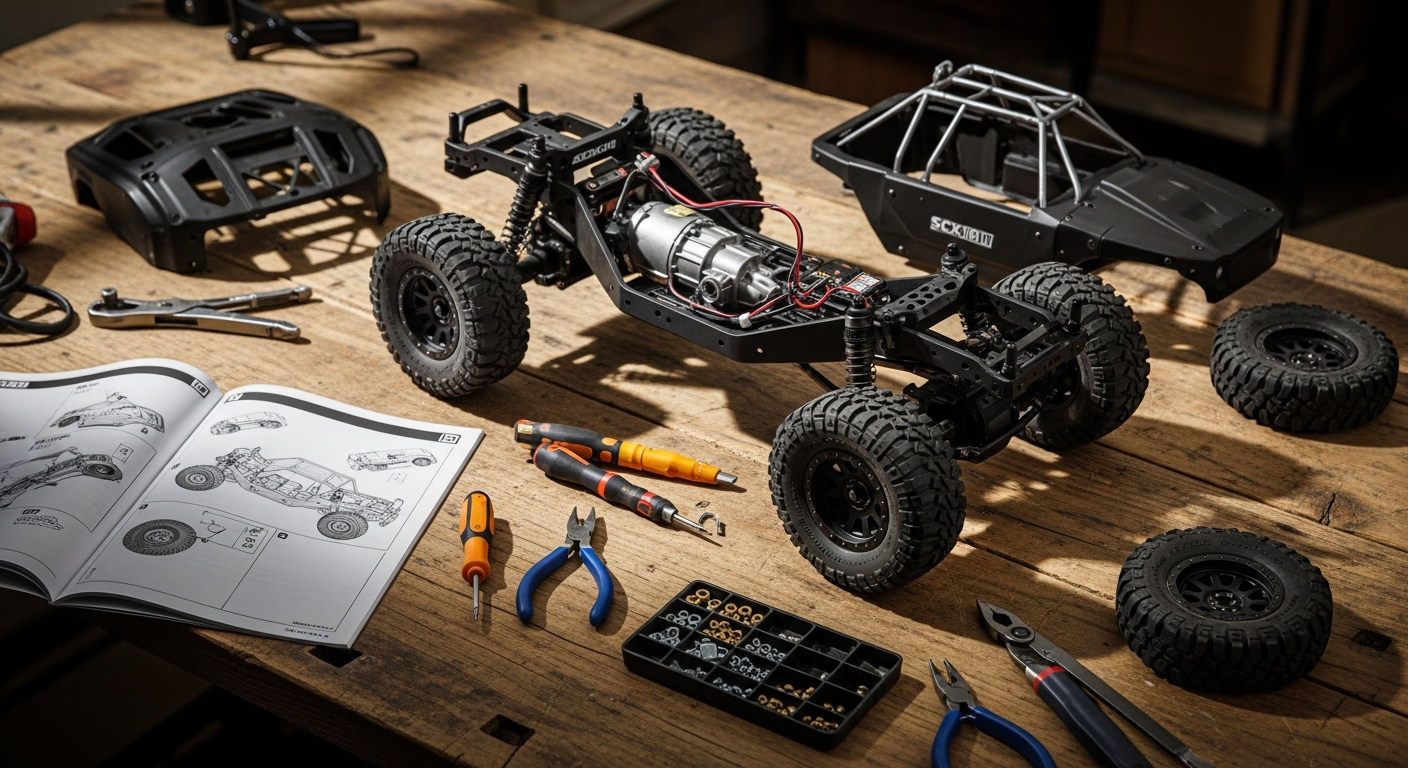
Did you know that the Axial SCX10 III has become the go-to choice for RC enthusiasts who want to build a machine that conquers real-world terrain? If you’ve scrolled through RC forums or watched trail videos, you’ve probably seen this beast in action—crawling over boulders, navigating technical obstacles, and handling extreme angles that would destroy ordinary RC vehicles. The SCX10 III isn’t your typical ready-to-run RC vehicle—it’s a builder’s kit that demands patience, mechanical skill, and a genuine passion for customization.
This platform has earned its legendary status because it balances authentic Jeep aesthetics with serious off-road capability, thanks to features like portal axles and a two-speed transmission that serious crawlers crave. Building an SCX10 III separates the casual hobbyists from those who view RC crawling as a true pursuit—one where the journey from unboxing parts to firing up your finished rig rivals the satisfaction of actually driving it.
Explore the Axial SCX10 III RC Rock Crawler Kit to begin your builder’s journey.
In this guide, I’m walking you through everything you need to know about assembling and optimizing your SCX10 III—from understanding what components you’ll actually need to buy separately, to leveraging the platform’s incredible aftermarket ecosystem for upgrades. By the end, you’ll have a clear roadmap for building a rig that’s uniquely yours.
The Builder’s Journey: What You’re Really Getting in the Box
Kit versus Ready-to-Run: Understanding the Distinction
The difference between a kit and a ready-to-run (RTR) model fundamentally shapes your entire experience. An RTR model arrives almost fully assembled with electronics pre-installed—you unbox it, charge the battery, and drive. A kit, by contrast, is a collection of structural components requiring significant assembly and the purchase of separate electronics. This distinction matters because it determines how much control you have over your final rig and how much time you’ll invest before that first drive.
What’s Inside the Box: Component Breakdown
The SCX10 III kit includes the chassis frame, detailed Jeep JL Wrangler Rubicon body shell, portal axle assemblies, two-speed transmission, suspension components, and structural hardware. The body alone showcases meticulous detail—from the grille work to the lighting elements—creating immediate visual appeal once assembled. The chassis uses metal-geared transmission construction throughout, ensuring durability through repeated trail abuse. Shock towers, links, and mounting points are engineered from quality materials designed to handle the stresses of aggressive off-road driving.
Portal Axle Technology Explained
Portal axles represent one of the SCX10 III’s most significant performance features. Traditional RC crawlers mount their motors and gearing directly in the axle housing, which limits ground clearance. Portal axles shift the motor mounting outboard, effectively extending the axle tubes upward. This design increases ground clearance considerably while improving articulation—your wheels can flex further up and down before suspension geometry becomes compromised. The result is better obstacle clearing, improved approach and departure angles, and enhanced ability to navigate genuinely technical terrain.
Two-Speed Transmission and Dig Function
The SCX10 III’s two-speed transmission delivers both high-speed touring capability and deliberate low-speed crawling precision. High-speed mode suits faster terrain—open trails, looser rock, and situations where momentum works in your favor. Low-speed mode engages a lower gear ratio, providing raw torque at minimal velocity, allowing you to power through tight boulder fields and negotiate obstacles requiring granular throttle control.
The dig function locks the rear axle, distributing power equally to both rear wheels. This capability proves invaluable for tight maneuvering—when you need to pivot in confined spaces or make aggressive directional changes, dig function keeps your rig planted and responsive.
Adjustable Wheelbase and Suspension Customization
Multiple wheelbase options let you optimize your platform for specific terrain characteristics. A shorter wheelbase improves turning radius and maneuverability through tight technical courses. A longer wheelbase increases stability over rough ground and improves weight distribution on extreme inclines. Similarly, the SCX10 III offers multiple shock mounting positions, allowing suspension geometry adjustments that fine-tune ride height, anti-dive characteristics, and overall flex behavior. These adjustability features transform the kit from a static platform into a tunable system responsive to your driving style and preferred terrain.
Electronics You’ll Need to Complete Your Build
Motor Selection: KV Ratings and Torque Considerations
Every motor carries a KV rating—essentially how many RPM the motor generates per volt of power. Lower KV motors (around 3000–4000) produce higher torque at lower RPM, perfect for slow technical crawling where raw pulling power matters more than speed. Higher KV motors (5000+) spin faster but deliver less torque. For SCX10 III crawling, most builders gravitate toward the 3000–4000 KV range because the platform’s two-speed transmission handles torque management, and crawling rewards controlled, powerful movement over raw speed.
Electronic Speed Controller (ESC) and Programming
Your ESC regulates power flow from battery to motor. Modern ESCs offer programmable features including throttle curve customization, drag brake settings, and terrain-specific response profiles. Some ESCs include waterproofing designed to handle mud and water exposure common in rock crawling. Programming allows you to adjust throttle sensitivity—critical when you’re trying to feather throttle in technical sections where overdriving wheels means losing traction and rolling backward.
Battery Specifications: Voltage, Capacity, and C-Ratings
RC crawling batteries come in standard voltages—typically 2S (7.4V), 3S (11.1V), or 4S (14.8V) LiPo configurations. The SCX10 III accepts various voltages, but most builders use 3S setups for balanced performance. Capacity measured in mAh determines runtime; higher capacity means longer driving sessions but also increased weight. C-rating indicates discharge speed—a 100C battery discharges faster than a 50C battery of equal capacity. Crawling doesn’t demand extreme discharge rates, so 50–80C ratings typically suffice.
Radio System Requirements
You’ll need a transmitter and receiver system. Two-channel receivers handle basic throttle and steering, sufficient for trail crawling. Four-channel setups add aux channels for functions like dig lockout, light control, or specialized rig features. Mid-range systems cost significantly less than competition-grade equipment while providing reliable control for recreational crawling.
Where to Source Electronics and Cost Considerations
Electronics represent the second-largest investment after the kit itself. Motor, ESC, battery, charger, and radio system collectively run $250–$500 depending on component quality. Sourcing from specialized RC retailers ensures compatibility and warranty support. Premium electronics packages optimized specifically for SCX10 platforms exist at various price points, often bundling compatible components at moderate discounts.
Check out complete SCX10 III bundles that include recommended electronics packages.
Future-Proofing Your Electronics Choices
Consider expandability when selecting initial electronics. A quality ESC with advanced programming potential serves you through multiple motor upgrades. Mid-range transmitters often support frequency upgrades and additional receivers. Batteries purchased in compatible configurations allow you to invest in additional packs without replacing your entire power system. This modular approach reduces long-term cost while maintaining upgrade flexibility.
Charging Systems and Battery Management
A quality battery charger supporting your chosen voltage configuration is non-negotiable. Advanced chargers offer balance charging, temperature monitoring, and storage mode functionality that extends battery lifespan significantly. Proper battery management—storing at partial charge during off-season, avoiding deep discharges, monitoring cell voltage—keeps lithium packs functioning reliably for years rather than months.
Performance on the Trail: Real-World Capability and Limitations
Portal Axles and Off-Road Performance
The portal axle setup transforms how the SCX10 III negotiates rough terrain. Increased ground clearance means rocks and obstacles that would hang up traditional crawlers pass safely underneath. Superior articulation lets wheels reach further during articulation, maintaining tire contact on uneven ground where conventional suspension would break traction. The result is dramatically improved traction, obstacle clearing, and overall capability on genuinely challenging terrain.
Two-Speed Transmission Advantages
Balancing speed and control across diverse terrain types becomes intuitive with the two-speed system. Fast open sections benefit from high-speed gear keeping your rig responsive and efficient. Technical boulder fields demand low-speed mode’s torquey control. Transitioning between modes mid-drive lets you adapt instantly to changing conditions without stopping—a capability that separates the SCX10 III from single-speed competitors.
Articulation and Suspension Geometry
The platform’s suspension allows exceptional flex while maintaining wheel contact. Over dramatic terrain with significant height changes, the SCX10 III maintains all four tires planted through suspension movement that would produce dramatic body roll or loss of traction on lesser designs. The adjustable shock mounting positions fine-tune this behavior further—tighter setups for stability, looser configurations for maximum articulation.
Scale Realism Benefits Handling
The Jeep JL Wrangler Rubicon’s proportions aren’t purely aesthetic. Weight distribution mimics actual vehicle balance, improving handling characteristics. The body’s shape creates realistic center-of-gravity positioning that contributes to natural turning behavior and predictable handling through corners. This realism translates to intuitive driving—your muscle memory from real vehicle experience transfers partially to the crawler.
Performance Comparison with Competitive 1/10 Scale Crawlers
Within the 1/10 scale crawling segment, the SCX10 III competes at the highest levels. Portal axles were formerly exclusive to premium models; the SCX10 III democratized this technology. The two-speed transmission offers versatility that single-speed competitors can’t match. Aftermarket support exceeds most rivals, meaning upgrade paths remain viable years into ownership. Build quality and design thoughtfulness position it ahead of budget alternatives while remaining more accessible than ultra-premium specialty crawlers.
Technical Maneuver Capabilities
Side-hilling—driving across steep inclines—becomes manageable thanks to articulation and weight distribution. Rock crawling through boulder fields showcases the portal axles and low-speed transmission’s synergy. Extreme terrain including near-vertical obstacles represents legitimate challenges even for the SCX10 III, but it tackles such terrain more capably than most alternatives at its price point.
Limitations and Realistic Expectations
Beginners should understand that rock crawling skill development takes time. Mastering throttle control, line selection, and understanding your specific rig’s behavior requires multiple trail sessions. The SCX10 III’s capabilities exceed beginner skill levels significantly—a humbling reminder that the platform will remain relevant as you improve. Extreme modifications eventually produce rigs outperforming stock configurations, but factory specs deliver genuinely impressive capability.
Real-World Testing Scenarios
Rocky hills showcase the SCX10 III’s articulation and portal axle advantages distinctly. Loosely-packed sandy terrain demonstrates the two-speed transmission’s flexibility. Mixed obstacle courses combining boulders, logs, and elevation changes represent the platform’s design sweet spot. Urban backyard courses built with stacked rocks and creative obstacles prove entertaining and revealing for tuning and driving practice.
Customization and Upgrade Potential: Building Your Unique Rig
The Aftermarket Ecosystem
The SCX10 platform’s longevity created an enormous aftermarket community. Third-party manufacturers produce carbon fiber chassis components, aluminum upgrades, alternative body options, transmission modifications, and specialized electronics. This ecosystem means your SCX10 III can evolve dramatically from its stock configuration—your investment remains current and upgradeable for years.
Chassis Upgrades: Weight Reduction and Structural Enhancement
Carbon fiber chassis components reduce weight while maintaining rigidity. Aluminum skid plates, bumpers, and protective components add durability without excessive weight penalty. Progressive builders gradually replace plastic components with premium materials, decreasing unsprung weight and improving responsiveness. These upgrades compound—each reduction in rotating mass or unsprung weight contributes to better performance.
Suspension Modifications
Aftermarket shock absorbers offer improved damping characteristics, better sealing for water resistance, and tunable spring rates. Different shock fluid viscosities alter damping behavior without component replacement. Adjustable spring preload lets you fine-tune ride height without changing springs entirely. Progressive suspension builders maintain multiple shock configurations for specific terrain types.
Axle Upgrades and Gear Ratio Customization
Upgraded axle shafts and joints improve durability and reduce weight. Changing gear ratios alters the balance between top speed and torque delivery. Taller gears increase speed potential; shorter gears increase low-end pulling power. Experimenting with different ratios reveals how significantly drivetrain tuning impacts performance across terrain types.
Body Customization: Paint, Decals, and Alternative Options
The Jeep body represents the most visible aspect of your build. Custom paint schemes, vinyl decals, and artistic modifications make your rig visually distinctive. Alternative Jeep body options—different Wrangler generations, custom designs—allow complete aesthetic reinvention while maintaining platform compatibility.
Drivetrain Enhancements
Upgrading to higher KV motors increases power output. Premium ESCs offer smoother throttle response and advanced programming. Transmission modifications, upgraded internal components, and custom gear sets optimize the drivetrain for specific performance goals. These enhancements compound—a better motor paired with improved gearing and electronics produces synergistic performance gains.
Electronics Swaps and System Upgrades
Initial electronics are merely starting points. Upgrading to waterproof high-performance ESCs, brushless motors with superior power delivery, and high-capacity batteries extends performance capabilities. Some builders eventually establish multiple drivetrain configurations for different conditions—one optimized for speed, another for technical crawling, maximizing versatility.
Community-Driven Modifications and Trending Approaches
Online communities continuously showcase innovative modifications—builders experimenting with unconventional approaches, sharing results, inspiring others. Following these trends prevents stagnation; you discover modifications making meaningful performance improvements, saving yourself time testing dead ends.
Total Cost Breakdown: Budget Planning for Your Complete Build
Base Kit Investment
The SCX10 III kit itself ranges from $400–$500, including chassis, body, transmission, axles, and suspension components. This foundation represents the bulk of structural cost but requires electronic systems for functionality.
Electronics Costs: Motor, ESC, Battery, and Radio
Motor selection typically runs $60–$150 depending on quality tier. ESC pricing spans $100–$250 for reliable, feature-rich options. Battery systems including charger cost $150–$300. Radio systems range from $80–$200. Combined electronics budget typically reaches $400–$900 depending on component selection.
Additional Accessories and Tools
Proper tools for assembly—Allen keys, screwdrivers, pliers, and specialized RC tools—cost $50–$150. A quality battery charger, spare batteries, and maintenance supplies add $100–$200. Spare parts including suspension components, transmission parts, and fasteners represent a prudent $100–$200 contingency.
Aftermarket Upgrade Costs
Initial upgrades—a carbon fiber chassis plate, upgraded shocks, or premium wheels—might cost $150–$300. Comprehensive upgrades gradually totaling $500–$1000+ create truly specialized rigs. Upgrade costs remain entirely optional; stock SCX10 III configurations deliver impressive performance.
Budget-Friendly versus Premium Options
At each component stage, budget alternatives exist alongside premium options. Budget electronics deliver functionality; premium electronics provide improved durability and performance. The key is identifying where your priorities lie—investing premium dollars in components you’ll upgrade frequently wastes money, while skimping on foundational elements creates regret.
Hidden Costs: Shipping, Taxes, and Unexpected Expenses
Online retail introduces shipping costs, often $20–$50 per order. Sales taxes vary regionally but typically add 6–10% to total costs. Assembly often reveals unexpected needs—missing fasteners requiring purchase, broken components needing replacement, specialized tools discovered during assembly. Building a $100–$150 contingency buffer prevents financial surprises.
Long-Term Maintenance and Replacement Parts
Bearings wear, seals degrade, and gears eventually sustain damage. Annual maintenance parts typically cost $50–$150. Major component failures—transmission damage or motor burnout—necessitate $150–$300 replacements. Stocking spare parts as you identify wear patterns prevents trail interruptions.
Total Value Proposition
A complete SCX10 III build—kit, electronics, accessories, and initial upgrades—costs $1200–$1800. Ready-to-run alternatives at similar price points exist but typically sacrifice customization, longevity, and performance capabilities. The builder’s journey adds intangible value—knowledge gained, skills developed, and pride from building your own rig.
Who Should Build the SCX10 III: Matching the Kit to Your Skill Level
Ideal Candidates: Experienced RC Hobbyists
Builders with prior RC experience find the SCX10 III’s assembly rewarding. Understanding basic electronics and mechanical principles accelerates the building process significantly. Experience with RC maintenance and troubleshooting provides context for assembly and future problem-solving. These builders appreciate the customization depth and aftermarket potential the platform offers.
Newcomers to the Hobby: Realistic Expectations
Newcomers can absolutely build an SCX10 III, but expectations require calibration. Assembly takes 20–40 hours including electronics integration and testing. Mechanical aptitude matters—stripped screws, misaligned components, or improper torque settings create frustrations. Online resources and community support mitigate these challenges substantially. Patience and methodical approach separate successful first-time builds from abandoned projects.
Experienced Builders: Advanced Opportunities
Seasoned builders leverage the SCX10 III’s platform maturity to create highly optimized specialized rigs. Custom electronics configurations, exotic materials, and competition-level tuning represent possibilities that engage experienced minds. The platform’s competitive scene provides objective performance benchmarking.
Solo versus Group Builds
Building alone allows full creative control and learning at your own pace. Group builds create accountability, shared expertise, and social engagement. Experienced friends explaining assembly steps and troubleshooting issues accelerate progress significantly. Both approaches work; personality preference and available support networks determine optimal choice.
Time Commitment and Ongoing Responsibilities
Initial assembly requires dedicated focus—40 hours spread across 2–4 weeks represents realistic timeframe. Ongoing maintenance demands 2–5 hours monthly depending on trail intensity. Upgrade projects consume additional time but remain entirely optional. Understanding this commitment prevents regret; building an RC crawler isn’t a weekend project.
Technical Knowledge Prerequisites
Understanding basic electrical concepts—voltage, polarity, connections—prevents costly mistakes. Mechanical knowledge helps; familiarity with suspension geometry, drivetrain function, and structural principles accelerates comprehension. These prerequisites aren’t insurmountable; learning alongside building combines education with practical application.
Personality Fit: Hands-On Building versus Instant Gratification
Builders who enjoy tinkering, problem-solving, and incremental improvement thrive with the SCX10 III. Hobbyists seeking immediate results frustrate when assembly extends longer than anticipated or initial performance disappoints before tuning. Honest self-assessment about your preference for hands-on engagement prevents disappointment.
Alternative Recommendations for Different Skill Levels
Absolute beginners might benefit from RTR crawlers first—understanding RC operations and developing basic driving skills before undertaking kit assembly. Experienced modelers and hobbyists without RC background often surprise themselves with successful SCX10 III builds, particularly with community guidance.
Community, Support, and Resources for SCX10 III Builders
Online Forums and Communities
Dedicated forums host thousands of SCX10 discussions, build logs, and technical exchanges. Experienced members answer questions patiently; newcomers find assembly guidance, troubleshooting solutions, and modification inspiration. Searching existing threads often reveals that your specific challenge has been addressed previously, saving time.
YouTube Resources and Tutorial Content
Comprehensive assembly tutorials guide step-by-step through complex procedures. Experienced channel creators demonstrate proper techniques—soldering connections, transmitter binding, motor installation—removing guesswork. Performance reviews and modification showcases inspire customization approaches.
Local RC Clubs and Trail-Running Groups
Geographic communities provide in-person mentorship and trail opportunities. Veteran drivers offer guidance about line selection and vehicle control. Local clubs often organize events combining casual driving with competitive racing, creating engagement beyond solo building.
Manufacturer Support: Axial Documentation and Customer Service
Axial provides official assembly manuals covering kit-specific procedures. Customer service addresses defect claims and technical questions. Official support legitimizes purchases and ensures access to genuine replacement parts when needed.
Peer-to-Peer Knowledge Sharing
Experienced builders share freely within communities, mentoring newcomers and collaborating on challenging problems. This peer knowledge represents an invaluable resource—real-world experience filtered through community wisdom.
Parts Compatibility Resources and Databases
Community-maintained compatibility databases clarify which aftermarket components fit which configurations. User experiences with specific parts inform purchasing decisions, preventing expensive incompatibility surprises.
Social Media Groups and Discord Communities
Real-time problem-solving occurs through active social media communities and Discord servers. Quick questions receive rapid responses. Visual content sharing—photos, videos, build updates—creates engagement and inspiration.
Events and Competitions
Organized events bring builders together, showcasing finished rigs and creating competitive environments. Competitions range from casual fun-runs to serious racing, accommodating all skill levels. These gatherings create lasting friendships and highlight techniques worth emulating.
Maximizing Your Investment: Long-Term Maintenance and Care
Regular Maintenance Schedule
Post-drive cleaning prevents mud and debris accumulation damaging components. Weekly inspection identifies wear before failure occurs. Monthly detailed maintenance—lubrication, seal inspection, fastener tightening—prevents minor issues compounding into major problems. Seasonal deep maintenance including transmission oil changes and shock servicing maintains optimal performance.
Wear Items and Strategic Spare Parts Stocking
Bearings and seals wear predictably; stocking spares prevents trail interruptions. Suspension components, drivetrain gears, and transmission parts represent common replacements. Understanding your specific rig’s wear patterns allows targeted spare parts inventory, saving money versus replacing components never failing.
Storage Best Practices
Off-season storage in climate-controlled environments prevents plastic brittleness and corrosion. Battery storage at 50% charge maintains health better than full or empty charge states. Protective covers prevent dust accumulation and UV damage. Periodic movement and visual inspection during storage catch potential issues before spring activation.
Battery Care and Lifespan Management
Careful charging practices—avoiding overcharging, using balance chargers, monitoring cell voltage—extend battery life significantly. Temperature monitoring during charging prevents damage from excessive heat. Storage charge maintenance prevents cell degradation. Well-cared-for batteries last 3–5 years; neglected packs fail within months.
Transmission Maintenance: Gears and Seals
Regular gear inspection reveals wear patterns requiring attention. Oil changes prevent friction and heat buildup. Seal replacement maintains water resistance as seals degrade. These maintenance tasks preserve transmission longevity and performance consistency.
Suspension Servicing
Shock fluid changes every 2–3 seasons maintain damping consistency. Seal inspection prevents oil leakage. Spring preload adjustment compensates for wear or chassis modifications. Regular servicing prevents suspension settling and maintains tuning consistency.
Weatherproofing Considerations
While the SCX10 III tolerates water exposure better than some crawlers, electronics benefit from protection. Waterproof ESC sealing prevents internal corrosion. Differential covers protect internal components from debris intrusion. Cable routing and connector sealing minimize water ingress during muddy terrain navigation.
Upgrade Planning and Strategic Component Replacement
Rather than random upgrades, develop systematic improvement plans. Replace components approaching failure limits with superior alternatives, maximizing performance improvement per dollar spent. Gradual progression creates a rig that evolves with your skills and preferences.
Your Next Steps in the SCX10 III Journey
The Axial SCX10 III demands commitment—but the payoff is extraordinary. You’re not just buying a kit; you’re investing in a hobby that rewards patience with precision, creativity with capability, and passion with performance. The assembly process transforms plastic, metal, and electronics into a capable machine reflecting your choices and effort. Watching that first moment when your finished rig conquers terrain you’ve been strategizing about validates every hour invested.
Start by researching electronics packages that match your budget and the performance characteristics you prioritize. Connect with the SCX10 community—join forums, watch build videos, find local RC clubs in your area. These connections provide mentorship, inspiration, and problem-solving resources you’ll appreciate throughout your building journey. Set aside dedicated time for assembly; rushing through critical steps creates frustration rather than enjoyment.
Stock spare parts strategically as you identify potential failure points specific to your building and driving style. Develop a maintenance schedule aligned with your trail intensity and climate. View upgrades as progressive enhancements rather than rushing comprehensive modifications immediately. Your unique rock crawler will evolve over months and years, becoming increasingly personalized and optimized for your preferences.
Leave a Reply