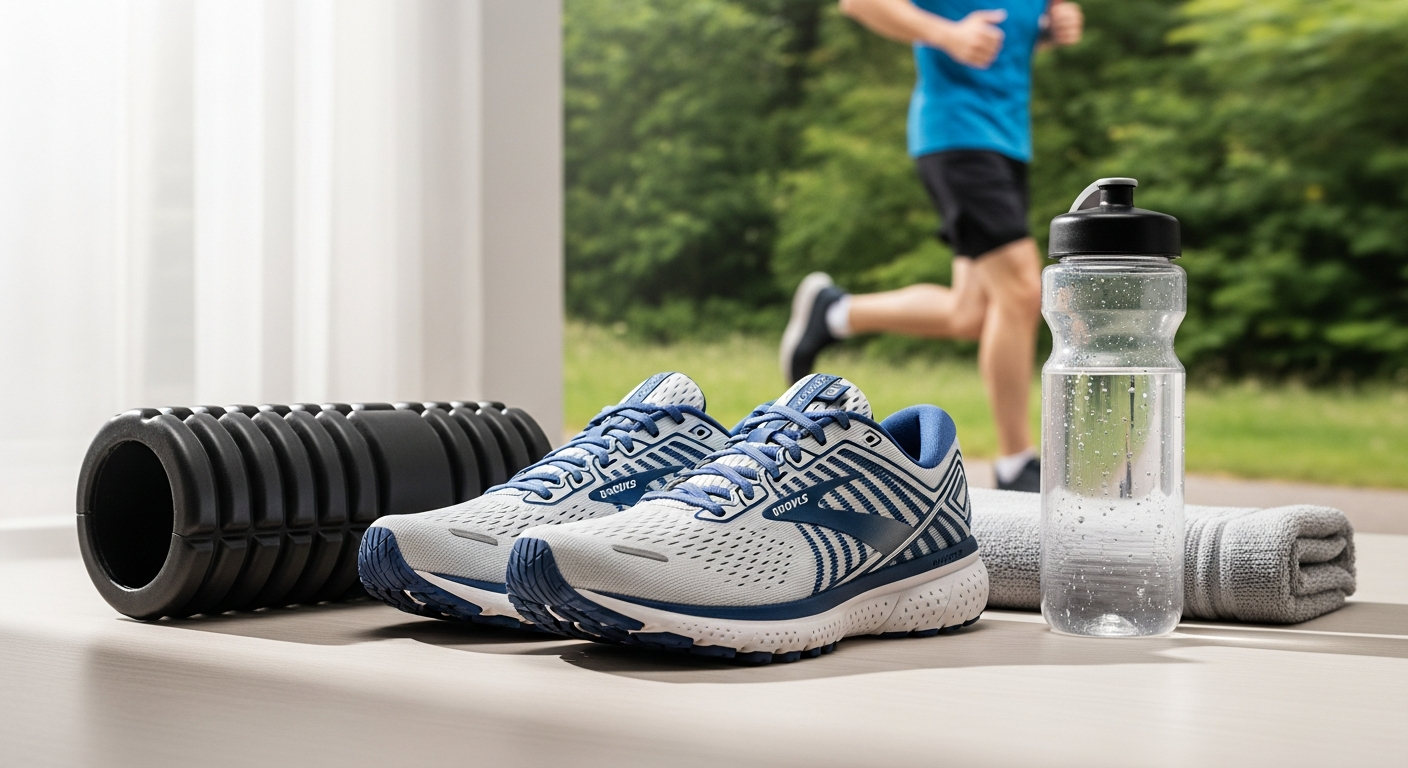
Every runner knows that feeling—you’re nursing a minor niggle, recovering from a hard workout, or simply trying to build base mileage without aggravating an old injury. The pressure to keep moving forward is real, but choosing the wrong shoe during these vulnerable phases can derail weeks of training. That’s where the Brooks Ghost 17 steps in, offering exactly what your body needs when you need it most.
The Ghost 17 has earned its reputation as the ultimate recovery and easy-run companion, not through flashy marketing or cutting-edge technology, but through relentless consistency and genuine comfort. Since its introduction, this neutral trainer has become the go-to choice for runners who prioritize injury prevention and sustainable training over speed chasing. It’s the shoe that lets you focus on your fitness, not your feet.
Discover why the Brooks Ghost 17 is the trusted choice for recovery runners worldwide.
Why Recovery Runs Demand a Different Kind of Shoe
Recovery runs require maximum comfort over responsiveness—the Ghost 17 prioritizes this balance perfectly. Most runners underestimate the importance of their easy-run footwear, yet easy-paced training accounts for roughly 80% of many runners’ weekly mileage. This makes shoe choice absolutely critical for injury prevention.
The difference between a feel-good shoe and one that causes cumulative stress on joints during low-intensity runs becomes apparent only after several weeks. Recovery days are when your body rebuilds and adapts. Neutral shoes like the Ghost 17 protect runners from overpronation-induced injuries during fatigue, when your form naturally deteriorates and your muscles tire.
Cushioning quality matters far more on recovery days than on tempo or speed-work days. During a challenging workout, adrenaline masks discomfort, and your focused form keeps impact in check. During recovery runs, however, you’re spending more time on your feet, your turnover is lower, and fatigue compounds with each stride. The mental benefit of trusting your shoe during these vulnerable training phases shouldn’t be overlooked either—confidence in your footwear translates directly to better adherence to your training plan.
DNA LOFT v3 Cushioning: Soft Support Without the Compromise
The Ghost 17 features nitrogen-infused foam technology that balances impact absorption with ground feel. This DNA LOFT v3 system differs meaningfully from previous iterations, delivering measurably better response times while maintaining the plush feel that recovery runners crave.
The science behind soft yet responsive matters for easy-pace running because it allows runners to maintain running economy without sacrificing protection. Traditional plush foams absorb energy but often feel sluggish, while firmer systems save energy but transmit more impact. DNA LOFT v3 splits the difference, providing the Goldilocks sensation that doesn’t punish your feet or your nervous system.
Midsole durability remains strong across hundreds of miles. Most runners report consistent cushioning performance throughout the shoe’s lifespan, which typically ranges from 300 to 500 miles depending on runner weight and gait mechanics.
Compared to other popular cushioning systems, DNA LOFT v3 occupies a distinct position. ASICS Gel tends toward greater softness at the cost of responsiveness. HOKA foam prioritizes height and maximal cushioning, which some runners find overdone for recovery work. New Balance Fresh Foam lands in similar territory to Ghost 17, though many prefer the Ghost 17’s more neutral feel. Softer cushioning can actually improve running economy on recovery runs because your muscles don’t work as hard to generate movement when impact forces are well-managed.
Test the Ghost 17’s proven cushioning system and experience the difference in your recovery runs.
Testing the cushioning during various paces confirms its versatility. During easy runs, the shoe feels supportive and responsive. During recovery jogs, it provides exactly the right amount of give without feeling unstable. During long-distance training, consistency holds up mile after mile without degradation.
Fit, Width Options, and Comfort for Extended Mileage
The Ghost 17 addresses one of the most frustrating aspects of shoe shopping: available width options. The shoe comes in narrow, medium, wide, and extra-wide accommodations, ensuring that runners with various foot shapes can find a proper fit.
The engineered double jacquard air mesh upper delivers both breathability and fit security during longer runs. This isn’t thin, insubstantial mesh that shifts and bunches. Instead, it’s engineered to move with your foot while maintaining support where it matters—around the midfoot and heel.
The heel-to-toe drop of 10mm represents a reduction from the 12mm of previous iterations, contributing to a more balanced feel and smoother transitions. For runners accustomed to higher-drop shoes, this adjustment takes roughly 20-30 miles to acclimate to, but the change is genuinely beneficial for long-term joint health.
Stack height specifications of 36mm heel and 26mm forefoot create a platform that feels substantial without being excessive. This geometry affects comfort during recovery runs by providing adequate cushioning while maintaining enough ground feel to encourage proper stride mechanics.
Toe box considerations vary depending on foot shape and width category. Standard-width versions feature a slightly tapered toe box that works well for neutral to narrow feet. However, runners with wider forefeet should prioritize trying on wide or extra-wide versions to avoid cramping during extended mileage.
The segmented crash pad facilitates smooth transitions during easy-paced running by allowing the heel and forefoot to move somewhat independently, reducing jarring sensations at foot strike. Real-world fit feedback from runners with various foot types confirms that the Ghost 17 accommodates most foot shapes, with the caveat that width selection is crucial for comfort.
Weight and Performance: The Goldilocks Principle in Action
The Ghost 17 weighs approximately 286-289 grams for men’s US size 9 and 249-255 grams for women’s US size 8. These numbers place it squarely in the mid-weight daily trainer category—not ultralight, but not heavy either.
Why lighter trainers aren’t always better for recovery runs is a nuance many runners miss. The sweet spot exists between protection and speed. Ultralight shoes force runners to rely more on muscular effort and form to manage impact, which defeats the purpose of recovery runs. The Ghost 17’s weight distribution affects fatigue during longer easy runs by maintaining a consistent, natural stride pattern rather than fatiguing smaller stabilizer muscles.
Compared to other daily trainers, the Ghost 17 feels balanced. It’s slightly heavier than the New Balance Fresh Foam 1080 but lighter than many HOKA models. The relationship between shoe weight and perceived comfort during recovery training shows that runners consistently prefer shoes in the 250-300 gram range for building mileage safely.
Recovery runners should prioritize cushioning quality over ultralight construction. A 50-gram difference in shoe weight matters far less to injury prevention than cushioning consistency and structural integrity. The Ghost 17’s measured approach to weight proves that performance doesn’t require sacrifice.
Durability and Long-Term Value for High-Mileage Training
Expected lifespan for the Ghost 17 typically ranges from 300 to 500 miles of regular use. This variance depends primarily on runner weight, gait mechanics, and training intensity. Many runners report that the shoe reaches 400+ miles before noticeable cushioning degradation occurs.
Outsole traction and reliability across various road surfaces and weather conditions remain consistent. The segmented crash pad design provides adequate grip without the aggressive tread patterns that might feel sluggish for easy running.
Consistent performance holds up through hundreds of miles of easy running. Unlike trendier models that sometimes show quality inconsistencies between production batches, the Ghost 17’s manufacturing standards remain remarkably stable. Outsole durability matches the midsole, with most runners experiencing even wear patterns that extend the shoe’s usable life.
Cost-per-mile analysis reveals strong value. With typical retail pricing around $150 USD and frequent sales at $120 USD, the Ghost 17 delivers approximately $0.24 to $0.40 per mile of use—excellent value compared to premium daily trainers costing $180-220.
Maintenance tips to extend shoe life during heavy recovery-run training include rotating between multiple pairs (allowing foam to decompress between runs), cleaning the upper regularly, and storing shoes in a cool, dry location. Why workhorse trainers like the Ghost 17 often outlast trend-chasing alternatives comes down to sensible engineering and proven materials rather than experimental technologies that sometimes fail prematurely.
Ghost 17 vs. Competitors: Which Neutral Trainer Wins for Recovery?
Head-to-head comparison reveals distinct strengths and weaknesses across the recovery-run category. The ASICS Gel-Cumulus emphasizes maximum softness, which some find overdone. The New Balance Fresh Foam 1080 competes directly with similar cushioning philosophy and price point. The HOKA Clifton prioritizes maximal cushioning height, which appeals to runners seeking maximum protection but sometimes feels excessive for easy training.
Cushioning philosophy differences matter considerably. The Ghost 17’s balanced approach avoids extremes. It doesn’t sacrifice responsiveness for softness, nor does it compromise comfort for ground feel. This middle ground appeals to runners who want reliable performance across multiple training scenarios rather than a specialized tool for single-purpose use.
Price-to-performance analysis shows the Ghost 17 competing very favorably. Most comparable neutral daily trainers cost $150-170 USD. The Ghost 17 frequently discounts to $120 USD, delivering superior value without compromising core features.
Fit and width availability compared to main competitors reveals the Ghost 17’s advantage. While competitors like ASICS and New Balance offer width options, the Ghost 17’s available configurations remain among the broadest in the category. Runners with wider feet consistently report better fit experiences with the Ghost 17’s wide and extra-wide options compared to competitor alternatives.
Durability and longevity comparisons based on runner feedback show the Ghost 17 holding its own against premium competitors. User reports from running communities consistently cite Ghost 17 as delivering expected lifespan while competitors sometimes struggle to maintain cushioning consistency past 400 miles.
Which shoe wins for specific recovery scenarios varies slightly. For injury comebacks, the Ghost 17 excels due to its balanced cushioning and proven comfort. For high-mileage weeks, its durability and reliable performance shine. For long-distance training, the Ghost 17’s consistency and comfortable geometry make it a top choice among marathon-training runners.
Real Runner Feedback: Who Loves the Ghost 17 and Why
Testimonials from beginner runners building base mileage safely consistently highlight comfort and reliability. New runners appreciate that the Ghost 17 doesn’t demand anything special—it performs as expected without surprising them negatively.
Experienced runners’ perspectives on using Ghost 17 for recovery phases reveal deep appreciation for consistency. Veteran runners who’ve tested dozens of shoes often return to the Ghost 17 because it allows them to focus on training rather than footwear variables.
Feedback from runners with common injuries—plantar fasciitis, runner’s knee, shin splints—shows the Ghost 17 providing reliable support during comeback phases. While not a medical device, the shoe’s balanced geometry and cushioning help many runners manage these conditions successfully.
Women’s-specific fit feedback and comfort experiences demonstrate satisfaction with the women’s version. The female Ghost 17 maintains the same cushioning philosophy while incorporating fit adjustments based on typical women’s foot architecture.
Runners with wider feet sharing their experiences with width options express significant relief at finally finding a mainstream trainer that accommodates them properly. This accessibility represents a major advantage over competitors with more limited width availability.
Common praise points consistently mention comfort, reliability, dependability, and approachable performance. Realistic limitations mentioned by actual users include the shoe lacking aggressive speed-work capability, slight tapered toe box in standard widths, and foam technology that feels less innovative than some cutting-edge alternatives.
Pricing, Sales, and When to Buy
Current retail pricing hovers around $150 USD, with frequent sales bringing prices down to approximately $120 USD. European pricing typically ranges from €120–€170, reflecting regional pricing variations and availability.
Best times to purchase for maximum savings without sacrificing colorway choices include seasonal clearance events in January/February and August/September. Mid-season pricing tends to remain steady, but outlet sales and online promotions offer occasional discounts.
Comparison of online retailers and pricing variations reveals differences worth monitoring. Major retailers like Running Warehouse, Dick’s Sporting Goods, and Amazon frequently adjust pricing. European platforms like Sportwerk DE/AT offer competitive European pricing.
The value proposition for recovery runners justifies the Ghost 17’s price point. Compared to shoes costing $50-100 less with questionable durability, or shoes costing $50-100 more with marginal performance gains, the Ghost 17 occupies the rational center of the market.
Budget-friendly alternatives exist if price is a limiting factor. Previous-generation Ghost models (Ghost 16, Ghost 15) often sell at substantial discounts and provide similar benefits for recovery running. However, the Ghost 17’s incremental improvements justify the modest price premium over older versions.
Is the Ghost 17 Right for Your Recovery Running Strategy?
Self-assessment questions determine whether Ghost 17 matches your training needs. Do you run 4+ days weekly? Do easy runs constitute 70%+ of your weekly mileage? Are you returning from injury or building base mileage? Do you value consistency and comfort over speed? If most answers are yes, the Ghost 17 fits your needs well.
Ideal runner profiles that benefit most from this shoe include beginner runners establishing aerobic base, experienced runners in recovery phases, runners managing minor injuries, and high-mileage runners prioritizing sustainability. The Ghost 17 also serves well for runners with wider feet seeking mainstream options.
Training scenarios where Ghost 17 excels include recovery runs, easy jogs, long-distance base-building, and low-intensity cross-training. Scenarios where other shoes might be better include tempo workouts (where slightly firmer trainers provide more response), track intervals (where lighter, more responsive options perform better), and trail running (where dedicated trail shoes offer better traction).
How to test the shoe before committing involves purchasing from retailers with solid return policies, running 20-30 miles before deciding, and comparing comfort to your current trainer. Return policies at major retailers typically allow 30-60 days for returns, providing adequate testing window.
Sizing guidance ensures proper fit. Most runners should try their typical running shoe size first. Those with wider feet should prioritize trying on wide and extra-wide versions rather than forcing standard widths. Professional shoe fitting at specialty running stores helps identify the right width option.
Integration into a multi-shoe training rotation strategy works well. The Ghost 17 serves as an excellent primary trainer, complemented by a lighter trainer for workouts and potentially a plush option for really easy days. This rotation maximizes durability and performance across different training purposes.
Building Stronger Miles, One Recovery Run at a Time
The Brooks Ghost 17 isn’t flashy. It won’t make you faster on race day or turn heads at the track. What it will do—and what it does exceptionally well—is provide the reliable, comfortable foundation that every runner needs for sustainable training. When you’re putting in the work on recovery runs, building mileage, or coming back from injury, you need a shoe that gets out of your way and lets your body do the adapting.
The most overlooked aspect of training success is the consistency of your easy runs. The Ghost 17 enables that consistency by delivering comfort mile after mile, week after week, without the complications or compromises that come with trendier options. Its DNA LOFT v3 cushioning, available width options, and proven durability make it a legitimate investment in your long-term running health.
If you’re serious about building a stronger aerobic base, recovering properly between hard efforts, or training through a comeback, the Ghost 17 deserves a place in your rotation. Start with a test run, pay attention to how your body feels over the first 50 miles, and you’ll quickly understand why this shoe has maintained its status as a runner’s favorite for over a decade. Your future self—the one logging consistent, injury-free miles—will thank you for making this choice.
Start building stronger recovery runs with the Brooks Ghost 17 today.
Leave a Reply