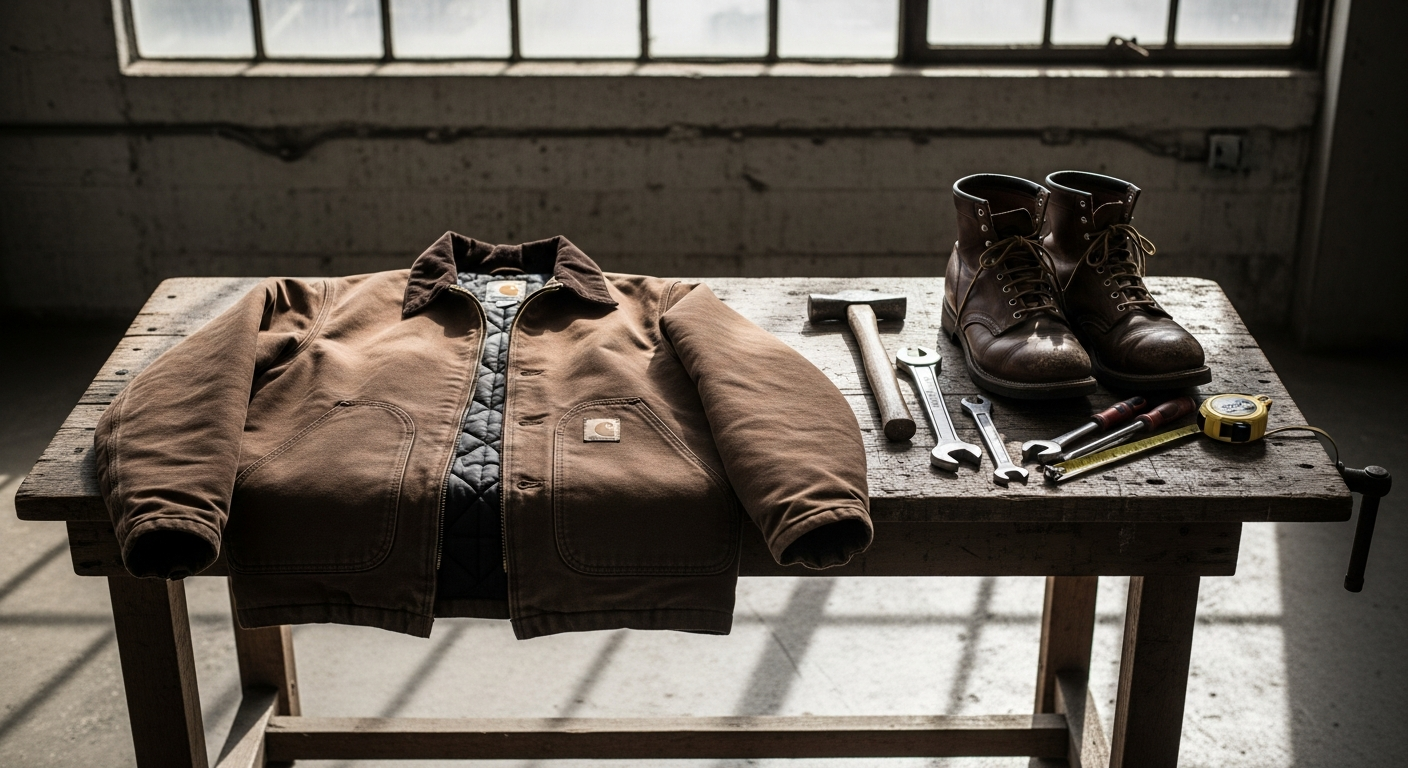
Over thirty years after its 1989 debut, the Carhartt Iconic J01 Duck Detroit Jacket remains one of the UK’s most coveted outerwear pieces—and it’s not because of flashy marketing or seasonal trends. Construction workers, fashion enthusiasts, and everyone in between reach for this jacket because it actually delivers on its promises. What started as straightforward workwear has evolved into something far more significant, representing an intersection of authentic craftsmanship and timeless design.
The Detroit Jacket’s 12-ounce duck canvas construction, triple-stitched seams, and thoughtful details weren’t designed to look impressive; they were engineered to perform under real-world conditions. This authenticity resonates deeply with anyone tired of disposable clothing that falls apart after a season. The jacket has transcended its original purpose without losing its core identity—a rare achievement in modern apparel.
This guide unpacks what makes this jacket genuinely special: from its robust material composition and heritage lineage to its surprising versatility across different lifestyles, examining the construction details that justify its price point, exploring how it’s transitioned from worksite staple to streetwear essential, and addressing what recent users are saying about quality variations.
Explore the Detroit Jacket collection at Carhartt UK today.
The 37-Year Legacy Behind the Carhartt J01 Detroit Jacket
Origins in 1989: How the Detroit Jacket emerged from Carhartt’s original workwear line as a response to specific job-site demands
The Detroit Jacket didn’t emerge from a designer’s sketchpad or a marketing focus group. It came from the actual needs of people working in harsh conditions. When Carhartt created this jacket in 1989, every detail served a practical purpose. Workers needed protection from the elements without sacrificing mobility. They needed pockets that could withstand heavy tool loads. They needed construction that could outlast multiple seasons on active job sites. These weren’t aesthetic considerations—they were survival requirements.
Evolution from utility to icon: The journey from pure functionality to cultural status symbol
Something remarkable happened over the decades. The jacket’s authentic functionality became fashionable precisely because it was so genuinely functional. Fashion-conscious individuals recognized that this piece represented real durability rather than performative style. The jacket crossed from workwear departments into high-street fashion without any intentional pivot toward trendiness. This organic transition from pure utility to cultural icon speaks volumes about its design integrity.
Blue-collar authenticity: Why genuine association with real work builds consumer trust and loyalty
People can detect the difference between authentic workwear and fashion-brand approximations. The Carhartt Detroit Jacket carries legitimate heritage from actual construction sites, automotive shops, and industrial settings. This isn’t a designer reinterpreting workwear aesthetics—it’s the genuine article worn by people whose livelihoods depend on their equipment. That authenticity creates a trust bond that marketing budgets cannot manufacture.
Cultural impact and collaborations: How the jacket has appeared in popular culture and partnered with other brands
The jacket’s presence in popular culture isn’t manufactured celebrity endorsement. Musicians, filmmakers, and fashion brands gravitated toward it because of its genuine appeal. Notable collaborations have elevated the jacket’s fashion credibility while maintaining its workwear legitimacy. These partnerships have introduced the jacket to new audiences without diluting its core identity.
Generational appeal: Why multiple age groups and demographics claim ownership of this design
Teenagers drawn to authentic streetwear and sixty-year-old tradespeople both reach for the Detroit Jacket. Construction workers view it as essential equipment. Vintage enthusiasts seek older models for their superior construction. Fashion-forward individuals appreciate its anti-trend positioning. This generational and demographic breadth indicates a design that transcends any single category or market segment.
Sustainability through longevity: How durability-focused design aligns with modern conscious consumption values
The jacket embodies sustainable fashion principles without needing the marketing label. A piece that lasts a decade or more inherently produces less waste than disposable alternatives. Modern consumers increasingly recognize that the most sustainable clothing choice is the one you’ll actually wear and keep for years. The Detroit Jacket’s durability-first approach aligns perfectly with this conscious consumption value system.
Deconstructing the Duck Canvas: Material Quality and Construction Standards
12-ounce ring-spun cotton duck canvas: Why this specific weight and weave matters for durability
The 12-ounce specification isn’t arbitrary. This weight hits the optimal balance between durability and wearability. Lighter canvas lacks protective qualities; heavier canvas becomes restrictive. Ring-spun cotton specifically provides stronger, more resilient fibers than conventional spinning methods. The weave creates a dense fabric capable of withstanding abrasion, punctures, and harsh weather exposure without becoming rigid or uncomfortable against skin.
Firm-hand fabric characteristics: What firm-hand means and how it contributes to weather resistance
“Firm-hand” describes how the fabric feels and behaves. Rather than soft or supple, firm-hand canvas resists water absorption and maintains structural integrity when wet. This characteristic doesn’t require chemical treatments—it’s a natural result of the tight weave and cotton type. The fabric develops a subtle patina over time, becoming more distinctive rather than degrading.
Triple-stitched main seams: The engineering behind Carhartt’s stitch pattern and why it extends jacket lifespan
Three parallel lines of stitching distribute stress across multiple threads rather than concentrating it in a single seam. If one line fails, the other two maintain structural integrity. This redundant approach to construction explains why Detroit Jackets worn for decades still hold together. The stitching doesn’t just last—it actively prevents catastrophic failure.
Blanket lining specifications: Comfort features and recent user feedback about lining quality variations
The blanket lining in the jacket body provides thermal insulation and comfort against skin. This detail transforms the jacket from purely functional workwear into something actually pleasant to wear. However, recent user reports suggest quality variations in newer production runs. Some owners report that current blanket linings lack the density and durability of older versions. This feedback warrants consideration when evaluating specific production batches.
Quilted nylon sleeve lining: How this detail improves functionality for layering and movement
The quilted nylon lining in sleeves serves a distinct purpose from the body blanket lining. Nylon allows smooth layering without friction when pulling the jacket on and off over other clothing. The quilted structure provides thermal insulation without adding bulk. This thoughtful material differentiation shows how construction details serve specific functional requirements rather than random styling choices.
Wind Fighter™ technology: What this proprietary feature does and which models include it
This Carhartt-developed technology enhances weather resistance through material engineering rather than bulk. Models that incorporate Wind Fighter™ provide additional protection against harsh conditions without significantly increasing weight or reducing mobility. Not all Detroit Jacket variants include this feature, so checking specific model specifications ensures you’re getting this protective capability if it matters for your intended use.
Corduroy-trimmed collar: Aesthetic and functional benefits of this distinctive detail
The corduroy collar trim represents the intersection of function and character. It provides structural support to the collar while adding visual distinction. The corduroy material offers different wear characteristics than the main canvas, preventing the collar from becoming too rigid or creasing awkwardly. This detail became so iconic that many owners consider it essential to the jacket’s identity.
Hood attachment system: How snap-on hood capability adds versatility without bulk
Some models feature snaps under the collar specifically designed to accommodate an optional hood. This design approach adds weather protection when needed without permanently increasing bulk or silhouette. The hood attaches cleanly without creating awkward layering or restricting movement. For workers or wearers in variable weather conditions, this optional system provides genuine functional value.
Check out the complete range of Detroit Jacket specifications on Carhartt UK.
Fit, Sizing, and the Bi-Swing Back Innovation
Relaxed workwear fit philosophy: Why traditional Carhartt sizing accommodates layering and movement
The Detroit Jacket’s cut prioritizes function over contemporary fashion silhouettes. The relaxed fit accommodates heavy layering for cold weather or work without restricting movement. This approach means the jacket will feel roomier than modern streetwear pieces, but this space serves practical purposes rather than representing poor sizing. Understanding this fit philosophy prevents disappointment when comparing it to slimmer contemporary alternatives.
Bi-swing back design: How this construction improves range of motion for physical labor
The bi-swing back features additional fabric panels in the back shoulders that allow the fabric to move independently when reaching or working overhead. This construction prevents the jacket from restricting movement or pulling at seams during physical tasks. The design originated from actual job-site feedback where workers needed full arm mobility. Many owners discover they appreciate this design feature even when not engaging in heavy labor.
Classic J01 vs. Carhartt WIP differences: Sizing variations between traditional and contemporary lines
The classic J01 maintains traditional workwear proportions with relaxed, generous sizing. Carhartt WIP (Work In Progress) versions often feature more contemporary cuts while retaining heritage DNA. WIP models sometimes offer more balanced silhouettes or even oversized options for streetwear styling. These variations mean sizing doesn’t transfer directly between lines—a medium in classic J01 won’t fit identically to a medium in WIP.
Oversized options in WIP collections: How modern silhouettes cater to streetwear preferences
Recognizing streetwear’s influence, WIP offers deliberately oversized sizing that appeals to contemporary fashion sensibilities. These versions maintain construction quality and material specifications while reimagining proportions. Oversized options accommodate the layering aesthetic popular in modern styling while preserving the jacket’s functional heritage.
Layering capacity: Practical guidance for wearing the jacket across seasons
The relaxed fit accommodates substantial layering for cold weather without becoming unwieldy. A lightweight long-sleeve shirt works perfectly for mild conditions. Add thermal layers, sweaters, or fleece for winter wear. The bi-swing back prevents bunching even when heavily layered. The jacket’s versatility across seasons explains why many owners keep it in rotation year-round rather than storing it seasonally.
Fit consistency across production years: Addressing user concerns about recent changes to cut and proportions
Long-time owners report noticeable differences between older and newer production runs. Some describe the newer versions as slightly slimmer or with different shoulder proportions. These changes reflect evolving manufacturing standards or WIP influence on production specifications. If fit consistency matters for your purposes, seeking older vintage models may deliver more predictable proportions.
Size chart navigation: Tips for selecting the right size based on intended use and styling preferences
Traditional workwear sizing suggests sizing up from your normal size if you plan substantial layering. For pure streetwear styling with minimal layering, sizing true to your regular measurements works well. Consider whether you’ll wear the jacket regularly enough to determine sizing—occasional seasonal wear versus frequent daily use changes the optimal choice. When in doubt, consulting Carhartt’s sizing guide or trying pieces in-store prevents sizing regret.
The Streetwear Transformation: From Job Site to Fashion Statement
Crossover appeal to non-workers: Why non-tradespeople are investing in authentic workwear
The Detroit Jacket’s appeal transcends occupational boundaries. People without construction jobs recognize that authentic workwear represents genuine durability and design integrity. Fashion-conscious individuals seeking pieces with legitimate heritage and staying power gravitate toward items like this jacket. The appeal stems from rejecting trend-dependent fashion in favor of clothing with proven longevity.
Streetwear styling versatility: How the Detroit Jacket works with casual, contemporary, and vintage aesthetics
The jacket pairs seamlessly with contemporary sneakers and tailored trousers. It anchors vintage-inspired outfits with thrifted denim and period-appropriate accessories. The brown colorway works with earth tones and neutrals. Black versions integrate into minimalist, monochromatic styling. This chameleon-like versatility explains its prominence in diverse style communities.
Celebrity and influencer adoption: Real-world examples of the jacket’s presence in fashion culture
The jacket appears organically in fashion photography and street style documentation, not through sponsored placements. Musicians, filmmakers, and fashion figures genuinely wear Detroit Jackets because they appreciate the piece’s authenticity. This organic adoption carries far more credibility than manufactured celebrity endorsement. The jacket’s presence in fashion culture stems from authentic appreciation rather than marketing campaigns.
Sustainability narrative: How durability-focused pieces align with anti-fast-fashion movements
Contemporary fashion consciousness increasingly values longevity over novelty. The Detroit Jacket embodies this value proposition—a single piece worn for years produces far less environmental impact than seasonal replacements. Fashion activists and sustainability advocates point to this jacket as an exemplary investment piece that contradicts disposable fashion culture.
Vintage market demand: Why older models command premium prices and collector interest
Vintage Detroit Jackets often sell for more than newer versions despite their age. Collectors recognize that older production runs feature blanket lining, construction techniques, and fit proportions superior to current versions. The vintage market demand reflects genuine preference for specific production eras. If you encounter vintage pieces in good condition, the premium pricing reflects real durability and quality advantages.
Brand collaborations: Notable partnerships that have elevated the jacket’s fashion credibility
Carhartt partnerships with respected fashion brands have introduced the Detroit Jacket to new audiences while reinforcing its credibility. These collaborations feel authentic because they pair two entities with genuine design integrity. Rather than diluting the jacket’s identity, successful collaborations have expanded its reach while maintaining its core character.
Wardrobe staple positioning: Why this piece works as a foundational layer across multiple outfit types
The jacket functions as a neutral, reliable outerwear option across numerous styling directions. Whether building minimalist capsules or maximalist creative outfits, the Detroit Jacket provides reliable protection and visual cohesion. Its visual neutrality—despite its distinctive details—allows it to enhance rather than dominate outfits. This foundational role explains why serious fashion enthusiasts maintain a Detroit Jacket in their wardrobes.
Price Point Analysis: What You’re Actually Paying For
UK pricing range (£101–£253.99): Understanding the cost variation across models and retailers
Detroit Jacket pricing varies substantially based on specific model, material specifications, and retailer. Standard J01 versions typically fall toward the lower end of this range, around £101-£150. Premium WIP editions with organic cotton or specialized finishes can reach £250 or beyond. Retailer pricing strategies, current inventory levels, and seasonal sales create additional variation. Understanding these price ranges helps contextualize costs when comparing options.
Classic J01 vs. premium WIP editions: Where price differences originate
Premium pricing in WIP editions reflects material upgrades like organic Dearborn canvas, contemporary fit specifications, and limited availability. Classic J01 versions maintain lower pricing while delivering the core jacket functionality and durability. The price difference doesn’t necessarily indicate quality superiority—rather, it reflects different design priorities and material choices.
Cost-per-wear calculation: Why expensive upfront costs become economical over time
A jacket worn regularly for five to ten years creates dramatically different cost-per-wear figures than typical seasonal purchases. A £150 jacket worn 100 times per year for five years costs £0.30 per wear. Compare this to £50 jackets purchased annually and the economic logic becomes clear. The Detroit Jacket’s durability transforms its seemingly high upfront cost into economical long-term value.
Comparison to fast-fashion alternatives: How durability justifies premium pricing
Fast-fashion alternatives might cost £40-£80 but typically require replacement after one to three seasons. Buying three fast-fashion jackets over the lifespan of a single Detroit Jacket costs considerably more while generating additional textile waste. The premium pricing reflects genuine durability that saves money and resources across time.
Organic cotton Dearborn canvas premium: Additional cost for WIP’s upgraded material options
WIP versions featuring organic Dearborn canvas command higher pricing than standard ring-spun cotton versions. The organic cotton represents additional sourcing costs and environmental considerations. Dearborn canvas offers slightly different aesthetic characteristics and hand-feel. Whether this premium aligns with your priorities determines whether the upgrade justifies the additional cost.
Retailer variation and availability: Where to find competitive pricing across UK stockists
Multiple UK retailers stock the Detroit Jacket, and pricing varies notably between them. Authorized Carhartt retailers, department stores, and specialist workwear suppliers may offer different pricing strategies. Seasonal sales, inventory clearance, and promotional periods create opportunities for better pricing. Comparing multiple retailers before purchasing ensures competitive pricing without compromising authenticity or warranty coverage.
Investment piece mentality: Reframing the purchase as long-term wardrobe value
Rather than viewing the jacket as a clothing expense, consider it wardrobe infrastructure. Foundational pieces that function across years and multiple outfit combinations provide value beyond their upfront cost. The Detroit Jacket’s reliability means you can confidently commit to styling it knowing it will deliver consistent performance and visual appeal season after season.
Color Options and Model Variations You Should Know About
Iconic Carhartt Brown: The signature colorway and its cultural significance
Carhartt Brown represents the brand’s classic identity and appears across most Detroit Jacket productions. This distinctive tan-brown shade carries cultural weight—it’s immediately recognizable as Carhartt across global contexts. The brown colorway pairs beautifully with denim, neutral tones, and earth-toned palettes. Many consider brown the essential colorway for authentic Detroit Jacket ownership.
Classic Black: Versatility and styling advantages of the neutral option
Black offers broader styling versatility for contemporary wardrobes. It pairs seamlessly with minimalist aesthetics, darker color palettes, and modern streetwear styling. Black versions integrate more easily into urban environments where neutral tones dominate. However, black offers less visual distinctiveness than the signature brown, which some consider a disadvantage for those seeking the jacket’s distinctive character.
Seasonal color releases: Limited editions and regional availability
Carhartt periodically releases limited-edition colors for seasonal collections. These variants appear for defined periods then become unavailable, creating collector interest. Regional availability means certain colors appear exclusively in specific markets. Checking current production releases identifies whether specialty colors align with your preferred purchasing timeline.
Organic vs. standard canvas finishes: How material choice affects color appearance and aging
Canvas made from organic cotton develops different patina patterns than standard ring-spun cotton. Organic versions may show color variation more distinctly as they age. The weight and hand-feel differ slightly, affecting how color reads visually. If aesthetic aging and patina development matter to your appreciation of the piece, comparing organic and standard versions reveals these distinctions.
Unlined WIP options: Warmer-weather alternatives for different climates
WIP produces unlined versions designed for warmer weather or layering-focused styling. These versions eliminate the blanket lining, reducing weight and thermal insulation. For people in mild climates or those prioritizing breathability over warmth, unlined options provide functional alternatives. However, these versions lose the comfort advantages that blanket lining provides in typical UK conditions.
Color durability and fading: How duck canvas develops patina over time
Duck canvas develops distinctive patina through wear and washing. Colors don’t fade uniformly—fading concentrates in high-friction areas where hands grip the jacket. This uneven aging creates character that many owners appreciate. Understanding that color change represents normal wear patterns rather than defects prevents misinterpreting intentional design features as quality problems.
Model-specific colorway availability: Where certain colors appear exclusively in J01 or WIP lines
Certain colors may appear exclusively in classic J01 or contemporary WIP versions. Specific colorways might align with particular production runs. Understanding which colors appear in which lines prevents disappointment when seeking specific combinations. Checking current availability confirms that your preferred color-model combination remains in production.
Real User Feedback: What Owners Are Actually Saying
Durability praise and longevity reports: Owners sharing multi-year wear experiences
Long-term owners consistently report Detroit Jackets functioning reliably after five, ten, or even fifteen years of regular wear. Seams remain intact, canvas maintains structural integrity, and functional details continue performing as designed. These multi-year testimonials validate the manufacturer’s durability claims through lived experience. Real-world reports consistently emphasize that these jackets genuinely improve with age rather than deteriorating.
Blanket lining quality concerns: Recent feedback about changes to interior construction
Several recent owners report that current blanket lining feels less dense or durable than older versions. Some suggest the lining separates or deteriorates before the main canvas shows significant wear. This feedback contradicts the jacket’s overall durability reputation and suggests possible material sourcing changes in newer production runs. Potential buyers should consider whether blanket lining longevity aligns with their expectations.
Fit evolution and nostalgia: Long-time users comparing older vs. newer production models
Long-time owners frequently compare older owned pieces to current production versions, noting fit differences in newer models. Some report that recent versions feel slightly slimmer through the shoulders or with different proportions overall. This evolution may reflect WIP influence or manufacturing adjustments. Owners seeking fit consistency with previously owned versions might genuinely prefer seeking vintage alternatives.
Detroit cuff elimination: Why the removal of this detail disappointed some enthusiasts
Earlier Detroit Jacket versions featured a distinctive ribbed cuff detail that newer models eliminated. This change disappointed some enthusiasts who considered the cuff essential to authentic character. While the elimination doesn’t affect functionality, it represents a stylistic departure from the original design. Owners prioritizing historical authenticity may prefer seeking versions that retain this detail.
Weather performance in practice: Real-world reports on Wind Fighter™ effectiveness and waterproofing
Owners report that the duck canvas provides substantial weather protection without complete waterproofing. The material resists water penetration during light rain and provides wind resistance effectively. Heavy downpours eventually saturate the fabric, though this takes considerable exposure. Models with Wind Fighter™ technology enhance this protection noticeably. Users consistently report genuine weather performance rather than marketing exaggeration.
Break-in period expectations: How the jacket feels initially versus after extended wear
New Detroit Jackets typically feel stiff initially due to the firm-hand canvas. Owners report that the jacket gradually becomes more comfortable after several weeks of regular wear. Canvas softens slightly, fabrics relax, and the jacket molds to individual body shape. This break-in process, while initially uncomfortable, contributes to the personalized fit that long-term owners appreciate. Understanding this evolution prevents misinterpreting initial stiffness as defective construction.
Repair and maintenance stories: User experiences with longevity and Carhartt’s warranty support
Owners report successful repairs from Carhartt and authorized repair services. Torn seams, separated linings, and other damage receive professional attention with reasonable pricing. Some owners describe sending jackets for repair after years of heavy use and receiving them returned to functional condition. These repair experiences contribute to the jacket’s total cost-of-ownership value. Warranty support validates the long-term investment perspective.
Practical Considerations Before You Buy
Intended use assessment: Determining whether this jacket suits your actual needs
Before purchasing, honestly evaluate whether you’ll actually utilize the jacket’s capabilities. Workers facing harsh conditions daily benefit from all technical features. Fashion-forward individuals seeking authentic style value its heritage. Casual users wanting reliable all-weather protection find appropriate value. Misalignment between your actual use and the jacket’s optimized capabilities wastes investment. Consider specific scenarios where you’d wear this piece regularly.
Work vs. casual styling: How your lifestyle impacts which model makes sense
Workers in demanding physical jobs benefit from classic J01 sizing that accommodates layering and prioritizes mobility. Casual wearers drawn to contemporary aesthetics might prefer WIP versions with more refined proportions. Pure streetwear enthusiasts might seek oversized WIP options. Understanding how your lifestyle aligns with model variants prevents purchasing options that don’t serve your primary use cases.
Climate suitability: Evaluating the jacket for your regional weather patterns
The Detroit Jacket excels in temperate climates with variable weather. Cold, wet UK conditions align perfectly with its specifications. Extremely hot climates render the thermal insulation and weight unnecessary. Highland regions with intense weather benefit from Wind Fighter™ technology. Analyzing your regional climate determines whether this jacket’s specifications match your environmental reality.
Maintenance requirements: Care instructions and how to preserve the duck canvas
Duck canvas requires specific care to maintain longevity. Regular brushing removes surface dirt without machine washing, which can deteriorate canvas integrity. When washing becomes necessary, cold water and gentle cycles prevent damage. Understanding these maintenance requirements ensures you can actually preserve the jacket rather than requiring professional cleaning. Commitment to appropriate care extends the jacket’s functional lifespan significantly.
Layering needs: Understanding what you’ll wear underneath across seasons
The relaxed fit accommodates various layering approaches. Consider what you typically wear underneath jackets in your climate—thermal layers, sweaters, or lightweight shirts. The bi-swing back accommodates these layers without restricting movement. Planning specific layering combinations ensures the jacket’s proportions work for your actual wardrobe rather than theoretical styling.
Budget flexibility: Whether the investment aligns with your clothing budget
Assess whether the purchase price represents reasonable spending within your clothing budget. For individuals with substantial discretionary income, the investment proves straightforward. For those with limited clothing budgets, the purchase requires careful consideration of opportunity cost versus other wardrobe needs. Budget honesty prevents impulsive purchases that create financial strain.
Return policies and sizing guarantees: Checking retailer terms before committing
Authorized retailers offer return policies and sizing guarantees that protect against fit disappointment. Understanding these terms before purchasing prevents situations where sizing regret requires absorbing full costs. Some retailers offer extended return windows specifically for fit verification. Checking these policies ensures appropriate consumer protection.
Warranty and repair services: Understanding Carhartt’s support for defects or damage
Carhartt stands behind manufacturing quality through warranty provisions covering defects. Authorized repair services handle damage repairs at reasonable costs. Understanding these support options validates that the upfront investment includes access to longevity support. Reviewing warranty details confirms coverage applies to your intended use.
The Detroit Jacket in 2026: Quality Assurance and What’s Changed
Current production standards: How Carhartt maintains quality across manufacturing facilities
Carhartt maintains quality control standards across production facilities, though consistency concerns have emerged in recent user feedback. The manufacturer continues emphasizing triple-stitched construction, proper canvas weighting, and functional detail specifications. Production standards reflect ongoing commitment to durability, even as some execution variations appear in recent batches.
Material sourcing updates: Changes to cotton sourcing and sustainability practices
Carhartt has adjusted cotton sourcing strategies, including introducing organic Dearborn canvas options in premium lines. Standard versions continue using ring-spun cotton, though sourcing facilities may have shifted. Sustainability initiatives include increased organic cotton availability, though this comes at premium pricing. Understanding sourcing changes clarifies material quality variations between specific production runs.
Manufacturing location variations: How production geography affects specifications
Production occurs across multiple facilities, potentially creating specification variations between geographic sources. Jackets manufactured in different countries may have subtle differences in canvas weight, stitching precision, or lining quality. These variations, while typically within acceptable ranges, might explain some consistency concerns users report.
Quality control feedback: Addressing concerns about inconsistencies in recent batches
User feedback regarding blanket lining quality and fit variations has reached manufacturers. Carhartt acknowledges receiving this feedback and adjusts production accordingly. Quality control improvements address identified concerns, though improvements require time to filter through inventory. Potential buyers evaluating recent production should consider whether these acknowledged variations align with expectations.
Model discontinuations: Which classic versions remain available and which have been retired
Certain classic specifications and colorways have been discontinued as WIP influences production priorities. Traditional unlined versions have largely been phased out. Some regional color exclusives no longer appear in standard production. Identifying which models remain in current production versus those requiring vintage sourcing informs purchasing timelines.
Future design direction: Speculation on how the jacket might evolve while maintaining heritage
Carhartt appears committed to balancing heritage preservation with contemporary market adaptation. WIP influence suggests continued evolution toward refined proportions. Sustainability priorities indicate continued organic cotton options. The brand seems positioned to maintain classic availability while expanding contemporary alternatives rather than abandoning the traditional J01 entirely.
Warranty improvements: How Carhartt has responded to user feedback about durability concerns
Warranty terms reflect ongoing commitment to standing behind products despite recent quality concerns. Repair services remain accessible and reasonably priced. The warranty structure suggests manufacturer confidence in durability despite acknowledged inconsistencies. Understanding warranty coverage validates the long-term investment perspective despite recent feedback.
The Carhartt Detroit Jacket Verdict: Is It Worth the Investment?
The Carhartt Iconic J01 Duck Detroit Jacket isn’t a trend piece masquerading as timeless—it’s genuinely earned its three-decade reign through relentless functionality and honest design. From its robust 12-ounce duck canvas and triple-stitched construction to its surprising versatility across workwear and streetwear contexts, this jacket represents something increasingly rare: clothing that improves with age rather than deteriorating.
The price point, while substantial, becomes entirely reasonable when you factor in the cost-per-wear calculation across years of reliable performance. A jacket worn regularly for five to ten years produces dramatically different economics than seasonal purchases. That said, this isn’t a universal solution for everyone.
If you work in demanding physical conditions, the classic J01 delivers uncompromising protection and durability. The relaxed fit accommodates heavy layering, the bi-swing back provides genuine mobility advantages, and the triple-stitched construction withstands real workplace demands. For tradespeople and workers facing harsh conditions regularly, this jacket justifies the investment through functional necessity.
If you’re building a sustainable wardrobe around investment pieces, the Detroit Jacket’s longevity aligns perfectly with conscious consumption values. Choosing one piece worn for a decade produces infinitely less environmental impact than cycling through multiple seasonal alternatives. This jacket embodies sustainability through durability rather than through marketing claims.
If you’re drawn to authentic style that transcends seasonal trends, the jacket’s cultural credibility speaks for itself. The authentic workwear heritage carries visual weight that fashion approximations cannot replicate. The jacket appears in street style photography, collaborations with respected brands, and organic fashion culture adoption. This cultural presence stems from genuine appreciation rather than manufactured hype.
However, recent feedback about blanket lining quality variations and fit changes in newer models warrants careful consideration. Older production runs may genuinely offer superior performance for serious users prioritizing maximum durability. If accessing the jacket’s absolute best version matters, seeking well-maintained vintage examples might deliver better long-term value despite premium vintage pricing.
The decision ultimately hinges on honest self-assessment: Will you actually wear this jacket regularly enough to justify the investment? Does your climate and lifestyle align with its capabilities? Are you comfortable with the relaxed, workwear-inspired fit? Can you commit to appropriate maintenance and care? Will you appreciate the jacket’s character development as it ages? If you answer yes to these questions, the Detroit Jacket represents one of the smartest wardrobe purchases you can make.
If you’re uncertain about any of these factors, try visiting an authorized retailer to feel the material, assess the fit against your body, and determine whether this piece genuinely belongs in your collection. That tactile experience often clarifies whether the investment makes authentic sense for your circumstances.
Browse and purchase the Detroit Jacket directly from Carhartt UK’s official store.
Leave a Reply