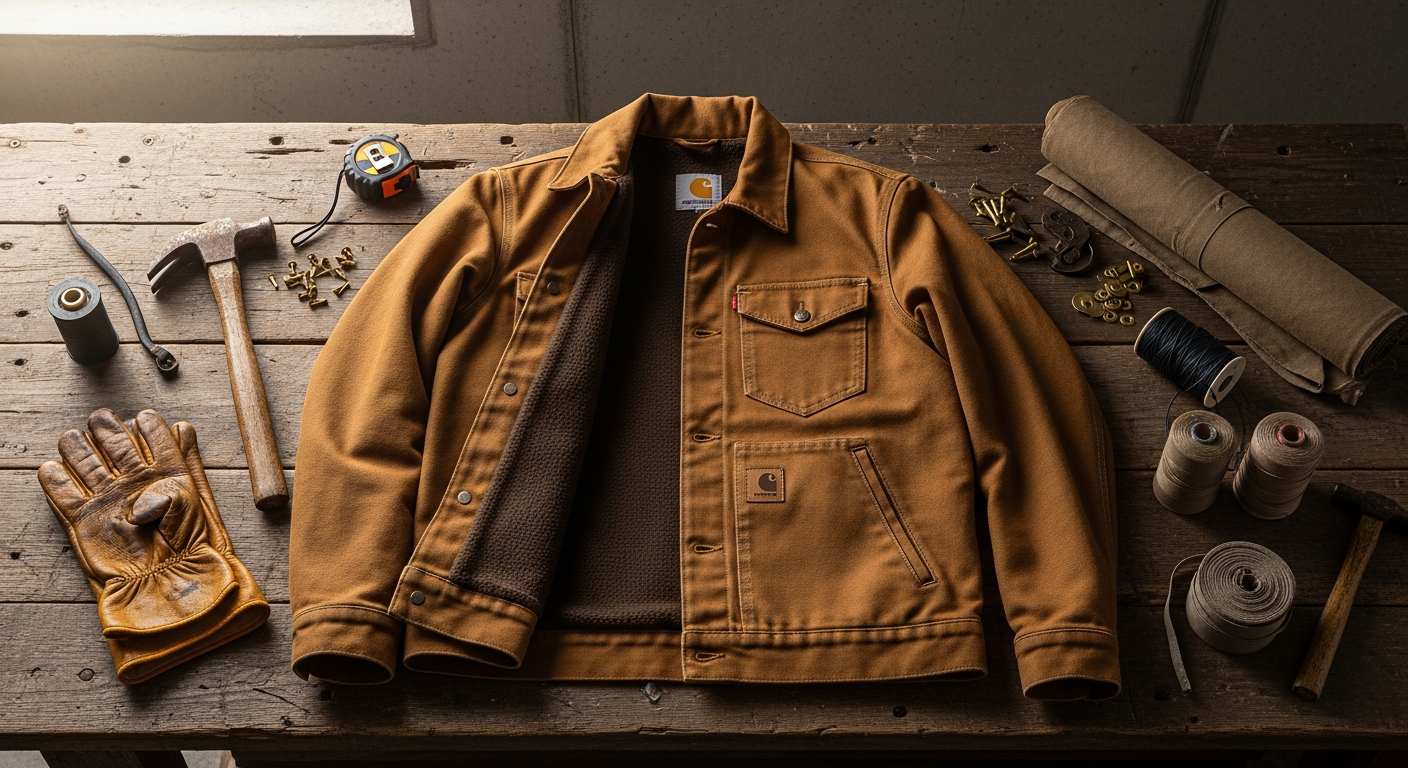
Over 135 years after Carhartt’s founding, one jacket continues to dominate both construction sites and street corners alike. The Carhartt Detroit Jacket isn’t just workwear—it’s a cultural phenomenon that’s earned its place as one of the UK’s best-selling outerwear pieces. What makes a simple canvas jacket so universally beloved? That’s the question worth answering.
The Detroit Jacket represents everything Carhartt built its reputation on: uncompromising durability, practical design, and authentic craftsmanship. Originally engineered for tradespeople facing brutal conditions, this jacket has transcended its utilitarian roots to become a streetwear staple embraced by everyone from electricians to fashion-forward urbanites. The 12-ounce ring-spun cotton duck canvas, paired with strategic lining and thoughtful details, creates a piece that actually improves with age and wear.
Explore the Carhartt Detroit Jacket on the official UK site.
The Engineering Behind Carhartt’s Most Durable Jacket
12-ounce ring-spun cotton duck canvas construction
The foundation of the Detroit’s legendary toughness lies in its heavyweight fabric. This isn’t thin, flimsy material—it’s dense, firm, and built to absorb punishment. Ring-spun cotton refers to the twisted yarn structure that creates exceptional strength without unnecessary bulk. The 12-ounce weight sits at that sweet spot: heavy enough to resist tears and abrasions, but not so heavy that it becomes unmanageable for all-day wear.
Firm-hand finish and weather resistance
Carhartt treats the canvas with a firm-hand finish that delivers water and wind resistance without sacrificing the fabric’s natural breathability. This isn’t a plastic coating that cracks after a few months—it’s a treatment that works with the cotton rather than against it. The dense weave blocks cold air penetration while allowing moisture vapor to escape, preventing the clammy feeling you get from purely waterproof synthetic materials.
Blanket lining in the body
The body of the Detroit features a blanket lining that provides genuine thermal insulation. This layer traps warm air close to your core without restricting movement or adding unnecessary stiffness to the front and back panels. The blanket material allows flexibility while you’re working or moving, making the jacket practical for active use rather than just static wear.
Quilted nylon sleeve lining
Sleeves receive a quilted nylon lining engineered specifically for easy layering and quick on-and-off functionality. This choice matters more than it might initially seem. The quilted nylon slides smoothly over sweaters and long-sleeve shirts without binding, and the nylon doesn’t absorb moisture like cotton would. This design choice reflects decades of real-world feedback from people actually wearing these jackets on job sites.
Corduroy-trimmed collar
The corduroy trim around the collar serves dual purposes. First, it adds durability to one of the highest-friction areas on any jacket—the neck and shoulder region. Second, it contributes to the Detroit’s classic aesthetic, a visual marker that instantly communicates “genuine workwear” rather than fashion imitation. This detail has remained virtually unchanged across decades.
Full-zip front closure
The full-zip design allows quick temperature adjustments and layering flexibility. You can unzip partially for ventilation during physical work, or open it completely for rapid heat management. This simple feature gets overlooked in fashion-focused jackets, but it’s essential for anyone actually working in the Detroit rather than just wearing it casually.
Drop tail design
The extended drop tail provides crucial coverage for those bending or reaching throughout the workday. Without this feature, your back gets exposed every time you lean forward—a genuine problem that traditional cropped jackets create. The drop tail moves with you, staying in place rather than riding up.
Fit, Comfort, and the All-Important Break-In Period
Original fit and loose silhouette
The Detroit comes in what Carhartt calls an “original fit”—a deliberate choice favoring function over fashion-forward tailoring. This loose silhouette is designed specifically for layering and unrestricted movement, not form-fitting aesthetics. Tradespeople need room to move their arms freely, bend, and reach without the jacket restricting their motion. That extra room also allows you to layer substantially during winter months without feeling compressed.
Adjustable cuffs and waist
Customizable cuffs and waist let you dial in the fit for your specific body type and seasonal needs. In summer, you might wear it looser; in winter, you can tighten everything down to trap warm air. This flexibility extends the jacket’s usable season and makes it work across varying layering scenarios.
Initial stiffness reality
New Detroit Jackets feel genuinely stiff—almost board-like in the first few days. This isn’t a manufacturing defect; it’s actually a sign that you’ve got quality construction. The firm-hand finish and dense canvas haven’t yet relaxed. Your body heat and natural movement will gradually soften the material, but this process takes weeks, not days.
Canvas softening timeline
Expect 3-6 weeks of regular wear before the jacket reaches comfortable levels. Heavy-use scenarios (working in it daily) compress this timeline to 2-3 weeks. The canvas doesn’t become limp or lose its structure—it simply becomes more flexible and molds slightly to your body shape. This breaking-in period is when the Detroit transforms from “stiff new purchase” to “perfect fit.”
Layering capabilities
The generous cut makes this jacket exceptional for the unpredictable British climate. You can wear it over a thin t-shirt in spring, a heavy sweater in autumn, or multiple layers in winter without feeling cramped. That same generous cut that some casual wearers criticize as “boxy” is precisely what makes it so functionally superior.
Weight considerations
The Detroit’s heft represents the trade-off between protection and portability. A 12-ounce canvas jacket weighs considerably more than a synthetic alternative. For all-day wear, that weight distributes evenly across your shoulders, and most users find it becomes unnoticeable. However, if you’re used to lightweight jackets, the initial weight can feel fatiguing during the first week or two.
Sizing guidance
Choosing the right size depends entirely on your intended use. Construction workers typically size for their working layers (often oversized to account for heavy sweaters and thermal wear), while casual wearers might prefer something closer to their normal fit. Carhartt’s sizing runs generous, so don’t automatically size up.
Storage Solutions That Actually Work
Two large front pockets
The Detroit features two substantial front pockets with real capacity. These aren’t shallow fashion pockets—they’re deep enough to hold standard tools, work gloves, or a phone and wallet. The placement keeps items accessible while you’re working, and the weight distribution remains balanced even when pockets are loaded.
Interior zippered pocket
An interior zippered pocket provides secure storage for valuables without external bulging. This pocket keeps essentials like car keys, phones, or wallets completely protected from the elements and theft risk. The placement inside the jacket means you’re not creating awkward lumps that distort the silhouette.
Pocket durability
Reinforced stitching keeps pockets functional after years of heavy use. Standard fashion jackets develop holes in pockets within months if used seriously. The Detroit’s stitching reinforcement means pockets remain intact and functional even after a decade of regular service.
Practical pocket design
Pocket placement matters for both tradesperson and casual wearer. The front pockets sit at the perfect height for accessing items while standing, bending, or sitting. The interior pocket means you have secure storage options without risking items falling out during active work.
Tool-holding capacity
Construction workers leverage pocket space deliberately. Pencils, tape measures, small tools, and fasteners all fit into the Detroit’s pockets. This pocket efficiency reduces the need for separate tool belts in many situations, making the jacket itself part of your job-site kit.
Check out the full range of Detroit Jacket options at Carhartt UK.
Weather Performance and Real-World Protection
Water-repellent properties
The canvas resists moisture without requiring chemical treatments that degrade over time. The firm-hand finish creates a barrier that sheds light rain and resists saturation. Heavy downpours will eventually penetrate—this isn’t a fully waterproof jacket—but you’ll get substantial protection for typical British weather conditions.
Wind-resistant construction
Dense weave blocks cold air penetration effectively. The tightly woven canvas creates a physical barrier that prevents wind from passing through the material itself. This wind resistance dramatically improves the jacket’s warmth factor, particularly valuable in exposed job sites where wind chill becomes a real concern.
Breathability balance
The jacket won’t trap moisture despite its protective qualities. Unlike fully synthetic jackets that become clammy during active work, the cotton canvas allows moisture vapor to escape. This breathability means you won’t develop that uncomfortable sweaty feeling even during physical labor.
Cold weather performance
The Detroit truly excels in temperatures between 5°C and 15°C—exactly where much of the UK spends its autumn, winter, and spring. The combination of dense canvas, blanket lining, and wind resistance creates an envelope of warmth without excessive bulk. In genuinely frigid conditions (below freezing), heavy layering underneath becomes necessary, but the jacket’s design accommodates this beautifully.
Damp climate suitability
UK weather aligns perfectly with the Detroit’s strengths. The jacket handles drizzle, dampness, and occasional rain without becoming water-logged. The firm-hand finish sheds moisture before it saturates the canvas, and the natural breathability of cotton prevents the jacket from becoming a moisture trap.
Seasonal versatility
Layering strategies extend the jacket’s usable season. In spring, wear it over a light sweater. In autumn, layer a thermal long-sleeve underneath. Winter demands heavier layering, but the Detroit’s generous cut accommodates this without constriction. Summer wear becomes impractical due to the heat retention of the blanket lining, though some users embrace it for cooler summer mornings and evenings.
Maintenance for longevity
Simple care routines preserve water resistance over time. Occasional brushing removes accumulated dirt without washing away the firm-hand finish. If the jacket gets genuinely dirty, gentle hand washing works better than machine washing. Avoid tumble drying—air dry preserves the fabric integrity and the water-repellent properties far longer.
From Worksite to Street: The Unlikely Fashion Icon
Carhartt’s 135-year heritage
Carhartt’s credibility was earned through 135 years of consistent quality, not through marketing campaigns. The company built its reputation by making jackets that tradespeople trusted with their livelihoods. That authentic utility carries weight that no fashion brand can manufacture. When a construction worker chooses a Detroit Jacket, they’re choosing based on function and durability. When a fashion enthusiast chooses one, they’re tapping into that same reservoir of authenticity.
Streetwear adoption and subculture appeal
The Detroit transcends traditional workwear boundaries because it represents genuine quality without pretense. Streetwear communities gravitating toward authentic workwear pieces represent a broader shift away from logos and trend-chasing toward items with real substance. The jacket doesn’t try to be cool—it simply functions so well that coolness becomes a side effect.
Styling versatility
The Detroit pairs equally well with workboots and steel toes as it does with trainers and jeans. This versatility stems from the jacket’s genuinely timeless design. It doesn’t scream a specific era or subculture—it simply says “durable and practical.”
The authenticity factor
Genuine workwear resonates differently than fashion imitations attempting to copy workwear aesthetics. The Detroit has genuine wear patterns, functional details, and material choices made for durability, not decoration. This authenticity creates a cultural capital that synthetic alternatives simply cannot replicate.
Celebrity and influencer endorsement
Cultural figures have amplified the jacket’s cool factor, but the Detroit succeeded long before any celebrity endorsement. Contemporary amplification has introduced the jacket to audiences who might not otherwise discover it, but the underlying appeal predates any influencer.
Timeless design philosophy
Trends fade but the Detroit remains relevant because its design solves actual problems rather than following aesthetic cycles. The corduroy collar, the drop tail, the pocket placement—these features exist because they work, not because they were fashionable when designed.
Investment piece mentality
Viewing workwear as long-term wardrobe staples rather than seasonal trends represents a fundamental shift in how people approach clothing. The Detroit costs £100-£150 once, then potentially lasts for decades. That’s exceptional value compared to buying three or four cheap jackets over the same period.
Durability Claims vs. Real-World Longevity
Years of heavy-use testimony
Documented cases of Detroit Jackets lasting 10, 15, or 20+ years aren’t exaggeration—they’re commonplace. Job site workers often speak about jackets that survived more punishment than they can remember. The heavy-duty construction means the jacket deteriorates slowly, gradually developing character rather than falling apart.
Wear patterns and aging gracefully
The Detroit develops distinctive character as it ages. The canvas fades naturally, worn areas show where you’ve carried tools or worked hardest, and creases become permanent features that tell the jacket’s story. This isn’t deterioration—it’s the jacket becoming uniquely yours through genuine use.
Repair and restoration options
Carhartt stands behind its products through repair services that most clothing manufacturers don’t offer. Ripped seams can be re-stitched, worn areas can be patched, and zippers can be replaced. This commitment to repair rather than replacement distinguishes the Detroit from disposable fashion alternatives.
Cost-per-wear calculation
At £100-£150, the Detroit becomes remarkable value over years of ownership. Wear the jacket 200 times per year over five years, and you’re at 1000 wears for a £125 investment—about 12p per wear. Extend that to ten years or more, and the per-wear cost becomes negligible. Compare that to seasonal jacket purchases and the financial advantage becomes obvious.
Comparison with cheaper alternatives
Fast-fashion workwear fails where the Detroit succeeds. Cheap jackets use thin canvas that tears easily, poor-quality linings that deteriorate within a season, and stitching that unravels with moderate use. The initial savings evaporate when you’re replacing the jacket annually.
Resale and hand-me-down value
The Detroit maintains value in secondhand markets. Vintage Carhartt jackets command strong prices among collectors and used workwear enthusiasts. Many Detroit Jackets get passed down through families or traded among tradespeople, a testament to their longevity and reliability.
Quality consistency across production
Carhartt maintains standards across manufacturing, meaning a Detroit Jacket from the 1990s feels virtually identical to a contemporary version. That consistency means you can confidently purchase knowing you’re getting the same quality your grandfather might have experienced.
Honest Drawbacks Worth Considering
The stiffness factor
The initial stiffness genuinely tests patience during the first few weeks. If you’re accustomed to soft, broken-in clothing, the firmness can feel uncomfortable or even restrictive. However, this stiffness signals quality construction—thin, cheap jackets feel soft immediately because they lack the robust canvas necessary for durability.
Loose fit criticism
Some people find the silhouette too boxy, preferring a more tailored profile. If you prioritize fashion-forward aesthetics over function, the Detroit’s generous cut might not appeal to you. Fashion-focused buyers might find alternatives that better suit contemporary silhouettes, though they’ll sacrifice the functional benefits of the generous fit.
Weight as a consideration
The jacket’s heft becomes a disadvantage for certain users. If you prefer lightweight jackets or find yourself fatigued by heavier garments, the Detroit’s 12-ounce canvas might feel burdensome. Some users discover they simply prefer the portability of lighter synthetics, despite the durability trade-off.
Break-in time investment
The realistic timeline before the jacket reaches peak comfort spans weeks, not days. If you need an immediately comfortable jacket, the Detroit requires patience. Some people appreciate this break-in period as the jacket gradually molding to their body; others find it frustrating.
Sizing challenges
Standard sizing might not work ideally for all body types. Particularly tall or petite individuals might struggle finding the perfect fit. Carhartt’s generous sizing helps in some cases but works against you if you’re below average height—the jacket’s length can feel excessive.
Heat retention in summer
The blanket lining and dense canvas make the Detroit impractical for year-round wear in warmer months. Summer temperatures make the jacket uncomfortable for most users, effectively limiting it to spring, autumn, and winter use in the UK climate.
Canvas stiffness in cold
In genuinely frigid temperatures (below freezing), the canvas becomes almost rigid, reducing flexibility. The material recovers its normal flexibility when it warms up, but in bitter cold, the jacket’s movement feels restricted. This rarely represents a practical concern in the UK, but Scottish or northern English winters occasionally hit this threshold.
Pricing, Value, and Where to Buy
UK price range reality
The Detroit Jacket typically costs between £100-£150 depending on the specific model and retailer. This price point remains consistent across most authorized sellers, though seasonal sales and clearances occasionally provide discounts. Finding the jacket significantly cheaper should raise questions about authenticity.
Seasonal sales patterns
Expect discounts during seasonal transitions, particularly when new season inventory arrives. End-of-season clearances sometimes offer 15-25% reductions. These sales windows occur predictably around July-August and January-February as retailers make room for new collections.
Retailer comparison
The official Carhartt UK website offers the full current range with guaranteed authenticity. Authorized resellers provide similar selection with occasional competitive pricing. Marketplace sellers vary wildly in legitimacy—stick with established retailers to ensure you’re getting genuine merchandise.
Model variations and pricing tiers
Different Detroit Jacket versions command different prices. The classic J01 Duck Detroit represents the entry point, while specialized versions with additional features or premium materials cost more. The core construction remains consistent across versions, though premium models might include upgraded linings or additional details.
Budget alternatives
Cheaper workwear jackets exist, but you’re sacrificing durability, material quality, and longevity. A £50 workwear jacket might last one or two seasons; the Detroit functions for years. The longer-term value proposition heavily favors the quality investment.
Investment justification
Calculating long-term value reveals the Detroit’s exceptional economics. Over five years, the Detroit costs about £20-£30 annually for a jacket you wear hundreds of times. Budget alternatives requiring annual replacement cost similar amounts but deliver far less reliable performance.
Warranty and customer service
Carhartt guarantees its products against manufacturing defects and stands behind repairs for years after purchase. This customer service commitment means you’re not just buying a jacket—you’re investing in a company that will support your purchase long-term.
The Detroit Jacket for Different User Types
Trade professionals and construction workers
The Detroit remains the go-to choice on job sites because it solves actual problems these workers face daily. Electricians appreciate the pocket capacity. Carpenters value the durable canvas that resists tool punctures. The jacket has earned its position through decades of proven reliability in demanding conditions.
Outdoor enthusiasts and gardeners
Protection for weather exposure without technical gear weight appeals to people spending hours outdoors. Gardeners particularly appreciate the pocket functionality and the jacket’s suitability for damp conditions. The durability means it handles hedge trimming, fence building, and other outdoor work without deteriorating rapidly.
Urban commuters and casual wearers
Styling a workwear piece for everyday city life works remarkably well because the Detroit doesn’t look exclusively utilitarian. Paired with modern jeans and trainers, it conveys authentic practicality rather than costume-like affectation. The durability means commuters get a jacket that handles years of daily exposure to urban wear and tear.
Collectors and heritage fashion followers
The Detroit represents a statement piece with genuine cultural weight. Vintage Carhartt enthusiasts and heritage fashion followers appreciate the jacket as a tangible connection to authentic workwear history. Collecting different colors or era variations appeals to people who view clothing as cultural artifacts.
Layering specialists
People maximizing jacket potential in unpredictable climates find the Detroit exceptional. The generous cut and strategic lining choices mean you can layer aggressively without restriction. Those who understand how to manipulate the jacket’s functionality discover it becomes a year-round solution.
Sustainability-conscious consumers
Longevity represents the ultimate eco-friendly choice. A jacket lasting ten years generates a fraction of the environmental impact of replacing cheaper alternatives annually. For consumers prioritizing sustainability, the Detroit’s durability makes it an environmentally responsible investment.
The Detroit Jacket Legacy: Why It Endures
The Carhartt Detroit Jacket isn’t just surviving in 2026—it’s thriving. That persistence stems from something increasingly rare: genuine utility married to timeless design. I’ve walked you through the engineering that makes it work, the honest break-in period you’ll face, and the real-world durability that keeps people wearing these jackets for decades.
Yes, the initial stiffness can feel unforgiving. Yes, the loose fit won’t appeal to everyone. But once you understand that these aren’t flaws but features—compromises made in favor of function and longevity—the Detroit transforms from a simple workwear purchase into a wardrobe investment. At £100-£150, you’re not buying a seasonal trend piece; you’re acquiring something that will outlast most of your other clothing combined.
Whether you’re pulling on the Detroit for a day on the job site or reaching for it as your go-to casual layer, you’re tapping into over a century of Carhartt’s commitment to quality. That’s not marketing speak—that’s the accumulated reputation of a brand that’s never compromised on durability.
Leave a Reply