Over 70% of homeowners underestimate the impact that quality skirting boards have on their interior aesthetic—yet this single element can transform a room's character in ways that paint or wallpaper simply cannot achieve. The transition between wall and floor deserves thoughtful consideration, and when executed properly, creates a polished, intentional look throughout your home.
Leistenhammer, a German manufacturer with seven decades of expertise, has perfected the art of skirting board craftsmanship. Since their founding, they've built a reputation for precision manufacturing and an extraordinary selection of over 650 different skirting board types. Their commitment to quality has made them a trusted resource for homeowners and professional contractors across Europe.
Their classic white MDF skirting boards featuring the distinctive Hamburger Profile have become the go-to choice for renovation enthusiasts and professional contractors alike. This guide walks you through everything you need to know about selecting and installing these premium skirting boards, from what makes the Hamburger Profile architecturally superior to how MDF compares to alternative materials and why German manufacturing standards matter for your long-term investment.
Explore Leistenhammer's complete skirting board collection today.
Understanding the Hamburger Profile: Design Elegance Meets Practical Function
What Defines the Hamburger Profile
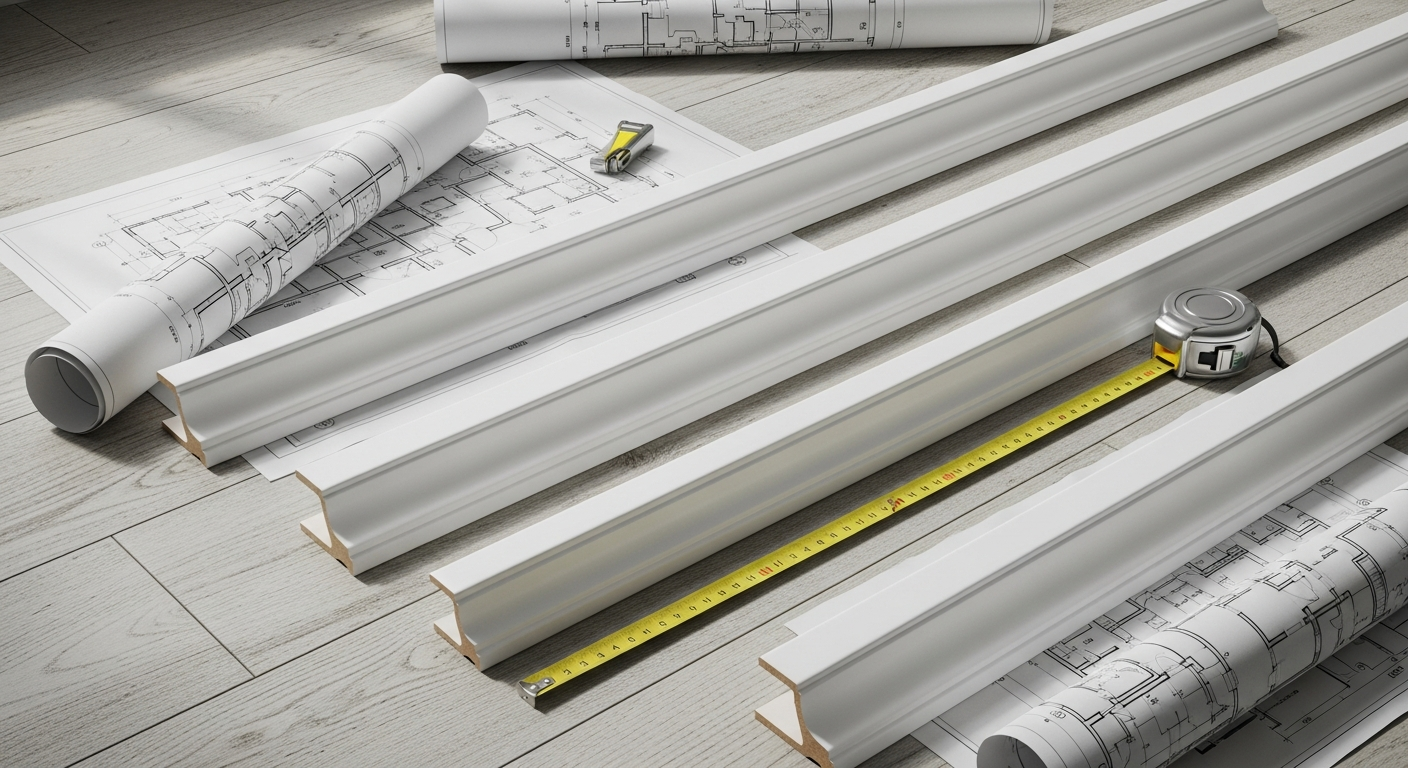
The Hamburger Profile, also known as the Berliner Profile, stands apart from simpler baseboard designs through its sophisticated stepped and curved architecture. Rather than presenting a flat or minimally textured surface, this profile features distinct layers and gentle curves that catch light and create shadow lines along the wall-to-floor junction. This dimensional quality elevates the visual interest of a room without overwhelming the eye.
The profile's distinctive stepped design creates architectural depth that transforms the baseboard from a purely functional element into a decorative feature. The curves are carefully proportioned to complement both classical and contemporary spaces, making it far more versatile than many assume.
How Architectural Elements Add Visual Depth
The stepped and curved design of the Hamburger Profile works by creating multiple planes of interest. When light moves across the profile throughout the day, the shadows cast by its contours shift, adding subtle animation to the room. This interplay between light and shadow gives walls a more refined, considered appearance than flat baseboards can achieve.
The profile's proportions establish a visual hierarchy that draws the eye downward gracefully, creating a frame for the room's architecture. This framing effect anchors the entire space, making ceilings feel taller and walls more substantial.
Why This Classic Design Complements Both Styles
Traditional interiors benefit from the Hamburger Profile's classical proportions and elegant curves, which echo period-appropriate architectural details. The profile's restraint—it's ornamental without being fussy—allows it to integrate seamlessly into Victorian, Georgian, or Edwardian-inspired homes.
Contemporary and minimalist spaces gain sophistication from the same profile. The profile's clean lines and refined geometry align with modern design principles, while the white finish maintains the visual clarity minimalist interiors demand. The result is a baseboard that feels both timeless and current.
Creating a Visual Anchor Between Surfaces
The Hamburger Profile's stepped design creates a subtle but definitive visual transition between vertical wall surfaces and horizontal flooring. This anchoring effect prevents rooms from feeling disconnected at their foundation—instead of abrupt meetings between planes, the profile orchestrates a composed handoff that feels intentional and complete.
Why MDF Material Outperforms Alternatives in Renovation Projects
Superior Stability and Warping Resistance
MDF (Medium-Density Fibreboard) demonstrates remarkable dimensional stability compared to solid wood alternatives. Where hardwood and softwood baseboards can warp, shrink, or expand with seasonal humidity fluctuations, MDF maintains consistent dimensions across temperature and moisture variations. This stability proves particularly valuable in climates with dramatic seasonal changes or in homes with inconsistent heating and cooling.
The manufacturing process of MDF creates a uniform density throughout the material, eliminating the grain direction issues that cause solid wood to move. A properly manufactured MDF baseboard installed today will maintain its profile and finish five, ten, or twenty years forward.
Manufacturing Excellence and Density Matters
High-quality MDF results from carefully controlled manufacturing processes that bond wood fibers with resin under precise heat and pressure conditions. Leistenhammer's MDF products, manufactured under German quality standards, feature consistent density throughout. This density directly correlates to durability—denser MDF resists dents, impact damage, and long-term wear far more effectively than lower-density alternatives.
The manufacturing process also creates a smooth, even surface that accepts paint and foil finishes uniformly, eliminating the surface irregularities that plague some wood baseboards. This smoothness simplifies installation and produces a more refined final appearance.
Moisture Resistance and Sealing Techniques
While MDF performs well in standard residential conditions, proper sealing is essential for bathroom and kitchen applications where humidity levels spike. Leistenhammer's white MDF skirting boards should be sealed with appropriate primer and paint systems designed for moisture-prone environments. A high-quality acrylic latex or oil-based paint applied over a moisture-resistant primer creates a protective barrier that prevents water penetration.
For kitchens and bathrooms, applying a secondary protective coat after the initial finish adds an extra layer of insurance against moisture damage. Maintaining good ventilation and addressing water spills promptly ensures your investment performs reliably for decades.
Cost-Effectiveness Without Aesthetic Compromise
MDF skirting boards cost considerably less than equivalent solid wood alternatives, yet the visual and performance differences prove negligible to most homeowners. The white finish applied to quality MDF achieves the same clean, refined appearance as painted solid wood, while the superior dimensional stability actually provides better long-term performance.
This cost advantage becomes especially significant in larger renovation projects where skirting board quantities multiply across multiple rooms. Homeowners can invest savings into other design elements or expand their project scope without stretching budgets.
Check current pricing and availability on Leistenhammer's website.
The White Finish Advantage: Versatility Beyond Aesthetics
Creating Visual Continuity and Brightness
Classic white skirting boards function as visual connectors throughout a home. Rather than creating hard lines or visual barriers, white baseboards enhance the sense of flow from room to room. The white finish reflects available light, brightening spaces and creating an airier feel—particularly valuable in rooms with limited natural light.
The white-on-white effect (white trim against most wall colors) creates subtle definition that grounds the room without asserting dominance. This restraint proves essential in smaller spaces where dark or bold baseboards could overwhelm the proportions.
Adaptability Across Color Palettes and Design Themes
White skirting boards adapt effortlessly to virtually any interior design direction. Paired with cool-toned gray walls, they enhance a sophisticated, contemporary aesthetic. Set against warm cream or beige, they provide classic, traditional anchoring. Even bold accent walls benefit from white baseboards, which frame the color without competing for attention.
The white finish also simplifies future design changes. Should wall colors or furnishings evolve, white baseboards remain relevant and complementary, reducing the likelihood of expensive replacement during future renovations.
The Psychology of White Baseboards in Interior Design
White trim carries psychological associations with cleanliness, clarity, and simplicity. These associations prove particularly powerful in kitchens and bathrooms, where cleanliness carries functional importance. In living areas and bedrooms, white baseboards contribute to feelings of calm and spaciousness.
The psychological effect of white extends to perceived quality—homes featuring crisp white trim often feel more carefully maintained and intentionally designed than those with neglected or mismatched baseboards. This perception translates to both personal satisfaction and measurable value if you eventually sell.
Maintenance and Cleaning Protocols
White skirting boards require regular attention to maintain their appearance, though the maintenance demands remain straightforward. Quarterly vacuuming or dusting with a soft brush removes accumulated dust. Monthly gentle wiping with a damp microfiber cloth keeps the surface bright.
For scuffs or marks, a magic eraser sponge removes most minor blemishes without damaging the finish. For deeper stains or accumulated grime, a solution of mild dish soap and warm water applied with a soft cloth restores the white finish effectively. Avoid abrasive cleaners or scouring pads, which can dull the painted surface.
Installation Realities: What DIY Enthusiasts and Contractors Should Know
Typical Dimensions and Specifications
Classic white MDF Hamburger Profile skirting boards from Leistenhammer arrive in standard lengths of 240-250 cm, accommodating typical room widths across European homes. Heights typically range from 58 mm to 145 mm, with thicknesses around 16-19 mm, allowing selection based on room proportions and design preferences.
Taller baseboards (120-145 mm) create more architectural presence and suit larger rooms with high ceilings. Shorter profiles (58-80 mm) work effectively in smaller spaces or contemporary interiors where restraint takes priority. Standard thicknesses provide adequate structural integrity while remaining lightweight enough for straightforward installation.
Tools and Materials Required
Professional-looking installation requires basic but essential tools: a miter saw for precise angle cuts, a caulking gun for adhesive application, a level to ensure even placement, and a nail gun or fasteners appropriate for your wall type. Additionally, you'll need high-quality construction adhesive rated for MDF-to-wall bonding, painter's caulk for joints, and finishing materials (primer and paint) to create seamless transitions.
Using quality tools and materials distinguishes professional results from amateur work. A sharp miter saw blade ensures clean cuts that require minimal finishing, while premium adhesive prevents future separation.
Wall and Flooring Preparation
Proper preparation determines installation success. Begin by examining walls and flooring for irregularities. Minor wall imperfections should be addressed with joint compound and sanding before baseboard installation. Flooring should be clean and stable—newly installed flooring requires sufficient curing time before baseboard attachment.
Check that walls are reasonably plumb (vertical) using a level. Significant deviations require shimming during installation to maintain proper alignment. Remove baseboards' protective packaging only immediately before installation to prevent dust accumulation on adhesive surfaces.
Adhesive and Fastening Methods for MDF
MDF baseboards bond effectively using construction adhesive specifically formulated for MDF attachment to drywall or plaster. Applying adhesive in a continuous bead along the wall ensures strong, lasting bonding superior to fasteners alone. After adhesive application, reinforce with finish nails or screws at intervals (typically every 16 inches) to maintain pressure while adhesive cures.
For superior results, combine adhesive with brad nails that penetrate the baseboard into wall studs whenever possible. This dual-method approach creates resilient installation that resists future separation even as the house settles naturally over time. Allow adhesive to cure fully (typically 24 hours) before painting or foiling.
The 10-Year Warranty and German Quality Assurance: What You're Really Buying
Leistenhammer's Quality Standards and Manufacturing
The "Made in Germany" designation on Leistenhammer's products represents far more than a geographical origin marker. German manufacturing standards enforce strict quality controls throughout production, from raw material selection through final packaging. These standards ensure consistency across Leistenhammer's 650+ product variations, meaning each skirting board meets identical performance specifications.
Leistenhammer's seven-decade heritage reflects accumulated expertise in skirting board production. This longevity indicates not just survival, but continuous refinement of manufacturing processes and commitment to customer satisfaction across generations.
What the 10-Year Warranty Covers
The 10-year warranty protects against manufacturing defects including dimensional inconsistencies, material flaws, and finish imperfections present at the time of manufacture. Warping due to manufacturing defects falls within coverage, as do adhesive or structural failures resulting from production issues.
The warranty explicitly does not cover damage from improper installation, inadequate sealing in moisture-prone environments, or damage from accidents or alterations after purchase. This clear delineation protects both manufacturer and consumer by establishing reasonable expectations for product performance.
German Standards Exceed Industry Expectations
German manufacturing standards (DIN standards) frequently exceed international norms. Leistenhammer's adherence to these standards means their skirting boards undergo more rigorous quality testing than many competing products. Testing includes dimensional accuracy verification, adhesive bond strength assessment, and durability evaluation under simulated long-term conditions.
These elevated standards translate to measurable differences in product longevity and performance. A skirting board that passes German quality standards arrives at your installation site ready to perform reliably for decades.
Quality Control Processes Across 650+ Variations
Managing consistent quality across 650+ product variations requires systematic quality control at multiple production stages. Leistenhammer's processes include raw material inspection, in-process dimensional checks during manufacturing, finished product evaluation before packaging, and random sampling for long-term performance verification.
This comprehensive approach ensures that whether you select a 58 mm profile or a 145 mm design, in standard white or specialized finishes, the product arriving at your door meets the same exacting standards. Consistency across such product breadth demonstrates manufacturing excellence.
Your Next Steps Toward Elevated Interior Design
The decision to invest in classic white MDF skirting boards with Hamburger Profile extends far beyond selecting a baseboard—you're choosing a design philosophy that prioritizes both elegance and practicality. Leistenhammer's seven-decade heritage, coupled with their Made in Germany quality assurance and generous 10-year warranty, removes the guesswork from what could otherwise be an overwhelming purchasing decision.
The Hamburger Profile's sophisticated curves and stepped design deliver architectural character that transforms ordinary rooms into thoughtfully curated spaces, while MDF's stability and ease of installation make the project accessible to both seasoned DIYers and first-time renovators. The white finish adapts seamlessly to any interior style, ensuring your investment remains relevant through future design evolution.
Your next action should be straightforward: examine Leistenhammer's offerings firsthand. Request their free samples and experience the quality difference that distinguishes Made in Germany products from standard alternatives. Holding actual samples in your space under your lighting conditions eliminates uncertainty about color, finish, and profile proportions. Once samples confirm your selection, ordering proceeds quickly, and installation can begin transforming your home within weeks.
The gap between ordinary rooms and thoughtfully designed spaces often hinges on details others overlook. Skirting boards represent one of those details where modest investment in quality yields disproportionate returns in visual impact and lasting durability. Leistenhammer makes the decision straightforward by combining accessible pricing with uncompromising quality standards.
Leave a Reply