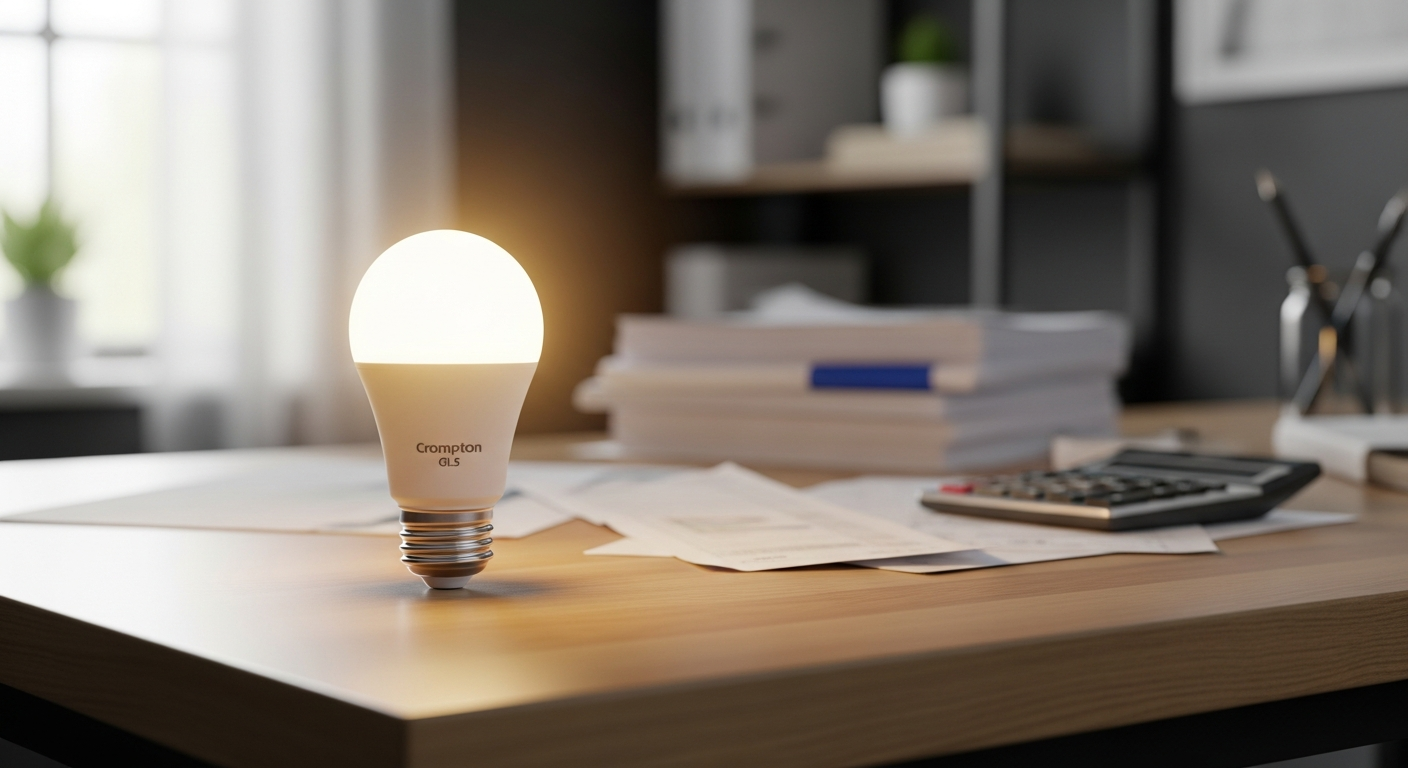
Most households waste hundreds of pounds annually on outdated lighting technology. Traditional incandescent bulbs consume up to five times more energy than modern LED alternatives, yet millions of homes still rely on them. If you're tired of replacing burnt-out bulbs every few months and watching your electricity meter climb, there's a simple fix that actually works.
The Crompton GLS Ultra-Efficient LED Bulb represents a significant shift in how we approach home and workplace lighting. This A-rated LED solution directly replaces conventional GLS (General Lighting Service) bulbs, delivering the warm, inviting light you love without the energy waste. With a 50,000-hour lifespan and backed by a 5-year warranty, it's engineered for durability, reliability, and genuine cost savings.
Understanding LED Wattage Equivalents and Real Power Consumption
What Wattage Equivalent Means and How It Differs from Actual Watts Consumed
When you see a label claiming "60W equivalent," it doesn't mean the LED uses 60 watts. Instead, it describes the brightness output compared to a traditional 60-watt incandescent bulb. The actual power consumption is dramatically lower—this is where real savings happen.
Breakdown of the Three Main Options: 2.2W (40W equivalent), 3.8W (60W equivalent), and 7.2W (100W equivalent)
The Crompton GLS range offers three practical options to match different lighting needs. The 2.2W model produces the same brightness as a 40-watt incandescent, the 3.8W delivers 60-watt equivalent output, and the 7.2W provides 100-watt equivalent brightness. This range covers most household applications, from accent lighting to primary room illumination.
How to Calculate Your Actual Energy Usage Versus Traditional Incandescent Bulbs
A standard incandescent 60W bulb running for eight hours daily consumes 480 watt-hours (0.48 kWh). The equivalent Crompton LED at 3.8W uses just 30.4 watt-hours (0.0304 kWh) for the same runtime. Over a year, that's a reduction from 175 kWh to 11 kWh—a difference you'll notice on your electricity bill.
Matching Wattage Equivalents to Room Size and Lighting Needs
Smaller spaces like bathrooms and hallways work well with the 2.2W option. Living rooms and kitchens typically benefit from the 3.8W or 7.2W variants, depending on natural light availability and personal preference. Bedrooms often fall somewhere in the middle, though dimmer switches can adjust brightness further.
Why Higher Wattage Doesn't Always Mean Better Brightness in LED Technology
LED brightness depends on lumens, not watts. A well-designed LED produces more lumens per watt than inefficient designs. The Crompton range maintains consistent, quality light output across all three wattage options, meaning you're getting optimal brightness for each power level.
Power Consumption Comparison Across Different Bulb Types
Incandescent bulbs waste about 90% of their energy as heat. Halogen bulbs improve slightly but still lag considerably. Compact fluorescent lamps (CFLs) achieve moderate efficiency but contain mercury and take time to reach full brightness. LED bulbs like the Crompton deliver superior efficiency—converting roughly 80-90% of energy into light rather than waste heat.
Cap Types and Compatibility: E27 Screw vs. B22 Bayonet
Overview of the Two Main Cap Types Available for This Bulb
The Crompton GLS comes in two standard British cap configurations: E27 (Edison Screw) and B22 (Bayonet Cap). Nearly every light fixture in UK homes uses one of these two types, making compatibility straightforward once you identify which your fittings require.
E27 (Edison Screw) Fitting: Common Applications and Fixture Compatibility
E27 fittings feature a threaded metal base that twists into a socket. You'll find these in most decorative lamps, table lamps, pendant lights, and many ceiling fixtures. The screw mechanism provides a secure connection and is intuitive for most people to install and remove.
B22 (Bayonet Cap) Fitting: Where You'll Find This Connection Type
B22 fittings use a push-and-twist locking mechanism—insert the bulb straight into the socket, then rotate clockwise to lock it in place. These are extremely common in UK ceiling lights, wall-mounted fixtures, and traditional lighting installations.
How to Identify Which Cap Type Your Existing Light Fittings Use
Remove an existing bulb and examine the base. A screw-threaded base indicates E27; two small pins or a push-in design with a twist-lock mechanism signals B22. If you're unsure, photograph the socket and consult Simply LED's compatibility guide, or measure the socket diameter (E27 measures 27mm, B22 is slightly smaller).
Installation Considerations for Each Cap Type
E27 bulbs require a gentle twisting motion—avoid forcing them. B22 bulbs need a straight push followed by a clockwise rotation; they don't twist like E27 models. Both are equally simple once you understand the mechanism, and neither requires any tools or special knowledge.
Availability and Pricing Differences Between E27 and B22 Variants
Both cap types are available in all three wattage options. Pricing is nearly identical, with the 7.2W E27 variant at £8.37 and the 2.2W variants at £6.97, whether you choose E27 or B22. Simply LED stocks both equally well, so availability isn't a concern.
Checking Compatibility Before Purchasing to Avoid Returns and Frustration
Take 30 seconds to identify your fitting type before ordering. This one step eliminates wasted shipping time and installation delays. Most returns stem from cap type mismatches—a preventable issue with a quick check beforehand.
The 50,000-Hour Lifespan Advantage: What It Really Means
Breaking Down the 50,000-Hour Rated Lifespan in Practical Terms (Years of Use)
A 50,000-hour lifespan translates to approximately 17 years if you run the bulb 8 hours daily. Running it 24/7 extends to 5.7 years of continuous operation. Most households will keep these bulbs installed far longer than they'll remain in the property.
How This Compares to Incandescent Bulbs (typically 1,000 hours) and Standard LED Alternatives
Standard incandescent bulbs last roughly 1,000 hours—about 4 months with 8 hours daily use. Many budget LED alternatives offer 10,000-25,000 hours. The Crompton's 50,000-hour rating positions it among the most durable options available, doubling or tripling the lifespan of mid-range competitors.
The Hidden Cost of Frequent Bulb Replacements and Maintenance Labor
Replacing a bulb every few months adds up. Consider the time spent on ladders accessing ceiling fixtures, the frustration of dealing with burnt-out lights, and the cumulative cost of constant replacements. Over 17 years, one Crompton bulb might replace 50+ incandescent equivalents.
Reduced Environmental Impact from Fewer Discarded Bulbs
Manufacturing and disposing of bulbs consumes resources and generates waste. Fewer replacements mean less manufacturing demand, reduced packaging waste, and lower landfill burden. The environmental savings are genuine and accumulate significantly over the bulb's lifespan.
Reliability in High-Use Areas Like Kitchens, Hallways, and Commercial Spaces
Kitchens and hallways see constant switching and extended use. Commercial properties demand maximum uptime and minimal maintenance disruption. The Crompton's reliability in these demanding environments translates to measurable operational benefits.
Long-Term Financial Benefits of Investing in Durable Bulbs
The upfront cost of £6.97-£8.37 per bulb seems higher than a £0.50 incandescent alternative. However, calculating total cost of ownership reveals the truth: one Crompton bulb costs less over 17 years than purchasing 50 traditional bulbs repeatedly. The financial advantage compounds across your entire home's lighting.
Why Lifespan Matters More Than Upfront Cost for Budget-Conscious Consumers
Budget-conscious households often focus on immediate purchase price. However, lifespan-based thinking—examining total cost per hour of use—reveals that longer-lasting, efficient bulbs deliver better value. Spending slightly more initially prevents hundreds of pounds in replacement costs.
Warm White Light and Creating the Right Atmosphere
Color Temperature Explained: Why Warm White (2700K) Suits Most Homes
Color temperature, measured in Kelvin (K), describes whether light appears warm (orange-tinted) or cool (blue-tinted). The Crompton emits 2700K warm white light—the same pleasant tone as traditional incandescent bulbs. This color temperature feels natural and relaxing in residential settings because it mimics evening firelight.
How Warm White Light Creates Inviting, Comfortable Living Spaces
Warm white light wraps rooms in a welcoming glow. Living rooms, bedrooms, and dining areas feel cozier and more intimate under this light. The psychological comfort of warm tones encourages relaxation and conversation, making homes feel lived-in rather than clinical.
Psychological Effects of Warm Lighting on Mood and Relaxation
Research consistently shows that warm light promotes relaxation and reduces stress. Cool white light energizes and alerts—ideal for workspaces but less suitable for unwinding at home. The Crompton's warm white output naturally aligns with how humans want to feel in their personal spaces.
Applications Where Warm White Excels (Bedrooms, Living Rooms, Dining Areas)
Bedrooms absolutely benefit from warm white—it promotes sleep and creates sanctuary atmospheres. Living rooms and lounges feel infinitely more inviting. Dining areas take on restaurant-quality ambiance. Even bathrooms feel more spa-like rather than sterile under warm white lighting.
Limitations of the Warm White-Only Offering for Specific Use Cases
Kitchen work surfaces sometimes need brighter, cooler light for task visibility. Home offices might benefit from more alert, neutral tones. Garages and utility spaces feel better under cooler light. The Crompton's warm white limitation means some spaces aren't optimal matches—though workarounds exist.
Comparison with Cool White and Daylight Options (And Why They're Not Included)
Cool white (4000K) and daylight (5000K+) options are available in other LED ranges but cost more to manufacture. Simply LED prioritizes warm white because it suits the majority of residential applications. Cost constraints and market demand guide product development decisions.
Tips for Layering Warm White Lighting with Other Fixtures for Flexibility
Strategic fixture placement solves warm white limitations. Install task lights in kitchens for work surfaces. Add desk lamps in home offices. Combine warm white ambient lighting with adjustable accent fixtures. This layering approach maintains the comfort of warm white while adding functional cool light where needed.
The 5-Year Warranty and What It Covers
Overview of Simply LED's Comprehensive 5-Year Warranty Commitment
Simply LED backs the Crompton GLS with a full 5-year warranty—a standout commitment in the LED market. This protection covers manufacturing defects, premature failure, and performance issues, demonstrating confidence in the product's quality.
What's Included in the Warranty Protection
The warranty covers defects in materials and workmanship. If a bulb fails to light or performs below specifications before five years elapse, Simply LED replaces it. Normal wear from extended use isn't covered, but manufacturing failures are comprehensively protected.
How the Warranty Process Works If a Bulb Fails Prematurely
Contact Simply LED with your purchase proof and bulb details. The process is straightforward—no complicated claims forms or lengthy approval periods. The company prioritizes customer satisfaction and replaces failed bulbs promptly, keeping you in light while the process completes.
Peace of Mind Factor and Brand Confidence This Warranty Represents
Extended warranties signal manufacturer confidence. A company wouldn't offer five-year coverage on unreliable products. This backing reduces purchase anxiety and signals that Simply LED stands behind its products—a powerful statement in an industry where cheaper alternatives often provide minimal protection.
Comparison with Typical LED Bulb Warranties (Often 2-3 Years)
Most LED bulbs carry 2-3 year warranties. The Crompton's 5-year coverage extends protection considerably, providing extra security. For a product lasting 17+ years, this extended period covers a significant portion of the bulb's early life when failures are statistically most likely.
Registration Requirements and Warranty Claim Procedures
Simply LED typically requires proof of purchase for warranty claims. Keep your receipt or order confirmation. No registration is usually necessary, though checking Simply LED's specific procedures ensures smooth claims if needed. The barrier to claiming is intentionally low.
Why This Extended Warranty Reflects Product Quality and Manufacturing Standards
Manufacturers only extend warranties when confident in product reliability. The Crompton's 5-year coverage reflects rigorous quality control, superior component selection, and manufacturing standards that exceed budget alternatives. Extended warranties are earned through proven performance.
Real-World Energy Savings and Cost Calculations
Monthly and Annual Electricity Cost Comparisons Using Actual Figures
Assume UK electricity costs approximately 28p per kWh. A single 60W incandescent bulb running 8 hours daily costs roughly £0.48 per month (£5.76 annually). The equivalent 3.8W Crompton LED costs just £0.03 per month (£0.36 annually). Per bulb, annual savings reach £5.40—multiply across a typical home's 40-50 light fixtures for dramatic household impact.
Calculating Your Specific Savings Based on Hours of Daily Use
The calculation is simple: (Incandescent watts – LED watts) × daily hours × 365 days ÷ 1000 × electricity rate per kWh. For example, replacing ten 60W incandescent bulbs (600W total) with equivalent 3.8W LED bulbs (38W total) saves 562W daily. Running 8 hours daily saves 1,641 kWh annually—worth approximately £460 at current rates.
Price Points: £8.37 for 7.2W E27 and £6.97 for 2.2W Variants
The upfront investment is modest. A 7.2W E27 bulb costs £8.37; the 2.2W variants cost £6.97. These prices compare favorably to budget alternatives while offering superior lifespan and warranty coverage.
Payback Period Analysis (How Quickly the Bulb Pays for Itself)
A £8.37 Crompton 7.2W bulb replacing a 100W incandescent saves approximately £6.84 annually in electricity costs. The payback period is roughly 14-15 months—after which the bulb generates pure savings. Most households reach payback within the first year of operation.
Cumulative Savings Across a Full Home Retrofit
Retrofitting an average home's 50 light fixtures with Crompton LEDs costs approximately £350-£400. Yet annual electricity savings across those fixtures easily exceed £200-£300. Payback occurs within 18 months, after which savings compound year after year for the remaining 15+ years of bulb lifespan.
Impact on Household Carbon Footprint and Environmental Benefits
Electricity generation produces carbon emissions. Reducing consumption directly reduces your household's carbon footprint. Switching 50 fixtures from incandescent to LED eliminates roughly 2-3 tons of CO2 annually—equivalent to the environmental impact of driving a car thousands of miles per year.
Tools and Calculators for Estimating Your Personal Savings
Simply LED's website features energy savings calculators allowing you to input your current usage, bulb types, and electricity rates. These tools provide personalized estimates based on your specific circumstances, revealing the financial case for switching in your particular situation.
Best Use Cases: Where This Bulb Shines
Residential Applications (Kitchens, Bathrooms, Bedrooms, Living Spaces)
The Crompton excels in every residential setting. Kitchens appreciate long lifespan reducing maintenance in high-traffic areas. Bathrooms benefit from warm white's spa-like quality and reliability. Bedrooms welcome the relaxing tone and reliability. Living spaces gain the cost savings and comfort.
Commercial and Workplace Settings Benefiting from Energy Efficiency
Offices, retail spaces, and hospitality venues with hundreds of light fixtures see dramatic energy savings. Commercial properties operating 12-16 hours daily maximize the efficiency advantage. Switching reduces operational costs significantly—a compelling business case for facility managers.
High-Traffic Areas Where Reliability and Longevity Matter Most
Hallways, stairwells, and entry points see constant switching and extended use. The Crompton's 50,000-hour lifespan and durability shine in these demanding applications. Fewer replacements mean less maintenance disruption and reduced operational expenses.
Rooms with Extended Daily Usage (Higher Savings Potential)
Living rooms where lights remain on 10+ hours daily, kitchens with morning and evening use, outdoor porch lights running dusk-to-dawn—these high-usage areas accelerate payback and maximize savings. Extended-use applications deserve extended-lifespan bulbs.
Properties with Multiple Light Fixtures Requiring Bulk Replacement
Large homes, multi-unit properties, and commercial buildings justify bulk purchases. Buying 20, 50, or 100 bulbs at once captures consistent pricing and simplifies logistics. Properties with numerous fixtures benefit most from efficiency investments.
Rental Properties and Commercial Leases Seeking Operational Cost Reduction
Landlords and property managers appreciate reduced maintenance costs and improved tenant satisfaction. Better lighting quality with lower energy bills benefits everyone. Commercial tenants welcome reduced operational expenses improving bottom-line profitability.
Situations Where Frequent Bulb Changes Are Inconvenient or Costly
High ceiling fixtures, recessed lighting difficult to access, and outdoor installations all benefit from extended lifespan. Avoiding expensive ladder work or professional electrician calls justifies the upfront bulb investment. Convenience value extends beyond pure financial calculations.
Installation, Setup, and Switching from Incandescent Bulbs
Safety Considerations Before Replacing Old Bulbs
Turn off the light switch before removing old bulbs—standard electrical safety. Wait a few minutes if incandescent bulbs were recently lit, as they retain considerable heat. Dispose of old bulbs properly according to local recycling guidelines. LEDs generate minimal heat, so burn risk is eliminated once installation completes.
Step-by-Step Installation Process for Both E27 and B22 Fittings
For E27 (screw): Turn off the light, wait briefly for cooling, grip the bulb firmly, and rotate counterclockwise until it releases. Insert the Crompton bulb and rotate clockwise until snug—not excessively tight. For B22 (bayonet): Turn off the light, insert the bulb straight into the socket, then rotate clockwise a quarter turn until it locks. Both processes take seconds.
Compatibility Checks with Dimmer Switches and Smart Lighting Systems
Standard dimmers may cause flickering or incompatibility with budget LEDs. The Crompton GLS works well with most dimmers due to quality electronics, though some older dimmer switches may require testing. Smart bulbs offer programmable features the standard Crompton doesn't provide—factor this into purchasing decisions if smart control is desired.
Initial Brightness and Warm-Up Time Expectations
Unlike older CFL technology, LED bulbs reach full brightness instantly. The Crompton provides immediate illumination—no waiting for warm-up. Initial brightness matches specifications immediately; there's no gradual brightening period.
Disposal of Old Incandescent and Fluorescent Bulbs Responsibly
Incandescent and halogen bulbs can often go in regular waste—they're glass and metal with no hazardous components. CFLs and other fluorescent bulbs contain trace mercury and require special recycling. Check local council guidance for proper disposal locations. Many retailers accept bulbs for recycling when purchasing replacements.
Testing After Installation to Ensure Proper Function
Switch the light on and verify the bulb illuminates normally. Check that brightness matches expectations for the wattage selected. If using a dimmer, test the full range to confirm smooth operation. Installation issues are rare, but quick testing prevents surprises later.
Troubleshooting Common Issues with LED Retrofitting
Flickering typically indicates dimmer incompatibility—solve this by upgrading the dimmer or removing dimming capability. Failure to illuminate suggests reversed polarity or loose connection—reseat the bulb firmly. Unusually dim output points to wrong wattage selection—verify you've chosen the appropriate option for your needs. Most issues resolve through basic troubleshooting.
Comparing Crompton GLS to Competing LED Bulbs
How Crompton Stacks Up Against Other A-Rated LED Options
The Crompton ranks among leading A-rated LED options for energy efficiency and cost-effectiveness. It competes favorably with premium brands while maintaining competitive pricing. Performance metrics place it in the top tier of consumer LED bulbs available.
Price-to-Performance Analysis Across the LED Market
At £6.97-£8.37 per bulb, Crompton sits in the mid-to-premium price range—above budget alternatives but below luxury brands. The value proposition is exceptional: combine A-rated efficiency, 50,000-hour lifespan, and 5-year warranty at this price point, and few competitors match the overall package.
Lifespan and Warranty Comparisons with Major Competitors
Major competitors typically offer 10,000-25,000 hour lifespans with 2-3 year warranties. The Crompton's 50,000-hour rating and 5-year warranty substantially exceed industry norms. Few competing products match this longevity and warranty commitment combination.
Energy Efficiency Ratings and Certifications
The Crompton holds A-rating status—the highest efficiency classification available. It meets or exceeds all UK and EU efficiency standards. Third-party testing confirms that claimed efficiency figures translate to real-world performance.
Customer Satisfaction and Reliability Track Record
The Crompton's bestseller status on SimplyLED.co.uk reflects genuine customer satisfaction. Repeat purchases and positive reviews indicate reliability matching the specifications. Long-term ownership data validates the 50,000-hour lifespan claims.
Unique Advantages of the Crompton Brand
Crompton specializes in lighting and has decades of manufacturing heritage. This specialization results in products refined through extensive real-world testing. The brand's reputation attracts customers seeking proven, reliable solutions rather than experimental alternatives.
Why SimplyLED Customers Choose This Model Repeatedly
SimplyLED's customer base returns for Crompton bulbs because they perform as promised. The combination of efficiency, durability, competitive pricing, and reliable service builds loyalty. Word-of-mouth recommendations drive repeat purchases—the strongest endorsement possible.
Addressing the Limited Color Temperature Option
Why Warm White Is the Default for Most Consumer LED Bulbs
Warm white (2700K) suits the majority of residential applications and matches consumer expectations from incandescent bulbs. Offering multiple color temperatures multiplies manufacturing complexity and inventory management. Market demand for warm white dominates, making it the logical default choice.
The Cost Implications of Offering Multiple Color Temperatures
Each additional color temperature variant requires separate manufacturing runs, component sourcing, and inventory management. Retailers must stock multiple SKUs, increasing warehouse complexity. Economies of scale favor focused product ranges. Price-conscious consumers appreciate this simplification.
Workarounds for Spaces Requiring Cooler Lighting
Install task-specific lighting alongside ambient warm white fixtures. Kitchen work surfaces can use cool white under-cabinet lights. Home offices benefit from dedicated cool white desk lamps. This layered approach maintains warm white comfort while addressing functional needs.
Mixing Warm and Cool White Bulbs in Multi-Fixture Rooms
Combining warm and cool whites in different fixtures creates flexibility. Use warm white ambient lighting with cool white task lighting. This approach satisfies both comfort and functionality without compromising the product range's simplicity.
Smart Bulb Alternatives If Color Flexibility Is Essential
Smart LED bulbs offer programmable color temperature adjustments from warm to cool. These command premium prices but provide ultimate flexibility. If color temperature customization is essential, smart bulbs justify the investment despite higher upfront costs.
Future Product Developments and Potential Expanded Options
As LED manufacturing matures and costs decrease, expanded color temperature offerings become increasingly viable. Future Crompton product lines may include cool white and daylight options. Consumer demand will ultimately drive these developments.
Making Peace with Warm White and Optimizing Room Design Around It
Warm white is genuinely optimal for most homes. Rather than viewing it as limitation, embrace the comfort and ambiance it provides. Decor choices, paint colors, and fixture selection can work harmoniously with warm white lighting—a positive rather than restricting constraint.
Making the Switch: Your Path to Lower Bills and Better Lighting
The Crompton GLS Ultra-Efficient LED Bulb isn't just another lighting product—it's a practical investment in your home's efficiency and your wallet's health. You've explored the wattage options, compatibility factors, impressive lifespan, and genuine cost savings you can expect. The numbers speak clearly: switching from incandescent bulbs to these LEDs can slash your lighting energy costs by up to 80%, with the 50,000-hour lifespan meaning you'll rarely think about replacements again.
What truly sets this bulb apart is the combination of affordability, reliability, and Simply LED's backing through a 5-year warranty. Whether you're outfitting a single room or completing a whole-home retrofit, you have the flexibility to choose between E27 and B22 fittings and three wattage options to match your specific needs. The warm white light creates the inviting atmosphere most people prefer, and the competitive pricing makes the upgrade accessible for any budget.
Ready to start reclaiming money on your energy bills? Head over to SimplyLED.co.uk and explore the Crompton GLS Ultra-Efficient LED Bulb options that match your fixtures. Calculate your potential savings based on your current usage, grab a few bulbs to test in your most-used spaces, and experience the difference reliable, efficient lighting makes. Your future self—and your bank account—will thank you for making the switch today.
Leave a Reply