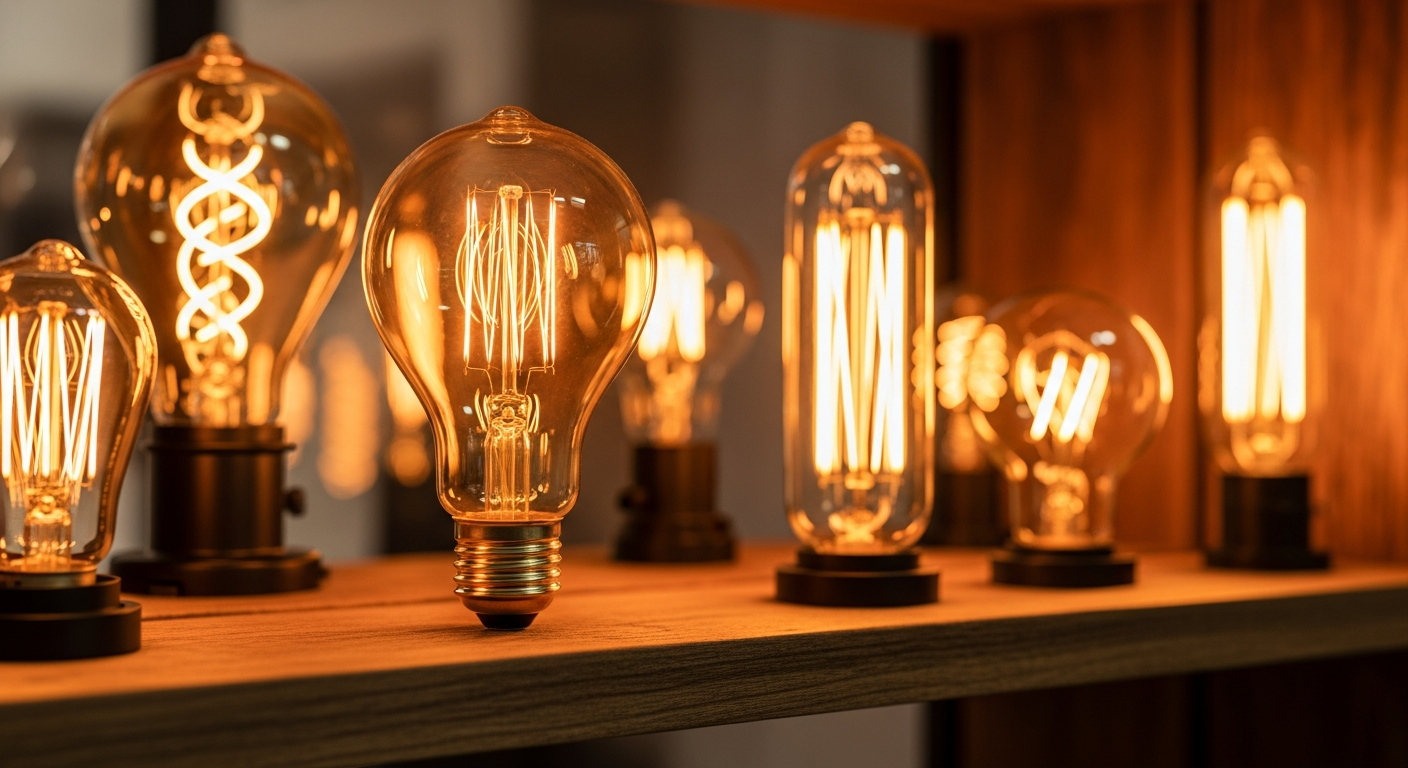
In an era dominated by LED efficiency and smart home automation, incandescent bulbs have become relics of a bygone era—yet they're making a quiet comeback. Incandescent bulbs account for less than 5% of the global lighting market today, yet they are experiencing a surprising resurgence among design-conscious homeowners and vintage enthusiasts. The E27 60W clear standard incandescent lamp has evolved from forgotten technology into a deliberate choice for those who refuse to compromise on authenticity.
The E27 60W incandescent bulb represents more than just a light source; it is a statement about intentional living and design authenticity. With its large screw fitting and warm, unfiltered glow, this bulb delivers the exact ambiance that modern LED alternatives struggle to replicate. The clear glass finish and classic warm tone create an atmosphere that feels distinctly human—something you cannot simply purchase from a catalog of smart bulbs and color-temperature adjustments.
Understanding the complete picture of E27 60W incandescent lamps requires examining their technical specifications, sourcing reliability, practical applications, and the real costs of supplier choices. You will discover why this particular wattage and fitting remain essential for specific applications, and what to watch for when purchasing to ensure you get genuine, long-lasting bulbs.
Find authentic E27 60W clear incandescent lamps from trusted suppliers today.
The Technical Breakdown of E27 60W Clear Incandescent Specifications
E27 Screw Fitting: The Universal Standard
The E27 fitting represents one of the most universally recognized lamp bases in the world. This threaded socket has a diameter of 27 millimeters and is found in the majority of residential fixtures across Europe, Asia, and many other regions. Its prevalence means that sourcing bulbs with E27 compatibility remains straightforward—most vintage lamps, pendant lights, and standard table lamps accommodate this fitting without modification.
60W Power Output and Brightness Characteristics
A 60W incandescent lamp produces approximately 800 lumens, positioning it as a medium-output bulb suitable for general room illumination. This wattage delivers noticeable brightness without overwhelming smaller spaces, making it the practical middle ground between lower 40W bulbs and more intense 100W varieties. The brightness output reaches full intensity instantly, with no gradual warm-up period required.
Clear Glass Finish and Visual Impact
The clear finish distinguishes this bulb from frosted or opalescent alternatives. Clear glass allows the filament to remain visible, creating a distinctive visual element when the bulb is exposed within pendant fixtures or decorative lamps. This transparent design permits direct light transmission without diffusion, resulting in sharper shadows and a more pronounced glow. For installations where the bulb itself becomes part of the aesthetic design, the clear finish proves essential.
Bulb Dimensions and Fixture Compatibility
At 55 millimeters in diameter, the E27 60W bulb maintains a relatively compact size compared to larger decorative varieties. This dimension ensures compatibility with standard lamp shades and fixtures designed for traditional bulbs. The proportions work particularly well in mid-century modern pendant lights, table lamps with fabric shades, and vintage floor lamps where oversized bulbs would appear visually incongruous.
Color Temperature and Ambiance Creation
Traditional incandescent technology produces light at approximately 2700 Kelvin—a warm white tone that leans distinctly toward amber and orange wavelengths. This color temperature mirrors the glow of candlelight and creates intimate, psychologically comforting environments. Unlike LED alternatives that attempt to simulate this warmth through electronic filtering, incandescent bulbs generate authentic warm light through their physical filament temperature.
Lifespan and Operating Hours
Incandescent bulbs typically last approximately 1000 hours under normal operating conditions. A bulb used for three hours daily provides roughly one year of service before requiring replacement. This relatively brief lifespan compared to LED bulbs represents both a disadvantage in terms of maintenance frequency and an advantage for those seeking regularly updated lighting solutions without long-term stock commitment.
Instant Illumination Without Warm-Up
Unlike certain energy-efficient alternatives that require several seconds to reach full brightness, incandescent bulbs deliver complete illumination the moment the switch activates. This instant-on characteristic proves particularly valuable in applications where immediate full brightness matters, such as bathroom fixtures, entry lighting, or task-oriented spaces.
Energy Consumption Reality
A 60W incandescent bulb consumes significantly more electricity than equivalent LED solutions, which might produce comparable light output at 8-10 watts. For environmentally conscious users, this higher consumption represents a genuine drawback. However, for those prioritizing aesthetic authenticity over energy efficiency, the trade-off remains consciously accepted.
Sourcing Authentic E27 60W Bulbs: Quality Considerations You Cannot Ignore
Red Flags in Counterfeit and Low-Quality Products
Counterfeit incandescent bulbs often display several warning signs that discriminating buyers should recognize. Poorly printed packaging with spelling errors, vague manufacturer information, and suspiciously low pricing suggest quality concerns. Physical examination matters equally—legitimate bulbs feature clean, uniform glass construction without visible defects, while inferior copies may show clouding, uneven coating, or unstable filaments that move excessively when the bulb is jostled.
Manufacturer Credentials and Authentication
Reputable incandescent manufacturers provide complete product information including manufacturing location, certification marks, and verifiable contact details. Research the claimed manufacturer before purchasing—legitimate companies maintain websites, certification databases, and industry registrations. Request documentation from suppliers unwilling to provide manufacturer specifics; authentic retailers never hesitate to verify product provenance.
Common Durability Problems Worth Investigating
Consumer reports frequently cite premature filament failure, where bulbs cease functioning after only weeks rather than the expected months. Glass defects including micro-fractures that weaken structural integrity also appear in low-quality batches. Some bulbs exhibit flickering caused by faulty filament connections, while others fail catastrophically with audible pops when switched on. Investigating whether previous customers experienced similar issues provides valuable insight into consistency.
Packaging Standards as Quality Indicators
Professional suppliers protect fragile incandescent bulbs through cushioned packaging, individual compartments, and shock-absorbing materials. Bulbs arriving in flimsy boxes with minimal protection have likely sustained damage during transit, even if not visibly obvious. Proper packaging demonstrates supplier commitment to product integrity and customer satisfaction.
Price-to-Quality Ratios and False Economy
The lowest-priced bulb rarely delivers the lowest total cost of ownership. When a €1.95 bulb fails after two weeks while a €3.50 alternative lasts months, purchasing the cheaper option actually costs more across multiple replacements, factoring in convenience and time investment. Establish a realistic budget that permits sourcing from quality-conscious suppliers rather than perpetually replacing failed bargain products.
Certification Marks and Testing Standards
Legitimate incandescent bulbs display certification marks from recognized testing organizations. European products should show CE marking, while other certifications might include specific national standards. These marks indicate third-party testing and compliance with safety and performance specifications. Unmarked bulbs warrant significant skepticism.
Supplier Reputation Beyond Online Reviews
While customer reviews provide useful data, they represent only one assessment layer. Contact suppliers directly with specific technical questions—responsive, knowledgeable staff indicate professional operations, while dismissive or evasive responses suggest potential issues. Investigate how long the supplier has operated, whether they maintain physical locations, and whether industry associations recognize them.
Bulk Purchasing Strategies
Collectors and individuals outfitting multiple fixtures benefit from bulk purchasing arrangements. Reputable suppliers offer volume discounts while maintaining quality standards—never accept lower quality in exchange for lower bulk pricing. Establish clear agreements regarding minimum order quantities, delivery schedules, and return provisions for defective items.
Secure reliable E27 60W incandescent bulbs from verified suppliers with quality guarantees.
Where the E27 60W Lamp Shines: Practical Applications and Use Cases
Vintage Pendant Lights and Mid-Century Modern Fixtures
The E27 60W clear incandescent bulb finds its natural home in pendant fixtures designed during the mid-twentieth century. These hanging lights, whether Danish modern, industrial, or minimalist designs, specifically require authentic incandescent technology to achieve the intended aesthetic. The exposed filament visible through clear glass completes the designer's original vision in ways that modern alternatives cannot replicate.
Table and Floor Lamps with Fabric Shades
Table lamps featuring linen, cotton, or silk shades benefit from the warm, consistent light output of 60W incandescent bulbs. The gentle warmth diffuses evenly through fabric, creating comfortable reading light without the harsh undertones that LED equivalents sometimes produce. Floor lamps designed with traditional specifications similarly depend on authentic incandescent technology for proper ambiance and performance within their shade structures.
Specialty Applications: Photography, Film, and Studio Work
Professional photographers and videographers often prefer incandescent bulbs for their consistent color rendering and lack of flicker. The 2700K warm tone and continuous spectrum provide reliable lighting for portrait work, still-life photography, and film production. Studio setups utilizing vintage lighting equipment frequently require E27 60W bulbs to maintain equipment compatibility and authentic visual characteristics.
Hospitality and Restaurant Environments
High-end restaurants, boutique hotels, and specialty hospitality venues deliberately specify incandescent lighting to create signature atmospheres. The warmth and organic quality of incandescent light contribute significantly to customer perception, comfort, and the establishment's distinctive character. These professional environments typically prioritize authentic bulbs over budget alternatives, recognizing that lighting quality directly affects customer experience and return visits.
Residential Spaces Where LED Fails
Certain home environments resist LED adaptation. Vintage homes, heritage properties, and residences featuring specific interior design philosophies simply require authentic incandescent technology. When LED alternatives produce visibly different light quality that clashes with design intent, genuine incandescent bulbs become not a luxury but a necessity.
Exposed-Bulb Fixtures as Design Elements
When bulbs remain visible—in industrial pendant lights, cage fixtures, or artistic installations—the physical bulb itself becomes decorative. The E27 60W clear incandescent bulb's classic shape and visible filament design contribute meaningfully to overall aesthetic impact. Selecting authentic, quality bulbs matters because inferior products display visible defects when exposed.
Dimmable Applications and Compatibility
Vintage dimmer switches designed before LED technology often function poorly with modern bulbs. Authentic incandescent bulbs work flawlessly with these legacy dimming systems, providing smooth brightness adjustment without flickering or compatibility issues. Homes with existing dimmer infrastructure frequently require incandescent bulbs to maintain expected functionality.
Heritage Homes and Historically Accurate Restorations
Restoring period properties requires historically appropriate lighting. A 1950s cottage, 1920s bungalow, or Victorian home deserves authentic incandescent bulbs that match the original specifications. Heritage preservation societies often recommend genuine incandescent technology for accuracy, and renovation budgets typically accommodate quality bulb sourcing as part of authentic restoration.
Navigating the Supplier Landscape: What to Expect From Retailers
Competitive Pricing Within Quality Parameters
Quality suppliers maintain competitive pricing while refusing to sacrifice product standards. The €1.95 price point offered by discount retailers appears attractive until failure rates, replacement costs, and customer service frustrations accumulate. Established suppliers typically position themselves at slightly higher price points, justified by consistent quality, responsive support, and reliable delivery.
Delivery Promises and Realistic Expectations
Many retailers advertise next-day delivery, claiming orders placed before specific times arrive the following day. Verify these claims independently through past customer experiences rather than accepting promises at face value. Transportation delays, inventory issues, and regional constraints frequently interrupt advertised delivery schedules. Realistic retailers provide contingency timeframes and proactively communicate delays when they occur.
Product Selection: Breadth Versus Depth
Some suppliers maintain extensive catalogs spanning dozens of bulb varieties, wattages, and finishes, while others concentrate on a curated selection of proven performers. Neither approach inherently proves superior—breadth serves customers with diverse needs, while depth indicates focus and expertise in specific products. Evaluate whether the supplier carries your exact specifications and whether they stock adequate inventory.
Customer Service Responsiveness and Support
Responsive customer service distinguishes reliable suppliers from problematic ones. Prompt replies to inquiries, clear communication regarding issues, and genuine problem-solving efforts indicate professional operations. Conversely, slow responses, dismissive attitudes, or inability to locate order information suggest systemic customer service failures that will complicate future interactions.
Return and Replacement Policies for Defective Products
Legitimate suppliers stand behind their products through clear return policies. Defective bulbs should be replaced or refunded without excessive bureaucracy. Retailers demanding original packaging for returns, charging restocking fees on defective items, or requiring customers to pay return shipping signal problematic policies that create unnecessary friction.
Packaging Quality and Shipping Protection
Quality suppliers invest in protective packaging that prevents damage during transit. Individually cushioned bulbs, shock-absorbing materials, and sturdy boxes demonstrate commitment to product integrity. Unboxing experiences that reveal damaged goods despite apparently careful handling suggest systemic issues with supplier logistics.
Transparency in Product Descriptions and Specifications
Reliable suppliers provide complete technical specifications, manufacturing information, expected lifespan data, and honest assessments of product characteristics. Vague descriptions, missing details, or unsubstantiated performance claims warrant skepticism. Clear, comprehensive product information indicates supplier confidence and professionalism.
Communication Standards During Problem Resolution
When issues arise—damaged shipments, incorrect orders, billing discrepancies—communication quality determines outcomes. Professional suppliers acknowledge problems promptly, take responsibility appropriately, and implement solutions quickly. Retailers who ignore customer inquiries, blame transportation companies entirely, or dispute legitimate complaints create unnecessary frustration during already-frustrating situations.
The Real Cost of Choosing Budget Suppliers Over Reliability
Hidden Expenses from Premature Failures
A bulb costing €1.95 that fails after three weeks costs significantly more than a €3.50 bulb lasting three months. Factor in the cumulative replacement cost across multiple failures, the inconvenience of frequent purchasing, and the time investment in reordering. Premature failures compound costs in ways that simple price comparisons ignore.
Time Investment in Customer Service Resolution
When defective products arrive or orders contain errors, resolving these issues demands time and effort. Sending complaint emails, waiting for responses, arranging returns, and restocking replacements consume hours that have genuine value. Budget retailers often provide minimal support, forcing customers to navigate problems independently or abandon resolution entirely.
Frustration From Damaged Goods and Incorrect Orders
Receiving damaged bulbs or wrong items creates genuine frustration beyond the economic loss. The anticipation of solving a lighting problem evaporates when damaged goods arrive. Repeat incorrect orders compound frustration and erode confidence in the supplier. These psychological costs matter even if economic replacement costs remain modest.
Quality Inconsistencies Affecting Investment Longevity
Inconsistent product quality means that some bulbs last months while others fail within weeks. This unpredictability complicates planning and budgeting. Quality suppliers maintain consistent standards, allowing reliable projections regarding replacement frequency and budgeting.
Warranty Coverage Gaps and Responsibility Questions
Budget suppliers often provide minimal or nonexistent warranties, leaving customers without recourse when products fail. Quality retailers back their products through explicit warranties, transferring some failure risk from consumer to supplier. This distinction matters substantially when premature failures occur.
Delivery Delays Disrupting Project Timelines
When renovation projects or lighting installations depend on timely bulb delivery, delays frustrate carefully planned schedules. Budget retailers frequently experience inventory shortages, transportation issues, and unreliable delivery timeframes. Missing delivery windows costs money if contractors must reschedule, or it disrupts residential projects awaiting completion.
Billing Discrepancies and Resolution Difficulty
Charging errors, duplicate charges, or disputed transactions create financial friction. Budget retailers handling high volumes sometimes struggle with billing accuracy. Resolving payment issues with unresponsive customer service becomes genuinely difficult, potentially requiring credit card company intervention.
The Value Proposition of Premium Reliability
Investing slightly more in bulbs from reliable suppliers eliminates hidden costs associated with failures, returns, and customer service struggles. The €1.50 price difference per bulb translates into meaningful savings across all hidden expenses, frustration factors, and time investment. Reliability carries genuine economic value beyond simple unit pricing.
Making Your E27 60W Purchase Decision: A Practical Checklist
Fixture Requirements and E27 Compatibility
Begin by confirming that your target fixture accepts E27 screw-base bulbs. Examine existing fixtures, consult manufacturer documentation, or contact lamp specialists if uncertain. Verify that the fixture's electrical specifications support 60W operation and that no unusual compatibility issues exist.
Calculate Your Actual Brightness Needs
Assess whether 60W intensity suits your specific application. Ambient room lighting might require only 40W, while a task-oriented reading lamp might benefit from 75W or 100W. Calculate brightness needs based on room size, ambient lighting conditions, and intended use patterns. Select wattage deliberately rather than defaulting to 60W.
Research Supplier Ratings Beyond Price Comparison
Investigate supplier reputations through multiple sources: industry reviews, customer forums, social media discussions, and direct supplier websites. Note patterns in customer feedback regarding quality consistency, delivery reliability, and customer service responsiveness. Price comparison sites alone provide insufficient information for confident purchasing decisions.
Read Detailed Customer Feedback
Focus on reviews discussing longevity, quality consistency, packaging protection, and customer service experiences. Individual reviewer credibility matters—detailed, specific feedback carries more weight than vague complaints. Look for patterns indicating systemic issues versus isolated incidents.
Verify Return Policies and Guarantees
Confirm return windows, replacement procedures, warranty coverage, and any associated costs or requirements. Comprehensive return policies provide protection against receiving defective products or items that fail prematurely.
Check for Bulk Discounts
If outfitting multiple fixtures, inquire about volume pricing. Established suppliers often provide tiered discounts that reduce per-unit costs while maintaining quality standards. Negotiate bulk orders carefully, ensuring discounts do not compromise product selection or delivery reliability.
Compare Delivery Options and Timelines
Evaluate delivery speed against project requirements. While next-day delivery sounds appealing, realistic timeframes matter more than optimistic promises. Compare multiple suppliers' typical delivery performance and cost implications of expedited options.
Confirm Aesthetic Preferences
Verify that clear glass finish, warm color temperature, and overall bulb appearance match your aesthetic vision. Request product photographs or sample bulbs if visual confirmation seems important. Detailed product descriptions and customer imagery help confirm that products match expectations.
The Enduring Appeal of Choosing Quality Over Convenience
The E27 60W clear standard incandescent lamp continues to command loyalty from those who value authenticity and warmth in their living spaces. Yes, it consumes more energy than modern alternatives, and yes, it requires more frequent replacement—but for a specific audience, these trade-offs feel entirely worthwhile. The bulb's appeal transcends mere nostalgia; it represents a deliberate choice to prioritize aesthetic integrity and genuine warmth over efficiency metrics and convenient automation.
Your purchasing decision ultimately hinges on balancing three competing priorities: cost, quality, and supplier reliability. The cheapest option rarely delivers on all fronts, and cutting corners with budget retailers often means frustration down the line. Initial savings evaporate quickly when premature failures necessitate repeated replacements, customer service issues demand time and emotional energy, or damaged shipments disrupt carefully planned projects.
If you are serious about vintage lighting, invest time in vetting your supplier, ask detailed questions about product sourcing, and do not hesitate to pay a premium for consistency and customer support. Suppliers standing behind their products, responding promptly to inquiries, and protecting shipments through quality packaging deserve slightly higher pricing for the reliability they deliver.
The E27 60W incandescent lamp is not going anywhere—in fact, its niche market continues to grow as people reject the sterile efficiency of mass-market lighting solutions. As LED alternatives saturate consumer markets and smart homes proliferate, authentic incandescent technology becomes increasingly precious to those seeking alternative paths. Make your choice deliberately, purchase from suppliers who stand behind their products, and enjoy the unmistakable glow that only authentic incandescent technology can deliver.
Leave a Reply