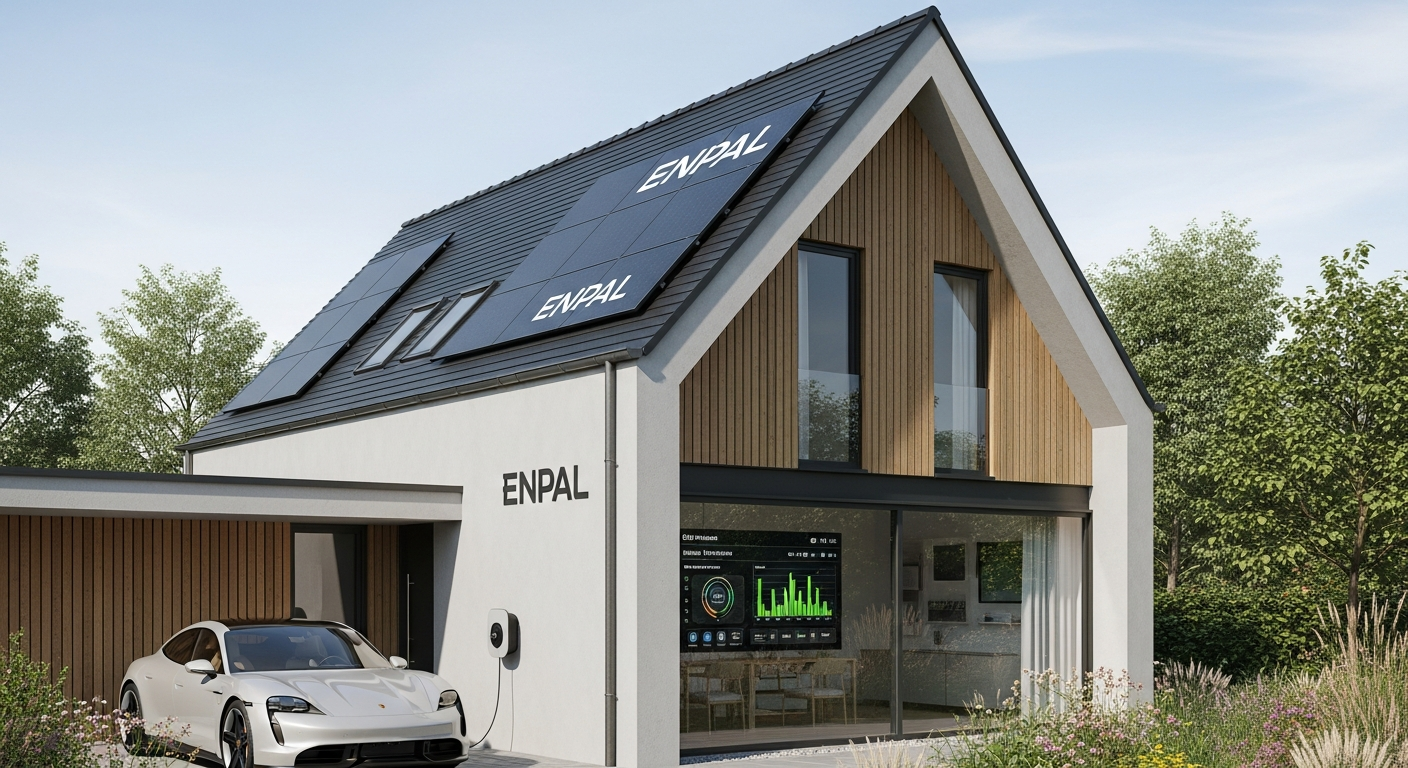
Rising electricity costs keep nearly 60% of European homeowners awake at night, yet most remain paralyzed by the complexity of making a real change. The barrier isn't lack of motivation—it's the overwhelming number of moving parts. Trying to coordinate solar installers, battery vendors, EV charging companies, and heating contractors separately feels like herding cats while managing separate contracts, warranties, and technical support channels for each component.
Enpal's All-in-One Solar Energy Solution disrupts this fragmentation entirely. Their integrated 5-in-1 package bundles solar generation, battery storage, EV charging capability, heat pump heating, and intelligent energy management into a single, cohesive ecosystem. Rather than piecing together components from different manufacturers and navigating a bureaucratic maze of support contacts, homeowners gain one provider responsible for everything—from initial installation through ongoing optimization and maintenance.
Explore Enpal's All-in-One Solar Energy Solution to see how integration transforms your energy independence. This article walks you through what genuinely differentiates this integrated approach, which homeowners benefit most, and where the hidden costs and limitations actually hide. You'll uncover the real pricing structure, how the AI-powered Enpal.One+ system optimizes performance in practice, and the critical questions demanding answers before committing to either rental or purchase agreements.
The 5-in-1 Integration: How Enpal Bundles Multiple Energy Systems
Enpal's ecosystem centers on seamless integration rather than forced compatibility. The foundation rests on Full-Black 450 Wp high-efficiency solar panels designed to maximize generation across varying weather conditions. These feed into a battery storage system—typically 10 kWh capacity—that captures excess power during peak solar hours, making that electricity available when the sun disappears or demand spikes.
The wallbox component eliminates the need for separate EV charging infrastructure. Rather than scheduling another installer and managing another vendor relationship, the charging system integrates directly into the energy management architecture. A heat pump handles space heating and cooling with the same efficiency philosophy driving the rest of the system.
The intelligence binding everything together is Enpal.One+—their proprietary energy management hub. This central system connects all components, monitors performance in real-time, and uses machine learning to optimize energy flow based on household patterns, weather forecasts, and pricing signals. The mobile app provides a unified dashboard replacing the typical nightmare scenario of logging into five different systems from five different manufacturers.
Installation happens once, handled by regional certified craftsmen who understand local building codes and electrical standards. Warranty, insurance, and remote maintenance coverage flow through a single point of contact rather than spreading across multiple companies. When something needs attention, you call Enpal, not a contractor trying to determine whether the issue falls on the solar company, battery vendor, or installer.
Why EV Owners Are Switching to Enpal's Ecosystem
Electric vehicle owners face a particular inefficiency in the current energy landscape—they install solar panels while still purchasing grid electricity for their vehicles and homes. Enpal's integrated approach eliminates this disconnect entirely.
Charging your vehicle with self-generated solar electricity rather than grid power transforms your daily energy economics. The wallbox integration removes the expense and complexity of installing separate charging infrastructure. That's one less project, one less vendor, one less cost item on your renovation budget.
AI-powered load management becomes genuinely useful here. The system prioritizes EV charging during peak solar production hours—typically midday when panels generate maximum output. Rather than charging whenever you plug in, smart scheduling can defer charging to moments when self-generated power flows abundantly. If your utility rates vary by time-of-use, the app can further optimize charging during lowest-cost windows.
Reduced dependency on public charging networks represents a psychological and financial win. You're no longer hunting for available chargers or subject to whatever variable pricing networks impose. Seamless energy routing between solar generation, battery storage, and vehicle charging means that excess power automatically flows to your car rather than sitting idle in the battery.
For high-mileage EV drivers, actual cost savings frequently exceed €1,000 annually. These aren't theoretical—they flow directly from consuming self-generated electricity instead of paying grid rates or public network fees. As EV adoption accelerates across Europe, homeowners with integrated charging infrastructure and solar generation gain a significant competitive advantage in household energy economics.
Rental vs. Purchase: Breaking Down the Financial Models
Enpal offers two fundamentally different pathways, each with distinct financial consequences and practical implications.
The rental model starts at approximately €128 per month with zero down payment. This structure removes the primary barrier preventing most homeowners from adopting renewable energy—the need for substantial upfront capital. Maintenance and repairs fall entirely on Enpal, equipment upgrades happen on their schedule, and monthly costs remain predictable through the contract term. You know exactly what the expense will be twelve months from now, five years from now, and fifteen years from now.
Purchase models follow a different logic. Systems around 9 kWp solar capacity with 10 kWh battery storage typically start upwards of €30,000. Financing options extend the payment across 25 years, potentially reaching €60,000 total over the life of the loan. Larger systems command higher quotes—20-year rental agreements for premium configurations hover around €72,000.
Electricity tariff rates through Enpal.One+ showcase advertised lows of 16 cents per kilowatt-hour, which sounds remarkable until you examine the fine print. Actual average rates track closer to 21 cents per kilowatt-hour plus monthly fees, and the lowest rates depend heavily on regional factors and grid conditions. The most attractive pricing rarely applies to average users in average locations.
Break-even timelines for purchase models typically span 8-12 years depending on configuration and local electricity rates. This presumes consistent energy consumption patterns and no major system failures requiring expensive repairs. Owned systems add measurable property value; rental agreements transfer to new owners, maintaining continuity without capital transfer.
Compare rental and purchase options directly through Enpal's comprehensive quote process.
How Enpal.One+ AI Optimizes Your Energy Consumption
The Enpal.One+ system represents the technological differentiator separating this bundled solution from pieced-together alternatives. Machine learning algorithms predict household energy patterns by analyzing months of usage data alongside weather forecasts and solar production models. The system learns when your home typically consumes power, how weather affects solar generation, and which appliances dominate energy usage.
Automatic load shifting directs power to high-consumption appliances—dishwashers, washing machines, electric water heaters—during peak solar production hours rather than evening peak rates. Battery charging and discharging cycles optimize themselves to maximize the percentage of self-consumed power. Rather than exporting excess generation to the grid at wholesale rates, the system prioritizes storing that energy for household use.
Electricity trading participation represents an additional revenue stream. Excess power flows to the grid during high-price periods, and the system participates in demand response programs where grid operators compensate homeowners for flexibility. Real earnings vary based on location and market conditions, but users report supplementary income from these services.
Real-time monitoring dashboards display energy flows, hourly costs, and accumulated savings. Mobile app notifications alert you to optimization opportunities—suggesting that now is an ideal time to run the washing machine, or that your system will generate excess power tomorrow morning. Continuous system learning improves efficiency recommendations over time as the AI develops deeper understanding of your household patterns.
Integration with smart home devices—thermostats, smart plugs, automated appliance scheduling—expands the automation ecosystem. The system can theoretically coordinate with your home's heating, cooling, and electrical consumption to optimize everything simultaneously.
The Installation & Support Experience: What to Expect
The installation process begins with comprehensive site assessment. Enpal technicians evaluate your roof's orientation, potential shading issues, structural capacity, and optimal solar panel placement. System sizing calculations determine whether you need 5 kWp or 15 kWp of solar capacity based on consumption patterns and future EV charging needs.
Professional installation by regional craftsmen proceeds smoothly when they understand local building codes and electrical standards. Typical timelines span 2-4 weeks from contract signing to operational system. The process encompasses electrical work, roof preparation, battery installation, wallbox setup, heat pump integration, and grid connection. System commissioning ensures everything communicates properly before you take over monitoring and control.
Insurance coverage protects against equipment failure and weather damage, eliminating a major concern for homeowners protecting substantial investments. Remote monitoring catches performance issues before they impact your daily energy independence—declining battery charge rates, panel efficiency drops, or inverter anomalies trigger notifications allowing preventative intervention.
Twenty-four-hour customer support handles technical questions, troubleshooting, and urgent issues. Scheduled maintenance visits ensure long-term system reliability. Software updates deliver automatically to improve performance, add new features, and address security vulnerabilities.
Critical Considerations Before You Commit
The Enpal experience isn't universally smooth despite the integrated approach's theoretical advantages.
Sales approach occasionally leans aggressive. Some customers report pressure to decide quickly, sales representatives pushing toward contract signing without adequately addressing concerns, and follow-up that feels pushy rather than informative. Sales team knowledge sometimes shows gaps in technical expertise—representatives occasionally struggle with detailed questions about system configuration, performance expectations, or technical specifications.
Electricity price transparency presents ongoing friction. The advertised 16 cents per kilowatt-hour rates rarely apply to average users across the full year. Regional variations matter significantly, and what works in optimal locations looks dramatically different in less favorable areas. Monthly fees, grid connection costs, and regional surcharges add to base pricing in ways that erode headline numbers.
Cloud dependency introduces a meaningful risk consideration. The system fundamentally relies on cloud-based management for optimal operation. This creates long-term functionality concerns if Enpal ceased operations—you'd retain a physical system but lose the AI optimization making it genuinely superior to alternatives.
Component quality varies depending on configuration. Heat pump peripherals sometimes source from lesser-known manufacturers rather than premium brands. Battery systems and solar panels come from established producers, but the ecosystem's total package occasionally mixes quality tiers that might concern meticulous buyers.
Price competitiveness deserves investigation. Enpal's offers occasionally exceed comparable providers' pricing for similar capacity systems. The integrated convenience carries a premium that doesn't always justify itself financially when comparing purely on component costs.
Purchase amortization requires patience. Owned systems require 12+ year payback periods in many scenarios. If you plan to relocate within eight years, the financial logic weakens considerably. Rental lock-in, meanwhile, reduces flexibility if circumstances change—you're locked into monthly payments for the contract duration even if needs shift or situations alter.
Hidden fees accumulate. Beyond base monthly rent or purchase price, grid connection costs, regional surcharges, and administrative fees add gradually to total expense. System scalability presents another consideration—future expansions or component replacements likely require Enpal involvement rather than sourcing independently.
Enpal All-in-One vs. Building Your Own System
The simplicity factor argument carries genuine weight. A single vendor eliminates the coordination headaches spanning multiple contractors. You contact one company for estimates, one company for installation, one company for support. That concentrated simplicity eliminates research fatigue, comparison shopping complexity, and decision paralysis.
Warranty management becomes substantially cleaner. Manufacturer warranties for individual components often conflict—battery manufacturer holds battery warranty, solar company covers panels, installer covers installation quality, electrical contractor handles electrical work. One comprehensive Enpal warranty avoids this fragmentation. Performance optimization likely outperforms generic third-party solutions through proprietary AI integration developed specifically for Enpal's component ecosystem.
Support consistency matters practically. Understanding your entire system rather than just isolated components allows faster troubleshooting and more effective optimization. Unified support prevents the common scenario where component A says component B caused a problem while component B blames component A.
Cost trade-offs present the counterargument. Bundled pricing sometimes exceeds what you'd pay sourcing components independently and coordinating installation yourself. Customization limitations mean pre-configured packages offer less flexibility than custom builds designed specifically around your property and usage patterns.
Long-term evolution reflects another distinction. Enpal controls upgrade paths—future battery replacements or solar panel additions proceed through their infrastructure. Independent systems offer more autonomy in selecting replacement components. Resale considerations matter differently too—branded integrated systems appeal to different buyer profiles than clearly itemized component inventories.
Real-World Scenarios: Who Benefits Most from This Solution
EV owners gain the most immediately obvious advantage. Simultaneous solar, battery, and EV charging integration creates synergies that standalone systems struggle matching. Eliminating charging station dependence while reducing fuel costs simultaneously appeals specifically to this demographic.
High electricity consumers—families with four or more people—benefit from larger system ROI. The economics improve dramatically when more people create more consumption justifying bigger solar arrays and larger battery systems. Homeowners with swimming pools, multiple electric appliances, or industrial equipment usage see payback timelines compress considerably.
Homeowners averse to complexity value having one point of contact for everything. Those wanting energy independence without managing multiple vendors find Enpal's approach genuinely liberating compared to coordinating separate suppliers.
Renters of owned homes want energy independence without managing multiple vendors or complex arrangements with landlords. Climate-conscious households seeking maximum environmental impact with minimal effort fit well within the target market. Tech-forward homeowners appreciate AI optimization and smart home integration capabilities that generic systems can't match.
Grid-independent aspirants wanting to reduce utility company reliance and volatility exposure find Enpal's ecosystem philosophically aligned with their goals. Multi-car EV households maximize solar generation benefits across multiple vehicles simultaneously. Heat pump candidates already planning heating system upgrades benefit substantially from the bundled approach avoiding separate coordination.
Limited time or technical skills point toward managed solutions over DIY energy projects. Those wanting professional installation and ongoing support rather than personal involvement throughout the system lifecycle align perfectly with Enpal's service proposition.
The Bottom Line: Is Enpal's Integrated Approach Right for You?
Enpal's All-in-One Solar Energy Solution genuinely simplifies the renewable energy transition. You're not researching separate vendors, juggling installation schedules, or managing multiple warranties—everything flows through one ecosystem. For EV owners specifically, the integration between solar generation, battery storage, and charging infrastructure creates real financial and practical advantages that standalone systems struggle to replicate.
That said, convenience carries trade-offs. The pricing isn't always as competitive as building your own system, the reliance on cloud-based management introduces dependency risk, and the advertised rates rarely reflect what average customers actually pay. Sales tactics occasionally feel pushy, and some component quality varies depending on configuration.
The real question isn't whether Enpal's technology works—it does. The question is whether the integrated simplicity justifies the premium, and whether you're comfortable with a long-term commitment to a single provider. If you value convenience, want professional installation and ongoing support, and can afford either the monthly rental or extended financing, Enpal delivers genuine energy independence. If you're price-sensitive or want maximum customization control, comparing independent alternatives remains essential.
Request detailed quotes, ask for regional references, and verify actual electricity rates in your area before deciding. Get a personalized quote from Enpal today to understand your specific costs and savings potential.
Leave a Reply