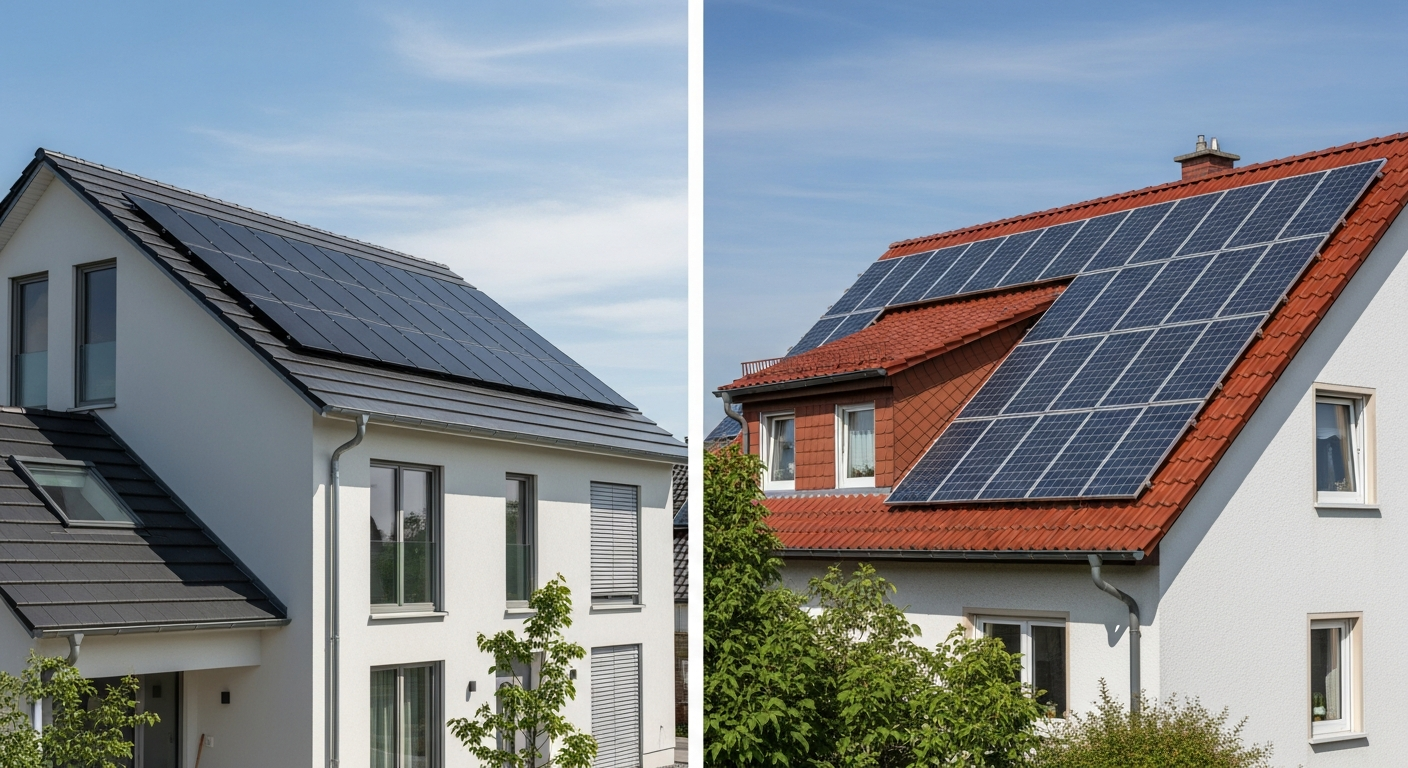
Germany's residential solar sector has exploded—over 2.5 million rooftop installations now dot the country's landscape. Yet many homeowners still hesitate at the price tag. Enpal promises to flip that script entirely, offering a complete solar ecosystem with zero upfront costs. But does their integrated approach actually deliver on the hype, or does bundling everything together create more problems than it solves?
Enpal's integrated home solar energy solution represents a fundamentally different way to go solar. Rather than purchasing individual components separately, you're getting a tightly woven package: high-performance PV panels, battery storage, an EV charging wallbox, heat pump technology, and an intelligent energy management system called Enpal.One+. The company has grown explosively by eliminating the traditional barrier to solar adoption—that crushing upfront investment. Their rental model lets homeowners access complete renewable energy systems without dropping €15,000–€25,000 upfront.
Discover Enpal's integrated solar solution and see if it fits your home energy needs.
This article examines what makes Enpal's bundled approach different, compares it head-to-head with traditional solar installations, breaks down the real financial mechanics of their rental versus purchase options, and addresses the legitimate concerns customers have raised about performance, customer service, and long-term viability. You'll walk away understanding whether Enpal's all-in-one solution makes sense for your home.
The All-in-One Bundle: What You're Actually Getting
Solar Panel Specifications
Enpal's system features Full-Black 450 Wp modules engineered specifically for German climate conditions and optimized roof performance. These panels are designed to maximize energy capture across varying seasonal sunlight patterns typical of Central Europe.
Battery Storage Integration
High-capacity battery systems enable 24/7 energy independence and self-consumption optimization. This means you're not just generating solar power during daylight—you're storing it for evening and nighttime use, substantially reducing your reliance on grid electricity.
EV Charging Wallbox
The integrated charging solution seamlessly delivers solar-generated power directly to electric vehicles, eliminating grid dependency for transportation. This creates a closed-loop system where your home's renewable energy fuels multiple aspects of your lifestyle.
Heat Pump Technology
Efficient heating and hot water systems reduce fossil fuel reliance while complementing your solar investment. The heat pump works synergistically with your battery storage and solar generation to provide comprehensive home energy solutions.
Enpal.One+ Energy Management System
An AI-driven platform monitors, optimizes, and automates energy flows across all components. The system intelligently routes power between solar generation, battery storage, heat pump operation, and EV charging based on real-time conditions and your household patterns.
Professional Installation and Maintenance
Enpal handles the complete setup process, ongoing support, and performance monitoring. This full-service approach eliminates the complexity of coordinating multiple contractors—one company owns the entire installation and operational relationship.
Enpal App Integration
Real-time energy tracking provides consumption insights and the ability to trade excess electricity back to the grid. Some customers leverage this feature to offset rental costs, though actual trading revenue varies significantly based on grid conditions and market rates.
Enpal's Rental Model vs. Traditional Solar Ownership: The Financial Reality
Zero-Upfront-Cost Structure
The rental agreement eliminates the primary barrier to solar adoption. Instead of writing a check for €15,000–€25,000 before installation, you pay monthly fees. This democratizes access to solar technology, though it fundamentally changes the financial relationship between homeowner and equipment.
Monthly Rental Fees
Typical costs range substantially depending on system size, location, and contract terms. Monthly payments often fall between €200–€400, comparable to what households might currently spend on grid electricity. Contract terms typically span 20 years, locking in a fixed payment structure.
Flexible Purchase Options
After an initial rental period, customers can transition to ownership by purchasing the system outright. Purchase prices are discounted compared to buying new installations from other providers, theoretically rewarding customer loyalty while generating revenue for Enpal.
Long-Term Savings Projections
Enpal projects substantial savings over 20 years, often claiming total savings in the €15,000–€30,000 range. However, real-world customer data tells a more complicated story. Some customers report genuine savings matching projections; others experience stagnant returns or even net losses compared to continuing traditional electricity purchases.
Grid Electricity Cost Escalation
Rising utility rates theoretically strengthen Enpal's financial case, as fixed monthly rental fees become increasingly attractive relative to climbing grid electricity prices. However, if energy prices stagnate or decline, the financial advantage narrows significantly.
Hidden Costs and Fine Print
Installation fees, service charges, and contractual obligations sometimes emerge during detailed contract review. Some customers report unexpected charges for non-standard installations, site preparation, or support services assumed to be included in the standard package.
Break-Even Timeline
Reaching financial break-even typically requires 10–15 years, depending on your local electricity rates, solar generation efficiency, and consumption patterns. This timeline assumes consistent system performance and reasonable energy yield—assumptions that don't always hold.
Get a personalized financial analysis from Enpal to understand your specific savings potential.
Performance Expectations vs. Real-World Results
Energy Yield Calculations
Enpal projects system output based on your location, roof orientation, shading analysis, and seasonal patterns. These calculations employ sophisticated modeling, yet actual generation frequently diverges from projections.
Weather and Seasonal Variations
German weather presents genuine challenges—cloud cover, winter darkness, and seasonal inconsistency all impact generation. Some customers experience 15–30% performance gaps compared to initial estimates, particularly during winter months.
Customer-Reported Performance Gaps
Documentation exists of multiple customers reporting systems underperforming by significant margins. These discrepancies sometimes reflect unrealistic initial projections; other times, they indicate installation quality issues or equipment defects.
Technical Defects and Reliability Issues
Post-installation problems have surfaced in customer reports—inverter malfunctions, battery failures, and monitoring system glitches. While warranty coverage exists, some customers report slow resolution timelines and difficulty getting Enpal to acknowledge defects.
Battery Efficiency and Degradation
Battery storage systems degrade over time—this is physics, not failure. However, the extent and timeline of degradation depends on usage patterns and maintenance quality. Enpal provides warranty coverage, but degradation acceleration beyond warranty terms remains customer responsibility.
System Monitoring Transparency
The Enpal App displays real-time energy flows, historical generation data, and consumption patterns. However, some customers question whether the app reveals all relevant diagnostic information, or whether certain performance metrics remain hidden within Enpal's servers.
Troubleshooting and Optimization
Whether Enpal proactively identifies underperformance issues or simply responds to customer inquiries varies by account. Some customers receive periodic optimization recommendations; others report discovering performance problems independently and requesting investigation.
Customer Service and Post-Installation Support
Response Time Challenges
Documented delays in addressing technical issues and customer inquiries persist across customer reviews. Response times ranging from days to weeks for non-emergency issues create frustration, particularly when performance problems directly impact household energy availability.
Warranty and Service Coverage
Standard warranty periods cover equipment defects and certain failure scenarios. However, coverage boundaries sometimes create disputes—customers disagree about whether specific failures fall within warranty responsibility.
Technical Problem Resolution
Effectiveness in resolving defects or performance issues varies considerably. Some customers report problems reaching swift resolution; others describe months of back-and-forth troubleshooting with inconsistent support quality.
Communication Channels
Enpal offers phone, email, and app-based support. Accessibility for non-technical homeowners varies—some find the system straightforward; others struggle navigating technical support terminology or understanding recommended troubleshooting steps.
Maintenance Schedules
Routine upkeep requirements typically remain minimal, as Enpal handles remote monitoring and predictive maintenance alerts. However, certain maintenance tasks fall to customers, and clarity about responsibilities sometimes creates confusion.
Escalation Procedures
When standard support channels fail to resolve problems, escalation pathways exist but reportedly lack transparency. Some customers describe frustration trying to reach higher-level support or manager intervention.
User Community and Peer Support
Enpal fosters some knowledge-sharing among customers through online forums and community channels. Peer support can provide practical insights, though it doesn't substitute for formal technical support when problems require direct company intervention.
The Server Dependency Question: Long-Term Viability Concerns
Cloud-Based System Architecture
Enpal.One+ relies on company servers for core functionality—energy optimization, consumption tracking, grid trading, and system monitoring all depend on cloud infrastructure. This design choice offers convenience but creates operational risk.
Operational Risk Exposure
If Enpal faces financial difficulties or ceases operations, system functionality becomes uncertain. Your solar panels will continue generating electricity, but intelligent optimization, battery management, and monitoring features depend on Enpal's continued operation.
Data Privacy and Security
Energy consumption data lives on Enpal servers, raising legitimate privacy questions. German data protection regulations apply, but you're trusting Enpal's security practices with detailed household energy information.
System Lockdown Scenarios
If cloud services become unavailable, basic solar functionality might continue, but system intelligence ceases. Customers cannot easily switch to alternative energy management platforms—the system design locks functionality within Enpal's ecosystem.
Contractual Protections
Your contract should address system functionality in worst-case scenarios. However, some customer contracts lack explicit protections guaranteeing operational independence if Enpal's services disappear.
Alternative Energy Management Options
Whether you can switch to third-party systems if needed depends on technical architecture and contractual terms. Some components may transition to standard operation; others may require equipment replacement.
Regulatory Considerations
German data protection laws and renewable energy regulations shape Enpal's compliance obligations. However, regulatory frameworks don't guarantee system functionality if the company fails—they simply dictate data handling requirements.
Comparing Enpal to Traditional Solar Alternatives
Modular Solar Systems
Buying panels, batteries, and inverters separately from different manufacturers offers greater flexibility and independence. You're not locked into a single ecosystem and can upgrade components individually as technology evolves. However, integration complexity and installation coordination become your responsibility.
Competing Bundled Solutions
Other German providers offer integrated systems with different business models. Some emphasize ownership over rental; others propose alternative financing structures. Comparing these competing bundled solutions reveals that Enpal's approach isn't the only comprehensive option available.
DIY versus Professional Installation
Handling installation yourself reduces costs substantially but requires technical expertise and permits. Professional installation—whether from Enpal or traditional solar installers—costs more upfront but eliminates personal liability and complexity.
Lease Programs from Traditional Installers
Other companies structure financing without Enpal's rental model, sometimes offering better terms or greater system independence. Shopping multiple providers reveals meaningful variation in contract terms and financial structures.
Government Incentives and Subsidies
KfW programs, tax credits, and renewable energy subsidies apply across different installation approaches. Understanding how incentives interact with Enpal's rental model versus traditional ownership affects actual financial outcomes.
Scalability and Future Upgrades
Adding capacity or components to Enpal systems follows the company's ecosystem constraints. Standalone systems permit greater flexibility in upgrading individual components as technology advances and your needs evolve.
Resale Value Implications
How solar installations affect home valuation varies across ownership models. Systems you own typically enhance property value; rental systems create ambiguity—some buyers assume lease obligations; others view them negatively.
Honest Assessment: Who Benefits Most from Enpal's Solution
Ideal Customer Profile
Homeowners who genuinely benefit from Enpal share specific characteristics: they prioritize convenience and simplicity, lack significant upfront capital, trust cloud-dependent systems, and can fully utilize bundled features like EV charging and heat pump integration. If you match this profile, Enpal's approach likely makes genuine sense.
Risk Tolerance Considerations
Comfort with cloud dependency and rental agreements matters enormously. If the thought of system functionality depending on a company's continued operation causes anxiety, or if you deeply value ownership and independence, Enpal's model creates ongoing discomfort.
Geographic Suitability
German regions with strong solar potential—southern areas with better sun exposure—maximize system output and financial returns. Customers in cloudier regions may struggle achieving break-even, making Enpal's financial case weaker.
Home Energy Consumption Patterns
Households with significant daytime electricity consumption maximize solar self-consumption without heavy battery reliance. Homes with evening-heavy consumption patterns depend more on battery storage, where degradation and efficiency losses impact returns.
EV Ownership and Heat Pump Readiness
You maximize bundled benefits by owning an electric vehicle and having appropriate heating needs. If you can't leverage these components, you're paying for capabilities you don't use, reducing overall financial advantage.
Aversion to Upfront Capital
When avoiding massive upfront investment outweighs other considerations, Enpal's zero-down approach becomes compelling. For customers with limited capital or strong preference for preserving liquidity, this represents genuine value.
Red Flags and Deal-Breakers
Situations where Enpal's approach creates problems include: homes with significant roof shading, regions with poor solar potential, customers expecting system independence, those requiring flexible upgrade options, and households uncomfortable with long-term contractual commitments to a single company.
The Marketing Claims vs. Reality Check
Mandatory Renewable Energy Transition Messaging
Enpal sometimes frames renewable energy adoption as mandatory or imminent, suggesting customers face regulatory pressure to switch. Reality proves more nuanced—incentives exist, but mandates don't yet require residential solar adoption in most German regions.
Savings Guarantees
Enpal frames financial projections as virtually certain, with marketing materials emphasizing savings ranges without clearly communicating assumptions and variability. Actual results depend heavily on energy prices, generation efficiency, and usage patterns—factors outside Enpal's complete control.
Climate-Neutral Home Positioning
Marketing positions bundled systems as achieving comprehensive climate neutrality. The claim contains truth—solar generation plus heat pump heating substantially reduces carbon footprint—but "climate-neutral" requires careful definition and depends on manufacturing impacts and electricity grid composition.
Simplicity Narratives
Marketing emphasizes hassle-free installation and operation. Many customers experience genuine simplicity; others encounter complex troubleshooting, customer service friction, and technical challenges contradicting marketing promises.
Energy Independence Claims
Framing systems as delivering "independence" becomes misleading when cloud functionality remains essential. You're independent from grid electricity but dependent on Enpal's continued operation and server availability.
Influencer Partnerships and Testimonials
Marketing leverages customer testimonials and influencer partnerships, selecting naturally positive cases. These testimonials reflect real customer experiences but don't represent statistical distribution—they showcase best-case scenarios.
Comparison Tactics
Enpal positions itself aggressively against competitors in promotional materials, sometimes employing selective comparisons emphasizing their advantages while downplaying weaknesses. Independently verifying comparative claims reveals more complexity than marketing suggests.
Making Your Decision: Key Questions to Ask Before Signing
Contract Review Essentials
Before committing to a 20-year relationship, understand payment escalation clauses, termination conditions, system ownership transitions, data privacy commitments, and warranty boundaries. Many customers admit overlooking critical contract details until problems emerge.
Performance Guarantees and Escape Clauses
What recourse exists if generation falls dramatically short? Can you exit the contract? Does Enpal provide remedies? Understanding these terms prevents discovering limited options after disappointment.
Financial Modeling Tools
Don't accept Enpal's projections uncritically. Run independent financial models using conservative assumptions, considering multiple energy price scenarios. Online solar calculators and spreadsheet models reveal whether claimed savings truly materialize under realistic conditions.
Site Assessment Requirements
Get professional roof evaluation and shading analysis before accepting Enpal's proposal. Poor shading analysis often explains subsequent underperformance, and you need this assessment in writing.
Competitor Quotes
Obtain multiple bids from traditional installers, competing bundled providers, and other rental companies. Comparing terms reveals whether Enpal's offer truly represents best available options.
Customer Reference Checks
Speaking directly with existing Enpal customers about their real experiences provides invaluable perspective. Ask about customer service responsiveness, actual versus projected savings, performance consistency, and whether they'd make the same decision again.
Legal and Regulatory Consultation
When considering a 20-year legal commitment, involving a lawyer before signing represents wise investment. Legal review ensures you understand obligations and protections before binding yourself contractually.
The Bottom Line: Is Enpal Right for Your Home?
Enpal's integrated home solar energy solution genuinely disrupts the German residential solar market—there's no denying that. The zero-upfront-cost model, the bundled convenience of solar plus storage plus EV charging plus heat pump integration, and the promise of energy independence appeal to thousands of homeowners annually. But here's the reality: bundling everything together creates both advantages and vulnerabilities. You gain simplicity and lower entry barriers. You also gain cloud dependency, contractual lock-in, and reliance on a single company's customer service quality.
The financial math doesn't always work out as advertised. Some customers report genuine savings; others experience stagnant or negative returns. Energy yields frequently fall short of projections. Customer service responsiveness remains inconsistent. And the long-term viability question—what happens if Enpal's servers go down or the company falters—remains genuinely unanswered.
That doesn't mean Enpal is a bad choice. It means you need to enter with eyes wide open. If you value simplicity over flexibility, can tolerate cloud dependency, and want to avoid massive upfront capital, Enpal's approach merits serious consideration. If you prioritize independence, want modular scalability, or demand ironclad performance guarantees, traditional solar installation or competing bundled providers might serve you better.
Get multiple quotes. Speak with existing customers. Run your own financial models. Then decide whether Enpal's integrated solution aligns with your actual needs and risk tolerance.
Leave a Reply