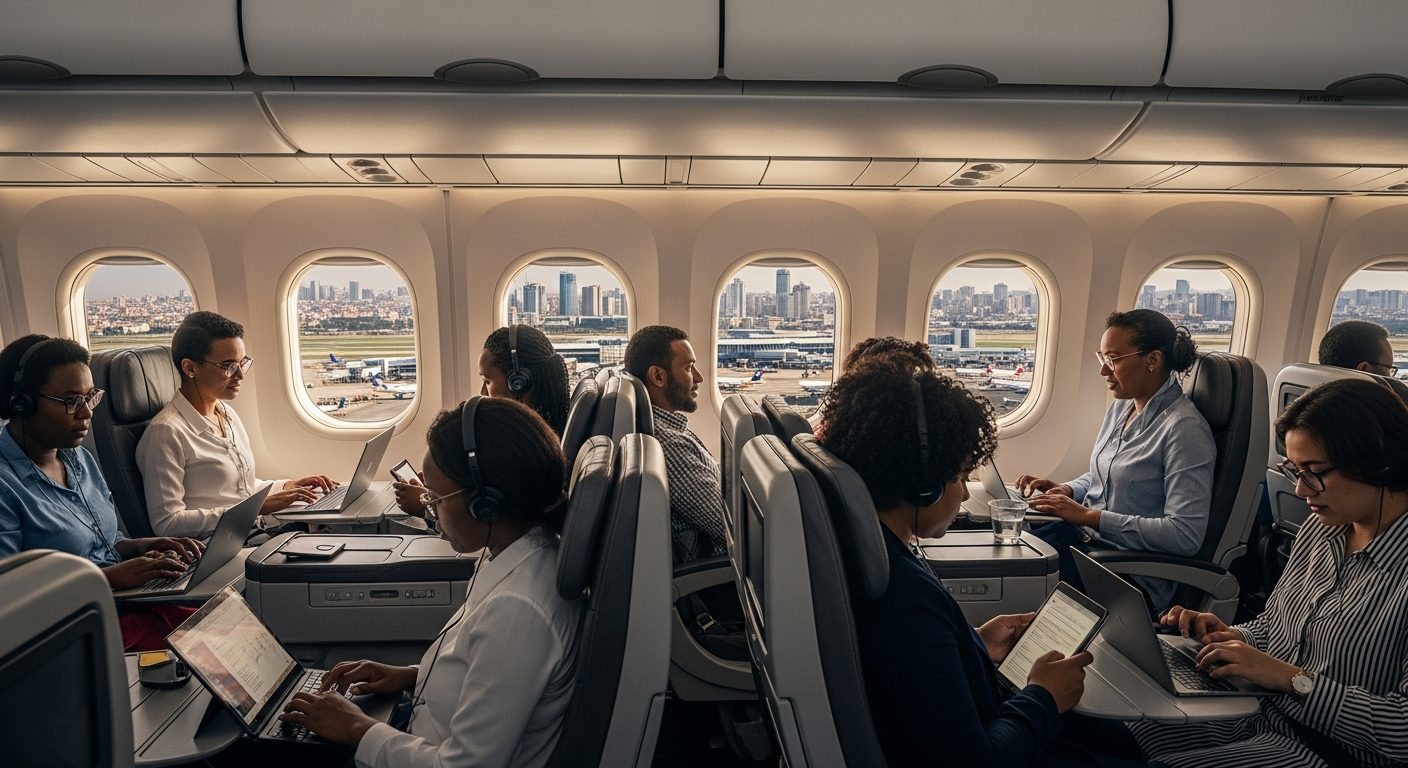
Imagine stepping off a plane in one of Africa's fastest-growing cities and realizing you've just accessed a network spanning 155 destinations across six continents. That's the reality for millions who pass through Addis Ababa Bole International Airport each year, routing their journeys through Ethiopian Airlines' remarkable continental hub. This isn't accidental—it's the result of strategic positioning at the geographic crossroads of Africa, Europe, and Asia, combined with Africa's largest airline operating the continent's most extensive network.
Ethiopian Airlines connects 63 African cities, more than any competitor, making it the undisputed gateway for intercontinental travel. The airline operates a modern fleet featuring Boeing 787 Dreamliners and Airbus A350s, delivering capabilities that rival legacy carriers despite significantly lower fares. With Star Alliance membership, a proprietary ShebaMiles loyalty program, and Skytrax Four-Star certification, the operation functions as a genuinely competitive global player, not merely a regional carrier.
This guide examines how Ethiopian Airlines transforms Addis Ababa into a working intercontinental connector. You'll understand the hub's strategic role, the specific aircraft enabling long-haul operations, what the passenger experience actually delivers across cabin classes, and the real strengths and challenges travelers encounter. Whether you're planning African travel, seeking efficient intercontinental connections, or evaluating loyalty program value, the details matter.
Book your Ethiopian Airlines flight today and experience Africa's gateway firsthand.
The Addis Ababa Hub's Strategic Role in Intercontinental Travel
Geographic Positioning and Continental Bridge
Addis Ababa sits at a remarkable intersection—equidistant from major European, Asian, and Middle Eastern hubs while serving as the natural entry point to sub-Saharan Africa. This positioning minimizes routing inefficiencies that plague competitors. A passenger traveling from London to Nairobi doesn't need a circuitous path through Middle Eastern hubs; Ethiopian's direct routing through Addis Ababa cuts both travel time and ticket costs.
Hub-and-Spoke Efficiency in Practice
The hub-and-spoke model works because Addis Ababa concentrates flights from 155 destinations, allowing efficient connections without requiring direct service between every city pair. A traveler from Cape Town heading to Paris doesn't need a direct flight; they connect through the hub on Ethiopian's schedule, which frequently offers same-day connections. This model reduces operational costs the airline passes directly to passengers.
African Network Dominance Without Parallel
Ethiopian operates to 63 African cities while competitors serve far fewer. This density creates advantages for both leisure and business travelers. The airline reaches safari destinations like Kilimanjaro and Serengeti, business hubs like Lagos and Accra, and emerging markets across East and West Africa. No other airline matches this breadth, making Ethiopian essential for pan-continental access.
Daily International Departures and Capacity
The schedule reflects hub scale: multiple daily departures to London, New York, Dubai, Toronto, and other major centers. High-volume routes like Addis Ababa-Dubai see substantial aircraft capacity deployed, sometimes featuring multiple daily frequencies. This frequency reduces wait times between connections and provides booking flexibility that infrequent service cannot match.
Time Zone Advantages for Global Travelers
Addis Ababa's location in East Africa Standard Time creates minimal jet lag for travelers connecting to Europe or Asia. A business traveler departing London in the afternoon arrives in Addis Ababa in the evening, rests overnight, and continues to Asia the following morning—a rhythm that genuinely works for human circadian rhythms, unlike connections through Middle Eastern hubs requiring artificial overnight waits.
Fleet Specifications and Long-Haul Capability
Boeing 787 Dreamliner Deployment
Ethiopian operates a significant 787 fleet for long-haul international routes. The aircraft features advanced cabin pressurization maintaining higher humidity and oxygen levels, reducing fatigue on extended flights. Wide-body design delivers both premium cabin configuration and adequate economy comfort. Fuel efficiency translates to competitive pricing—the 787 burns substantially less fuel than older wide-bodies, and Ethiopian passes these savings to customers rather than exclusively capturing them as profit margins.
Airbus A350 Operations
The A350 represents next-generation technology with superior aerodynamics, advanced materials, and passenger-focused cabin design. These aircraft feature larger windows, improved lighting systems, and better air quality compared to older aircraft. Deployment on key long-haul routes—particularly transatlantic services—signals serious commitment to competitive premium service.
Range and Non-Stop Capability
Both aircraft deliver 7,000+ nautical mile range, enabling non-stop service from Addis Ababa to London, New York, and Toronto without intermediate stops. This capability differentiates Ethiopian from carriers requiring routing through secondary hubs. Direct service reduces total travel time significantly.
Fleet Modernization and Maintenance Standards
Ethiopian continues fleet renewal, gradually retiring aging narrow-body aircraft. The modernization trajectory shows commitment to maintaining competitive standards. Maintenance compliance with international aviation safety protocols—IATA, FAA, and EASA standards—ensures reliability comparable to global carriers. Regular servicing schedules keep aircraft in certified condition, though occasional mechanical delays still occur despite robust programs.
Compare Ethiopian Airlines' modern fleet options and book your preferred aircraft cabin class.
Navigating Cabin Classes and In-Flight Services
Economy Class Offerings and Baggage Policy
Economy passengers receive two checked bags up to 23kg each on international flights—a generous allowance compared to budget carriers charging for any baggage. Meal service on long-haul flights includes both lunch/dinner and breakfast depending on flight duration. Standard in-flight entertainment arrives via seat-back screens with rotating movie, music, and gaming libraries.
The reality: meal quality varies. Some passengers report thoughtful multi-course meals reflecting African and international cuisine; others encounter repetitive menus on frequent routes. Entertainment libraries sometimes feel limited relative to Gulf carriers, though recent fleet additions feature expanded content.
Cloud Nine Business Class Distinction
Business Class delivers genuine separation from economy. Priority check-in and boarding eliminate airport queuing. Lounge access before departure provides quiet spaces with showers, refreshments, and workspace. Lie-flat seating on newer aircraft (particularly 787s and A350s) enables genuine rest on long-haul flights.
Baggage allowance reaches 32kg per piece—substantially more than economy—plus carry-on and personal items. Premium meal service features à la carte selections and premium beverage options. Business Class passengers receive upgraded amenity kits with noise-canceling headphones and skincare products on selected routes.
In-Flight Dining Across Cabins
Ethiopian emphasizes African cuisine integration alongside international standards. Meals frequently feature Ethiopian dishes, grains, and preparation styles alongside conventional European options. Beverage service includes wine and spirits matching expectations for international carriers.
Consideration: food quality inconsistency appears in passenger reviews. Meals on early morning flights sometimes lack the attention given to afternoon/evening services. Dietary restrictions require advance notification; requesting vegetarian, halal, or other specialty meals during booking ensures proper preparation.
Entertainment System Capabilities and Limitations
Seat-back screens provide direct passenger control over content selection. Recent aircraft feature responsive systems with adequate movie selections. However, music and gaming libraries sometimes feel limited compared to premium global carriers. Passengers on older aircraft occasionally encounter non-functional screens requiring crew assistance.
Baggage Policies and Route Variations
Baggage allowances vary by route and fare class—premium economy sometimes differs from standard economy, while business class policies differ by aircraft type. Review specific policy details for your route before booking to avoid surprises. Checked baggage transfer between connecting flights operates smoothly through the Addis Ababa hub in most cases, though occasional delays in baggage delivery have been reported.
Star Alliance Lounge Access for Frequent Travelers
Elite frequent flyer status—particularly Platinum ShebaMiles members—unlocks access to 1,000+ Star Alliance lounges globally. This benefit transforms the airport experience, providing quiet spaces, meals, showers, and workspace instead of terminal congestion. Partners include Lufthansa, United, and other premium carriers operating excellent lounges in major hubs.
Loyalty Programs and Star Alliance Benefits
ShebaMiles Program Structure and Tier Progression
Ethiopian's proprietary ShebaMiles program mirrors standard airline loyalty models with tiered progression: Silver, Gold, and Platinum. Members earn miles on Ethiopian flights and partner airlines. Tier advancement unlocks incremental benefits—Silver members gain 10% mileage bonus; Gold members receive 25% bonuses plus priority customer service; Platinum members achieve 50% bonuses plus lounge access and complimentary upgrades on select flights.
The program design rewards loyal customers meaningfully without requiring impossible mileage thresholds to reach elite status, making it accessible for travelers flying Ethiopian regularly or combining Ethiopian with Star Alliance partners.
Mileage Redemption Options and Flexibility
Accumulated miles redeem for flights, seat upgrades, baggage allowance extensions, and ancillary services. Redemption rates remain competitive with global programs—transatlantic flights typically require 50,000-70,000 miles depending on season and demand, comparable to legacy carriers. Off-peak redemptions cost less, rewarding flexible travelers.
Star Alliance Membership and Partner Network
Ethiopian's Star Alliance membership provides access to 26+ partner airlines including Lufthansa, United, Air Canada, and others. Passengers can book multi-airline itineraries using Ethiopian miles, significantly expanding redemption flexibility. Partner airlines reciprocate with mileage earning on Ethiopian flights, creating compound loyalty benefits.
Priority Boarding, Check-In, and Service Benefits
Frequent flyer status unlocks fast-track airport procedures—dedicated check-in lines, priority boarding, and priority baggage handling. These benefits dramatically reduce airport friction on long journeys. Business class passengers automatically receive priority boarding regardless of status, though elite members often board even earlier.
Complimentary and Paid Upgrade Pathways
ShebaMiles elite members receive periodic complimentary upgrade certificates, particularly for longer flights. Paid upgrades (purchasing business class from economy) frequently offer discounted rates for frequent flyers. Upgrade availability depends on demand and seat inventory, but Ethiopian generally provides transparent upgrade clearing processes.
Competitive Pricing and Value Proposition for African Routes
Cost-Effective Fares Across Routes
Ethiopian's pricing to/from Africa undercuts legacy European carriers and Gulf airlines substantially. Direct Addis Ababa connections eliminate intermediary markups other carriers apply. A London-Nairobi flight on Ethiopian typically costs 20-40% less than equivalent Lufthansa or BA pricing, despite comparable service quality.
This pricing advantage stems from lower operational costs—smaller crew requirements, efficient hub routing, and African cost structures—rather than service compromises.
Frequency Advantage and Availability
Multiple daily departures on major routes mean lower fares during off-peak times. Travelers with schedule flexibility access significantly cheaper fares simply by shifting flights by a few hours. This frequency advantage doesn't exist on competitors serving African routes with single daily departures.
Baggage Value Compared to Competitors
Ethiopian includes two checked bags for economy on international flights. Budget carriers charge €20-50 per bag; even full-service carriers sometimes limit baggage. The included baggage value alone saves families and business travelers hundreds of euros on multi-person bookings.
Connectivity Savings Through Single-Ticket Bookings
Booking a multi-leg journey on one Ethiopian ticket (e.g., London-Addis Ababa-Dar es Salaam) costs less than separate bookings on different carriers. Guaranteed connections protect passengers if connections get missed. This single-ticket model especially benefits families and leisure groups.
Seasonal Promotions and Campaign Pricing
Ethiopian runs regular promotional fares targeting African diaspora during holiday periods and business travelers during conference seasons. Email subscribers receive advance notice of sales. Flexibility on travel dates captures these promotions more effectively than fixed-date bookings.
Corporate Partnership and Negotiated Rates
Organizations with corporate travel agreements receive negotiated rates unavailable to general public. Business travel managers should evaluate Ethiopian's corporate programs—particularly valuable for organizations with African operations or frequent intercontinental travel.
Awards, Recognition, and Service Quality Standards
Skytrax Four-Star Certification Significance
Skytrax's independent assessment evaluated Ethiopian across numerous categories: staff service, cabin comfort, food quality, entertainment, and airport experience. Four-Star certification places Ethiopian in the top tier globally—alongside Lufthansa, Air Canada, and Singapore Airlines. This validation carries genuine weight because Skytrax assessment reflects actual passenger surveys rather than airline marketing.
Best Airline in Africa Regional Recognition
Multiple award programs—ACI (Airports Council International), IATA, and travel publications—consistently recognize Ethiopian as Africa's best airline. This recognition reflects both peers' assessment and passenger voting. Regional recognition matters because it reflects performance among informed travelers with alternatives.
Safety Record and Operational Compliance
Ethiopian maintains strong safety protocols with full compliance to international aviation authorities including FAA and EASA. The airline's safety record over decades supports its operational reliability reputation. Recent years show no significant safety incidents, maintaining the standard established historically.
On-Time Performance and Reliability Metrics
Ethiopian's on-time performance typically ranges 80-85% across its network, comparable to major global carriers. Delays occur—weather events, mechanical issues, and congestion happen universally—but Ethiopian's performance meets competitive standards. Specific routes and seasons show variation; African routes sometimes experience delays during rainy seasons when terminal operations get affected by weather.
Staff Training and Multilingual Support
Crew training programs emphasize hospitality and service standards. Multilingual staff—particularly on international routes—provide support in English, French, Amharic, Arabic, and other languages. Customer service responsiveness varies by department and situation, but training infrastructure supports service quality.
Real Passenger Challenges and Operational Realities
Service Quality Inconsistency Across Routes and Times
Passenger reviews reveal variation in service delivery. Some travelers report exceptional meal quality and attentive cabin crew; others on similar routes encounter rushed service and mediocre meals. This inconsistency likely stems from crew composition, flight timing, and staffing levels during peak versus off-peak periods.
Addis Ababa Airport Experience During Peak Hours
The airport itself—not Ethiopian—sometimes creates friction. Terminal congestion during peak arrival times produces crowded corridors, unclear signage, and long security/immigration lines. Some travelers describe the experience as efficiently organized; others characterize it as chaotic and disorganized. Individual experiences vary dramatically based on flight timing and personal stress tolerance.
Baggage Handling Inconsistencies
Most baggage arrives on schedule; however, occasional reports of delayed, lost, or damaged luggage surface in reviews. These incidents occur across airlines, but Ethiopian's large volume means proportionally more absolute incidents despite reasonable percentages. The hub's scale sometimes creates processing delays on baggage transfers.
Flight Delays and Weather Sensitivity
Delays occur regularly, particularly during African rainy seasons when weather affects terminal operations. Mechanical delays happen occasionally despite maintenance programs. Communication during disruptions sometimes lacks clarity—passengers report insufficient updates about delay causes and revised departure times.
Connection Logistics and Tight Timing Challenges
The hub operates efficiently, but connection windows of 2-3 hours between international flights create stress for some passengers. Missed connections do happen when inbound flights arrive late, forcing rebooking on subsequent flights. Experienced Ethiopian travelers plan conservative connection times (3+ hours for complex itineraries).
Entertainment System Limitations and Content Gaps
In-flight entertainment systems on some older aircraft feature limited movie and music libraries compared to premium global carriers. Recent fleet additions deliver expanded content, but inventory inconsistency persists. Gaming options sometimes malfunction; non-responsive screens require crew intervention.
Ground Service Variability by Destination Airport
Ground handling quality—checked baggage processing, wheelchair assistance, special services—varies by airport. Major hubs like London and New York feature reliable handling; secondary African airports sometimes experience delays. This variation reflects destination airport infrastructure rather than Ethiopian's control exclusively.
Who Benefits Most from Ethiopian Airlines' Global Connectivity
African Diaspora Maintaining Continental Connections
Families separated across continents rely on Ethiopian for affordable travel maintaining connections. Lower fares enable more frequent visits to home countries than legacy carriers allow. Extended baggage allowances accommodate the heavy packing typical for family reunions and cultural transitions.
Business Professionals Accessing Emerging African Markets
Executives building operations across African territories depend on Ethiopian's frequency and African network breadth. Competitive pricing controls travel budgets while extensive destinations eliminate routing complexity. Business class Cloud Nine service provides work-friendly cabin amenities for important meetings.
Leisure Travelers to African Destinations
Budget-conscious tourists seeking safari experiences, cultural immersion, and adventure travel benefit from Ethiopian's pricing and African connectivity. Gateway access to Kilimanjaro, Victoria Falls, and wildlife reserves works seamlessly through the Addis Ababa hub.
Connecting Passengers Using Hubs Strategically
Travelers routing through secondary African cities leverage Ethiopian's unparalleled African network. A passenger connecting from London to Kampala, Dar es Salaam, or Antananarivo finds Ethiopian often provides the only convenient single-ticket solution.
Frequent Flyer Program Maximizers
Travelers maintaining consistent business travel or intercontinental personal journeys accumulate ShebaMiles efficiently. Star Alliance partnerships amplify program value by enabling earning on partner airlines. Elite status progression provides meaningful benefits at Platinum levels.
Corporate Travel Managers and Organizations
Companies with African operations or frequent intercontinental requirements negotiate corporate rates with Ethiopian, controlling travel expenses while maintaining service standards. The extensive network supports complex itineraries without forced connections through inefficient hubs.
NGO and Humanitarian Workers
Development professionals, aid workers, and humanitarian organizations accessing remote African locations benefit from Ethiopian's network breadth reaching smaller cities competitors ignore. Reliable international connectivity supports critical work.
Comparing Ethiopian Airlines to Regional and Global Competitors
Versus Middle Eastern Carriers
Emirates and Qatar offer more premium amenities, newer fleets exclusively, and superior in-flight entertainment. However, Ethiopian provides more African destinations, competitive pricing, and equally modern aircraft on newer routes. The choice depends on whether priority is African network breadth or premium experience maximization.
Versus European Legacy Carriers
Lufthansa, Air France, and British Airways offer established premium service reputations and extensive global networks. Ethiopian matches modern fleet standards and undercuts pricing while providing superior African connectivity. Legacy carriers sometimes charge premium prices for African routes despite no service advantage.
Versus African Regional Carriers
Ethiopian surpasses regional competitors in fleet modernization, intercontinental network, and operational scale. Smaller African carriers serve niche routes but lack both resources and network breadth Ethiopian provides.
Versus Budget Carriers
Budget carriers offer lower baseline fares but charge heavily for baggage, meals, and services. Ethiopian includes baggage and basic meals, making total journey costs competitive with or cheaper than budget alternatives when totaling ancillary fees.
Network Breadth and Hub Efficiency
Ethiopian's 155 destinations exceed most African competitors; comparable to some European carriers. Addis Ababa's centrality for African routing rivals Dubai and Istanbul for strategic importance, though Dubai and Istanbul provide more non-African connections.
Loyalty Program Competitiveness
ShebaMiles combined with Star Alliance membership competes effectively with global programs. Redemption rates remain reasonable; upgrade pathways reward loyalty. Program value matches established carriers.
Fleet Modernity and Aircraft Standards
Boeing 787 and Airbus A350 deployment on key long-haul routes matches or exceeds regional competitor standards. Fleet age averages younger than many African carriers, supporting reliability and comfort claims.
Planning Your Journey Through Addis Ababa Hub
Optimal Connection Time Recommendations
Minimum 2.5 hours suffices for straightforward domestic-to-international or international-to-international connections through Addis Ababa. Complex itineraries (multiple stops, baggage transfers, visa processing) warrant 3+ hours. First-time visitors to Addis Ababa should plan conservatively—terminal navigation requires time orientation.
Terminal Layout Navigation and Facilities
Addis Ababa Bole International Airport features two main terminals: T1 for domestic/regional flights, T2 for international operations. T2 includes duty-free shopping, restaurants, and lounges. Terminal maps display at check-in; mobile airport apps provide guidance. Signage could improve—asking airport staff for directions often proves more efficient than reading signage.
Visa Requirements and Transit Policies
Ethiopian nationals enjoy visa-free access to many destinations; non-Africans require visas for most African countries beyond brief transits. Layover passengers may or may not require visa depending on nationality and layover length. Research specific requirements; Ethiopian provides visa guidance during booking but verification remains passenger responsibility.
Ground Transportation and Airport Access
Airport shuttle services connect terminals to central Addis Ababa (roughly 45 minutes, modest cost). Car rental agencies operate from T2; ride-sharing apps Uber and local alternatives work throughout the city. Taxi stands provide service though negotiated fares beforehand avoid disputes.
Hotel Partnerships for Extended Layovers
Ethiopian offers layover accommodation deals through partner hotels; Star Alliance membership unlocks additional discounts. Serena Hotel and Hilton Addis Ababa provide convenient service near the airport. Most hotels offer free airport shuttle, making overnight layovers restful rather than exhausting.
Baggage Transfer and Claim Procedures
Checked baggage transfers between Ethiopian flights occur automatically if booked on single ticket. Baggage claim upon final destination follows standard procedures. Tight connections sometimes result in baggage delays of 24+ hours; Ethiopian tracks and delivers delayed baggage to final destination addresses.
Lounge Access and Amenities During Layovers
Ethiopian's Addis Ababa lounge operates in T2 for international passengers; Star Alliance lounges provide additional options. Lounge access requires business class ticket or elite frequent flyer status. Facilities include showers (valuable for long layovers), workspace, beverages, and refreshments.
Change Policies and Rebooking Procedures
Ethiopian's change policies vary by fare class—basic economy sometimes restricts changes; premium economy and business class tickets allow more flexibility. Missed connections trigger automatic rebooking on subsequent available flights. Clear rebooking policies protect passengers from abandonment on missed connections.
Your African Gateway Awaits
Ethiopian Airlines' Addis Ababa hub genuinely transforms how travelers access Africa and route between continents. The combination of 155 destinations, modern fleet featuring 787s and A350s, competitive pricing, and strategic geographic positioning creates compelling value, particularly for African-focused travel or intercontinental connections.
The Star Alliance partnership and ShebaMiles loyalty program add flexibility that frequent travelers genuinely appreciate. The airline's Four-Star Skytrax certification and consistent regional recognition reflect authentic service quality. Yet reality demands nuance: service quality fluctuates, Addis Ababa airport can feel overwhelming during peak hours, and baggage handling occasionally falters. These aren't deal-breakers—they're operational realities worth understanding rather than ignoring.
Ethiopian Airlines deserves serious consideration if you're planning African travel, seeking affordable intercontinental connections, or building a loyalty portfolio with meaningful benefits. Success requires informed decision-making: evaluate your specific route, understand baggage policies for your chosen fare class, leverage ShebaMiles if anticipating multiple journeys, and check recent reviews specific to your flight. Plan connection times conservatively, manage expectations around in-flight amenities realistically, and recognize that the airline's strength lies in network and pricing rather than premium service matching Gulf carriers.
The airline has earned its reputation through genuine service delivery and continental positioning. Your African journey—whether business, leisure, or family reconnection—can succeed brilliantly through Ethiopian Airlines when booked strategically.
Start planning your Ethiopian Airlines journey now and unlock Africa's gateway.
Leave a Reply