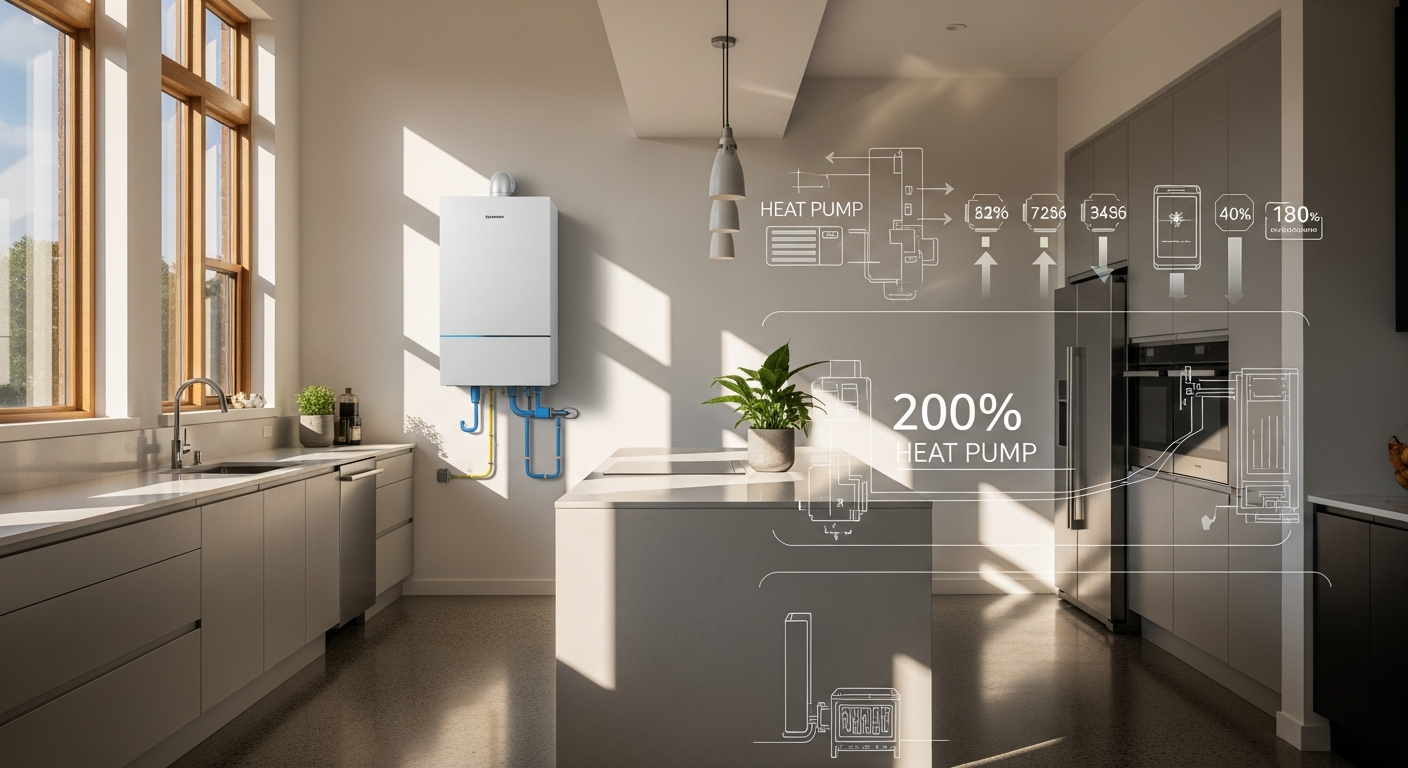
As heating bills climb and environmental concerns intensify, Dutch homeowners face an uncomfortable reality: your current system is likely consuming roughly 40% of your total energy budget, and those costs keep rising. The pressure to act is real, but the choices often feel extreme—either maintain an aging gas boiler or commit to a complete, expensive overhaul with a fully electric heat pump. This dilemma has kept many households trapped in outdated heating patterns despite their growing awareness of climate and cost issues.
Feenstra Hybrid Heat Pump Systems emerged as a practical response to this exact problem. Rather than forcing an all-or-nothing decision, Feenstra engineered a solution that works alongside your existing CV-ketel, combining a compact electric heat pump with your current infrastructure. The result is substantial gas savings, meaningful environmental impact, and the reliability you've come to expect—without dismantling everything that already functions.
This guide examines the real-world mechanics of hybrid heating retrofits, cutting through marketing claims to show you actual installation costs, available government subsidies, genuine energy savings, and honest assessments of both strengths and limitations. You'll understand exactly how these systems operate, whether your home qualifies for maximum benefits, and how to calculate if a hybrid heat pump makes financial sense for your specific situation.
Explore Feenstra's hybrid heat pump systems and start saving today
How Feenstra Hybrid Heat Pump Systems Actually Work
The engineering behind these systems is straightforward but effective. An outdoor unit extracts ambient warmth from the air—yes, even in freezing conditions—and transfers that heat indoors through your existing radiator network. This electric heat pump handles the majority of your heating demands throughout the year. On the coldest winter days when outdoor temperatures plummet and heat pump efficiency drops, your existing CV-ketel automatically activates as backup, ensuring continuous comfort without any manual intervention.
Dual-heating mechanism
The system operates on temperature thresholds you can control. Your heat pump works as the primary heating source during mild and moderately cold periods. When outdoor temperatures fall below a specific threshold—typically around -5°C or lower—the boiler engages to supplement heating output. This intelligent switching maximizes efficiency by using the lowest-cost heating method available at any given moment.
Air-source technology & seamless integration
The outdoor unit pulls warmth from ambient air through a refrigerant cycle, delivering that energy indoors without requiring ground loops, water sources, or extensive excavation. Your existing radiators, pipes, and tap water heating systems remain unchanged. The heat pump simply integrates with what's already there, feeding warm water into your current distribution network.
Intelligent switching & backup comfort
Automatic controls manage the transition between heat pump and boiler operation. You maintain the psychological comfort of knowing a reliable boiler backs up your system on extreme weather days—a significant advantage over fully electric solutions for households hesitant about heat pump-only heating. The 15-year lifespan matches traditional CV-ketels, making replacement cycles predictable and comparable to what homeowners already understand.
Energy efficiency standards
Feenstra partners with manufacturers whose hybrid heat pumps consistently achieve A++ energy labels, reflecting genuine efficiency improvements across their product range. These aren't marginal upgrades; they represent substantial performance gains compared to traditional boiler-only systems.
Installation & System Sizing: Finding Your Perfect Fit
Selecting the right system size prevents both undersized heating and unnecessary overspending. Feenstra technicians assess your home's square footage, insulation quality, current heating patterns, and regional climate factors to determine optimal capacity.
Power output options
Two primary sizes serve most Dutch households. The 4kW system suits smaller homes and terraced houses with moderate heating demands. The 6kW system handles larger properties or homes with higher heating requirements. Feenstra's assessment process identifies which capacity delivers optimal performance without oversizing your investment.
Professional assessment & retrofit compatibility
Installation begins with a detailed home evaluation. Technicians examine your existing CV-ketel, radiator configuration, pipe routing, and outdoor space availability. The retrofit approach means minimal disruption—your current boiler remains in place, connected seamlessly to the new heat pump unit. No radiator replacement, no pipe rerouting, no weeks of construction chaos.
Installation timeline & existing infrastructure leverage
Professional setup typically completes within 1-2 days. Certified Feenstra technicians handle all connections, safety checks, and system programming. Because the installation builds upon your existing infrastructure rather than replacing it, costs stay reasonable and disruption stays minimal. Your home's heating network requires no modifications; the new system integrates directly into what's already functioning.
Breaking Down the Real Costs: Investment & Subsidies
Transparency about pricing matters. A 4kW hybrid system with professional installation costs approximately €8,600 before subsidies. The 6kW version runs around €9,700 including installation. These figures represent complete retrofit packages—not stripped-down quotes requiring additional expenses later.
Government subsidy availability
Here's where the math improves significantly. The Dutch government recognizes hybrid heat pumps as viable solutions within the energy transition and provides subsidies ranging from €1,700 to €2,150 depending on system size and energy efficiency class. Feenstra assists with the entire subsidy application process, handling paperwork and ensuring you capture all available funding.
Effective out-of-pocket costs & ROI potential
After subsidy application, your actual investment drops substantially. A 4kW system might cost around €6,900 out-of-pocket (€8,600 minus €1,700 subsidy). The 6kW system could settle around €7,550 (€9,700 minus €2,150). These numbers make the investment far more accessible than initial quotes suggest.
Annual energy savings estimates show approximately €955 per year for typical terraced houses based on January 2024 gas pricing. While your electricity bills rise slightly, the gas savings exceed those increases significantly. This means break-even typically occurs within 7-10 years, with subsequent decades delivering pure savings.
Get your personalized Feenstra hybrid system quote and subsidy assessment
Annual Energy Savings & Operating Cost Reality
Understanding actual savings requires moving beyond marketing estimates to real household data. Hybrid systems reduce natural gas consumption substantially—typically 40-50% compared to boiler-only heating depending on outdoor temperatures throughout the heating season.
Electricity cost increases & net savings calculation
Yes, your electricity bill rises. The heat pump requires electrical power, and winter heating demands are substantial. However, the gas savings exceed the additional electricity costs by a significant margin. A household previously paying €1,200 annually for gas might pay €1,100 for gas plus €250 for additional electricity—a net savings of €50 that year. As energy prices fluctuate, this advantage compounds.
Multi-year savings trajectory
The real benefit emerges across multiple years. Year one might deliver €955 in net savings. Year two brings the same benefit. After 10 years, you've recovered your entire investment and begin accumulating pure gains. Natural gas prices historically trend upward, meaning future savings likely exceed today's estimates.
Variations by home type & heating patterns
Terraced houses typically benefit most because heating demands remain moderate—the heat pump handles most needs, the boiler rarely engages. Detached homes in colder regions might see lower percentage savings because extreme weather forces more boiler operation. Your actual savings depend on insulation quality, home size, and winter weather patterns in your specific location.
Environmental Impact & Carbon Reduction Benefits
Beyond financial returns, hybrid systems deliver tangible climate benefits. Reducing natural gas consumption cuts household CO2 emissions substantially. A typical household using a hybrid heat pump might reduce annual carbon emissions by 2-3 metric tons—equivalent to removing a car from the road for several months.
Gas independence & transition support
These systems advance the Netherlands' energy transition without requiring full electrification. Households reduce reliance on natural gas while maintaining reliable heating through cold weather. This gradual transition approach suits many homeowners uncomfortable with all-electric solutions but committed to sustainability progress.
Future renewable compatibility
Hybrid systems integrate well with solar panel installations. Your heat pump can draw power from rooftop solar during daylight hours, further reducing grid electricity consumption and environmental impact. This future-proofing ensures your heating system aligns with evolving renewable energy infrastructure.
Who Benefits Most From Hybrid Heat Pump Retrofits
Not every household benefits equally from hybrid systems. Understanding whether yours matches the ideal profile prevents mismatched investments.
Primary candidate profiles
Homeowners with existing CV-ketels in reasonable condition are perfect candidates. If your boiler still functions reliably but your gas bills alarm you, a hybrid retrofit makes immediate sense. You gain energy savings without the complete replacement cost of a fully electric heat pump system.
Budget-conscious renovators who want sustainability improvements but lack €15,000-€20,000 for full electrification find hybrid systems attractive. The €8,600-€9,700 investment (before subsidies) delivers meaningful benefits at a more accessible price point.
Terraced house owners typically experience the strongest ROI because their moderate heating demands suit hybrid system efficiency profiles perfectly. Homeowners in well-insulated properties see better performance than those with poor insulation—the heat pump operates more efficiently when less heat escapes.
Families prioritizing comfort over cutting-edge environmental statements benefit from the CV-ketel backup. You eliminate concerns about heat pump performance during extreme weather—the boiler engages automatically, ensuring warmth regardless of outdoor conditions.
Households seeking gradual transition
If you want to move away from natural gas but aren't ready for complete electrification, hybrid systems bridge that psychological and practical gap. They demonstrate that sustainable heating doesn't require abandoning familiar technology; it simply means reimagining how existing systems work together.
Honest Trade-Offs & Limitations to Consider
No solution is perfect. Understanding hybrid system limitations prevents disappointment after installation.
Initial investment & not fully gas-free
The upfront cost remains higher than replacing your CV-ketel with another boiler. If your current system fails and you need immediate heating, a traditional boiler replacement might cost €4,000-€5,000. Choosing a hybrid system adds €3,600-€4,700 to that expense (before subsidies). This barrier prevents some households from upgrading despite understanding the long-term benefits.
Hybrid systems aren't fully gas-free. Environmental purists seeking complete natural gas elimination must pursue fully electric heat pumps instead. If zero-gas operation aligns with your values, this limitation matters.
Space requirements & noise considerations
Your outdoor unit needs adequate clearance and weather protection. Most homes accommodate this requirement, but properties with limited outdoor space might face constraints. Heat pump units generate modest operational noise—roughly the volume of an air conditioning unit—which concerns some households but barely registers for others depending on unit placement and neighbor proximity.
Weather-dependent efficiency & subsidy eligibility
System performance varies with outdoor temperature. On extremely cold days, the boiler handles more heating load, reducing efficiency compared to mild winter days. The backup boiler prevents discomfort but doesn't eliminate this efficiency variance. Additionally, not all homes qualify for subsidies; specific energy efficiency requirements and property criteria apply.
Feenstra's Complete Service Package & Support
What distinguishes Feenstra isn't only their technology but the comprehensive support structure surrounding installation and operation.
Expert consultation through ongoing maintenance
Technicians assess your home and recommend appropriate sizing during initial consultation. Professional installation follows, completed by certified technicians with quality guarantees. Feenstra then guides you through subsidy applications, handling paperwork and ensuring you capture all available funding.
Ongoing maintenance plans keep systems operating at peak efficiency. Regular servicing prevents performance degradation and extends component lifespan. Emergency support provides access to responsive technicians when troubleshooting or repairs become necessary.
Some systems include smart controls allowing you to monitor usage, adjust temperature settings, and optimize efficiency from your smartphone. Parts availability and warranty coverage provide reliable access to replacement components and manufacturer support.
Feenstra educates customers on system operation, explaining how to maximize efficiency benefits and troubleshoot basic issues. This knowledge empowers you to understand your investment rather than remaining dependent on technician visits for routine adjustments.
Making Your Decision: Is a Feenstra Hybrid System Right for You?
The decision process involves evaluating your current situation against hybrid system benefits and limitations.
Assessment checklist & budget evaluation
Examine your existing heating system's age, efficiency rating, and condition. If your boiler approaches 15 years old or requires frequent repairs, a hybrid retrofit makes timing sense. Determine your acceptable investment range and confirm whether your home qualifies for maximum subsidy amounts.
Calculate realistic annual savings based on your home's size, insulation quality, and regional climate. Consider your long-term ownership plans—do you intend to remain in this home for 10+ years? Shorter ownership horizons reduce time available to recover the investment through energy savings.
Weigh your environmental priorities honestly. If sustainability matters deeply, hybrid systems deliver meaningful progress. If you prioritize absolute lowest costs, a traditional boiler replacement might suit you better despite higher ongoing expenses.
Confirm that hybrid system reliability meets your comfort expectations. Some households find reassurance in the boiler backup; others view it as a compromise. Verify that adequate outdoor space exists for the heat pump unit installation on your property.
Consultation scheduling
Contact Feenstra for a personalized home assessment and detailed recommendations specific to your situation. Initial consultations evaluate whether a hybrid system fits your needs and clarify what financial returns you can realistically expect. Professional guidance prevents mismatched investments and ensures you make informed decisions.
Moving Forward With Confidence
The case for Feenstra Hybrid Heat Pump Systems strengthens yearly as gas prices rise and environmental concerns intensify. You're considering genuine energy savings—potentially €955 annually—combined with meaningful carbon reduction and government subsidies that substantially reduce your actual investment.
This hybrid approach eliminates the false choice between traditional heating and complete electrification. Your existing boiler remains as reliable backup on the coldest winter days while the electric heat pump manages heating throughout most of the year. You gain sustainability progress without sacrificing comfort or emptying your wallet.
Feenstra distinguishes itself through comprehensive support. From initial home assessment through installation, subsidy navigation, and ongoing maintenance, they manage the complexity while you enjoy lower bills and reduced environmental impact. Your current heating system doesn't require abandonment; it simply requires reimagining for a more sustainable future.
The decision shouldn't be rushed, but waiting indefinitely means missing another winter of unnecessary energy expenses. Each year you delay costs money and increases your household's carbon footprint when solutions already exist.
Schedule your free Feenstra assessment and discover your energy savings potential today
Leave a Reply