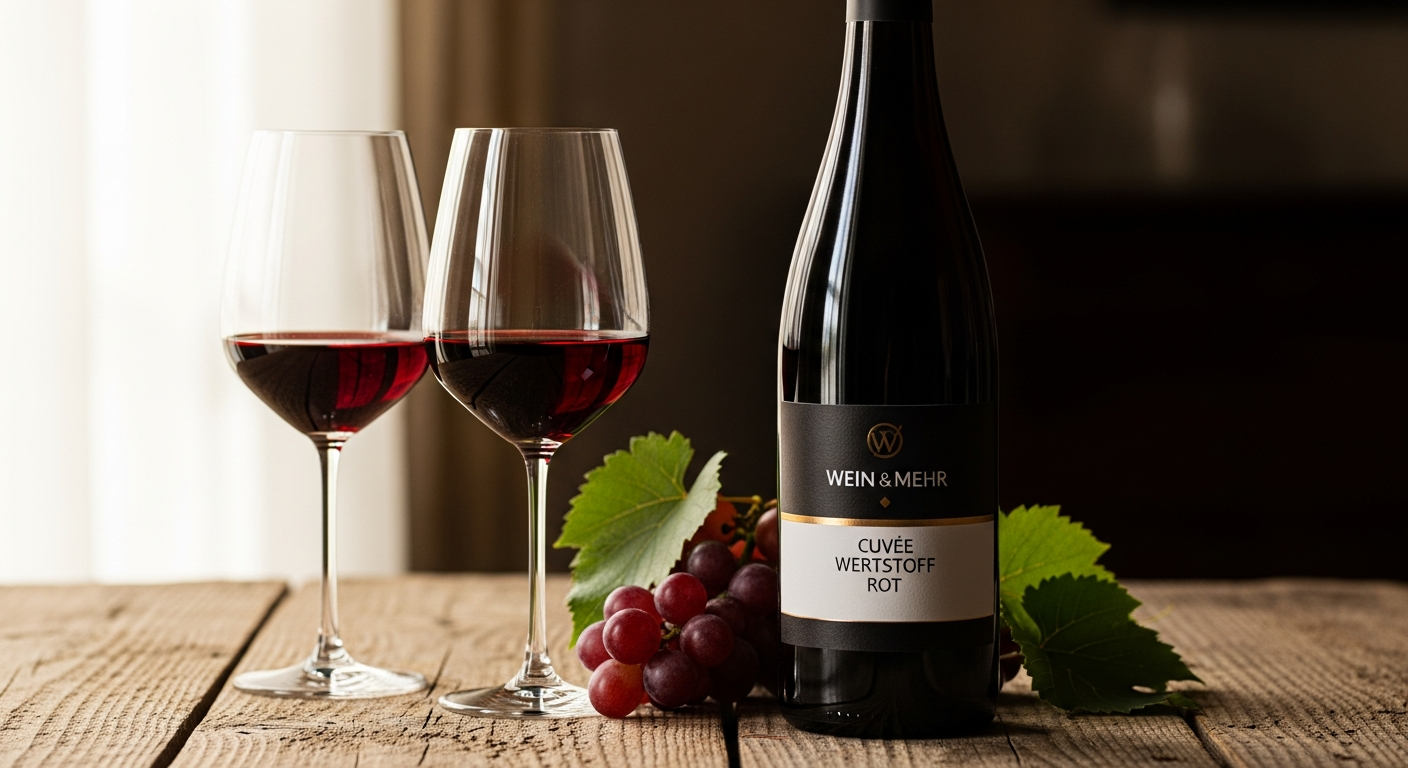
Most wine enthusiasts assume that exceptional German red wines demand a €20+ investment—but the Wein & Mehr Cuvée Wertstoff Rot shatters that misconception entirely. This Pfalz-region cuvée represents a fundamental shift in how German wineries approach value without compromising integrity or character. The blend of Cabernet Sauvignon, Merlot, and Dornfelder grapes, combined with 18 months in oak barrels, creates a wine that respects tradition while remaining remarkably accessible.
At approximately €9.90 per bottle, this wine positions itself as the thinking person’s everyday red—sophisticated enough for dinner parties, unpretentious enough for casual weeknight meals. The 14% alcohol content delivers a robust, full-bodied profile that commands attention without overwhelming the table. What makes this wine truly noteworthy is its refusal to cut corners despite its approachable price.
Discover the Wein & Mehr Cuvée Wertstoff Rot and elevate your everyday wine experience.
The Pfalz Terroir Behind Wein & Mehr’s Signature Blend
The Pfalz region occupies a unique position in German winemaking. Known primarily for Riesling and white wine production, this wine region challenged conventions by developing exceptional red blends that respect continental climate influences. The Wein & Mehr Cuvée Wertstoff Rot draws its character from three carefully selected grape varieties, each contributing distinct elements to the final expression.
Cabernet Sauvignon, Merlot, and Dornfelder: Individual Contributions
Cabernet Sauvignon brings structural backbone and aging potential to the blend. Its naturally robust tannin profile provides framework and longevity, ensuring the wine can develop complexity over years rather than months. Merlot softens this severity with approachable fruit character and silky tannin integration, adding layers of accessible pleasure that make the wine immediately enjoyable. Dornfelder, a German varietal, introduces regional authenticity and distinctive spicy rosehip characteristics that distinguish this blend from international competitors. Together, these three varieties create synergy rather than compromise—each grape elevates what the others contribute.
Continental Climate Influence on Ripeness and Alcohol Content
Pfalz’s continental climate produces warmer growing seasons than cooler German regions. This warmth drives phenolic ripeness, allowing grapes to achieve the 14% alcohol content that defines this wine’s full-bodied character. The continental pattern also creates temperature fluctuations between day and night, preserving acidity and freshness despite higher alcohol levels. These climatic conditions produce wines with substance and presence—wines that feel substantial on the palate without becoming overly heavy or alcohol-forward.
Philosophy: German Tradition Meets International Varietals
Wein & Mehr’s winemaking philosophy embraces a deliberate contradiction. Rather than viewing international grape varieties as threats to German winemaking tradition, the winery positions them as tools for expanding expression within a regional context. The use of Cabernet Sauvignon and Merlot alongside native Dornfelder reflects confidence in blending as a legitimate winemaking approach. This perspective allows the winery to honor German heritage while creating wines that appeal to modern palates accustomed to international varietals.
Vintage Variations and Consistency
The 2017 and 2021 releases demonstrate the winery’s commitment to consistency across different growing conditions. Both vintages maintain the wine’s signature character—balanced complexity, smooth oak integration, and versatile food pairing potential. While individual vintage variations exist (as they should in authentic winemaking), the Cuvée Wertstoff Rot resists the trap of dramatic year-to-year swings that plague less carefully managed wines. This consistency proves invaluable for consumers building a reliable rotation of everyday wines.
Decoding the Aromatic and Flavor Profile
The wine announces itself through its aromatic complexity. Opening a bottle reveals layers that unfold gradually rather than all at once—a hallmark of serious winemaking regardless of price point.
Primary Fruit Aromas and Secondary Complexity
Black currants and red currants form the aromatic foundation, immediately identifying this as a serious red wine. Blueberry notes add subtle sweetness that balances the wine’s racy structure. These primary fruit aromas would satisfy many wines at this price point, but the Cuvée Wertstoff Rot doesn’t stop there. Secondary aromas emerge with time in the glass—coffee beans and licorice introduce savory complexity that prevents the wine from feeling one-dimensional or overly fruity.
The Spicy Rosehip Character
Spicy rosehip notes surface as the wine opens further. This characteristic derives partly from the Dornfelder component and partly from oak barrel maturation. The spice isn’t aggressive or peppery in an unwelcome way; rather, it adds textural interest and aromatic dimension that elevates the wine from pleasant to genuinely engaging. This spice component makes the wine particularly effective with food pairings that might overwhelm wines built purely on fruit expression.
Vanilla Pod Undertones from Oak Integration
Vanilla pod aromas emerge subtly, indicating the 18-month barrel maturation process. Rather than dominating the wine’s profile, these oak-derived notes weave through the aromatic landscape, creating smoothness without obliterating the wine’s fruit character. This restraint demonstrates skilled winemaking—the oak serves the wine rather than the wine serving as a vehicle for oak flavor.
Palate Structure: Racy, Peppery, and Juicy
On the palate, the wine reveals its true character. “Racy” describes the wine’s liveliness and acidity—it never feels flat or flabby despite its full body. Peppery sensations emerge from tannin structure and the Dornfelder component, adding kinetic energy and complexity. Juicy fruit flavors persist throughout the palate, preventing the tannins from becoming austere or demanding. This combination creates a wine that tastes alive in the mouth rather than heavy or monolithic.
Mild Tannin Integration and Smooth Finish
The tannins present themselves as mild rather than aggressive, indicating proper ripeness of grape material and skillful oak selection. These tannins integrate smoothly into the wine’s overall structure, providing grip and aging potential without dominating younger vintages. The finish extends pleasantly without harsh drying sensations that plague poorly made reds at any price point.
Oak Aging and Production Techniques That Define the Wine
The 18-month barrel maturation process separates this wine from simpler, cheaper alternatives. This extended aging represents a significant commitment of winery resources and storage space—investments not typically made for wines selling at €9.90 unless quality justifies the expense.
Barrel Maturation and Depth Development
Eighteen months in oak creates a fundamentally different wine than extended stainless steel aging would produce. The barrel’s porous nature allows micro-oxidation—controlled exposure to oxygen that softens tannins and develops complexity through oxidative reactions. This process cannot be rushed or replicated through chemical additions. The extended timeframe permits fruit flavors and oak characteristics to marry thoroughly, creating integrated rather than disjointed expressions.
Special Oak Barrel Selection and Woody Undertones
The winery employs “special oak barrels” that contribute subtle woody undertones without overwhelming fruit character. This measured approach suggests careful cooperage selection—likely a combination of French and possibly Austrian or German oak, chosen for complementary characteristics rather than maximum impact. The woody notes enhance rather than dominate, creating a wine that tastes of oak without tasting like oak.
Temperature and Humidity Control During Aging
Proper cellar conditions during maturation preserve wine integrity while allowing developmental processes to occur. Temperature stability prevents premature oxidation or stuck fermentation issues. Humidity management prevents excessive evaporation that could concentrate the wine’s flavors beyond desirable levels. These seemingly technical details profoundly affect final quality—they represent invisible labor that consumers never witness but entirely depend upon.
Full-Bodied Character Through Extended Maturation
Extended barrel aging naturally creates fuller body through concentration and tannin polymerization. As tannins bind together and with other compounds, they gradually soften while increasing their ability to structure and frame fruit flavors. This natural development produces genuinely full-bodied wines rather than wines artificially pumped up through overextraction or excessive alcohol.
Fruit Preservation and Oak Balance
The winemaker’s central challenge during 18 months of aging involves maintaining fruit vibrancy while integrating oak influence. Too much oak contact, and the wine tastes wooden and over-extracted. Too little, and the wine fails to achieve the smoothness and complexity that justify extended aging. The Cuvée Wertstoff Rot achieves this balance convincingly—the fruit remains present and vibrant rather than oakwood-masked.
Vegan-Friendly Vinification Methods
The winery avoids animal-derived fining agents entirely during production. Traditional winemaking employs egg whites, isinglass (fish bladder), and gelatin to clarify wine and remove suspended particles. The Cuvée Wertstoff Rot achieves clarity and stability through plant-based alternatives, demonstrating that ethical production choices enhance rather than compromise wine quality.
Vegan Wine Credentials and Sustainable Practices
The wine’s vegan certification isn’t a marketing afterthought—it reflects genuine commitment to production practices that align with conscientious consumer values.
What Makes Cuvée Wertstoff Rot Vegan-Certified
Vegan certification requires eliminating all animal-derived ingredients throughout winemaking. Most wines fail this standard because fining agents—the compounds used to clarify wine—traditionally derive from animal sources. The Wein & Mehr approach replaces these conventional methods with plant-based clarification techniques that achieve identical results without ethical compromise.
Animal-Derived Fining Agents and Why They’re Avoided
Egg white (albumin), isinglass derived from fish bladders, and gelatin from animal bones represent standard winemaking clarification methods used for generations. These fining agents bind to suspended particles and gradually settle to the bottle bottom, carrying particles with them and leaving clear wine above. While effective, these methods contradict vegan dietary commitments. The winery’s decision to abandon them signals respect for consumer ethics.
Alternative Clarification Methods
Plant-based alternatives include pea protein, bentonite clay, and activated charcoal derived from plant sources. These materials perform identical clarification functions without animal inputs. The winery’s selection of specific alternatives likely varies by vintage based on particular clarification requirements. The result—crystal-clear wine—arrives regardless of which plant-based method employed.
Growing Market Demand for Plant-Based Wine Options
The wine market has witnessed explosive growth in vegan options over the past decade. Younger consumers particularly prioritize alignment between personal values and purchasing choices. Rather than viewing vegan credentials as niche concern, forward-thinking wineries recognize this demographic represents significant market opportunity and genuine consumer demand rather than passing trend.
Quality Without Compromise
Some consumers worry that ethical production choices diminish wine quality. The Cuvée Wertstoff Rot definitively proves this assumption wrong. The wine achieves 4.5-star recognition and consistent consumer praise while maintaining full vegan compliance. Quality derives from grape selection, winemaking technique, and aging methodology—variables entirely independent of fining agent choice.
Alignment with Modern Consumer Values
Contemporary wine drinkers increasingly consider production ethics alongside taste quality. The vegan certification appeals directly to this value system, allowing consumers to enjoy excellent wine while supporting production methods reflecting their dietary and ethical preferences. This alignment transforms the wine from simple beverage into statement of personal values.
Experience vegan-friendly winemaking excellence with Wein & Mehr’s Cuvée Wertstoff Rot.
Food Pairing Mastery: From Beef to Vegan Dishes
The wine’s versatility at the table represents one of its greatest practical advantages. Few wines at this price point adapt so convincingly across diverse cuisines and preparations.
Beef and Steak: Tannin Structure and Red Meat Synergy
The wine’s tannin structure creates natural affinity with beef and steak preparations. Tannins bind with proteins in meat, softening their perception on the palate while simultaneously enhancing meat flavors through complementary interactions. The wine’s full body matches the substance of quality steak, preventing the wine from feeling overwhelmed or lost alongside rich meat dishes. Grilled steak with peppercorn crust finds particular harmony with the wine’s peppery notes.
German Brotzeit Traditions: Cold Cuts and Charcuterie
Brotzeit—the German tradition of cold cuts, cured meats, and artisan breads consumed as a light meal—pairs beautifully with this wine. The wine’s balanced acidity cuts through the richness of cured meats and aged cheeses, while the wine’s body stands up to the salt and smoke flavors inherent in quality charcuterie. The versatility works whether you’re enjoying traditional German varieties or international cured meat selections.
Smoked Dishes and Complementary Peppery Notes
Smoked preparations—whether fish, poultry, or meat—find excellent companions in this wine. The wine’s peppery characteristics enhance the wine’s natural affinity with smoke flavors, creating harmony rather than competition. The juicy fruit component prevents the pairing from becoming overly heavy or one-dimensional. Smoked salmon particularly benefits from this wine’s brightness beneath its full body.
Lighter Meats: Poultry and Game Preparations
Contrary to assumptions that full-bodied reds clash with lighter proteins, this wine bridges the gap convincingly. Roasted chicken, duck confit, and game bird preparations all benefit from the wine’s structure and complexity. The wine never overwhelms poultry while providing sufficient substance and complexity to make the pairing interesting. Game birds especially—with their richer, more assertive flavors than domestic poultry—find natural partnership with the wine’s character.
Vegan Cuisine Pairings: Plant-Based Excellence
The wine’s vegan production credentials represent more than marketing advantage—they signal genuine versatility with plant-based cuisine. Hearty vegetable preparations, legume-based dishes, and plant-based proteins pair convincingly with the wine’s racy structure and complex aromatics. The wine’s peppery notes particularly complement roasted vegetables and spice-forward plant-based preparations. Mushroom-centric dishes—with their umami richness—pair exceptionally well with the wine’s complexity.
Unexpected Pairings Worth Experimenting With
The wine’s aromatic complexity opens doors to unconventional pairings. Asian cuisines featuring star anise, licorice, and warming spices create surprising harmony with the wine’s secondary aromatics. Mediterranean preparations featuring herbs, olives, and tomato-based sauces work better than expected. Even lighter chocolate desserts (not overly sweet preparations) occasionally harmonize with the wine’s licorice and coffee bean undertones.
Serving Temperature and Decanting Recommendations
Serve the wine at 16-18°C (approximately 60-65°F)—slightly cooler than room temperature but warmer than refrigeration. This temperature range allows the wine’s aromatic complexity to emerge while maintaining freshness. For immediate consumption, decanting for 30-45 minutes opens the wine’s aromatics and allows tannins to soften. Older vintages benefit from longer decanting periods, while younger releases (2021 vintage) appreciate shorter aeration times.
Value Proposition: Why €9.90 Feels Like a Steal
The arithmetic of wine pricing reveals why this wine represents extraordinary value.
Price Comparison Against Premium German Reds
Premium German red wines command average prices around €23.09 according to Vivino assessments. The Cuvée Wertstoff Rot sells for €9.90—less than half that average. This price gap exists despite comparable quality markers: 18-month oak aging, serious blending philosophy, vegan production, and consistent expert recognition. Few wines offer such dramatic value advantage.
Quality-to-Cost Ratio Analysis
Calculating value requires comparing production investments and quality outcomes against price charged. The 18-month barrel maturation alone represents significant cost that most €9.90 wines skip entirely. The three-varietal blend demands more nuanced winemaking than single-varietal productions. The vegan production methods require alternative clarification agents. Yet the wine captures these values at a price point typically associated with simpler wines using shortcuts.
What You’re Paying For
The €9.90 price purchases genuine barrel aging, sophisticated blending, quality grape material from Pfalz’s excellent terroir, and a winery’s accumulated expertise. You’re not paying for prestige branding or collector-grade scarcity. You’re paying for winemaking substance at an entry-level price. This distinction explains why the wine represents value rather than bargain-bin mediocrity.
Accessibility for Everyday Wine Drinkers
The price point positions this wine as genuinely accessible for regular wine drinkers. A €9.90 bottle fits comfortably into weekly wine budgets, allowing consumers to experience genuine quality without financial strain. This accessibility transforms the wine from occasional treat into reliable rotation candidate. Many consumers spend €9.90 on inferior wines lacking this quality foundation.
Bulk Purchasing Advantages and Restaurant Positioning
Restaurants and wine retailers frequently stock this wine at favorable wholesale prices, further compressing consumer costs through volume purchasing. Restaurant wine lists often feature this wine at markups that remain reasonable compared to alternative reds at similar retail levels. The wine’s demonstrated consistency and reliability make it attractive to establishments seeking quality house wines without premium pricing.
Long-Term Value and Cellaring Recommendations
The wine exhibits aging potential extending 5-10 years from vintage release, creating temporal value advantages. A consumer purchasing multiple bottles at €9.90 can age some while enjoying others immediately, spreading consumption across years and building a modest cellar without substantial financial investment. This approach to long-term value encourages exploration and experimentation impossible with expensive collector wines.
Tasting Notes and Expert Recognition
Critical acclaim from recognized sources validates what individual palates discover on first sip.
Captain Cork’s 4.5 Out of 5-Star Rating
Captain Cork awarded the 2017 vintage 4.5 out of 5 stars—an exceptional mark reflecting genuine quality recognition. This rating carries weight precisely because Captain Cork maintains high standards across the wines reviewed. Four and a half stars from this source signals a wine that transcends its price category and compares favorably against significantly more expensive options.
Consumer Reviews and Vivino Ratings
Vivino’s platform aggregates consumer reviews across multiple vintages, providing broad sample perspectives. The wine maintains solid ratings across different release years, indicating consistency rather than lucky exceptional vintage. Consumer reviews frequently praise the wine’s balance, versatility, and value proposition—the same qualities emphasized by experts.
Critical Acclaim from German Wine Publications
German wine publications, naturally more discerning about domestic wines, recognize the Cuvée Wertstoff Rot’s legitimacy within the German winemaking landscape. Rather than treating it as bargain anomaly, serious German wine critics position it as honest expression of Pfalz winemaking philosophy executed with skill and restraint.
Blind Tasting Performance Against Expensive Competitors
Informal blind tasting comparisons frequently reveal that this wine holds its own against significantly more expensive reds from respected producers. Without price information to bias perception, tasters often rank it comparably to wines selling for double or triple its cost. This blind tasting success proves the quality assessment isn’t price-influenced nostalgia or marketing-driven.
Consistent Quality Across Release Years
The 2017 and 2021 vintages maintain signature character across different growing conditions. Rather than dramatic vintage variations, the wines demonstrate that the winemaker controls consistency through skill and technique. This reliability proves invaluable for consumers building regular wine rotation—they can confidently purchase multiple bottles knowing quality remains consistent year to year.
Competition Recognition and Accolades
The wine has garnered recognition in wine competitions, further validating quality credentials. Competition medals carry particular weight because independent judges evaluate wines blind against peer competitors, eliminating producer reputation as evaluation factor. Awards from legitimate competitions prove objective quality recognition rather than marketing-driven accolades.
Aging Potential and Cellaring Strategy
While immediately enjoyable, this wine rewards patient consumption across multiple years.
Optimal Drinking Window: Immediate to Year 10
The wine drinks beautifully upon release—the oak integration is smooth, the fruit remains vibrant, and the tannins have softened sufficiently for immediate pleasure. This accessibility differentiates it from young wines requiring years to become drinkable. Simultaneously, the wine’s structure supports extended cellaring through year 10 and occasionally beyond, creating flexibility in consumption timing.
Structure Supporting Extended Cellaring
The wine’s structural foundations—balanced acidity, integrated tannins, and concentrated fruit—establish conditions supporting long-term aging. Extended cellaring allows tannins to polymerize further, softening into silk-like textures. Acidity remains stable as a preservation mechanism. Fruit flavors gradually become more complex through subtle oxidative development.
Storage Conditions for Complexity Preservation
Successful aging requires consistent storage conditions. Horizontal bottle position maintains cork contact and prevents cork drying. Temperature stability between 10-15°C (50-59°F) prevents premature aging or oxidation. Darkness protects from light damage that can prematurely age wine or create unpleasant aromas. Humidity maintenance around 70% prevents cork drying without promoting mold growth.
Flavor Evolution: What Develops with Bottle Age
Young versions emphasize fruit brightness and oak smoothness. Aged versions gradually develop secondary flavors—dried fruit, leather, tobacco leaf, and earth tones emerge as primary fruit gradually integrates into the wine’s overall structure. The spicy rosehip character may soften while gaining complexity. These evolutionary patterns create incentive for tasting verticals across multiple vintages.
When to Drink Versus When to Hold
Immediate consumption suits many occasions—weeknight dinners, casual gatherings, and introduction to the wine’s baseline character. Holding 3-5 years creates noticeably different wines with developed complexity. Cellaring 7-10 years produces tertiary flavors and deeper silky textures for special occasions. Rather than rigid rules, flexibility in consumption timing allows consumers to experience the wine across its aging spectrum.
Budget Collector Strategy and Investment Potential
The moderate price point allows budget-conscious collectors to purchase multiple bottles across several vintages without substantial financial commitment. This approach enables vertical tastings comparing 2017, 2019, and 2021 releases—a learning experience impossible with expensive collector wines. The strategy builds personalized knowledge about the wine’s aging patterns while enjoying excellent quality without collector-grade investment requirements.
Addressing the Blend Debate: Single-Varietal vs. Cuvée Preferences
Wine enthusiasm encompasses passionate advocates for both blended and single-varietal expressions. The Cuvée Wertstoff Rot addresses legitimate concerns from blend-skeptical drinkers.
Why Some Enthusiasts Prefer Single-Varietal Expressions
Single-varietal wines promise transparency—the ability to taste an individual grape variety’s essential character without blending complications. A pure Cabernet Sauvignon from Pfalz would express that varietal’s characteristics distinctively. The appeal lies partly in purity and partly in educational value—understanding individual varietals enhances broader wine knowledge. Some drinkers find blends muddled or compromised, believing the blender sacrifices distinct varietal character for safe mediocrity.
Blending Advantages: Complexity, Balance, and Consistency
Skillful blending creates qualities individual varietal wines cannot achieve alone. The Cabernet Sauvignon’s structure combines with Merlot’s approachability and Dornfelder’s regional authenticity to create a wine greater than any component alone. Blending also permits vintage adjustment—if Cabernet Sauvignon ripened unevenly in a particular year, adjusting blend proportions maintains consistency. Complexity emerges from variety interaction rather than from single varietal intensity.
Synergy Rather Than Compromise
The Cuvée Wertstoff Rot demonstrates genuine synergy—each grape genuinely enhances others rather than diluting them. The Dornfelder’s spicy rosehip character would seem alien in a pure Cabernet Sauvignon or Merlot, yet in the blend it adds sophisticated complexity. The Merlot’s softness prevents the Cabernet’s structure from feeling austere. This interactive balance represents blending at its finest rather than blending as compromise vehicle.
Blind Tasting and Blend Detection
Interestingly, many tasters fail to identify the wine as a blend when tasting blind. The blend components integrate so thoroughly that distinct varietal characteristics become difficult to isolate. This integration reflects successful blending—the wine tastes harmonious and complete rather than obviously multi-varietal. Some experienced tasters correctly identify it as a blend based on aromatic complexity and textural nuance, but many simply taste “excellent red wine” without deciphering the three-varietal composition.
Transparency in Labeling and Grape Percentages
Wein & Mehr demonstrates transparency about the blend’s composition, providing consumers with information rather than marketing obfuscation. Knowing the three varieties encourages educated tasting—consumers can specifically identify Cabernet structure, Merlot softness, and Dornfelder spice. This transparency respects consumer intelligence and permits informed evaluation of blending choices.
Converting Blend-Skeptical Drinkers
The wine serves as effective introduction for consumers skeptical of blends. Rather than declaring “blends are superior,” tasting this wine reveals blending possibilities when executed with skill. The wine’s demonstrated quality and recognition prove that blends merit serious consideration. Many skeptics discovering this wine revise their categorical dismissal of blended wines.
The Everyday Excellence of Wein & Mehr Cuvée Wertstoff Rot
The Wein & Mehr Cuvée Wertstoff Rot proves that exceptional wine doesn’t require exceptional spending. This Pfalz blend delivers genuine sophistication—complex aromatics, balanced structure, and remarkable versatility—at a price point that invites regular rotation into your weekly routine. The 18-month oak maturation creates depth that rivals wines costing two or three times more, while the vegan-friendly production appeals to conscientious drinkers without sacrificing quality. What truly sets this wine apart is its refusal to apologize for being a blend or for its modest price tag. Whether you’re pairing it with German cold cuts, grilled steak, or plant-based dinners, the wine adapts with grace. Its 4.5-star recognition from Captain Cork and consistent consumer praise validate what your palate will confirm on the first sip: this is a wine worth discovering, worth sharing, and worth buying again.
Order your bottle of Wein & Mehr Cuvée Wertstoff Rot today and taste everyday excellence.
Leave a Reply