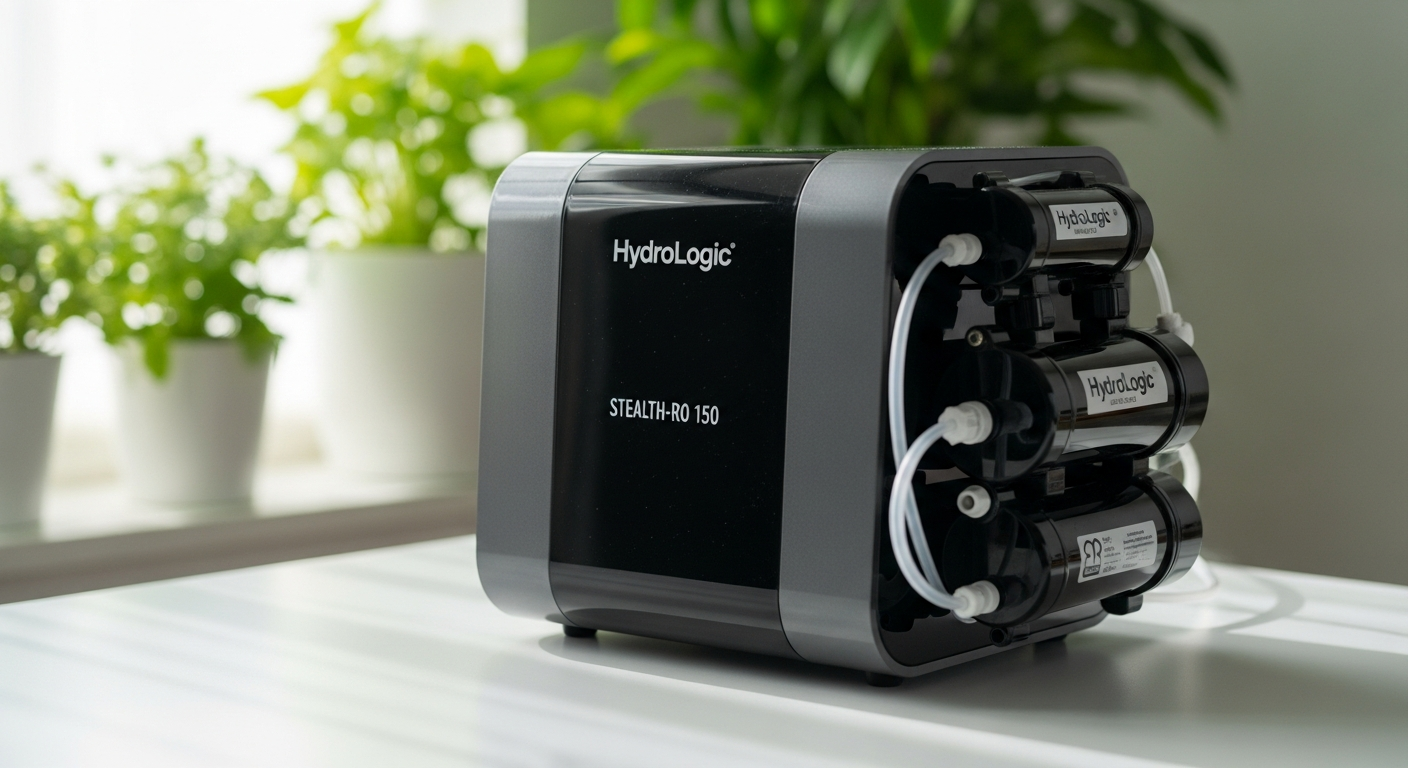
Healthy plants begin with pure water—yet most tap water contains dissolved minerals, chlorine, and contaminants that sabotage nutrient uptake and stunt growth. I've watched countless growers struggle with yellowing leaves and nutrient lockout, only to discover their water quality was the culprit all along. The HydroLogic Stealth-RO 150 water filter addresses this exact problem, delivering ultra-pure water specifically engineered for plant cultivation.
For over a decade, serious growers have trusted the Stealth-RO 150 to produce pristine, low-PPM water that maximizes nutrient absorption and stabilizes pH levels. This reverse osmosis system stands apart from generic household filters because it's built with horticultural applications in mind—not as an afterthought. The system's three-stage filtration process, water-saving advantages, and proven reliability make it a cornerstone technology for professional and dedicated home growers alike.
Three-Stage Filtration: How the Stealth-RO 150 Removes 98% of Contaminants
Stage 1 – Sediment Pre-Filter: The First Line of Defense
The pleated, cleanable sediment pre-filter removes dirt, rust, and large particles before they reach the membrane. This stage protects the downstream filters and the RO membrane itself, extending their lifespan and maintaining optimal performance. Because this filter is cleanable rather than disposable, you can rinse it regularly depending on your source water quality.
Stage 2 – Coconut Carbon Block: Eliminating Chemical Toxins
Green coconut carbon effectively eliminates chlorine, chloramines, and chemical toxins that interfere with plant nutrition. Chlorine and its derivatives are particularly problematic in hydroponic systems because they can damage beneficial microbial populations and create nutrient availability issues. The carbon block captures these compounds before water reaches the critical RO membrane stage.
Stage 3 – RO Membrane Technology: Ultra-Pure Water Production
The 150 GPD membrane reduces total dissolved solids (TDS) and PPM levels to create ultra-pure water ideal for nutrient-sensitive applications. This is where the real magic happens—the membrane's microscopic pores allow water molecules through while blocking dissolved minerals, salts, and remaining contaminants.
Contaminant Removal Rate and Practical Impact
The Stealth-RO 150 achieves 98%+ removal of tap water impurities, ensuring consistent water quality for every watering cycle. This level of purity prevents nutrient lockout, reduces salt buildup in growing media, and allows plants to absorb nutrients more efficiently than they ever could with standard tap water.
Water Efficiency Features That Reduce Waste by 50%
Adjustable Waste-to-Product Ratios
The system offers a choice between 2:1 (standard) or 1:1 (premium) waste ratios depending on your water source and environmental concerns. Most conventional reverse osmosis units produce 3-4 gallons of wastewater for every 1 gallon of pure water. The Stealth-RO 150 cuts this significantly, making it a genuinely sustainable choice for water-conscious growers.
Real Cost Savings and Environmental Benefits
Reduced wastewater means lower water bills, especially critical for large-scale operations or regions with water restrictions. In arid climates or drought-prone areas, this efficiency advantage becomes a game-changer for sustainability-minded growers. You're looking at potential water bill reductions of $100-$300+ annually, depending on your region and water rates.
Long-Term Value Proposition
The combination of water savings and improved crop yields creates compelling economics. Over five years, most growers recoup their initial investment multiple times through efficiency gains alone.
Capacity and Performance Specifications You Need to Know
Production Capacity and Flow Rate
The system produces up to 150 gallons per day under optimal conditions (77°F, 65 psi, 500 PPM source water), translating to approximately 6.25 gallons per hour. This capacity suits operations requiring 20-40 gallons daily and works well for most mid-to-large scale growing operations.
Pressure Requirements and Performance Variables
A minimum 40 psi inlet pressure is required for operation, with systems performing best at 65 psi or higher. Real-world performance factors matter considerably—actual GPD output varies with inlet water temperature, source water PPM, filter age, and incoming pressure. Colder water and lower pressure reduce production rates, sometimes significantly.
Physical Specifications and Installation Flexibility
The compact dimensions (15" x 16" x 6") and 10.8 lbs weight make it suitable for tight spaces, wall-mounted installations, or mobile setups. This portability gives growers options for positioning the unit wherever it works best for their operation.
Installation and Setup: From Unboxing to First Use
Complete Box Contents
Your purchase includes the RO membrane, carbon filter, sediment filter, automatic shut-off cartridge, wall-mountable metal bracket, garden hose connector, inline shut-off valve, tubing (RO, drain, inlet), filter wrench, and Membrane Power Flush Kit. Everything needed for immediate setup comes in the box.
Simple Connection Process
The system threads directly onto standard outdoor faucets, eliminating complex plumbing requirements. You can wall-mount using the included bracket or position on a bench for portable setups. The pre-cut tubing for inlet, drain, and RO lines simplifies the assembly process, and no special tools beyond the included filter wrench and basic hose connections are required.
First-Run Procedure
An initial flush is recommended to clear manufacturing residue before using water for plants. This takes only a few minutes and ensures your first batches of filtered water are truly pristine.
Maintenance and Filter Replacement Schedules
Sediment Pre-Filter Care
The cleanable design extends lifespan significantly; rinse regularly depending on source water quality, typically every 3-6 months. Regular rinsing prevents the accumulation that reduces flow rate and efficiency.
Carbon Block and RO Membrane Replacement
The carbon block filter requires replacement every 6-12 months, depending on chlorine levels and water usage volume. The RO membrane typically lasts 2-5 years with proper maintenance; longevity depends on water quality and usage patterns. The included Membrane Power Flush Kit helps extend membrane life by removing accumulated mineral deposits.
Budgeting for Ongoing Maintenance
Plan on $50-$100 annually for filter replacements, with membrane replacement ($80-$150) needed less frequently. Neglected filters reduce flow rate and contaminant removal, so maintaining the schedule preserves the 98% removal efficiency. Monitor water output and TDS readings to determine when filters need changing.
Ideal Growing Scenarios Where the Stealth-RO 150 Excels
Hydroponic Systems
The Stealth-RO 150 is essential for nutrient film technique (NFT), deep water culture (DWC), and ebb-and-flow systems where water purity directly impacts plant health. Hydroponic growers depend on precise water chemistry, and impure water undermines all other system components.
High-Value Crop Production and Specialty Plants
Growers cultivating specialty vegetables, microgreens, or premium herbs benefit from the precise water chemistry control. Orchids, carnivorous plants, and other finicky species thrive with the low-PPM water this system produces. Medium-sized commercial greenhouses can rely on the 150 GPD capacity for consistent daily water needs.
Hard Water Regions and pH Optimization
Areas with high mineral content in tap water see dramatic improvements in plant vigor and reduced nutrient lockout. Ultra-pure water provides a blank slate for nutrient solutions, allowing you to dial in exact pH levels without tap water interference.
Comparing the Stealth-RO 150 to Other Reverse Osmosis Systems
Reputation and Proven Track Record
Over a decade of proven performance in professional growing communities sets it apart from newer competitors. The Stealth-RO 150's longevity in the market reflects real-world success, not marketing hype.
Water-Saving Advantage
The optional 1:1 ratio significantly outperforms standard RO systems that waste 75-80% of input water. This water efficiency translates directly to lower operating costs and reduced environmental impact.
Value Proposition
At $230-$265, the system is competitively positioned—more affordable than high-end commercial systems yet more capable than basic household filters. The comprehensive package includes everything needed; competitors often require separate purchases for brackets, tubing, and maintenance tools. Purpose-built for plant cultivation rather than generic drinking water applications, the Stealth-RO 150 delivers horticultural-specific benefits that mass-market RO systems simply don't provide.
Potential Limitations and How to Overcome Them
Low-Pressure Environments
If your water source provides less than 65 psi, actual output drops below the rated 150 GPD. The solution is to install a booster pump ($150-$300), which makes the system perform at full capacity even in low-pressure situations.
Cold Water Performance
Winter months or cold source water slow production rates. Workarounds include installing an inline water heater or running the system during warmer hours.
Filter and Membrane Maintenance
As filters accumulate sediment and carbon becomes saturated, contaminant removal declines. Follow the recommended replacement schedule to maintain peak performance. Hard water or high-sediment source water can clog the membrane faster; prevention involves upgrading sediment pre-filter frequency or adding a water softener upstream.
Cost and Learning Curve
The $230-$265 purchase price requires budget planning, though it's offset by long-term water savings and improved crop yields. First-time users may need to experiment with waste-to-product ratios and pressure settings to optimize performance, but the learning curve is minimal with standard RO technology.
Real-World Results: What Growers Report After Switching
Measurable Plant Health Improvements
Growers consistently report faster growth, deeper green coloration, and stronger root development after implementing the Stealth-RO 150. Elimination of nutrient lockout and deficiency symptoms previously attributed to genetics or growing technique becomes obvious within weeks.
Operational and Financial Benefits
Water bill reduction of 30-50% within the first year is common in water-metered areas. System reliability stands out—many users report 3-5 years of consistent performance from a single unit with straightforward maintenance. The ease of use means growers spend less time troubleshooting and more time growing.
Scalability and Growth Potential
Successful small-scale users often purchase additional units or upgrade to larger capacity systems as operations expand. The Stealth-RO 150 proves itself as a foundation technology that scales with your growing ambitions.
Calculating Your Return on Investment
Financial Breakdown
The upfront cost is $230-$265, with approximately $50-$100 annually for filter replacement depending on water quality and usage. Water savings typically reach $100-$300+ annually, depending on your region and water rates. Higher-quality water often translates to 10-20% yield increases—calculate this against your crop value and the impact becomes substantial.
Break-Even Analysis
Most growers recoup their investment within 6-18 months through combined water savings and improved harvests. Over five years, the system pays for itself multiple times through efficiency and productivity gains. The financial case for RO filtration becomes compelling once you account for all these factors.
Choosing the Right RO System for Your Operation
Assessment Factors
Conduct a capacity assessment: the 150 GPD capacity suits operations requiring 20-40 gallons daily, while larger facilities may need multiple units or higher-capacity models. Test your tap water PPM and pressure before purchasing; this determines filter replacement frequency and whether you need a booster pump.
Operational Considerations
Verify your mounting location has adequate clearance for tubing and filter changes. Balance the system cost against your water expenses and crop value to determine if RO filtration is justified. If you're expanding your operation, consider whether a larger capacity system now prevents future upgrades.
Maintenance Readiness
Ensure you have time for regular filter cleaning and replacement; neglected systems underperform. The Stealth-RO 150 demands only modest maintenance, but commitment to the schedule is essential.
Your Path Forward in Pure Water Growing
The HydroLogic Stealth-RO 150 water filter represents a fundamental shift in how serious growers approach plant nutrition and water quality. With 98% contaminant removal, adjustable waste ratios that cut water usage by half, and a price point that makes commercial-grade filtration accessible, this system has earned its reputation as a best-seller for good reason.
Whether you're running a hydroponic farm, managing a greenhouse, or cultivating specialty plants at home, the quality of your water directly determines your results. The Stealth-RO 150 removes the guesswork, eliminates nutrient lockout, and gives you the ultra-pure foundation that high-value crops demand.
Take the next step: test your current tap water quality, calculate your daily water needs, and assess whether the 150 GPD capacity fits your operation. If you're serious about maximizing plant potential, this filter deserves a place in your growing infrastructure. Your plants will respond with healthier growth, stronger nutrient uptake, and harvests that justify the investment.
Leave a Reply